
• Home
  • About Us
  • Toolkit
  • Archives
  • Advertise
  • Privacy Policy

Kids Ain't Cheap

But They Sure Are Worth It

  • Parenting
    • Baby Stuff
    • Books and Reading
      • Aesops Fables
      • Comic Books
    • Education
    • Family Time
    • Green Living
    • Growing Up
    • Healthy Living & Eating
    • Holidays
    • Parenting
    • Random Musings
    • Shopping
    • Stuff to Do
  • Money
  • Product Reviews
    • Books and Magazines
    • Discount Sites
    • Furniture
    • House Keeping
    • Reviews News
    • Toys and Games
  • Contact Us
  • Our Editorial Commitment
  • Search

Large Family Grocery List: 12 Must-Have Items to Keep Everyone Fed and Happy

February 24, 2025 | Leave a Comment

Large Family Grocery List: 12 Must-Have Items to Keep Everyone Fed and Happy
Image Source: Pexels

Keeping a large family fed and happy is a difficult balancing act. Each family member likely has competing allergies, dietary needs, and taste buds, which makes meal planning and writing a large family grocery list a challenge. For big groups, we love “build your own” meals like chopped salads, taco bars, and rice bowls. 

They allow everyone to customize their portion with the ingredients and flavors they love, keeping   the whole family satisfied. If you keep a few low-cost staples on hand, you’ll be able to cook modular recipes that even the pickiest eaters will enjoy. Here are 12 must-have items to include in your large family grocery list. 

Crowd-Pleasing Large Family Grocery List

Beans 

Beans
Image Source: Pexels

Beans are a surprisingly good source of protein, especially considering how affordable they are. One cup of cooked black beans has 15 grams of protein, plus essential vitamins like iron, thiamine, magnesium, and manganese. Depending on the variety, dried beans typically cost $1 per pound or less, making them one of the cheapest proteins available. 

Beans are incredibly versatile and can be prepared in lots of unique ways. You can mash up beans with bread crumbs and fry them to create satisfying bean cakes. Pinto beans can be refried with oil to make a satisfying burrito or taco filling. Bean salads or dips are also delicious ways to increase your fiber and protein intake. Plus, you can add them to sauces, soups, and casseroles for an extra dose of protein.

Chicken Breast 

Chicken Breast
Image Source: Pexels

Chicken breast is one of the most affordable sources of protein for a large family grocery list at just $4 per pound on average. A cup of chicken has a whopping 43 grams of protein to keep the whole family satiated. You can easily stretch chicken breast and make it go further by shredding it up and adding it to recipes like soup and casserole. Pounding it flat can also help you get multiple portions from just one breast.

Pasta

Pasta
Image Source: Pexels

Pasta is a versatile pantry staple and family favorite but is sometimes regarded as being unhealthy. However, pasta provides many important nutrients including dietary fiber, B vitamins, iron, magnesium, selenium, and more. It’s also a good source of complex carbs, which provide essential energy for children who are active and growing rapidly. Plus, pasta has a surprising amount of protein—about 5g per 100g serving. 

Thinking outside the box when it comes to pasta will help you make nutritious meals. Although many of us default to white pasta, there are many varieties available, including chickpea, black bean, whole wheat, quinoa, and more. To add an extra health boost to spaghetti night, try blending extra vegetables into the sauce or topping your pasta with beans and greens. Instead of serving garlic bread on the side, opt for a side salad for extra fiber.

Rice 
Rice
Image Source: Pexels

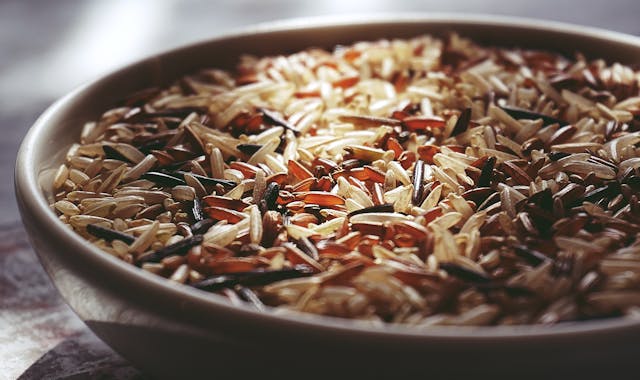
Rice is another affordable source of carbohydrates, the body’s main fuel source. Brown rice especially provides many key nutrients, including fiber, manganese, selenium, magnesium, and B vitamins. Rice is a staple in many different cuisines and can be used in a variety of dishes, including Spanish rice and beans, risotto, pilaf, fried rice, and paella. Plus, rice is a great base for build-your-own bowls. 

Oats 
Oats
Image Source: Pexels

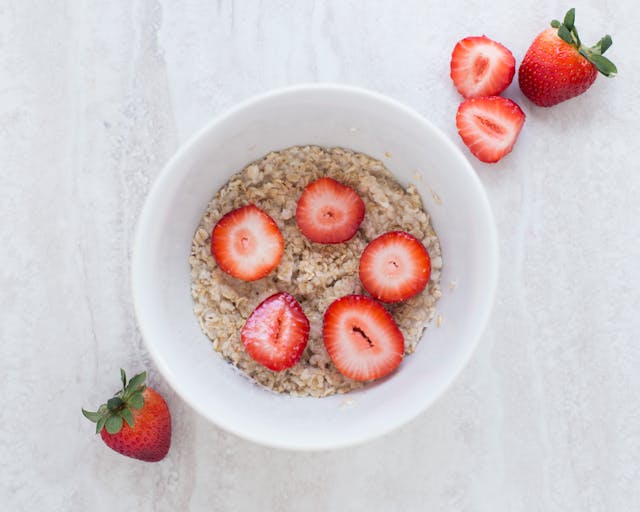
Oatmeal is the ultimate customizable breakfast and a great addition to any large family grocery list. You can make oatmeal with milk or water for lactose-intolerant family members. Each person can top their portion with their favorite add-ons, such as cinnamon sugar, fruit, peanut butter, and cocoa powder. You can even make a delicious oatmeal with ingredients like eggs, greens, and mushrooms. No matter how you prepare them, oats have roughly 10 grams of protein per 300-calorie serving, making them a nutritious way to start the day.

Bananas 

Bananas
Image Source: Pexels

Bananas are one of the best affordable snack foods for large families. Although grocery prices vary by region, bananas usually cost under a dollar a pound. Since they have a peel, they’re easy to throw in a bag and take to sports practice. Adding a few spoonfuls of peanut butter can turn a banana into a complete snack with protein, fiber, and vitamins like potassium and B6. Bananas can also be turned into protein pancake batter by mashing them with eggs and flour.

Spices 

Spices
Image Source: Pexels

The right spices can completely change the way foods taste, helping prevent food fatigue. For example, adding cajun seasoning to basic rice and beans can elevate them into a flavorful meal. Don’t be afraid to get creative and try new spices to expand your family’s palate. Ethnic grocery stores often have cheap bulk spices, allowing you to sample a variety of new flavors at an affordable price.

Cheese 

Cheese
Image Source: Pexels

There is no shortage of options when it comes to cheese. Sliced, shredded, or block; mild, stinky, or sweet. Cheese can be a filling snack or a satisfying addition to any meal, including salads, sandwiches, tacos, pizza, lasagna, and more. 
Cheese is not only delicious but also a great source of protein and calcium. Whether you have little kids with growing bones or adults and seniors starting to worry about brittle bones, the calcium in cheese can be a positive addition to your family’s diet.

Nut and Seed Butter

Nut butter
Image Source: Pexels

Everybody loves nut butter, which is a great source of protein, healthy fats, vitamins, and minerals. If someone in your family is allergic to peanut butter, they may be able to eat a different variety, such as cashew, almond, or sunflower butter. Nut butter can be spread on toast or fruit for an easy breakfast or snack. It’s also a great addition to many entrees like peanut noodles, satay chicken skewers, and peanut stew. Plus, nut butter can be added to yogurt, oatmeal, or smoothies for an extra protein boost.

Canned Tomatoes

Tomatoes
Image Source: Pexels

Canned goods are processed to preserve freshness and can be a great option in the winter when fresh, local produce isn’t readily available. Looking for low-sodium options can help reduce your family’s salt intake, preventing issues like high blood pressure down the line. 

Canned tomatoes are one of my favorite pantry staples for a large family grocery list due to the variety available. You can find them stewed, diced, crushed, fire-roasted, and even turned into salsa. This makes canned tomatoes perfect for a wide range of culinary applications, including soup, chili, enchiladas, casserole, stew, and more.

Popcorn

Popcorn
Image Source: Pexels

Popcorn is a classic movie snack, but did you know it can actually be healthy depending on how you prepare it? Popcorn is a whole grain that’s low in calories and high in fiber. However, you have to be careful when buying packaged or pre-popped popcorn, because they often contain extra oils, colors, and flavorings. 

Fortunately, it’s easy to pop your own at home in an air popper or pan on the stove, allowing you to control what goes in it. You only need a few dashes of salt or seasoning and a little oil spray or butter to make your popcorn delicious.

Flour

Flour
Image Source: Pexels

Flour is always on my large family grocery list because it can last up to 8 months and only costs about a dollar per pound. It’s a baking staple that comes in handy when making bread and desserts like cookies and cakes. Even if you aren’t much of a baker, flour can be used to make pancakes, thicken sauces and soups, or make drop dumplings for stew. 

What are your favorite items to add to a large family grocery list? Share your staples in the comments!

Vanessa Bermudez
Vanessa Bermudez
Vanessa Bermudez is a content writer with over eight years of experience crafting compelling content across a diverse range of niches. Throughout her career, she has tackled an array of subjects, from technology and finance to entertainment and lifestyle. In her spare time, she enjoys spending time with her husband and two kids. She’s also a proud fur mom to four gentle giant dogs.

Read More

  • 4 Simple Ways Your Family Can Save Money

    Saving money is important, regardless of the size of your family. This is because unforeseen…

  • When It's Time to Pause.
    When It's Time to Pause.

    It has been an extremely tiring week.  I had to work for 12 straight, full…

  • 5 Inexpensive Ways to Pay For Your Child's Braces

    Image source: Unsplash When your child’s dentist delivers the news—“They’re going to need braces”—it can…

  • 5 Strategies to Build a Healthy Relationship with Your Teenager
    5 Strategies to Build a Healthy Relationship with Your Teenager

    You’re in the process of hiring a contractor through Key Interiors, when you get a…

  • frugal busy parents
    3 Easy Ways Busy Parents Can Be More Frugal

    As a parent your to-do list can seem endless. Go to work. Drop the kids…

  • Heres What Your Childs Summer School Teacher Wish Youd Tell Them About Your Kid
    Here's What Your Child's Summer School Teacher Wish You'd Tell Them About Your Kid

    Summer school isn’t just about catching up—it’s about helping kids grow in a more relaxed,…

Filed Under: Healthy Living & Eating Tagged With: Food, Groceries, Saving Money

Leave a Reply Cancel reply

Your email address will not be published. Required fields are marked *

This site uses Akismet to reduce spam. Learn how your comment data is processed.

  • Facebook
  • Pinterest
  • RSS
  • Twitter
Best Parenting Blogs

Most Popular

Baby names

Teachers Admit: These 6 Baby Names Create Instant Bias in the Classroom

Latrice Perez
These Are 6 Baby Names Inspired by Vintage TV and Movies

6 Baby Names Inspired by Vintage TV and Movies

Brandon Marcus
6 Baby Names That Sound Cute Now but Cause Problems Later

6 Baby Names That Sound Cute Now but Cause Problems Later

Brandon Marcus
11 Ways Kids Are Outsmarting Parental Controls 1. Using Alternate Devices One common trick is simply turning to another device. If a child’s main phone or tablet is restricted, they may borrow a sibling’s, friend’s, or even a school laptop. This instantly gives them access to content outside of parental oversight. Parents often focus on one device, forgetting that others in the household can serve as loopholes. Knowing this tactic helps families tighten controls across all electronics. 2. Clearing Browsing Histories Many kids quickly learn that clearing browsing history hides evidence of restricted activity. With just a few clicks, they can erase any trace of websites visited. This makes it harder for parents to notice when rules are being broken. Parents may assume no history means no browsing, but the reality is often the opposite. Kids are outsmarting parental controls by making it seem like nothing happened at all. 3. Using Private Browsing Modes Most browsers offer “incognito” or private browsing features. Kids use this mode to access websites without leaving a record in the history. To parents checking later, everything looks clean and safe. This simple trick is often one of the first ways kids discover how to bypass restrictions. Conversations about private browsing can help close this gap. 4. Guessing or Resetting Passwords Children who are persistent may try to guess passwords to parental control apps or accounts. Others may find ways to reset them through email prompts or security questions. Once inside, they can disable restrictions entirely. Parents may not even realize controls have been altered until much later. Stronger, less predictable passwords can make this more difficult. 5. Using VPNs to Hide Activity Virtual private networks, or VPNs, let kids disguise their online locations. With one downloaded app, they can bypass geographic or parental restrictions. Some children learn about VPNs through friends or even social media. This makes it easy for them to reach content that should be blocked. Parents often underestimate just how simple it is for kids to use these tools. 6. Creating Fake Accounts When parents monitor social media, kids may create hidden accounts. These “finstas” or fake profiles allow them to interact freely without parental oversight. While their main account appears harmless, the secondary one tells a different story. Kids are outsmarting parental controls by playing both sides at once. Checking for duplicate accounts can help parents stay more aware. 7. Exploiting Time Zone Settings Some kids change the time zone on their devices to bypass screen time limits. This trick allows them to gain extra hours of usage undetected. Parents may assume controls are working, but in reality, the child is bending the clock. It’s a clever loophole that highlights just how resourceful kids can be. Monitoring device settings regularly can catch this tactic. 8. Disabling or Uninstalling Apps Parental control apps can be deleted or disabled with surprising ease. Some kids even reinstall them before a parent checks, making it seem like nothing changed. Others may simply restrict permissions to prevent apps from functioning properly. When apps aren’t monitored closely, parents may not notice they’ve been tampered with. This shows the importance of consistent follow-up. 9. Turning to Friends for Access If a child can’t get past restrictions on their own, they may rely on friends. Visiting a friend’s house or borrowing their phone can give them a free pass. Parents often forget that peer environments can override restrictions set at home. This kind of social workaround is especially common with gaming or social media. Open conversations about trust and responsibility are essential. 10. Hiding Apps in Plain Sight Kids sometimes download apps that look innocent but serve as gateways to hidden activity. These apps may disguise themselves as calculators or utilities. In reality, they allow file storage, private messaging, or browser access. Parents glancing at a home screen may overlook them entirely. Learning to recognize these disguised apps can help parents stay informed. 11. Outpacing Parents’ Tech Knowledge Finally, kids often know more about devices than their parents do. Whether through YouTube tutorials, TikTok hacks, or peer groups, they quickly learn advanced workarounds. This knowledge gap means controls can be bypassed before parents even realize the loophole exists. Staying informed and continually learning about new technology is the best defense. Kids are outsmarting parental controls because they adapt faster than most adults. The Real Solution Lies Beyond Restrictions While controls and filters are important, no system is perfect. Kids will always find creative ways around barriers, making communication the strongest safeguard. Setting clear expectations, building trust, and having ongoing conversations about online behavior matter more than apps alone. Parents who combine technology with open dialogue create a safer digital environment. The goal isn’t to win a battle of wits but to build a relationship that keeps kids both safe and honest. Do you think kids are outsmarting parental controls faster than parents can keep up? Share your experiences in the comments below. What to Read Next... 6 Parenting Tech Shortcuts That Can Expose Your Child to Strangers How Much Screen Time Is Too Much—Legally Speaking? Is Your Child’s School Quietly Tracking Their Location Without Your Consent? How Much Screen Time Is Quietly Reshaping Childhood Behavior? Why Some Parents Are Being Investigated Over Homeschooling Records

11 Ways Kids Are Outsmarting Parental Controls

Catherine Reed
Smiling grandfather holding a happy baby indoors.

Why Grandparents Shouldn’t Babysit Their Grandkids Every Week – The Unspoken Issue

Samantha

All content on Kids Ain’t Cheap is for entertainment purposes only. By reading this blog, you agree that Kids Ain’t Cheap is not responsible for any actions taken after reading this blog. For the full disclaimer, see our privacy policy.

Please note that Kids Ain’t Cheap has financial relationships with some of the merchants mentioned here. Kids Ain’t Cheap is funded by banner advertising, commission sales and search optimization consulting.

Copyright © 2006–2026 | District Media | All Rights Reserved | Privacy Policy

Copyright © 2026 Runway Pro Theme by Viva la Violette