• Home
  • About Us
  • Toolkit
  • Archives
  • Advertise
  • Privacy Policy

Kids Ain't Cheap

But They Sure Are Worth It

  • Parenting
    • Baby Stuff
    • Books and Reading
      • Aesops Fables
      • Comic Books
    • Education
    • Family Time
    • Green Living
    • Growing Up
    • Healthy Living & Eating
    • Holidays
    • Parenting
    • Random Musings
    • Shopping
    • Stuff to Do
  • Money
  • Product Reviews
    • Books and Magazines
    • Discount Sites
    • Furniture
    • House Keeping
    • Reviews News
    • Toys and Games
  • Contact Us
  • Our Editorial Commitment
  • Search

Phone-Free Schools Act: New Policies Limit Student Smartphone Use to Curb Distraction and Cyberbullying

July 2, 2026 | Leave a Comment

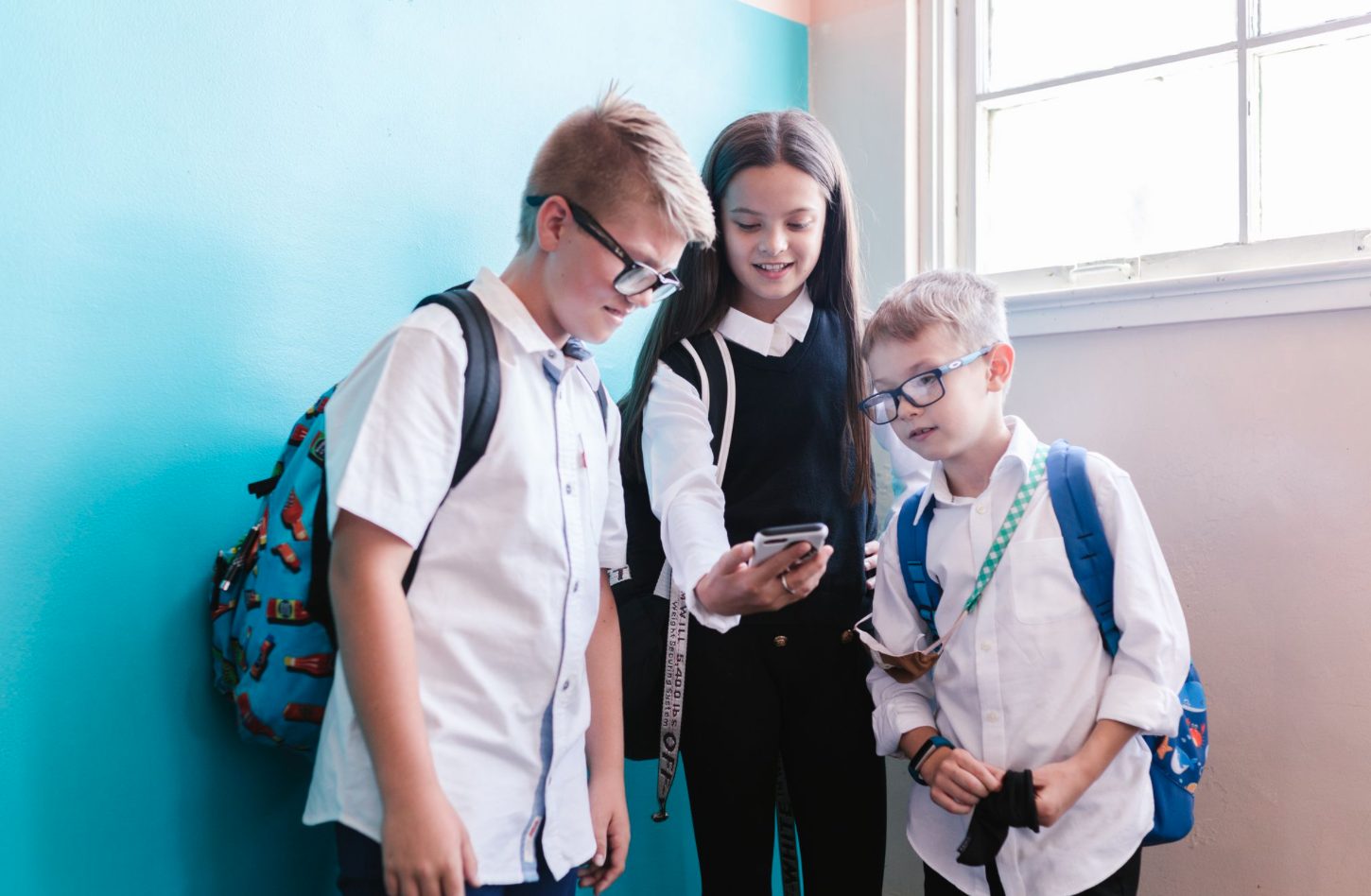
Kids Using Smartphone
Students are starting to place their smartphones in secure storage before class as schools adopt new phone-free policies designed to reduce distractions, improve focus, and help prevent cyberbullying during the school day. (Pexels).

Schools across the United States are tightening rules on student smartphone use as lawmakers and educators respond to growing concerns about classroom distractions, cyberbullying, and excessive screen time. Phone-free school policies have expanded rapidly over the past two years. According to a 2026 review, more than 35 states and Washington, D.C., have enacted or adopted statewide laws or policies restricting student cellphone use, while many others require districts to develop local policies.

While the exact rules vary by state and district, the shared goal is to help students stay focused while creating a safer learning environment. As families prepare for another school year, understanding these new expectations can help parents and students adjust more smoothly.

Why Phone-Free Schools Are Expanding Across the Country

The Phone-Free Schools Act reflects a nationwide shift toward reducing digital distractions in classrooms. More than 30 states now have statewide laws or policies requiring schools to restrict student cellphone use in some form, with several implementing bell-to-bell restrictions that keep phones out of reach throughout the school day.

When announcing New York’s statewide phone-free schools law, Governor Kathy Hochul said students “deserve distraction-free classrooms where they can focus on learning and building relationships,” describing the policy as an investment in both academic success and student well-being.

Early reports from districts that have adopted phone-free policies have found higher teacher satisfaction, less in-class phone use, and improved student engagement, although researchers continue studying long-term academic outcomes. One national review linked stricter policies with improved attendance and classroom focus while noting that evidence on test-score gains remains mixed.

Reducing Distractions While Addressing Cyberbullying

One of the biggest arguments supporting the Phone-Free Schools Act is its potential to reduce interruptions that pull students away from learning. A single phone notification can quickly derail attention, and repeated distractions throughout the day can make it difficult for students to absorb new information.

Limiting phone access also reduces opportunities for students to record classmates without permission or engage in online harassment during school hours. While cyberbullying does not disappear once students leave campus, restricting phone use during the day can reduce incidents that begin or escalate inside school buildings. Parents and educators often agree that classrooms should prioritize face-to-face learning over constant digital engagement.

What Parents and Students Should Expect

Most new policies do not completely prohibit students from bringing phones to school but instead regulate when they can be used. Many districts require phones to remain powered off inside backpacks or locked in specialized storage pouches until dismissal, while exceptions typically exist for medical needs or emergencies. Parents who worry about reaching their children should know that schools continue to provide communication through front offices and established emergency procedures. Students may initially find the adjustment challenging, especially if they are accustomed to checking notifications throughout the day. Over time, many schools report that students adapt quickly as phone-free routines become part of the daily schedule.

The Debate Over Whether Phone Bans Really Work

Not everyone agrees that the Phone-Free Schools Act is a complete solution to student learning challenges. Recent large-scale research has found that strict phone bans dramatically reduce classroom phone use but produce only modest improvements in standardized test scores. Researchers say the strongest benefits may be improved classroom attention, student well-being, and teacher satisfaction rather than immediate academic gains.

Other education experts argue that successful policies combine reasonable limits with digital citizenship lessons that teach students how to use technology responsibly. This balanced approach may better prepare students for life beyond school than relying on bans alone.

Even critics generally acknowledge that reducing unnecessary classroom distractions gives teachers more opportunities to focus on instruction rather than policing devices.

Finding the Right Balance Between Technology and Learning

Phone-free school policies are becoming a permanent part of the education landscape, but they’re only one piece of a larger conversation about technology and student well-being. While research continues to evaluate their long-term academic impact, many educators report calmer classrooms, fewer distractions, and more face-to-face interaction among students. As schools refine these policies, success will likely depend on combining reasonable phone restrictions with digital literacy, clear communication, and consistent expectations for students and families. The goal isn’t to eliminate technology—it’s to ensure it supports learning instead of competing with it.

Do you think the Phone-Free Schools Act will improve education, or should students have more flexibility? Share your thoughts and experiences in the comments below.

What to Read Next

How Your Child’s Cell Phone Could Now Ruin Them In School

7 Kids Apps That Can Silently Access Your Camera or Microphone

Should You Let Your Child Keep Their Smartphone Overnight?

Evan Morgan

Evan Morgan has been a full-time freelance writer and editor for 10+ years. When not working, he enjoys catching the latest true crime documentary or getting lost in a good book.

Read More

  • 8 Reasons to Move to Texas With Your Kids

    Texas's big spaces and mix of cultures give families who want to move there lots…

  • Why Are Single Moms Doing Better Than Ever 7 Reasons No One Talks About But Should
    Why Are Single Moms Doing Better Than Ever? 7 Reasons No One Talks About, But Should

    Single moms doing better in today’s world isn’t just a feel-good story—it’s a reality backed…

  • 4 Things New Parents Should Stay On Top Of

    When you become a parent, there are so many things that you are now responsible…

  • Girl Playing
    The SEED Act Victory: What Parents Should Know About the New 2026 Child Care Funding

    The rising cost of child care has been one of the most persistent challenges for…

  • Helping Family With Financial Problems
    Helping Family With Financial Problems

    Money issues can often become a family issue. When we were younger, my sister was…

  • Low-Cost After School Activities for Kids
    Low-Cost After School Activities for Kids

    More and more, parents are not content to let their kids stay home after school…

Filed Under: Education Tagged With: classroom distraction, Cyberbullying, digital wellness, education policy, K-12 education, Parenting, Phone-Free Schools Act, school cellphone ban, school safety, student smartphones

Leave a Reply Cancel reply

Your email address will not be published. Required fields are marked *

This site uses Akismet to reduce spam. Learn how your comment data is processed.

  • Facebook
  • Pinterest
  • RSS
  • Twitter
Best Parenting Blogs

Most Popular

Baby

9 Baby Names That Sound Expensive Even Though Naming Your Baby Is Still Free

Evan Morgan
Baby

The Rise of “Aggressive” Baby Names Is Raising Eyebrows — Here’s What Parents Are Choosing

Evan Morgan
Baby names

Teachers Admit: These 6 Baby Names Create Instant Bias in the Classroom

Latrice Perez
6 Baby Names That Sound Cute Now but Cause Problems Later

6 Baby Names That Sound Cute Now but Cause Problems Later

Brandon Marcus
11 Ways Kids Are Outsmarting Parental Controls 1. Using Alternate Devices One common trick is simply turning to another device. If a child’s main phone or tablet is restricted, they may borrow a sibling’s, friend’s, or even a school laptop. This instantly gives them access to content outside of parental oversight. Parents often focus on one device, forgetting that others in the household can serve as loopholes. Knowing this tactic helps families tighten controls across all electronics. 2. Clearing Browsing Histories Many kids quickly learn that clearing browsing history hides evidence of restricted activity. With just a few clicks, they can erase any trace of websites visited. This makes it harder for parents to notice when rules are being broken. Parents may assume no history means no browsing, but the reality is often the opposite. Kids are outsmarting parental controls by making it seem like nothing happened at all. 3. Using Private Browsing Modes Most browsers offer “incognito” or private browsing features. Kids use this mode to access websites without leaving a record in the history. To parents checking later, everything looks clean and safe. This simple trick is often one of the first ways kids discover how to bypass restrictions. Conversations about private browsing can help close this gap. 4. Guessing or Resetting Passwords Children who are persistent may try to guess passwords to parental control apps or accounts. Others may find ways to reset them through email prompts or security questions. Once inside, they can disable restrictions entirely. Parents may not even realize controls have been altered until much later. Stronger, less predictable passwords can make this more difficult. 5. Using VPNs to Hide Activity Virtual private networks, or VPNs, let kids disguise their online locations. With one downloaded app, they can bypass geographic or parental restrictions. Some children learn about VPNs through friends or even social media. This makes it easy for them to reach content that should be blocked. Parents often underestimate just how simple it is for kids to use these tools. 6. Creating Fake Accounts When parents monitor social media, kids may create hidden accounts. These “finstas” or fake profiles allow them to interact freely without parental oversight. While their main account appears harmless, the secondary one tells a different story. Kids are outsmarting parental controls by playing both sides at once. Checking for duplicate accounts can help parents stay more aware. 7. Exploiting Time Zone Settings Some kids change the time zone on their devices to bypass screen time limits. This trick allows them to gain extra hours of usage undetected. Parents may assume controls are working, but in reality, the child is bending the clock. It’s a clever loophole that highlights just how resourceful kids can be. Monitoring device settings regularly can catch this tactic. 8. Disabling or Uninstalling Apps Parental control apps can be deleted or disabled with surprising ease. Some kids even reinstall them before a parent checks, making it seem like nothing changed. Others may simply restrict permissions to prevent apps from functioning properly. When apps aren’t monitored closely, parents may not notice they’ve been tampered with. This shows the importance of consistent follow-up. 9. Turning to Friends for Access If a child can’t get past restrictions on their own, they may rely on friends. Visiting a friend’s house or borrowing their phone can give them a free pass. Parents often forget that peer environments can override restrictions set at home. This kind of social workaround is especially common with gaming or social media. Open conversations about trust and responsibility are essential. 10. Hiding Apps in Plain Sight Kids sometimes download apps that look innocent but serve as gateways to hidden activity. These apps may disguise themselves as calculators or utilities. In reality, they allow file storage, private messaging, or browser access. Parents glancing at a home screen may overlook them entirely. Learning to recognize these disguised apps can help parents stay informed. 11. Outpacing Parents’ Tech Knowledge Finally, kids often know more about devices than their parents do. Whether through YouTube tutorials, TikTok hacks, or peer groups, they quickly learn advanced workarounds. This knowledge gap means controls can be bypassed before parents even realize the loophole exists. Staying informed and continually learning about new technology is the best defense. Kids are outsmarting parental controls because they adapt faster than most adults. The Real Solution Lies Beyond Restrictions While controls and filters are important, no system is perfect. Kids will always find creative ways around barriers, making communication the strongest safeguard. Setting clear expectations, building trust, and having ongoing conversations about online behavior matter more than apps alone. Parents who combine technology with open dialogue create a safer digital environment. The goal isn’t to win a battle of wits but to build a relationship that keeps kids both safe and honest. Do you think kids are outsmarting parental controls faster than parents can keep up? Share your experiences in the comments below. What to Read Next... 6 Parenting Tech Shortcuts That Can Expose Your Child to Strangers How Much Screen Time Is Too Much—Legally Speaking? Is Your Child’s School Quietly Tracking Their Location Without Your Consent? How Much Screen Time Is Quietly Reshaping Childhood Behavior? Why Some Parents Are Being Investigated Over Homeschooling Records

11 Ways Kids Are Outsmarting Parental Controls

Catherine Reed

All content on Kids Ain’t Cheap is for entertainment purposes only. By reading this blog, you agree that Kids Ain’t Cheap is not responsible for any actions taken after reading this blog. For the full disclaimer, see our privacy policy.

Please note that Kids Ain’t Cheap has financial relationships with some of the merchants mentioned here. Kids Ain’t Cheap is funded by banner advertising, commission sales and search optimization consulting.

Copyright © 2006–2026 | District Media | All Rights Reserved | Privacy Policy

Copyright © 2026 Runway Pro Theme by Viva la Violette