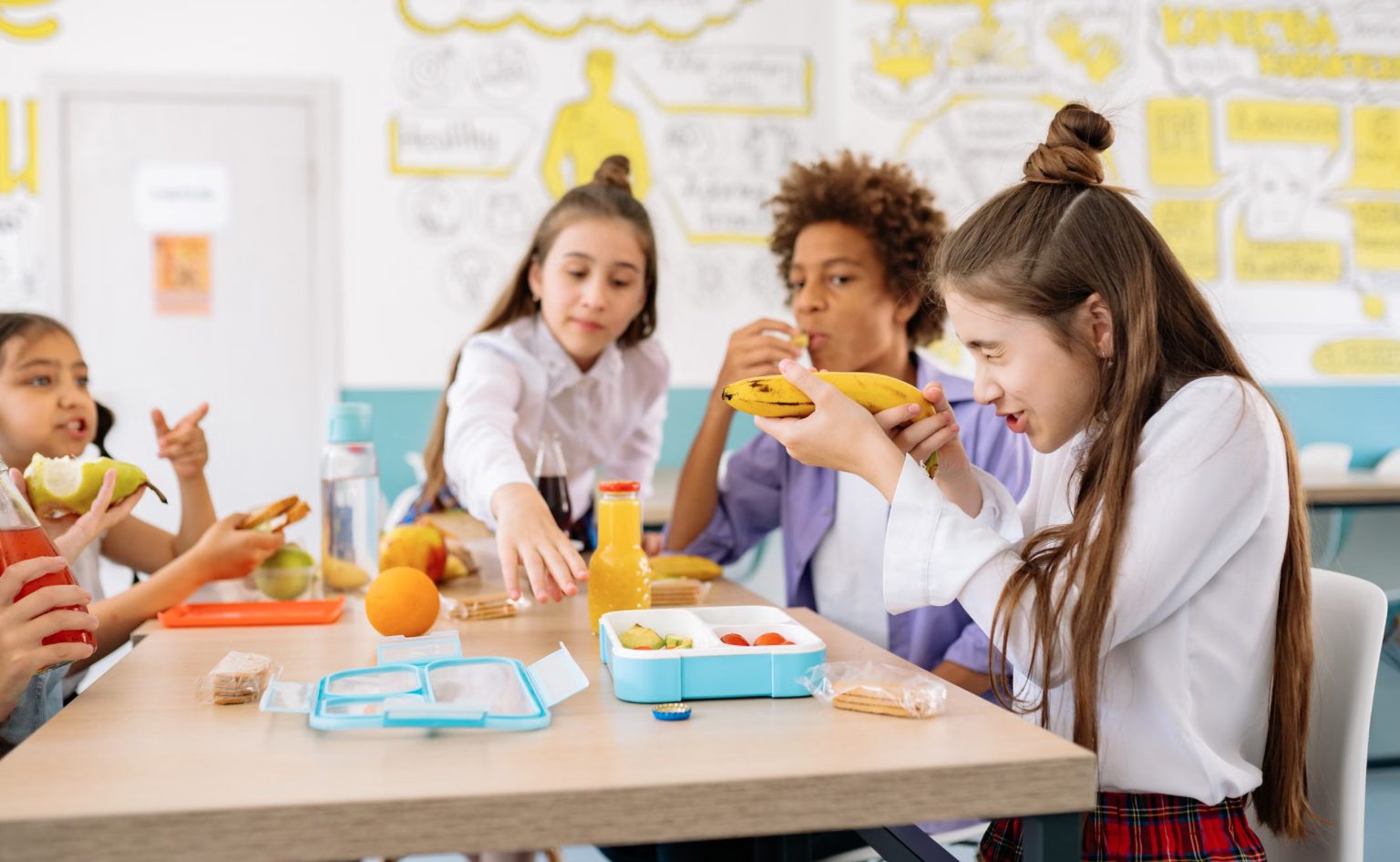
For years, packing a child’s lunch has felt like the obvious money-saving alternative to paying the cafeteria every day. In 2026, however, higher grocery prices and the growing popularity of individually packaged snacks have complicated that assumption. Depending on what goes into the lunchbox, the school lunch cost can actually be considerably lower than what parents spend assembling lunch at home. The biggest surprise is that even a basic homemade lunch may not beat the cafeteria once families calculate the cost per serving instead of simply looking at the grocery receipt.
The 2026 Numbers Favor The Cafeteria
A 2026 analysis from Deloitte estimates the average packed lunch at $6.33 per day, up 2% from the previous year, while the average cafeteria lunch costs about $3.15. Even Deloitte’s least expensive packed option, a classic peanut butter-and-jelly-style lunch, came to $4.89, while its more contemporary lunch reached $7.49. Separately, the School Nutrition Association reported typical 2025-26 paid lunch prices of $3 for elementary students, $3.20 for middle schoolers and $3.25 for high schoolers. Those numbers make the school lunch cost surprisingly competitive with groceries, particularly when parents rely on single-serving drinks, snack packs or prepared foods. Of course, local prices vary, so parents should check their district’s current menu and meal price before assuming either choice is cheaper.
A Small Daily Difference Becomes Hundreds Of Dollars
Consider a child attending school for roughly 180 days and compare Deloitte’s $6.33 packed-lunch estimate with its $3.15 cafeteria figure. At those prices, packed lunches would total about $1,139 for the school year, compared with approximately $567 in cafeteria charges—a difference of roughly $572 per child. For two children, the gap could exceed $1,140, showing why a seemingly minor daily difference deserves attention in a household budget. Even using Deloitte’s $4.89 PB&J-style lunch would cost about $880 over 180 days, roughly $313 more than the $3.15 cafeteria benchmark. Your actual school lunch cost could be higher or lower, but multiplying the daily price by the number of school days gives families a much clearer comparison than guessing at weekly grocery spending.
Free Meals Can Completely Change The Calculation
Before buying another month’s worth of lunchbox supplies, parents should verify whether their children can receive meals at no charge. The Food Research & Action Center reports that 55,362 schools used the Community Eligibility Provision during the 2025-26 school year, allowing 27.6 million children attending those schools to receive breakfast and lunch without charge. Additionally, research published in Nutrients identified nine states with enacted universal school-meal laws as of the end of 2025: California, Colorado, Maine, Massachusetts, Michigan, Minnesota, New Mexico, New York and Vermont. Eligibility and implementation can vary, making it important to check the rules at your child’s specific school rather than assuming your household earns too much to benefit. For a student receiving lunch at no charge, the out-of-pocket school lunch cost is effectively zero, making cafeteria meals extremely difficult for a packed lunch to beat financially.
Smart Families Can Use Both Options
The best money-saving strategy does not have to mean choosing cafeteria meals or packed lunches exclusively for the entire year. Review the school menu each week, identify meals your child enjoys and pack lunch on days when the cafeteria choices are unlikely to get eaten. For homemade lunches, buying larger containers of yogurt, crackers or snacks and portioning them into reusable containers can reduce the premium attached to individual packages. Leftovers can also lower packed-lunch expenses, provided they can be stored safely and your child has an appropriate way to keep hot foods hot and cold foods cold. Finally, compare the school lunch cost every semester because cafeteria prices, grocery prices and your child’s eating habits can all change.
The Real Winner Depends On What Lands In The Trash
For many families paying full price in 2026, the numbers suggest cafeteria lunch can cost less than a typical packed lunch, but averages cannot decide what works for every child. KPRC 2 Click2Houston recently illustrated that local differences matter, reporting cafeteria prices ranging from $2.75 at certain Katy-area elementary schools to $4 at non-CEP Houston ISD campuses. Before deciding, calculate your child’s cafeteria price, determine whether free or reduced-cost meals are available, and divide the actual cost of lunchbox groceries by the number of lunches those groceries produce. Then factor in the food that routinely comes home untouched, because reducing waste can matter almost as much as finding a lower sticker price.
Which costs your family less in 2026—packing lunch or buying it at school, and has the answer changed as grocery prices have risen? Share your experience in the comments.
What to Read Next
7 School Lunch Payment Fees Quietly Raising Parents’ Costs
Teachers Beg Parents: Stop Buying These 7 High-Sugar Snacks for School Lunches
The Lunchbox Items Kids Are Most Likely to Bring Home Uneaten

Evan Morgan has been a full-time freelance writer and editor for 10+ years. When not working, he enjoys catching the latest true crime documentary or getting lost in a good book.
Read More
Did you know that Polyvinyl alcohol or PVA is a great product to have in…

At some point, every child starts to wonder what it really means to grow up,…
Surviving on a low income can be difficult, especially if you have family members who…

A child trust fund isn't just for the Rockefellers and the Rothschilds of the world.…


If your kid can break it, they will—and they’ll do it faster than the warranty…

Achieving financial independence is a goal that many aspire to but often find challenging to…


Leave a Reply