
• Home
  • About Us
  • Toolkit
  • Archives
  • Advertise
  • Privacy Policy

Kids Ain't Cheap

But They Sure Are Worth It

  • Parenting
    • Baby Stuff
    • Books and Reading
      • Aesops Fables
      • Comic Books
    • Education
    • Family Time
    • Green Living
    • Growing Up
    • Healthy Living & Eating
    • Holidays
    • Parenting
    • Random Musings
    • Shopping
    • Stuff to Do
  • Money
  • Product Reviews
    • Books and Magazines
    • Discount Sites
    • Furniture
    • House Keeping
    • Reviews News
    • Toys and Games
  • Contact Us
  • Our Editorial Commitment
  • Search

10 Unspoken Rules Every Multigenerational Household Has

April 17, 2025 | Leave a Comment

Image Source: Unsplash

Multigenerational households are on the rise—and for good reason. They offer emotional closeness, practical help with childcare, and shared financial responsibilities.

Beyond challenges like the ability to get children and the elderly on insurance plans, multigenerational households also face communication issues at times, and that’s why it’s so important to have boundaries and guidelines for interacting with one another.

As heartwarming as it can be to live with extended family, there are also unspoken rules that shape the way everyone coexists. Understanding those dynamics can help everyone breathe a little easier.

1. Respect Different Parenting Styles

When several generations live together, at least two approaches to parenting will collide. Talking through expectations early—and listening to each other—prevents daily friction. Studies find that acknowledging different styles while maintaining consistency for kids is crucial for harmony in intergenerational homes.

Sit down within the first week of living together and trade notes on non‑negotiables (discipline, food rules, screen time). Keep the tone curious—“Tell me more about why bedtime feels important to you.” When clashes arise later, you can reference this conversation instead of reacting in the moment.

Post a one‑page “family agreement” on the fridge as a gentle reminder of shared goals and the kids’ need for consistency.

2. Privacy Matters More Than You Think

Even in a loving, close‑knit residence, privacy is a form of respect. Simple agreements—like knocking before entering bedrooms or setting quiet hours—preserve everyone’s well‑being.

Agree on literal “do‑not‑disturb” zones: bedrooms, work nooks, and bathrooms. Add a visual cue such as a small sign or a closed‑door policy during certain hours. Encourage headphones for calls and designate a single, centralized spot for loud play or TV. Privacy isn’t withdrawal—it’s fuel for positive interaction when everyone reconvenes.

3. Shared Expenses Should Be Discussed, Not Assumed

From utilities to groceries, cost‑sharing can be a huge advantage, but only if expectations are clear. Transparent money talks are a key predictor of reduced conflict in multigenerational living.

Hold a monthly 20‑minute budget huddle. Itemize major costs (rent/mortgage, groceries, childcare) and assign owners or percentages right then—no lingering “we’ll figure it out later.” Use a shared spreadsheet or expense‑tracking app so every adult can see running totals in real time.

Clear, written agreements minimize resentment and make it easier to adjust when someone’s circumstances change.

4. Leave Room for Conflicting Values

Political, spiritual, or lifestyle differences will surface. Focusing on shared values—such as love for the children—helps bridge gaps.

Instead of debating the latest headline, anchor conversations in mutual care for the children. Swap “You’re wrong about…” with “How can we model respect for the kids when we disagree?”

Create a family reading list, movie night, or volunteer outing that highlights universal values—kindness, service, gratitude—so ideological gaps feel smaller.

5. Don’t Undervalue the Power of Emotional Support

Give grandparents or relatives a regular “connection gig” (story time, afternoon walk, Friday pancake breakfast). This predictable role lets kids build a tight bond and gives parents breathing room. In turn, elders feel seen and purposeful—which research shows boosts their mental health, too.
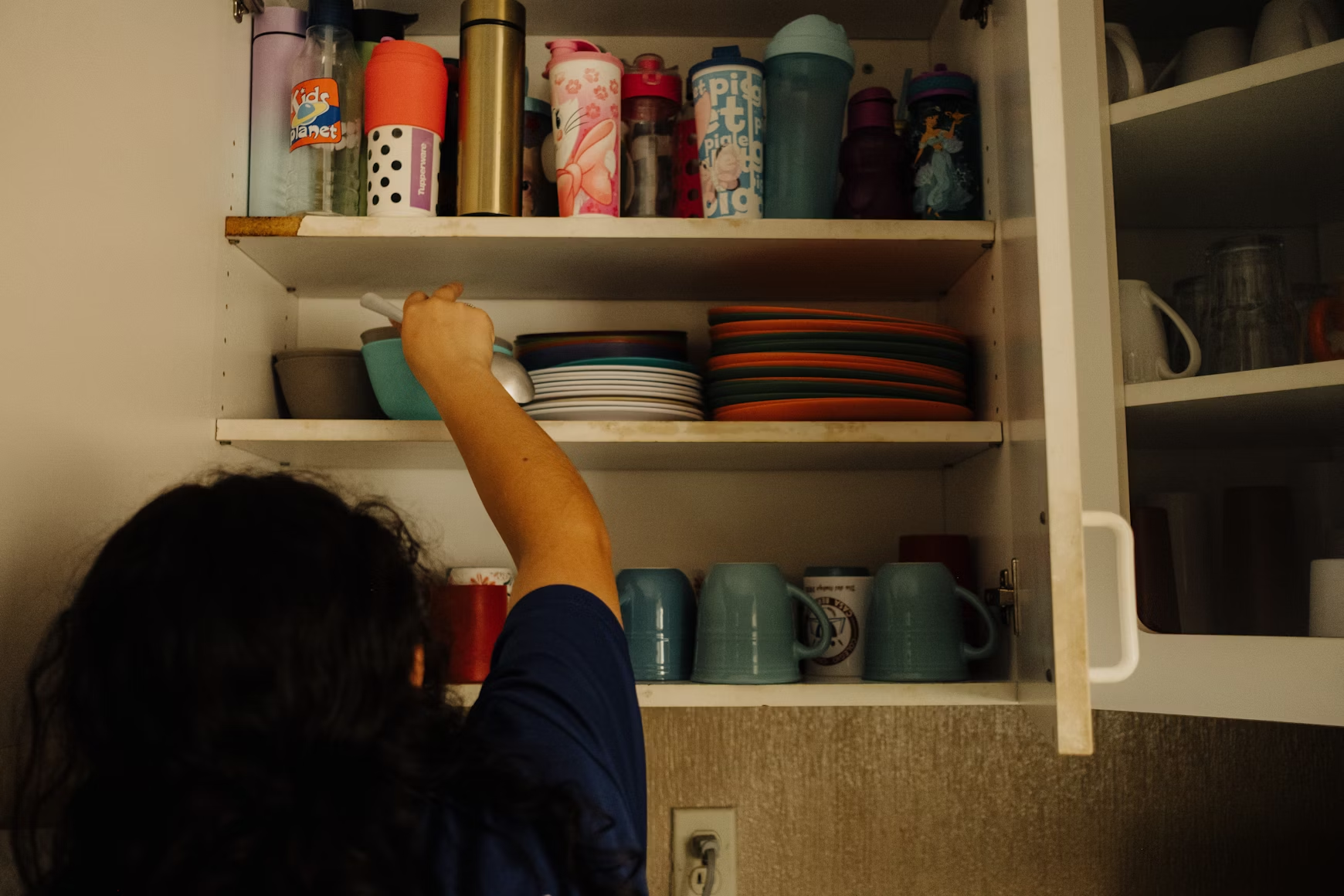
helping with chores at home
Image Source: Unsplash

6. Everyone Needs to Feel Useful

No matter their age, each family member wants to contribute. Small roles—like cooking, tutoring, or gardening—build respect across age lines.

Hold a quick Sunday “role‑roulette.” Let each person choose or swap a task—grandpa trims basil, teens handle grocery pickup, younger kids feed the dog. Rotate roles every month so chores stay fresh and no one feels pigeon‑holed. Publicly thank each contributor during dinner to reinforce dignity and teamwork.

7. Keep Communication Clear and Daily

Regular check‑ins (a group text or post‑dinner recap) stop small misunderstandings from snowballing.

Start a shared group chat (or dry‑erase board) for quick updates—“Soccer practice ends at 6,” “Grandma resting, please keep hallway quiet.” Follow up with a five‑minute after‑dinner roundtable where everyone shares one win and one need. This ritual normalizes speaking up before frustrations calcify.

8. Recognize Parenting Is Still the Parents’ Job

Extra adults can assist, but parents make the final call on bedtime, discipline, and routines. Respecting this boundary keeps relationships healthy.

Create a code phrase—“Parent call”—that signals Mom or Dad is stepping in. Relatives can still suggest ideas, but the parents’ decision stands. When boundaries blur, revisit the mantra: support is helpful; overriding is harmful. Clear lines preserve authority and keep gratitude flowing both ways.

9. Kids Thrive on Routine—Even in a Busy House

Shared living is lively, yet consistent bedtimes, homework slots, and screen limits act as anchors for children’s sense of security.

Post a simple picture schedule for younger kids and a written one for older siblings (wake‑up, meals, homework, screen‑off, lights‑out). Use smartphone alarms to cue transitions so adults don’t have to play time‑cop. Routines also cue visitors: when Nana sees the 8 p.m. “quiet wind‑down,” she’ll know it’s not the best time for spontaneous karaoke.

10. Laughter Is Essential

Humor lightens the mood, diffuses tension, and strengthens bonds. If you can laugh together, you’ll weather the messier parts of shared living—and maybe even thrive.

Start a weekly “family funny” tradition: share a joke at dinner, re‑enact a silly moment, or watch a short comedy clip together. Keep a communal jar for comic strips and kid‑drawn cartoons. Humor acts as social glue—when tempers flare, a shared laugh reminds everyone they’re on the same team.

Finding Harmony in the Chaos

Successful multigenerational homes don’t avoid challenges; they commit to working through them together with clarity, compassion, and flexibility. Which of these unspoken rules rings true in your household?

Read More

  • 8 Things Grandparents Wish Their Grandkids Wanted to Do With Them
  • The Silent Burnout Epidemic Among Stay-at-Home Parents

Samantha Warren
Samantha

Samantha Warren is a holistic marketing strategist with 8+ years of experience partnering with startups, Fortune 500 companies, and everything in between. With an entrepreneurial mindset, she excels at shaping brand narratives through data-driven, creative content. When she’s not working, Samantha loves to travel and draws inspiration from her trips to Thailand, Spain, Costa Rica, and beyond.

Read More

  • How to Promote and Encourage Your Child's Hobbies and Passions
    How to Promote and Encourage Your Child's Hobbies and Passions

    One of the many ways we can show love to our children is to encourage…

  • 10 Subscription Boxes That Promise Growth but Cost More Than You Think
    10 Subscription Boxes That Promise Growth but Cost More Than You Think

    From baby toys to teen science kits, subscription boxes promise growth, learning, and convenience in…

  • These Are 5 Ways Schools Are Secretly Shifting Costs to Parents in 2026
    5 Ways Schools Are Secretly Shifting Costs to Parents in 2026

    Schools in 2026 are operating in a financial squeeze, and instead of trimming budgets in…

  • school fundraisers
    The 7 School Fundraisers That Quietly Cost Parents the Most (And What to Skip)

    It starts with a glossy catalog or an enthusiastic email from the PTA promising a…

  • Why Your Family Absolutely Needs an Emergency Fund
    Why Your Family Absolutely Needs an Emergency Fund

    If you don't already have one I'm here to tell you why you, especially with …

  • Beatuful ginger mother playing with daughter. Little girl sitting on a bed at home. A young mother clinging to a daughter of hair
    8 Babysitter Safety Tips Every Parent Wishes They Knew Sooner

    Image Source: 123rf.com Hiring a babysitter should bring peace of mind, not added stress. But…

Filed Under: Parenting Tagged With: emotional support, family dynamics, household boundaries, multigenerational living, parenting advice, parenting styles, shared living

Leave a Reply Cancel reply

Your email address will not be published. Required fields are marked *

This site uses Akismet to reduce spam. Learn how your comment data is processed.

  • Facebook
  • Pinterest
  • RSS
  • Twitter
Best Parenting Blogs

Most Popular

Baby

9 Baby Names That Sound Expensive Even Though Naming Your Baby Is Still Free

Evan Morgan
Baby

The Rise of “Aggressive” Baby Names Is Raising Eyebrows — Here’s What Parents Are Choosing

Evan Morgan
Baby names

Teachers Admit: These 6 Baby Names Create Instant Bias in the Classroom

Latrice Perez
6 Baby Names That Sound Cute Now but Cause Problems Later

6 Baby Names That Sound Cute Now but Cause Problems Later

Brandon Marcus
11 Ways Kids Are Outsmarting Parental Controls 1. Using Alternate Devices One common trick is simply turning to another device. If a child’s main phone or tablet is restricted, they may borrow a sibling’s, friend’s, or even a school laptop. This instantly gives them access to content outside of parental oversight. Parents often focus on one device, forgetting that others in the household can serve as loopholes. Knowing this tactic helps families tighten controls across all electronics. 2. Clearing Browsing Histories Many kids quickly learn that clearing browsing history hides evidence of restricted activity. With just a few clicks, they can erase any trace of websites visited. This makes it harder for parents to notice when rules are being broken. Parents may assume no history means no browsing, but the reality is often the opposite. Kids are outsmarting parental controls by making it seem like nothing happened at all. 3. Using Private Browsing Modes Most browsers offer “incognito” or private browsing features. Kids use this mode to access websites without leaving a record in the history. To parents checking later, everything looks clean and safe. This simple trick is often one of the first ways kids discover how to bypass restrictions. Conversations about private browsing can help close this gap. 4. Guessing or Resetting Passwords Children who are persistent may try to guess passwords to parental control apps or accounts. Others may find ways to reset them through email prompts or security questions. Once inside, they can disable restrictions entirely. Parents may not even realize controls have been altered until much later. Stronger, less predictable passwords can make this more difficult. 5. Using VPNs to Hide Activity Virtual private networks, or VPNs, let kids disguise their online locations. With one downloaded app, they can bypass geographic or parental restrictions. Some children learn about VPNs through friends or even social media. This makes it easy for them to reach content that should be blocked. Parents often underestimate just how simple it is for kids to use these tools. 6. Creating Fake Accounts When parents monitor social media, kids may create hidden accounts. These “finstas” or fake profiles allow them to interact freely without parental oversight. While their main account appears harmless, the secondary one tells a different story. Kids are outsmarting parental controls by playing both sides at once. Checking for duplicate accounts can help parents stay more aware. 7. Exploiting Time Zone Settings Some kids change the time zone on their devices to bypass screen time limits. This trick allows them to gain extra hours of usage undetected. Parents may assume controls are working, but in reality, the child is bending the clock. It’s a clever loophole that highlights just how resourceful kids can be. Monitoring device settings regularly can catch this tactic. 8. Disabling or Uninstalling Apps Parental control apps can be deleted or disabled with surprising ease. Some kids even reinstall them before a parent checks, making it seem like nothing changed. Others may simply restrict permissions to prevent apps from functioning properly. When apps aren’t monitored closely, parents may not notice they’ve been tampered with. This shows the importance of consistent follow-up. 9. Turning to Friends for Access If a child can’t get past restrictions on their own, they may rely on friends. Visiting a friend’s house or borrowing their phone can give them a free pass. Parents often forget that peer environments can override restrictions set at home. This kind of social workaround is especially common with gaming or social media. Open conversations about trust and responsibility are essential. 10. Hiding Apps in Plain Sight Kids sometimes download apps that look innocent but serve as gateways to hidden activity. These apps may disguise themselves as calculators or utilities. In reality, they allow file storage, private messaging, or browser access. Parents glancing at a home screen may overlook them entirely. Learning to recognize these disguised apps can help parents stay informed. 11. Outpacing Parents’ Tech Knowledge Finally, kids often know more about devices than their parents do. Whether through YouTube tutorials, TikTok hacks, or peer groups, they quickly learn advanced workarounds. This knowledge gap means controls can be bypassed before parents even realize the loophole exists. Staying informed and continually learning about new technology is the best defense. Kids are outsmarting parental controls because they adapt faster than most adults. The Real Solution Lies Beyond Restrictions While controls and filters are important, no system is perfect. Kids will always find creative ways around barriers, making communication the strongest safeguard. Setting clear expectations, building trust, and having ongoing conversations about online behavior matter more than apps alone. Parents who combine technology with open dialogue create a safer digital environment. The goal isn’t to win a battle of wits but to build a relationship that keeps kids both safe and honest. Do you think kids are outsmarting parental controls faster than parents can keep up? Share your experiences in the comments below. What to Read Next... 6 Parenting Tech Shortcuts That Can Expose Your Child to Strangers How Much Screen Time Is Too Much—Legally Speaking? Is Your Child’s School Quietly Tracking Their Location Without Your Consent? How Much Screen Time Is Quietly Reshaping Childhood Behavior? Why Some Parents Are Being Investigated Over Homeschooling Records

11 Ways Kids Are Outsmarting Parental Controls

Catherine Reed

All content on Kids Ain’t Cheap is for entertainment purposes only. By reading this blog, you agree that Kids Ain’t Cheap is not responsible for any actions taken after reading this blog. For the full disclaimer, see our privacy policy.

Please note that Kids Ain’t Cheap has financial relationships with some of the merchants mentioned here. Kids Ain’t Cheap is funded by banner advertising, commission sales and search optimization consulting.

Copyright © 2006–2026 | District Media | All Rights Reserved | Privacy Policy

Copyright © 2026 Runway Pro Theme by Viva la Violette