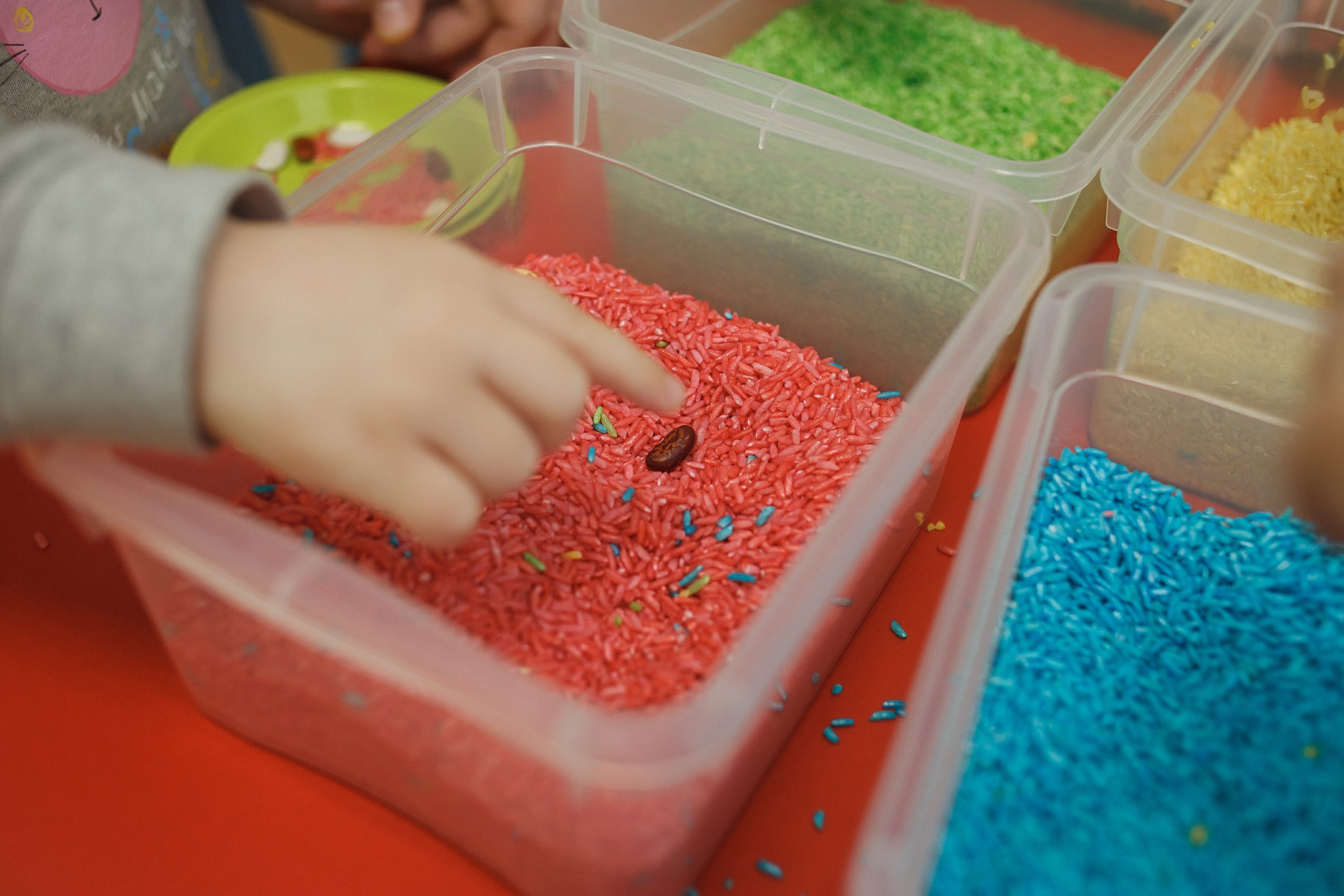
Creating colorful rice for sensory bins is a fun and easy activity that can enhance your child’s sensory play experience. Dyeing rice is a simple process that involves a few household ingredients, and it results in vibrant, tactile play materials that children will love. Here’s a step-by-step guide to help you dye rice for sensory bins.
Gather Your Supplies
Before you begin, gather all the necessary supplies. You will need uncooked white rice, food coloring, white vinegar or rubbing alcohol, ziplock bags or containers, and a baking sheet or large tray for drying. These items are readily available and make the process smooth and efficient.
Measure the Rice
Decide how much rice you want to dye and measure it out. A good starting point is one cup of rice per color, but you can adjust this amount based on your needs. Place the measured rice into ziplock bags or containers, one for each color you plan to make.
Add Color and Vinegar
Add a few drops of food coloring to each bag or container of rice. The amount of food coloring depends on the desired intensity of the color. Add one teaspoon of white vinegar or rubbing alcohol to help distribute the color evenly and ensure it adheres to the rice. Seal the bag or container and shake it well until the rice is evenly coated with the color.
Let the Rice Dry
Once the rice is evenly colored, spread it out on a baking sheet or large tray to dry. Spread the rice in a single layer to allow it to dry completely. This process can take a few hours to overnight, depending on the humidity and temperature of your environment. Stir the rice occasionally to ensure even drying and prevent clumping.
Store the Colored Rice
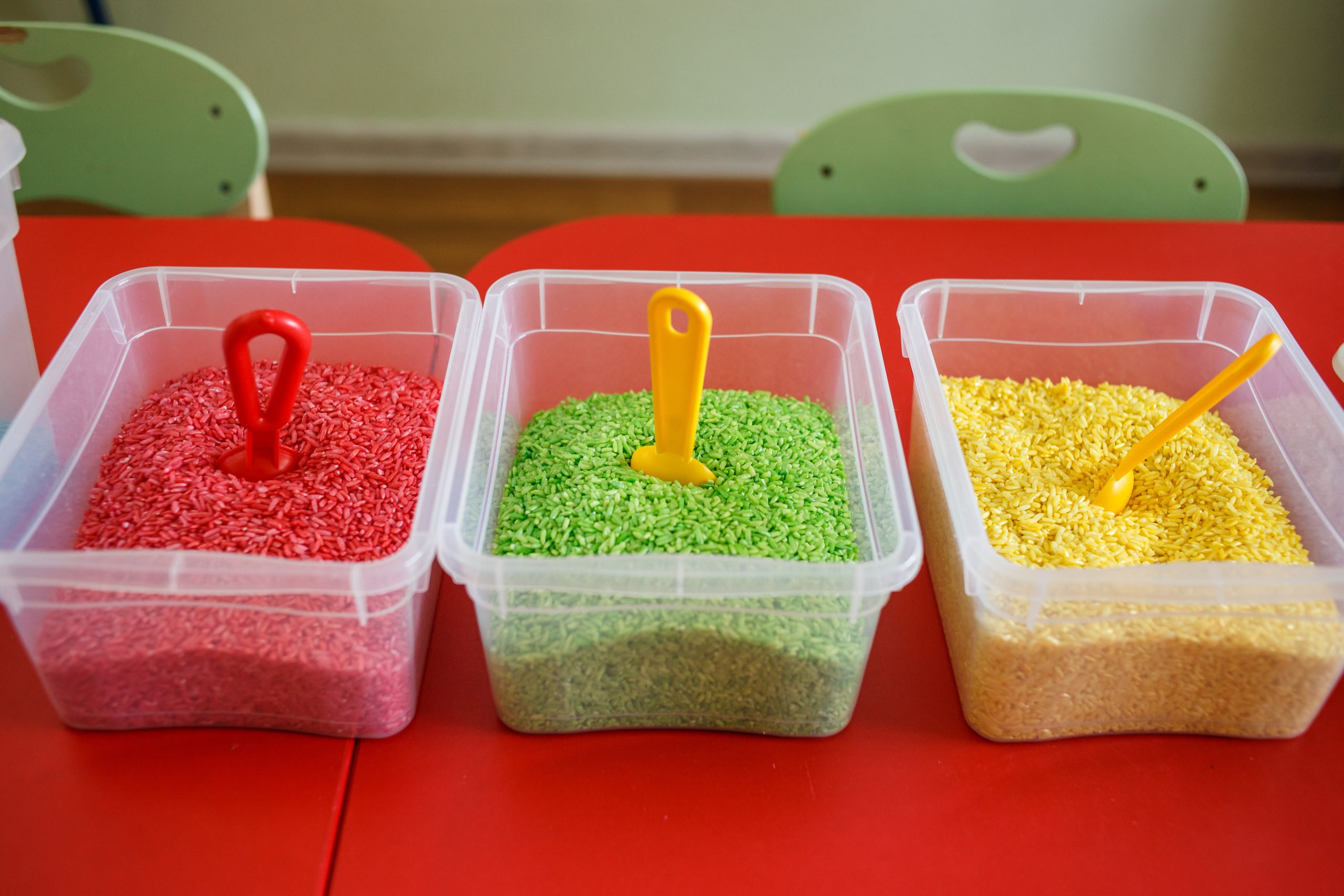
After the rice is completely dry, store it in airtight containers or ziplock bags until you are ready to use it. Properly stored dyed rice can last for several months, providing endless fun for sensory play. Ensure the containers are labeled with the color and date for easy identification.
Incorporate into Sensory Bins
Now that you have your colorful rice, it’s time to incorporate it into sensory bins. Fill a large bin or tray with the dyed rice and add various scoops, funnels, and toys to enhance the sensory experience. Encourage your child to explore the textures and colors, which can help develop fine motor skills and creativity.
Experiment with Colors and Scents
To add an extra dimension to your sensory bins, experiment with mixing colors to create new shades or adding scents to the rice. A few drops of essential oils can add a pleasant aroma, making the sensory experience even more engaging. Just be sure to use child-safe, non-toxic scents.
Encourage Creative Play
Encourage your child to use their imagination while playing with the dyed rice. They can create patterns, bury and find small toys, or practice counting and sorting by color. Sensory bins provide endless opportunities for creative and educational play.
Cleaning Up
Clean-up is straightforward. Store the rice back in its containers for future use, and vacuum or sweep up any stray grains. The colored rice is reusable, making it an economical and sustainable choice for sensory play activities.
Enjoy the Benefits of Sensory Play
Dyeing rice for sensory bins is a fun and rewarding activity that enhances your child’s playtime. By following these simple steps, you can create vibrant and engaging sensory materials that promote creativity, fine motor skills, and sensory development. Enjoy the process and watch your child’s imagination soar.

Latrice is a dedicated professional with a rich background in social work, complemented by an Associate Degree in the field. Her journey has been uniquely shaped by the rewarding experience of being a stay-at-home mom to her two children, aged 13 and 5. This role has not only been a testament to her commitment to family but has also provided her with invaluable life lessons and insights. As a mother, Latrice has embraced the opportunity to educate her children on essential life skills, with a special focus on financial literacy.
