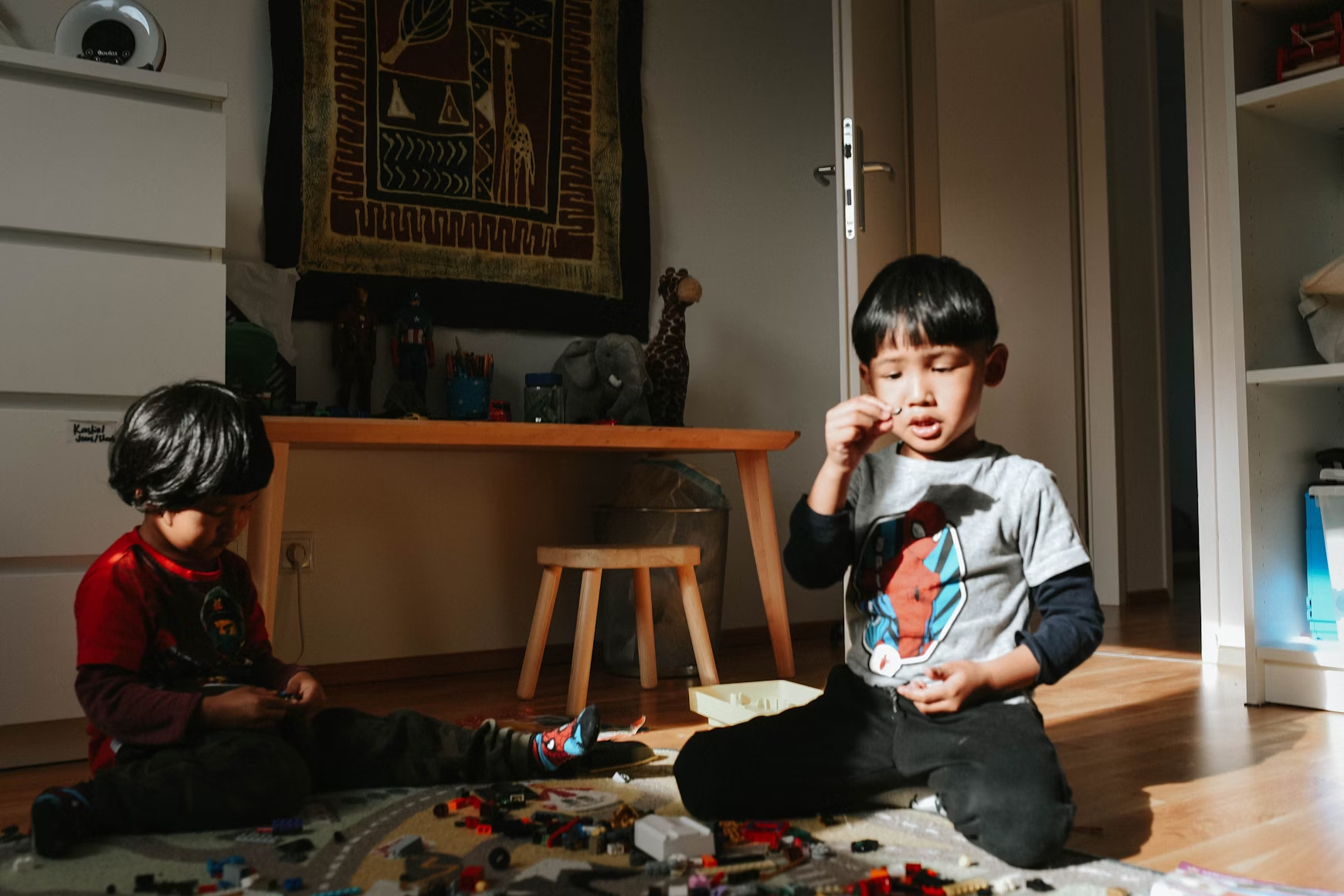
We’ve all done it—laughed off our child’s wild energy, blamed a meltdown on too much sugar, or explained away nonstop movement with a shrug and a “they’re just high-energy.” And sometimes, that’s absolutely true. But there’s a point where the chaos stops being typical—and starts being a cry for help.
The truth is, some kids are naturally more spirited. But others are struggling underneath that energy, reacting to a brain or body that isn’t quite in sync with the world around them. And the signs that something deeper is going on? They’re often easy to miss—or easy to excuse.
If you’ve ever wondered whether your child’s “hyper” behavior might actually be a red flag, here’s what to look for.
They Can’t Seem to Turn “Off”
All kids get the zoomies. But when your child truly can’t stop, even when asked, even when it’s dangerous, even when they’re visibly exhausted, that’s not just energy. It’s dysregulation. You may notice they’re constantly moving: running into things, climbing what shouldn’t be climbed, even injuring themselves without seeming to care. These kids aren’t ignoring the rules. Their brains are struggling to process boundaries, danger, and self-control.
You might see teachers getting frustrated. Other parents might stop inviting your child over. And while everyone else assumes they’re “just wild,” you’re starting to wonder why your child seems compelled to keep going, no matter the consequences.
Emotional Reactions Seem Way Bigger Than the Situation
If your child falls apart over a broken cookie or the wrong color cup, you might be tempted to label it as drama. But for some kids, a small change in their environment can trigger a huge emotional surge. These aren’t tantrums designed to manipulate. They’re emotional explosions caused by a nervous system that feels overwhelmed.
Transitions can be especially tough. Leaving the house, starting bedtime, or switching from one activity to another might send them into full-blown panic. You’re not dealing with a power struggle. You’re witnessing real distress. And that’s a cue to look deeper.
They Struggle to Play Alone or Focus on Anything
Many children enjoy attention, but if your child can’t play alone, even for a few minutes, it might be more than clinginess. You may notice they bounce from one activity to another, unable to stay with anything. They constantly ask you what to do, get frustrated quickly, and rely on you to guide every step.
This level of dependence can be a sign of executive functioning challenges. These kids aren’t lazy or spoiled. They may truly have a hard time figuring out where to start, what to do next, or how to stay with something long enough to enjoy it.

Nothing Seems to “Work” to Rein in Behavior
You’ve read the parenting books. You’ve tried time-outs, rewards, and logical consequences. Maybe even gentle parenting or a more rigid structure. And nothing seems to stick.
That doesn’t mean you’re failing. It often means your child needs a different approach—one tailored to how their brain works. Kids with ADHD, sensory processing difficulties, or undiagnosed anxiety don’t respond to discipline in the typical way. Their behavior isn’t defiance. It’s communication. When everything feels too loud, too fast, or too confusing, the result is often misbehavior that’s really just a cry for support.
They Know They’re Different, And It Hurts
One of the most heartbreaking signs that something deeper is going on is when your child starts saying things like, “Nobody likes me” or “I always mess up.” These kids notice when they get in trouble more than others, when they’re left out of birthday parties, or when even adults treat them like a problem.
Underneath the hyperactivity or defiance, there’s often a kid who’s deeply aware that they’re not like the others and who desperately wants to be. Ignoring that pain won’t make it go away. But recognizing it is the first step to helping them feel seen, understood, and supported.
You Feel Something’s Off, But Keep Getting Dismissed
Maybe the teachers say, “They’ll grow out of it.” Maybe your partner doesn’t see the problem. Maybe well-meaning friends tell you to just be firmer. But deep down, you know. You live it every day. You feel the tension, the meltdowns, the way everything always feels one step from chaos.
Trust your gut. If you’ve been sensing for a while that your child isn’t just quirky or strong-willed—that they’re struggling—you’re probably right.
What You Can Do Next
Start with your pediatrician. Share specific examples, like the time your child darted into traffic without hesitation or the fact that they’ve had three meltdowns before breakfast every day this week. From there, you can explore whether an evaluation makes sense, either through your child’s school or with a private specialist.
You don’t need a diagnosis overnight. And you definitely don’t need to panic. But you do deserve support, and so does your child. The earlier you get answers, the sooner you can shift from reacting to understanding. And once you understand, everything starts to change.
Have you ever felt dismissed when trying to advocate for your child’s needs? What helped you push through, and what do you wish someone had told you sooner?
Read More:
12 Behaviors That Are Nonexistent in Children With Loving Parents
From Chaos to Calm: Strategies for Difficult Toddler Behavior