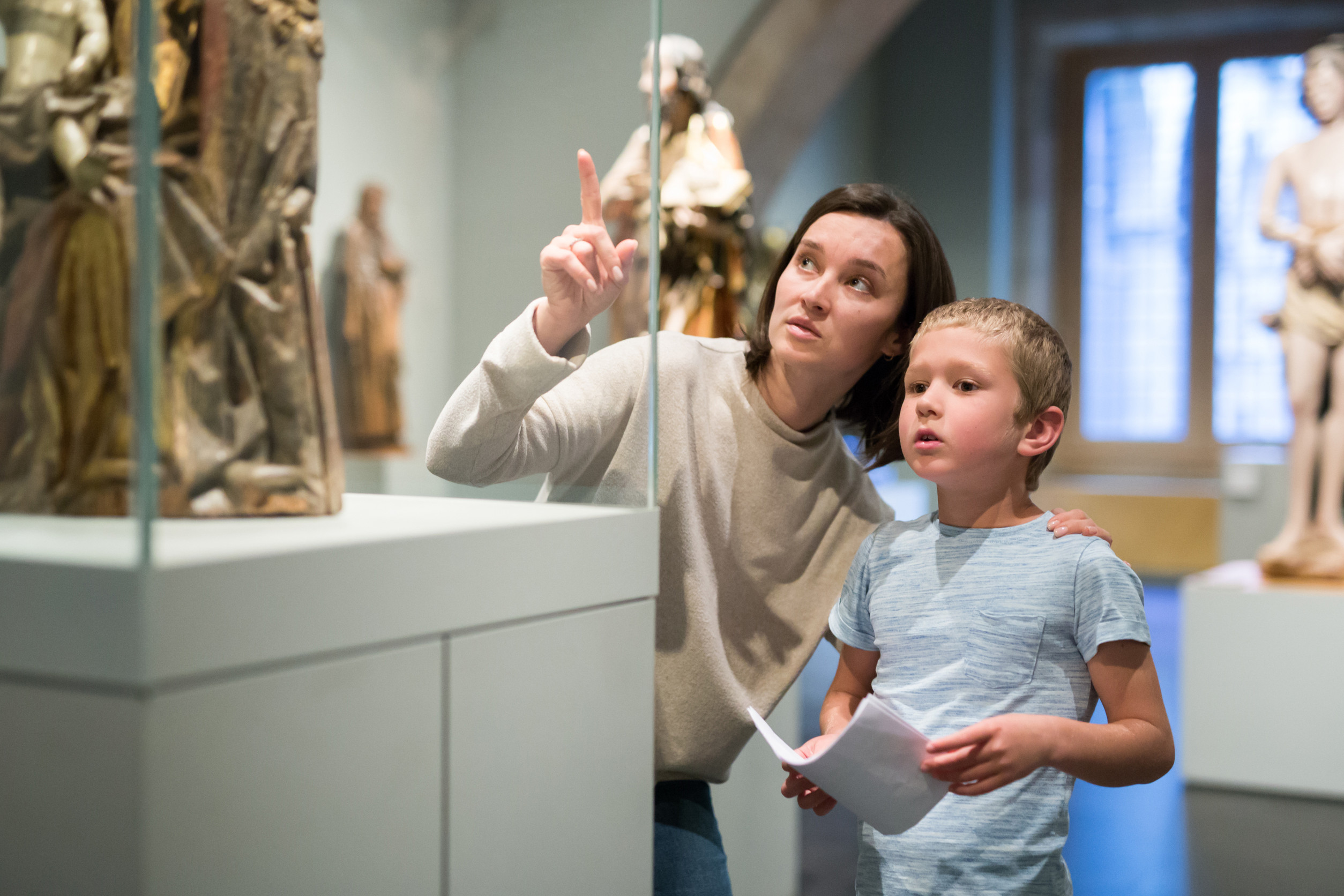
Parents looking for engaging, low-tech ways to support their child’s development don’t have to look far—museums and galleries offer more than just a quiet afternoon. Visiting art galleries and museums can open a child’s mind to new ways of thinking, seeing, and feeling. Whether it’s a historical exhibit or a collection of abstract paintings, these spaces provide rich opportunities for learning far beyond the classroom. They encourage curiosity, spark creativity, and introduce kids to new cultures, ideas, and emotions. Best of all, they create moments that stick with your child long after the trip is over.
1. Creative Thinking Takes Many Forms
Art galleries, in particular, encourage kids to think outside the box. Whether they’re looking at a sculpture made from recycled materials or a surrealist painting, they learn that creativity has no single formula. Visiting art galleries and museums helps them realize that thinking differently isn’t wrong—it’s powerful. When they see how artists use color, shape, and story to express big ideas, it teaches them that their own ideas are valuable too. Creative thinking spills over into schoolwork, problem-solving, and even playtime.
2. History Feels Real, Not Just Textbook
Museums have a special way of bringing history to life. Instead of reading about the past, kids can walk through replicas of ancient homes, see artifacts from long ago, and visualize historical events in a tangible way. Visiting art galleries and museums gives context to timelines and historical figures, helping kids understand how the world has changed over time. Seeing these items in person adds emotion and detail that textbooks often can’t. History becomes more than facts—it becomes a story they can connect with.
3. Emotional Intelligence Gets a Boost
Looking at art and cultural exhibits allows kids to explore feelings in a safe space. They may feel joy, confusion, sadness, or inspiration—all from one afternoon in a gallery. Helping them reflect on these emotions builds empathy and emotional intelligence. Ask your child how a painting makes them feel or what they think the artist was trying to say. These simple questions can lead to meaningful conversations about emotions and perspectives.
4. Attention to Detail Is Rewarded
Some museum exhibits require close observation, whether it’s reading an artifact’s backstory or spotting tiny brushstrokes in a painting. These quiet moments of focused attention sharpen your child’s ability to notice the small things. Visiting art galleries and museums encourages them to slow down, look closer, and appreciate subtle details. That kind of patience and focus benefits them in schoolwork and everyday life. It also teaches the value of looking deeper before jumping to conclusions.
5. Cultural Awareness Expands Their Worldview
Museums often feature exhibits from around the world, giving kids the chance to learn about cultures far different from their own. From Indigenous art to ancient African pottery to traditional Japanese prints, the range is eye-opening. This kind of exposure helps kids grow into more open-minded, respectful individuals. Visiting art galleries and museums shows them that the world is wide, and that every culture has stories worth telling. These experiences plant the seeds of global citizenship.
6. Inspiration Strikes in Unexpected Ways
Sometimes a single visit can change a child’s entire view of what’s possible. A natural history exhibit might inspire a future scientist, while a budding artist might be captivated by bold contemporary paintings. Visiting art galleries and museums can ignite passions your child didn’t even know they had. Encourage them to sketch something they saw or write about their favorite exhibit. You never know what spark might turn into a lifelong interest.
7. Visual Learning Gets a Major Boost
Not every child learns best through reading or lectures. For visual learners, especially, museums and galleries are goldmines of information. Diagrams, photographs, timelines, and displays all make complex ideas easier to understand. Visiting art galleries and museums helps kids absorb information in a way that sticks. They get to see, touch (in some cases), and experience learning with their whole bodies, not just their brains.
8. Curiosity Becomes a Habit
Museums naturally invite questions: “What is that?” “Why did they do it that way?” “How old is this?” Encouraging kids to ask these questions helps develop critical thinking and a love of learning. If your child walks out of the museum with more questions than they had going in, that’s a success. Visiting art galleries and museums reminds them that knowledge isn’t something to memorize—it’s something to explore. Curiosity leads to deeper learning and a hunger to know more about the world.
When Learning Feels Like an Adventure
Taking your child to museums and galleries isn’t just an educational outing—it’s an invitation to explore the world with wonder. From creativity to culture, from history to emotional insight, there’s so much more happening in these spaces than meets the eye. Visiting art galleries and museums gives kids a chance to grow in quiet but powerful ways. You’re not just filling their weekend—you’re shaping the way they think, feel, and see the world.
Have you taken your child to a museum or gallery that made a lasting impression? Tell us about it in the comments!
Read More:
The Best Money Lessons Kids Learn From Chores
7 Critical Life Skills Most Parents Never Teach Their Children

Catherine is a tech-savvy writer who has focused on the personal finance space for more than eight years. She has a Bachelor’s in Information Technology and enjoys showcasing how tech can simplify everyday personal finance tasks like budgeting, spending tracking, and planning for the future. Additionally, she’s explored the ins and outs of the world of side hustles and loves to share what she’s learned along the way. When she’s not working, you can find her relaxing at home in the Pacific Northwest with her two cats or enjoying a cup of coffee at her neighborhood cafe.
