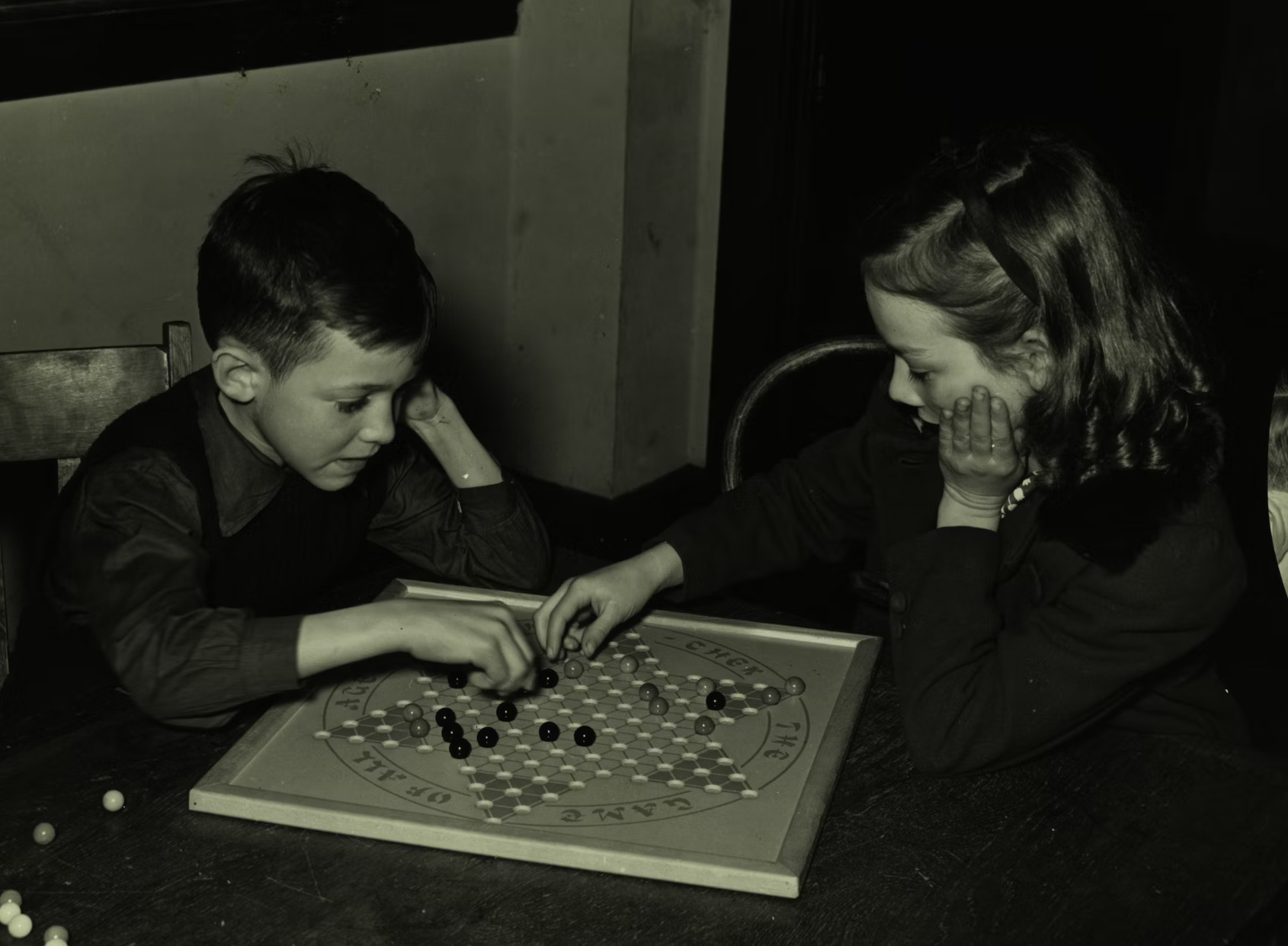
Before smartphones hijacked recess and gaming consoles swallowed rainy-day play, kids sprinted out the door clutching marbles, chalk, or a jump rope. The best 1960s kids’ games thrived on imagination, fresh air, and whatever bits of sidewalk, grass, or scrap lumber were available. They sharpened coordination, nurtured cooperation, and taught a generation how to win (and lose) with grace.
Ready to swap screen time for timeless fun? Dust off these 10 classics and watch neighborhood play transform.
1. Kingpin (Handball)
Australian schoolyards pulsed with this chalk-lined handball variant, where bragging rights rested on lightning-fast rallies and clever angles. Players slapped a rubber ball into numbered squares, hustling to reach the coveted King square while avoiding an unforced error that could banish them back to the peasant ranks. Because courts could be redrawn in seconds with sidewalk chalk, the game popped up on driveways, apartment lots, and beach promenades alike. Rules morphed by region—some kids allowed “grabs,” others insisted on clean palm hits—so negotiation skills grew alongside reflexes.
A single round might last the entire recess, teaching stamina and focus under pressure. Spectators cheered or jeered from the sidelines, fueling friendly rivalries that often spilled into after-school rematches. Kingpin needed zero setup cost and fit any group size, making it the ultimate egalitarian playground sport. Reviving it today only takes a pack of chalk, a bouncy ball, and five spare minutes before dinner.
2. Marbles
Few childhood currencies felt richer than a velvet pouch clinking with freshly won aggies and cat’s-eyes. Kids scratched a dusty circle on the ground, crouched low, and launched their prized shooters with thumb-flick precision, staking collections on nerve and skill. Each knockout sparked cheers as colorful glass orbs ricocheted across the ring like tiny comets. The game sharpened geometry instincts—angles, force, and spin mattered far more than random luck. Victories taught kids how to win graciously; losses taught resilience when a favorite swirl slipped into someone else’s pocket.
Between rounds, budding entrepreneurs bartered doubles and rares, learning rudimentary supply-and-demand economics. Because a full set fit in a pocket, marbles traveled effortlessly from lunch tables to neighborhood dirt patches, erasing “I’m bored” from the vocabulary. Grab an inexpensive starter bag today and you’ve got an instant screen-free pastime ready for any picnic blanket.
3. Gilli Danda
Picture cricket stripped to its raw essentials—one long stick (danda), one tapered peg (gilli), and a dusty lot begging for action. Players tapped the gilli so it popped airborne, then swung the danda like a miniature bat, sending the peg arcing toward makeshift boundaries. Spectators measured distance in strides or rope lengths, and epic strikes earned legends retold for weeks. Because equipment was scavenged from fallen branches, the barrier to entry hovered at zero dollars, democratizing play across villages and city alleys alike.
Timing and hand-eye coordination developed rapidly, as missing the tiny gilli meant an embarrassing early exit. Chasing the peg built sprint speed, while quick mental math tallied unofficial scores. Neighborhood tournaments often attracted multigenerational audiences—grandparents reminisced, parents judged fair calls, kids hustled for glory. Reintroducing Gilli Danda today doubles as a cultural history lesson and an antidote to pricey sports leagues.
4. “Queenie, Queenie, Who’s Got the Ball?”
Part hide-and-seek, part poker face, this giggly classic required nothing more than a tennis ball and a singsong rhyme. One player turned “Queenie” facedown while friends secretly shuffled the ball behind their backs, chanting the hypnotic refrain. At rhyme’s end Queenie spun, scanning micro-smirks, twitches, and fidgety hands for clues. Guess correctly and she kept her regal post; guess wrong and the bluffing culprit claimed the crown, proving deception can be playful.
Beyond laughs, kids gained a crash course in reading body language and managing nervous tells—early lessons in empathy and persuasion. Spectators chimed in with mock-royal commentary, upping the theatrical flair. Rounds moved quickly, so no one languished on the sidelines, boosting inclusivity for shy classmates. Swap in a stress ball or rolled-up sock at home and the game doubles as rainy-day entertainment.
5. Wheelies and Street-Bike Tricks
Banana seats, chromed Sting-Ray handlebars, and endless asphalt once transformed cul-de-sacs into low-budget X-Games arenas. Kids practiced curb jumps, ghost rides, and mile-long wheelies, discovering that momentum plus confidence equaled unforgettable thrills. Every new scrape or torn jean became a medal of honor, proof of experiments with gravity and gyroscopic balance. Older riders mentored rookies, sharing tips on perfecting bunny hops or nailing a no-hands cruise past the neighbor’s rosebush.
As skills grew, so did bike-tuning know-how—raising seats for leverage, lowering tire PSI for softer landings. Parents preached helmet safety while secretly admiring the resilience that came from wiping out, dusting off, and trying again. Evenings ended with impromptu “best trick” showcases lit by street-lamp glow and buzzing cicadas. Modern helmets, elbow pads, and GoPro mounts make this daring rite of passage safer—but just as legendary.
6. Hopscotch
Sidewalk chalk plus one flat stone equaled infinite configurations of numbered squares and squiggly bonus rounds. Hopping on one foot across a wobbly grid taught balance, spatial timing, and the art of soft landings. Missing a square meant laughter, not shame, embedding perseverance in every do-over. Because the rules flexed—add a spiral, throw two markers, reverse the order—kids flexed creativity alongside calf muscles.
Chalk masterpieces evolved into neighborhood murals, each rainstorm wiping the slate for tomorrow’s reinvention. Waiting players counted aloud, sneaking in arithmetic without realizing it. Spectators served as judges, cheering flawless runs and debating toe-line fouls like pint-size referees. In an age of pricey toys, hopscotch proves daily that six cents of chalk can buy an entire afternoon of joy.
7. “What’s the Time, Mr. Wolf?”
This suspense-laden playground chase blended quick math with adrenaline spikes. Players formed a line and crept forward, chanting the titular question while the Wolf, back turned, announced the hour—“three o’clock” allowed three tiny steps. Heartbeats quickened each time they asked, never sure when the growled “Dinner time!” would unleash a sudden pursuit. Sprinters dashed for the safety line while shrieks echoed off brick walls, transforming recess into a cardio interval session.
The role of Wolf rotated, giving timid kids a taste of playful authority and louder voices. Meanwhile, timing step sizes demanded mental counting, sneaking arithmetic into the fun. Because the only equipment needed was open space, games erupted on beaches, living-room carpets, or gym floors alike. Reviving it after school doubles as a stealth workout and a confidence booster.

8. Skipping-Rope Rhymes and Double Dutch
A single rope honed solo stamina; Double Dutch elevated skipping to a symphony of rhythm, teamwork, and daring footwork. Two turners swung opposite ropes in hypnotic arcs while jumpers timed the perfect entry, often to chants like “Engine engine number nine, going down Chicago line.” Miss a beat and ropes stung ankles, teaching instant feedback on synchronization. Group routines sprouted: crossover swings, crisscross arms, high-knee sprints—all coded into vibrant playground culture.
Counting jumps sneaked mathematics into muscle memory, and inventing new rhymes flexed language creativity. Watching friends nail complicated sequences forged community pride and gentle peer coaching. Modern LED ropes flash colors with every spin, mesmerizing newcomers and extending dusk playtime. YouTube tutorials now bridge generations, ensuring grandma can still wow the block with her double-under prowess.
9. Ludo
When rain hammered rooftops, families unfolded the bright cross-shaped board of Ludo—an elegant descendant of ancient Pachisi. Players rolled dice, weighed risks, and cajoled fortune to shuttle four tokens safely home while sabotaging opponents with tactical blockades. Early defeats taught patience as unlucky pieces languished at the starting pad, waiting for that elusive six. Victories felt doubly sweet after a daring sprint past enemy tokens, triggering gleeful send-backs that reset rivals’ progress.
Sibling rivalry bubbled, yet sportsmanship prevailed as gloating earned immediate karmic dice rolls. The game’s blend of chance and calculation mirrored real-life decision-making: you can’t control the dice, but you choose the moves. Because rounds ran 20-60 minutes, Ludo bridged dinner prep and bedtime stories perfectly. Modern travel versions tuck into glove compartments, ready to rescue road-trip boredom in seconds.
10. Meccano Building Sets
Long before plastic bricks clicked, gleaming metal Meccano beams, plates, and gears invited young engineers to dream in riveted steel. Armed with miniature wrenches, kids bolted together cranes, drawbridges, and fantastical contraptions whose gears actually meshed and spun. Every misaligned bolt demanded disassembly and iteration, teaching grit and the value of blueprint planning. Spatial reasoning blossomed as builders envisioned 3-D structures from 2-D instruction sheets—or tossed the sheets aside to freestyle inventions.
Satisfying clinks echoed each tightened nut, rewarding fine-motor mastery and patience in equal measure. Completed models became props for imaginative play, doubling the toy’s lifespan well beyond construction time. Vintage kits now fetch collector buzz, but modern STEM editions keep the screwdriver spirit alive with motors and Bluetooth controls. Introduce Meccano on a rainy weekend and watch screens fade in favor of analog ingenuity.
Why Revive These Retro Gems?
In an era dominated by digital entertainment, re-discovering these 1960s kids games can brighten backyards and schoolyards alike. They remind children (and nostalgic parents) that some of the best adventures start with little more than chalk dust, friendly competition, and an open stretch of sidewalk. So hunt down a skipping rope, grab a bag of marbles, and see how quickly “just one game” turns into an entire afternoon of unplugged joy.
What forgotten game would you love to see on today’s playgrounds? Share your memories—or your kids’ reactions to these retro revivals—in the comments below!
Read More
- Learning Through Games: 5 Best Educational Gift Ideas for Kids
- Best Games to Teach Elementary Students Geography

Samantha Warren is a holistic marketing strategist with 8+ years of experience partnering with startups, Fortune 500 companies, and everything in between. With an entrepreneurial mindset, she excels at shaping brand narratives through data-driven, creative content. When she’s not working, Samantha loves to travel and draws inspiration from her trips to Thailand, Spain, Costa Rica, and beyond.
