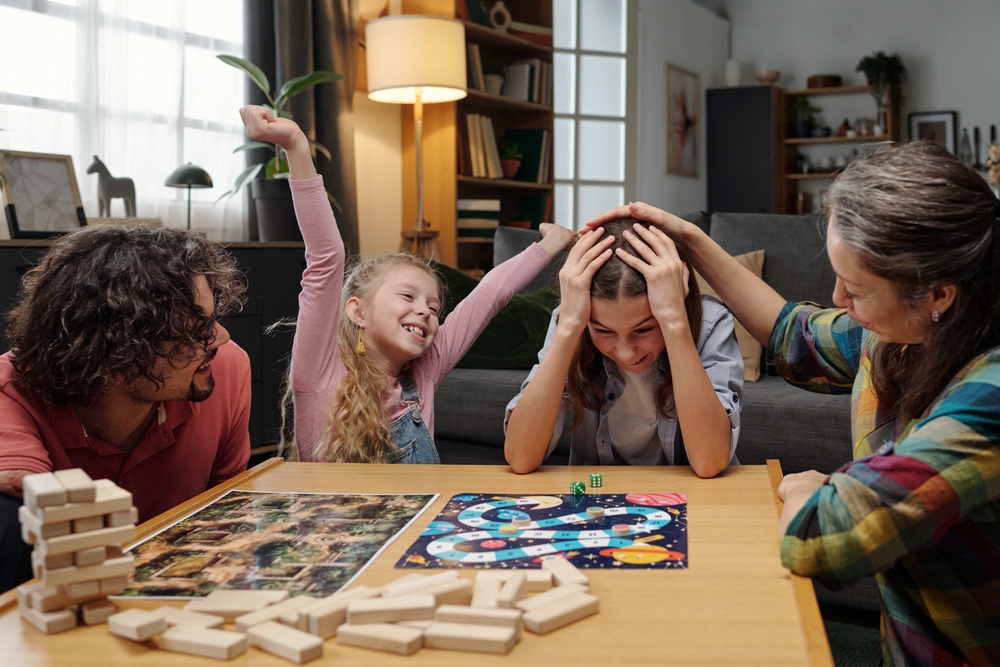
Family game night already has everything parents dream of—laughter, togetherness, and screens finally switched off for a while. What many families don’t realize is that those same games are also a perfect chance to sneak in real-world money skills. Kids are already thinking about turns, rules, and rewards, which is exactly how money works in everyday life. With a few small tweaks, you can turn the games you already own into playful practice for budgeting, saving, and smart decision-making. Best of all, your kids just feel like they’re having fun with you, not sitting through a lecture. That said, here are six ways you can sneak in some lessons during your next game night.
1. Turn Classic Games Into Money Lessons
Games that use play money, properties, or resources are a natural place to weave in money lessons without making things feel heavy. As you play, you can casually talk about what it means to save versus spend and how it feels to have a cushion for later turns. When your child faces a choice—buy a property, skip it, or hold onto cash—you can gently ask what they think might happen next. You don’t need long speeches; simple questions like “What’s your plan?” or “How will this help you later in the game?” go a long way. Over time, those tiny conversations help kids connect game decisions to real-life money choices.
2. Let Kids Be the Banker for Hands-On Practice
Putting your child in charge of the money pile can turn an ordinary round into powerful, hands-on money lessons. When kids act as the banker, they have to count, sort, and organize, which reinforces basic math and number sense. You can encourage younger kids to group bills by amount or make piles that add up to a certain total, turning simple tasks into quick learning moments. Older kids can handle giving change, double-checking payment amounts, and tracking who has what. The more comfortable they get handling pretend money, the more confident they’ll feel with real cash later.
3. Use Game Night to Talk About Wants Versus Needs
Many board and card games involve buying items, collecting cards, or trading for upgrades, which makes them perfect for gentle money lessons around wants and needs. When your child wants to spend all their tokens on something fun early in the game, you can pause to ask whether it’s a want or a need for winning. You might talk through whether saving some tokens could help them later or if they’re okay with spending now for short-term excitement. These conversations don’t have to be serious or strict—keep your tone light and curious. Over time, kids start to recognize that not every cool option is the smartest choice, at the table or in real life.
4. Sneak in Conversations About Saving and Interest
Some games reward players for holding onto resources or building steadily instead of grabbing everything at once. That’s a great doorway into money lessons about saving and how small choices grow over time. You might point out when a player who saved early has more options later, or how “investing” in certain cards or spaces pays off over several turns. If your kids are older, you can introduce the idea of interest by giving a tiny bonus each round to players who keep a certain amount of game money. Kids begin to see that saving isn’t just about not spending, it’s about creating more choices for their future.
5. Turn Rule Tweaks Into Budget Challenges
You don’t need a special “money game” to teach money lessons; you can simply add budget-style rules to the games you already love. For example, everyone might start with a set “budget,” and each move, card, or action has a cost that they have to track. You can give bonus points at the end to the player who managed their budget most carefully, not just the one who won the game. For younger kids, you might use tokens or coins they hand in for certain moves, so the idea of limited resources feels concrete. These small tweaks teach that you can’t do everything at once, and smart planning makes the game—and life—go more smoothly.
6. Model Healthy Money Talk While You Play
Kids learn as much from how you talk about money as from what you actually say. Game night is a low-pressure time to model calm, thoughtful decision-making instead of stress or shame around money lessons. You can narrate your choices in a simple way, like “I’m going to save my money this turn so I have more options later,” or “I spent a lot early, so now I need to be careful.” When something doesn’t go your way, you can talk about it as a learning moment rather than a disaster. This shows kids that mistakes with money are normal and fixable, not something to hide or panic about.
Building Strong Money Skills One Game at a Time
When you look at family game night through this new lens, it becomes much more than just a way to pass the time. You’re still laughing, rolling dice, and sharing snacks, but underneath all that fun, your kids are practicing real skills they’ll carry into adulthood. They’re learning to plan ahead, weigh trade-offs, and think about how today’s choices affect tomorrow’s options. That’s the heart of every money decision, whether it’s about game tokens or a future paycheck. With a few simple shifts, every family game night can move your kids one step closer to becoming confident, capable money managers.
What are your family’s favorite games, and how have you used them to sneak in money lessons without ruining the fun—any creative twists you’d recommend?
What to Read Next…
8 Reasons Your Kids Should Be Playing Video Games
16 Life Lessons from Fairy Tales We Shouldn’t Forget
8 Games That Are Perfect for Grandparents to Play With Grandkids
Are You Accidentally Teaching Your Kids Money Doesn’t Matter?
Bored No More: The 7 Best Travel Games for Endless Fun on the Go

Catherine is a tech-savvy writer who has focused on the personal finance space for more than eight years. She has a Bachelor’s in Information Technology and enjoys showcasing how tech can simplify everyday personal finance tasks like budgeting, spending tracking, and planning for the future. Additionally, she’s explored the ins and outs of the world of side hustles and loves to share what she’s learned along the way. When she’s not working, you can find her relaxing at home in the Pacific Northwest with her two cats or enjoying a cup of coffee at her neighborhood cafe.
