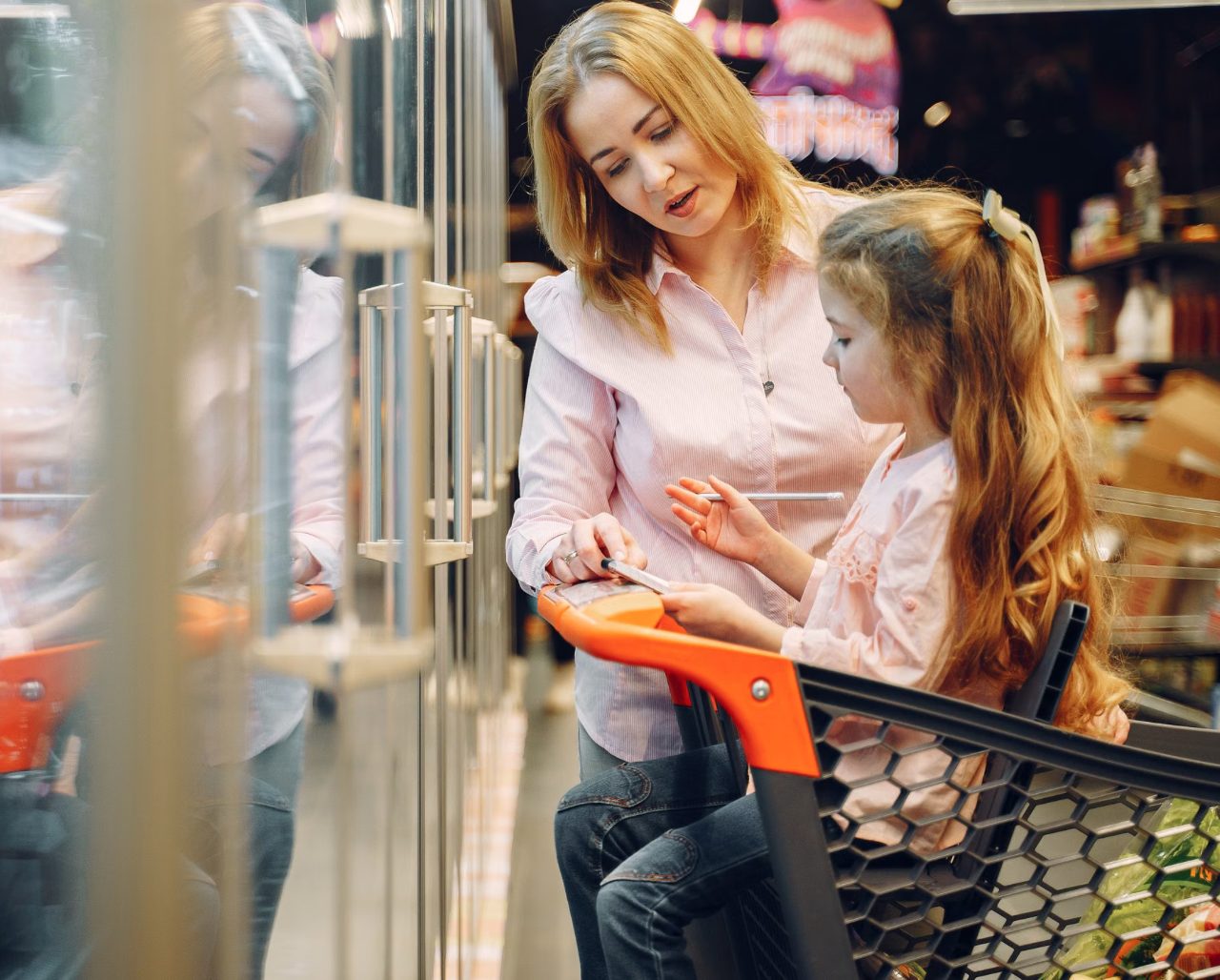
A grocery run may feel routine, but for children, it can become a surprisingly useful financial classroom. Prices are right in front of them, choices have immediate consequences, and a shopping cart provides plenty of opportunities to discuss needs, wants, budgeting, and value. Those money lessons for kids matter when families are still watching food costs closely; U.S. grocery prices were 2.2% higher in August 2026 than a year earlier, according to the latest federal data. Instead of giving children a lecture about finances, parents can turn an ordinary shopping trip into hands-on practice they can understand.
1. A Budget Means Making Choices
Before entering the store, give your child a simple spending target, such as $75 for the items on your list. As products enter the cart, let an older child keep a running estimate using a calculator or phone. If the total approaches $75, ask what could be swapped, postponed, or removed. This makes money lessons for kids concrete because a budget stops being an abstract number and becomes a limit requiring decisions. University of Minnesota Extension recommends age-appropriate financial conversations that help young people weigh necessities against optional purchases.
2. Needs And Wants Are Different
The cereal aisle offers an easy lesson in separating necessities from extras. Your family may need breakfast food, but that does not necessarily mean buying the most expensive cereal or an additional box simply because the packaging looks appealing. Ask your child, “Do we need this, or do we just want it?” Then explain that wants are not automatically bad; they simply compete with other priorities. Learning that distinction helps children understand why responsible spending involves choices rather than buying everything affordable at that moment.
3. The Lowest Price Is Not Always The Best Deal
A smaller package can have a cheaper shelf price while costing more per ounce, pound, or item. Show your child the unit-price label and compare two sizes of rice, cereal, yogurt, or another familiar product. NerdWallet recommends comparing grocery deals using unit prices rather than sticker prices alone, while Consumer Reports has likewise found that larger packages can sometimes provide better value than smaller alternatives. The hidden lesson is that “cheaper” and “better value” are not always the same thing. These money lessons for kids encourage comparison instead of automatically grabbing the lowest-priced package.
4. Brand Names Can Carry A Premium
Put a national-brand product beside the store-brand version and ask your child to compare price, size, and ingredients. Store brands reached a record $282.8 billion in U.S. sales during 2025, while their dollar sales grew 3.3%, nearly three times the 1.2% growth of national brands, according to Private Label Manufacturers Association data based on Circana research. Store brands also accounted for 23.5% of units sold in the measured market. Explain that advertising, familiarity, and packaging can influence what shoppers choose. The goal is not always to buy generic, but to decide whether a higher price delivers something your family actually values.
5. A Shopping List Protects Your Money
Making a list before shopping teaches children that spending decisions can begin before anyone reaches the store. Check the refrigerator and pantry together, then write down what is actually missing. NerdWallet recommends taking inventory first because buying something already sitting at home wastes money and can undermine a grocery budget. Let your child cross off each item while shopping and notice tempting products that were never part of the plan. This is one of the simplest money lessons for kids because it connects planning directly with spending control.
6. Small Savings Can Become Real Money
Coupons, loyalty discounts, sales, and store brands may save only a dollar or two at a time, but repeated savings add up. Suppose your family trims just $8 from its weekly grocery bill through thoughtful substitutions; over 52 weeks, that equals $416. Store-brand products are now found in about 90% of grocery shoppers’ homes, according to a 2025 FMI survey of nearly 1,500 U.S. grocery shoppers. Ask your child what $416 could accomplish if saved instead of spent. That simple calculation shows why small financial decisions deserve attention.
7. Sales Only Save Money When You Need The Product
A “buy two, get one free” sign can look like automatic savings, but it may encourage a family to purchase more than planned. Ask your child whether you would have bought the product without the promotion and whether your family will use it before it spoils. A discount on an unnecessary purchase is still money leaving the household. This teaches children to evaluate promotions instead of reacting to the word “sale.” Good money lessons for kids include recognizing that spending $10 unnecessarily does not become smart simply because the regular price was $15.
8. Paying With A Card Still Means Spending Real Money
Children may understand handing a cashier $20 more easily than tapping a phone or inserting a card. At checkout, explain that a debit-card purchase generally takes money from a bank account even though no bills physically change hands. Have your child compare the receipt with the amount you expected to spend and identify where the estimate differed. This creates a natural opening to discuss digital payments, receipts, account balances, and why adults track purchases. It also reinforces an essential principle: convenient payment methods do not make purchases free.
One Grocery Trip Can Build A Lifetime Skill
You do not need a complicated financial curriculum to start teaching children about money. A grocery store already contains budgets, price comparisons, marketing, tradeoffs, digital payments, and dozens of small decisions that mirror adult financial life. The most useful approach is to explain your reasoning and occasionally let children make a low-stakes choice themselves. Repeating these money lessons for kids can gradually turn concepts such as budgeting and value into everyday habits rather than rules they hear only when they are older.
On your next grocery trip, what money decision could you let your child make for themselves, and what might their choice teach both of you? Share your experience and thoughts in the comments.
What to Read Next
Summer EBT Facts That Could Put $120 on Your Grocery Card
SUN Bucks 2026: How Families of Special Needs Students Can Claim Summer EBT Grocery Benefits
The Grocery Costs Parents of Sensory-Sensitive Kids Say No One Talks About

Evan Morgan has been a full-time freelance writer and editor for 10+ years. When not working, he enjoys catching the latest true crime documentary or getting lost in a good book.
Read More

It starts with a designer stroller and quickly snowballs into $200 sneakers for a toddler…

Some people shop all year long for Christmas. Others wait until December 24th. Wherever you…

Kids are clever—sometimes a little too clever when they want something. Whether it's an emergency…

When your child struggles in the classroom, the alphabet soup of special education services can…


During my undergraduate degree I worked part-time at a local pharmacy as a pharmacy technician. I…

My slow cooker (aka crock-pot) and I are BFFs. It cooks -- I clean. We have a perfect culinary partnership.…


Leave a Reply