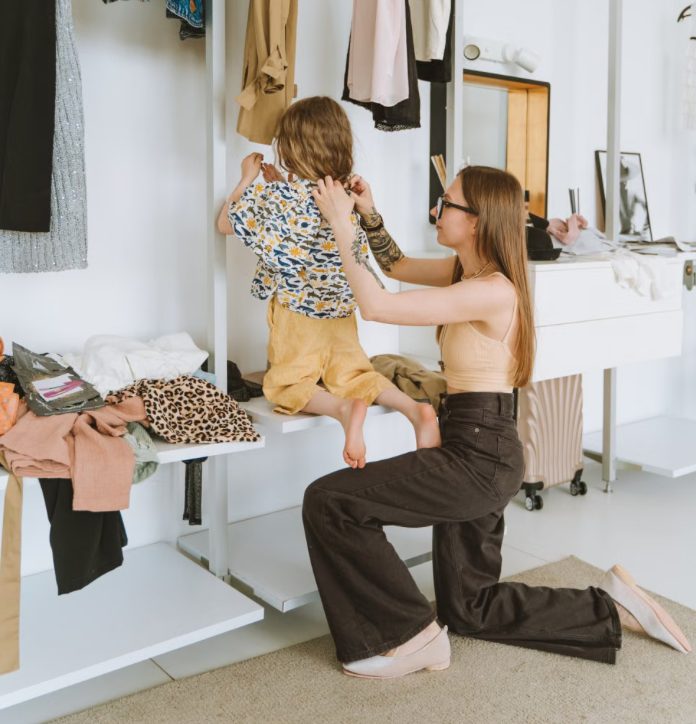
Buying the next size up can feel like smart parenting, especially when a clearance rack makes next season’s clothes look too cheap to pass up. But children do not always grow on a predictable schedule, and that bargain winter coat or stack of jeans may be the wrong size when the weather finally changes. For families trying to control a clothing budget, buying too far ahead can quietly turn savings into wasted money. The problem becomes especially relevant as clothing remains a significant part of back-to-school spending. A better strategy may be buying fewer items now and keeping more money available for what children actually need later.
Families Are Already Spending Hundreds On Clothes
The latest National Retail Federation back-to-school survey found that families with children in kindergarten through 12th grade planned to spend an average of $863.86 on back-to-school purchases in 2026. Of that amount, $250.29 was earmarked specifically for clothing and accessories, while another $174.01 was expected to go toward shoes. Those numbers help explain why seemingly small purchases can quickly strain a kids clothing budget, particularly in households with multiple children. Interestingly, 47% of shoppers said they planned to buy only the essentials for the beginning of school and replenish supplies as needed. That approach can work for clothing too, because waiting provides parents with better information about fit, weather, school activities and what their child will actually wear.
Growth Does Not Follow Your Shopping Calendar
One overlooked risk of stockpiling clothes is that children grow at different rates rather than neatly moving into a new size every six months. The American Academy of Pediatrics’ HealthyChildren.org explains that children tend to grow in spurts, with some growing as much as three times faster during certain seasons than during slower periods. That means buying size 8 shorts nine months early because they are 60% off does not guarantee they will fit when summer arrives. Shoes can be even trickier because an uncomfortable or undersized pair cannot simply be rolled at the cuffs like pants. Parents protecting a clothing budget may therefore be better off keeping only a small reserve of basics in the next size rather than building an entire future wardrobe.
A Sale Is Only A Deal If It Gets Worn
Imagine a parent finds four shirts for $8 each, two pairs of pants for $15 each and a $30 jacket during an end-of-season sale, spending $92 on clothes for next year. If the child skips that size, dislikes half the shirts or needs a different jacket by then, even $40 of unused merchandise wipes out much of the expected savings. This matters because NRF’s 2026 research on back-to-school prices found that 78% of shoppers expected higher prices on back-to-school merchandise, which can make buying early feel especially tempting. Instead of asking only, “How much am I saving today?” parents can ask, “How certain am I that my child will wear this?” That simple question shifts a clothing budget away from chasing discounts and toward calculating the actual value of each purchase.
Secondhand Clothing Changes The Math
Waiting does not necessarily mean paying full retail price later, especially as resale becomes a mainstream alternative to buying new clothes. ThredUp’s 2026 Resale Report, based partly on a survey of 3,268 U.S. consumers, projects the global secondhand apparel market will reach $393 billion by 2030 and says the U.S. secondhand market grew nearly four times faster than the broader retail clothing market in 2025. Research published in Sustainability on secondhand school uniforms also found affordability was the leading motivation for choosing used uniforms among surveyed parents, although availability, sizing and quality remained barriers. Families can check consignment stores, resale platforms, school uniform exchanges and neighborhood groups when an actual need appears instead of buying every future size in advance. Hand-me-downs can stretch a clothing budget even further, particularly for coats, special-occasion outfits and other pieces children may wear relatively few times.
Buy For The Child You Have Today
Buying ahead is not automatically wasteful, especially for predictable necessities such as socks, pajamas or a favorite brand whose sizing a parent already understands. The bigger financial risk comes from confusing a low price with guaranteed savings and filling closets with clothes based on guesses about future growth, weather and preferences. A practical compromise is to keep a limited number of next-size basics, review children’s wardrobes every few months and postpone specialized or expensive purchases until they are genuinely needed. That approach leaves room in the household budget for an unexpected growth spurt without forcing parents to ignore worthwhile sales altogether.
Do you buy your children’s clothes months ahead to catch sales, or have you learned that waiting saves more money in the long run? What strategies help you avoid buying clothes your kids never wear? Share your experiences and money-saving tips in the comments below.
What to Read Next
Here Are the Best Online Shopping Sites for Affordable Kids Clothes
Money-Saving Hacks for Parents Shopping Clearance Clothes After the Holidays
Clothes From Shein and Temu Could Be Hazardous To Your Child’s Health

Evan Morgan has been a full-time freelance writer and editor for 10+ years. When not working, he enjoys catching the latest true crime documentary or getting lost in a good book.
Read More
Here in Manila, we have some holidays that are decidedly Western and Mother’s Day is…

Choking is one of the leading causes of injury and death in young children, and…
As a resident of the beautiful - but often soggy - Pacific NW; I am…
It’s so important to develop good dental hygiene habits at a young age but as…


Kids’ bank accounts may seem like low-stakes targets, but to hackers, they’re often the perfect…

Image Source: 123rf.com Parenting comes with its fair share of challenges, and moments of frustration…


Leave a Reply