• Home
  • About Us
  • Toolkit
  • Archives
  • Advertise
  • Privacy Policy

Kids Ain't Cheap

But They Sure Are Worth It

  • Parenting
    • Baby Stuff
    • Books and Reading
      • Aesops Fables
      • Comic Books
    • Education
    • Family Time
    • Green Living
    • Growing Up
    • Healthy Living & Eating
    • Holidays
    • Parenting
    • Random Musings
    • Shopping
    • Stuff to Do
  • Money
  • Product Reviews
    • Books and Magazines
    • Discount Sites
    • Furniture
    • House Keeping
    • Reviews News
    • Toys and Games
  • Contact Us
  • Our Editorial Commitment
  • Search

These Are the 6 Best Types of Neighborhoods to Raise Your Kids In

April 23, 2025 | Leave a Comment

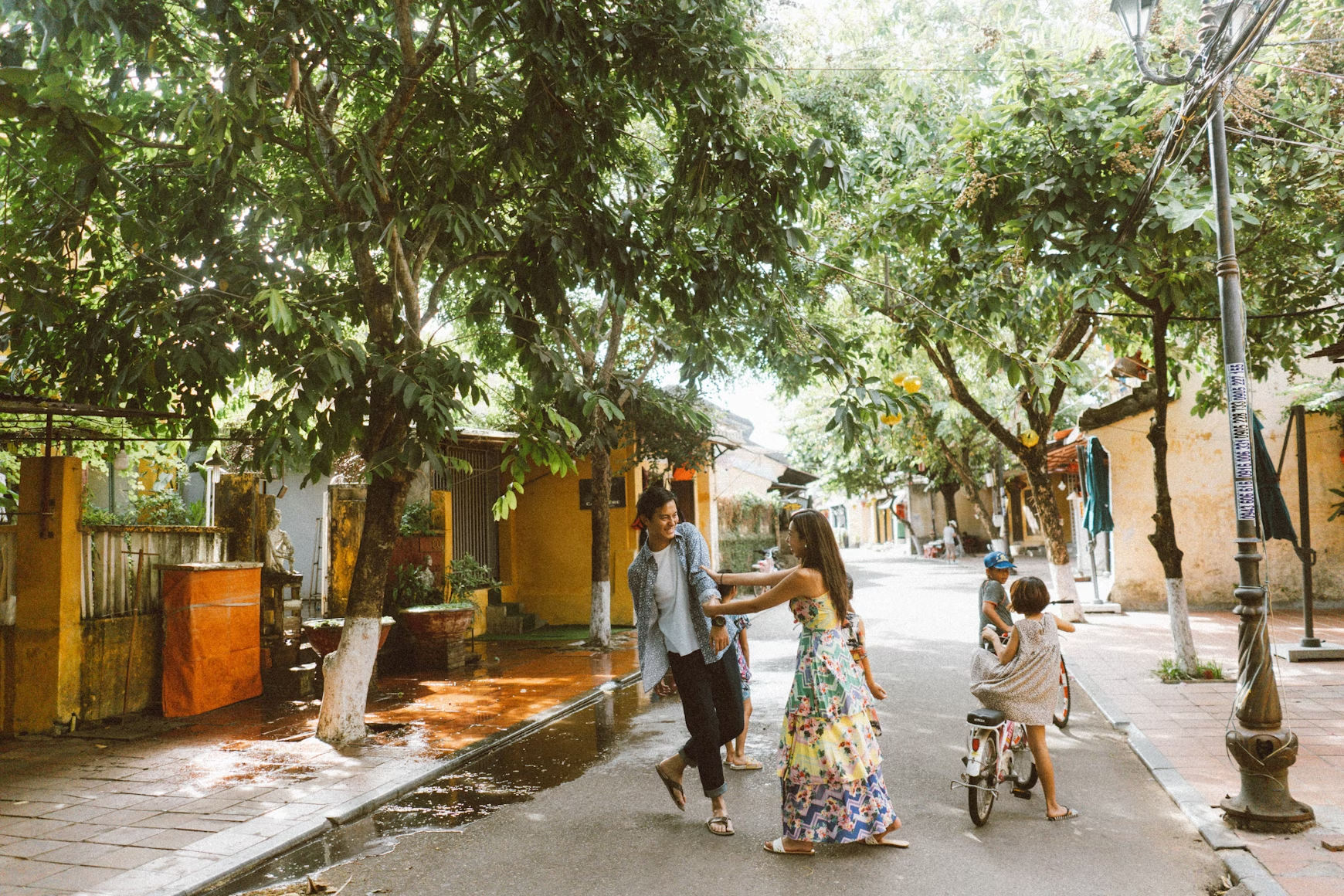
Image Source: Unsplash

Deciding where to raise children is more than a housing choice—it’s about finding the backdrop for their entire childhood. According to a recent Pew Research Center survey, parents who rate their neighborhoods highly report far fewer worries about their kids’ well‑being than those living in areas they view as just “fair” or “poor.” So what kinds of communities consistently help families thrive? Below are six neighborhood types—each offering its own blend of safety, connection, and opportunity.

1. Walkable Urban Communities With Family Amenities

Not all city blocks are concrete jungles. Many urban districts have reinvented themselves with wide sidewalks, pocket parks, and stroller‑friendly greenways. Living where grocery stores, libraries, and after‑school programs are a quick walk away gives kids early independence: they can bike to piano lessons or meet friends at the playground without a chauffeured schedule.

For parents, walkability trims time behind the wheel, lowering stress and transportation costs. When you tour: notice whether crosswalk signals are long enough for small legs, if streets have speed‑calming measures, and how many other families you see on foot at dusk; their presence signals an environment that feels safe even after dinner.

City living isn’t automatically kid‑unfriendly. Many urban neighborhoods now feature wide sidewalks, pocket parks, and libraries within strolling distance. Easy access to everyday destinations gives kids early independence and social confidence. Planning experts highlight that walkability also boosts physical activity and reduces car‑related stress on families; see the Walk Score neighborhood index for snapshots of how walkable an address really is.

2. Suburbs With Strong School Districts

Well‑funded schools often go hand‑in‑hand with safe streets, active PTAs, and plenty of youth programs. Communities built around top‑rated districts tend to have low traffic speeds, abundant green space, and stable property values—attributes that rank high among families in Niche’s annual “Best Places for Families” reports.

3. Tight‑Knit Small Towns

In a place where neighbors greet one another by first name, children benefit from a built‑in support system of trusted adults: coaches double as deacons, the pharmacist sponsors the Little League team, and Main Street’s diner posts lost‑backpack flyers in the window. Community events—parades, holiday lightings, Saturday markets—become rites of passage, cementing a sense of place. Amenities may be fewer than in big cities, so look at how far you’ll drive for specialized healthcare or advanced extracurriculars. Spend a weekend attending a local ball game or arts festival; the crowds’ warmth and diversity will speak louder than any realtor brochure.

In places where shopkeepers know your name and neighbors look out for each other, children grow up with a tangible sense of security. Local events—from farmers’ markets to high‑school parades—double as gathering points, giving kids strong social roots and a clear sense of belonging.

4. Master‑Planned Communities Designed for Families

These developments come loaded with playgrounds, splash pads, and sometimes even on‑site schools. Because they’re designed as one cohesive unit, traffic patterns are calmer and walking paths safer. Parents often cite a “built‑in village” feel, which makes finding playdates, babysitters, and community events almost effortless.

A playground with inclusive swings, symbolizing accessible neighborhood design.
Image Source: Unsplash

5. Inclusive Neighborhoods With Accessible Design

Family‑friendly communities must serve all children, including those with disabilities. Areas with ADA‑compliant ramps, inclusive playground equipment, and accessible community centers help foster empathy and peer connection. Urban planners point out that universal design isn’t just about meeting regulations—everyone benefits when spaces are easy to navigate.

6. Areas Focused on Child Health and Well‑Being

Some neighborhoods are intentionally planned around fresh‑air living: extensive bike trails, community gardens, and quick access to pediatric care. Research compiled by County Health Rankings & Roadmaps shows that children in areas rich in green space and health resources experience better long‑term physical and mental outcomes.

Final Thoughts: Where Your Child Grows Up Matters

No neighborhood is perfect, and every family’s priorities differ. Yet the environment surrounding your kids will shape their friendships, habits, and sense of security for years to come. Tour schools, chat with future neighbors, walk the streets at different times of day, and trust your instincts about what feels right—because choosing a community is really about choosing a childhood.

What kind of neighborhood feels best for your family? Share your thoughts in the comments—we’d love to hear your experiences.

Read More

  • My #1 Brand of Choice for Long-Lasting Toys for Toddlers
  • 3 Essential Tips for Finding the Best Family Neighborhood to Raise Kids
Samantha Warren
Samantha

Samantha Warren is a holistic marketing strategist with 8+ years of experience partnering with startups, Fortune 500 companies, and everything in between. With an entrepreneurial mindset, she excels at shaping brand narratives through data-driven, creative content. When she’s not working, Samantha loves to travel and draws inspiration from her trips to Thailand, Spain, Costa Rica, and beyond.

Filed Under: Growing Up Tagged With: child development, Community, family life, moving with kids | Lifestyle, neighborhood safety, Parenting, real estate

What I Love Most about Having Twins!

February 5, 2011 | Leave a Comment

TwinsI love having twins! People always ask me if it’s a lot of work and I say, “Sure it is, but it’s worth it.” They truly are a double blessing. Here are some of the best things about having twins.

A Baby for Everyone

One of the first things I loved about having twins, was that they were easy to share. After the boys were born, my Mom and Mother-in-law were so happy that they each had a baby to hold. When people came to visit, there weren’t any awkward, “quit hogging the baby” moments — because there was usually one up for grabs.

Some new mothers feel like everyone is holding their baby but them; or that they only get the baby when they need to be fed or starts crying. Not so much with twins — I am happy to report that I got lots of baby holding time and so did all the other people that love them.

Two Bald Baby Heads with Toothless Grins

Some of my favorite moments of the day, were when the boys would wake up from their naps, or first thing in the morning (especially if they slept in). As soon as I would hear them making cute baby noises; I would go into their room. That’s when I would see the cutest little bald babies smiling at me, with their adorable toothless grins. I loved that!

Rinse and Repeat

Having two infants at the same time was a little intense. The best twin advice I received was “What you do for one, do for the other.” This saved me so much time and frustration. It took a little while for us to get in the groove of things but once I remembered that advice – and put it into practice – things flowed much more smoothly.

They ate at the same time, I changed their diapers at the same time (whether the other one needed it or not), I put them down for a nap at the same time, and as soon their sleep schedules began to sync, life got a tiny bit easier. Plus, I got really good at doing things, because I would do it once and then immediately do it again. Except feeding. I always fed them at the same time, otherwise I wouldn’t have had time for anything else.

Built in Best Friend (wrestling buddy)

My boys always have a playmate. Of course, that can also work against me when they are fighting — but if you have more than one kid it’s bound to happen. When they were newborns, they didn’t really look at each other much but they loved to be side-by-side. One would lay their head on the other’s shoulder or they might hold hands. It was so adorable!

Now that they are older, they have inside jokes, they giggle and chat before falling asleep and again when they wake up, they make up all kinds of fun adventures and work together to achieve a common goal. They are also more confident when experiencing new situations, because they have each other.

Twins Community

I am part of a wonderful community of twin parents. You know how motorcyclists wave at each other as they pass on the road; it’s kind of like that for parents of twins. We might stop to swap stories or just give each other a knowing smile. We share a common bond and it’s always nice to talk to other parents of twins. I especially enjoy meeting twins who are grown-up. They provide fantastic insights.

2-for-1 Deal

It took awhile for my husband and I to have children. We always said we were going to have two; we just didn’t know it would happen at the same time. Sometimes, I wish I could have experienced two pregnancies but I am very thankful for the one I did have. I got two babies and only had to go through labor once — that’s a pretty good deal. Plus, I have two very healthy little boys. I couldn’t ask for more than that.

People Tell Me I’m a Supermom

This is always nice to hear and I really appreciate when people take the time to tell me this. It’s very sweet. Truth is, I think there are a lot of Supermoms (and Dads) out there, who work very hard for their children every day. That’s what being a parent is all about – no matter what hand you are dealt – a good parent will just do what needs to be done to care for their child or children, no matter what.

I once had a lady say to me, “You have twins? Wow! I don’t know how you do it. I have one three year old and it’s insane. I would have killed myself if I had twins.” Yikes! Better me than her I guess.

The Same but Different

My boys share a birthday, they both love superheros and fire trucks, and the both love their dog but they are really so very different. For one thing A. will eat just about any fruit on the planet but N. really only likes apples and grapes (thankfully he’s not as picky about veggies). Before they were even born, A. was pretty chill and N. moved around like a wild man. After they arrived — A. was pretty chill and N. was a wild man.

They don’t look alike, they don’t dress alike and they certainly have different ideas about things — but at the end of the day they are best buddies. If they are apart for any length of time – as soon as they see each other – they are so happy to be together again.

There’s really so much to love about having twins! There’s double the hugs and double the kisses. There is no feeling in the world like holding a sleeping baby in each arm. Sometimes, I still try to carry them both for old times sake, but it’s getting much more difficult.

I am so thankful to be a mother of twins. It has been an amazing experience so far — and the adventure has just begun!

The blessings of raising twins, certainly outweigh the challenges.

Do you have twins? What do you love most about having them?

Brian
Brian

Brian is the founder of Kids Ain’t Cheap and is now sharing his journey through parenthood.

 
Email • Google + • Facebook • Twitter

Filed Under: Baby Stuff, Parenting Tagged With: Community, Parenting, Supermom, Twins

  • Facebook
  • Pinterest
  • RSS
  • Twitter

Basic Principles Of Good Parenting

Here some basic principles for good parenting:

  1. What You Do Matters: Your kids are watching you. So, be purposeful about what you want to accomplish.
  2. You Can’t be Too Loving: Don’t replace love with material possessions, lowered expectations or leniency.
  3. Be Involved Your Kids Life: Arrange your priorities to focus on what your kid’s needs. Be there mentally and physically.
  4. Adapt Your Parenting: Children grow quickly, so keep pace with your child’s development.
  5. Establish and Set Rules: The rules you set for children will establish the rules they set for themselves later.  Avoid harsh discipline and be consistent.
  6. Explain Your Decisions: What is obvious to you may not be evident to your child. They don’t have the experience you do.
  7. Be Respectful To Your Child: How you treat your child is how they will treat others.  Be polite, respectful and make an effort to pay attention.
Best Parenting Blogs

Most Popular

11 Ways Kids Are Outsmarting Parental Controls 1. Using Alternate Devices One common trick is simply turning to another device. If a child’s main phone or tablet is restricted, they may borrow a sibling’s, friend’s, or even a school laptop. This instantly gives them access to content outside of parental oversight. Parents often focus on one device, forgetting that others in the household can serve as loopholes. Knowing this tactic helps families tighten controls across all electronics. 2. Clearing Browsing Histories Many kids quickly learn that clearing browsing history hides evidence of restricted activity. With just a few clicks, they can erase any trace of websites visited. This makes it harder for parents to notice when rules are being broken. Parents may assume no history means no browsing, but the reality is often the opposite. Kids are outsmarting parental controls by making it seem like nothing happened at all. 3. Using Private Browsing Modes Most browsers offer “incognito” or private browsing features. Kids use this mode to access websites without leaving a record in the history. To parents checking later, everything looks clean and safe. This simple trick is often one of the first ways kids discover how to bypass restrictions. Conversations about private browsing can help close this gap. 4. Guessing or Resetting Passwords Children who are persistent may try to guess passwords to parental control apps or accounts. Others may find ways to reset them through email prompts or security questions. Once inside, they can disable restrictions entirely. Parents may not even realize controls have been altered until much later. Stronger, less predictable passwords can make this more difficult. 5. Using VPNs to Hide Activity Virtual private networks, or VPNs, let kids disguise their online locations. With one downloaded app, they can bypass geographic or parental restrictions. Some children learn about VPNs through friends or even social media. This makes it easy for them to reach content that should be blocked. Parents often underestimate just how simple it is for kids to use these tools. 6. Creating Fake Accounts When parents monitor social media, kids may create hidden accounts. These “finstas” or fake profiles allow them to interact freely without parental oversight. While their main account appears harmless, the secondary one tells a different story. Kids are outsmarting parental controls by playing both sides at once. Checking for duplicate accounts can help parents stay more aware. 7. Exploiting Time Zone Settings Some kids change the time zone on their devices to bypass screen time limits. This trick allows them to gain extra hours of usage undetected. Parents may assume controls are working, but in reality, the child is bending the clock. It’s a clever loophole that highlights just how resourceful kids can be. Monitoring device settings regularly can catch this tactic. 8. Disabling or Uninstalling Apps Parental control apps can be deleted or disabled with surprising ease. Some kids even reinstall them before a parent checks, making it seem like nothing changed. Others may simply restrict permissions to prevent apps from functioning properly. When apps aren’t monitored closely, parents may not notice they’ve been tampered with. This shows the importance of consistent follow-up. 9. Turning to Friends for Access If a child can’t get past restrictions on their own, they may rely on friends. Visiting a friend’s house or borrowing their phone can give them a free pass. Parents often forget that peer environments can override restrictions set at home. This kind of social workaround is especially common with gaming or social media. Open conversations about trust and responsibility are essential. 10. Hiding Apps in Plain Sight Kids sometimes download apps that look innocent but serve as gateways to hidden activity. These apps may disguise themselves as calculators or utilities. In reality, they allow file storage, private messaging, or browser access. Parents glancing at a home screen may overlook them entirely. Learning to recognize these disguised apps can help parents stay informed. 11. Outpacing Parents’ Tech Knowledge Finally, kids often know more about devices than their parents do. Whether through YouTube tutorials, TikTok hacks, or peer groups, they quickly learn advanced workarounds. This knowledge gap means controls can be bypassed before parents even realize the loophole exists. Staying informed and continually learning about new technology is the best defense. Kids are outsmarting parental controls because they adapt faster than most adults. The Real Solution Lies Beyond Restrictions While controls and filters are important, no system is perfect. Kids will always find creative ways around barriers, making communication the strongest safeguard. Setting clear expectations, building trust, and having ongoing conversations about online behavior matter more than apps alone. Parents who combine technology with open dialogue create a safer digital environment. The goal isn’t to win a battle of wits but to build a relationship that keeps kids both safe and honest. Do you think kids are outsmarting parental controls faster than parents can keep up? Share your experiences in the comments below. What to Read Next... 6 Parenting Tech Shortcuts That Can Expose Your Child to Strangers How Much Screen Time Is Too Much—Legally Speaking? Is Your Child’s School Quietly Tracking Their Location Without Your Consent? How Much Screen Time Is Quietly Reshaping Childhood Behavior? Why Some Parents Are Being Investigated Over Homeschooling Records

11 Ways Kids Are Outsmarting Parental Controls

Catherine Reed
Smiling grandfather holding a happy baby indoors.

Why Grandparents Shouldn’t Babysit Their Grandkids Every Week – The Unspoken Issue

Samantha
Girl getting makeup done, referencing psychologist-approved age.

Wearing Makeup: Here Is the Age That Psychologists Agree It’s Okay for Girls to Wear Makeup

Samantha
birthday gifts

7 Birthday Gifts Your Child Should Never Bring to a Party

Latrice Perez

Babysitting Without Cash: 10 Ways to Barter Your Way Out of Childcare Costs

Ashleigh Clyde

All content on Kids Ain’t Cheap is for entertainment purposes only. By reading this blog, you agree that Kids Ain’t Cheap is not responsible for any actions taken after reading this blog. For the full disclaimer, see our privacy policy.

Please note that Kids Ain’t Cheap has financial relationships with some of the merchants mentioned here. Kids Ain’t Cheap is funded by banner advertising, commission sales and search optimization consulting.

Copyright © 2006–2026 | District Media | All Rights Reserved | Privacy Policy

Copyright © 2026 Runway Pro Theme by Viva la Violette