
• Home
  • About Us
  • Toolkit
  • Archives
  • Advertise
  • Privacy Policy

Kids Ain't Cheap

But They Sure Are Worth It

  • Parenting
    • Baby Stuff
    • Books and Reading
      • Aesops Fables
      • Comic Books
    • Education
    • Family Time
    • Green Living
    • Growing Up
    • Healthy Living & Eating
    • Holidays
    • Parenting
    • Random Musings
    • Shopping
    • Stuff to Do
  • Money
  • Product Reviews
    • Books and Magazines
    • Discount Sites
    • Furniture
    • House Keeping
    • Reviews News
    • Toys and Games
  • Contact Us
  • Our Editorial Commitment
  • Search

7 School Fundraising Scams That Parents Are Tired Of

March 3, 2026 | Leave a Comment

school fundraising scams
Image source: Shutterstock.com

Opening your child’s backpack to find yet another glossy catalog or a QR code for a ‘mandatory’ app feels like a personal intrusion on your family’s budget. For years, the system has relied on parental guilt to fuel a multibillion-dollar industry that often leaves schools with pennies and corporate middlemen with the lion’s share. These 7 school fundraising scams are evolving in 2026, using high-pressure social tactics and digital manipulation to target your time and your contacts. You are about to learn how the game is rigged against you and why saying no is the smartest financial move you can make this semester.

1. The ‘Share All Contacts’ Digital Trap

Honestly, the newest and most aggressive tactic involves third-party apps that promise ‘points’ for simply downloading them. Once installed, these platforms prompt your child to hit a button that blasts every person in your phone’s contact list with a donation request. This isn’t just a fundraiser; it is a data-harvesting scheme disguised as school spirit. Surprisingly, many parents realize too late that they have just spammed their boss and their grandparents for a three-dollar plastic trinket. You should check the cybersecurity risks associated with these apps before granting any permissions.

2. The catalog wrapping paper hustle

We have all been there, paying thirty dollars for a roll of paper that feels like tissue. These product-based sales are notorious for low quality and high margins. Typically, the school only sees about 40% of the revenue, meaning you are essentially a volunteer salesperson for a massive corporation. Furthermore, the pressure to ‘reach the next tier’ for a cheap toy creates a tiered social system in the classroom. This culture rewards the kids with the wealthiest social circles while leaving others feeling less-than. Here’s the truth: your time is worth more than the margin the school actually receives.

3. The high-fee ‘A-Thon’ platforms

Fun Runs and Read-A-Thons are wholesome in theory, but the digital platforms managing them often take a ‘convenience fee’ of up to 25%. On the other hand, many PTAs find these services easier than tracking laps by hand. However, that ease comes at a direct cost to your donation’s impact. Specifically, when you give one hundred dollars, only seventy-five might actually go toward the new playground equipment. It is a hidden system that prioritizes organizer convenience over donor intent. Always ask if you can write a direct check to the school instead.

4. The ‘No-Fuss’ opt-out deception

Some schools are now offering an ‘un-fundraiser’ where you pay a flat fee to avoid all future requests. While this sounds like a dream, some predatory companies are now packaging these ‘opt-outs’ with high administrative fees. You might pay fifty dollars to be left alone, only to find out that fifteen dollars went to the platform fee. It is a scam because it exploits your desire for peace. Always verify that 100% of your ‘no-fuss’ donation stays with the school’s parent organization. Otherwise, you are just paying a ‘silence tax’ to a third party.

5. The fake student solicitor

Recent reports in 2026 highlight a rise in young adults posing as students outside big-box retailers to solicit graduation funds. These individuals often claim to be from a local high school but cannot provide a teacher sponsor’s name or official paperwork. Surprisingly, many well-meaning neighbors give cash without a second thought. Here’s the truth: legitimate school fundraisers will almost always have a sponsor present and clear signage. If you see kids asking for money without an adult nearby, it is likely an unauthorized racket. You should alert store management or the local police immediately.

6. The ‘Spirit Night’ math failure

Restaurant spirit nights feel like an easy win, but the math rarely works out in the school’s favor. Most chains only return 10% to 15% of the sales generated by the event. Consequently, your family has to spend two hundred dollars at a pizza joint just for the school to earn twenty dollars. On the other hand, these events are great for community building, but they are a poor fundraising strategy. If your goal is to help the school, you are better off eating at home and donating that same twenty dollars directly. You save money, and the school gets the full benefit.

7. The prize assembly brainwash

The system uses high-energy assemblies to whip children into a frenzy over prizes like ‘limo rides’ or ‘slushing the principal.’ This psychological manipulation forces kids to pester their parents until they give in. It is a predatory tactic that ignores the financial reality of many families. Furthermore, it takes away valuable instructional time for a sales pitch. Schools that value their students’ emotional well-being are moving away from these high-stakes prize systems. By speaking up at the next PTA meeting, you can advocate for more ethical ways to support your child’s education.

Reclaiming Your Giving Power

Your generosity is a finite resource, and it should be treated with the same respect as your hard-earned paycheck. By identifying these school fundraising scams, you take the power back from corporate middlemen and put it where it belongs. Do not feel guilty for skipping the overpriced cookie dough or the contact-stealing apps. Instead, focus on direct, transparent ways to help your local teachers. A simple ‘direct-give’ campaign is more effective, more honest, and far less stressful for everyone involved. Your family’s budget is worth more than a catalog trinket.

Has your child’s school used any of these aggressive tactics this year, and how did you handle it? Leave a comment below and share your ‘no-fuss’ fundraising ideas.

What to Read Next…

  • The 7 School Fundraisers That Quietly Cost Parents the Most (And What to Skip)
  • Parents Are Stunned by the New Homework Shift Showing Up in Elementary Schools
  • Before You Sign Up: 6 “Free” School Programs That Aren’t Actually Free
Latrice Perez

Latrice is a dedicated professional with a rich background in social work, complemented by an Associate Degree in the field. Her journey has been uniquely shaped by the rewarding experience of being a stay-at-home mom to her two children, aged 13 and 5. This role has not only been a testament to her commitment to family but has also provided her with invaluable life lessons and insights.  As a mother, Latrice has embraced the opportunity to educate her children on essential life skills, with a special focus on financial literacy.
Filed Under: Education Tagged With: consumer protection, digital privacy, education costs, Family Budgeting, financial literacy, parenting tips, PTA Advice, school fundraisers, School Scams 2026, Smart Giving

Virginia Baby Food Ban: 5 Specific Brands Just Prohibited Under New Safety Laws

January 30, 2026 | Leave a Comment

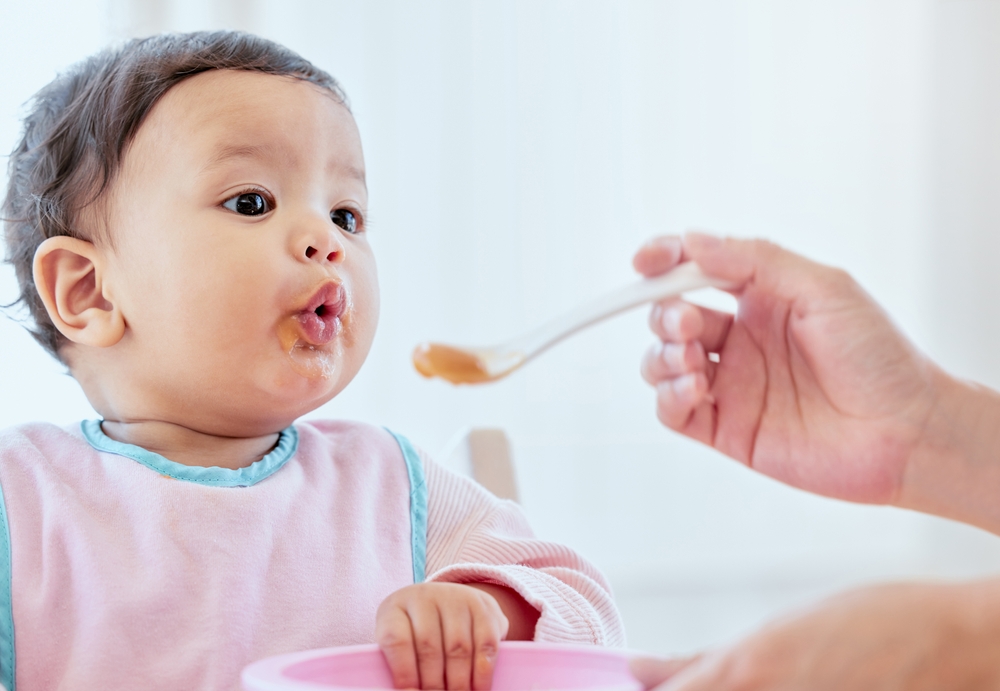
Virginia Baby Food Ban: 5 Specific Brands Just Prohibited Under New Safety Laws
Image Source: Shutterstock.com

When was the last time a grocery aisle felt like a life-changing pivot point for parents everywhere? If you feed babies — or know someone who does — Virginia’s bold new baby-food safety law is exactly that kind of seismic shift. Starting January 1, 2026, the Commonwealth of Virginia enacted the Baby Food Protection Act, a state law that makes it illegal to sell, offer, distribute, or manufacture baby foods containing toxic heavy metals. That’s huge — not only in Richmond but as a bellwether for consumer safety trends nationwide.

We’ve got the scoop on how this law works, why it matters, and a spotlight on five well-known baby-food brands that have faced scrutiny for heavy metal concerns in the past and are squarely in the safety conversation now that the law is live.

What Virginia’s Baby Food Law Actually Does (And Doesn’t)

To start with the truth that matters: this law doesn’t say “Brand X is banned forever.” What it does say, in plain English, is that any baby food on the market in Virginia must meet strict heavy-metal limits — and manufacturers have to prove it. If a product contains lead, arsenic, cadmium, or mercury above the FDA’s established action levels, it simply cannot be sold in the state. That applies whether it’s in a jar, pouch, or squeezable pack.

The law also requires companies to post test results online and attach QR codes on packages so curious shoppers can scan and see what’s inside — a move that feels more high-tech than you might expect for a jar of peas.

Heavy Metals and Why They Matter to Your Baby’s Brain

“Why all the fuss about lead or arsenic?” you might ask. The short answer: even at low levels, toxic heavy metals can negatively affect brain development in infants and toddlers, whose nervous systems are still forming. Health experts warn that chronic exposure — even through food — may contribute to developmental issues later in life.

It’s not that every baby food ever made has dangerous amounts. But decades of independent testing have found that many popular baby food products had detectable levels of heavy metals, including arsenic and lead — sometimes above what experts now consider safe for ingestion by infants.

1. Gerber (Nestlé) – Once America’s Baby Food Standard

Gerber is arguably the most iconic baby food brand in the U.S. yet has repeatedly appeared in independent testing reports showing elevated levels of heavy metals like arsenic and lead in some products. While not legally banned nationwide, those products could fall afoul of Virginia’s standards if they don’t meet FDA action levels under the new law.

2. Beech-Nut Nutrition Co. – A Legacy Brand Under Pressure

Beech-Nut has also been flagged in heavy-metal testing analyses in the past decade. That doesn’t mean all of its products will be prohibited, but specific batches or items exceeding toxic metal limits won’t be legal in Virginia after the new law takes effect.

3. Happy Family / Nurture, Inc. – Organic Isn’t Always Enough

Happy Family’s products, including those marketed as organic, have appeared in testing with measurable amounts of arsenic or cadmium. Under Virginia’s law, organic status alone won’t protect a product that doesn’t meet safety limits — so look for updated testing disclosures.

4. Earth’s Best Organic (Hain Celestial Group) – Organic Flag, Metals Questioned

Earth’s Best has also been cited in heavy metal test results in the past. Again, that doesn’t mean every item from the brand is illegal — but it could be banned from sale in Virginia if any products exceed limits when they were made or tested after Jan. 1, 2026.

5. Plum Organics – Popular With Parents, But Under Watch

Plum Organics products have surfaced in investigations for arsenic and lead in some products. Like the other brands above, specific non-compliant items could be barred from Virginia store shelves under the new law’s strict testing regime.

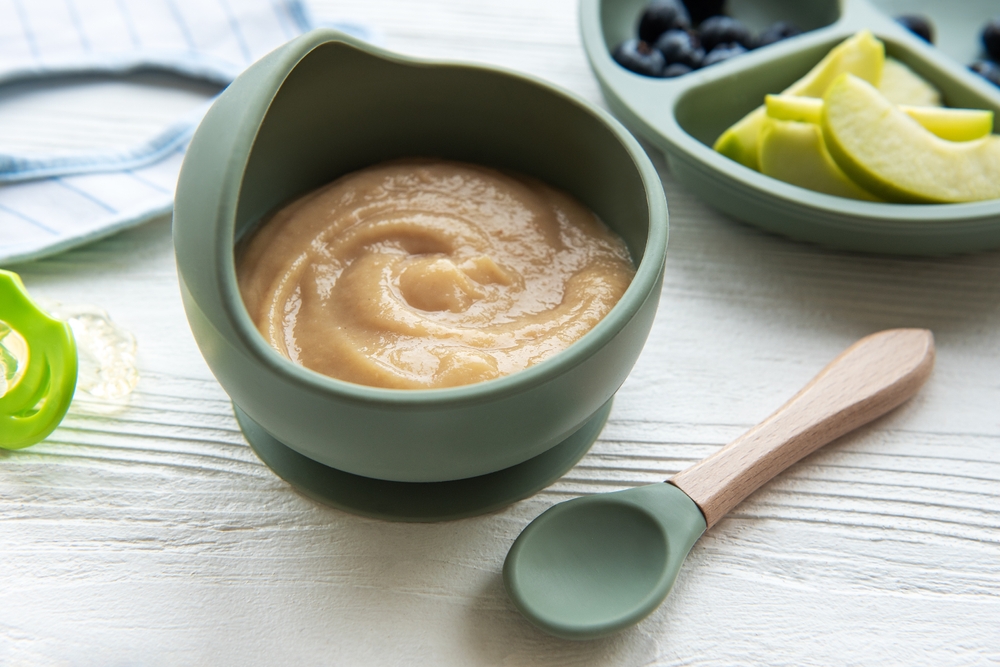
Virginia Baby Food Ban: 5 Specific Brands Just Prohibited Under New Safety Laws
Image Source: Shutterstock.com


What This Means for the Future of Baby Food

The Baby Food Protection Act is more than a law — it’s a signal. States across the country are watching. If transparency and safety standards like Virginia’s spread, you may soon see similar shifts nationwide. For consumers, that means more data and more power. For manufacturers, it means innovation and stricter testing.

In a world where the safety of even the smallest bites matters, Virginia is raising the bar for everyone.

And now it’s your turn. Do you support the new law? Are you changing how you shop for baby food because of it? Sound off in the comments below.

You May Also Like…

Beyond The Label: 8 Everyday Products Dangerous For Babies

9 Traditional Family Routines That Help Kids Feel Secure

6 Kid-Friendly Foods That Were Recalled This Month

7 Lunch Foods That Make Kids a Target for Teasing

Virginia Law: The “Baby Food Protection Act” Just Banned These Brands from Shelves

Brandon Marcus
Brandon Marcus
Brandon Marcus is a writer who has been sharing the written word since a very young age. His interests include sports, history, pop culture, and so much more. When he isn’t writing, he spends his time jogging, drinking coffee, or attempting to read a long book he may never complete.

Filed Under: Family Tagged With: baby food safety, baby health, Beech-Nut, child nutrition, consumer protection, Earth’s Best, FDA action levels, Gerber heavy metals, Happy Family, heavy metals, parenting advice, Plum Organics, Virginia law

  • Facebook
  • Pinterest
  • RSS
  • Twitter

Basic Principles Of Good Parenting

Here some basic principles for good parenting:

  1. What You Do Matters: Your kids are watching you. So, be purposeful about what you want to accomplish.
  2. You Can’t be Too Loving: Don’t replace love with material possessions, lowered expectations or leniency.
  3. Be Involved Your Kids Life: Arrange your priorities to focus on what your kid’s needs. Be there mentally and physically.
  4. Adapt Your Parenting: Children grow quickly, so keep pace with your child’s development.
  5. Establish and Set Rules: The rules you set for children will establish the rules they set for themselves later.  Avoid harsh discipline and be consistent.
  6. Explain Your Decisions: What is obvious to you may not be evident to your child. They don’t have the experience you do.
  7. Be Respectful To Your Child: How you treat your child is how they will treat others.  Be polite, respectful and make an effort to pay attention.
Best Parenting Blogs

Most Popular

Baby

9 Unusual Baby Names That Sound Like They Belong to Future CEOs

Evan Morgan
Baby

10 Baby Names That Were Once Considered “Grandparent Names” but Feel Cool Again

Evan Morgan
Target Store

Choking Incident Prompts Recall of 49,000 Target Gigglescape “Under the Sea” Popping Toys

Evan Morgan
Frustrated Girl

Why Some Students on the Spectrum Are Labeled With ODD

Evan Morgan
Coke Bottles

12 Things Kids Took to School in the ’70s That Would Never Be Allowed Today

Evan Morgan

All content on Kids Ain’t Cheap is for entertainment purposes only. By reading this blog, you agree that Kids Ain’t Cheap is not responsible for any actions taken after reading this blog. For the full disclaimer, see our privacy policy.

Please note that Kids Ain’t Cheap has financial relationships with some of the merchants mentioned here. Kids Ain’t Cheap is funded by banner advertising, commission sales and search optimization consulting.

Copyright © 2006–2026 | District Media | All Rights Reserved | Privacy Policy

Copyright © 2026 Runway Pro Theme by Viva la Violette