
• Home
  • About Us
  • Toolkit
  • Archives
  • Advertise
  • Privacy Policy

Kids Ain't Cheap

But They Sure Are Worth It

  • Parenting
    • Baby Stuff
    • Books and Reading
      • Aesops Fables
      • Comic Books
    • Education
    • Family Time
    • Green Living
    • Growing Up
    • Healthy Living & Eating
    • Holidays
    • Parenting
    • Random Musings
    • Shopping
    • Stuff to Do
  • Money
  • Product Reviews
    • Books and Magazines
    • Discount Sites
    • Furniture
    • House Keeping
    • Reviews News
    • Toys and Games
  • Contact Us
  • Our Editorial Commitment
  • Search

9 Differences in How Millennial Moms and Dads Discipline

August 11, 2025 | Leave a Comment

9 Differences in How Millennial Moms and Dads Discipline
Image source: 123rf.com

Millennial parents are reshaping the way kids are raised—and that includes how discipline is handled. While many couples try to present a united front, the truth is that millennial moms and dads often approach discipline from very different angles. From tone of voice to screen time rules, subtle distinctions in their parenting styles can lead to big conversations (or disagreements) behind closed doors. Understanding these differences doesn’t just help parents get on the same page—it can also strengthen their ability to set consistent, respectful boundaries for their kids. Let’s explore how millennial moms and dads discipline differently, and what that means for today’s families.

1. Moms Are More Likely to Use Gentle Discipline

Millennial moms tend to lean into gentle parenting, emphasizing empathy and emotional awareness over punishment. They’re more likely to kneel down to a child’s level, talk through feelings, and encourage understanding over consequences. This doesn’t mean they let bad behavior slide, but they often prioritize connection before correction. Dads, in contrast, may favor a quicker, more direct approach to managing behavior. These differences in strategy can create friction unless both parents openly discuss their goals and values.

2. Dads May Default to Rules, While Moms Focus on Emotions

Millennial dads often enforce clear rules and consequences, sometimes with less emotional cushioning than moms. Their approach may be rooted in how they were disciplined growing up, with an emphasis on respecting authority and following structure. Moms, on the other hand, might consider how a child is feeling before deciding on the best course of action. This emotional filter can be incredibly effective but might seem inconsistent to a rule-driven partner. Finding a balance between structure and compassion can lead to stronger outcomes for kids.

3. Moms Often Handle Discipline More Frequently

In many households, millennial moms still take on the bulk of daily parenting responsibilities, which includes managing most discipline situations. This means they’re more likely to be the ones navigating meltdowns, sibling squabbles, or tantrums on a regular basis. As a result, moms might develop a more flexible or nuanced approach out of sheer necessity. Dads who step in occasionally may default to firmer discipline, feeling the need to “correct” behavior quickly. Open communication can help both parents support each other instead of unintentionally undermining their efforts.

4. Dads May Be More Comfortable with Natural Consequences

Millennial dads are often more willing to let kids learn through experience, allowing natural consequences to play out instead of stepping in immediately. For example, if a child forgets their homework, a dad might let them deal with the school consequences, while a mom might rush to bring it in. This difference doesn’t stem from carelessness but from a desire to build responsibility. Moms, driven by emotional nurturing, may struggle more with letting kids face discomfort. These contrasting instincts both have value and can complement each other when used intentionally.

5. Moms Are More Likely to Research Discipline Techniques

Millennial moms often turn to parenting blogs, podcasts, and online communities to learn about the latest discipline strategies. They may bring in ideas like time-ins, behavior charts, or positive reinforcement systems. Dads might be less involved in research but stick to what they know has worked in the past. This difference can lead to disagreements if one parent sees the other’s method as outdated or too soft. The best results happen when both parents are open to learning and adapting together.

6. Dads Tend to Use Humor in Discipline More Often

Millennial dads are increasingly using humor as a way to diffuse tension and redirect misbehavior. A silly face or unexpected joke can snap a child out of a tantrum faster than a time-out. Moms may sometimes interpret this as not taking discipline seriously, especially if they’ve been managing back-to-back behavior issues all day. However, humor can be a powerful tool for reconnecting and modeling emotional regulation. When used mindfully, it can make discipline feel less combative for everyone involved.

7. Moms Are More Concerned About Long-Term Emotional Impact

Millennial moms are highly tuned into how discipline affects a child’s emotional health over time. They’re more likely to worry about shame, guilt, or fear stemming from punishment. Dads might be more focused on short-term behavior correction and less concerned about lingering emotional effects. This doesn’t mean dads don’t care—they may simply view discipline through a more pragmatic lens. Talking openly about long-term goals can help both parents align their approaches for healthier outcomes.

8. Dads May Struggle with Consistency

Because moms often handle more of the day-to-day discipline, they tend to be more consistent with enforcing rules and boundaries. Dads, especially those who work long hours or parent part-time, might have trouble maintaining the same follow-through. This can cause confusion for kids and frustration for moms who feel like they’re carrying the load. To prevent this, dads can create simple systems they can stick to when they’re home. Consistency doesn’t require perfection—it just needs to be predictable.

9. Moms and Dads View Screen Time Discipline Differently

Millennial moms and dads discipline differently when it comes to tech-related rules. Moms often worry more about how screen time affects sleep, attention spans, and mood. Dads may be more flexible, especially if screen time offers a break or bonding opportunity. Conflicts can arise if one parent uses screens as leverage while the other treats it as a casual pastime. Aligning expectations and setting tech boundaries as a team can help avoid mixed messages.

Working Together Makes All the Difference

While millennial moms and dads’ discipline in unique ways, their shared goal is raising respectful, emotionally healthy kids. These differences aren’t necessarily bad—in fact, they can provide balance and flexibility when embraced. The key is open communication, mutual respect, and a willingness to support one another. When kids see their parents working as a team, they benefit from more consistent and secure boundaries. Discipline becomes less about who’s right and more about what’s best for the child.

Do you and your partner discipline differently? Tell us how you make it work in the comments below!

Read More:

11 Discipline Methods That Secretly Backfire On Parents

10 Reasons Why So Many Parents Think Spanking Is Effective

Catherine Reed
Catherine Reed

Catherine is a tech-savvy writer who has focused on the personal finance space for more than eight years. She has a Bachelor’s in Information Technology and enjoys showcasing how tech can simplify everyday personal finance tasks like budgeting, spending tracking, and planning for the future. Additionally, she’s explored the ins and outs of the world of side hustles and loves to share what she’s learned along the way. When she’s not working, you can find her relaxing at home in the Pacific Northwest with her two cats or enjoying a cup of coffee at her neighborhood cafe.

Filed Under: Parenting Tagged With: discipline strategies, family communication, millennial parents, modern parenting, moms and dads, parenting styles, positive discipline

The Invisible Work Moms Do—and Why Dads Often Don’t See It

April 11, 2025 | Leave a Comment

A multitasking mother
Image Source: Unsplash

There’s more going on than meets the eye.

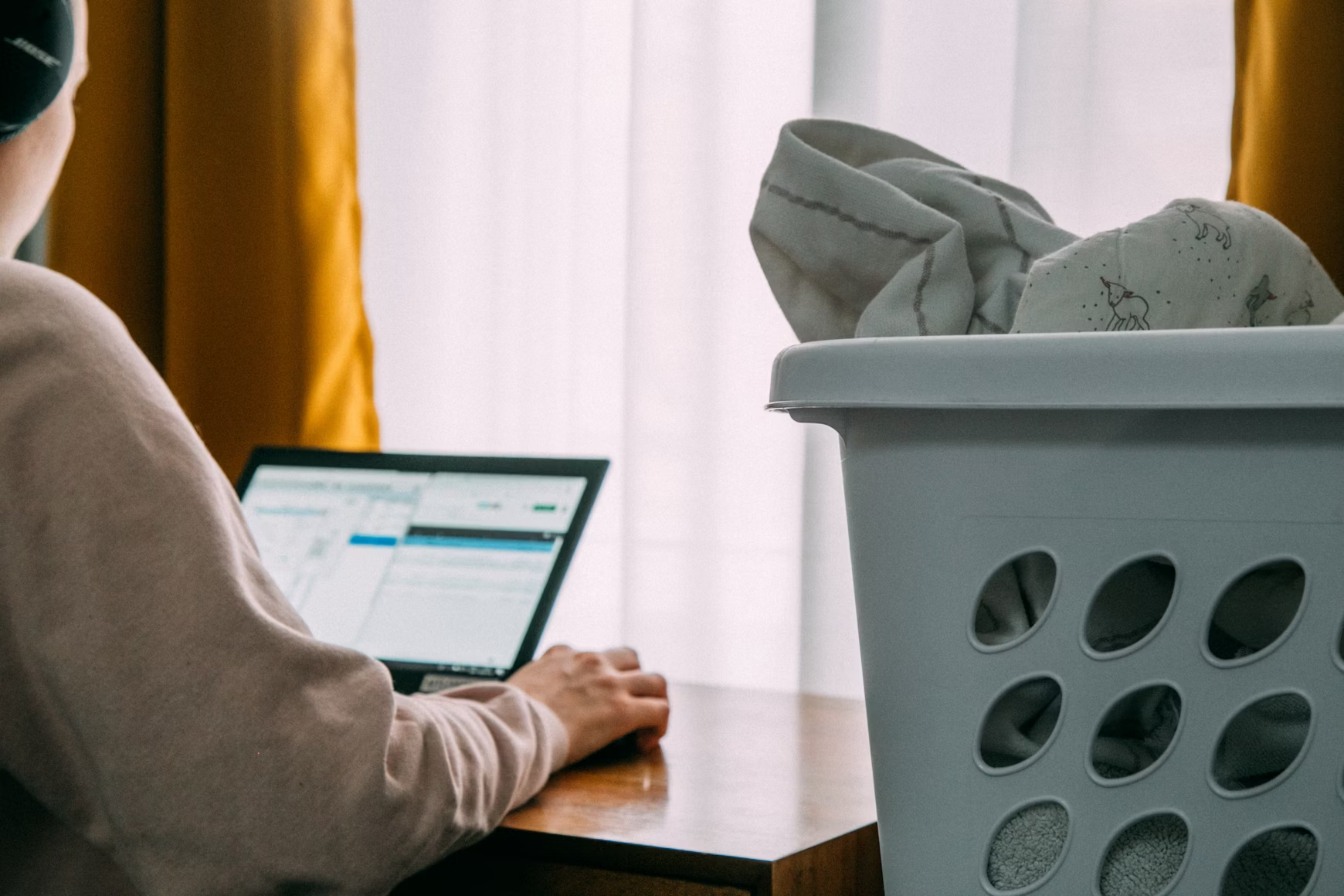
It’s not the folded towels or the trimmed crusts on sandwiches—it’s everything leading up to those tasks that goes unseen. Behind the scenes of a smoothly running household lies a to-do list that never ends, and more often than not, moms are the ones carrying it. You may not hear it, but it’s the inner voice reminding them to book the dentist appointment, restock the birthday gift stash, and sign yet another permission slip.

This management work is called invisible labor, and although it isn’t measured in loads of laundry or visible mess, it’s constantly in motion. Understanding this silent burden is critical—not just for valuing what moms do, but also for tackling the imbalance that can overwhelm them.

What Is Invisible Work, Really?

“Invisible work” refers to all the mental, emotional, and logistical tasks that keep family life functioning. Think scheduling doctor’s visits, updating the family calendar, chasing down your child’s shoes before daycare, and making sure snack supplies don’t run out. While these tasks are essential, they’re easily overlooked because they’re not a physical chore you can observe.

As defined in This Is Perimenopause, invisible labor sustains everyday life even when it’s never written down or explicitly voiced. Just because it doesn’t accumulate like dishes in the sink doesn’t mean it’s any less exhausting.

Why It Falls Most Often on Moms

Invisible work isn’t shared evenly in many households, and moms bear much of the load. According to a study highlighted by Mom’s Hierarchy of Needs, mothers handle a large majority of tasks like organizing schedules, coordinating activities, and anticipating kids’ needs.

This phenomenon often stems from ingrained cultural roles that frame mothers as the default caregivers. Over time, this setup can feel normal—unless someone deliberately changes it. Without intentional effort to shift that mental load, a cycle forms where moms keep doing more by default, and dads are left unaware of the full scope.

Why Dads Often Don’t Recognize It

It’s not always that dads refuse to help—they may just not see what needs doing. Invisible work is, by nature, hidden. It’s the thinking and planning that happens in someone’s mind, not the action you can easily witness. In many families, dads are willing to step up when asked, but the burden remains on moms to remember, organize, and delegate. As a result, a mother might handle all the mental overhead—while dad might not even realize there’s a load to share.

The Emotional Toll of the Mental Load

Invisible work doesn’t just steal time; it also drains emotional energy. Moms juggling endless mental checklists can feel underappreciated or exhausted by constantly having to “manage” the entire household behind the scenes. Referred to as “cognitive labor,” this relentless mental juggling can lead to feelings of burnout, guilt, or resentment when it goes unacknowledged. Lack of recognition isn’t about craving praise; it’s about wanting a partner in the planning. Without that partnership, stress compounds and can negatively impact a mom’s emotional well-being.

capturing the quiet emotional strain and overwhelm that dads can experience
Image Source: Unsplash

Dads Can Feel Strained Too—Just Differently

Although moms bear most of the invisible work, dads often face other pressures, like long work hours or societal expectations to be the breadwinner. Some struggle with how to connect more deeply at home while balancing external demands. A father might be unaware of the mental tasks his partner manages simply because he’s consumed by a different set of challenges.

The good news? When dads are invited and encouraged to share in the invisible load, they can experience a stronger bond with both their partner and children—while alleviating the burden on mom.

Time to Share the Load

Recognizing invisible work is only the first step; taking action is what truly changes things. Couples can start by having open, non-judgmental conversations about who handles which tasks and how that distribution can become more balanced. Scheduling or listing out the tasks—things like “buy birthday gifts,” “set up dentist appointment,” or “order groceries”—can reveal just how many responsibilities moms juggle quietly. From there, you can decide which tasks to delegate or alternate. Even small shifts can lighten the burden and improve family dynamics.

More Than “Just Moms’ Work”

Invisible work isn’t a “mom problem”—it’s a family challenge. When families grasp the depth and weight of the planning, organizing, and mental load that often falls on mothers, they can work toward true collaboration. Whether it’s having dad manage all after-school activities, or a shared digital calendar for chores, the aim is fairness, empathy, and unity. Kids also benefit from seeing teamwork and learning that each family member contributes. That’s how families grow strong together.

How do you manage invisible work in your household? Share your strategies in the comments—we’re all learning ways to lighten the load and support each other more effectively.

Read More

  • How Two Teens Are Financially Responsible in Different Ways
  • Focus On Wellness: Keeping Your Family And Pets As Healthy As Possible
Samantha Warren
Samantha

Samantha Warren is a holistic marketing strategist with 8+ years of experience partnering with startups, Fortune 500 companies, and everything in between. With an entrepreneurial mindset, she excels at shaping brand narratives through data-driven, creative content. When she’s not working, Samantha loves to travel and draws inspiration from her trips to Thailand, Spain, Costa Rica, and beyond.

Filed Under: Parenting Tagged With: emotional well-being, family dynamics, household roles, invisible work, mental load, moms and dads, Parenting, practical parenting

  • Facebook
  • Pinterest
  • RSS
  • Twitter

Basic Principles Of Good Parenting

Here some basic principles for good parenting:

  1. What You Do Matters: Your kids are watching you. So, be purposeful about what you want to accomplish.
  2. You Can’t be Too Loving: Don’t replace love with material possessions, lowered expectations or leniency.
  3. Be Involved Your Kids Life: Arrange your priorities to focus on what your kid’s needs. Be there mentally and physically.
  4. Adapt Your Parenting: Children grow quickly, so keep pace with your child’s development.
  5. Establish and Set Rules: The rules you set for children will establish the rules they set for themselves later.  Avoid harsh discipline and be consistent.
  6. Explain Your Decisions: What is obvious to you may not be evident to your child. They don’t have the experience you do.
  7. Be Respectful To Your Child: How you treat your child is how they will treat others.  Be polite, respectful and make an effort to pay attention.
Best Parenting Blogs

Most Popular

Baby

9 Unusual Baby Names That Sound Like They Belong to Future CEOs

Evan Morgan
Baby

10 Baby Names That Were Once Considered “Grandparent Names” but Feel Cool Again

Evan Morgan
Target Store

Choking Incident Prompts Recall of 49,000 Target Gigglescape “Under the Sea” Popping Toys

Evan Morgan
Frustrated Girl

Why Some Students on the Spectrum Are Labeled With ODD

Evan Morgan
Coke Bottles

12 Things Kids Took to School in the ’70s That Would Never Be Allowed Today

Evan Morgan

All content on Kids Ain’t Cheap is for entertainment purposes only. By reading this blog, you agree that Kids Ain’t Cheap is not responsible for any actions taken after reading this blog. For the full disclaimer, see our privacy policy.

Please note that Kids Ain’t Cheap has financial relationships with some of the merchants mentioned here. Kids Ain’t Cheap is funded by banner advertising, commission sales and search optimization consulting.

Copyright © 2006–2026 | District Media | All Rights Reserved | Privacy Policy

Copyright © 2026 Runway Pro Theme by Viva la Violette