• Home
  • About Us
  • Toolkit
  • Archives
  • Advertise
  • Privacy Policy

Kids Ain't Cheap

But They Sure Are Worth It

  • Parenting
    • Baby Stuff
    • Books and Reading
      • Aesops Fables
      • Comic Books
    • Education
    • Family Time
    • Green Living
    • Growing Up
    • Healthy Living & Eating
    • Holidays
    • Parenting
    • Random Musings
    • Shopping
    • Stuff to Do
  • Money
  • Product Reviews
    • Books and Magazines
    • Discount Sites
    • Furniture
    • House Keeping
    • Reviews News
    • Toys and Games
  • Contact Us
  • Our Editorial Commitment
  • Search

Pediatricians Warn: The “White Noise” Habit That Is Quietly Damaging Infant Hearing

April 5, 2026 | Leave a Comment

Sleeping Baby
Image Source: Pexels

White noise has become a go-to solution for exhausted parents trying to help their babies sleep longer and more soundly. From sleek sound machines to smartphone apps, the promise of better rest is incredibly appealing during those early months. But pediatricians are beginning to raise concerns about how this seemingly harmless habit may be affecting infant hearing over time. While white noise can be useful, misuse or overuse may carry risks that many parents simply aren’t aware of. Understanding those risks—and how to use white noise safely—can make a meaningful difference in your child’s development.

Why White Noise Became So Popular Among Parents

White noise mimics the constant whooshing sounds babies hear in the womb, which can be soothing and familiar to newborns. Many parents find that it helps babies fall asleep faster and stay asleep longer, especially in noisy households. It can also mask sudden sounds like barking dogs or slamming doors that might otherwise wake a sleeping infant. Because of these benefits, white noise machines have quickly become a staple in nurseries around the world. However, popularity doesn’t always equal safety, especially when guidelines aren’t clearly understood or followed.

The Hidden Risks of Continuous Noise Exposure

One of the main concerns pediatricians highlight is prolonged exposure to high decibel levels. Some white noise machines can reach volumes comparable to a running vacuum cleaner, which is far louder than most parents realize. Infants have delicate, developing auditory systems that are particularly vulnerable to sustained noise exposure. Over time, this can potentially lead to subtle hearing damage or delayed auditory processing. The issue becomes more concerning when devices are left running all night at high volumes, creating a constant stream of sound with no breaks.

How Volume and Distance Make a Big Difference

Not all white noise use is harmful, and much depends on how the device is used. Experts recommend keeping sound levels below 50 decibels, which is roughly the volume of a quiet conversation. Placement also matters, as devices placed too close to a crib can significantly increase the intensity of sound reaching a baby’s ears. Ideally, the machine should be positioned several feet away from the sleeping area to reduce direct exposure. Small adjustments like lowering the volume and increasing the distance can dramatically reduce potential risks.

Signs Your Baby May Be Affected

It’s not always easy to recognize early signs of hearing issues in infants, but there are subtle clues to watch for. A baby who doesn’t startle at loud noises or fails to respond to familiar voices may need further evaluation. Delays in babbling or vocal experimentation can also signal potential concerns. While these signs don’t always point directly to white noise exposure, they are worth discussing with a pediatrician. Early detection is crucial, as addressing hearing issues sooner rather than later can significantly improve outcomes.

Safer Alternatives and Smart Usage Tips

Parents don’t have to abandon white noise altogether, but using it more thoughtfully can make a big difference. Consider using timers so the sound turns off after your baby falls asleep rather than playing continuously. You might also explore gentler alternatives like soft lullabies or ambient nature sounds played at low volumes. Creating a consistent bedtime routine can help babies associate sleep with calming cues beyond just sound. Over time, this reduces reliance on white noise and supports more natural sleep habits.

Finding the Right Balance for Healthy Sleep

White noise can be a helpful tool, but like many parenting aids, it works best when used with care and awareness. Pediatricians aren’t calling for a complete ban but rather encouraging parents to be mindful of volume, duration, and placement. By making small adjustments, you can continue to support your baby’s sleep without putting their hearing at risk. As more research emerges, staying informed will help you make the best choices for your child’s well-being. After all, healthy sleep should never come at the cost of healthy development.

Have you been using white noise for your baby, and did any of these insights surprise you? What changes, if any, will you make to your baby’s sleep routine after reading this? Share your experience or questions in the comments—we’d love to hear how you’re navigating sleep routines at home.

What to Read Next

5 Baby Products Pediatricians Warn Parents to Stop Using Early

12 Household Sounds That Are Affecting Your Child’s Sleep

8 Must-Have Baby Gadgets That Pediatricians Say Delay Development

Evan Morgan

Evan Morgan has been a full-time freelance writer and editor for 10+ years. When not working, he enjoys catching the latest true crime documentary or getting lost in a good book.
Filed Under: Parenting Tagged With: baby safety, baby sleep tips, infant hearing, Newborn Care, parenting advice, sleep training, white noise

What You Didn’t Know: 11 Unexpected Medical Bills After A New Baby

July 25, 2025 | Leave a Comment

What You Didn't Know 11 Unexpected Medical Bills After A New Baby
Image source: 123rf.com

You plan for diapers, clothes, and car seats, but few new parents are ready for the avalanche of unexpected medical bills that show up after a baby is born. Even with decent insurance, the fine print can turn a joyful time into a financial headache. From hospital extras to follow-up appointments you didn’t even know were scheduled, the charges can quickly pile up. Knowing what to expect can help you ask smarter questions and avoid budget surprises. Here are 11 unexpected medical bills many families face after bringing home their new bundle of joy.

1. The Hospital Nursery May Cost Extra

Many parents are shocked to find out that nursery care isn’t always included in delivery costs. If your baby is taken to the nursery for observation or basic care, those charges may show up separately on your bill. Even something as simple as routine monitoring can be billed as an extra service. To avoid surprises, ask what’s considered standard versus optional care. Insurance companies don’t always break it down clearly, so request itemized billing after your stay.

2. Lactation Consultant Visits Aren’t Always Covered

Breastfeeding support can be a lifeline for new moms, but it doesn’t always come free. While some insurance plans cover lactation services, others only cover a limited number of visits or require pre-authorization. You might also be billed separately for a consultant’s time, even if it happens during your hospital stay. Be sure to check whether in-network or certified providers are required. If you need help at home, find out ahead of time what’s covered and what isn’t.

3. Newborn Hearing Tests and Screenings Can Surprise You

Routine newborn screenings, like hearing tests and blood spot tests, are often assumed to be part of the delivery package. But depending on your provider and insurance, these may show up as separate unexpected medical bills. Some are billed by third-party labs, which may not be in-network. This means you could be responsible for the full cost, even if the hospital is covered. Before delivery, ask your provider about how screenings are billed and who performs them.

4. Extra Pediatrician Visits Add Up Fast

Newborns typically see a pediatrician within the first few days after birth, but follow-up visits can come sooner and more often than expected. If your baby has jaundice, weight loss, or feeding trouble, multiple appointments might be required. While each visit may seem routine, co-pays and lab work can quickly accumulate. Some practices also charge for phone consultations or after-hours care. It helps to confirm what’s considered a standard visit under your plan.

5. Bloodwork and Lab Fees Aren’t Always Bundled

Hospitals often send newborn bloodwork to outside labs, which means you may get a bill long after you’ve left the hospital. These fees may not be itemized clearly or could be billed at out-of-network rates. It’s especially common with genetic or metabolic screenings. If you’re unsure where your baby’s tests are going, ask your care team during your stay. Calling your insurance provider to confirm covered labs can help prevent sticker shock later.

6. Anesthesia and Epidural Services Come with Their Own Bill

If you received an epidural or any form of anesthesia, that service is billed separately from your delivery. What many don’t realize is that the anesthesiologist might be out-of-network, even in an in-network hospital. This can lead to massive unexpected medical bills for pain management services. Always ask in advance if the anesthesia team is covered under your plan. It’s not a fun question to ask in labor, so plan ahead if possible.

7. NICU Charges Can Appear Even for Brief Stays

Sometimes a baby needs to spend a few hours or days in the neonatal intensive care unit (NICU), even if everything ends up being fine. These stays, no matter how short, often come with very high price tags. Each test, scan, or monitoring period in the NICU is billed separately. While necessary, these charges are a major contributor to medical debt for new parents. Find out if your insurance requires special authorization for NICU services ahead of time.

8. Doctor “Rounds” May Result in Duplicate Charges

You might think all the doctors who visit during your hospital stay are part of one team, but that’s not always the case. Pediatricians, specialists, or hospitalists who stop by to check on your newborn may each bill separately. This can lead to multiple charges for what feels like a single check-in. Ask the hospital if all providers are in-network and check your Explanation of Benefits (EOB) carefully. Disputing unfamiliar charges early is easier than waiting until they go to collections.

9. Postpartum Supplies Might Not Be Fully Covered

Items like breast pumps, compression garments, or wound care supplies may be partially covered or not at all. Sometimes the hospital sends you home with items assuming your insurance will pay, only for you to get a bill later. This is especially common with durable medical equipment. Before accepting anything, ask if it’s considered covered and request documentation. You can often buy the same items cheaper yourself if needed.

10. Vaccinations May Come from Out-of-Network Providers

While newborns don’t receive many vaccines in the hospital, some facilities bring in third-party providers for these services. This is especially true for the Hepatitis B shot. If that provider isn’t in your insurance network, the charge could be much higher than expected. To avoid this, confirm ahead of time who administers the vaccines and whether they’re in-network. If not, ask if your pediatrician can provide them instead.

11. Mental Health Services for Moms Aren’t Always Prioritized

Postpartum depression or anxiety is incredibly common, yet many new moms don’t seek help because of cost. Therapy, psychiatric visits, and even medications may fall outside of your regular coverage or require high co-pays. Since mental health coverage varies widely, it’s easy to be caught off guard. If you’re struggling, check your policy for mental health support before the baby arrives. Prioritizing care early can prevent both emotional and financial strain later.

Planning Now Helps You Dodge the Worst Surprises

The joy of bringing home a baby can quickly be clouded by a wave of unexpected medical bills that no one warned you about. While some charges are unavoidable, knowing what to expect gives you a leg up in navigating the fine print of your coverage. Don’t hesitate to ask questions, push for itemized bills, and explore alternate care options when possible. The earlier you plan, the more you can protect your growing family’s financial health. Knowledge is power when you’re dealing with a healthcare system that often keeps parents in the dark.

Did you face any surprise bills after your baby was born? Share your experience and advice in the comments!

Read More:

The Hidden Costs: 11 Things You Didn’t Know You’d Pay For After Baby

9 Money Mistakes That Cost New Parents Fortunes

Catherine Reed
Catherine Reed

Catherine is a tech-savvy writer who has focused on the personal finance space for more than eight years. She has a Bachelor’s in Information Technology and enjoys showcasing how tech can simplify everyday personal finance tasks like budgeting, spending tracking, and planning for the future. Additionally, she’s explored the ins and outs of the world of side hustles and loves to share what she’s learned along the way. When she’s not working, you can find her relaxing at home in the Pacific Northwest with her two cats or enjoying a cup of coffee at her neighborhood cafe.

Filed Under: Money and Finances Tagged With: financial planning for parents, health insurance tips, hospital costs, medical billing tips, new baby expenses, Newborn Care, parenting budget, unexpected medical bills

7 Things Nobody Ever Told You About Your Baby Monitor

April 30, 2025 | Leave a Comment

 Smiling baby lying in a bassinet next to a seated adult.
Image Source: Unsplash

A baby monitor feels like a superhero gadget—standing guard so you can catch your breath, prep a bottle, or simply hear the comforting rustle of your little one breathing. Yet monitors, whether audio, video, or wearable, carry hidden downsides. Low-level radiation, hacking risks, and false alarms can turn a high-tech helper into an energy-sapping stressor.

Before you rest your peace of mind on a blinking LED, take ten minutes to learn the truths most companies skip in their marketing copy. You don’t need to ditch your monitor; you just need to use it wisely.

1. Wireless Baby Monitors Emit Radiation

Most modern baby monitors transmit via Wi-Fi, Bluetooth, or DECT radio frequencies. That invisible signal makes crisp video feeds possible, but it also means continuous electromagnetic radiation. Every wireless baby monitor sold in North America emits high-frequency energy—even when “idle.” Research on the long-term effects of low-level exposure is inconclusive, yet infants’ rapidly developing brains and thinner skulls worry many pediatric specialists.

Simple tweaks help: place the transmitter at least three feet from the crib, activate eco or VOX (voice-activated) modes when possible. Power the unit down for daytime naps if you’re working in the next room.

2. Placement Matters More Than You Think

You’d be shocked how often parents mount a camera directly above the crib, cables dangling like enticing toys. A monitor that slips or a cord that drapes within reach can create a strangulation hazard in seconds. JPMA Cares urges caregivers to secure cords against walls and to keep devices a minimum of three feet from any sleep surface. Angle the camera from a shelf or wall bracket. Zoom features on many models compensate for distance. Proper placement also improves picture clarity, since the lens isn’t fighting crib slats or shadows.

3. Vital-Sign Monitors Aren’t Always Accurate

Sock sensors and belly bands that track oxygen saturation promise early warning during respiratory dips. The reality is more nuanced. In controlled lab settings, many devices work well—but nurseries aren’t labs. A study at the Children’s Hospital of Philadelphia recorded frequent false alarms and missed events on several popular wearables. Parents jolted from sleep by false positives often develop alarm fatigue, eventually ignoring alerts.

If you use a vitals monitor, follow manufacturer instructions to the letter. Choose the correct sock size, avoid lotions that interfere with sensors, and discuss any repeated warnings with your pediatrician instead of relying purely on the app.

4. FDA Approval Is Rare—But It Matters

Because most baby monitors are classified as wellness devices, they bypass strict medical evaluation. That changed in 2023 when one pulse-oximeter earned Food and Drug Administration clearance for home use in medically supervised cases. FDA review verifies accuracy and safety under certain conditions—yet even a cleared device isn’t a free pass. Clearance applies to infants between specific weight and age ranges and is meant to supplement professional care. If your child faces respiratory or cardiac concerns, ask whether prescription-level monitoring is warranted. For healthy babies, safe-sleep routines—flat surface, firm mattress, no loose blankets—remain more protective than any gadget.

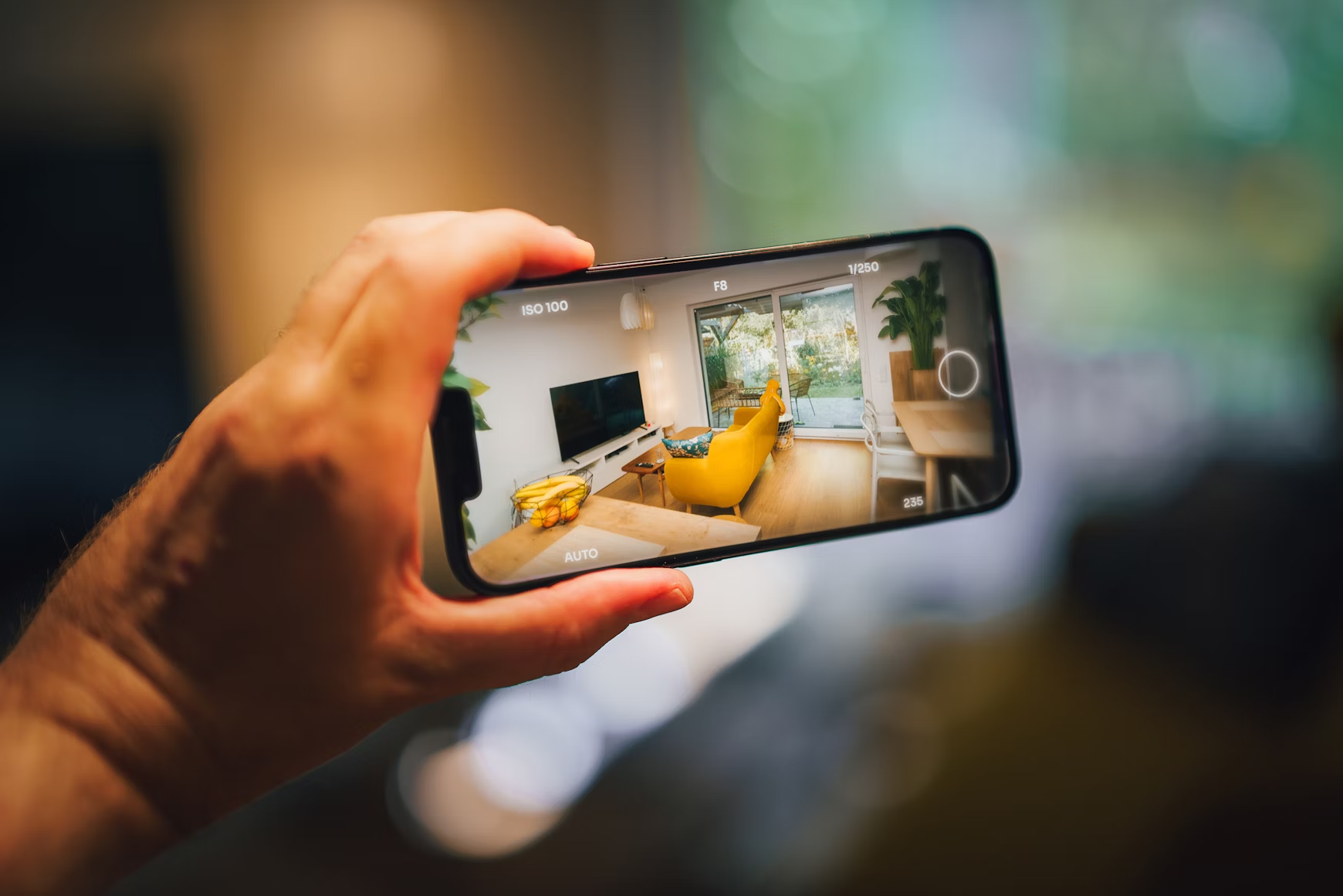
Hand holding a smartphone taking a photo of a modern living room.
Image Source: Unsplash

5. Smartphone-Connected Monitors Have Big Limitations

Turning your phone into a monitoring hub sounds efficient—until the app crashes during nap time. Reviews in medical journals list inconsistencies in data capture and transmission for many app-based products. Video lag, weak Wi-Fi signals, and unverified metrics can lull parents into a false sense of security. To reduce glitches, place your router centrally, update firmware promptly, and avoid power-saving modes that throttle background apps. Treat push notifications as helpful prompts, not unquestionable truth—always verify if something seems off.

6. Not All Alerts Are Helpful

You buy a monitor for reassurance. However, some models ping your handset every time the nursery fan oscillates. Over-sensitivity can compound sleep deprivation and make nights even more exhausting. Before declaring the unit defective, explore the settings menu. Adjust motion thresholds, lengthen sound-delay timers, or disable secondary alerts like humidity reports at three in the morning. A streamlined profile focuses on real risks—sustained crying, prolonged stillness—rather than harmless wiggles.

7. Your Baby Isn’t the Only One Being Watched

Baby-monitor hacking stories sound like urban legends until you read accounts of strangers speaking through a nursery camera. The risk spikes when families reuse default passwords or skip firmware updates. Create a unique, complex password, update software regularly, and enable two-factor authentication whenever the feature exists. For extra protection, place the monitor on a guest or IoT network separate from laptops and banking devices. Finally, disable remote access when you’re away. Unused features are essentially unlocked doors.

What This Means for You

Baby monitors are powerful tools—but they’re not magical shields. Think of yours as one layer in a broader safety strategy that includes safe-sleep positioning, regular pediatric visits, and plain-old parental instinct. Five steps to remember:

  1. Choose wisely. Decide whether audio, video, or vitals tracking fits your needs. More features equal more potential headaches.
  2. Position safely. Follow the three-foot rule, and secure every cord.
  3. Optimize settings. Calibrate alerts to match your comfort level.
  4. Maintain cyber hygiene. Strong passwords and timely updates protect privacy.
  5. Keep perspective. No device replaces attentive caregiving or common-sense routines.

When used thoughtfully, a monitor can give you priceless peace of mind without piling on new anxieties. Equip yourself with knowledge, tailor your setup, and get back to what matters most—restful, connected time with your growing child.

Have you used a baby monitor before? If so, how was your experience? Share in the comments below!

Read More

  • Use Video Baby Monitors With Caution
  • Spying On The Nanny: Is It Ethical to Use Nanny Cams to Monitor Babysitters?
Samantha Warren
Samantha

Samantha Warren is a holistic marketing strategist with 8+ years of experience partnering with startups, Fortune 500 companies, and everything in between. With an entrepreneurial mindset, she excels at shaping brand narratives through data-driven, creative content. When she’s not working, Samantha loves to travel and draws inspiration from her trips to Thailand, Spain, Costa Rica, and beyond.

Filed Under: Parenting Tagged With: Baby Gear, Baby Monitor, baby safety, child safety | Parenting, Gear Guides, Newborn Care, parenting tips

  • Facebook
  • Pinterest
  • RSS
  • Twitter

Basic Principles Of Good Parenting

Here some basic principles for good parenting:

  1. What You Do Matters: Your kids are watching you. So, be purposeful about what you want to accomplish.
  2. You Can’t be Too Loving: Don’t replace love with material possessions, lowered expectations or leniency.
  3. Be Involved Your Kids Life: Arrange your priorities to focus on what your kid’s needs. Be there mentally and physically.
  4. Adapt Your Parenting: Children grow quickly, so keep pace with your child’s development.
  5. Establish and Set Rules: The rules you set for children will establish the rules they set for themselves later.  Avoid harsh discipline and be consistent.
  6. Explain Your Decisions: What is obvious to you may not be evident to your child. They don’t have the experience you do.
  7. Be Respectful To Your Child: How you treat your child is how they will treat others.  Be polite, respectful and make an effort to pay attention.
Best Parenting Blogs

Most Popular

Baby

9 Unusual Baby Names That Sound Like They Belong to Future CEOs

Evan Morgan
Baby

10 Baby Names That Were Once Considered “Grandparent Names” but Feel Cool Again

Evan Morgan
Target Store

Choking Incident Prompts Recall of 49,000 Target Gigglescape “Under the Sea” Popping Toys

Evan Morgan
Frustrated Girl

Why Some Students on the Spectrum Are Labeled With ODD

Evan Morgan
Coke Bottles

12 Things Kids Took to School in the ’70s That Would Never Be Allowed Today

Evan Morgan

All content on Kids Ain’t Cheap is for entertainment purposes only. By reading this blog, you agree that Kids Ain’t Cheap is not responsible for any actions taken after reading this blog. For the full disclaimer, see our privacy policy.

Please note that Kids Ain’t Cheap has financial relationships with some of the merchants mentioned here. Kids Ain’t Cheap is funded by banner advertising, commission sales and search optimization consulting.

Copyright © 2006–2026 | District Media | All Rights Reserved | Privacy Policy

Copyright © 2026 Runway Pro Theme by Viva la Violette