• Home
  • About Us
  • Toolkit
  • Archives
  • Advertise
  • Privacy Policy

Kids Ain't Cheap

But They Sure Are Worth It

  • Parenting
    • Baby Stuff
    • Books and Reading
      • Aesops Fables
      • Comic Books
    • Education
    • Family Time
    • Green Living
    • Growing Up
    • Healthy Living & Eating
    • Holidays
    • Parenting
    • Random Musings
    • Shopping
    • Stuff to Do
  • Money
  • Product Reviews
    • Books and Magazines
    • Discount Sites
    • Furniture
    • House Keeping
    • Reviews News
    • Toys and Games
  • Contact Us
  • Our Editorial Commitment
  • Search

10 Words Most Adults Use That Children Should Understand by the Age of 5

April 24, 2025 | Leave a Comment

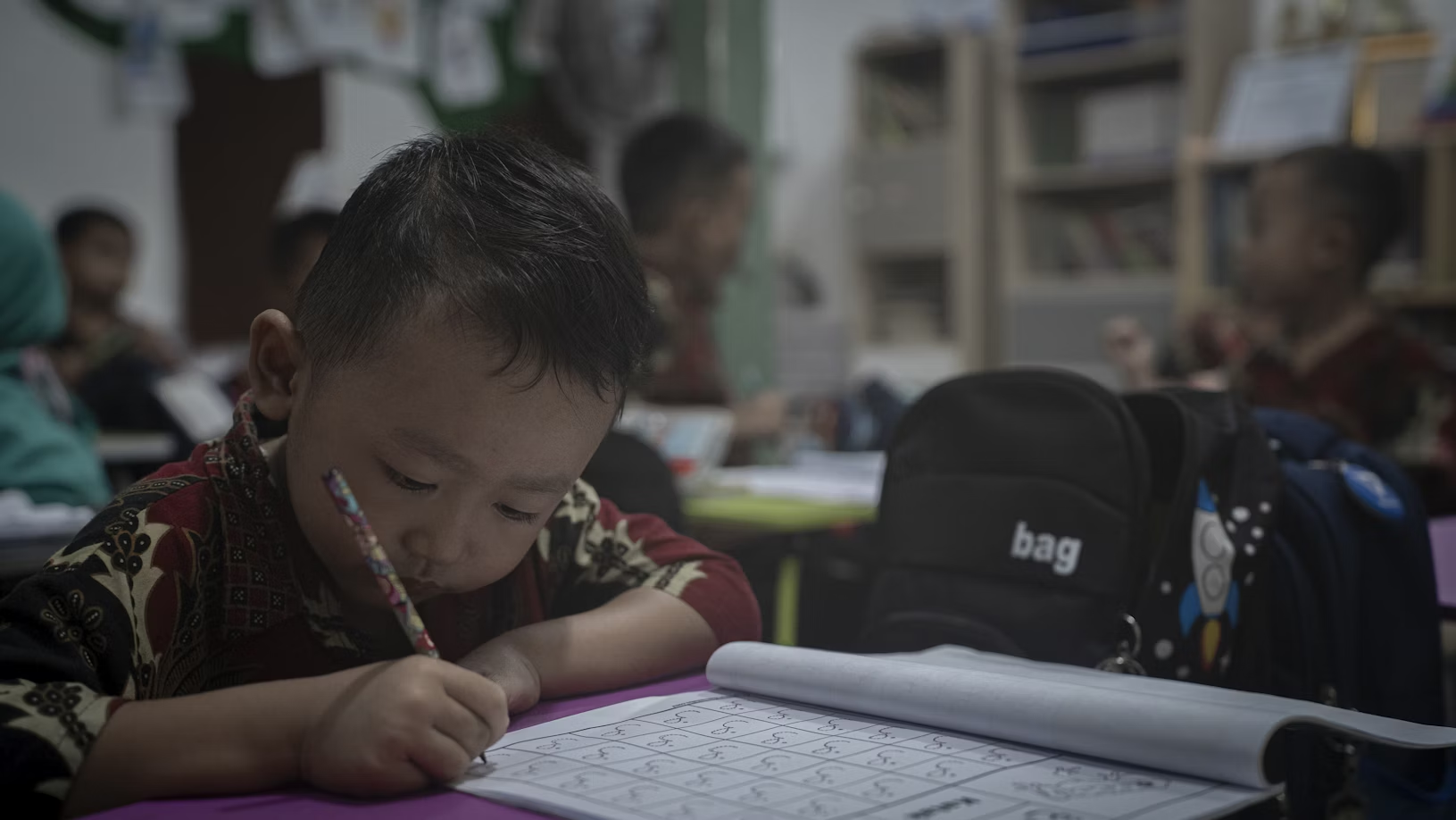
Young child focused on writing in a classroom setting
Image Source: Unsplash

The preschool years are bursting with discoveries—tying shoes, sharing toys, asking a million “why’s.” Underneath those visible milestones, language is the real powerhouse, wiring a child’s brain for everything from emotional self-control to early math.

During the ages of three to five, neural connections fire at lightning speed; every conversation, story time, or grocery-aisle chat lays down pathways they’ll use for reading, problem-solving, and friendship.

A typical five-year-old recognizes roughly 10,000 words, yet a handful function like VIP passes: they open the doors to sequencing, emotional literacy, and social ease.

Below are 10 everyday words that children should understand by the age of 5—and why each one matters for confidence and connection.

Think of this list as the starter kit for confident communication. Mastery doesn’t require flashcards—just mindful, everyday talk from caregivers and teachers.

WordWhy It Matters
BeforeTeaches sequencing: “Wash hands before dinner.” Mastering order helps with routines and later reading comprehension.
BecauseConnects cause and effect: “I’m sad because my tower fell.” Builds reasoning and empathy.
AfterIntroduces future thinking and delayed gratification: “After school we’ll visit the park.”
HappyFoundational feeling word; naming emotions reduces meltdowns and boosts emotional intelligence.
SameEarly concept of equality and basic math (“same amount”); fosters fairness.
DifferentEncourages curiosity about diversity—eye color, lunch choices, cultures.
InsideSpatial cue vital for safety and independence (“Snacks are inside your bag”).
StopBoundary word that promotes impulse control—and can literally keep kids safe.
WaitBuilds patience and self‑regulation: “Wait for the light to turn green.”
FunnyRecognizing humor strengthens peer bonds and supports pre‑reading rhyming skills.
Scrabble tiles spelling 'SMILE' with googly eyes on blue background
Image Source: Unsplash

How to Weave These Words Into Daily Life

  • Narrate routines: “Before we go outside, coats on; after we play, shoes off.”
  • Model feelings: “I feel happy because you shared.”
  • Transform playtime: Sort blocks into “same” and “different” piles, hide treasures inside boxes, shout “stop” then “go.”
  • Pause for practice: When you say “wait,” count slowly together to reinforce the pause, then cheer their success.
  • Fuel laughter: Make up tongue twisters or silly rhymes—anything that tickles their “funny” bone reinforces the concept.

Remember, learning these words isn’t a quiz—it unfolds through everyday chatter, stories, and games. Each term strengthens a bridge to clearer communication, sturdier self-control, and richer relationships.

Quick Word Check and When to Seek Extra Support

Worried your child might be missing a few of these key terms? Try this simple, no-pressure check:

  1. Play “Show Me”: Hold up a favorite toy and say, “Hide it inside the box—then grab it after I count to three.”
  2. Feelings Flashcards: Show a happy face and ask, “What’s this feeling? When do you feel happy?”
  3. Story Sequencing: Ask your child to retell a short picture book. Listen for before, because, and after clues.
  4. Red Light/Green Light Remix: Add “stop,” “wait,” and “go” commands to see how quickly they connect words with actions.

If your preschooler regularly:

  • Replaces these words with vague fillers (“thingy,” “that one”),
  • Avoids cause-and-effect phrases (“because”) by age five,
  • Struggles to follow simple sequencing directions

Consider a chat with their teacher or a pediatric speech-language pathologist. Early intervention can turn small gaps into big gains—giving your child the confidence to tackle kindergarten with a robust word bank and the social skills to match.

Join the Conversation

Which of these words sparked the biggest “aha!” moment for your child? Tell us in the comments—your tip could help another parent today.

Read More

  • Here’s How to Send Your Children to Private School
  • Your Child’s Manners Are Why No One Is Inviting You Over (You Can Change This)
Samantha Warren
Samantha

Samantha Warren is a holistic marketing strategist with 8+ years of experience partnering with startups, Fortune 500 companies, and everything in between. With an entrepreneurial mindset, she excels at shaping brand narratives through data-driven, creative content. When she’s not working, Samantha loves to travel and draws inspiration from her trips to Thailand, Spain, Costa Rica, and beyond.

Filed Under: Parenting Tagged With: child communication | Parenting, child development, early childhood development, kids vocabulary, parenting tips, preschool learning, speech milestones

Is Parenting Today Way Too Soft? Here’s Why It Might Be Hurting Your Kids

April 24, 2025 | Leave a Comment

Mother and daughter lying on bed, smiling at each other
Image Source: Unsplash

The instinct to shield children from stress or hardship is natural—especially in an unpredictable world. Yet when protection turns into soft parenting that removes every obstacle, kids can miss out on crucial emotional tools. Below, we explore how overly gentle approaches can backfire and what balanced alternatives—like “lighthouse parenting”—offer instead.

What is Soft Parenting?

Soft parenting—often called gentle or respectful parenting—is an approach that puts connection before correction. Instead of relying on threats, bribes, or harsh punishments, caregivers lead with empathy, collaboration, and steady boundaries.

The goal is not permissiveness; it is to teach self‑discipline through modeling and problem solving rather than fear. A soft parent begins by validating feelings (“You feel angry your tower broke”) and then guides behavior (“Let’s breathe, then rebuild”).

Core pillars include emotional attunement, age‑appropriate choices, and natural consequences. For example, rather than yelling about a skipped chore, a parent might calmly explain why the task matters and invite the child to help set a reminder system.

Discipline focuses on repairing, not shaming: apologize if you overreact, brainstorm solutions together, and reinforce the idea that mistakes are learning chances.

Soft Parenting Can Undermine Resilience

Shielding children from failure or disappointment robs them of practice in problem‑solving. Studies highlight that over‑involvement lowers self‑esteem and leaves kids anxious about trying new things without immediate help.

Emotional Health May Be at Risk

Counter‑intuitively, removing all hurdles doesn’t guarantee happiness. Research links overprotective parenting to higher rates of anxiety and depression because kids never build the coping muscles everyday struggles provide.

Soft Does Not Always Mean Effective

A Pew survey reports 45% of parents lean overprotective. Excessive softness—fixing every issue, avoiding discipline—can stunt independence and stall skills such as decision‑making and persistence.

Two kids at a kitchen sink, one wearing a colander as a hat
Image Source: Unsplash

Behavior Problems May Follow

Permissive households often see more defiance, aggression, or trouble respecting authority. Consistent, supportive boundaries teach kids limits while still making them feel safe.

A Balanced Path: Lighthouse Parenting

Lighthouse parents offer steady guidance and clear expectations while allowing kids to navigate manageable challenges—a middle ground between helicopter (over‑involved) and free‑range (hands‑off) styles.

What You Can Do Today

  • Set firm, consistent rules—and explain the why. Kids are more likely to respect boundaries when they understand the reason behind them. Instead of “Because I said so,” try: “We turn tablets off at 7 p.m. so your mind can slow down and you can fall asleep faster.” Deliver rules in the same tone every time, and follow through on consequences you’ve agreed upon. Predictability helps children feel safe, which in turn makes cooperation easier.
  • Let children face age‑appropriate challenges before stepping in. Soft parenting isn’t swooping in at every wobble; it’s offering a safety net, not a helicopter. If your five‑year‑old struggles to zip a jacket, resist the urge to fix it immediately. Offer encouragement—“I see you working hard; try guiding the zipper with your thumbs”—and step back. Mastering small frustrations now builds resilience for bigger hurdles later.
  • Model calm problem‑solving: talk through setbacks instead of erasing them. When setbacks happen—spilled juice, lost homework—narrate your thought process: “I feel disappointed, but let’s figure out a solution. First, we’ll grab paper towels; then we’ll pour a new drink.” Speaking your steps aloud shows kids how to move from emotion to action. It also normalizes mistakes as learning moments, not crises that require rescue.
  • Praise effort over outcomes to build grit. Swap “You’re so smart” with “I noticed how patiently you sounded out every word.” Highlighting persistence teaches children that growth comes from practice, not innate talent. When a project fails, celebrate the experiment: “It didn’t work this time, but you tested a brave idea—what will you try next?” Over time, kids internalize that setbacks are stepping stones, not dead ends.

Parenting With Heart and Backbone

Soft parenting becomes harmful when it erases struggle altogether. By combining warmth with structure—walking beside rather than clearing the path—you empower kids to handle life’s hard parts with confidence.

Have you noticed softness slipping into your own style? Share how you balance love and limits in the comments below.

Read More

  • 12 Parenting Mistakes You’re Making Right Now: Learn How to Save Your Child’s Happiness Before It’s Too Late
  • Guiding The Future: 12 Crucial Conversations With Your Son on His Road to Manhood
Samantha Warren
Samantha

Samantha Warren is a holistic marketing strategist with 8+ years of experience partnering with startups, Fortune 500 companies, and everything in between. With an entrepreneurial mindset, she excels at shaping brand narratives through data-driven, creative content. When she’s not working, Samantha loves to travel and draws inspiration from her trips to Thailand, Spain, Costa Rica, and beyond.

Filed Under: Parenting Tagged With: child communication | Parenting, child development, early childhood development, kids vocabulary, parenting tips, preschool learning, speech milestones

  • Facebook
  • Pinterest
  • RSS
  • Twitter

Basic Principles Of Good Parenting

Here some basic principles for good parenting:

  1. What You Do Matters: Your kids are watching you. So, be purposeful about what you want to accomplish.
  2. You Can’t be Too Loving: Don’t replace love with material possessions, lowered expectations or leniency.
  3. Be Involved Your Kids Life: Arrange your priorities to focus on what your kid’s needs. Be there mentally and physically.
  4. Adapt Your Parenting: Children grow quickly, so keep pace with your child’s development.
  5. Establish and Set Rules: The rules you set for children will establish the rules they set for themselves later.  Avoid harsh discipline and be consistent.
  6. Explain Your Decisions: What is obvious to you may not be evident to your child. They don’t have the experience you do.
  7. Be Respectful To Your Child: How you treat your child is how they will treat others.  Be polite, respectful and make an effort to pay attention.
Best Parenting Blogs

Most Popular

Baby

9 Unusual Baby Names That Sound Like They Belong to Future CEOs

Evan Morgan
Baby

10 Baby Names That Were Once Considered “Grandparent Names” but Feel Cool Again

Evan Morgan
Target Store

Choking Incident Prompts Recall of 49,000 Target Gigglescape “Under the Sea” Popping Toys

Evan Morgan
Frustrated Girl

Why Some Students on the Spectrum Are Labeled With ODD

Evan Morgan
Coke Bottles

12 Things Kids Took to School in the ’70s That Would Never Be Allowed Today

Evan Morgan

All content on Kids Ain’t Cheap is for entertainment purposes only. By reading this blog, you agree that Kids Ain’t Cheap is not responsible for any actions taken after reading this blog. For the full disclaimer, see our privacy policy.

Please note that Kids Ain’t Cheap has financial relationships with some of the merchants mentioned here. Kids Ain’t Cheap is funded by banner advertising, commission sales and search optimization consulting.

Copyright © 2006–2026 | District Media | All Rights Reserved | Privacy Policy

Copyright © 2026 Runway Pro Theme by Viva la Violette