Anyone raising children knows how quickly perfectly good clothes can become too small. Buying secondhand can be a smart way to stretch a family budget, particularly when many shirts and jeans are barely worn before they are outgrown. In 2026, the National Retail Federation reports that K-12 families expect to spend an average of $250.29 on clothing and accessories and another $174.01 on shoes. National Retail Federation That makes used kids items tempting, but some purchases carry risks that a bargain price cannot reveal.
1. Car Seats With An Unknown History
A used car seat can look spotless while hiding damage that cannot be seen from the outside. Consumer Reports notes that most car seats have useful lives of roughly six to 10 years, and crash history, recalls and expiration dates all matter. A marketplace seller may honestly believe a seat is safe without knowing whether it experienced damaging crash forces years earlier. If a new seat costs $180 while a used one costs $70, that $110 savings is difficult to justify when its complete history is uncertain. Among used kids items, car seats deserve particularly careful scrutiny.
2. Bike And Sports Helmets
Helmets are another product where damage may be hidden beneath a good-looking exterior. Consumer Reports recommends replacing a bicycle helmet after a crash even when damage is not visible, because the impact-absorbing foam may already have been compromised. It also recommends replacing a well-used helmet after approximately five years. Unless you personally know the helmet’s entire history, buying new removes an important unknown. Parents can still save by choosing a basic safety-rated model instead of paying extra for graphics or a fashionable brand.
3. Cribs With Missing Parts Or Labels
That beautiful hand-me-down crib may have more history than a seller realizes. The American Academy of Pediatrics advises families using previously owned cribs to make sure they meet current standards, have proper slat spacing and are not missing hardware. Repeated assembly, disassembly, or improvised replacement hardware can also make evaluating an older crib difficult. Older models may lack instructions or identifying information needed to check their history. A dresser can be a terrific secondhand find, but an infant’s primary sleep space deserves a higher bar.
4. Used Crib Mattresses
A crib mattress is another used item where appearance does not tell the whole story. Safe infant sleep requires a firm, flat surface that fits the crib properly, and a previously used mattress can develop sagging or damaged areas. The American Academy of Pediatrics emphasizes that the sleep surface should be firm and should not indent under the baby. Stains, moisture exposure, and unknown storage conditions provide additional reasons to be cautious with mattresses from strangers. Saving elsewhere in the nursery may make more sense than gambling on the condition of a baby’s sleep surface.
5. Single-User Breast Pumps
A secondhand breast pump can seem like an easy way to avoid another large baby expense, but check the manufacturer’s designation first. Medela, for example, states that its Freestyle Mini is a single-user product and should not be borrowed or purchased secondhand, even though it uses a closed-system design. That is different from equipment specifically designed and validated for multiple users, such as certain hospital-grade rental pumps. Parents should therefore never assume that “closed system” automatically means “safe to share.” With these used items, the model’s instructions matter more than the seller’s description.
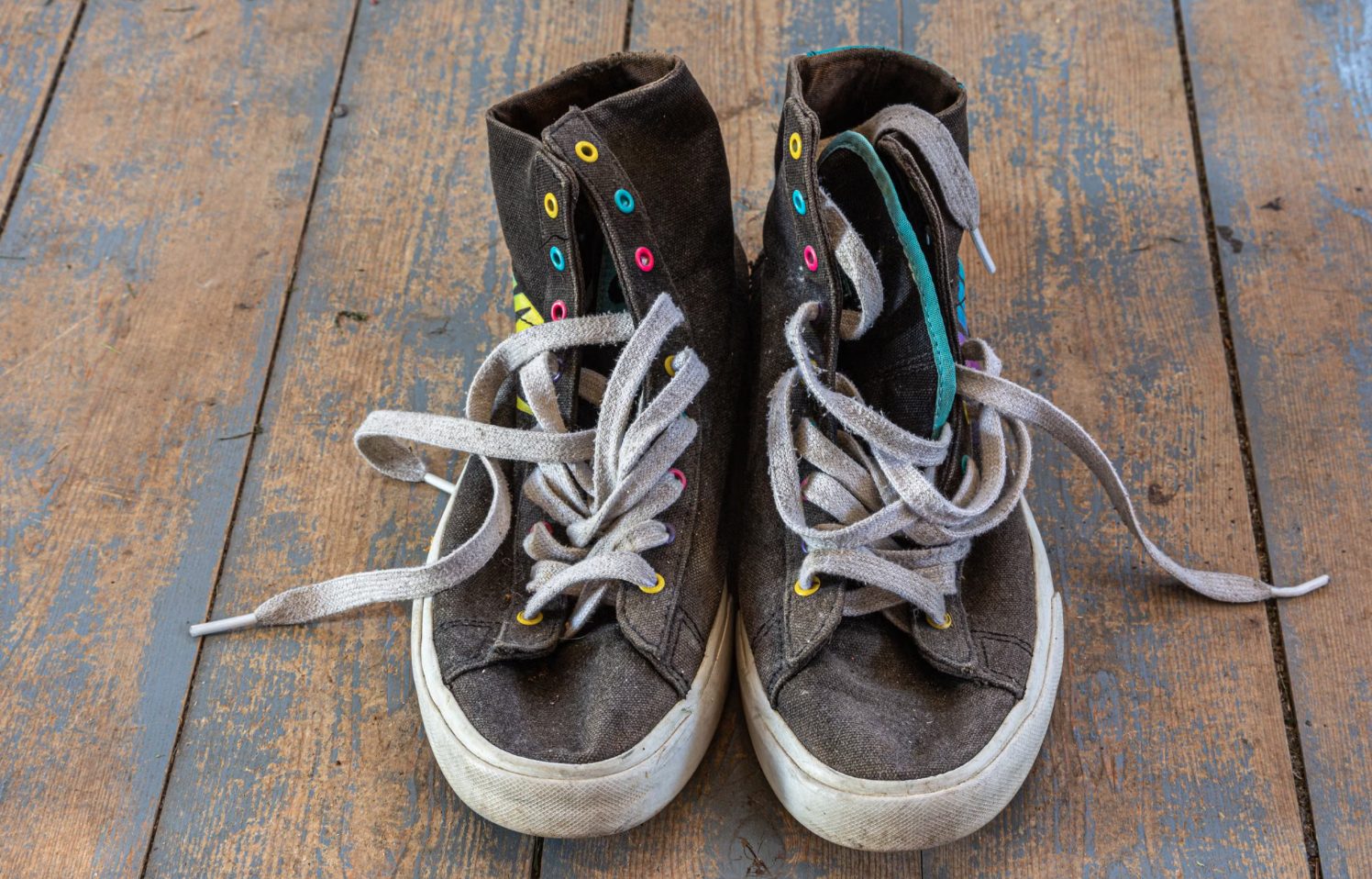
6. Heavily Worn Shoes
Shoes are trickier because experts do not universally say every lightly used pair must immediately go in the trash. However, the American Podiatric Medical Association recommends checking children’s shoe sizing every four to six months and allowing roughly 10 to 15 millimeters of room ahead of the longest toe. A used shoe may already have compressed cushioning, uneven tread, or a shape influenced by its previous wearer. That makes heavily worn athletic shoes and everyday sneakers poor places to economize. Families can instead buy fewer new pairs, measure both feet and prioritize fit over expensive logos.
7. Children’s Sleepwear With Missing Safety Information
Used pajamas may look like ordinary clothing, but children’s sleepwear is subject to special flammability requirements. U.S. rules distinguish qualifying tight-fitting sleepwear from other children’s sleepwear, making fit and labeling more important than many parents realize. Cornell Legal Information Institute provides details on the federal requirements covering children’s sleepwear. Be cautious when resale pajamas have missing labels, unclear sizing, damaged fasteners or enough stretching that formerly snug sleepwear now hangs loosely. Buying new makes it easier to verify the intended size, labeling, and condition.
The Best Bargain Is Knowing Where Not To Cut Corners
Secondhand shopping still makes excellent financial sense for many children’s shirts, jeans, coats, books and other easy-to-inspect belongings. The key is separating cosmetic wear from products whose safety depends on history, structure, hygiene or precise fit. With families budgeting $174.01 on average for K-12 shoes alone in 2026, choosing carefully matters more than simply choosing new or used every time. Before buying used items for kids, ask whether you can verify the product’s age, condition, instructions, recall history and previous use.
Which children’s products do you happily buy secondhand, and which ones will you only purchase new? Share your experience in the comments.
What to Read Next
Bought Kids’ Toys From SHEIN or Amazon? Check These New Recalls Before Playtime
8 Money Lessons Kids Can Learn From One Trip to the Grocery Store
Are Parents Buying Too Many Clothes Before Kids Actually Need Them?

Evan Morgan has been a full-time freelance writer and editor for 10+ years. When not working, he enjoys catching the latest true crime documentary or getting lost in a good book.
Read More
Image Source: 123rf.com Parenting is a profound journey, often influenced by the tapestry of our…
You’d think a $300 designer hoodie for a toddler would make any parent run the…
For many families, turning 18 is a major milestone that brings new freedoms and responsibilities.…
Image Source: Pexels DIY kids crafts are not only fun, but also beneficial for your…

Sleepovers, a staple of childhood and teenage years, have evolved significantly over time. What used…
The holidays have a sneaky way of turning food into a full-time job: extra grocery…


Leave a Reply