
• Home
  • About Us
  • Toolkit
  • Archives
  • Advertise
  • Privacy Policy

Kids Ain't Cheap

But They Sure Are Worth It

  • Parenting
    • Baby Stuff
    • Books and Reading
      • Aesops Fables
      • Comic Books
    • Education
    • Family Time
    • Green Living
    • Growing Up
    • Healthy Living & Eating
    • Holidays
    • Parenting
    • Random Musings
    • Shopping
    • Stuff to Do
  • Money
  • Product Reviews
    • Books and Magazines
    • Discount Sites
    • Furniture
    • House Keeping
    • Reviews News
    • Toys and Games
  • Contact Us
  • Our Editorial Commitment
  • Search

How to Build Kids’ Resilience and Gratitude During a Cold Month of Cabin Fever

December 14, 2025 | Leave a Comment

How to Build Kids’ Resilience and Gratitude During a Cold Month of Cabin Fever
Image source: shutterstock.com

When the weather keeps your family inside for days, the mood in your home can shift fast. Kids get restless, parents feel tapped out, and tiny frustrations start to feel huge. It is easy to slip into survival mode and count the minutes until spring returns. But these long, cold weeks can also become powerful training ground for resilience and gratitude. With a little intention, you can turn a month of cabin fever into a season where your child learns to cope, appreciate, and bounce back stronger.

1. Reframe Cabin Fever As A Family Challenge

Kids take their emotional cues from the adults around them. If you talk about this stretch as “the worst time of year,” children will absorb that script. Instead, frame it as a challenge your family can face together, like a team trying to beat a tricky level in a game. You might say, “This month is tough, but we’re going to practice new skills and see how creative we can get.” When you talk this way, you normalize hard days while reinforcing that your family knows how to handle them.

2. Create Routines That Make Days Feel Different

When every day looks the same, kids feel stuck and cranky. Simple routines break up the monotony and give kids something to look forward to, especially when cabin fever feels heavy. Try making themed evenings, like “Cozy Reading Night,” “Build-It Night,” or “Family Show Night.” Post a simple weekly calendar where kids can see what is coming and add their own ideas. These small anchors give structure to long days and help kids learn that they can shape their environment, not just endure it.

3. Practice Gratitude In Small, Concrete Ways

Gratitude does not have to mean big speeches about how “lucky” kids are. It works best when it shows up in tiny, specific moments that kids can see and feel. This is where cabin fever can become an opportunity, because kids notice small comforts more when life slows down. At dinner, ask each person to name one thing that helped them today, like “my warm socks” or “laughing during our dance break.” Over time, children start looking for these bright spots on their own, building a habit of noticing what is going right.

4. Build Coping Skills Through Play

Play is one of the safest ways for kids to practice handling big feelings. When cabin fever makes everyone edgy, lean into games and activities that help kids move their bodies and manage emotions. You might try “freeze dance” where kids practice stopping and starting on cue, or a “feelings charades” game where they act out emotions. Board games and card games also teach patience, turn-taking, and how to lose without falling apart. Each playful moment becomes a tiny lesson in frustration tolerance and emotional control.

5. Stay Connected To Others From Home

Feeling isolated makes tough months harder for both kids and parents. If cabin fever leaves your child missing friends or relatives, build connection into your weekly plan. Schedule video calls with grandparents, cousins, or school friends and give kids a simple “show and tell” to share. Older kids might enjoy writing short notes, drawing comics, or sending voice messages to loved ones. These connections remind children that their world is bigger than four walls and that relationships can stay strong even when you cannot visit in person.

6. Let Kids Help With Real-World Problems

Resilience grows when kids see themselves as capable, not fragile. During cabin fever months, invite kids into real tasks instead of trying to entertain them nonstop. Younger kids can help sort laundry by color, match socks, or stir ingredients for dinner. Older kids can help plan meals, make a simple grocery list, or reorganize a cluttered shelf. When children contribute, they learn that they are part of the solution on hard days, not just passengers along for the ride.

Turning A Cold Month Into A Kinder One

At the end of a long winter stretch, your home might still feel messy and loud, but your child can come out of it with new emotional muscles. By giving structure, practicing gratitude, and making room for real-world contribution, you plant seeds that last well beyond this season. Your child learns that boredom and disappointment are uncomfortable, but they are not emergencies. They discover that connection, creativity, and small comforts are still possible on the hardest days. Most importantly, they see that your family faces challenges together, which might be the most powerful lesson of all.

What is one simple tradition or routine you use to help your kids handle a long stretch of being stuck inside? Share your ideas in the comments to inspire other parents.

What to Read Next…

Quick Fixes for Parents to Avoid the “I’m Bored” Meltdown at Home

Their Future Selves: 12 Ways To Build Resilience In Your Kids

Winter Craft Materials You Probably Already Have and Kids Will Love

8 Unexpected Benefits of Boredom in Children

7 Ways to Raise Resilient Kids in a World of Instant Gratification

Catherine Reed
Catherine Reed

Catherine is a tech-savvy writer who has focused on the personal finance space for more than eight years. She has a Bachelor’s in Information Technology and enjoys showcasing how tech can simplify everyday personal finance tasks like budgeting, spending tracking, and planning for the future. Additionally, she’s explored the ins and outs of the world of side hustles and loves to share what she’s learned along the way. When she’s not working, you can find her relaxing at home in the Pacific Northwest with her two cats or enjoying a cup of coffee at her neighborhood cafe.

Filed Under: Parenting Tagged With: cabin fever, child gratitude, emotional skills for kids, family routines, kids resilience, parenting tips, Positive Parenting, winter activities for kids

Cure Cabin Fever: Simple Indoor Ideas Kids Actually Love

April 25, 2025 | Leave a Comment

Child peeking through a wooden window indoors.
Image Source: Unsplash

When “I’m bored!” echoes from every room, cabin fever can deflate the whole household. The good news? With a sprinkle of imagination, nearly any space—living room, hallway, even the kitchen—can morph into an adventure zone. The following activities require minimal setup, spark creativity, burn energy, and strengthen family bonds. Mix, match, and repeat to reach the 700-word finish line of indoor sanity.

1. Host an Indoor Scavenger Hunt

Start with ten easy items (“something soft,” “two blue things”) or craft rhymed clues that send kids racing from sofa to closet. Want to level up? Photograph each clue’s location on your phone so younger children have visual hints. Older kids can solve riddles or complete mini-challenges at each stop—“Do five jumping jacks before grabbing the next clue.” The finale might be a homemade coupon for picking dessert or choosing tomorrow’s breakfast. Fast setup, zero cost, big excitement—and kids practice teamwork, observation, and problem-solving.

2. Create a DIY Movie Theater

Transform an ordinary afternoon into a cinematic event. Kids make admission tickets, design posters, and arrange seating with pillows and blankets. Set up a “concession stand” with popcorn bags, sliced fruit, or a quick brownie mix. Rotate who chooses the feature film so everyone feels included. Ask trivia questions about the movie afterward to encourage recall and discussion. Tip: dim the lights and cue a “coming attractions” clip (an age-appropriate short trailer) to mimic the theater experience.

3. Build a Blanket-Fort Wonderland

Drape quilts over chairs, tables, or couches to create secret hideouts. Inside, forts can become pirate ships sailing stormy seas or outer-space command centers. Once built, shift gears to quiet activities: read aloud by flashlight, host a plush-toy tea party, or relax with calming music. The temporary nature of forts teaches resourcefulness—kids engineer stability with cushions and clothes pins—while offering a cozy retreat to recharge.

4. Make a Sensory Bin

Fill a plastic tub with inexpensive materials: dry rice, pasta, cotton balls, dried beans, or kinetic sand. Bury small toys or laminated letters for children to discover by touch. Sensory play strengthens fine-motor skills and invites mindfulness, especially helpful when kids feel overstimulated. Extend the learning by offering measuring cups and funnels for scooping, sorting, and counting. (If your child still mouths objects, choose large, non-chokable items like chunky wooden blocks or silicone shapes.)

5. Design an Indoor Obstacle Course

Channel restless energy into a DIY “Ninja Warrior” track: hop over tape lines, crawl under broomsticks balanced on chairs, and zigzag around plastic cups. Use painter’s tape to mark balance beams or create a hopscotch grid. Challenge kids to beat their own time or race a sibling. For younger toddlers, keep it simple: crawl through a cardboard-box tunnel and toss stuffed animals into laundry baskets. Physical play indoors boosts gross-motor skills and mood—without wrecking the furniture.

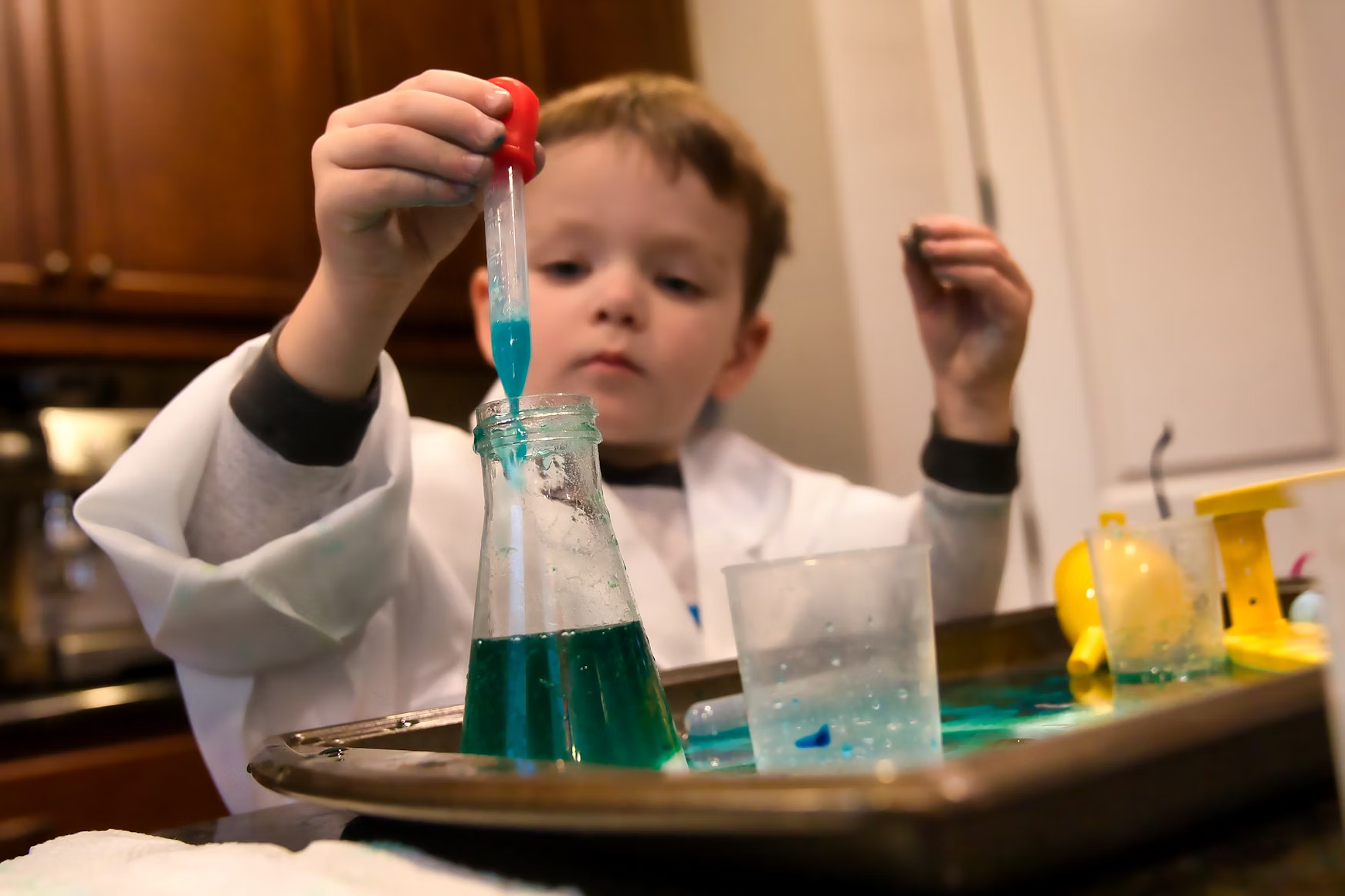
Child in a lab coat doing a science experiment at home.
Image Source: Unsplash

6. Launch a Kitchen Science Lab

Cooking ingredients double as chemistry supplies. Make erupting volcanoes with baking soda and vinegar tinted with food coloring, or craft homemade play dough (flour, salt, warm water, a spoonful of oil). Transform milk, dish soap, and food coloring into a swirling “color explosion.” Discuss observations: What changed? Why did bubbles form? Quick experiments spark scientific curiosity and use items already in your pantry.

7. Host a Chopped-Style Snack Challenge

Raid the fridge and set out three or four surprise ingredients (think apple slices, pretzels, yogurt, raisins). Then, see who can invent the tastiest snack in ten minutes. No hot stove required—just creativity, basic knives for older kids, and parental oversight. Kids learn food prep, flavor pairing, and presentation. Award playful titles like “Best Crunch” or “Most Colorful Creation.”

8. Stage an Indoor Campout

Set up a pop-up tent or sleeping bags in the living room. Switch off overhead lights and rely on flashlights or battery lanterns. Share ghost stories (not too spooky), sing camp songs, and toast marshmallows over the stovetop or microwave s’mores. Falling asleep “under canvas” at home adds novelty without braving cold temperatures. Little campers wake up with big memories.

9. Spin a Story-Chain

Sit in a circle. One person starts a tale with a single sentence: “On a snowy day, Max discovered a secret door behind the bookcase…” Each family member adds a sentence, continuing until the plot reaches a silly or epic conclusion. Story-chains build language skills, imagination, and listening patience. They usually end in giggles.

10. Create a Family Art Gallery

Pull out crayons, washable paints, or scrap paper collage supplies. Set a timer for 20 minutes of “studio time,” then display masterpieces on a hallway wall or clothesline. Add captions and host a gallery walk, where each artist explains their work. Art boosts fine-motor development and self-expression. The finished gallery brightens long winter afternoons.

Finding Joy Indoors

Store a few “special-use” items—puzzles, craft kits, a deck of card-game prompts—in a labeled bin out of everyday reach. Rotate them every few weeks to renew interest without spending extra money. Keep a brainstorming list on the fridge so kids can help choose the next boredom buster.

Cabin fever simply signals a need for novelty, movement, or connection. Whether you’re racing an obstacle course or nesting in a blanket fort, a few minutes of engaged, playful presence turns restlessness into laughter. On gloomy days, these mini-adventures remind everyone that joy lives right at home—no sunshine required.

What’s your go-to cure for cabin fever? Share below; your idea might save another parent’s sanity!

Read More

  • 7 Birthday Gifts Your Child Should Never Bring to a Party
  • A Fun and Economical Way to Get Kids Interested in Reading: Comic Books
Samantha Warren
Samantha

Samantha Warren is a holistic marketing strategist with 8+ years of experience partnering with startups, Fortune 500 companies, and everything in between. With an entrepreneurial mindset, she excels at shaping brand narratives through data-driven, creative content. When she’s not working, Samantha loves to travel and draws inspiration from her trips to Thailand, Spain, Costa Rica, and beyond.

Filed Under: Parenting Tagged With: cabin fever, child development, creative play | Activities & Play, Family bonding, indoor activities for kids, indoor games, parenting tips, winter boredom

  • Facebook
  • Pinterest
  • RSS
  • Twitter

Basic Principles Of Good Parenting

Here some basic principles for good parenting:

  1. What You Do Matters: Your kids are watching you. So, be purposeful about what you want to accomplish.
  2. You Can’t be Too Loving: Don’t replace love with material possessions, lowered expectations or leniency.
  3. Be Involved Your Kids Life: Arrange your priorities to focus on what your kid’s needs. Be there mentally and physically.
  4. Adapt Your Parenting: Children grow quickly, so keep pace with your child’s development.
  5. Establish and Set Rules: The rules you set for children will establish the rules they set for themselves later.  Avoid harsh discipline and be consistent.
  6. Explain Your Decisions: What is obvious to you may not be evident to your child. They don’t have the experience you do.
  7. Be Respectful To Your Child: How you treat your child is how they will treat others.  Be polite, respectful and make an effort to pay attention.
Best Parenting Blogs

Most Popular

Baby

9 Baby Names That Sound Rare Without Being Hard to Spell

Evan Morgan
Baby

9 Unusual Baby Names That Sound Like They Belong to Future CEOs

Evan Morgan
Target Store

Choking Incident Prompts Recall of 49,000 Target Gigglescape “Under the Sea” Popping Toys

Evan Morgan
Frustrated Girl

Why Some Students on the Spectrum Are Labeled With ODD

Evan Morgan
Coke Bottles

12 Things Kids Took to School in the ’70s That Would Never Be Allowed Today

Evan Morgan

All content on Kids Ain’t Cheap is for entertainment purposes only. By reading this blog, you agree that Kids Ain’t Cheap is not responsible for any actions taken after reading this blog. For the full disclaimer, see our privacy policy.

Please note that Kids Ain’t Cheap has financial relationships with some of the merchants mentioned here. Kids Ain’t Cheap is funded by banner advertising, commission sales and search optimization consulting.

Copyright © 2006–2026 | District Media | All Rights Reserved | Privacy Policy

Copyright © 2026 Runway Pro Theme by Viva la Violette