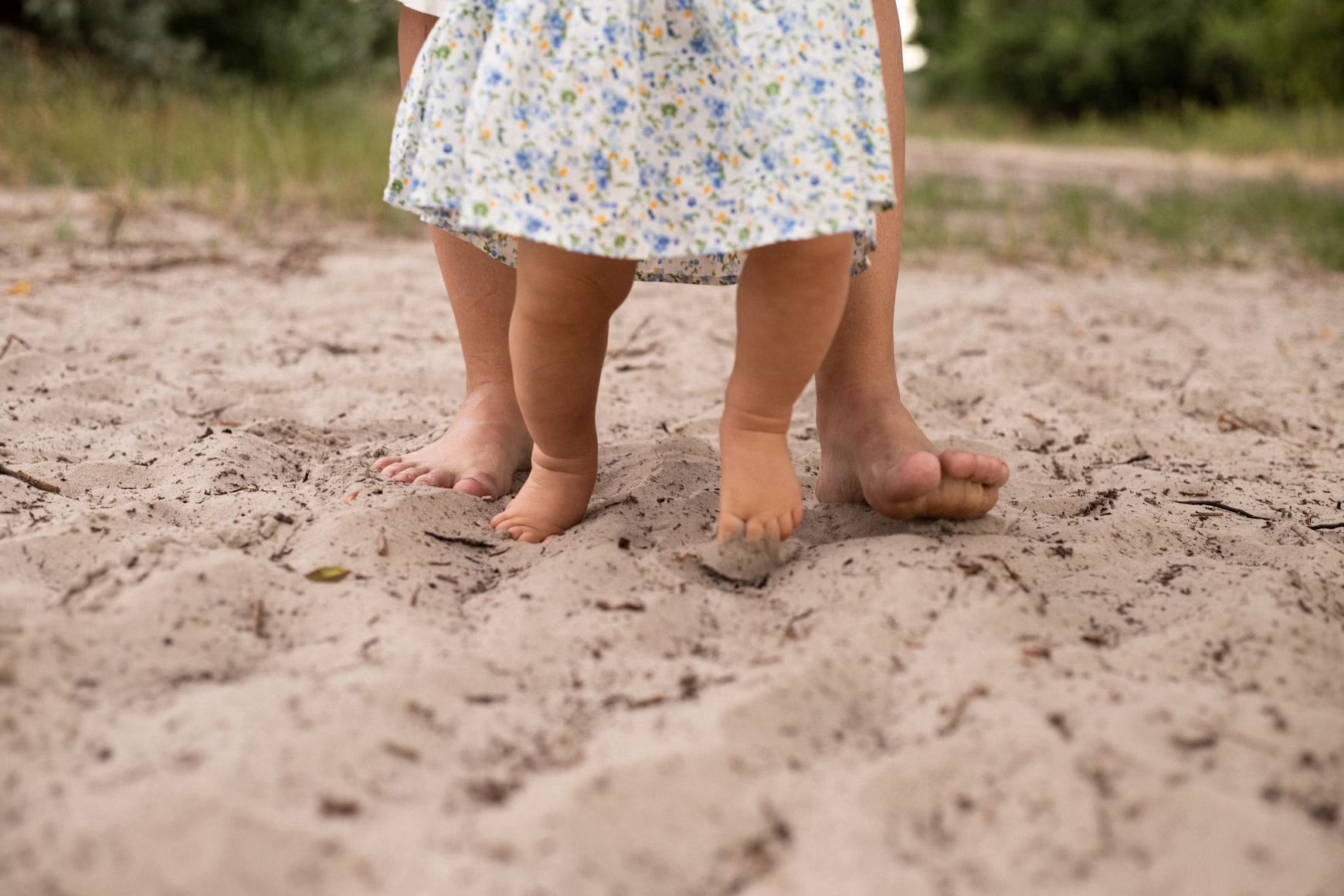
You’ve seen it: your toddler gliding through the living room like a pint-size ballerina, heels never touching the floor. At first it’s adorable, but after several weeks—or months—you may wonder whether tiptoe walking is still “just a phase.”
It’s time to set the record straight! Friends, family, and social-media threads often offer conflicting opinions, making it hard to know what’s normal and what needs a closer look. Below, you’ll find clear, parent-friendly answers so you can support your child with confidence instead of worry.
Tiptoe Walking in Toddlers Is Often Developmental
Between first steps and roughly age 2, many children experiment with different walking styles while they master balance and leg strength. Tiptoe walking during this stage can feel thrilling—kids move faster and enjoy the springy sensation.
Pediatric resources note that most toddlers naturally settle into a flat-footed gait as muscles mature and coordination improves. If your child is under two, walks on their toes only part of the time, and meets other milestones (climbing, squatting, cruising furniture), tiptoe bursts are usually part of healthy exploration.
Persistent Toe Walking Can Signal Something More
When toe walking sticks around beyond age 2 or intensifies around age 3, it’s time for a closer examination. Consistent tiptoeing may stem from:
- Tight calf muscles or a shortened Achilles tendon – If the heel cords are too tight, placing the foot flat feels uncomfortable.
- Sensory preferences – Some kids dislike the feeling of shoes or certain floor textures under their heels.
- Neurological or developmental conditions – Cerebral palsy, muscular dystrophy, autism spectrum disorder, and certain genetic syndromes can all feature toe walking among early signs.
These possibilities don’t mean your child definitely has a serious condition; they simply highlight why a professional evaluation is smart. Early assessment by a pediatrician or pediatric physical therapist can rule out issues—or catch them early when intervention is most effective.
Many Kids Toe Walk Without a Medical Cause
Surprisingly, a large group of children who continue tiptoeing after toddlerhood have no identifiable medical reason—a pattern called idiopathic toe walking. In these cases, the habit can:
- Run in families – If you, a sibling, or another relative tiptoed, genetics or shared motor-learning styles may play a role.
- Stem from imitation or habit – Kids may copy peers or simply enjoy the sensation and continue out of routine.
- Resolve over time – Some idiopathic toe walkers transition to a normal gait during preschool or early elementary years without intervention.
Even with idiopathic cases, a brief assessment is valuable; professionals can confirm that muscle length and joint mobility are adequate and give you exercises to encourage heel-to-toe walking.
How Professionals Evaluate Toe Walking
If you seek help, expect a step-by-step process:
- Medical history & milestone review – A pediatrician asks about birth history, developmental patterns, family traits, and any other concerns (speech delays, sensory sensitivities).
- Physical exam – Checking muscle tone, joint range, reflexes, and foot alignment helps pinpoint tightness or neurological signs.
- Gait observation – Therapists watch your child walk barefoot and in shoes on different surfaces, assessing stride length, balance, and heel strike.
- Additional tests – In rare cases, imaging or referral to a neurologist or orthopedist may follow if underlying conditions are suspected.
Practical Ways to Support Your Tiptoer at Home
Whether your child is still under evaluation or already in therapy, simple daily habits reinforce progress:
- Stretch and strengthen – Play “bear walks” (heels down, hips high) or “wall calf stretches” disguised as superhero poses.
- Ride scooters or trikes – Pushing pedals with heels encourages dorsiflexion (bringing toes toward the shin).
- Barefoot play on varied textures – Grass, sand, and play-dough mats can give sensory input that motivates heel contact.
- Use visual cues – Place stickers or footprints on the floor and invite your child to make their heels “squish the stickers.”
- Celebrate every heel touch – Positive attention reinforces the brain–body connection; skip shaming or constant corrections.
When Intervention Goes Beyond Exercise
Most kids respond well to stretching and practice, but persistent tightness or underlying conditions may call for:
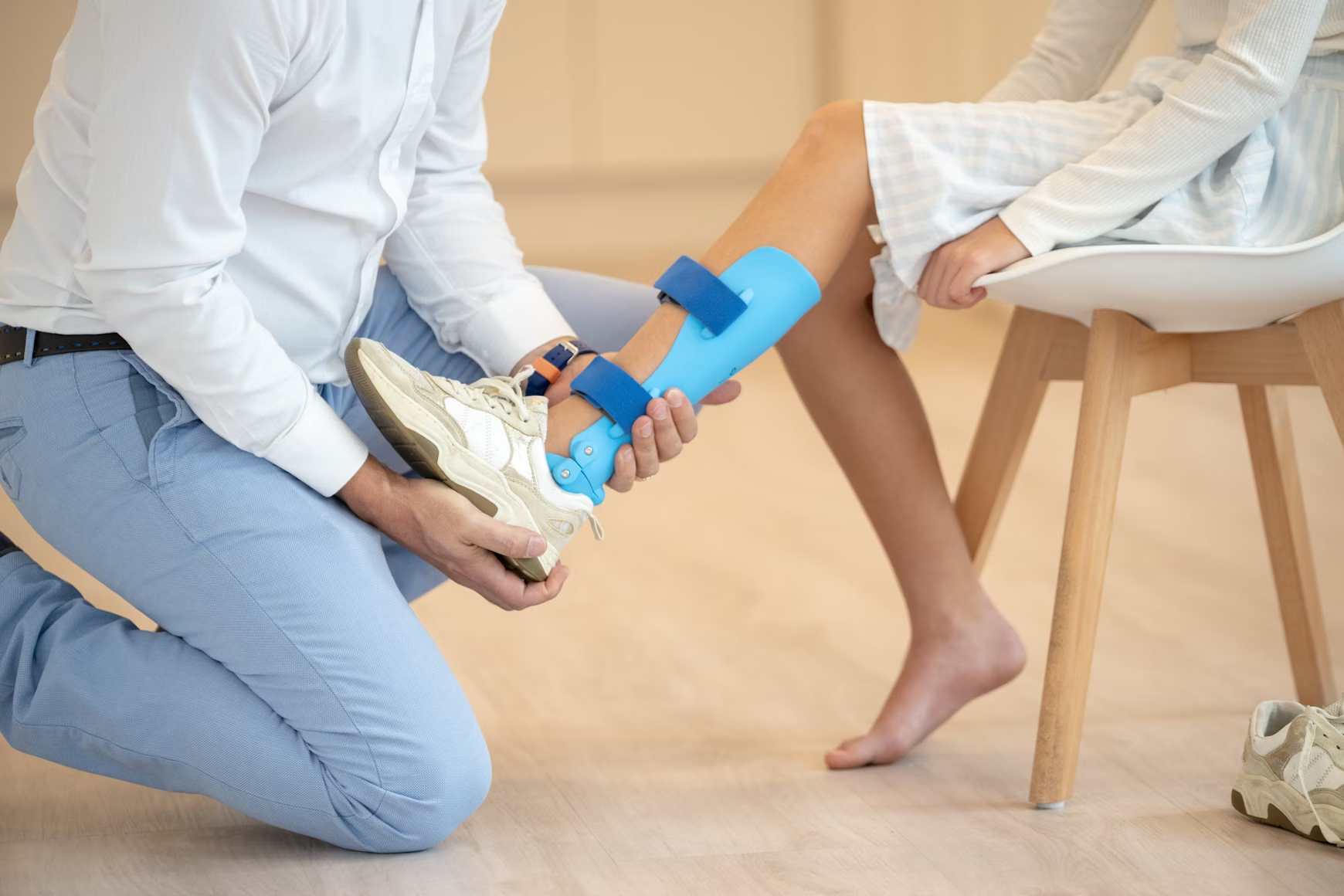
- Night splints or ankle-foot orthoses (AFOs) – Soft braces worn during sleep gently lengthen the Achilles tendon.
- Serial casting – A series of lightweight casts gradually stretches calf muscles over several weeks.
- Botox injections – In select neurological cases, Botox temporarily relaxes tight calf muscles to facilitate therapy.
- Surgery – Reserved for severe, long-standing contractures that limit mobility or cause pain.
These interventions are typically guided by a pediatric orthopedic surgeon after conservative methods are tried.
Understanding Toe Walking Builds Confidence—For Both of You
Most parents breathe easier once they know two facts:
- Occasional toe walking in toddlers is usually harmless.
- Persistent toe walking has effective, child-friendly treatments.
By observing, asking questions, and partnering with professionals, you turn uncertainty into actionable support. This proactive approach not only protects your child’s physical development but also models problem-solving and self-advocacy—skills they’ll carry far beyond the toddler years.
Have you dealt with tiptoe walking in your family? Share success stories, lingering questions, or creative at-home exercises in the comments. Your experience could reassure another parent who’s watching a tiny ballerina dart across the living room right now.
Read More
- Introducing Christie Walker; One of Our Newest Writer
- Looking for the Best Walker for Infants? Here Are 5

Samantha Warren is a holistic marketing strategist with 8+ years of experience partnering with startups, Fortune 500 companies, and everything in between. With an entrepreneurial mindset, she excels at shaping brand narratives through data-driven, creative content. When she’s not working, Samantha loves to travel and draws inspiration from her trips to Thailand, Spain, Costa Rica, and beyond.
