
• Home
  • About Us
  • Toolkit
  • Archives
  • Advertise
  • Privacy Policy

Kids Ain't Cheap

But They Sure Are Worth It

  • Parenting
    • Baby Stuff
    • Books and Reading
      • Aesops Fables
      • Comic Books
    • Education
    • Family Time
    • Green Living
    • Growing Up
    • Healthy Living & Eating
    • Holidays
    • Parenting
    • Random Musings
    • Shopping
    • Stuff to Do
  • Money
  • Product Reviews
    • Books and Magazines
    • Discount Sites
    • Furniture
    • House Keeping
    • Reviews News
    • Toys and Games
  • Contact Us
  • Our Editorial Commitment
  • Search

5 Free Apps That Beat the Summer Slide

June 12, 2026 | Leave a Comment

Kid On Tablet
Children using educational apps on tablets during summer break help to maintain reading, math, and problem-solving skills. These free learning apps make learning fun while preventing the summer slide. (Pexels).

Summer break is a welcome pause from homework and school routines, but it can also lead to the “summer slide,” a well-documented learning loss that occurs when students spend months away from academic activities. Research has shown that students can lose some progress in reading and math during long school breaks, making the transition back to school more challenging. Fortunately, parents do not need expensive tutoring programs to keep young minds engaged. Several free learning apps offer educational content, interactive lessons, and skill-building activities that make learning feel like play. These tools can help children stay sharp while still enjoying everything summer has to offer.

1. Khan Academy Kids Makes Learning Feel Like Play

Khan Academy Kids remains one of the most trusted free learning apps available for children ages 2 to 8. The platform offers thousands of activities covering reading, math, writing, and social-emotional learning, all without ads or subscription fees. Its adaptive learning system adjusts content based on a child’s progress, helping kids work at an appropriate level. Parents often appreciate that the app includes books, videos, and interactive games in one place. For families looking to maintain learning habits during summer vacation, it provides a structured yet enjoyable experience that feels more like entertainment than schoolwork.

2. Duolingo Turns Language Learning Into a Daily Habit

Learning a second language can strengthen memory, problem-solving skills, and cognitive flexibility, making summer an ideal time to start. Duolingo uses short, game-like lessons that encourage children and adults to practice for just a few minutes each day. The app’s streak feature motivates users to stay consistent, which can be especially helpful when routines become more relaxed during summer break. A child learning Spanish for five minutes each morning can build vocabulary steadily without feeling overwhelmed. Among today’s most popular free learning apps, Duolingo stands out because it transforms language practice into a rewarding daily challenge.

3. PBS KIDS Games Combines Fun and Education

Many parents worry that screen time during summer automatically means wasted time, but PBS KIDS Games offers a different approach. The app includes hundreds of educational games featuring familiar characters from popular PBS programs. Activities focus on subjects such as reading, science, math, and critical thinking while keeping children entertained. Because the games are designed with educational goals in mind, kids often learn without realizing they are practicing important skills. This balance between fun and academics makes PBS KIDS Games one of the most effective free learning apps for younger children.

4. Libby Encourages Reading Without Extra Costs

Reading remains one of the best ways to prevent the summer slide, yet buying books regularly can become expensive. Libby connects users to their local library’s digital collection, allowing them to borrow e-books and audiobooks for free with a library card. Families can access thousands of titles from home, making it easier to keep children reading throughout the summer. For reluctant readers, audiobooks can help build comprehension while introducing engaging stories. Using Libby for just 20 minutes a day can help maintain reading skills and foster a lifelong love of books.

5. ScratchJr Introduces Coding Through Creativity

Technology skills are increasingly valuable, and ScratchJr gives young learners a simple introduction to coding concepts. Instead of memorizing commands, children create stories, animations, and games using colorful programming blocks. The app encourages creativity, logical thinking, and problem-solving while remaining accessible for beginners. A child can spend a rainy afternoon designing an animated story and unknowingly practice sequencing and computational thinking. Among free learning apps, ScratchJr offers a unique opportunity to build future-ready skills in a playful environment.

Why Small Daily Habits Matter More Than Long Study Sessions

One common misconception is that children need hours of academic work each day to avoid summer learning loss. In reality, consistency often matters more than duration, and even 15 to 30 minutes of focused learning can make a meaningful difference. Parents who combine reading, educational games, and short skill-building activities often see better engagement than those who attempt lengthy study sessions. The key is creating a routine that feels manageable and enjoyable rather than forcing a school-like schedule during vacation. By using free learning apps strategically, families can support learning while still leaving plenty of time for outdoor adventures, family trips, and relaxation.

The Smartest Way to Keep Learning Alive This Summer

The summer slide does not have to be an inevitable part of school break. Apps like Khan Academy Kids, Duolingo, PBS KIDS Games, Libby, and ScratchJr provide accessible ways to keep children engaged, curious, and learning. Each app offers a different approach, from reading and language learning to coding and educational games. When used consistently, these free learning apps can help children return to school feeling confident rather than trying to catch up.

Which of these apps would your family be most likely to try this summer, and do you have another favorite that deserves a spot on the list? Share your thoughts and experiences in the comments below.

What to Read Next

Online Safety Experts Urge Parents to Check These Apps Before Summer Begins

Consumer Watchdogs Warn: 6 Kids Apps Draining $50+ Monthly Without Parent Permission

How Your Child’s Cell Phone Could Now Ruin Them In School

Evan Morgan

Evan Morgan has been a full-time freelance writer and editor for 10+ years. When not working, he enjoys catching the latest true crime documentary or getting lost in a good book.

Filed Under: Education Tagged With: Duolingo, educational apps, free learning apps, Khan Academy Kids, Libby, parenting tips, PBS Kids Games, ScratchJr, summer learning, summer slide

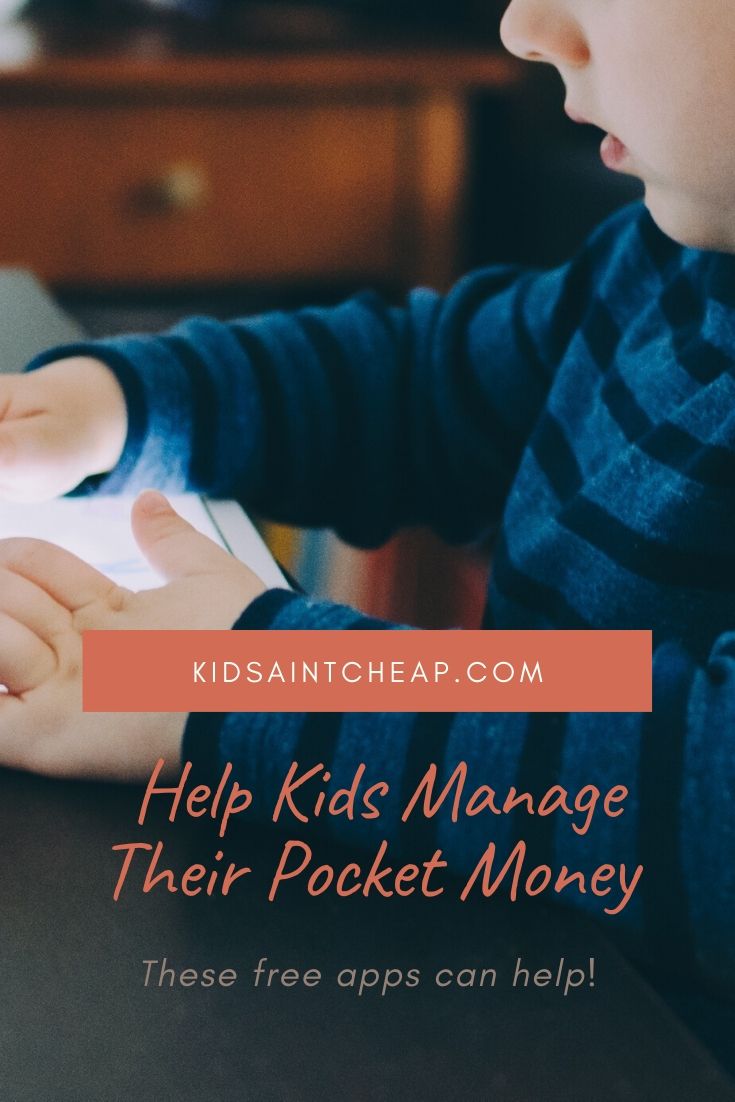
Free Apps That Help Kids Manage Their Pocket Money

April 23, 2020 | Leave a Comment

When we give our kids an allowance, we are giving them their first experience with money.  An allowance allows them to make money mistakes (and hopefully learn from them).  But it also gives them the chance to save for their goals and buy something for themselves only after having the discipline to save.  However, kids don’t learn to be smart savers instantly, though a lucky few seem to right from the start!  We, as parents, have to teach them.  Another fun way to enhance this learning is by using free apps that help kids manage their pocket money.

Free Apps That Help Kids Manage Their Pocket Money

Free Aps That Help Kids Manage Their Pocket Money

PiggyBot

This app allows parents and kids to track the children’s allowance virtually.  Rather than hand your kids $10 for allowance, parents deposit the allowance virtually into PiggyBot.

The app lets parents deposit the money into three different accounts—spend, share, and save.  Children can come into the app and set goals for what they want to buy with their money.  When they reach their savings goal, the child can ask mom or dad for the money to buy the item.  The parent simply deducts the money from the app to match the fact that money has been dispersed.

This is a simple app, which is available for free and works on an iPad, iPod Touch, or an iPhone.

bankaroo

bankaroo was created by a high schooler for kids to learn to manage their money.  While many families use it at home, it’s also used in some school districts to teach kids money management skills.

bankaroo is free and can be used online.  It can also be used as an app for iOS, Android, and Kindle phones and tablets.  For $4.99 a month, you can upgrade to bankaroo GOLD, which will allow you to add interest to savings as well as transfer money electronically between family members.

I don’t have much cash on hand since we’re not going out right now due to the virus.  Instead, I’ve been keeping track of what I owe my kids through bankaroo.  It’s easy for me to manage, and my kids are enjoying the app.  They can see their money grow there, even if they don’t have the cash on hand as they’re used to.

Allowance and Chore Bot

Free Apps That Help Kids Manage Their Pocket Money
Photo by Patricia Prudente on Unsplash

This app is free if you just need to enter information for one child.  If you have more than one child, you’ll need to buy the $2.99 version, which supports multiple children.

As a chore app, you can give your child daily or weekly chores to complete and mark in the app.

As an allowance app, you can choose two versions.  Either you pay your child weekly with the money not linked to chores, or you pay based on the chores that are completed.

Children can easily look at the app and see how much money they have accrued, what they’ve spent and on what.  They can also compute how much they’ll make in the future based on their current allowance.

This app is good for all ages and is available on Android and iOS.

Star Banks Adventure

Star Banks Adventure app is the product of T. Rowe Price and is available for free.  This app is best for ages 9+ and is designed for the iPhone and iPad.

This app presents kids with a game where they have to draw lines through matching shapes and colors.  When they do that, they’re rewarded with virtual money to buy the things that they need.  Through the app, they learn about money management and the banking industry.

ChoreMonster

Do you have trouble getting your kids to do their chores without procrastinating and complaining?  If so, the ChoreMonster app may change that.  Designed for kids ages 4 to 12, the ChoreMonster app is available on the Web, Android, iOS, and Kindle.

Parents can use the app to assign their children chores, give a weight to the chore such as earning 10 points, and then specifying what children can “buy” with their points.  Rewards can be 30 extra minutes watching a TV show or getting an ice cream cone.

While this app does not specifically teach children about money, it does teach them the correlation between working hard for things that they want.

App for Less than $6

While most free apps should do just fine with teaching your kids about money and helping them manage their allowance, if you have $6 to spend, there are some apps that are popular and educational.

Savings Spree

This app is $5.99 and for iPhone, iPod Touch, or iPad.  Perfect for kids ages 7 and up, kids will likely enjoy this app so much they won’t realize they’re also learning.

Savings Spree is designed like a game show, and kids must answer questions.  They learn about using money wisely and long-term savings goals.

App for Less than $6 a Month

Most of the apps mentioned above are for kids 12 and under.  What if you want to teach your teen about real-life money management?  Suddenly the stakes get much higher.  Of course, if you just give him cash, he can’t spend more than he has, but what if you want to teach him how to manage in our high-tech financial world?

FamZoo Family Finance

This is not one of our free apps that help kids manage their pocket money.  In fact, this app is $5.99 a month unless you pay for 24 months in advance.  In that case, the app is $2.50 a month.

Despite the price, this app is worth mentioning because it’s for kids 13+, and it’s not an app that teaches virtual lessons.  Rather, the parents put money in the child’s account in FamZoo Family Finance, and the child is issued a card that links to the app.  Parents can see their child’s spending and offer advice.  The app also tracks chores and odd jobs and teaches teens about preventing credit card debt.

Final Thoughts

If you’d like to teach your child in a fun way, there are plenty of free apps that help kids manage their pocket money.  There are also a few that aren’t free but you may find worth the price.  No matter what apps you chose, teaching kids about finances with apps is fun and will hopefully set them up for a more financially savvy future.


Melissa Batai
Melissa Batai

Melissa is a writer and virtual assistant. She earned her Master’s from Southern Illinois University, and her Bachelor’s in English from the University of Michigan. When she’s not working, you can find her homeschooling her kids, reading a good book, or cooking. She resides in Arizona where she dislikes the summer heat but loves the natural beauty of the area.

Filed Under: Money and Finances Tagged With: apps for kids, educational apps, personal finance apps

5 Apps That Teach Children a Cool Skill

December 12, 2016 | Leave a Comment

Here are five apps that teach a cool skill like cursive, cartooning, and foreign language.Apps seem to be a dime a dozen these days, so finding the right ones can be daunting. When I search through the sea of choices, it’s much simpler to choose something with ABC’s and 123’s to ensure it educates my kids. But then I wondered, are there any apps that teach children a cool skill instead of just the basics?

Yes, “cool” is relative, but after some digging, I found some unique options for you to try.

A Quick Word About Screen-Time for Young Children

We all know that screen-time is best used in moderation. However, in recent studies, I’ve discovered one other significant reason to limit my children’s time parked in front of the screen. Even if it’s educational material, I believe this is still an important thought to consider.

According to this study released on NPR.org, when children decrease their time in front of screens, they are able to read human emotions more easily. The ability to learn from communication, social cues, and problem-solving with others is a need that humans have their entire lives. Using a screen removes the interactive portion of development and threatens to affect a child’s social behavior well into adulthood.

I definitely give my kids screen-time, but I also try to spend a lot of unplugged time with them. That door swings both ways. The kids have to put away their gadgets, and mom must put down her phone.

Bonus Reading: “7 Screen-Free Activities for Preschoolers”

5 Apps That Teach Children a Cool Skill

Cursive Writing Skills – Cursive Writing Wizard Letters

Available for iOS or Android

Cursive writing is no longer required in many schools, even though it’s one of the most beautiful art forms we each can learn. To help your young child develop her own skills with cursive, try this app.

After using the app for a time, work together on writing the real letters on paper so she can better apply what she has learned.

Foreign Language Skills – Duolingo

Available for iOS and Android

Never has it been more relevant than today to teach your child a second language. Expose him to the rich diversity of languages throughout the world with Duolingo – from Spanish to Italian to Chinese.

Sign Language Skills – ASL Kids

Available for iOS and Android

Another amazing skill your children might enjoy learning is American Sign Language. Both of my children started learning when they were infants and loved mimicking my motions. As they got older, we spent time each day at the breakfast table going through their letters, numbers, foods, colors, days of the week, etc.

For something that is so fun to practice and so beneficial to those who use sign language as their primary form of communication, this is definitely one of my top apps that teach children a cool skill.

Money Management Skills – Dinorama

Available for iOS

How better to understand money management, multi-tasking, and running a business than to run your own dinosaur theme park? Dinorama offers children (age 7 and up) the challenge of building their empire from the ground up. This can lead to some great conversations at the dinner table or in the car (after the game is put away) about money management in the real world.

Creative Drawing Skills – Toontastic

Available for iOS

Try Painting Drawing Dooble Kids as an alternative for Android.

Learning to draw can become a lifelong hobby or even a career. With today’s booming commerce on the internet, the creatives have more avenues in which to publish their work than ever. If your child enjoys doodling, cartooning, or any other type of illustration, try out Toontastic.

Do you have older children? Check out “Essential Apps Every Student Must Have.”

Which of these 5 apps would you have loved to use when you were a kid? Share in the comments below.

Filed Under: Education, Growing Up, Product Reviews for Parents, Uncategorized Tagged With: Android, apps for kids, apps that teach children a cool skill, educational apps, iOS

  • Facebook
  • Pinterest
  • RSS
  • Twitter

Basic Principles Of Good Parenting

Here some basic principles for good parenting:

  1. What You Do Matters: Your kids are watching you. So, be purposeful about what you want to accomplish.
  2. You Can’t be Too Loving: Don’t replace love with material possessions, lowered expectations or leniency.
  3. Be Involved Your Kids Life: Arrange your priorities to focus on what your kid’s needs. Be there mentally and physically.
  4. Adapt Your Parenting: Children grow quickly, so keep pace with your child’s development.
  5. Establish and Set Rules: The rules you set for children will establish the rules they set for themselves later.  Avoid harsh discipline and be consistent.
  6. Explain Your Decisions: What is obvious to you may not be evident to your child. They don’t have the experience you do.
  7. Be Respectful To Your Child: How you treat your child is how they will treat others.  Be polite, respectful and make an effort to pay attention.
Best Parenting Blogs

Most Popular

11 Ways Kids Are Outsmarting Parental Controls 1. Using Alternate Devices One common trick is simply turning to another device. If a child’s main phone or tablet is restricted, they may borrow a sibling’s, friend’s, or even a school laptop. This instantly gives them access to content outside of parental oversight. Parents often focus on one device, forgetting that others in the household can serve as loopholes. Knowing this tactic helps families tighten controls across all electronics. 2. Clearing Browsing Histories Many kids quickly learn that clearing browsing history hides evidence of restricted activity. With just a few clicks, they can erase any trace of websites visited. This makes it harder for parents to notice when rules are being broken. Parents may assume no history means no browsing, but the reality is often the opposite. Kids are outsmarting parental controls by making it seem like nothing happened at all. 3. Using Private Browsing Modes Most browsers offer “incognito” or private browsing features. Kids use this mode to access websites without leaving a record in the history. To parents checking later, everything looks clean and safe. This simple trick is often one of the first ways kids discover how to bypass restrictions. Conversations about private browsing can help close this gap. 4. Guessing or Resetting Passwords Children who are persistent may try to guess passwords to parental control apps or accounts. Others may find ways to reset them through email prompts or security questions. Once inside, they can disable restrictions entirely. Parents may not even realize controls have been altered until much later. Stronger, less predictable passwords can make this more difficult. 5. Using VPNs to Hide Activity Virtual private networks, or VPNs, let kids disguise their online locations. With one downloaded app, they can bypass geographic or parental restrictions. Some children learn about VPNs through friends or even social media. This makes it easy for them to reach content that should be blocked. Parents often underestimate just how simple it is for kids to use these tools. 6. Creating Fake Accounts When parents monitor social media, kids may create hidden accounts. These “finstas” or fake profiles allow them to interact freely without parental oversight. While their main account appears harmless, the secondary one tells a different story. Kids are outsmarting parental controls by playing both sides at once. Checking for duplicate accounts can help parents stay more aware. 7. Exploiting Time Zone Settings Some kids change the time zone on their devices to bypass screen time limits. This trick allows them to gain extra hours of usage undetected. Parents may assume controls are working, but in reality, the child is bending the clock. It’s a clever loophole that highlights just how resourceful kids can be. Monitoring device settings regularly can catch this tactic. 8. Disabling or Uninstalling Apps Parental control apps can be deleted or disabled with surprising ease. Some kids even reinstall them before a parent checks, making it seem like nothing changed. Others may simply restrict permissions to prevent apps from functioning properly. When apps aren’t monitored closely, parents may not notice they’ve been tampered with. This shows the importance of consistent follow-up. 9. Turning to Friends for Access If a child can’t get past restrictions on their own, they may rely on friends. Visiting a friend’s house or borrowing their phone can give them a free pass. Parents often forget that peer environments can override restrictions set at home. This kind of social workaround is especially common with gaming or social media. Open conversations about trust and responsibility are essential. 10. Hiding Apps in Plain Sight Kids sometimes download apps that look innocent but serve as gateways to hidden activity. These apps may disguise themselves as calculators or utilities. In reality, they allow file storage, private messaging, or browser access. Parents glancing at a home screen may overlook them entirely. Learning to recognize these disguised apps can help parents stay informed. 11. Outpacing Parents’ Tech Knowledge Finally, kids often know more about devices than their parents do. Whether through YouTube tutorials, TikTok hacks, or peer groups, they quickly learn advanced workarounds. This knowledge gap means controls can be bypassed before parents even realize the loophole exists. Staying informed and continually learning about new technology is the best defense. Kids are outsmarting parental controls because they adapt faster than most adults. The Real Solution Lies Beyond Restrictions While controls and filters are important, no system is perfect. Kids will always find creative ways around barriers, making communication the strongest safeguard. Setting clear expectations, building trust, and having ongoing conversations about online behavior matter more than apps alone. Parents who combine technology with open dialogue create a safer digital environment. The goal isn’t to win a battle of wits but to build a relationship that keeps kids both safe and honest. Do you think kids are outsmarting parental controls faster than parents can keep up? Share your experiences in the comments below. What to Read Next... 6 Parenting Tech Shortcuts That Can Expose Your Child to Strangers How Much Screen Time Is Too Much—Legally Speaking? Is Your Child’s School Quietly Tracking Their Location Without Your Consent? How Much Screen Time Is Quietly Reshaping Childhood Behavior? Why Some Parents Are Being Investigated Over Homeschooling Records

11 Ways Kids Are Outsmarting Parental Controls

Catherine Reed
Smiling grandfather holding a happy baby indoors.

Why Grandparents Shouldn’t Babysit Their Grandkids Every Week – The Unspoken Issue

Samantha
Girl getting makeup done, referencing psychologist-approved age.

Wearing Makeup: Here Is the Age That Psychologists Agree It’s Okay for Girls to Wear Makeup

Samantha
birthday gifts

7 Birthday Gifts Your Child Should Never Bring to a Party

Latrice Perez

Babysitting Without Cash: 10 Ways to Barter Your Way Out of Childcare Costs

Ashleigh Clyde

All content on Kids Ain’t Cheap is for entertainment purposes only. By reading this blog, you agree that Kids Ain’t Cheap is not responsible for any actions taken after reading this blog. For the full disclaimer, see our privacy policy.

Please note that Kids Ain’t Cheap has financial relationships with some of the merchants mentioned here. Kids Ain’t Cheap is funded by banner advertising, commission sales and search optimization consulting.

Copyright © 2006–2026 | District Media | All Rights Reserved | Privacy Policy

Copyright © 2026 Runway Pro Theme by Viva la Violette