
• Home
  • About Us
  • Toolkit
  • Archives
  • Advertise
  • Privacy Policy

Kids Ain't Cheap

But They Sure Are Worth It

  • Parenting
    • Baby Stuff
    • Books and Reading
      • Aesops Fables
      • Comic Books
    • Education
    • Family Time
    • Green Living
    • Growing Up
    • Healthy Living & Eating
    • Holidays
    • Parenting
    • Random Musings
    • Shopping
    • Stuff to Do
  • Money
  • Product Reviews
    • Books and Magazines
    • Discount Sites
    • Furniture
    • House Keeping
    • Reviews News
    • Toys and Games
  • Contact Us
  • Our Editorial Commitment
  • Search

How to Spot a “Cool” Parent Who’s Actually Just Checked Out

April 25, 2025 | Leave a Comment

Smiling child with arms outstretched, parents standing behind
Image Source: Unsplash

Pizza for breakfast, TikTok till midnight, homework optional—at first glance, the laid-back parenting vibe feels breezy and progressive. After all, who wants to be the strict rule-enforcer when you could be the parent everyone’s friends rave about? Yet beneath the easygoing facade lurks a hard truth: children need warmth and structure.

Kids read our presence—or absence—almost like Wi-Fi signal bars. They sense when we’re so intent on staying “fun” that we skip the tougher task of noticing their fears, negotiating screen limits, or insisting on homework before YouTube. Over time, that missing signal teaches them to self-soothe with snacks, scrolling, or late-night gaming instead of turning to a trusted adult.

If you sense that carefree vibes have drifted into emotional absence, use the guide below as an honest gut-check.

What’s a “Cool” Parent—And Why That’s Not Always a Compliment

Popular culture often equates looseness with love, yet many “cool” moms or dads slide into the uninvolved parent category: emotionally distant, lightly supervising, and slow to discipline. Research links this hands-off style to weak coping skills, lower grades, and shaky self-esteem.

5 Signs the “Cool” Parent Is Actually Checked Out

1. Minimal Structure or Supervision

Kids crave safe guardrails. Chronic lateness, skipped curfews, or unmonitored screen time may look relaxed, yet inside children feel unstable—and cortisol levels rise when life feels unpredictable.

2. “Yes” Is the Default to Avoid Conflict

Always agreeing seems kind, but it shifts adult responsibility onto kids who are not wired to make big life calls. The short-term harmony often mutates into long-term anxiety because children sense you are dodging the emotional labor of parenting.

3. Missing Emotional Availability

A weekend full of roller coasters and milkshakes does not offset weekday silence. When parents overlook subtle cues—shrugged shoulders, a wavering voice—kids internalize the message that their inner world is invisible.

4. No Follow-Through on Promises or Consequences

Empty threats (“Clean your room or no phone!” followed by a shrug) erode trust and teach that words hold no weight. Over time, children copy the pattern in friendships and school commitments.

5. Popularity Trumps Effectiveness

Acting like a peer can feel bonding, but friendship status blocks tough, necessary guidance. Children need you to be their secure base—someone who will risk a temporary eye-roll to protect their future.
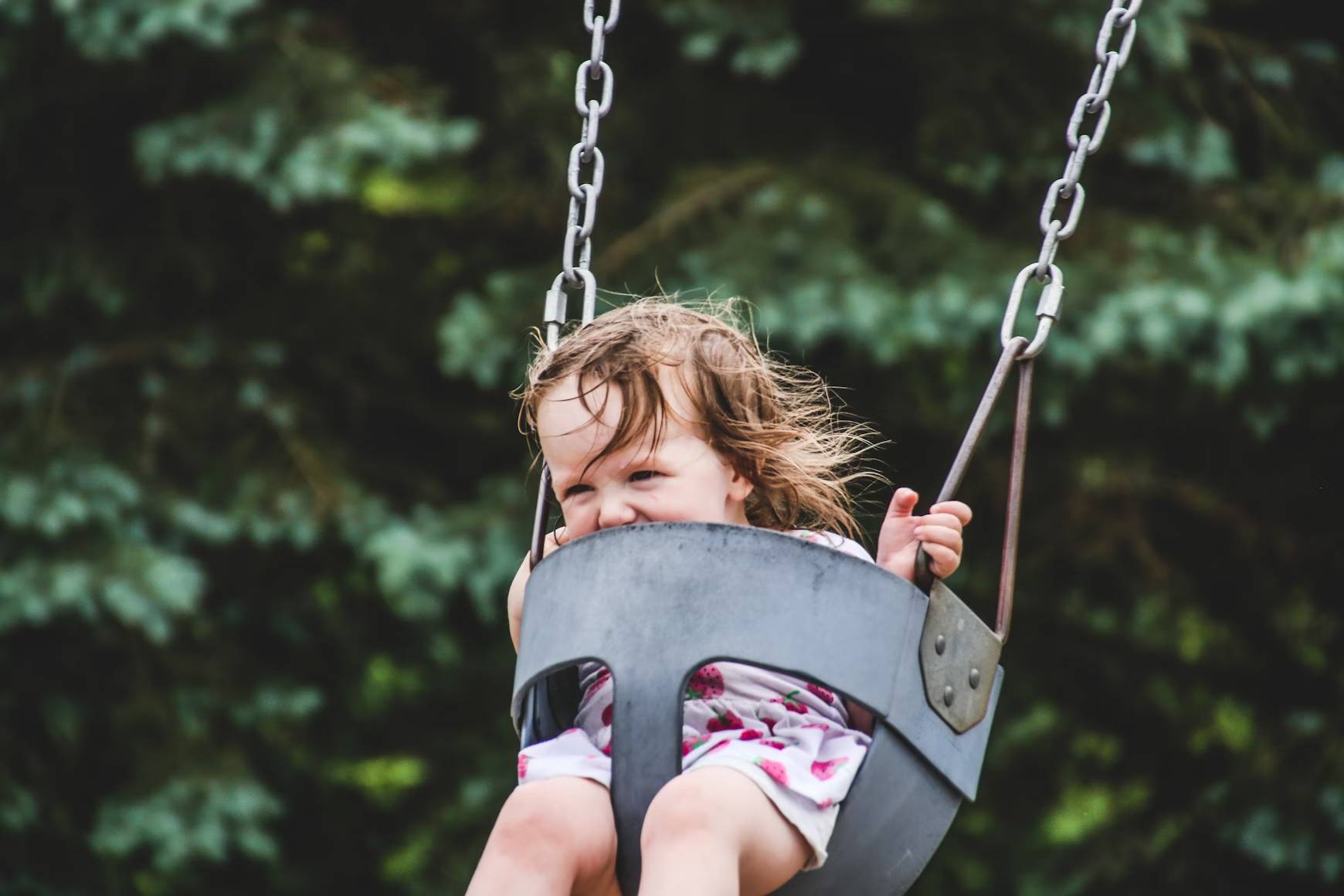
Young child swinging with a playful expression
Image Source: Unsplash

Why Presence Beats Popularity

Freedom without security can stunt emotional health. Balanced parenting—sometimes called authoritative or “lighthouse” parenting—pairs warmth with clear limits. Kids thrive when adults are both fun and firm.

How to Stay Present Without Losing Your Cool

  • Show up consistently. Share one tech-free meal a day or a nightly ten-minute check-in where you ask and answer open-ended questions.
  • Set clear, kind expectations. Explain why sugar limits or curfews exist (“Your brain needs deep sleep to lock in today’s learning”). Follow through every time.
  • Listen more than you lecture. Use reflective phrases—“Sounds like algebra felt overwhelming”—before offering advice.
  • Guide, don’t punish. Swap shame-based punishments for logical consequences: if a bike is left in the rain, the child wipes it down and oils the chain.
  • Model emotional regulation. Narrate your calm-down rituals—deep breathing, counting to ten—so kids see practical tools in action.

When “Cool” Requires a Closer Look

A carefree home with no meltdowns over rules may hide children yearning for real attention. Fun is great—alongside boundaries and emotional presence.

If you notice “cool but detached” parenting in yourself or others, take it as a cue to re-engage. The greatest gift isn’t popularity; it’s meaningful connection.

How do you balance fun with firm in your household? Share your strategies in the comments below—your insight could help another parent today.

Read More

  • Owning a Home Can Be a Great Investment, but Renting Gives You Freedom
  • 5 Apps That Teach Children a Cool Skill

Samantha Warren
Samantha

Samantha Warren is a holistic marketing strategist with 8+ years of experience partnering with startups, Fortune 500 companies, and everything in between. With an entrepreneurial mindset, she excels at shaping brand narratives through data-driven, creative content. When she’s not working, Samantha loves to travel and draws inspiration from her trips to Thailand, Spain, Costa Rica, and beyond.

Filed Under: Parenting Tagged With: child development, cool parenting, discipline struggles | Parenting, emotional availability, parenting styles, permissive parenting, relationships, uninvolved parent

Did Boomer Parenting Create Emotionally Unavailable Adults?

April 17, 2025 | Leave a Comment

Adult hugging child with a distant expression
Image Source: Unsplash

If you’ve ever struggled to express feelings—or found it tough to connect deeply with others—you’re not alone. Many Millennials and Gen Z adults wonder whether the way they were raised contributed to today’s surge in anxiety, depression, and emotional detachment.

Rather than pointing fingers, it helps to examine how the dominant parenting approach of Baby Boomers might have shaped both the strengths and struggles of their children.

Boomer Parents Were Deeply Involved—Sometimes Overly So

Baby Boomers ushered in an era of unprecedented parental engagement: driving to every soccer practice, checking homework, and offering frequent advice well into their kids’ adulthood.

A landmark study found that Boomers gave emotional or practical help to their adult children multiple times a week. Yet “always there” can morph into “too involved.”

That unwavering attendance at every recital or late‑night proofreading session came from love—and it also set a high bar. Many Millennials remember feeling torn between gratitude for constant support and pressure to meet equally high expectations.

Today, a helpful first step is simply naming that tension: “I appreciate how present you were, but I also felt I always had to ace it.” Acknowledging both gratitude and pressure lets families honor good intentions without glossing over side effects.

When parents constantly intervene, children may have fewer chances to solve problems independently. Over time, that can blunt emotional resilience.

Ultra‑Involvement Can Stifle Emotional Growth

Helicopter‑style oversight didn’t start with Millennials; Boomers often pioneered it. A University of Northern Iowa paper observed that close monitoring of teens’ academics and friendships sometimes undercut self‑regulation skills.

Consider the difference between rescuing and scaffolding. Rescuing means swooping in to fix the science‑fair project at midnight. Scaffolding is asking guiding questions—“What’s your next step?”—and letting the child decide.

Adults who grew up with rescuing often notice a sneaky doubt when challenges arise: “Can I handle this by myself?” If that feels familiar, experiment with micro‑risks: try a new hobby without Googling ten tutorials first, allow a friend to give feedback before perfecting a draft. Each small stretch rewires the “someone will save me” script.

If parents solve every conflict or cushion every failure, kids may struggle later with anxiety, perfectionism, or fear of disappointing others. The lesson: presence is valuable, but boundaries matter.

supportive hug
Image Source: Unsplash

Early Emotional Support Predicts Adult Well‑Being

Research is clear: childhood emotional climate strongly forecasts adult mental and physical health. Adults who reported low warmth in youth faced higher rates of depression and chronic illness decades later.

In many Boomer households, affection was shown through provision—roof, food, education—while feelings were rarely discussed. That gap can leave grown children uncertain how to name emotions or seek help.

Emotional Availability Outweighs Practical Help

A 2021 meta‑analysis linked parents’ day‑to‑day emotional responsiveness with superior relationship skills and self‑esteem in offspring. Kids need more than attendance at events; they need validation when they’re sad, angry, or scared.

Without it, some learn to suppress vulnerability—fueling the “emotionally unavailable” stereotype many adults now try to overcome.

Unequal Impacts and Today’s Mental‑Health Crisis

Boomer parenting was not monolithic—race, class, and culture shaped how involvement and emotional expression played out. Still, surveys show record levels of poor mental health among young adults, driven by economic stress, social media, and lingering family dynamics.

Recognizing the role of upbringing helps break cycles of silence and normalize therapy, open dialogue, and healthier boundaries.

Generational Growth Begins With Awareness

So, did Boomer parenting create emotionally unavailable adults? It contributed—alongside broader social forces—to how many of us process feelings today. The hopeful news: emotional availability is learnable at any age.

By practicing empathy, encouraging open conversations, and allowing children to face age‑appropriate challenges, today’s parents can build on their own upbringing rather than simply repeat it.

Have you felt the influence of Boomer parenting in your emotional life? Share your story below—your insight might help another reader feel less alone.

Read More

  • Unlock the Heart of Your Child: 10 Life-Changing Ways to Build an Emotional Bond
  • Supporting Adult Children: 8 Things Boomers Can Do Instead of Giving Money
Samantha Warren
Samantha

Samantha Warren is a holistic marketing strategist with 8+ years of experience partnering with startups, Fortune 500 companies, and everything in between. With an entrepreneurial mindset, she excels at shaping brand narratives through data-driven, creative content. When she’s not working, Samantha loves to travel and draws inspiration from her trips to Thailand, Spain, Costa Rica, and beyond.

Filed Under: Parenting Tagged With: Boomer parenting, emotional availability, emotional resilience, generational parenting, Mental Health, parenting styles

  • Facebook
  • Pinterest
  • RSS
  • Twitter

Basic Principles Of Good Parenting

Here some basic principles for good parenting:

  1. What You Do Matters: Your kids are watching you. So, be purposeful about what you want to accomplish.
  2. You Can’t be Too Loving: Don’t replace love with material possessions, lowered expectations or leniency.
  3. Be Involved Your Kids Life: Arrange your priorities to focus on what your kid’s needs. Be there mentally and physically.
  4. Adapt Your Parenting: Children grow quickly, so keep pace with your child’s development.
  5. Establish and Set Rules: The rules you set for children will establish the rules they set for themselves later.  Avoid harsh discipline and be consistent.
  6. Explain Your Decisions: What is obvious to you may not be evident to your child. They don’t have the experience you do.
  7. Be Respectful To Your Child: How you treat your child is how they will treat others.  Be polite, respectful and make an effort to pay attention.
Best Parenting Blogs

Most Popular

Baby

10 Baby Names That Were Once Considered “Grandparent Names” but Feel Cool Again

Evan Morgan
Baby

9 Baby Names Inspired by Fall Without Naming Your Child Autumn

Evan Morgan
Baby

10 Vintage Baby Names That Sound Surprisingly Modern Again

Evan Morgan
Baby names

Teachers Admit: These 6 Baby Names Create Instant Bias in the Classroom

Latrice Perez
6 Baby Names That Sound Cute Now but Cause Problems Later

6 Baby Names That Sound Cute Now but Cause Problems Later

Brandon Marcus

All content on Kids Ain’t Cheap is for entertainment purposes only. By reading this blog, you agree that Kids Ain’t Cheap is not responsible for any actions taken after reading this blog. For the full disclaimer, see our privacy policy.

Please note that Kids Ain’t Cheap has financial relationships with some of the merchants mentioned here. Kids Ain’t Cheap is funded by banner advertising, commission sales and search optimization consulting.

Copyright © 2006–2026 | District Media | All Rights Reserved | Privacy Policy

Copyright © 2026 Runway Pro Theme by Viva la Violette