
• Home
  • About Us
  • Toolkit
  • Archives
  • Advertise
  • Privacy Policy

Kids Ain't Cheap

But They Sure Are Worth It

  • Parenting
    • Baby Stuff
    • Books and Reading
      • Aesops Fables
      • Comic Books
    • Education
    • Family Time
    • Green Living
    • Growing Up
    • Healthy Living & Eating
    • Holidays
    • Parenting
    • Random Musings
    • Shopping
    • Stuff to Do
  • Money
  • Product Reviews
    • Books and Magazines
    • Discount Sites
    • Furniture
    • House Keeping
    • Reviews News
    • Toys and Games
  • Contact Us
  • Our Editorial Commitment
  • Search

10 Ways Parents Accidentally Teach Kids to Be Cruel

June 5, 2025 | Leave a Comment

10 Ways Parents Accidentally Teach Kids to Be Cruel

Most parents want to raise kind, compassionate children—but sometimes, without realizing it, they model behaviors that do just the opposite. Cruelty in kids doesn’t always come from playground bullies or bad influences; it can start at home, subtly and unintentionally. From the way adults react to stress, to the words they use when frustrated, kids are constantly learning what’s acceptable. If we’re not careful, we may teach kids to be cruel by normalizing sarcasm, disrespect, or exclusion in everyday life. Here are ten surprising ways parents may be sending the wrong message, along with tips for course-correcting with intention.

1. Laughing at Someone Else’s Misfortune

It might seem harmless to chuckle at a silly fail video or joke about a neighbor’s bad luck, but kids are watching—and absorbing the message. When parents treat someone’s pain as entertainment, they teach kids to be cruel by normalizing a lack of empathy. These small moments shape how children react when others are hurt or struggling. Instead of laughing, parents can take the opportunity to ask, “How do you think that person felt?” A little reflection goes a long way toward building kindness.

2. Using Name-Calling as Discipline

Frustrated parents sometimes resort to calling their child “lazy,” “bad,” or “a brat” in the heat of the moment. Not only does this type of verbal abuse harm a child’s self-worth, it also models a behavior they may copy with others. When children hear adults assign negative labels, they learn that using hurtful words is a way to control or shame someone. This is one of the most direct ways adults unintentionally teach kids to be cruel. Replacing criticism with calm, specific feedback helps children understand behavior without attacking identity.

3. Gossiping in Front of Children

Even casual gossip—about coworkers, family, or other parents—teaches kids that it’s okay to judge and talk behind people’s backs. When adults share unkind observations at the dinner table or while driving, kids pick up on the tone and content. They may even repeat what they hear at school or use similar tactics in their own social groups. If something negative needs to be discussed, it’s better to save it for private adult time. Showing discretion teaches kids when, how, and if certain conversations are appropriate.

4. Ignoring or Excusing Mean Behavior

When a child is unkind and the behavior is brushed off as “kids being kids,” it sends the message that cruelty isn’t a big deal. Some parents even excuse teasing as harmless or “just joking,” when it’s clearly making someone uncomfortable. This downplays the impact of bullying and discourages kids from taking responsibility. Instead, it’s important to calmly address even minor unkindness and help children reflect on how their actions affect others. Consistency builds better habits.

5. Setting Double Standards

If adults demand kindness from kids but treat waitstaff, teachers, or other parents with rudeness, the double standard won’t go unnoticed. Children mirror what they see, not just what they’re told. Parents who lose their temper, belittle others, or act disrespectfully during conflict unintentionally teach kids to be cruel when angry. Practicing respectful communication—even during stressful moments—shows children how to hold boundaries without resorting to meanness.

6. Dismissing Emotional Reactions

When a child is upset and hears “toughen up,” “don’t be so sensitive,” or “that’s nothing to cry about,” it teaches them to hide emotion and shame others for expressing it. Over time, they may begin mocking others who show vulnerability, because they’ve learned that feelings are a weakness. Teaching emotional intelligence means acknowledging and validating emotions—even ones that seem small or inconvenient. This helps kids build compassion rather than callousness.

7. Using Fear as a Teaching Tool

Threatening punishment or using fear to control behavior may stop kids in the moment, but it often creates resentment and aggression. Children who are constantly managed with fear may replicate that power dynamic with others—especially peers or siblings. They may also see cruelty as a path to control. Parents can use firm, respectful discipline that encourages cooperation and understanding instead of fear and compliance.

8. Promoting “Win at All Costs” Thinking

When parents place a high value on achievement without emphasizing teamwork, fairness, or sportsmanship, kids may begin to view others as obstacles. This can lead to behaviors like cheating, taunting, or exclusion in competitive settings. It’s important to praise effort, encourage empathy in competition, and remind children that success is more meaningful when it’s shared with others. Values like humility and cooperation help balance ambition with kindness.

9. Teasing Children as a Form of Bonding

Many parents tease their kids with affection, but it’s easy to cross the line into sarcasm or mockery. When teasing becomes relentless or targets a child’s insecurities, it doesn’t feel playful—it feels mean. Children might adopt the same style of humor with others and struggle to understand boundaries. Light teasing should always be mutual and respectful, and parents should be quick to apologize if they take it too far.

10. Failing to Address Differences Respectfully

Comments about weight, appearance, culture, or abilities—whether said jokingly or seriously—can reinforce judgmental thinking. Even offhand remarks can shape a child’s view of what is “normal” or “acceptable.” Kids often internalize their parents’ values around inclusion and difference. Speaking positively about diversity, correcting stereotypes, and avoiding derogatory language teaches children to respect everyone, regardless of their background or circumstances.

Raising Kinder Kids Starts with Awareness

We all make mistakes as parents, especially in stressful moments—but recognizing how we may unintentionally teach kids to be cruel is the first step in shifting our approach. By modeling empathy, respect, and emotional awareness, we teach children how to treat others with dignity. Small, everyday changes in how we speak and act can plant the seeds for lifelong kindness.

Have you caught yourself doing any of these without realizing it? What changes have helped you model kindness at home? Share your thoughts in the comments below.

Read More:

How Do You Teach Kids About Consent and Boundaries?

Raising Resilient Kids: 8 Lessons Every Parent Should Teach

Catherine Reed
Catherine Reed

Catherine is a tech-savvy writer who has focused on the personal finance space for more than eight years. She has a Bachelor’s in Information Technology and enjoys showcasing how tech can simplify everyday personal finance tasks like budgeting, spending tracking, and planning for the future. Additionally, she’s explored the ins and outs of the world of side hustles and loves to share what she’s learned along the way. When she’s not working, you can find her relaxing at home in the Pacific Northwest with her two cats or enjoying a cup of coffee at her neighborhood cafe.

Filed Under: Parenting Tagged With: child behavior, child discipline, Child Psychology, emotional development, empathy in children, family habits, parenting tips, raising kind kids

Building Strong Character in Your Children: Simple Steps

April 25, 2025 | Leave a Comment

Smiling child in red jacket standing in a grassy field at sunset
Image Source: Unsplash

Screens ping, trends change overnight, and peer pressure starts earlier than ever. In the middle of that whirlwind, core values—kindness, honesty, resilience—act like an internal GPS, guiding kids toward healthy relationships and lasting fulfillment.

Character isn’t built during one big lecture; it’s shaped in a thousand everyday moments when parents model empathy, hand over responsibility, and talk openly about what matters. The ideas below turn lofty virtues into practical, bite-sized habits any family can start today.

1. Practice Empathy Together

True empathy begins with noticing. Pause in public places and name what you see:

  • Spot feelings. “She looks disappointed—what might help her feel better?”
  • Brainstorm solutions. Ask, “If that were you, what would you want someone to do?”
  • Celebrate follow-through. A simple “Thanks for holding the door; that was thoughtful” reinforces the behavior.

Tiny daily chances to comfort others teach kids that emotions matter and kindness is an action word, not just a polite ideal. Don’t underestimate the power of turning a theoretical concept into a concrete one.

2. Hand Over Age-Appropriate Independence

Confidence grows when children see proof of their own capability. So, empower them by giving them autonomy!

  • Toddlers (2-4): Let them pour water into a cup placed inside the sink.
  • Early elementary (5-8): Invite them to plan Friday’s snack menu or feed the pet.
  • Tweens & teens: Give ownership of part of the morning routine—setting alarms, packing lunches.

Each task delivers a silent message: I trust you. That trust fuels accountability better than any pep talk.

3. Model the Values You Preach

Kids hear your words, but study your actions. Make sure you do the following:

  • Integrity on display. Return extra change, even if it’s a hassle.
  • Apology in motion. “I snapped earlier because I was stressed—that wasn’t fair to you.”
  • Kindness under pressure. Greet the grumpy neighbor with warmth; children learn that courtesy isn’t conditional.

Think of yourself as the living textbook your child reads every day.

4. Use Creative Tools for Kindness and Problem-Solving

Play lowers defenses and turns abstract ideas into muscle memory. That’s why it’s so important to carve out intentional time for creativity and play in your child’s life. For example:

  • Gratitude tree. Tape a paper trunk on the fridge; add leaf-shaped sticky notes for daily “thank-yous.”
  • Stuffed-animal theater. Role-play a playground snub, then swap roles so your child tries different solutions.
  • Feelings dice. Craft a cube with emotions on each side; roll it and act out how to cope in a healthy way.

Making virtues interactive helps them stick long after the craft glue dries.

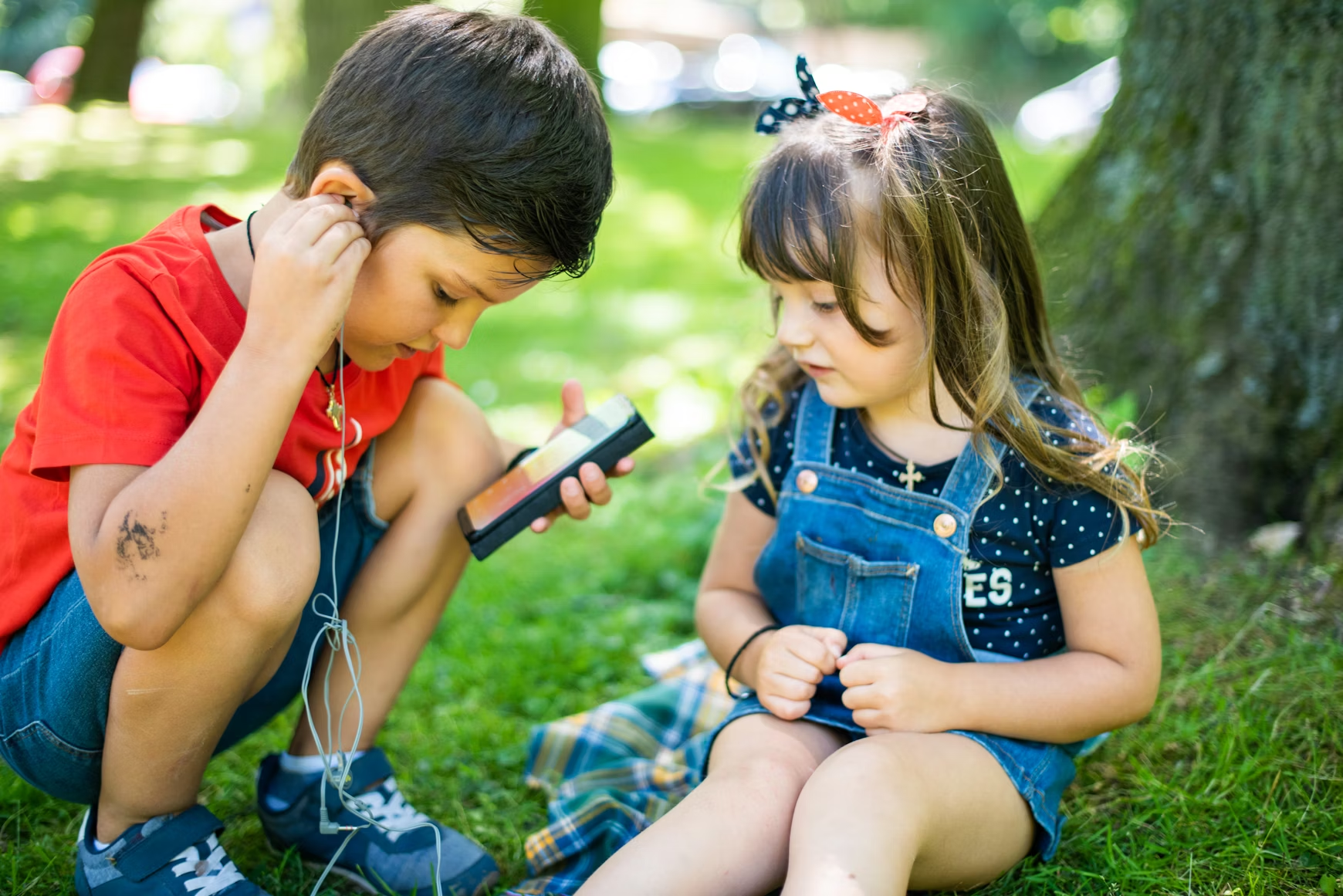
Two kids sitting on grass, sharing earphones and a phone
Image Source: Unsplash

5. Talk Openly About Values—With Real Examples

Your child will mirror the values you demonstrate in the world. Link lofty ideals to everyday choices.

  • Honesty in action. “We’re turning in this lost wallet because its owner is probably worried.”
  • Respect for spaces. “Let’s pick up this litter; we share this park with everyone.”
  • Resilience check-in. After a tough test, ask, “What did you learn that will help next time?”

Concrete moments anchor values far better than abstract lectures.

Small Steps, Big Impact

Character is carved in the mundane: how you handle spilled juice, the words you use when traffic stalls, the grace you show after your own mistakes. Perfection isn’t required—consistent presence and intentional choices are. Pick one small step today—maybe letting your child rinse dishes or adding a gratitude leaf—and watch it ripple outward as your child’s inner compass takes shape.

How do you encourage character-building at home? Share your tips in the comments!

Read More

  • Is Gentle Parenting Creating Entitled Kids—or Building Strong Character?
  • 7 Tips for Patience With an Extremely Active Child

Samantha Warren
Samantha

Samantha Warren is a holistic marketing strategist with 8+ years of experience partnering with startups, Fortune 500 companies, and everything in between. With an entrepreneurial mindset, she excels at shaping brand narratives through data-driven, creative content. When she’s not working, Samantha loves to travel and draws inspiration from her trips to Thailand, Spain, Costa Rica, and beyond.

Filed Under: Parenting Tagged With: character development, child development, child independence, empathy in children, parenting tips, values education | Parenting

12 Times When an Immediate Hug Is the Remedy for Your Child’s Problems

April 10, 2025 | Leave a Comment

emotional reassurance
Image Source: Unsplash

Sometimes your child doesn’t need words—they need your arms. In parenting, few things offer such instant comfort and lasting impact as a genuine hug. While it might seem simple, hugging your child at the right moments can be one of the most powerful tools you have. Whether it’s a scraped knee, an emotional outburst, or a moment of sadness, hugging taps into your child’s need for connection, safety, and love.

Here are 12 situations when pausing for a hug can make a world of difference—and why it matters.

1. After a Meltdown or Tantrum

When your child is mid-meltdown, emotions have overridden logic. They might be crying, yelling, or behaving in ways that feel irrational to you. That’s because, in the moment, their bodies are flooded with cortisol—the stress hormone. A hug triggers the release of oxytocin, which reduces cortisol and helps them settle down more quickly.
In fact, Child Mind Institute’s insights highlight how a well-timed hug or gentle touch can help a child regulate after a tantrum – without rewarding the behavior.

2. When They’ve Made a Mistake and Feel Guilty

Kids will mess up; it’s part of growing up. Whether they broke something or hurt a friend’s feelings, guilt can weigh heavily on them. Before jumping into a lesson or consequence, start with compassion. A hug in that moment shows them they’re loved even when they err, creating a safe space for accountability and growth.

3. Before a Big, Nerve-Wracking Event

From the first day of school to a doctor’s visit, anxiety often manifests as restlessness, tears, or an uneasy tummy. A hug before these events can reset their nervous system, sending the message: “You’ve got this, and I’ve got you.” That touch fosters emotional resilience, reminding them they’re not alone in their fears.

4. After a Nightmare

Monsters feel real when you’re little. When your child wakes up terrified, they don’t need long explanations—they need immediate comfort. A hug re-establishes safety, physically calming the fear response. According to Zero to Three’s guidance on nightmares, a reassuring presence helps children differentiate between dream and reality more effectively.

5. When They’re Feeling Left Out

Not getting picked for a team or feeling excluded by friends stings. A hug in this case doesn’t solve social woes—it validates the hurt. It says, “I see you. You belong here with me.” This form of empathetic touch, as many child development experts note, can bridge the gap between emotional pain and eventual resilience.

6. After They’ve Gotten Hurt

Skinned knees, bumped heads—minor mishaps are part of childhood. A warm embrace can calm them down, almost acting like the first step toward healing. That brief moment of connection assures them that pain is temporary and they are cared for. It’s often more reassuring than any bandage you could apply.

academic struggles
Image Source: Unsplash

7. When They’re Struggling at School

School stresses—bad grades, peer drama, or just feeling overwhelmed—can weigh on your child. Offering a hug before diving into problem-solving reminds them they’re not alone and that you respect their emotions. By first addressing their emotional distress, you help them open up for more constructive conversations about what’s next.

8. When Sibling Fights Leave Tensions High

Siblings can clash, leaving everyone drained. After the yelling subsides, a hug can help reset the tone and show both children they remain valued and loved. It teaches them that even after conflict, a caring touch can restore the sense of family unity. Over time, this approach subtly nudges them toward empathy for each other.

9. During Emotional Overwhelm

Sometimes, your child just feels “off.” They might be anxious, cranky, or sad without knowing why. In these moments, words can fail to reach them, but hugs can act as a direct line to emotional support. Harvard Health Publishing notes that physical touch releases serotonin and dopamine, improving mood naturally.

10. Before Bedtime

Beyond pajamas and storytime, a hug can be the perfect goodnight ritual. It helps them wind down from the day’s excitement and transitions them into a calmer state. This little pause for warmth ensures they head to sleep feeling safe, loved, and emotionally settled. These bedtime hugs often become cherished routines well into adolescence.

11. After a Disappointment

Missed a soccer goal? Didn’t get picked for the school play? While failures and setbacks are normal, they can feel crushing for a child. A hug says, “I know this matters to you, and I’m here.” It’s a gentle reminder that one disappointment doesn’t define them—and that it’s okay to grieve small losses before bouncing back.

12. When They Seek It Without Words

Kids won’t always say they need a hug, but you’ll spot the clues—lingering near you, climbing onto your lap, or simply looking at you with soft eyes. Recognize these silent signals as emotional checkpoints. By opening your arms, you validate an unspoken need for reassurance, fostering a stronger sense of self-worth in your child.

One Hug, Many Lifelines

The benefits of hugging children go beyond quick comfort: it’s a powerful tool for resilience and emotional well-being. From regulating stress to boosting confidence, a parent’s touch reminds them they are not alone, no matter the challenge they face. With all the demands of modern life, hugging is one of the simplest, most direct ways to show empathy, build trust, and help your child navigate their world. So next time they’re hurting or you sense they need a pick-me-up, don’t hesitate—offer the kindness only your embrace can give.

What moments remind you that a hug is exactly what your child needs? Let us know in the comments—every parent’s journey can inspire another.

Read More

  • Tips for Ensuring a Cost-Effective Home Build for Your Family
  • Unlock the Heart of Your Child: 10 Life-Changing Ways to Build an Emotional Bond
Samantha Warren
Samantha

Samantha Warren is a holistic marketing strategist with 8+ years of experience partnering with startups, Fortune 500 companies, and everything in between. With an entrepreneurial mindset, she excels at shaping brand narratives through data-driven, creative content. When she’s not working, Samantha loves to travel and draws inspiration from her trips to Thailand, Spain, Costa Rica, and beyond.

Filed Under: Parenting Tagged With: benefits of hugging children, child development, child stress management, Emotional Regulation, empathy in children, parenting strategies, parenting tips

  • Facebook
  • Pinterest
  • RSS
  • Twitter

Basic Principles Of Good Parenting

Here some basic principles for good parenting:

  1. What You Do Matters: Your kids are watching you. So, be purposeful about what you want to accomplish.
  2. You Can’t be Too Loving: Don’t replace love with material possessions, lowered expectations or leniency.
  3. Be Involved Your Kids Life: Arrange your priorities to focus on what your kid’s needs. Be there mentally and physically.
  4. Adapt Your Parenting: Children grow quickly, so keep pace with your child’s development.
  5. Establish and Set Rules: The rules you set for children will establish the rules they set for themselves later.  Avoid harsh discipline and be consistent.
  6. Explain Your Decisions: What is obvious to you may not be evident to your child. They don’t have the experience you do.
  7. Be Respectful To Your Child: How you treat your child is how they will treat others.  Be polite, respectful and make an effort to pay attention.
Best Parenting Blogs

Most Popular

Baby names

Teachers Admit: These 6 Baby Names Create Instant Bias in the Classroom

Latrice Perez
6 Baby Names That Sound Cute Now but Cause Problems Later

6 Baby Names That Sound Cute Now but Cause Problems Later

Brandon Marcus
11 Ways Kids Are Outsmarting Parental Controls 1. Using Alternate Devices One common trick is simply turning to another device. If a child’s main phone or tablet is restricted, they may borrow a sibling’s, friend’s, or even a school laptop. This instantly gives them access to content outside of parental oversight. Parents often focus on one device, forgetting that others in the household can serve as loopholes. Knowing this tactic helps families tighten controls across all electronics. 2. Clearing Browsing Histories Many kids quickly learn that clearing browsing history hides evidence of restricted activity. With just a few clicks, they can erase any trace of websites visited. This makes it harder for parents to notice when rules are being broken. Parents may assume no history means no browsing, but the reality is often the opposite. Kids are outsmarting parental controls by making it seem like nothing happened at all. 3. Using Private Browsing Modes Most browsers offer “incognito” or private browsing features. Kids use this mode to access websites without leaving a record in the history. To parents checking later, everything looks clean and safe. This simple trick is often one of the first ways kids discover how to bypass restrictions. Conversations about private browsing can help close this gap. 4. Guessing or Resetting Passwords Children who are persistent may try to guess passwords to parental control apps or accounts. Others may find ways to reset them through email prompts or security questions. Once inside, they can disable restrictions entirely. Parents may not even realize controls have been altered until much later. Stronger, less predictable passwords can make this more difficult. 5. Using VPNs to Hide Activity Virtual private networks, or VPNs, let kids disguise their online locations. With one downloaded app, they can bypass geographic or parental restrictions. Some children learn about VPNs through friends or even social media. This makes it easy for them to reach content that should be blocked. Parents often underestimate just how simple it is for kids to use these tools. 6. Creating Fake Accounts When parents monitor social media, kids may create hidden accounts. These “finstas” or fake profiles allow them to interact freely without parental oversight. While their main account appears harmless, the secondary one tells a different story. Kids are outsmarting parental controls by playing both sides at once. Checking for duplicate accounts can help parents stay more aware. 7. Exploiting Time Zone Settings Some kids change the time zone on their devices to bypass screen time limits. This trick allows them to gain extra hours of usage undetected. Parents may assume controls are working, but in reality, the child is bending the clock. It’s a clever loophole that highlights just how resourceful kids can be. Monitoring device settings regularly can catch this tactic. 8. Disabling or Uninstalling Apps Parental control apps can be deleted or disabled with surprising ease. Some kids even reinstall them before a parent checks, making it seem like nothing changed. Others may simply restrict permissions to prevent apps from functioning properly. When apps aren’t monitored closely, parents may not notice they’ve been tampered with. This shows the importance of consistent follow-up. 9. Turning to Friends for Access If a child can’t get past restrictions on their own, they may rely on friends. Visiting a friend’s house or borrowing their phone can give them a free pass. Parents often forget that peer environments can override restrictions set at home. This kind of social workaround is especially common with gaming or social media. Open conversations about trust and responsibility are essential. 10. Hiding Apps in Plain Sight Kids sometimes download apps that look innocent but serve as gateways to hidden activity. These apps may disguise themselves as calculators or utilities. In reality, they allow file storage, private messaging, or browser access. Parents glancing at a home screen may overlook them entirely. Learning to recognize these disguised apps can help parents stay informed. 11. Outpacing Parents’ Tech Knowledge Finally, kids often know more about devices than their parents do. Whether through YouTube tutorials, TikTok hacks, or peer groups, they quickly learn advanced workarounds. This knowledge gap means controls can be bypassed before parents even realize the loophole exists. Staying informed and continually learning about new technology is the best defense. Kids are outsmarting parental controls because they adapt faster than most adults. The Real Solution Lies Beyond Restrictions While controls and filters are important, no system is perfect. Kids will always find creative ways around barriers, making communication the strongest safeguard. Setting clear expectations, building trust, and having ongoing conversations about online behavior matter more than apps alone. Parents who combine technology with open dialogue create a safer digital environment. The goal isn’t to win a battle of wits but to build a relationship that keeps kids both safe and honest. Do you think kids are outsmarting parental controls faster than parents can keep up? Share your experiences in the comments below. What to Read Next... 6 Parenting Tech Shortcuts That Can Expose Your Child to Strangers How Much Screen Time Is Too Much—Legally Speaking? Is Your Child’s School Quietly Tracking Their Location Without Your Consent? How Much Screen Time Is Quietly Reshaping Childhood Behavior? Why Some Parents Are Being Investigated Over Homeschooling Records

11 Ways Kids Are Outsmarting Parental Controls

Catherine Reed

10 Children’s Games From the ’60s That Need to Make a Comeback

Samantha
Smiling grandfather holding a happy baby indoors.

Why Grandparents Shouldn’t Babysit Their Grandkids Every Week – The Unspoken Issue

Samantha

All content on Kids Ain’t Cheap is for entertainment purposes only. By reading this blog, you agree that Kids Ain’t Cheap is not responsible for any actions taken after reading this blog. For the full disclaimer, see our privacy policy.

Please note that Kids Ain’t Cheap has financial relationships with some of the merchants mentioned here. Kids Ain’t Cheap is funded by banner advertising, commission sales and search optimization consulting.

Copyright © 2006–2026 | District Media | All Rights Reserved | Privacy Policy

Copyright © 2026 Runway Pro Theme by Viva la Violette