
• Home
  • About Us
  • Toolkit
  • Archives
  • Advertise
  • Privacy Policy

Kids Ain't Cheap

But They Sure Are Worth It

  • Parenting
    • Baby Stuff
    • Books and Reading
      • Aesops Fables
      • Comic Books
    • Education
    • Family Time
    • Green Living
    • Growing Up
    • Healthy Living & Eating
    • Holidays
    • Parenting
    • Random Musings
    • Shopping
    • Stuff to Do
  • Money
  • Product Reviews
    • Books and Magazines
    • Discount Sites
    • Furniture
    • House Keeping
    • Reviews News
    • Toys and Games
  • Contact Us
  • Our Editorial Commitment
  • Search

Should Boomers Stop Expecting Grandkids from Their Adult Children?

April 18, 2025 | Leave a Comment

Child holding tablet with his grandfather
Image Source: Unsplash

For many Baby Boomers, becoming a grandparent feels like the natural next step in life. When adult children delay—or decide against—starting families of their own, it can stir up disappointment, confusion, even grief.

Yet Millennials and Gen Z face economic pressures and lifestyle shifts Boomers never imagined. Is it fair, then, to hold fast to grandparents’ expectations? Below, we unpack why assumptions about grandchildren deserve a rethink—and how letting go can keep families closer.

Why Expectations Around Grandkids Have Changed

Housing prices and child‑care fees have skyrocketed, and U.S. student‑loan debt tops $1.7 trillion. Layer in unstable job markets and the high emotional load of modern parenting, and many couples reprioritize—or postpone—having children altogether.

Boomers’ Close Ties Can Heighten Pressure

Boomers spend more time and money helping adult kids than previous generations did. That closeness can fuel hopes for grandkids. Remember, though: emotional proximity doesn’t guarantee identical life goals. Respecting your child’s autonomy preserves the very bond you value.
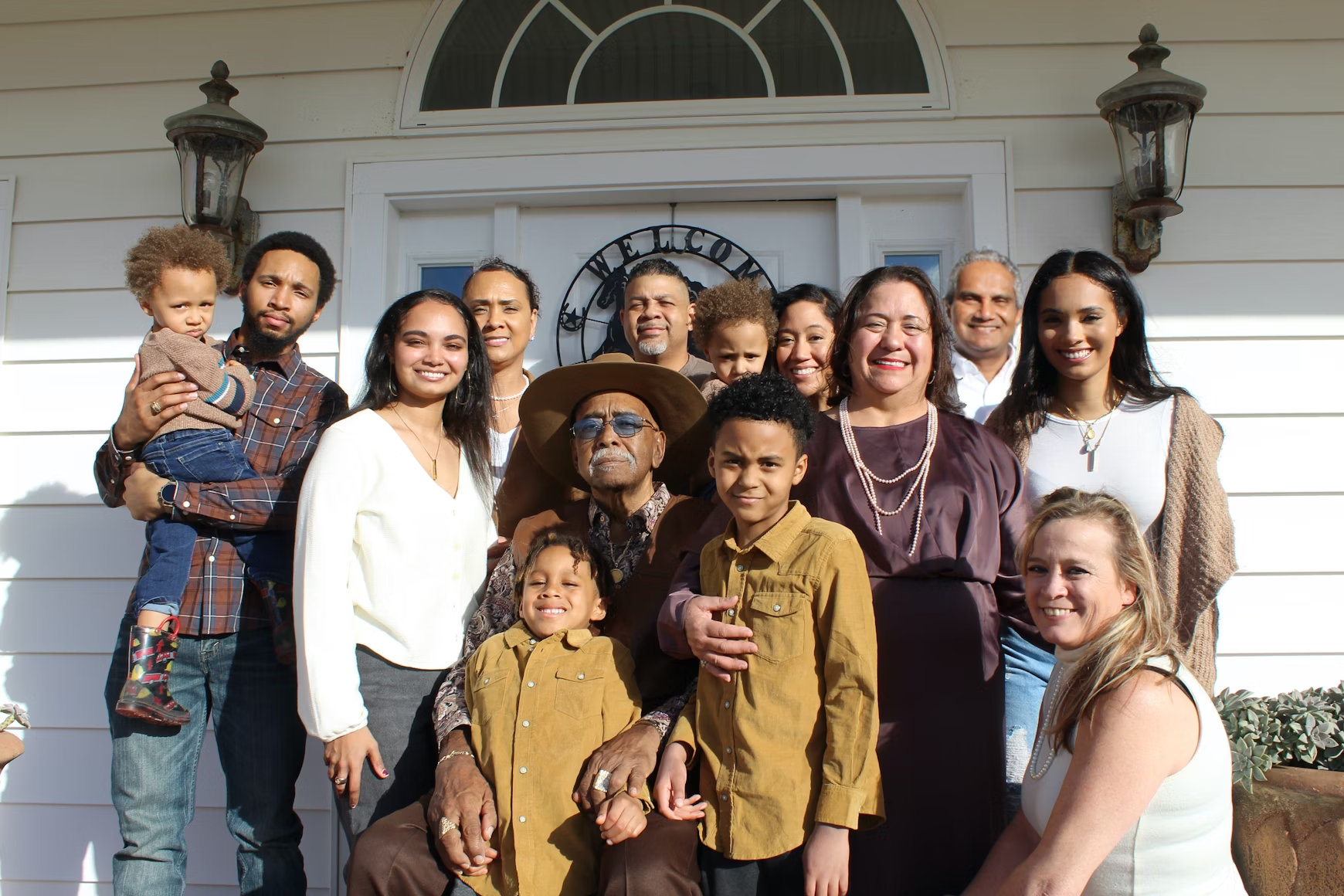
Diverse family spending time together outdoors
Image Source: Unsplash

Not All Families Look the Same—and That’s Okay

Some adult children are child‑free by choice; others quietly struggle with infertility. Silent expectations compound stress. Embracing diverse family forms—step‑grandchildren, foster kids, or “honorary grands” through community mentoring—broadens what legacy can look like and keeps love at the center.

Estrangement and Unspoken Hurt

Roughly 20% of parents experience estrangement from an adult child, according to a national AARP survey. Pressure to deliver grandkids can widen rifts if underlying issues—boundary conflicts, past hurts—remain unaddressed. Rebuilding trust often starts with listening rather than lobbying for babies.

Finding Meaning in the “In‑Between” Years

Waiting for a baby that may never arrive can leave a void. Fill it intentionally. Channel the same anticipation you once pictured for diaper duty into pursuits that knit generations together right now. Offer to pass down a family recipe over FaceTime, digitize old photo albums, or help your adult child knock out their to‑do list on moving day. Acts that lighten their load today speak louder than dreaming aloud about toddlers tomorrow. When they feel supported rather than judged, the door to future possibilities—baby‑related or not—stays propped open.

Open, Ongoing Conversations Heal More Than Time

Tension around unrealized expectations often festers in silence. Set aside a calm moment to ask, with genuine curiosity, how your children envision the next five years and what support would be welcome. Listen without crafting rebuttals. If emotions still run high, a neutral family therapist or structured “mediated conversation” can untangle misunderstandings before they calcify. Finally, cultivate your own peer network—friends, volunteer groups, or grandparenting forums—where you can process feelings openly. Sharing stories with others on similar journeys normalizes the experience and reminds you that love, not lineage, is the heart of family.

Grandparenting Isn’t One‑Size‑Fits‑All

Even when infants arrive, roles vary. Some Boomers become full‑time caregivers; others visit occasionally. Respect your adult child’s parenting philosophy and logistical limits. Offering help—rather than insisting—signals support without overstepping.

Crafting a Legacy Beyond Biology

Grandchildren can be a joy, but they aren’t the sole measure of a life well‑lived. Volunteering, sharing family history, or funding a grand‑niece’s education all transmit values forward. Letting go of rigid endpoints frees you to invest in relationships you already have.

Key Takeaways for Boomers

  1. Acknowledge today’s realities. Finances, climate anxiety, and career demands reshape family planning.
  2. Communicate openly—without pressure. Ask about your child’s dreams before assuming they mirror yours.
  3. Broaden the definition of legacy. Mentorship, philanthropy, and storytelling pass wisdom along, grandkids or not.

Join the Conversation

Have you talked with your adult children about family planning? How did you keep the discussion judgment‑free? Share your experience below—your insight could help another family navigate the same crossroads.

Read More

  • How Do You Teach Kids About Consent and Boundaries?
  • 8 Things Grandparents Wish Their Grandkids Wanted to Do With Them

Samantha Warren
Samantha

Samantha Warren is a holistic marketing strategist with 8+ years of experience partnering with startups, Fortune 500 companies, and everything in between. With an entrepreneurial mindset, she excels at shaping brand narratives through data-driven, creative content. When she’s not working, Samantha loves to travel and draws inspiration from her trips to Thailand, Spain, Costa Rica, and beyond.


Filed Under: Parenting Tagged With: adult children, baby boomers, family planning, generational relationships, grandparents' expectations, parenting dynamics

Should There Be a Legal Limit on How Many Kids One Family Can Have?

April 17, 2025 | Leave a Comment

Large group of siblings standing together outdoors
Image Source: Unsplash

Could the number of children you’re allowed to raise someday be up to the law—and not your heart or home? It’s already a live debate in policy circles, fueled by worries about resource distribution, environmental impact, and child welfare.

Some nations have tried to curb births (China’s historic one‑child policy is the most famous example), while the United States currently leaves family size to personal choice. Before we imagine legislation that caps kids, it’s worth weighing the ethical, practical, and emotional stakes.

When Fiction Sparks Real Questions

Law‑school case studies sometimes use hypotheticals like a “Quality of Life Act,” limiting families to two children, to probe the tension between individual freedoms and collective interests. One well‑known classroom example explores hardship exemptions and enforcement dilemmas, pushing students to ask who decides what family size is “acceptable.”

You can read that thought experiment in the William & Mary Bill of Rights Journal’s archive. While fictional, it forces us to confront how deeply personal decisions collide with public policy goals.

Lessons From Countries That Tried Child Limits

China’s one‑child policy (1979‑2015) is often cited as proof that hard caps create unintended fallout—gender imbalance, forced abortions, and a shrinking workforce among them. The country’s pivot to a three‑child allowance underscores how difficult it is to fine‑tune population through law. A concise overview of the policy’s evolution and side effects appears on Britannica. The takeaway: imposing quotas may reduce births, but social costs can linger for generations.

Economic Policies Already Shape U.S. Family Size

Even without an official limit, certain rules act like soft caps. The Social Security “family maximum” caps survivors’ or disability benefits no matter how many children need support, nudging larger families to make do with less.

Meanwhile, stringent childcare regulations drive up costs, deterring some couples from having a third or fourth child. Policy pressure points already influence how big families get—just indirectly.

Equity Concerns in Any Limit

Research from Penn State shows white, higher‑income children are more likely to be diagnosed (and sometimes over‑diagnosed) with special needs than peers of color—illustrating how bias creeps into supposedly objective systems.

If family‑size laws ever relied on hardship waivers or medical exemptions, similar inequities could emerge. Any cap would need rock‑solid safeguards to prevent discrimination, yet history suggests those safeguards are difficult to design and enforce.

running freely through open field
Image Source: Unsplash

Freedom, Responsibility, and Better Alternatives

Supporters of limits argue they could ease environmental strain or relieve pressure on public services. Critics counter that bodily autonomy and cultural traditions make reproduction a fundamental right. One compromise: strengthen voluntary family‑planning tools—affordable childcare, paid leave, tax credits—so people can choose the family size that feels sustainable.

When financial barriers drop, birth rates align more closely with parents’ true desires, reducing the perceived need for coercive laws.

Raising What Matters Most

The heart of the debate isn’t merely how many children people have—it’s how society shares responsibility for their future. A child raised in a community with solid schools, clean air, and accessible healthcare grows into an adult better equipped to innovate the very solutions our planet needs.

Whether you envision one child or five, healthy families thrive on resources, respect, and informed choice—not quotas. Instead of policing wombs, policymakers might focus on making housing, healthcare, and education attainable for households of every size.

What’s your take—could a legal limit on family size ever be justified, or would it cross a line that should remain inviolable? Share your thoughts below.

Read More:

  • New Baby, New Budget: The Top Tips for Budgeting for a New Baby
  • How to Get Teens Excited About an International Trip
Samantha Warren
Samantha

Samantha Warren is a holistic marketing strategist with 8+ years of experience partnering with startups, Fortune 500 companies, and everything in between. With an entrepreneurial mindset, she excels at shaping brand narratives through data-driven, creative content. When she’s not working, Samantha loves to travel and draws inspiration from her trips to Thailand, Spain, Costa Rica, and beyond.

Filed Under: Parenting Tagged With: child welfare, family planning, family size, fertility policy, legal parenting issues, parenting choices

Should People Be Fined for Having Too Many Kids?

April 15, 2025 | Leave a Comment

Large family playing together outdoors
Image Source: Unsplash

Is there ever a valid reason to punish parents for growing their families? Parenting is challenging enough without the added stress of public policy intervening in our most personal decisions. Yet in some parts of the world, the idea of fining people for having “too many” children isn’t just an idea—it’s real policy.

These regulations don’t just shape individual households; they can redefine an entire nation’s perception of family life. Below, we’ll explore how such policies have played out and the consequences for both parents and kids when governments take control of family size.

The Story of China’s One-Child Policy: More Than Just a Number

From 1980 to 2015, China enforced a sweeping one-child policy aimed at curbing population growth. Parents who dared exceed the limit faced steep income-based fines—referred to as “social maintenance fees.” These fines often matched or even surpassed a family’s annual earnings. In many cases, parents who couldn’t pay risked losing access to vital resources like education and healthcare for their child.

While it might seem extreme, the policy was embedded in everyday life for millions, affecting fundamental choices about marriage, childbirth, and even the possibility of forced abortions or hidden pregnancies. It was, in essence, the government deciding how many children a family could have—and punishing those who dared go beyond that limit.

Real-Life Consequences for Parents and Children

Fines aren’t just about money; in places with strict reproductive controls, kids born outside of quotas often wind up without legal registration. That means no official ID, no schooling, no healthcare, and no social services.

Parents, desperate to protect their unregistered children, sometimes resort to illegal or semi-legal schemes to get them basic rights. The human toll is staggering.

Children grow up with limited opportunities. Families bear constant shame or secrecy. It’s not simply an inconvenience—it permanently affects a child’s education, self-esteem, and long-term well-being.

As the NPR coverage of China’s one-child policy explains, couples who tried to navigate these regulations found themselves caught between their own desires for a family and the government’s demands for population control.

Policies Can Shape Behavior in Unexpected Ways

For families determined to have more than one child under such restrictive regulations, creative workarounds emerged. In China, a notable uptick in twin births was reported—some couples used fertility treatments to sidestep the limit, since twins didn’t technically violate it.

Yet having multiples is no small task, often bringing its own set of stresses, from higher medical costs to more complicated childcare. This underscores how policies aimed at controlling one aspect of family planning can end up pushing parents into new, sometimes riskier decisions.

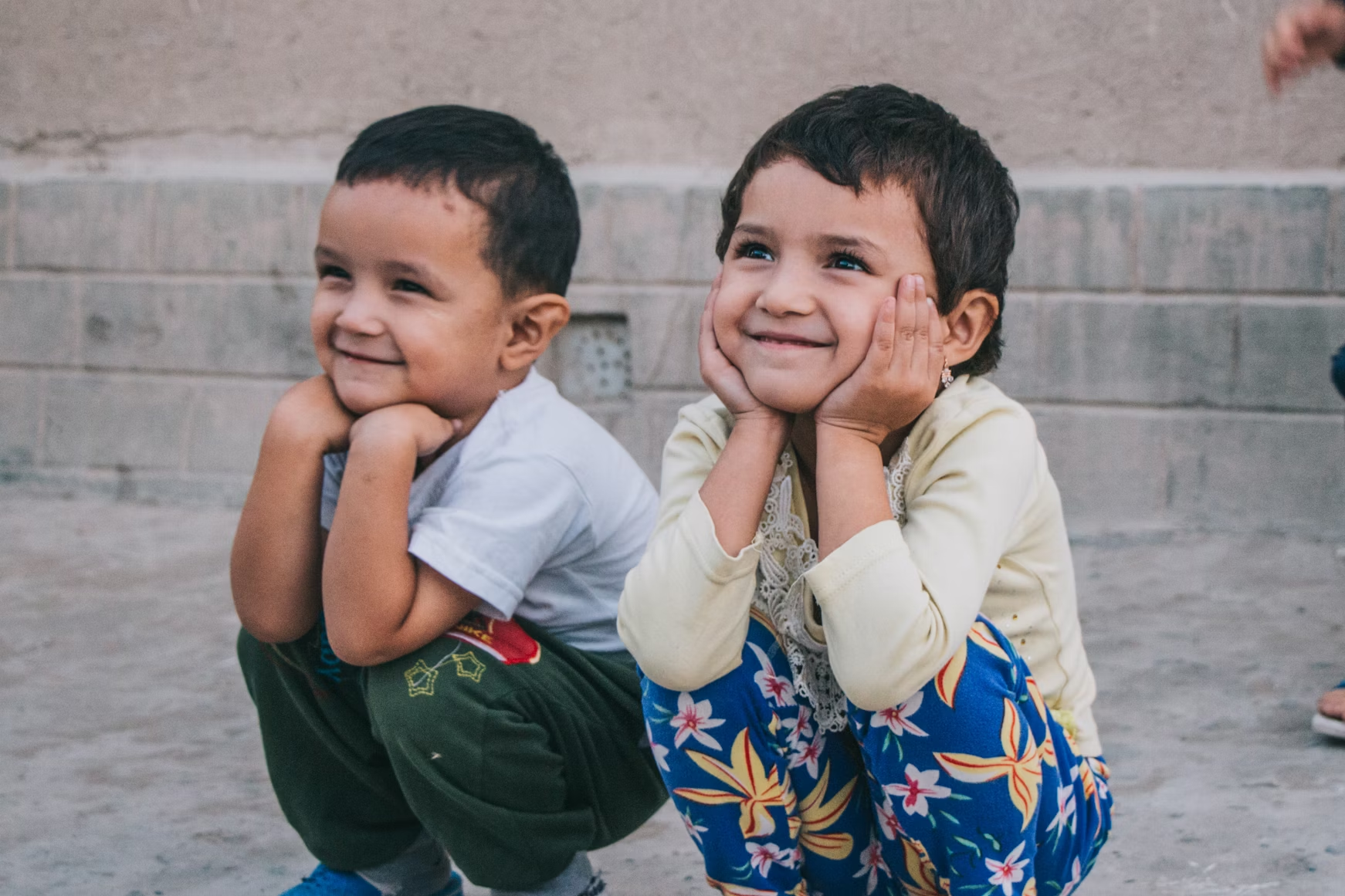
Two kids sitting together outdoors
Image Source: Unsplash

From One-Child to Two-Child—and Beyond

Even after China transitioned to a two-child limit, many of the pressures continued. Third children were still penalized with fines that could reach ten times a family’s annual income. Forced or coerced abortions, especially in under-resourced rural areas, have not disappeared entirely.

Though the fine structure changed, the emotional, physical, and mental strain for parents didn’t vanish overnight. This evolution illustrates that even slight adjustments in family-size policies may not fully address the deeper ethical and psychological dilemmas they create.

Are Other Countries Following Suit?

In the United States and many other nations, fining families for having more children is typically viewed through the lens of human rights violations. Democratic societies generally consider reproductive freedom a fundamental right, making the prospect of family-size fines unlikely.

Still, concerns about environmental resources, public spending, or social welfare do fuel debates about how many children people “should” have. These arguments sometimes spur controversy but rarely lead to formal policies like China’s. Nevertheless, it’s a reminder that population control discussions remain relevant, especially as global issues like climate change intensify.

What Parents Need to Understand

The heart of the matter is this: raising a family shouldn’t risk punishment. Policies that fine families for having more children not only undercut empathy and personal choice—they disproportionately harm the poorest and most vulnerable.

Instead of tackling issues like poverty or resource management through penalties, governments can foster solutions that uplift families. Investing in healthcare, education, and community support is more humane—and more effective—than penalizing reproduction.

Ultimately, these policies can cast a long shadow over a child’s life, hindering access to basic rights and a sense of security. While everyone wants a sustainable planet and well-managed public resources, using fines to regulate family size risks eroding human freedoms in deeply personal ways.

Join the Conversation

So is there ever a valid argument for fining families based on how many kids they have? Should environmental or economic concerns outweigh individual rights? Or is the very idea a slippery slope that leads to more harm than good?

Your insights matter. Feel free to share what you think about this complex intersection of personal freedom, government policy, and the future of our communities.

Read More:

  • How to Save Money for Your Family
  • Fit Families: Being Active Doesn’t Have to Cost Money
Samantha Warren
Samantha

Samantha Warren is a holistic marketing strategist with 8+ years of experience partnering with startups, Fortune 500 companies, and everything in between. With an entrepreneurial mindset, she excels at shaping brand narratives through data-driven, creative content. When she’s not working, Samantha loves to travel and draws inspiration from her trips to Thailand, Spain, Costa Rica, and beyond.
Filed Under: Parenting Tagged With: child fines, China population control, family planning, government regulation, one-child policy, parenting ethics, parenting policy

12 Of The Cutest Baby Names For Your Little Princess

April 7, 2025 | Leave a Comment

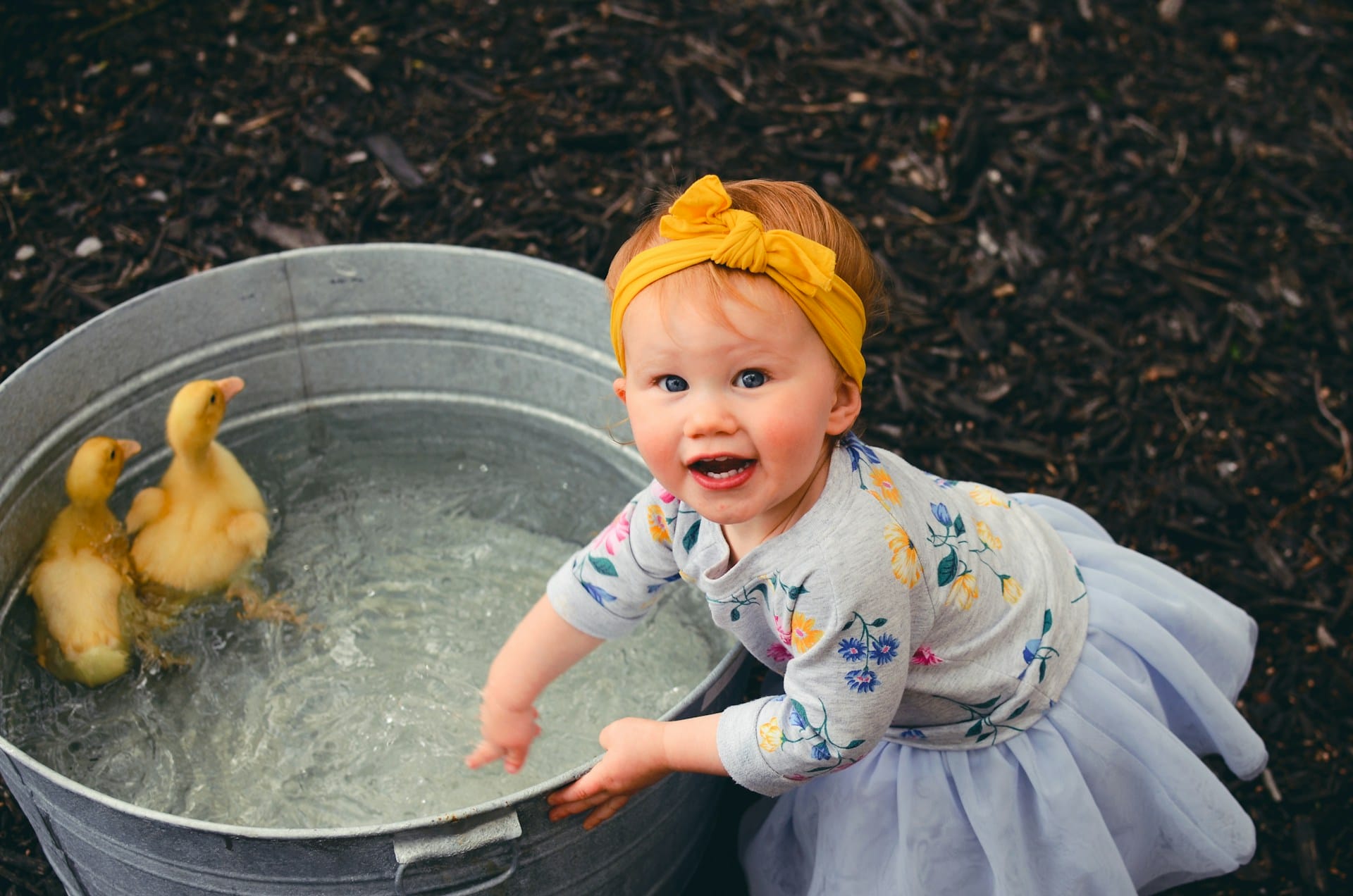
smiling baby girl
Image Source: Unsplash

Choosing a name for your daughter is one of those magical moments that you’ll treasure for a lifetime.

It’s not just about picking something that sounds pretty—it’s about finding a name that reflects your hopes, your family’s heritage, and the unique little person she’s destined to become.

With so many options out there, the process can feel exciting and overwhelming all at once. Let’s take the stress out of searching by sharing 12 of the cutest baby girl names brimming with charm, history, and heart.

Which baby girl names have been on your list? Feel free to share them in the comments below!

1. Isla

Meaning & Origin: A Scottish name meaning “island.”
Why It’s Adorable: Isla (EYE-lah) has a soft, melodic quality that sounds gentle yet modern. It’s a favorite among nature-inspired names without being too obvious.

2. Aria

Meaning & Origin: Italian for “song” or “melody.”
Why It’s Adorable: Aria hits the sweet spot between whimsical and grounded—perfect for parents who appreciate creativity, expression, and a musical twist.

3. Lila

Meaning & Origin: Has roots in Arabic, Hindi, and Hebrew, often meaning “night” or “dark beauty.”
Why It’s Adorable: Lila (LEE-lah or LIE-lah) is vintage, poetic, and effortlessly stylish—ideal if you want a classic sound with multicultural flair.

4. Elodie

Meaning & Origin: Of French origin, meaning “foreign riches.”
Why It’s Adorable: Delicate and feminine without being frilly, Elodie also lends itself to sweet nicknames like “Ellie” or “Lo.”

smiling baby in field
Image Source: Unsplash

5. Ava

Meaning & Origin: From Latin, meaning “life” or “bird.”
Why It’s Adorable: A timeless favorite, Ava is short, elegant, and wonderfully versatile—just as fitting for a toddler as it is for an adult.

6. Aurora

Meaning & Origin: Latin for “dawn.”
Why It’s Adorable: Tied to natural phenomena (Aurora Borealis) and fairytale lore (Sleeping Beauty), Aurora is both whimsical and strong. Nicknames like “Rory” add a playful touch.

7. Hazel

Meaning & Origin: A nature name referring to the hazel tree.
Why It’s Adorable: Vintage, earthy, and quietly strong, Hazel has a sweet warmth that suits both a curious child and a confident adult.

8. Nora

Meaning & Origin: An Irish name meaning “honor” or “light.”
Why It’s Adorable: Nora seamlessly blends tradition with modernity, offering an old-fashioned charm that never goes out of style.

9. Mae

Meaning & Origin: Often linked to the month of May, symbolizing warmth and new life.
Why It’s Adorable: Tiny in length but big on charm, Mae brings a sweet simplicity that can stand alone or complement a longer middle or last name.

10. Savannah

Meaning & Origin: Derived from the Spanish word for tropical grasslands.
Why It’s Adorable: Romantic yet familiar, Savannah offers a sense of wide-open spaces and free-spirited adventure—perfect for a little girl with a big imagination.

11. Cora

Meaning & Origin: From Greek mythology, meaning “maiden.”
Why It’s Adorable: Simple yet impactful, Cora has a quiet nobility. It’s easy to pronounce and spell, making it a timeless choice for any personality type.

12. Wren

Meaning & Origin: Named after the small songbird known for its cheerful tune.
Why It’s Adorable: Modern, minimalist, and nature-inspired, Wren feels fresh and distinct while remaining utterly charming.

A Name That Echoes Her Story

Ultimately, the best name is the one that resonates with your heart and your family’s values. Whether you’re drawn to vintage classics, nature-inspired picks, or melodic options, let meaning and intuition guide you. Your daughter’s name is more than just a word—it’s a piece of her story that begins with you.

What’s your favorite baby girl name on this list—or beyond it? Let us know in the comments below!

Read More

  • 10 Toxic Things to Never Tell a Child When You’re Mad
  • 9 Baby Names You’ve Never Heard Before, But Should Consider

Samantha Warren
Samantha

Samantha Warren is a holistic marketing strategist with 8+ years of experience partnering with startups, Fortune 500 companies, and everything in between. With an entrepreneurial mindset, she excels at shaping brand narratives through data-driven, creative content. When she’s not working, Samantha loves to travel and draws inspiration from her trips to Thailand, Spain, Costa Rica, and beyond.
Filed Under: Baby Names Tagged With: baby girl names, baby names, choosing baby names, family planning, name ideas, newborn, parenting tips, Pregnancy

« Previous Page
  • Facebook
  • Pinterest
  • RSS
  • Twitter

Basic Principles Of Good Parenting

Here some basic principles for good parenting:

  1. What You Do Matters: Your kids are watching you. So, be purposeful about what you want to accomplish.
  2. You Can’t be Too Loving: Don’t replace love with material possessions, lowered expectations or leniency.
  3. Be Involved Your Kids Life: Arrange your priorities to focus on what your kid’s needs. Be there mentally and physically.
  4. Adapt Your Parenting: Children grow quickly, so keep pace with your child’s development.
  5. Establish and Set Rules: The rules you set for children will establish the rules they set for themselves later.  Avoid harsh discipline and be consistent.
  6. Explain Your Decisions: What is obvious to you may not be evident to your child. They don’t have the experience you do.
  7. Be Respectful To Your Child: How you treat your child is how they will treat others.  Be polite, respectful and make an effort to pay attention.
Best Parenting Blogs

Most Popular

Baby

9 Unusual Baby Names That Sound Like They Belong to Future CEOs

Evan Morgan
Baby

10 Baby Names That Were Once Considered “Grandparent Names” but Feel Cool Again

Evan Morgan
Target Store

Choking Incident Prompts Recall of 49,000 Target Gigglescape “Under the Sea” Popping Toys

Evan Morgan
Frustrated Girl

Why Some Students on the Spectrum Are Labeled With ODD

Evan Morgan
Coke Bottles

12 Things Kids Took to School in the ’70s That Would Never Be Allowed Today

Evan Morgan

All content on Kids Ain’t Cheap is for entertainment purposes only. By reading this blog, you agree that Kids Ain’t Cheap is not responsible for any actions taken after reading this blog. For the full disclaimer, see our privacy policy.

Please note that Kids Ain’t Cheap has financial relationships with some of the merchants mentioned here. Kids Ain’t Cheap is funded by banner advertising, commission sales and search optimization consulting.

Copyright © 2006–2026 | District Media | All Rights Reserved | Privacy Policy

Copyright © 2026 Runway Pro Theme by Viva la Violette