
• Home
  • About Us
  • Toolkit
  • Archives
  • Advertise
  • Privacy Policy

Kids Ain't Cheap

But They Sure Are Worth It

  • Parenting
    • Baby Stuff
    • Books and Reading
      • Aesops Fables
      • Comic Books
    • Education
    • Family Time
    • Green Living
    • Growing Up
    • Healthy Living & Eating
    • Holidays
    • Parenting
    • Random Musings
    • Shopping
    • Stuff to Do
  • Money
  • Product Reviews
    • Books and Magazines
    • Discount Sites
    • Furniture
    • House Keeping
    • Reviews News
    • Toys and Games
  • Contact Us
  • Our Editorial Commitment
  • Search

The Benefits of 1000 Hours Outside

January 19, 2023 | Leave a Comment

Benefits of 1000 Hours Outside

I have heard of the 1000 Hours Outside movement for the last few years, but I never tried it because we lived in Arizona, where it was too hot most of the year to spend much time outdoors. Now, we’ve moved to a more temperate climate, so in 2023, we’re joining the movement. There are many benefits of the 1000 hours outside challenge that I’ve already seen for our family and expect to increase as we get further into the year.

The Benefits of 1000 Hours Outside

These are some of the benefits I’ve seen so far:

More Family Time

My husband works a lot, but he enjoys spending time outdoors. So, he joins us whenever we head out for an outdoor adventure. Likewise, the girls are teens and don’t like to do as much together, but they, too, join in for outdoor activities.

More Frugal Entertainment

We’ve found immersing ourselves in nature is a frugal endeavor. Recently, we took a road trip to a location 70 miles from our home. First, we walked around some college campuses that our kids wanted to see. Then, we went to a nearby cemetery where we found the graves of Frederick Douglas and Susan B. Anthony. We spent several hours outdoors exploring; the only cost was the gas to get to the city.

Better Physical Fitness

Since we started this challenge, we’ve been more active. The girls will take two-mile walks with me to rack up more outdoor time. In addition, we’ve resumed hiking as a family, something we haven’t done for years.

Better Behavior

When our kids were younger, I noticed a direct correlation between their time on devices and challenging behavior. They were grumpier and more aggressive as they spent more time on electronics. They’re older now, so the behavior challenges are more nuanced. However, I notice that they seem more peaceful and relaxed when they spend time outdoors.

Less Reliance on Technology

Benefits of 1000 hours outside

When kids get bored, they turn to electronics. If they’re outdoors doing activities, they don’t have electronics to turn to. Most kids today (and adults!) rely too heavily on electronics. Stopping this behavior cold turkey is difficult, if not impossible in our society. However, you can diminish the time you and your kids spend on electronics by replacing that time with something better, like time outdoors.

I wish we had started the 1000 Hours Outside challenge when my kids were toddlers. They would have grown up knowing so much more about nature. They would have found being outdoors a natural way to live. However, it’s never too late, which is why we’re embarking on the challenge now, while we still have time.

Final Thoughts

The earlier you start immersing your kids in the outdoors, the better. However, your kids are never too old to reap the benefits of 1000 Hours Outside challenge. Our kids are 12 and 14, and they’re still benefiting. So, what are you waiting for? Put on your jacket or sunscreen, depending on the weather, and enjoy the great outdoors.

Read More

7 Free Activities to Do with Toddlers This Summer

How Much Does Unschooling Cost?

A Frugal Life: How to Drastically Cut Expenses and Improve Your Finances

Melissa Batai
Melissa Batai

Melissa is a writer and virtual assistant. She earned her Master’s from Southern Illinois University, and her Bachelor’s in English from the University of Michigan. When she’s not working, you can find her homeschooling her kids, reading a good book, or cooking. She resides in Arizona where she dislikes the summer heat but loves the natural beauty of the area.
Filed Under: Family Time, Parenting Blog at KidsAintCheap Tagged With: 1000 hours outdoors, Activities For Family, frugal and fun

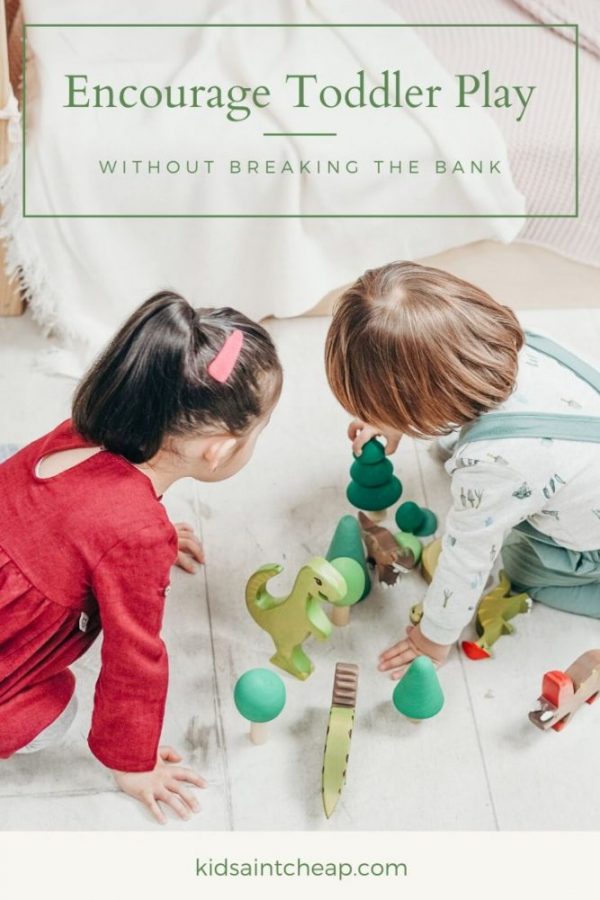
Encourage Toddler Play without Breaking the Bank

May 21, 2020 | Leave a Comment

The toddler years from one to three are a time of tremendous growth.  Kids learn to walk, run, and explore their worlds.  They are curious, and both their minds and bodies are developing rapidly.  As a parent, giving your children safe ways to play and explore is important to their development.  At this age, you can find plenty of frugal ways to encourage toddler play without breaking the bank.

Encourage Toddler Play without Breaking the Bank

Low-Cost Supplies

There are so many low-cost supplies that you can stock your shelves with that will keep your child happy for hours.

Play-Doh

For less than $5, you can pick up a small set of Play-Doh for your toddler.  Play-Doh has definitely gotten fancier since my kids were toddlers.  Now you can buy Play-Doh with glitter in it and in a large variety of color.  Kids are usually happy playing with just Play-Doh, but if you want to spend a bit more, you can buy Play-Doh toys like a hair dresser shop or a gravel construction yard, for example.  You can also try your hand at making homemade playdough.

Finger Paint

If you have $8, you can buy a 6 pack of finger paint that will provide your child with artistic and sensory expression.  All of my children loved to finger paint when they were toddlers, but my middle child easily wanted to finger paint several times a week.  She still enjoys art, and I attribute it to all the time she spent finger painting when she was young.

Bubbles

This is likely the best way to encourage toddler play without breaking the bank.  Bubbles are ridiculously cheap, less than $1 for a small bottle, and yet your child can likely use them for at least a month.  He can experiment with how hard to blow to form the bubble or run and try to get the bubble to form.  Even better, mom or dad can blow bubbles while your toddler tries to catch them without popping them or runs through them.

Sidewalk Chalk

Sidewalk chalk is yet another way to let your little artist express herself.  You can get a box of 48 pieces of chunky chalk (perfect for little hands) for around $5.  These will last all summer, and your sidewalk or driveway is the perfect canvas.

Bath Supplies

After finger painting, my younger two kids’ favorite activity was taking a bath.  They loved to have the tub filled with bubbles to play in.  When the bubbles dissipated, they liked to play with their bath toys.  They could easily spend 45 minutes to an hour in the tub.  (Just make sure a parent stays in the room with them.)  You could buy the bubbles and a few toys for your kids for less than $20.  My girls’ favorite bath activity was using bath crayons to draw on the tub walls.

Doctor Kit

Many toddlers like playing doctor.  They take the stethoscope to your chest to check your breathing, they check your reflexes, and then they give you their diagnosis.  They also love it when you give them an exam.  These kits are a bit more expensive, around $20, but your child will likely use them quite a bit.  (We bought ours used at a garage sale for $1, which is another great way to save money).

Make It Yourself

There are other ways to encourage toddler play without breaking the bank.  Namely, instead of buying something, make it yourself!

Calm/Glitter Bottles

Many toddlers are fascinated with calm/glitter bottles and can spend a surprising amount of time tipping them from side to side.  Making a calm bottle is not difficult; there are plenty of tutorials online.

Once you buy the ingredients, you likely have enough to make several bottles.  Once your child tires of one, make a new one in a different color with different items inside.  Even though this tutorial only had glitter, I’ve seen calm bottles filled with a variety of items like large stars to give them some more visual appeal.

Bowling Set

Another idea for outdoor fun is to make a toddler bowling set.  You’ll need some empty water bottles and a ball.  Your toddler can practice knocking them down.  He’ll love it if you play with him.

The nice thing about a homemade bowling set is not only that it’s frugal, but if one bowling pin gets damaged, it’s easy to replace.

https://youtu.be/PHm4jK6x_sg

Sensory Play

There are a host of reasons why sensory play is beneficial for kids, not the least of which is that it helps develop connections in the brain and encourages imaginative play.

Probably the easiest one is to buy a can of shaving cream.  When my kids were about three, I’d put a light layer of shaving cream on a cookie sheet, and they practiced writing their letters in the shaving cream.  They loved the sensation, and they were learning at the same time.

Another less messy way to do this is to put a bit of shaving cream and a drop or two of dye in a gallon plastic freezer bag.  (Don’t fill it too much!)  Then kids can write their letters in the cream, but they do so on top of the bag so they still get sensory input, but there’s no mess for parents to clean up.

There are plenty of sensory play ideas online.

Don’t Forget the Books!

While it’s very important to encourage play in your toddlers, don’t forget to also read aloud to your child daily, the more the better.  The stories that you read aloud to your child now will eventually lead to imaginative play later.

I read aloud to my children frequently, and when my girls were in first and second grade, we read the entire Little House on the Prairie series.  They had the discipline to sit through those books because they were used to being read to.  For the next few years, much of their imaginative play was based on what they learned through those books.

Final Thoughts

Children under the age of three experience a phenomenal amount of brain and body growth in these important years.  Starting now, make sure to give your child plenty of safe opportunities to play and learn.

Melissa Batai
Melissa Batai

Melissa is a writer and virtual assistant. She earned her Master’s from Southern Illinois University, and her Bachelor’s in English from the University of Michigan. When she’s not working, you can find her homeschooling her kids, reading a good book, or cooking. She resides in Arizona where she dislikes the summer heat but loves the natural beauty of the area.

Filed Under: Education, Growing Up, Parenting Tagged With: frugal and fun, long-lasting toys for toddlers, toddlers

  • Facebook
  • Pinterest
  • RSS
  • Twitter

Basic Principles Of Good Parenting

Here some basic principles for good parenting:

  1. What You Do Matters: Your kids are watching you. So, be purposeful about what you want to accomplish.
  2. You Can’t be Too Loving: Don’t replace love with material possessions, lowered expectations or leniency.
  3. Be Involved Your Kids Life: Arrange your priorities to focus on what your kid’s needs. Be there mentally and physically.
  4. Adapt Your Parenting: Children grow quickly, so keep pace with your child’s development.
  5. Establish and Set Rules: The rules you set for children will establish the rules they set for themselves later.  Avoid harsh discipline and be consistent.
  6. Explain Your Decisions: What is obvious to you may not be evident to your child. They don’t have the experience you do.
  7. Be Respectful To Your Child: How you treat your child is how they will treat others.  Be polite, respectful and make an effort to pay attention.
Best Parenting Blogs

Most Popular

Baby

9 Baby Names That Sound Expensive Even Though Naming Your Baby Is Still Free

Evan Morgan
Baby

The Rise of “Aggressive” Baby Names Is Raising Eyebrows — Here’s What Parents Are Choosing

Evan Morgan
Baby names

Teachers Admit: These 6 Baby Names Create Instant Bias in the Classroom

Latrice Perez
6 Baby Names That Sound Cute Now but Cause Problems Later

6 Baby Names That Sound Cute Now but Cause Problems Later

Brandon Marcus
11 Ways Kids Are Outsmarting Parental Controls 1. Using Alternate Devices One common trick is simply turning to another device. If a child’s main phone or tablet is restricted, they may borrow a sibling’s, friend’s, or even a school laptop. This instantly gives them access to content outside of parental oversight. Parents often focus on one device, forgetting that others in the household can serve as loopholes. Knowing this tactic helps families tighten controls across all electronics. 2. Clearing Browsing Histories Many kids quickly learn that clearing browsing history hides evidence of restricted activity. With just a few clicks, they can erase any trace of websites visited. This makes it harder for parents to notice when rules are being broken. Parents may assume no history means no browsing, but the reality is often the opposite. Kids are outsmarting parental controls by making it seem like nothing happened at all. 3. Using Private Browsing Modes Most browsers offer “incognito” or private browsing features. Kids use this mode to access websites without leaving a record in the history. To parents checking later, everything looks clean and safe. This simple trick is often one of the first ways kids discover how to bypass restrictions. Conversations about private browsing can help close this gap. 4. Guessing or Resetting Passwords Children who are persistent may try to guess passwords to parental control apps or accounts. Others may find ways to reset them through email prompts or security questions. Once inside, they can disable restrictions entirely. Parents may not even realize controls have been altered until much later. Stronger, less predictable passwords can make this more difficult. 5. Using VPNs to Hide Activity Virtual private networks, or VPNs, let kids disguise their online locations. With one downloaded app, they can bypass geographic or parental restrictions. Some children learn about VPNs through friends or even social media. This makes it easy for them to reach content that should be blocked. Parents often underestimate just how simple it is for kids to use these tools. 6. Creating Fake Accounts When parents monitor social media, kids may create hidden accounts. These “finstas” or fake profiles allow them to interact freely without parental oversight. While their main account appears harmless, the secondary one tells a different story. Kids are outsmarting parental controls by playing both sides at once. Checking for duplicate accounts can help parents stay more aware. 7. Exploiting Time Zone Settings Some kids change the time zone on their devices to bypass screen time limits. This trick allows them to gain extra hours of usage undetected. Parents may assume controls are working, but in reality, the child is bending the clock. It’s a clever loophole that highlights just how resourceful kids can be. Monitoring device settings regularly can catch this tactic. 8. Disabling or Uninstalling Apps Parental control apps can be deleted or disabled with surprising ease. Some kids even reinstall them before a parent checks, making it seem like nothing changed. Others may simply restrict permissions to prevent apps from functioning properly. When apps aren’t monitored closely, parents may not notice they’ve been tampered with. This shows the importance of consistent follow-up. 9. Turning to Friends for Access If a child can’t get past restrictions on their own, they may rely on friends. Visiting a friend’s house or borrowing their phone can give them a free pass. Parents often forget that peer environments can override restrictions set at home. This kind of social workaround is especially common with gaming or social media. Open conversations about trust and responsibility are essential. 10. Hiding Apps in Plain Sight Kids sometimes download apps that look innocent but serve as gateways to hidden activity. These apps may disguise themselves as calculators or utilities. In reality, they allow file storage, private messaging, or browser access. Parents glancing at a home screen may overlook them entirely. Learning to recognize these disguised apps can help parents stay informed. 11. Outpacing Parents’ Tech Knowledge Finally, kids often know more about devices than their parents do. Whether through YouTube tutorials, TikTok hacks, or peer groups, they quickly learn advanced workarounds. This knowledge gap means controls can be bypassed before parents even realize the loophole exists. Staying informed and continually learning about new technology is the best defense. Kids are outsmarting parental controls because they adapt faster than most adults. The Real Solution Lies Beyond Restrictions While controls and filters are important, no system is perfect. Kids will always find creative ways around barriers, making communication the strongest safeguard. Setting clear expectations, building trust, and having ongoing conversations about online behavior matter more than apps alone. Parents who combine technology with open dialogue create a safer digital environment. The goal isn’t to win a battle of wits but to build a relationship that keeps kids both safe and honest. Do you think kids are outsmarting parental controls faster than parents can keep up? Share your experiences in the comments below. What to Read Next... 6 Parenting Tech Shortcuts That Can Expose Your Child to Strangers How Much Screen Time Is Too Much—Legally Speaking? Is Your Child’s School Quietly Tracking Their Location Without Your Consent? How Much Screen Time Is Quietly Reshaping Childhood Behavior? Why Some Parents Are Being Investigated Over Homeschooling Records

11 Ways Kids Are Outsmarting Parental Controls

Catherine Reed

All content on Kids Ain’t Cheap is for entertainment purposes only. By reading this blog, you agree that Kids Ain’t Cheap is not responsible for any actions taken after reading this blog. For the full disclaimer, see our privacy policy.

Please note that Kids Ain’t Cheap has financial relationships with some of the merchants mentioned here. Kids Ain’t Cheap is funded by banner advertising, commission sales and search optimization consulting.

Copyright © 2006–2026 | District Media | All Rights Reserved | Privacy Policy

Copyright © 2026 Runway Pro Theme by Viva la Violette