• Home
  • About Us
  • Toolkit
  • Archives
  • Advertise
  • Privacy Policy

Kids Ain't Cheap

But They Sure Are Worth It

  • Parenting
    • Baby Stuff
    • Books and Reading
      • Aesops Fables
      • Comic Books
    • Education
    • Family Time
    • Green Living
    • Growing Up
    • Healthy Living & Eating
    • Holidays
    • Parenting
    • Random Musings
    • Shopping
    • Stuff to Do
  • Money
  • Product Reviews
    • Books and Magazines
    • Discount Sites
    • Furniture
    • House Keeping
    • Reviews News
    • Toys and Games
  • Contact Us
  • Our Editorial Commitment
  • Search

A Closer Look at School-Bus Details Parents of Autistic Children Should Confirm in Writing

August 4, 2026 | Leave a Comment

School Bus
A parent should review an autistic child’s school transportation plan with school staff, ensuring important IEP accommodations and safety procedures are confirmed in writing before the school year begins. (Pexels).

The school bus is often the first and last part of a child’s school day, making it just as important as what happens inside the classroom. For autistic children, even small changes during transportation can affect their comfort, safety, and ability to learn once they arrive at school. While many families focus on classroom accommodations, transportation services deserve the same level of attention and documentation. Confirming key bus arrangements in writing can reduce misunderstandings, create accountability, and help ensure consistent support throughout the school year.

Transportation Services Should Match the Child’s IEP

Transportation is not automatically provided as a special education service simply because a child has autism. Instead, the Individualized Education Program (IEP) team determines whether transportation is necessary for the student to access a free appropriate public education, and what accommodations are needed. If transportation is included, the IEP should clearly describe the specific supports rather than simply stating that bus service will be provided. Parents should request written confirmation that the transportation department has received and understands those requirements before the first day of school. This step helps reduce confusion between school staff and transportation providers while ensuring everyone is working from the same plan.

Written Details Help Prevent Daily Misunderstandings

A written transportation plan can address concerns that may seem minor but make a significant difference for an autistic child. Parents should confirm details such as pickup and drop-off locations, approximate pickup windows, who is authorized to receive the child, and procedures if no caregiver is present. If a child benefits from sitting near the front, riding a shorter route, or having consistent seating, those expectations should be documented whenever appropriate. Written communication also provides a record if questions arise later about whether agreed-upon accommodations were followed. Having these details in writing protects both families and school staff by creating clear expectations from the beginning.

Behavioral and Sensory Supports Matter During the Ride

The bus environment can be overwhelming because of loud noises, crowded seating, unpredictable routines, and extended travel times. For some autistic students, supports such as a trained bus aide, visual schedules, noise-reducing headphones, or scheduled seating may help reduce anxiety and prevent behavioral challenges. Parents should discuss these needs during the IEP meeting and request that approved accommodations be documented instead of relying on verbal agreements. A child who becomes distressed during unexpected route changes may benefit from advance notice or consistent transportation routines whenever possible. Addressing sensory and behavioral needs before problems occur often leads to safer, calmer rides for everyone involved.

Communication Plans Can Solve Problems Faster

Transportation issues rarely happen only once, making communication procedures just as important as the accommodations themselves. Parents should ask who to contact if the bus is running late, if a substitute driver is assigned, or if a transportation concern develops during the school year. It is also helpful to know how behavioral incidents, missed pickups, or safety concerns will be documented and shared with families. A clear communication process allows problems to be addressed before they become recurring issues. Many experienced parents find that email summaries after important conversations create an accurate record that everyone can reference later if needed.

Documentation Protects Everyone When Changes Occur

School transportation often changes throughout the year because of staffing shortages, route adjustments, or substitute drivers. When accommodations exist only through verbal conversations, important information can easily be overlooked during those transitions. Written documentation helps ensure that new transportation staff understand a child’s established needs without requiring parents to repeatedly explain them. If transportation services included in the IEP are interrupted, families should contact the school promptly to request clarification and discuss solutions through the IEP process. Maintaining organized records of emails, transportation notices, and IEP documents can make resolving concerns much smoother while supporting collaborative communication with the school.

The Ride to School Is Part of the Learning Experience

A successful school day begins long before the classroom door opens, and transportation plays an important role in that experience. When transportation services are carefully documented, autistic children are more likely to experience consistency, predictability, and appropriate support from home to school and back again. Parents should feel comfortable asking questions and requesting written confirmation whenever transportation plans are discussed because clear communication benefits everyone involved. Taking a proactive approach today can help prevent unnecessary stress and confusion throughout the school year.

What transportation accommodations have made the biggest difference for your child, and is there anything you wish you had requested in writing sooner? Share your experiences in the comments to help other families learn from your journey.

What to Read Next

5 Reasons You Should Let Your Child Catch The Bus To School

Sensory-Friendly School Supplies: What Helps and What Can Be Skipped

7 School Lunch Payment Fees Quietly Raising Parents’ Costs

Evan Morgan

Evan Morgan has been a full-time freelance writer and editor for 10+ years. When not working, he enjoys catching the latest true crime documentary or getting lost in a good book.
Filed Under: Parenting Tagged With: autism, autistic children, disability rights, education, IEP, Parenting, school bus safety, school transportation, special education

5 Reasons You Should Let Your Child Catch The Bus To School

May 26, 2025 | Leave a Comment

5 Reasons You Should Let Your Child Catch The Bus To School

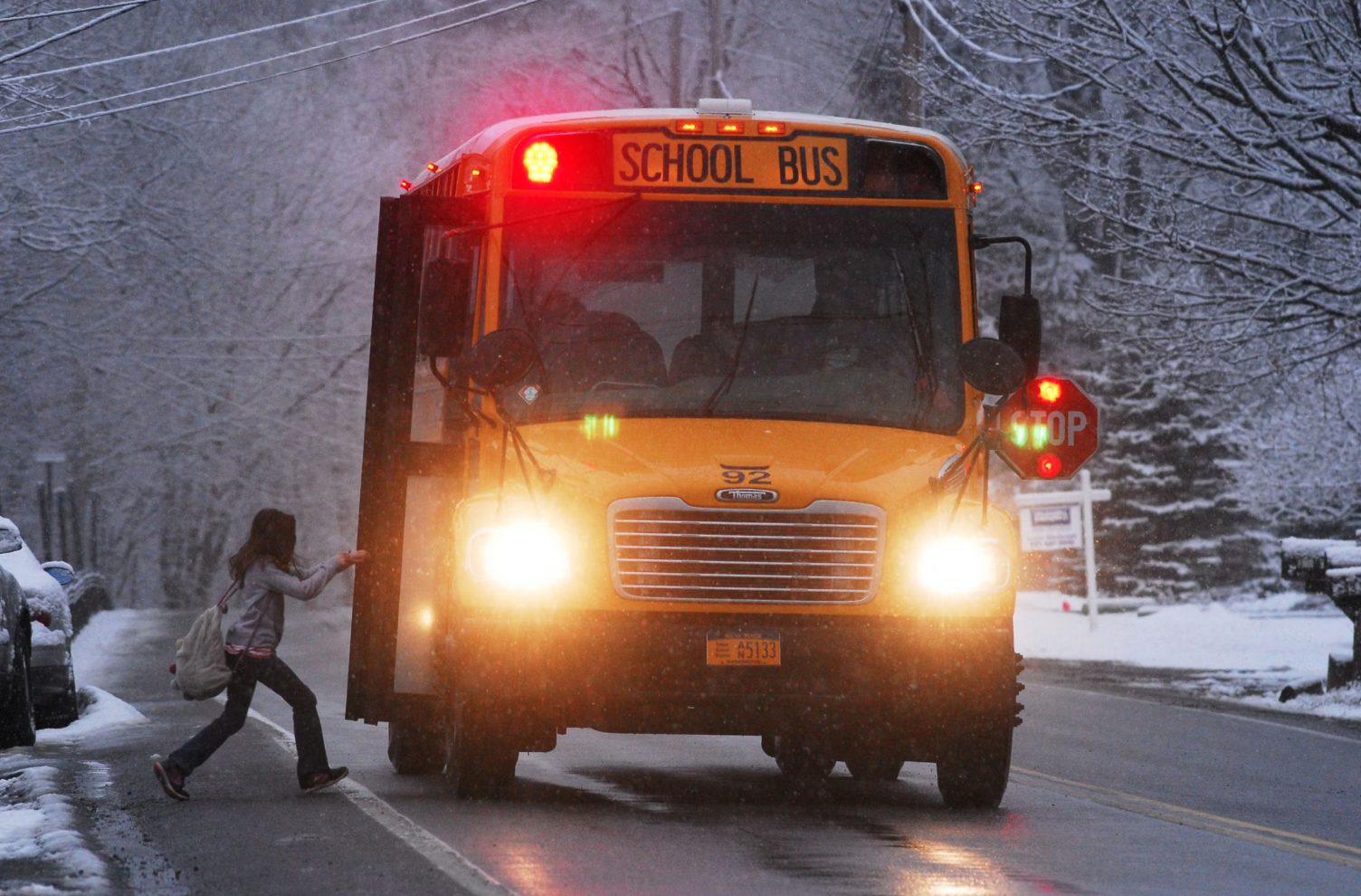
It’s easy to default to driving your child to school every morning, especially when you want to squeeze in those last few minutes together. But if you’re feeling overwhelmed by the morning rush or questioning whether the drive is always necessary, it might be time to rethink your routine. When you let your child catch the bus to school, you’re giving them more than just a ride—you’re offering a chance to build independence, save time, and create structure. School buses are safer and more efficient than most parents realize, and they come with benefits that ripple through the entire day. Here’s why putting your child on the bus could be one of the best parenting decisions you make this year.

1. It Builds Confidence and Independence

Children grow when they’re given opportunities to navigate their world without constant supervision. When you let your child catch the bus to school, you’re teaching them how to manage time, follow routines, and feel capable outside your immediate presence. Getting to the bus stop, remembering their belongings, and sitting with peers can all help boost self-esteem. Small moments of independence like this prepare them for bigger responsibilities down the road. It’s a gentle, age-appropriate way to build resilience and confidence.

2. The Routine Sets a Strong Foundation

Buses run on strict schedules, and kids quickly learn to manage their mornings around it. Unlike the unpredictable chaos of car rides or last-minute drop-offs, school bus routines create dependable structure. When you let your child catch the bus to school, you’re instilling the value of being on time and the importance of daily habits. These routines reduce stress and give children a clearer mental map of their day. The rhythm of a consistent morning routine can positively influence their mood, focus, and school performance.

3. It Teaches Social Skills Outside the Classroom

The school bus may be loud and chaotic at times, but it’s also an important space for learning how to interact with others. Kids learn to navigate group dynamics, resolve minor conflicts, and form friendships—all in an environment that isn’t teacher-led. When you let your child catch the bus to school, you’re giving them a space to build social confidence away from adult guidance. These peer-to-peer interactions help develop empathy, communication, and boundary-setting skills. As long as you check in regularly about their experience, the bus can be a safe place for valuable social growth.

4. It’s Often Safer Than Driving Yourself

Parents are sometimes surprised to learn that school buses are one of the safest modes of transportation for children. School buses are specifically designed with safety in mind, including high visibility, specialized safety equipment, and professionally trained drivers. When you let your child catch the bus to school, you reduce the risk associated with hectic school drop-off lines and distracted drivers. Studies show that kids are far less likely to be involved in accidents on a school bus compared to being driven in a private vehicle. The peace of mind that comes with that fact can’t be overstated.

5. It Frees Up Time (and Gas Money) for the Whole Family

Between traffic, school drop-off chaos, and the long car lines, driving your child to school can eat up a surprising amount of time each week. Letting them ride the bus means fewer rushed mornings, fewer missed work meetings, and more time for everyone to start their day smoothly. When you let your child catch the bus to school, you’re also saving on gas, wear and tear on your vehicle, and the stress of juggling multiple morning responsibilities. It’s one less thing for parents to worry about—and that’s worth a lot.

Empowering Your Child, One Bus Ride at a Time

Riding the school bus may seem like a small act, but it opens the door to big developmental gains. When you let your child catch the bus to school, you’re saying, “I trust you. You’ve got this.” That quiet confidence can carry over into every corner of their life—from the classroom to their relationships. Plus, you’re modeling the value of trusting systems, embracing routines, and sharing responsibility. It’s a win-win for you and your child.

Do you let your child catch the bus to school? What benefits—or challenges—have you seen? Share your thoughts in the comments!

Read More:

7 Reasons You Shouldn’t Waste Money on Private Schools

8 Reasons Your Kids Prefer School Lunches to What You Pack

Catherine Reed
Catherine Reed

Catherine is a tech-savvy writer who has focused on the personal finance space for more than eight years. She has a Bachelor’s in Information Technology and enjoys showcasing how tech can simplify everyday personal finance tasks like budgeting, spending tracking, and planning for the future. Additionally, she’s explored the ins and outs of the world of side hustles and loves to share what she’s learned along the way. When she’s not working, you can find her relaxing at home in the Pacific Northwest with her two cats or enjoying a cup of coffee at her neighborhood cafe.

Filed Under: Education Tagged With: child independence, morning routine, parenting and time management, parenting tips, school bus safety, school routine, school transportation

  • Facebook
  • Pinterest
  • RSS
  • Twitter

Basic Principles Of Good Parenting

Here some basic principles for good parenting:

  1. What You Do Matters: Your kids are watching you. So, be purposeful about what you want to accomplish.
  2. You Can’t be Too Loving: Don’t replace love with material possessions, lowered expectations or leniency.
  3. Be Involved Your Kids Life: Arrange your priorities to focus on what your kid’s needs. Be there mentally and physically.
  4. Adapt Your Parenting: Children grow quickly, so keep pace with your child’s development.
  5. Establish and Set Rules: The rules you set for children will establish the rules they set for themselves later.  Avoid harsh discipline and be consistent.
  6. Explain Your Decisions: What is obvious to you may not be evident to your child. They don’t have the experience you do.
  7. Be Respectful To Your Child: How you treat your child is how they will treat others.  Be polite, respectful and make an effort to pay attention.
Best Parenting Blogs

Most Popular

11 Ways Kids Are Outsmarting Parental Controls 1. Using Alternate Devices One common trick is simply turning to another device. If a child’s main phone or tablet is restricted, they may borrow a sibling’s, friend’s, or even a school laptop. This instantly gives them access to content outside of parental oversight. Parents often focus on one device, forgetting that others in the household can serve as loopholes. Knowing this tactic helps families tighten controls across all electronics. 2. Clearing Browsing Histories Many kids quickly learn that clearing browsing history hides evidence of restricted activity. With just a few clicks, they can erase any trace of websites visited. This makes it harder for parents to notice when rules are being broken. Parents may assume no history means no browsing, but the reality is often the opposite. Kids are outsmarting parental controls by making it seem like nothing happened at all. 3. Using Private Browsing Modes Most browsers offer “incognito” or private browsing features. Kids use this mode to access websites without leaving a record in the history. To parents checking later, everything looks clean and safe. This simple trick is often one of the first ways kids discover how to bypass restrictions. Conversations about private browsing can help close this gap. 4. Guessing or Resetting Passwords Children who are persistent may try to guess passwords to parental control apps or accounts. Others may find ways to reset them through email prompts or security questions. Once inside, they can disable restrictions entirely. Parents may not even realize controls have been altered until much later. Stronger, less predictable passwords can make this more difficult. 5. Using VPNs to Hide Activity Virtual private networks, or VPNs, let kids disguise their online locations. With one downloaded app, they can bypass geographic or parental restrictions. Some children learn about VPNs through friends or even social media. This makes it easy for them to reach content that should be blocked. Parents often underestimate just how simple it is for kids to use these tools. 6. Creating Fake Accounts When parents monitor social media, kids may create hidden accounts. These “finstas” or fake profiles allow them to interact freely without parental oversight. While their main account appears harmless, the secondary one tells a different story. Kids are outsmarting parental controls by playing both sides at once. Checking for duplicate accounts can help parents stay more aware. 7. Exploiting Time Zone Settings Some kids change the time zone on their devices to bypass screen time limits. This trick allows them to gain extra hours of usage undetected. Parents may assume controls are working, but in reality, the child is bending the clock. It’s a clever loophole that highlights just how resourceful kids can be. Monitoring device settings regularly can catch this tactic. 8. Disabling or Uninstalling Apps Parental control apps can be deleted or disabled with surprising ease. Some kids even reinstall them before a parent checks, making it seem like nothing changed. Others may simply restrict permissions to prevent apps from functioning properly. When apps aren’t monitored closely, parents may not notice they’ve been tampered with. This shows the importance of consistent follow-up. 9. Turning to Friends for Access If a child can’t get past restrictions on their own, they may rely on friends. Visiting a friend’s house or borrowing their phone can give them a free pass. Parents often forget that peer environments can override restrictions set at home. This kind of social workaround is especially common with gaming or social media. Open conversations about trust and responsibility are essential. 10. Hiding Apps in Plain Sight Kids sometimes download apps that look innocent but serve as gateways to hidden activity. These apps may disguise themselves as calculators or utilities. In reality, they allow file storage, private messaging, or browser access. Parents glancing at a home screen may overlook them entirely. Learning to recognize these disguised apps can help parents stay informed. 11. Outpacing Parents’ Tech Knowledge Finally, kids often know more about devices than their parents do. Whether through YouTube tutorials, TikTok hacks, or peer groups, they quickly learn advanced workarounds. This knowledge gap means controls can be bypassed before parents even realize the loophole exists. Staying informed and continually learning about new technology is the best defense. Kids are outsmarting parental controls because they adapt faster than most adults. The Real Solution Lies Beyond Restrictions While controls and filters are important, no system is perfect. Kids will always find creative ways around barriers, making communication the strongest safeguard. Setting clear expectations, building trust, and having ongoing conversations about online behavior matter more than apps alone. Parents who combine technology with open dialogue create a safer digital environment. The goal isn’t to win a battle of wits but to build a relationship that keeps kids both safe and honest. Do you think kids are outsmarting parental controls faster than parents can keep up? Share your experiences in the comments below. What to Read Next... 6 Parenting Tech Shortcuts That Can Expose Your Child to Strangers How Much Screen Time Is Too Much—Legally Speaking? Is Your Child’s School Quietly Tracking Their Location Without Your Consent? How Much Screen Time Is Quietly Reshaping Childhood Behavior? Why Some Parents Are Being Investigated Over Homeschooling Records

11 Ways Kids Are Outsmarting Parental Controls

Catherine Reed
Smiling grandfather holding a happy baby indoors.

Why Grandparents Shouldn’t Babysit Their Grandkids Every Week – The Unspoken Issue

Samantha
Girl getting makeup done, referencing psychologist-approved age.

Wearing Makeup: Here Is the Age That Psychologists Agree It’s Okay for Girls to Wear Makeup

Samantha
birthday gifts

7 Birthday Gifts Your Child Should Never Bring to a Party

Latrice Perez

Babysitting Without Cash: 10 Ways to Barter Your Way Out of Childcare Costs

Ashleigh Clyde

All content on Kids Ain’t Cheap is for entertainment purposes only. By reading this blog, you agree that Kids Ain’t Cheap is not responsible for any actions taken after reading this blog. For the full disclaimer, see our privacy policy.

Please note that Kids Ain’t Cheap has financial relationships with some of the merchants mentioned here. Kids Ain’t Cheap is funded by banner advertising, commission sales and search optimization consulting.

Copyright © 2006–2026 | District Media | All Rights Reserved | Privacy Policy

Copyright © 2026 Runway Pro Theme by Viva la Violette