• Home
  • About Us
  • Toolkit
  • Archives
  • Advertise
  • Privacy Policy

Kids Ain't Cheap

But They Sure Are Worth It

  • Parenting
    • Baby Stuff
    • Books and Reading
      • Aesops Fables
      • Comic Books
    • Education
    • Family Time
    • Green Living
    • Growing Up
    • Healthy Living & Eating
    • Holidays
    • Parenting
    • Random Musings
    • Shopping
    • Stuff to Do
  • Money
  • Product Reviews
    • Books and Magazines
    • Discount Sites
    • Furniture
    • House Keeping
    • Reviews News
    • Toys and Games
  • Contact Us
  • Our Editorial Commitment
  • Search

Boomer Confession: “We Never Paid for These 5 Things Parents Buy Today”

February 12, 2026 | Leave a Comment

Boomer Confession:
Image Source: Shutterstock.com

There’s a strange magic that happens when generations compare notes. Suddenly, the everyday stuff you take for granted becomes a cultural mystery, and normal life starts looking like a sociology experiment. Parenting, especially, has gone through a quiet revolution that didn’t come with headlines or parades, just credit card statements and calendar overload. What once felt simple now feels structured, scheduled, monetized, and professionalized.

This isn’t about shaming parents or romanticizing the past; it’s about recognizing how wildly the definition of “normal” has shifted, and how many things that now feel essential simply didn’t exist as paid expenses for previous generations.

1. The After-School Activity Economy

For many Boomer kids, after school meant bikes, backyards, pickup games, and whatever chaos the neighborhood naturally produced. There were sports teams and music lessons, sure, but they were often community-based, low-cost, and low-pressure. Today’s kids live in a world of structured enrichment, where every interest has a registration fee, a uniform, a subscription, and a schedule portal. Dance academies, travel sports leagues, STEM camps, coding bootcamps, and private coaching sessions now feel less like extras and more like expectations.

Parents aren’t just buying activities; they’re buying perceived opportunity, future readiness, and competitive advantage. It’s not that these programs are bad, because many are fantastic and genuinely enriching. The shift is that childhood has become curated rather than organic, and fun has quietly become a financial category. If it isn’t supervised, certified, and scheduled, it can feel like it doesn’t “count” anymore, which is a massive cultural change from the free-range childhood model of earlier generations.

2. Professional Childcare as a Standard Expense

Boomer families often relied on informal childcare systems: neighbors, siblings, extended family, or one parent staying home. Paid childcare existed, but it wasn’t the default model for most households. Today, professional childcare is practically a structural requirement for working families. Daycare, nannies, after-school programs, and babysitting services are not luxuries; they’re logistical necessities tied directly to modern work culture.

This isn’t just a financial change, it’s a social one. Parenting has shifted from a community-supported model to a service-based model. Care is now outsourced to professionals, licensed providers, and institutions, which adds safety, structure, and expertise, but also significant cost. Families aren’t failing at childcare; they’re navigating a system that simply doesn’t function the way it used to.

3. Academic Support as an Industry

Tutors, test prep services, learning apps, homework coaches, and educational consultants were not part of the average Boomer household vocabulary. If you struggled in school, you struggled, and maybe a teacher noticed. Today, academic performance is surrounded by a massive support industry designed to optimize outcomes at every stage. Parents can now buy reading specialists, math intervention programs, college admissions consultants, and exam prep subscriptions starting in elementary school.

Education has become less about access and more about optimization. It’s no longer enough to attend school; families now feel pressure to enhance school. The system isn’t broken because parents care too much; it’s because success pathways have become hyper-competitive and increasingly specialized. Learning support has shifted from being a school responsibility to a household investment strategy, which fundamentally changes how families experience education.

Boomer Confession:
Image Source: Shutterstock.com

4. Children’s Entertainment as a Subscription Model

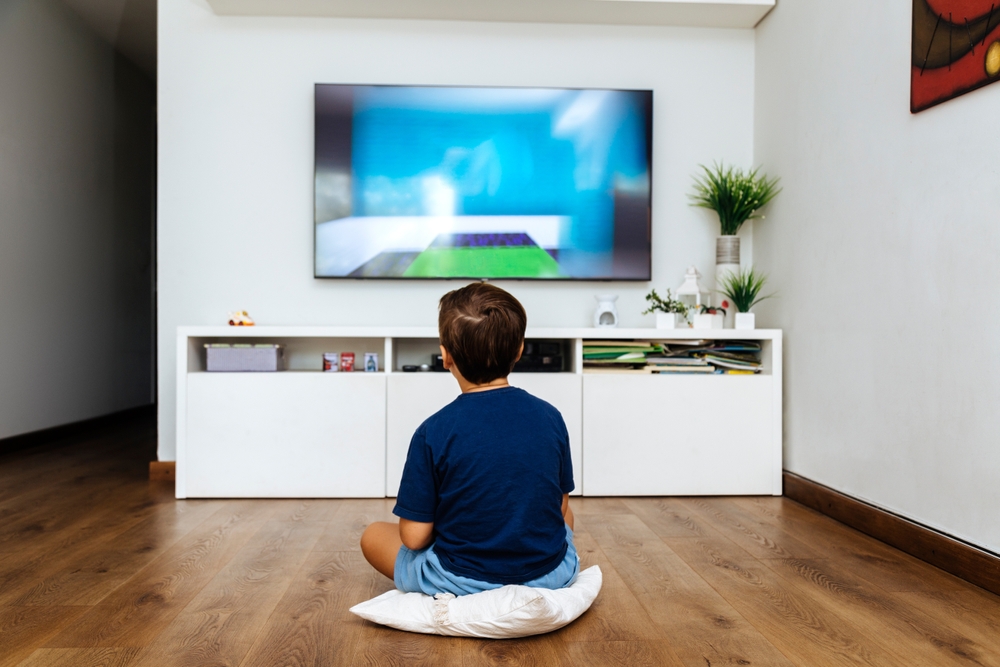
Boomer kids had Saturday morning cartoons, a few TV channels, library cards, and maybe a movie night if the family budget allowed. Entertainment wasn’t personalized, curated, or algorithm-driven. Today’s kids live inside a subscription ecosystem. Streaming platforms, educational apps, gaming services, audiobooks, kid-specific content libraries, and interactive learning platforms are all part of daily life.

What changed isn’t just technology, it’s the expectation of constant stimulation. Entertainment is now customized, portable, and always available, which subtly shifts parenting dynamics. Screens aren’t just distractions; they’re tools, babysitters, teachers, and sometimes sanity-savers. Parents aren’t buying content because they’re lazy; they’re buying time, flexibility, and mental bandwidth in a world that never slows down.

5. Parenting Advice as a Product

Boomer parents relied on instinct, family traditions, community norms, and maybe a few parenting books. Today’s parents navigate a massive industry built around guidance, coaching, courses, influencers, and expert-driven content. Sleep consultants, parenting coaches, discipline programs, child development apps, and curated parenting frameworks are now standard offerings.

Modern parents aren’t less confident; they’re more overwhelmed with information. The volume of advice available creates pressure to do everything “right,” even when there’s no universal definition of right. Parenting has become a performance metric instead of a lived experience. Families aren’t just raising kids anymore; they’re managing systems, strategies, and psychological frameworks designed to produce optimal outcomes.

The Real Shift No One Talks About

The biggest difference isn’t the money, it’s the mindset. Parenting has shifted from survival and support to optimization and preparation. Boomers raised kids to function in the world. Modern parents feel pressure to prepare kids to compete in it. That changes everything, from spending habits to emotional labor to daily stress levels.

If there’s one powerful takeaway, it’s that modern parenting isn’t softer, weaker, or more indulgent. It’s more complex, more structured, and more psychologically loaded. Families are navigating systems that didn’t exist before, expectations that didn’t exist before, and pressures that didn’t exist before.

So what’s one thing today’s parents pay for that genuinely surprised you when you noticed it? Make sure that you share all your thoughts in the comments section below.

You May Also Like…

7 Boomer-Era Family Traditions That Lower Household Stress

Are Millennial Parents Overreacting To Boomer Advice On Screen Time?

7 Parenting Expenses That Quietly Drain Budgets After the Holidays

Are Boomer vs. Millennial Bedtime Styles Causing Sibling Trauma?

10 Unspoken Rules Every Multigenerational Household Has

Brandon Marcus
Brandon Marcus
Brandon Marcus is a writer who has been sharing the written word since a very young age. His interests include sports, history, pop culture, and so much more. When he isn’t writing, he spends his time jogging, drinking coffee, or attempting to read a long book he may never complete.

Read More

  • That 'Perfect' Nursery Photo? It's Hiding These 8 Shocking Dangers
    That 'Perfect' Nursery Photo? It's Hiding These 8 Shocking Dangers

    The soft lighting, coordinated colors, dreamy mobiles, and plush accents make that perfect nursery photo…

  • young couple cooking together
    Are Child-Free Couples Still Facing Stigma in 2025?

    Image Source: Unsplash Opting out of parenthood is no longer rare, but it’s hardly free…

  • 8 Things Your Child Can Learn From Visiting Art Galleries and Museums
    8 Things Your Child Can Learn From Visiting Art Galleries and Museums

    Parents looking for engaging, low-tech ways to support their child’s development don’t have to look…

  • Taking Care of Your Children and Your Wallet
    Taking Care of Your Children and Your Wallet

    When it comes to raising kids, it’s safe to see you’ll have your hands full.…

  • Summer Fun on a Budget: 10 Ways to Beat the Heat for Cheap

    Image by Raphaël Biscaldi When the temperatures rise, it’s easy to fall into the trap…

  • 8 Toys That Were Approved—Then Quietly Recalled
    8 Toys That Were Approved—Then Quietly Recalled

    Every parent assumes that toys on store shelves have passed every safety test imaginable. Yet…

Filed Under: Parenting Tagged With: boomer perspective, cultural change, Family Budgeting, family expenses, generational differences, lifestyle trends, modern parenting, Nostalgia, parenting culture, parenting evolution, raising kids today

Leave a Reply Cancel reply

Your email address will not be published. Required fields are marked *

This site uses Akismet to reduce spam. Learn how your comment data is processed.

  • Facebook
  • Pinterest
  • RSS
  • Twitter
Best Parenting Blogs

Most Popular

Baby

9 Baby Names That Sound Expensive Even Though Naming Your Baby Is Still Free

Evan Morgan
Baby

The Rise of “Aggressive” Baby Names Is Raising Eyebrows — Here’s What Parents Are Choosing

Evan Morgan
Baby names

Teachers Admit: These 6 Baby Names Create Instant Bias in the Classroom

Latrice Perez
6 Baby Names That Sound Cute Now but Cause Problems Later

6 Baby Names That Sound Cute Now but Cause Problems Later

Brandon Marcus
11 Ways Kids Are Outsmarting Parental Controls 1. Using Alternate Devices One common trick is simply turning to another device. If a child’s main phone or tablet is restricted, they may borrow a sibling’s, friend’s, or even a school laptop. This instantly gives them access to content outside of parental oversight. Parents often focus on one device, forgetting that others in the household can serve as loopholes. Knowing this tactic helps families tighten controls across all electronics. 2. Clearing Browsing Histories Many kids quickly learn that clearing browsing history hides evidence of restricted activity. With just a few clicks, they can erase any trace of websites visited. This makes it harder for parents to notice when rules are being broken. Parents may assume no history means no browsing, but the reality is often the opposite. Kids are outsmarting parental controls by making it seem like nothing happened at all. 3. Using Private Browsing Modes Most browsers offer “incognito” or private browsing features. Kids use this mode to access websites without leaving a record in the history. To parents checking later, everything looks clean and safe. This simple trick is often one of the first ways kids discover how to bypass restrictions. Conversations about private browsing can help close this gap. 4. Guessing or Resetting Passwords Children who are persistent may try to guess passwords to parental control apps or accounts. Others may find ways to reset them through email prompts or security questions. Once inside, they can disable restrictions entirely. Parents may not even realize controls have been altered until much later. Stronger, less predictable passwords can make this more difficult. 5. Using VPNs to Hide Activity Virtual private networks, or VPNs, let kids disguise their online locations. With one downloaded app, they can bypass geographic or parental restrictions. Some children learn about VPNs through friends or even social media. This makes it easy for them to reach content that should be blocked. Parents often underestimate just how simple it is for kids to use these tools. 6. Creating Fake Accounts When parents monitor social media, kids may create hidden accounts. These “finstas” or fake profiles allow them to interact freely without parental oversight. While their main account appears harmless, the secondary one tells a different story. Kids are outsmarting parental controls by playing both sides at once. Checking for duplicate accounts can help parents stay more aware. 7. Exploiting Time Zone Settings Some kids change the time zone on their devices to bypass screen time limits. This trick allows them to gain extra hours of usage undetected. Parents may assume controls are working, but in reality, the child is bending the clock. It’s a clever loophole that highlights just how resourceful kids can be. Monitoring device settings regularly can catch this tactic. 8. Disabling or Uninstalling Apps Parental control apps can be deleted or disabled with surprising ease. Some kids even reinstall them before a parent checks, making it seem like nothing changed. Others may simply restrict permissions to prevent apps from functioning properly. When apps aren’t monitored closely, parents may not notice they’ve been tampered with. This shows the importance of consistent follow-up. 9. Turning to Friends for Access If a child can’t get past restrictions on their own, they may rely on friends. Visiting a friend’s house or borrowing their phone can give them a free pass. Parents often forget that peer environments can override restrictions set at home. This kind of social workaround is especially common with gaming or social media. Open conversations about trust and responsibility are essential. 10. Hiding Apps in Plain Sight Kids sometimes download apps that look innocent but serve as gateways to hidden activity. These apps may disguise themselves as calculators or utilities. In reality, they allow file storage, private messaging, or browser access. Parents glancing at a home screen may overlook them entirely. Learning to recognize these disguised apps can help parents stay informed. 11. Outpacing Parents’ Tech Knowledge Finally, kids often know more about devices than their parents do. Whether through YouTube tutorials, TikTok hacks, or peer groups, they quickly learn advanced workarounds. This knowledge gap means controls can be bypassed before parents even realize the loophole exists. Staying informed and continually learning about new technology is the best defense. Kids are outsmarting parental controls because they adapt faster than most adults. The Real Solution Lies Beyond Restrictions While controls and filters are important, no system is perfect. Kids will always find creative ways around barriers, making communication the strongest safeguard. Setting clear expectations, building trust, and having ongoing conversations about online behavior matter more than apps alone. Parents who combine technology with open dialogue create a safer digital environment. The goal isn’t to win a battle of wits but to build a relationship that keeps kids both safe and honest. Do you think kids are outsmarting parental controls faster than parents can keep up? Share your experiences in the comments below. What to Read Next... 6 Parenting Tech Shortcuts That Can Expose Your Child to Strangers How Much Screen Time Is Too Much—Legally Speaking? Is Your Child’s School Quietly Tracking Their Location Without Your Consent? How Much Screen Time Is Quietly Reshaping Childhood Behavior? Why Some Parents Are Being Investigated Over Homeschooling Records

11 Ways Kids Are Outsmarting Parental Controls

Catherine Reed

All content on Kids Ain’t Cheap is for entertainment purposes only. By reading this blog, you agree that Kids Ain’t Cheap is not responsible for any actions taken after reading this blog. For the full disclaimer, see our privacy policy.

Please note that Kids Ain’t Cheap has financial relationships with some of the merchants mentioned here. Kids Ain’t Cheap is funded by banner advertising, commission sales and search optimization consulting.

Copyright © 2006–2026 | District Media | All Rights Reserved | Privacy Policy

Copyright © 2026 Runway Pro Theme by Viva la Violette