• Home
  • About Us
  • Toolkit
  • Archives
  • Advertise
  • Privacy Policy

Kids Ain't Cheap

But They Sure Are Worth It

  • Parenting
    • Baby Stuff
    • Books and Reading
      • Aesops Fables
      • Comic Books
    • Education
    • Family Time
    • Green Living
    • Growing Up
    • Healthy Living & Eating
    • Holidays
    • Parenting
    • Random Musings
    • Shopping
    • Stuff to Do
  • Money
  • Product Reviews
    • Books and Magazines
    • Discount Sites
    • Furniture
    • House Keeping
    • Reviews News
    • Toys and Games
  • Contact Us
  • Our Editorial Commitment
  • Search

Raising Money Smart Kids

October 7, 2013 | Leave a Comment

money smart kidsIn today’s tumultuous economy, it is more important than ever for parents to teach their children how to be financially responsible. Money has to be earned and budgeted before it’s spent, and let’s not forget the importance of continuously saving money for the future. Communicating this to your children is essential to helping shape the financial decisions they will make later in life.

That said here are some helpful tips for raising money-smart kids, at an early age.


Open Up a Savings Account

Has your child been asking for a special toy, a bicycle, a video game? Open them a savings account at your local bank. Discuss how much they will need to set aside to reach their target, on a weekly or monthly basis. You can also explain how a savings account works and how he or she can earn interest on money that is deposited. This is often a nice motivation for your child to use the savings account. You may find that your child uses the account to set and reach a financial goal, which is a great thing to watch.


Let them Earn Allowances

Once your child reaches an age where they can start contributing around the house, you can pay them a small amount of money for helping out. Whether it’s taking out the garbage, watering the plants, or helping with dishes, you need to show them that they have to work for their money. It doesn’t just grow on trees. This is a small amount of money that you give the child for spending on just about whatever he or she so desires. By giving your child an allowance, your child will come to realize the value of a dollar when it comes time to make decisions about what to buy.


Get Your Child Involved

If your child is old enough, you can teach him or her a financial lesson by sending your child on an errand to pick up some groceries. Give your child $20 or so along with a list of items that you know will cost very close to $20. Your child will then have to carefully consider how to make that money stretch to get all the groceries you need. If your child is successful, consider giving him or her some kind of reward.

In order for children to grow up to be financially responsible adults, it is important that parents begin teaching them about how to manage money as early as possible. If you have been putting this off with your own child, then it may very well be time to reconsider.


Brian
Brian

Brian is the founder of Kids Ain’t Cheap and is now sharing his journey through parenthood.

 
Email • Google + • Facebook • Twitter

Filed Under: Money and Finances Tagged With: Kids, money

Raising a Saver

October 2, 2013 | 3 Comments

raising a saverGrowing up, I didn’t have much in terms of financial role models. My mom used to say blanket statements like ”debt is bad” and ”always pay your credit card balance in full” but she never explained details about money.  Details about how to manage my money, how to allocate savings or even encouraging me to save. I think she was just relieved that when I got a job she was no longer on the hook to ‘support’ me and my social habits.


My History

I grew up always spending any money earned. I managed to save a few bucks for my wedding but that was the extent of my savings. Even though I started working when I was 15, it wasn’t until I was in my mid 20’s that I began to understand the logic behind emergency funds and planning for a ”rainy day”. Though I had a savings account my entire life, it remained empty 99% of the time.

Educating your children early on how and why one saves money is so important. When I think about how much money  let pass through my fingers over the last 15 years a small piece of my soul dies.


Start Young

If you want to raise a child who understands and respects money, it is so, so, important that you start young. Giving an allowance before they start earning their own money is an easy way for children to learn the ins and outs of money management.

The allowance money should come from your budgeted monthly amount for your children. If, for example you have allocated $50 per month for ”kids” which can include anything from haircuts to lunch money, give your child a percentage of that money for them to manage. This will be done within you guidance but have them learn about money; spending, saving and budgeting. Have them help you shop and budget for their things. This way they will understand that they only have $25 to buy pants, therefore rather than whining in the store about the why they can’t have the $50 jeans they will need to shop around.

A percentage of their allowance needs to go into savings. Teach them early about the importance of saving for things. If they really want those $50 jeans, they’re going to have to save up for them. Not everything can be purchased immediately and will require financial planning and preparation. This is applied to everything from the purple My Little Pony they want to the university education they aspire to obtain.


Saving as Your Child Grows Older

As kids get older, give them opportunity to make more money. Money that can be made beyond upholding normal household expectations (ie don’t pay them for making their bed). If they’re saving for something or would like to have extra money for something have them work for it. This will depend on the age but something like cleaning dads car for $20, helping clean the yard in preparation for winter for $30 sort of thing. The point is that kids need to understand early that money comes from hard work, and building savings, not from mom and dad’s wallet. If children grow up assuming money will just appear when they need it, they will fail.

When kids get they first real paying job it is important that a percentage of their pay goes directly into savings. This will be decided upon between kids and parents but agree on a spending and savings amount and enforce it. Saving early will establish long-term good habits.

Did you start saving young? How are you encouraging your kids to save?

Catherine
Catherine

Catherine is a first time momma to a rambunctious toddler. When she isn’t soaking up all that motherhood has to offer, you can find her blogging over at Plunged in Debt where she chronicles her and her husbands journey out of debt. You can also follow her on Twitter.

plungedindebt.com

Filed Under: Money and Finances Tagged With: Saver, saving, Saving Money

4 Tips for Saving When Moving Abroad

September 29, 2013 | Leave a Comment

Uhaul truck for movingSo, moving is a tough activity!  When I was a kid, I always dreamed of moving from one house to the next, of course always with the provision that I was moving to a progressively better house with each move.  It never occurred to me then, and it didn’t really hit home until the past two years, that moving is a very involved job.  And this becomes even more complicated when you have a very small budget to work with.  Plus, if you’re considering moving aborad, you have some extra elements that you have to take into consideration.


Always Start Early

As soon as you have sold your home, perhaps to a cash buyer like https://webuyhousesinatlanta.com/, and locked down your new house, start to pack up things in your current place. This should be started as soon as possible before the move. Of course, you will be scratching your head thinking, “‘how can this be done when obviously we will still need access to a lot of our things?”  The answer is really quite simple.  Pack all those things you hardly use first. Yes, you will have a lot of them.  I consciously made the effort not to hoard things from my last move so I was surprised still at the amount of knickknacks I had managed to collect, some important, some not so much.  So, start with those things.  Then work your way to the move date slowly packing things along the way.  You will, at some point, need professional movers to get your stuff overseas.  If you pack things yourself, consider talking with the movers ahead of time to make sure that you do things correctly.


Clean and Dispose of Things

I always had three containers when I was packing, one for the stuff I was bringing with me, the other for the stuff I was donating, and the last for the stuff I was throwing away.  And, again, I was surprised at how little I was actually considering bringing with me to my new abode. As I packed these now-few items, I always made sure to thoroughly clean them before packing them away.  If you know me well, you would know that I HATE packing and unpacking and, in my college days, resorted to just stuffing things in boxes in a haste to get things packed, only to wince in pain at the effort required to unpack.  This time, the ‘mature me’ packed carefully making unpacking much, much easier to do.  How do you save here? Throwing thing away obviously lessened the amount of things I needed to cart from one location to the next. Donating things even turned out to be a helping hand.  Cleaning things before carefully packing them away took away the need to thoroughly crush and clean things when they came out.  So, not only was I able to save on cleaning implements, but also time and effort.

Remember, the less you pack, the more you save on moving costs to go overseas!


The Most Expensive is Not Always The Best

I do not know how it is in other countries but in mine, there are two kinds of movers- the pro’s and the amateur haulers. The pro’s will pack your stuff for you in nice, thick boxes, complete with addictive bubble wrap while you sit, watching them, sipping a cup of tea.  They will also unpack most of your things for you when you get to your new place.  Amateur haulers will physically lift your already-boxed items into a moving truck and then physically bring them down and place them where you want the item. That’s it.  No thick box (you have to buy this yourself), and no bubble wrap. You can imagine how much the price difference is between the two. Now, if you have started your packing relatively early, and if you were meticulous with your packing, all you really need is the physically labor to lift things around and then get it to where you’re going.  So, do not feel bad if you can only afford the cheapest truck.  The point is getting yourself, and your belongings, from point old to point new.


Plan For When You Get There

When you move, you always end up needing to buy new things when you move in.  You need to plan ahead, and make sure that you open an offshore bank account.  Before you leave home, make sure that you transfer a nice sum of money to your new offshore account, and confirm that it arrived.  That way, when you get to your final destination, you have cash available to purchase the new items that you’ll need for your home.  Plus, having a bank account in the country you’re going can make it easier to get a cell phone and setup utilities at your new home. Do not forget that moving your money from your home country to your destination can be quite costly. As an alternative, you can use currency services for your international money transfers. Read this expat blog on this topic to learn more.

I found that if you follow these basic things, you will be able to save on so many things. You will keep to a small budget, you will save time and energy, and you will not stress out.

What is moving like in your corner of the world?

Brian
Brian

Brian is the founder of Kids Ain’t Cheap and is now sharing his journey through parenthood.

 
Email • Google + • Facebook • Twitter

Filed Under: Home and Living, Money and Finances Tagged With: Movers, Moving, Packing, saving

Soccer and Debt Infographic

September 29, 2013 | Leave a Comment

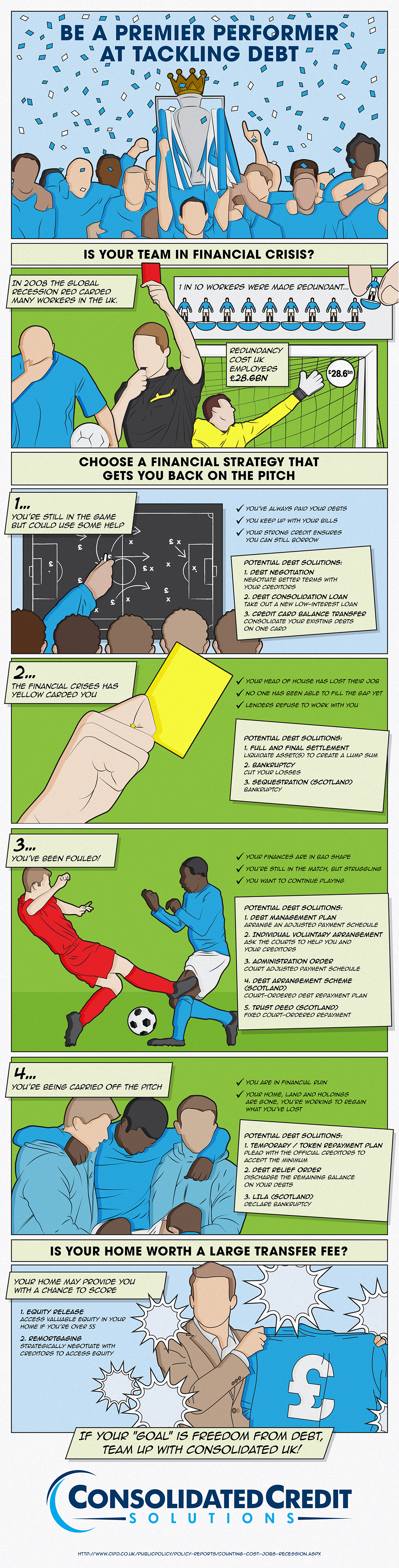
Does debt have you on the sidelines when you’d rather be working toward your financial goals? Shedding debt is a necessary step in unencumbering yourself in your financial life. Once done, you have much more saving power. You could be in debt for a variety of reasons and at varying degrees. The cause and amount of debt you are under can affect the strategies you should take to get out of debt. However no matter how much debt you are under, there is a way out. Whether you just have a little bit of debt and can still make payments or you have a huge amount there is a game plan for you.

Soccer Debt

If you are worried that you can’t deal with your debt on your own try talking to experts at places like Consolidated Credit to see if the can help make your payments more manageable. To determine the kind of debt you have and the possible solutions at your disposal, read through this infographic. Whether, you are at stage 1 or stage 4, Consolidated Credit is on your team.

Brian
Brian

Brian is the founder of Kids Ain’t Cheap and is now sharing his journey through parenthood.

 
Email • Google + • Facebook • Twitter

Filed Under: Money and Finances Tagged With: Debt, paying off debt, soccer

Are You Ready to Buy a Family Home?

September 18, 2013 | Leave a Comment

family homeBuying a home for your family is a very exciting time. It is important that you consider all factors before making the transition though.

When hubby and I purchased the home that we currently live in, we fully expected to move eventually. It’s not a large enough home, nor is it in our ideal area. We currently live in the suburbs in a nice area but would rather not see our neighbors. What I mean is that once our priorities are taken care of (paying off debt, minus mortgage) we plan on moving further out towards the ‘country’.

Since we have considered everything we realize that this move won’t be feasible for a few years. These are things you need to consider when thinking about moving your family.


Have You Considered all Expenses?

For us, we want to have our non-mortgage debt paid off before we move again. By the time this happens we will be at max capacity of this home (nearing this point now) but have committed to paying things off before moving. This frees up money for other expenses such as larger down payment, legal fees involved with move, potential fees if we decide to build, and professional movers. We have moved twice with the help and kindness of friends and family, but there’s no way we could, or would do it again. Since our plan is to make our next move, our last move, we will be hiring professionals to do it for us. An expense but so worth it.

Consider ALL expenses before deciding to move. In our case when we move out of our current area, a second car will be a must, an added expense we can’t handle right now even with the decrease in public transit use.


Is Renting a More Viable Option?

You have to still consider if renting is a more viable option for you and your family. Home ownership is not for everyone. As long as you have a safe roof over your family’s head that’s all that matters. Some argue that rent is throwing money away but if renting means your able to live the life you want, debt-free, without property ownership than who cares?! For some, tying permanent roots down is daunting, they move often or like the idea of a swanky apartment with more amenities than a starter home. If home maintenance doesn’t interest you than don’t ever be pressured to buy.


Don’t Buy More Than You Need!

This is a tricky one. Especially if you’ve gone through the pre-approval process. You see how much the bank thinks you can afford and you’re expectations of home get out of control. Try and keep a modest list of wants and needs and be willing to make compromises if needed.


Beef Up Your Emergency Fund, Add New Budget Categories

If this home purchase will be your first, it’s time that you establish or beef up an emergency fund. Homeownership can be a bumpy ride and stuff can go wrong. Mother nature can be a real pain in the butt and hit you when you least expect it – whether that’s due to a sudden storm or for unexpected damages that necessitate a Crawl Space Remediation, make sure you have at least enough in your emergency fund to cover any insurance deductibles as well as minor home repairs.

You also need to set aside a small amount of money to new expenses such as insurance premiums and regular home maintenance repairs. If this is something that will send your budget over the edge, probably an indication that you’re not quite ready for homeownership.

Homeownership can be an amazingly fun experience but it can also be very stressful. Make sure you have everything figured out before deciding to embark on this venture, especially if there’s a family involved that you’re required to protect!

What else do you need to be ready for your family home?

Catherine
Catherine

Catherine is a first time momma to a rambunctious toddler. When she isn’t soaking up all that motherhood has to offer, you can find her blogging over at Plunged in Debt where she chronicles her and her husbands journey out of debt. You can also follow her on Twitter.

plungedindebt.com

Filed Under: Money and Finances Tagged With: Buying a Home, Family Home, Home Buying

How to Regulate the Amount You Spend on Your Kids…Because Kids Ain’t Cheap

July 20, 2013 | Leave a Comment

regulate kids spendingWe all know, kids ain’t cheap.  When you stare into your little bundle of joy’s face for the first time, you likely only feel amazement and awe.  You watch your child grow and develop and meet major milestones.  You delight in his first smile, laugh, and coo.

But then, you start noticing the expenses.  The diapers.  The formula.  The childcare.

It’s a good thing your baby’s so cute because he’s starting to cost you –big time.

Sound familiar?

First time parents are often shocked at how much an infant costs.  Guess what, folks–it doesn’t get any cheaper as they get older.  If you want to still be able to save money for your own retirement, make sure you regulate how much you spend on your kids!  The sooner you get a good plan together on how much you spend, the easier it will be later on when they are teenagers and asking for their own money to spend!


1. Remember, You Come First

Save for your own future first.  Sure, you want to give Junior everything, but save for your own retirement first.  You’re not being selfish.  Trust me, when Junior is 25, he’ll be glad he doesn’t need to help support mom and dad.  Plus, your kid can get student loans and other help to pay for expenses, but you can’t get a loan to fund your retirement.


2. An Emergency Fund is Essential

Keep a rainy day fund.  In addition to retirement savings, make sure to keep a rainy day fund.  You might want to look online for the best fixed rate bonds for some of the money that you’re setting aside for long-term goals.  For an emergency fund, you’ll want to have the money easily accessible.


3. Budget for the Big Stuff

Decide how much you’ll pay for major events.  While Junior’s still in diapers, long before he needs thousands of dollars for college, decide how much you’ll pay.  Maybe you want to pick up the whole tab for college.  Great.  You’ll need to plan accordingly.  Maybe you don’t want to pay anything; in that case you’ll need to let Junior know early so he can make his own college plans in high school, including how to pay.


4. Teach Your Child About Money

Teach your child to be financially independent.  The best way to regulate the amount of money you spend on your child is to teach him to be good with his money.  When he’s a teen or young adult, have him open a bank account.  Places like http://www.bmsavings.co.uk have some fantastic savings options.

With a little discipline and financially sound decisions, you can avoid bankruptcy while raising your child AND teach him how to be financially independent as he grows up.

How else can you regulate the amount you spend on your kids?

Brian
Brian

Brian is the founder of Kids Ain’t Cheap and is now sharing his journey through parenthood.

 
Email • Google + • Facebook • Twitter

Filed Under: Money and Finances Tagged With: Cheap, Good Plan, The Amount, Your Kids

How to Save Money for Your Family

June 13, 2013 | 2 Comments

save money for familyAre you looking to save money for your family? Many families today are just trying to tread water when it comes to paying the bills and staying out of debt. Who has extra money to actually put into the bank? Well, when you put your mind to something, you might be surprised how much you can accomplish, especially when it comes to savings money.

Two Steps to Saving Money

If you truly are committed to saving money for your family, there are just two things that you need to focus on. You must reduce your costs and you must learn to grow your money once you’ve got some stashed away in savings.

Reducing Costs

This can be a tall order because many of us already feel like we’re pinching pennies as it is. But, no matter how tight you think you are with money, there are always ways to spend less than you are now.

  1. Second Hand Stores – When is the last time you stepped foot in a second hand store to make a purchase? If buying second hand clothing weirds you out, I understand, but there are plenty of other things that you can save money on by buying it second hand. If your chair breaks and you have nothing left to sit on, I bet you can find a perfectly reliable one at the second hand store. It might not match perfectly with your décor, but it will allow you to save money for your family.
  2. No more restaurants – Going out to eat is fun, but man is it expensive! I just made pasta for myself at home for $1.50. Do you know what this would cost you at a family restaurant? Probably at least $8 if not more! Avoid those restaurants and buy your food from the grocery store.

Grow Your Money

After you save enough money, you might start to wonder what you should do with it. If you don’t have an emergency fund, that would be your first option. When things go wrong in life, like your water heater breaking down or a major home expense such as bathroom remodeling in Washington Township (or elsewhere), it’s reassuring to have the money on hand for these unknown expenses. To cover these types of costs, make sure your funds are easily accessible. This might mean putting some money in a standard savings account, some in a check-writing CD, and another portion in an ISA, which is an individual savings account. For those in the United Kingdom, ISAs can be particularly useful for emergency savings and provide a secure place to park a portion of your funds.

Once your emergency account is funded, then it’s time to start growing your money. Instead of earning a couple of percent interest here and there, consider investing your additional money into a venture that could potentially offer a higher return, like 10% or more. This could be anything from starting your own business to supporting a promising project or even diversifying into real estate. The riskier the investment, typically the higher the return you might expect. But proceed with caution—risky investments can sometimes fall short.

It’s simple, but true.  What do you think?

Brian
Brian

Brian is the founder of Kids Ain’t Cheap and is now sharing his journey through parenthood.

 
Email • Google + • Facebook • Twitter

Filed Under: Money and Finances Tagged With: family money, save money

Saving Money When You Have Kids

April 25, 2013 | 2 Comments

It’s no secret that kids can be quite the expensive investment, especially when you’re on your second or third pup.  That doesn’t mean there aren’t ways to save money when you’ve got kids however. In fact, there are quite a few things you can do to keep the costs down as much as possible even with a few extra people in your home.


Bills and Utilities

More people in your home means more electricity being used up every month.  It’s important to assess Texas Electricity Providers (or whatever local energy providers you’ve got) and compare the prices per kilowatt to see if you can save quite a bit of money each month on your utility bills.  When you have kids it’s difficult to keep tabs on your energy consumption all the time so having a lower electricity rate will help keep costs down.


Food and Clothes

When you’ve got kids you should start looking into buying things in bulk.  Buying items that you use constantly in bulk is going to be the best and most cost effective way of purchasing things.  When you buy in wholesale you’ll get quite a discount on the items and it isn’t like you aren’t going to end up using them, so it’s probably your best bet for things that aren’t perishable.

As you start to spend more money when you’ve got kids, you’ll need to find ways to cut down your other expenses as much as possible.  This means you’re going to have to start using coupons and looking for things that are on sale.  While it might be a little difficult to get into these types of behaviors initially, you’ll find that it does tend to get easier as time goes on and once you get into the routine, you’ll start looking for sales and coupons without even thinking about it.


Furnitures and Other Goods

full shopping cartLook on Craigslist or eBay, or start searching for yard sales to grab stuff for a lot cheaper than you would buy them otherwise.  These are great resources when it comes to finding furniture or children’s toys and more often than not, you can find things that are in quite good condition.  Some of these might even be free and you can end up cutting down a few hundred dollars that you would have spent had you not gone the cheaper route.


Fun Stuff

Not all vacations or activities need to have a hefty price tag on them in order for them to be fun.  You’ll find that a lot of kids can have an enjoyable time in almost every situation as long as you find ways to keep their attention, so don’t think you have to spend a ton of money for a weekend trip.

Something as simple as a day outside can mean a lot to your kids and as long as you’re spending legitimate time with them, they probably won’t mind that you haven’t gone to the latest amusement park.  Try doing more home-based activities or going to attractions when they’re offered for free and you’ll end up saving a ton of cash.

Kids aren’t cheap, but that doesn’t mean they have to be necessarily expensive.  There are different ways you can save money while keeping your kids happy as long as you’re conscious about what you’re doing and spend a little effort.  Coupons and free items are going to end up saving you a ton of money and having fun at home is priceless.

Brian
Brian

Brian is the founder of Kids Ain’t Cheap and is now sharing his journey through parenthood.

 
Email • Google + • Facebook • Twitter

Filed Under: Money and Finances Tagged With: kids money, Saving Money, Shopping

Funeral Insurance is More Important than You May Think

April 3, 2013 | 1 Comment

Funeral InsuranceThroughout all of life’s ups and downs, there are a few things you can be certain of:

  • You will have to pay taxes
  • You will endure many changes and seasons of change as you grow older
  • You will eventually pass away

While death is certainly a sensitive topic to most, careful consideration should be taken to ensure your final days are spent filled with love, family and friends instead of accountants, bills and funeral directors.

With a bit of pre-planning, you can make sure all of your final arrangements are taken care of long before those emotional last hours. You can also rest peacefully knowing that your loved ones won’t be left with any financial burden by purchasing funeral insurance.


What is Funeral Insurance?

Also known as burial or final expense insurance, funeral insurance is a type of life insurance policy that covers the costs associated with your end of life arrangements. These can include everything from caskets and funeral home costs to flowers and burial plots in the cemetery.

Policies typically range in value from $5,000 to $50,000 and are left in the control of a designated beneficiary who will organize, and pay for, your final arrangements as you specify.


Tips for Buying Funeral Insurance

First and foremost, don’t purchase a policy that’s unnecessary. This may be the case if your current life insurance policy covers funeral expenses (or perhaps you already have money saved for these costs). Once you’ve identified that funeral insurance is a purchase you’d like to make, check the laws in your state and city, discuss your plans with your family, and research a few different brokerages and coverage options before committing to one.

You should also set up a meeting with a funeral director at the home you plan to have your final arrangements carried out. Also, make sure to take advantage of the “free look” period (the first 30-60 days of your policy) so you’re 100% confident this is the policy you need and like. If there’s something wrong or you’ve changed your mind, you can legally cancel the policy and get your money back!


When it’s Time to Buy

The first step of the buying process should be to have everything put into writing. Ensure that your wishes are clearly stated and the various components of your arrangements are clearly listed in the contracts. Finally, make sure all documents are signed in your presence!

Do you have funeral insurance?

Brian
Brian

Brian is the founder of Kids Ain’t Cheap and is now sharing his journey through parenthood.

 
Email • Google + • Facebook • Twitter

Filed Under: Money and Finances Tagged With: Family, Funeral, Funeral Insurance, Insurance

Round Out Your Portfolio with Managed Funds

April 1, 2013 | 1 Comment

investingAs most investors know, diversification is a great measure of protection from the depreciation of certain assets. If your investment portfolio is weighted heavily in stocks and the market takes a downturn, so does your balance. But if your investments are spread out among various securities, the loss in value of one can often be offset or lessened by the stability and/or growth of others.


What is a Managed Fund?

A managed fund is a type of investment comprised of multiple securities (stocks, bonds, etc.) that involves the funds of multiple investors. The theory here is that with more people investing in a certain fund, the more money the fund can raise and therefore invest for profit.

Managed funds are a great choice for those who have little to invest and want to share the risk with other investors. When the managed fund profits, everyone who has invested in it shares its success. Of course, when the fund’s performance lags or takes a nose dive, everyone shares that as well so be sure you are comfortable with the idea of losing your money.


Pros and Cons of Managed Funds

As with any investment tool, managed funds have a variety of pros and cons. The benefits of a managed fund include reduced risk, professional management, convenience and even low costs of entry. Managed funds can also be a convenient way to gain experience as you learn the ropes as a new investor.

On the flip side, managed funds can have high fees, the success of the fund it at the mercy of the fund manager and there is no guarantee that money will be made. In fact, you could lose your initial investment and then some!


HOW TO MAKE MANAGED FUNDS WORK FOR YOU

If you’re interested in investing via managed fund, take note of the following tips:

  • Research all of your options including the company and the fund manager
  • Request (and read!) the fund’s prospectus before you hand over any money
  • Ensure you’re aware of any and all fees associated with investing in the fund—both in the short and long terms
  • Have a clear set of goals defined before you invest your money—what are you saving for?
  • Understand all of the costs associated with the investment—including taxes!
  • Monitor the progress of your fund (and its manager)
  • Make all changes via writing and save your records

Before you make any final decisions on what you want to invest in, it’s important that you also look into the stocks’ predicted growth, for example, by looking into Lucid stock price prediction you can gain a better understanding of the market growth trend and what the predicted market forecast is. Looking into these trends will help you make an informed decision. By following the above tips and using the many resources out there, you can be sure that you make a worthy investment.

Do you invest in managed funds?

Brian
Brian

Brian is the founder of Kids Ain’t Cheap and is now sharing his journey through parenthood.

 
Email • Google + • Facebook • Twitter

Filed Under: Money and Finances Tagged With: Investing, Managed Funds

Saving on Prom Expenses

January 15, 2013 | 1 Comment

Prom Dresses

With the new year brings excitement for high school graduates. Acceptance letters coming in the mail and the excitement of prom on the horizon the title of this blog will likely come to fruition. When it comes to high school prom, the words kids ain’t cheap with likely leave your mouth.

My younger cousin recently posted a picture on Facebook advertising her prom dress for sale. She graduated last year, wore it the one time and is now looking to make some money off the dress in time for this seasons prom. What shocked me?

Prom dress for sale. Paid $800.00, asking $600.00 (firm)

$800.00 for a dress?! A prom dress at that?! I didn’t pay that much for my wedding dress!

It’s been a few years since I graduated but is this what I have in store for my daughter? Because if it is, she’s got another thing coming. I will not now, nor will I ever pay $800.00 for a dress.


Does Prom Have to Be Expensive?

I borrowed my prom dress, even in my youth I was always on the hunt for a good bargain. I understand that some girls don’t even want to entertain the thought of wearing a dress from last season but really? Does it matter? As adults we know it doesn’t but explaining this to a hormonal 18-year-old might be a challenge.


Money Saving Tips for Prom

If you want to help save money on the prom events try these tips:

  • Go to local stores to try on different dress styles but buy the dress (or similar style once you find a comfortable style) via online classifieds (craigslist, ebay) or other websites like amazon. Shopping online or shopping secondhand can potentially save hundreds.
  • Borrow the dress.
  • Borrow the tux from male friend or family member. Trust us boys, high school girls will not know the difference between a high-end, name-brand tux and a borrowed one, just make sure it fits properly.
  • Split the vehicle cost among friends. I know graduates get excited about rolling up to prom in style often renting fancy cars. Consider a larger vehicle like a limo or party bus and splitting the cost among many friends.
  • Don’t waste money on jewelry. The other thing my cousin did was go out and spend over $200.00 on earrings and a necklace! Stores like Claire’s offer great costume jewelry at a fraction that a jeweler would charge. Sites like etsy.com also offer beautiful handmade and vintage options (I used Etsy for all of my wedding party jewelry, great site)
  • Check out consignment shops for everything (dress, tux, shoes, jewelry).

I know it’ll be hard but try to explain to your child that it’s about making memories and in many years it won’t matter what they wore because it’ll already be out of style 😉

Catherine
Catherine

Catherine is a first time momma to a rambunctious toddler. When she isn’t soaking up all that motherhood has to offer, you can find her blogging over at Plunged in Debt where she chronicles her and her husbands journey out of debt. You can also follow her on Twitter.

plungedindebt.com

Filed Under: Growing Up, Money and Finances Tagged With: Graduation, Prom, Prom Dresses, Prom Events, Saving Money on Prom, Saving On Prom, School Prom

My Wife’s Biggest Money Fear

January 10, 2013 | 3 Comments

biggest money fearDealing with family finances can be hard, no matter what philosophy of money you fall into: keeping things in one pot or keeping things separate.  The bottom line is that everyone will have fears about money – not having enough, not doing the right thing for saving for retirement, or maybe how to raise a family on a budget.

For my wife, her biggest money fear is not knowing.  We fall into the philosophy of having a shared pot for everything.  Both our paychecks go into one checking account, and we pay all of our bills from it.  We also share two credit cards, so we can maximize rewards.  That’s where we do all of our spending.

However, because of the simple logistics of processing bill payments, sometimes one or the other just handles it.  But then the real questions comes up – was it handled?  How much do we have left?  Do you have a scheduled payment that I don’t know about, so we really don’t have $X in our checking account?

That’s a valid fear.  Here is what we’re doing about it.


Where Her Money Fear Comes From

Getting married is great, but it is also tough when it comes to money.  We were both two single people who managed our castles just fine.  We didn’t need help, and we had full control.  We both admit that we’re pretty Type-A, so giving up control is hard.  Even though we both trust each other 100%, it’s still hard.

My wife’s fear comes from a self-admitted place of not having control.  For example, before Christmas, when our spending was probably at it’s peak getting ready for family dinners and buying gifts, she was very stressed because she didn’t see every single transaction each day – I was spending too.  It was hard for her.

While I don’t get to the same place, I can relate to when she spends and I don’t know where the money is going as well.


Solutions for Overcoming My Wife’s Biggest Money Fear

Since overcoming my wife’s biggest money fear was the most important challenge in our marriage, here are some of the solutions that we’ve put into place that have been working well for us.  While they may not work for everyone, they have helped eliminate 90% of the fear.

Shared and Agreed Upon Organization

The first thing is coming up with a shared and agreed upon system for keeping everything financial organized.  A huge part of fear comes from just not knowing.  So make sure that you both put into place a system where you will know.

For us, we rely on two key systems:

  1. Quicken
  2. HomeFile

For Quicken, we have all of our accounts synced so that in one update, either of us can get a clear picture of where we stand financially.  Quicken is great for our household finances because it will pull from all of our accounts, and show all of our recent transactions.  Plus, it has a lot of great reports that either of us can view, so we can really get a clear picture of our spending.

HomeFile is our way of organizing all of our records and financial documents.  It’s basically a filing system, that has tabs and organization for everything you need for your records.  For my wife, I wanted to make it easy for her to find anything, say insurance papers or auto records, should anything happen.  With the HomeFile system, we can both easily file everything, and find records as needed.

Now, neither of us must depend on the other to handle financial stuff.  This relieves some of the fear and stress around our finances.

Open Accounts and Passwords

With trust and transparency, it is important that we both have access to each other’s accounts.  When we got married, we gave each other Power of Attorney for Finances for all of our accounts, and we also gave each other access to our passwords.  Sometimes, you can’t always see pending transactions in Quicken, or investments take several days to post and update.  As such, we have a list of all our accounts – even our not shared ones like IRAs, with passwords, so we can both access them as needed.  This eliminates any fear of manipulating Quicken numbers or deleting transactions.  If either of us wants to, we can always go and look online for ourselves.

Clear Understand of Expectations

Finally, we both have setup clear expectations for handling money with each other.  For example, we’ve agreed that we can buy food and lunch whenever we want – no need to discuss anything with each other about that type of spending.  However, we’ve set limits on buying things for the house – like furniture or electronics – unless we both agree on it and setup a plan for action.

The bottom line is that we both have solid expectations for each other when it comes to spending money, and so we know what is good and bad to do.


Remember, at the end of the day, a happy wife is a happy life.  As such, it is essential that we work to solve my wife’s biggest money fear and make sure she is comfortable with the family finances at all times – whether she physically pays the bills or not.  Sitting up and wondering or worrying is not healthy, and doesn’t make for a good relationship.  This is what worked for us, what has worked for you?

How have you overcome family money fears?

Brian
Brian

Brian is the founder of Kids Ain’t Cheap and is now sharing his journey through parenthood.

 
Email • Google + • Facebook • Twitter

Filed Under: Money and Finances Tagged With: Biggest Money Fear, Family Finance, Fear, money, Philosophy Of Money

« Previous Page
Next Page »
  • Facebook
  • Pinterest
  • RSS
  • Twitter
Best Parenting Blogs

Most Popular

Baby

10 Baby Names That Were Once Considered “Grandparent Names” but Feel Cool Again

Evan Morgan
Baby

9 Baby Names Inspired by Fall Without Naming Your Child Autumn

Evan Morgan
Baby

9 Baby Names That Sound Expensive Even Though Naming Your Baby Is Still Free

Evan Morgan
Baby names

Teachers Admit: These 6 Baby Names Create Instant Bias in the Classroom

Latrice Perez
6 Baby Names That Sound Cute Now but Cause Problems Later

6 Baby Names That Sound Cute Now but Cause Problems Later

Brandon Marcus

All content on Kids Ain’t Cheap is for entertainment purposes only. By reading this blog, you agree that Kids Ain’t Cheap is not responsible for any actions taken after reading this blog. For the full disclaimer, see our privacy policy.

Please note that Kids Ain’t Cheap has financial relationships with some of the merchants mentioned here. Kids Ain’t Cheap is funded by banner advertising, commission sales and search optimization consulting.

Copyright © 2006–2026 | District Media | All Rights Reserved | Privacy Policy

Copyright © 2026 Runway Pro Theme by Viva la Violette