• Home
  • About Us
  • Toolkit
  • Archives
  • Advertise
  • Privacy Policy

Kids Ain't Cheap

But They Sure Are Worth It

  • Parenting
    • Baby Stuff
    • Books and Reading
      • Aesops Fables
      • Comic Books
    • Education
    • Family Time
    • Green Living
    • Growing Up
    • Healthy Living & Eating
    • Holidays
    • Parenting
    • Random Musings
    • Shopping
    • Stuff to Do
  • Money
  • Product Reviews
    • Books and Magazines
    • Discount Sites
    • Furniture
    • House Keeping
    • Reviews News
    • Toys and Games
  • Contact Us
  • Our Editorial Commitment
  • Search

7 Ways To Save Money on Groceries

January 30, 2018 | Leave a Comment

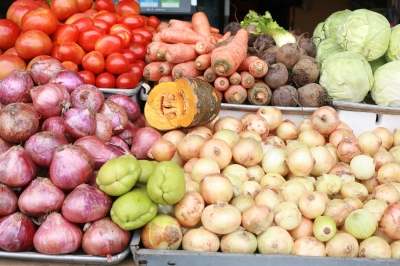
It’s so easy to overspend on groceries that there are plenty of ways to cut back. However, you’ll want to pace yourself so you don’t get overwhelmed — try one of the following savings tips at a time. [Read more…]

Jackie Cohen
Jackie Cohen

Jackie Cohen is an award winning financial journalist turned turned financial advisor obsessed with climate change risk, data and business. Jackie holds a B.A. Degree from Macalester College and an M.A. in English from Claremont Graduate University.

www.jackiecohen.xyz

Filed Under: Money and Finances Tagged With: Groceries, saving, Shopping

5 Tips for Eating Well on a Budget

May 28, 2014 | Leave a Comment

eating well on a budgetI have heard many arguments that one of the main reasons obesity is such a rampant issue is because eating well is so much more expensive than buying ‘junk food’. This is something I have always argued.

Buying convenience food is substantially more expensive than buying fresh, and I live in an area where food is very expensive. There are certain things you must do if you want to eat well on a budget.

Make it a Priority

If you don’t make eating well on a budget a priority the rest of your efforts won’t make any difference. I didn’t say it was easy to eat well, especially on a budget but it will be so worth it for you and your family.

Learn to Cook

You have to learn how to cook. If you can read then you can follow simple recipes and cook. The reason people shop for convenience food is often because they’re lazy, don’t know how to cook, lack time or simply don’t care. Basic cooking skills will go a long way in stretching your budget. At the grocery store this week I noticed a single-serve frozen entree on sale for $3.00 each. Instead I made a delicious pasta dish from scratch for $6.00. Double the price but provided 8 sizable servings. It definitely pays to learn how to cook!

Make Better Choices

This week I could have bought three large bags of chips for $6.00, instead I opted to buy the two-pound container of blueberries for $7.00.  Though $7.00 seems like a lot for a single fruit it will accompany our meals for at least five days. There is often always a choice. Don’t waste your money on pop and juice, water is a healthier and cheaper option.

Canned and Frozen is Ok!

People often forget about both canned and frozen fruits and vegetables. I buy large bags of frozen fruit to make smoothies or add to yogurt at a fraction of the cost of fresh. We also stock up on canned goods when needed. Just make sure your veggies are not canned in salt and that your fruits are canned in either water or natural juices instead of syrup.

Grow Your Food

Even when I lived in a one bedroom apartment I grew some of my own food. I had a few small containers on our deck where I grew peppers, tomatoes and herbs. For a low upfront cost I was able to grow and enjoy a substantial amount of food.

Eating well is a challenge. You have to learn to meal plan and shop the sales. Putting the effort into learning or refining your cooking skills will go a long way for providing good food for you and your family. The better you eat now, the less complications you may experience long-term. Eating well may help keep your medical bills down afterall, living with obesity isn’t without its own costs. 

What do you do to eat well on a budget?

Catherine
Catherine

Catherine is a first time momma to a rambunctious toddler. When she isn’t soaking up all that motherhood has to offer, you can find her blogging over at Plunged in Debt where she chronicles her and her husbands journey out of debt. You can also follow her on Twitter.

plungedindebt.com

Filed Under: Healthy Living & Eating, Uncategorized Tagged With: budgets, eating well, Food, Groceries

5 Easy Ways to Lower Your Expenses

January 9, 2014 | 2 Comments

lower grocery costsIf you’ve resolved that 2014 will be your year financially, take heart that there are many things, small and large, that you can do to improve your finances.  You don’t have to go extreme to make a real impact on your finances.  In fact, with careful planning, you can live the same lifestyle you are used to at a fraction of the cost.

Here are some smart choices you can make to conserve your funds:

1.  Use coupon and rebate sites.  If you buy things on the internet (and who doesn’t nowadays), make sure to take advantage of the many sites out there that offer coupons or discount codes.  Try to never make a purchase without using an online code or getting free shipping.

Also take advantage of rebate sites like Great Canadian Rebates.  Typically, with these sites, you go to the rebate site first, then are redirected to the online store and earn a rebate.  This can add up surprisingly quickly if shop online frequently.

2.  Find cheaper ways to get the services you need.  If you have a land line still, consider switching to a service like Ooma Telo.  You’ll pay less than $5 a month for home service, including long distance calls.  If you still have cable television, can you cut the cord and pay for Netflix streaming instead?  At only $8 a month for Netflix, you’ll save over cable.

3.  Save on groceries.  Feeding your family a healthy diet is important, but there are ways you can do that on a budget.  If you don’t already, consider shopping at a discount grocery store like Aldi or Food4Less.  Another option is to calculate how much your regular repertoire of meals costs.  Try to make the meals with the lowest cost per serving more often than the other ones that are pricier.

4.  Embrace minimalism, to a point.  Many of our financial struggles come from our culture of excess.  Even if you’re a shoe connoisseur, how many shoes do you really need?  Do you need more than five?  Sure, you may want more than five, but focus on what you need.  Asking yourself before each purchase if you NEED something is a good way to cut down on excess consumption and save money.

5.  Consider buying used.  This concept may take a while to get used to if you haven’t bought used, but with diligence, you can find what you need used and save 80 or 90% off the price of buying new, especially for tools and household goods.  This principle also applies to cars.  Considering the loss of value in a new car when you drive it off the lot, buying used makes sense.  Let someone else take the financial hit.

Utilize some or all of these strategies, and you’ll find your bottom line improving faster than you thought possible.

What strategies do you use to keep your expenses down?

Brian
Brian

Brian is the founder of Kids Ain’t Cheap and is now sharing his journey through parenthood.

 
Email • Google + • Facebook • Twitter

Filed Under: Money and Finances Tagged With: cut costs, expenses, Groceries, lower expenses

How to Save Money on Food

May 28, 2013 | 2 Comments

fresh foodOther than housing, food is probably the second largest component in a family’s budget. With food prices only rising, it is important to save as much money as possible without compromising the integrity of your family’s healthy diet.

Eating well and cheap is possible but requires effort and planning. When just starting, expect to set aside at least an hour every week if you plan on getting serious about saving money on food for your family.

Here are some tips for how to save money on food and still eat well:

  • Meal plan. This is the easiest way to save money on food. With a meal plan, you can shop for the items you need for the whole week ensuring not only that you have all required ingredients, but also that you don’t end up back in the grocery store. When you make multiple trips to the store unnecessary costs will likely occur.
  • Shop with a list! If you don’t have a list you’ll navigate the store aimlessly and put more things in your cart than required, as well miss items you may need.
  • Always shop the parameter first. Grocery stores are designed to have all the fresh and frozen items on the exterior of the store. Non-perishables are found on the interior. Fill you cart with the health items first then move to the interior aisles.
  • Shop late at night. Shopping late at night may mean you score daily mark-downs. At the end of a normal day (usually around 7-8pm) a lot of grocery stores will start marking down things like their meats in preparation for the next day. They need to make room for the fresh product and will start marking down older or near expired items. I have found this to be particularly true for meat and bread.
  • Coupon. I don’t have a lot of advice to offer on couponing since there are many restrictions on coupon use here in Canada, but I know if done correctly, you’ll be able to save a lot of money and even score free product.
  • Keep a price book. For items that you frequently buy, keep a log of the different grocery store prices. Compare frequently and watch for sales. This will help establish a budget for your weekly spending.
  • Freezer cook. Freezer cooking involves preparing multiple meals at once, freezing them and using them as required. I recently partook in a ”Big Cook” where we prepared over 30 meals at once, froze them and had dinners for over a month. Most freezer cooking meals can adapted for crock pot or oven. Thaw the night before, put in slow cooker in the morning and have dinner cooked!
  • Take advantage of your farmer’s market. Utilizing your local farmer’s market is an easy way to save money on food and get a great product.
  • Buy seasonally and freeze. We have a large blueberry season where I live so in the summer we’ll go to a local u-pick lot and pick berries to freeze. We eat some fresh then freeze them to use throughout the year for things like baking and smoothies. This is much cheaper than buying them frozen throughout the year.

With a little planning and preparation you’ll be able to save money on groceries for your family and still eat well. It will soon become a routine and take no time at all.

How do you save money on food for your family?

Catherine
Catherine

Catherine is a first time momma to a rambunctious toddler. When she isn’t soaking up all that motherhood has to offer, you can find her blogging over at Plunged in Debt where she chronicles her and her husbands journey out of debt. You can also follow her on Twitter.

plungedindebt.com

Filed Under: Healthy Living & Eating Tagged With: Cooking, Easy Way To Save Money, Food, Groceries, How To Save Money On Food, money, Way To Save Money

3 Ways to Cut Costs at Home

April 27, 2011 | 2 Comments

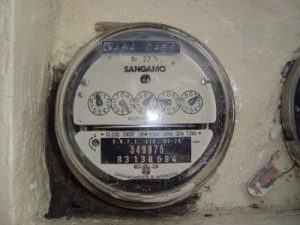
keep an eye on youe electric meter to save costs
Curtesy of CAPL

If there is anything any parent these days knows, it is that a family really needs to save to make sure that there is extra money for the things that really matter. The economic slump in my country has been the norm for many years now. Here, it really is a matter of how much you are taught, how skilled you are when you leave school, how much schooling you get and the kind of schooling you get as well, that will help you in carving out that great future for yourself and for your family by getting that high paying-high reward kind of job.

Now knowing this, know that education in my country is by no means cheap. There is public schooling much the same way there is in America wherein parents only pay a minimum amount for the education but, with the arguable exception of the State University High School, the quality of these schools is not good enough for a high paying job in the future. It is a cold, hard, unfortunate fact. Our schooling system is dying for improvements and the funding that will enable fantastic teachers to continue teaching…but that is another issue altogether.

That said, you can imagine how hard it is for parents to make ends meet. If you want quality anything, you have to pay- quality health care, quality education, quality housing. I do not know how it is in America but I do know that, in the United Kingdom for example, there is some support from the government. There is very little support for single parents as well (I think I have mentioned this before).

So, if you are a single mom like myself, you will want 1) a good paying job 2) still decent work hours 3) to live in a good area of the capital city or in a good area in any of the other major cities across the country 4) a good budget. These are all essential in the creation of a base that will allow for giving children the right education and rearing they need to succeed. Does it sound medieval? Victorian maybe? Well, again, it is the cold, hard fact of life.

So, there are ways to cut expenses in a household that may differ somewhat from what those people who live in the U.S. or U.K. know.

1. Cut on electricity as much as possible

In my country there is one electric company and this electric company seems to increase and give rebates on electrical costs when they feel like it (it feels a lot like increases more than rebates to be honest). This is also a tropical country so you really feel only one of two things- heat or humidity. There are air conditioners in almost every viable office and a lot of homes can boast of one air conditioner as well. Naturally there is the refrigerator and television. Aside from this, there are households- those of middle income earners mostly- that also use such items as a rice cooker, toaster, coffee brewer, washing machine and dryer, iron, and a microwave oven. One way to cut on electrical costs greatly is to cut out all the peripherals and to keep only the essential and to use these really only when absolutely needed. So, in my house, I have gone back to basics. I use the old-fashioned pot to cook rice, I hand wash most of the time, iron once a week for a couple of hours maximum, nix the brewer, toaster, and microwave oven. Air conditioning use is strictly regulated to 6-8 hours a day only, and the rest of the day being cooled by electric fans. I keep energy-saving bulbs and try to shut lights whenever possible. I can say this works because this brought my bill down from a 7000 bill to a 3800 bill.

2. Create a grocery list that reflects your budget and stick to this

I do my grocery once a month for most things. I think most people will agree that, when you buy in bulk, it is cheaper. So I get bulk cereal and oatmeal, bulk milk, bulk kilos of meat and fish, etc. The things I reserve for weekly purchase are easily consumed items like eggs, butter, tea, and vegetables. After experimenting with half month grocery shopping and weekly grocery shopping, I have found that this is the best way to buy food that will last, on a budget. Here we do not have coupons or discounts so every peso counts.

My kids, naturally, want everything every time I go to the grocery and this just isn’t realistically possible (I also really do not believe on giving them everything they want, every time and any time they want it). So I shuffle the items around a bit making the months menus very different. This way, I stick to the budget and the people in the house do not get bored. It is a trial for me to resist the urge to buy those perishables before the end of the week but sticking to the budget and the plan is a key element in making the whole thing work.

3. Save water

This is the easiest bit. This really just requires regulating your laundry days to three to four times a week. This is for many reasons. One, too much laundry at one time is taxing on the person washing. Two, the amount of water used for large bulks of clothes is a lot of water. Three, big batches of clothes may be too much for any extended clothes line to carry as well.

These are the three things I find I can control in order to have a budget that will include all the basic living requirements, the kids to go to good schools, and to have a family life as well however simple.

How do you cut costs at home where you live? Is it any different?

Brian
Brian

Brian is the founder of Kids Ain’t Cheap and is now sharing his journey through parenthood.

 
Email • Google + • Facebook • Twitter

Filed Under: Home and Living, Money and Finances Tagged With: Electric, Groceries, Home, Saving Money, Water

  • Facebook
  • Pinterest
  • RSS
  • Twitter

Basic Principles Of Good Parenting

Here some basic principles for good parenting:

  1. What You Do Matters: Your kids are watching you. So, be purposeful about what you want to accomplish.
  2. You Can’t be Too Loving: Don’t replace love with material possessions, lowered expectations or leniency.
  3. Be Involved Your Kids Life: Arrange your priorities to focus on what your kid’s needs. Be there mentally and physically.
  4. Adapt Your Parenting: Children grow quickly, so keep pace with your child’s development.
  5. Establish and Set Rules: The rules you set for children will establish the rules they set for themselves later.  Avoid harsh discipline and be consistent.
  6. Explain Your Decisions: What is obvious to you may not be evident to your child. They don’t have the experience you do.
  7. Be Respectful To Your Child: How you treat your child is how they will treat others.  Be polite, respectful and make an effort to pay attention.
Best Parenting Blogs

Most Popular

Baby

9 Unusual Baby Names That Sound Like They Belong to Future CEOs

Evan Morgan
Baby

10 Baby Names That Were Once Considered “Grandparent Names” but Feel Cool Again

Evan Morgan
Target Store

Choking Incident Prompts Recall of 49,000 Target Gigglescape “Under the Sea” Popping Toys

Evan Morgan
Frustrated Girl

Why Some Students on the Spectrum Are Labeled With ODD

Evan Morgan
Coke Bottles

12 Things Kids Took to School in the ’70s That Would Never Be Allowed Today

Evan Morgan

All content on Kids Ain’t Cheap is for entertainment purposes only. By reading this blog, you agree that Kids Ain’t Cheap is not responsible for any actions taken after reading this blog. For the full disclaimer, see our privacy policy.

Please note that Kids Ain’t Cheap has financial relationships with some of the merchants mentioned here. Kids Ain’t Cheap is funded by banner advertising, commission sales and search optimization consulting.

Copyright © 2006–2026 | District Media | All Rights Reserved | Privacy Policy

Copyright © 2026 Runway Pro Theme by Viva la Violette