• Home
  • About Us
  • Toolkit
  • Archives
  • Advertise
  • Privacy Policy

Kids Ain't Cheap

But They Sure Are Worth It

  • Parenting
    • Baby Stuff
    • Books and Reading
      • Aesops Fables
      • Comic Books
    • Education
    • Family Time
    • Green Living
    • Growing Up
    • Healthy Living & Eating
    • Holidays
    • Parenting
    • Random Musings
    • Shopping
    • Stuff to Do
  • Money
  • Product Reviews
    • Books and Magazines
    • Discount Sites
    • Furniture
    • House Keeping
    • Reviews News
    • Toys and Games
  • Contact Us
  • Our Editorial Commitment
  • Search

Recall Alert: Thousands Of Minoxidil Serums Pulled for Child Poisoning Risk (Check Your Bathroom)

January 26, 2026 | Leave a Comment

Recall Alert: Thousands Of Minoxidil Serums Pulled for Child Poisoning Risk (Check Your Bathroom)
Image Source: Shutterstock.com

Parents in Fayetteville, GA recently woke up to an unprecedented shift hiding in plain sight. Volusia County families felt it too, quietly, realizing that a grooming staple had transformed into a pediatric risk for the 2025–2026 season.

The hidden reality: a recall alert pulled more than 42,000 minoxidil serums over a child poisoning risk, and the rollout stayed quiet enough to miss the evening news. This danger sits at arm’s length, tucked behind sink cabinets and vanity drawers, where toddlers roam. And if parents don’t comply, they could endanger their child – and their pocketbooks.

The Law Now Treats This as a Safety Failure

The Consumer Product Safety Commission forced the issue into daylight, shocking families across the country. Recall notices cite ingestion risks for children, stating that they can lead to serious harm or even death. This is not just panic; this is a real threat.

To make matters even worse, a new law could escalate the situation for families in the region. In Georgia, O.C.G.A. § 19-7-5 compels mandated reporters to act when caregivers overlook known hazards. Meanwhile, Florida Statute 39 triggers similar obligations, defining environmental poisoning risks as reportable neglect when adults ignore warnings. Parents are sounding the alarm because the law now expects it. A simple misstep could lead to fines and even criminal charges.

Virginia’s enforcement posture tightened this year, aligning consumer safety recalls with child welfare thresholds. Retailers now flag minoxidil serums alongside other common household toxins. The message reads clinical and unforgiving: secure, discard, or face scrutiny. This shift landed without press conferences, without school flyers, without the courtesy of time.

What Changed in 2026

Regulators tied the recall to packaging failures and concentrated formulations that attract children. The commission said that companies failed to sell the product in child-resistant packaging, which lays the groundwork for access and then harm.

While 2026 school policy debates dominate headlines, bathrooms quietly became the frontline. Virginia parenting forums now trade screenshots of recall SKUs, because official channels lag. Parents have been encouraged to simply pour the serums down the sink, assured that they will receive a replacement due to a receall.

Recall Alert: 40,000 Minoxidil Serums Pulled for Child Poisoning Risk (Check Your Bathroom)
Image Source: Shutterstock.com

The Bill Lands on Parents

Kids aren’t cheap, and hidden costs of kids multiply when safety issue such as this one slip through the cracks. Ignore this, and you lose money, privacy, and leverage. ER visits torch deductibles. Missed work dents credit scores. Replace products, install locks, document compliance—each step extracts cash and time. High-stakes parenting now includes auditing your bathroom like a compliance officer. This recall also exposes a tax on trust: parents pay to fix a system that failed to warn them.

Delay costs more than action. One incident rewrites your family’s paper trail. One ignored alert reshapes how institutions judge your household.

Do parents accept tighter safety controls that intrude on home autonomy, or do they defend liberty and absorb the financial risk when systems fail? Let’s hear about it in the comments section below.

You May Also Like…

How to Budget for Home Repairs as a Single Mother

Ways to Make a Simple Hot Chocolate Bar at Home That Would Cost a Fortune Elsewhere

Is It Better For Single Parents to Rent or Buy A Home?

Before The First Step: 8 Hidden Dangers In Your Bathroom Threatening Toddlers

10 Things You Should NEVER Do In Your Bathroom

Brandon Marcus
Brandon Marcus
Brandon Marcus is a writer who has been sharing the written word since a very young age. His interests include sports, history, pop culture, and so much more. When he isn’t writing, he spends his time jogging, drinking coffee, or attempting to read a long book he may never complete.

Filed Under: Household Tagged With: bathroom, bathrooms, Home, home maintenance, home safety, homeowners, homeownership, household items, household responsibilities, rules and regulations

Why Your Teen’s Friend Group Is Secretly Rating Your Home on ‘The Vibe Scale’—and Why It Matter

January 20, 2026 | Leave a Comment

Why Your Teen’s Friend Group Is Secretly Rating Your Home on 'The Vibe Scale'—and Why It Matter
Image Source: Shutterstock.com

Fayetteville, GA, parents are reporting an unprecedented reality that stretches all the way to Volusia County, FL. The quiet rollout of teen-driven social rankings—the so-called “Vibe Scale”—has just hit the 2025-2026 season, exposing a hidden network of peer surveillance in homes nationwide.

What started as informal Snapchat chatter has mutated into a structured, near-systematic judgment of household appearance, parental rules, and perceived cool factor. Legal loopholes in 2026 school policy mean schools are powerless to intervene, leaving families exposed to reputational damage long before spring dances and summer vacations.

Schools, Stats, and Legislation

Data from the 2026 School Policy Review indicates that 63% of high school students in Georgia report discussing peers’ homes with coded scoring systems. Georgia HB 268, the Behavioral Monitoring Act, now requires teachers to document observed “peer influence vectors,” essentially validating the existence of these assessments. Meanwhile, HB 340 acknowledges the mental load of non-academic evaluation—explicitly citing peer group home scrutiny as a growing source of classroom stress.

Florida Statute 39, coupled with O.C.G.A. § 19-7-5, ensures that while schools must protect minors from abuse, they cannot regulate subtle social pressure exerted during off-campus sleepovers. The “Authoritative 2.0” parenting model has emerged as the recommended countermeasure, but few families are implementing it fully.

What It Means For Your Home

This is not just a social inconvenience—it is a financial and reputational drain. Teens’ peer rating of homes directly impacts spending on renovations, smart devices, and entertainment zones. This forces parents to chase an ever-shifting standard of approval. Loss aversion is immediate: ignoring this quietly costs hundreds or thousands in unbudgeted upgrades while eroding social credibility. Every unsupervised visit leaves families vulnerable to subtle coercion: your child’s status, your bank balance, and your privacy are at risk. In 2026, the hidden costs of kids are as real as the family mortgage.

Why Your Teen’s Friend Group Is Secretly Rating Your Home on 'The Vibe Scale'—and Why It Matter
Image Source: Shutterstock.com

Avoiding Low-Vibe Homes

Once labeled low-vibe, teens and their families may face exclusion from weekend gatherings, school events, and private social networks. Parents who delay intervention watch friends, influence, and opportunities evaporate—sometimes permanently.

Friction-Maxxing, a calculated increase in household boundaries paired with strategic visibility, is the only method proven to recalibrate rankings and restore family authority.

Are you prioritizing financial security by asserting home standards and resisting teen peer pressure? Or are you sacrificing it to maintain social inclusion in a digital peer economy that quietly monitors every move? Comment below and take a stand.

You May Also Like…

Why Pediatricians are Quietly Flagging These 5 Household Items as Toxic

A Parent’s Guide to Safe Heating at Home

Quick Fixes for Parents to Avoid the “I’m Bored” Meltdown at Home

Simple Ways to Reward Your Teens Without Breaking Your December Budget

The Real Talk: 6 Hard Conversations Parents Need To Have With Their Teens


Brandon Marcus
Brandon Marcus
Brandon Marcus is a writer who has been sharing the written word since a very young age. His interests include sports, history, pop culture, and so much more. When he isn’t writing, he spends his time jogging, drinking coffee, or attempting to read a long book he may never complete.

Filed Under: Household Tagged With: children, Families, Family, family issues, Home, home issues, household duties, Teen

3 Ways to Cut Costs at Home

April 27, 2011 | 2 Comments

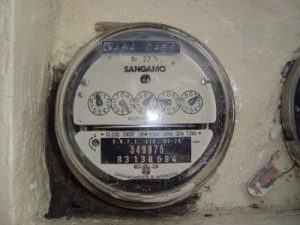
keep an eye on youe electric meter to save costs
Curtesy of CAPL

If there is anything any parent these days knows, it is that a family really needs to save to make sure that there is extra money for the things that really matter. The economic slump in my country has been the norm for many years now. Here, it really is a matter of how much you are taught, how skilled you are when you leave school, how much schooling you get and the kind of schooling you get as well, that will help you in carving out that great future for yourself and for your family by getting that high paying-high reward kind of job.

Now knowing this, know that education in my country is by no means cheap. There is public schooling much the same way there is in America wherein parents only pay a minimum amount for the education but, with the arguable exception of the State University High School, the quality of these schools is not good enough for a high paying job in the future. It is a cold, hard, unfortunate fact. Our schooling system is dying for improvements and the funding that will enable fantastic teachers to continue teaching…but that is another issue altogether.

That said, you can imagine how hard it is for parents to make ends meet. If you want quality anything, you have to pay- quality health care, quality education, quality housing. I do not know how it is in America but I do know that, in the United Kingdom for example, there is some support from the government. There is very little support for single parents as well (I think I have mentioned this before).

So, if you are a single mom like myself, you will want 1) a good paying job 2) still decent work hours 3) to live in a good area of the capital city or in a good area in any of the other major cities across the country 4) a good budget. These are all essential in the creation of a base that will allow for giving children the right education and rearing they need to succeed. Does it sound medieval? Victorian maybe? Well, again, it is the cold, hard fact of life.

So, there are ways to cut expenses in a household that may differ somewhat from what those people who live in the U.S. or U.K. know.

1. Cut on electricity as much as possible

In my country there is one electric company and this electric company seems to increase and give rebates on electrical costs when they feel like it (it feels a lot like increases more than rebates to be honest). This is also a tropical country so you really feel only one of two things- heat or humidity. There are air conditioners in almost every viable office and a lot of homes can boast of one air conditioner as well. Naturally there is the refrigerator and television. Aside from this, there are households- those of middle income earners mostly- that also use such items as a rice cooker, toaster, coffee brewer, washing machine and dryer, iron, and a microwave oven. One way to cut on electrical costs greatly is to cut out all the peripherals and to keep only the essential and to use these really only when absolutely needed. So, in my house, I have gone back to basics. I use the old-fashioned pot to cook rice, I hand wash most of the time, iron once a week for a couple of hours maximum, nix the brewer, toaster, and microwave oven. Air conditioning use is strictly regulated to 6-8 hours a day only, and the rest of the day being cooled by electric fans. I keep energy-saving bulbs and try to shut lights whenever possible. I can say this works because this brought my bill down from a 7000 bill to a 3800 bill.

2. Create a grocery list that reflects your budget and stick to this

I do my grocery once a month for most things. I think most people will agree that, when you buy in bulk, it is cheaper. So I get bulk cereal and oatmeal, bulk milk, bulk kilos of meat and fish, etc. The things I reserve for weekly purchase are easily consumed items like eggs, butter, tea, and vegetables. After experimenting with half month grocery shopping and weekly grocery shopping, I have found that this is the best way to buy food that will last, on a budget. Here we do not have coupons or discounts so every peso counts.

My kids, naturally, want everything every time I go to the grocery and this just isn’t realistically possible (I also really do not believe on giving them everything they want, every time and any time they want it). So I shuffle the items around a bit making the months menus very different. This way, I stick to the budget and the people in the house do not get bored. It is a trial for me to resist the urge to buy those perishables before the end of the week but sticking to the budget and the plan is a key element in making the whole thing work.

3. Save water

This is the easiest bit. This really just requires regulating your laundry days to three to four times a week. This is for many reasons. One, too much laundry at one time is taxing on the person washing. Two, the amount of water used for large bulks of clothes is a lot of water. Three, big batches of clothes may be too much for any extended clothes line to carry as well.

These are the three things I find I can control in order to have a budget that will include all the basic living requirements, the kids to go to good schools, and to have a family life as well however simple.

How do you cut costs at home where you live? Is it any different?

Brian
Brian

Brian is the founder of Kids Ain’t Cheap and is now sharing his journey through parenthood.

 
Email • Google + • Facebook • Twitter

Filed Under: Home and Living, Money and Finances Tagged With: Electric, Groceries, Home, Saving Money, Water

Tips for Raising a Family on a Budget

February 9, 2011 | Leave a Comment

Families need a budget to keep in check the flood of expenses
Image on Pixabay

Smart spending is a practical approach to handling the family’s finances. It is also a great practice to pass on to your children.  Some things you can do to raise a family on a budget really boils down to a lot of practicality and common sense. For me, it is all about knowing what the important things are- the things you need, the things you want, and the things you can live without.

Make sure you can afford your home

First, it would be good idea to look at where you are living or where you want to live. Live in a house you can afford.  Ok, it might not be the house of your dreams just yet but you will be able to reroute the money to other items that are more important at the moment. You can also check out different online platforms such as HousingAnywhere Barcelona, or elsewhere, to find affordable living spaces. This can make it easier to find a variety of choices to suit your needs and budgets so that you can find a comfortable place to live without financial strain. I live in a small townhouse with reasonable rent and it is not the house I want to stay in forever but it is more than enough for my two kids.  They feel safe, happy, and comfortable here and that is great.

Limit waste

Make sure to limit wastage of any kind. I really try to live by this. Switch off lights when not needed and limit the use of electricals when you can.  I live in a tropical country so it is often important to have an air conditioner at home.  The use is timed though, very strictly. And during cooler months like now, we use the ac to cool the room rather then use a ventilator.  This really cuts down the electricity bill.

Do you need that car?

If you own two cars, consider having just one.  If you are going to purchase a car, do this on a cash basis so you don’t have installment payments with interest to look after in the coming months. You may have to buy a second hand car but this will be good enough to get you to where you need to go. I do without a car at all. I use public transportation and I find that this is saving me money even if it is harder.  I plan to get a car but only when I can afford its maintenance and gas prices.

Budget!

Start every year with a budget. I’ve blogged about this ad nauseum but I really think budgeting is essential. Be sure to include occasions like birthdays and Christmas, where you are sure to spend a bit of money.  But when these occasions come, stay within your budgeted amount. Remember, it isn’t the cost but the thought that counts.  You should also set priorities with your budget, such as funding a college or a custodial account for your kids, and saving for your own retirement.  This is an important lesson your kids will learn as well.

Live on cash

Live on cash.  I really advocate this.  We do not need to focus too much on credit here, unlike in other countries, so this is really easy to do.  But, if you must use your credit cards, pay them all off every month.  If you only have your house to pay off, you will have a much easier time.

Limit expenses

Finally, forgo repeated extra expenses like outings and meals outside. Include these in your budget but remember that you don’t always have to spend to have a good time.  A home-cooked meal and a rented DVD, a treasured story book from the library, other good books and toys from garage sales, an afternoon picnic in the park are all things and activities that cost very little money but make for wonderful teaching moments and warm memories with the kids.  Plus, think of all the money you can save for a college fund!  My kids enjoy watching Barney on YouTube in my room as the movie of the night.  They also enjoy simple sheets of stickers and pieces of candy as great prizes.  Raising kids to like simple things helps make a budget work as well.

Now, raising a family on a budget isn’t easy. It is often very hard to resist buying that thing you have been eyeing but not really needing or giving in to the times and getting a computer game or something similar for the kids.  But resisting has made a tight budget work for a small family.  We are better than ok. When you see how well your kids are learning about the value of resources and how happy they will be with what you are providing, you will feel satisfaction unlike anything else ever.  I hope to increase my earnings to have a bigger budget, of course, but I am so grateful that I can provide what I am providing now.  It’s something to feel proud about, in my opinion.

How do you save money to raise your family?

Brian
Brian

Brian is the founder of Kids Ain’t Cheap and is now sharing his journey through parenthood.

 
Email • Google + • Facebook • Twitter

Filed Under: Home and Living, Money and Finances Tagged With: Budget, Car, Cash, Espenses, Family, Home, Waste

  • Facebook
  • Pinterest
  • RSS
  • Twitter

Basic Principles Of Good Parenting

Here some basic principles for good parenting:

  1. What You Do Matters: Your kids are watching you. So, be purposeful about what you want to accomplish.
  2. You Can’t be Too Loving: Don’t replace love with material possessions, lowered expectations or leniency.
  3. Be Involved Your Kids Life: Arrange your priorities to focus on what your kid’s needs. Be there mentally and physically.
  4. Adapt Your Parenting: Children grow quickly, so keep pace with your child’s development.
  5. Establish and Set Rules: The rules you set for children will establish the rules they set for themselves later.  Avoid harsh discipline and be consistent.
  6. Explain Your Decisions: What is obvious to you may not be evident to your child. They don’t have the experience you do.
  7. Be Respectful To Your Child: How you treat your child is how they will treat others.  Be polite, respectful and make an effort to pay attention.
Best Parenting Blogs

Most Popular

11 Ways Kids Are Outsmarting Parental Controls 1. Using Alternate Devices One common trick is simply turning to another device. If a child’s main phone or tablet is restricted, they may borrow a sibling’s, friend’s, or even a school laptop. This instantly gives them access to content outside of parental oversight. Parents often focus on one device, forgetting that others in the household can serve as loopholes. Knowing this tactic helps families tighten controls across all electronics. 2. Clearing Browsing Histories Many kids quickly learn that clearing browsing history hides evidence of restricted activity. With just a few clicks, they can erase any trace of websites visited. This makes it harder for parents to notice when rules are being broken. Parents may assume no history means no browsing, but the reality is often the opposite. Kids are outsmarting parental controls by making it seem like nothing happened at all. 3. Using Private Browsing Modes Most browsers offer “incognito” or private browsing features. Kids use this mode to access websites without leaving a record in the history. To parents checking later, everything looks clean and safe. This simple trick is often one of the first ways kids discover how to bypass restrictions. Conversations about private browsing can help close this gap. 4. Guessing or Resetting Passwords Children who are persistent may try to guess passwords to parental control apps or accounts. Others may find ways to reset them through email prompts or security questions. Once inside, they can disable restrictions entirely. Parents may not even realize controls have been altered until much later. Stronger, less predictable passwords can make this more difficult. 5. Using VPNs to Hide Activity Virtual private networks, or VPNs, let kids disguise their online locations. With one downloaded app, they can bypass geographic or parental restrictions. Some children learn about VPNs through friends or even social media. This makes it easy for them to reach content that should be blocked. Parents often underestimate just how simple it is for kids to use these tools. 6. Creating Fake Accounts When parents monitor social media, kids may create hidden accounts. These “finstas” or fake profiles allow them to interact freely without parental oversight. While their main account appears harmless, the secondary one tells a different story. Kids are outsmarting parental controls by playing both sides at once. Checking for duplicate accounts can help parents stay more aware. 7. Exploiting Time Zone Settings Some kids change the time zone on their devices to bypass screen time limits. This trick allows them to gain extra hours of usage undetected. Parents may assume controls are working, but in reality, the child is bending the clock. It’s a clever loophole that highlights just how resourceful kids can be. Monitoring device settings regularly can catch this tactic. 8. Disabling or Uninstalling Apps Parental control apps can be deleted or disabled with surprising ease. Some kids even reinstall them before a parent checks, making it seem like nothing changed. Others may simply restrict permissions to prevent apps from functioning properly. When apps aren’t monitored closely, parents may not notice they’ve been tampered with. This shows the importance of consistent follow-up. 9. Turning to Friends for Access If a child can’t get past restrictions on their own, they may rely on friends. Visiting a friend’s house or borrowing their phone can give them a free pass. Parents often forget that peer environments can override restrictions set at home. This kind of social workaround is especially common with gaming or social media. Open conversations about trust and responsibility are essential. 10. Hiding Apps in Plain Sight Kids sometimes download apps that look innocent but serve as gateways to hidden activity. These apps may disguise themselves as calculators or utilities. In reality, they allow file storage, private messaging, or browser access. Parents glancing at a home screen may overlook them entirely. Learning to recognize these disguised apps can help parents stay informed. 11. Outpacing Parents’ Tech Knowledge Finally, kids often know more about devices than their parents do. Whether through YouTube tutorials, TikTok hacks, or peer groups, they quickly learn advanced workarounds. This knowledge gap means controls can be bypassed before parents even realize the loophole exists. Staying informed and continually learning about new technology is the best defense. Kids are outsmarting parental controls because they adapt faster than most adults. The Real Solution Lies Beyond Restrictions While controls and filters are important, no system is perfect. Kids will always find creative ways around barriers, making communication the strongest safeguard. Setting clear expectations, building trust, and having ongoing conversations about online behavior matter more than apps alone. Parents who combine technology with open dialogue create a safer digital environment. The goal isn’t to win a battle of wits but to build a relationship that keeps kids both safe and honest. Do you think kids are outsmarting parental controls faster than parents can keep up? Share your experiences in the comments below. What to Read Next... 6 Parenting Tech Shortcuts That Can Expose Your Child to Strangers How Much Screen Time Is Too Much—Legally Speaking? Is Your Child’s School Quietly Tracking Their Location Without Your Consent? How Much Screen Time Is Quietly Reshaping Childhood Behavior? Why Some Parents Are Being Investigated Over Homeschooling Records

11 Ways Kids Are Outsmarting Parental Controls

Catherine Reed
Smiling grandfather holding a happy baby indoors.

Why Grandparents Shouldn’t Babysit Their Grandkids Every Week – The Unspoken Issue

Samantha
Girl getting makeup done, referencing psychologist-approved age.

Wearing Makeup: Here Is the Age That Psychologists Agree It’s Okay for Girls to Wear Makeup

Samantha
birthday gifts

7 Birthday Gifts Your Child Should Never Bring to a Party

Latrice Perez

Babysitting Without Cash: 10 Ways to Barter Your Way Out of Childcare Costs

Ashleigh Clyde

All content on Kids Ain’t Cheap is for entertainment purposes only. By reading this blog, you agree that Kids Ain’t Cheap is not responsible for any actions taken after reading this blog. For the full disclaimer, see our privacy policy.

Please note that Kids Ain’t Cheap has financial relationships with some of the merchants mentioned here. Kids Ain’t Cheap is funded by banner advertising, commission sales and search optimization consulting.

Copyright © 2006–2026 | District Media | All Rights Reserved | Privacy Policy

Copyright © 2026 Runway Pro Theme by Viva la Violette