• Home
  • About Us
  • Toolkit
  • Archives
  • Advertise
  • Privacy Policy

Kids Ain't Cheap

But They Sure Are Worth It

  • Parenting
    • Baby Stuff
    • Books and Reading
      • Aesops Fables
      • Comic Books
    • Education
    • Family Time
    • Green Living
    • Growing Up
    • Healthy Living & Eating
    • Holidays
    • Parenting
    • Random Musings
    • Shopping
    • Stuff to Do
  • Money
  • Product Reviews
    • Books and Magazines
    • Discount Sites
    • Furniture
    • House Keeping
    • Reviews News
    • Toys and Games
  • Contact Us
  • Our Editorial Commitment
  • Search

How to Help Your Child Socialize During a Pandemic

September 24, 2020 | Leave a Comment

We have three kids who are 16, 12, and 10.  The older two are quite social, and the younger one is introverted and prefers to be at home.  When the stay-at-home order began at the end of March, I wasn’t too worried.  I thought we’d be mostly home for a month or two and then cases would be low enough to resume most normal activities.  Boy, was I wrong!  As our time at home stretched on, all three of my kids started craving social interaction.  If yours do too, here’s how to help your child socialize during a pandemic.

How to Help Your Child Socialize During a Pandemic

Zoom Is Your Friend

Before the pandemic, I hadn’t even heard of Zoom.  Now, it’s a household name.

All three of my kids use Zoom to stay in touch with friends.  There are a variety of ways they have socialized with their friends over Zoom.

Cooking Lessons

My oldest has a friend who loves to cook Mexican food for her large family.  Over Zoom one day, she cooked while my son watched and asked her questions.  He wrote down the recipe and has created the meal himself.

Likewise, your child can cook at the same time their friend is.  Even more fun, your kids and their friends can have a Chopped session.  Each pulls out three unusual ingredients, and over Zoom, they cook a meal and decide who is the winner.

White Board Games

My younger two frequently use the whiteboard feature and play games over Zoom with their friends that way.   They’ve played hangman and tic tac toe.  They’ve even drawn each other pictures and talked about them.

Board Games

Younger kids might enjoy playing board games over Zoom.  Each child would need to have the board game in his or her house and move for the other player.

Watch Movies Together

Have one person the designated movie player.  All that person has to do is share screen and then tap the tab where she has the movie set up and all Zoom participants can watch the movie and chat while watching.

While it’s not quite the same as having your friends lounging on the couch with you watching the movie together, it is the next best thing considering our current times.

Meet in Person, Socially Distanced

Help Your Child Socialize During a Pandemic
Photo by Julian Schiemann on Unsplash

If you feel comfortable with doing this, another option is to have your older kids meet in person.  Have them wear a mask and socially distance.  Some kids do this and play a game like hackey sack where they don’t have to be really close to one another.  Other options would be skateboarding or throwing a frisbee.  Teens could also play a game of tennis or go on a socially distanced hike.  As long as they’re socially distanced, wearing a mask, and outdoors, they should be good for any outdoor meet ups.

Final Thoughts

While some people have gone back to more normal activities such as work and attending schools, other families have chosen to stay mostly at home to protect people in their family who may be high risk.  If you fall into the latter category, there are still ways to help your children socialize during the pandemic.

Read More

Tips to Improve Eye Fatigue from Online School

Why the Pandemic Affected Our School Choice

What You Need to Know to Homeschool Your Child in the Age of COVID

Melissa Batai
Melissa Batai

Melissa is a writer and virtual assistant. She earned her Master’s from Southern Illinois University, and her Bachelor’s in English from the University of Michigan. When she’s not working, you can find her homeschooling her kids, reading a good book, or cooking. She resides in Arizona where she dislikes the summer heat but loves the natural beauty of the area.

Filed Under: Growing Up, Parenting Blog at KidsAintCheap Tagged With: Child Social Skills, coronavirus, friends, pandemic, socialization

Tips to Improve Eye Fatigue from Online School

September 16, 2020 | Leave a Comment

Since March, our kids have been spending MUCH more time in front of the computer.  Some kids are taking synchronous learning via Zoom, which means they are in front of the computer for a full school day, five days a week.  For most people, this is way too much screen time.  If your child is complaining of eye issues, try these tips to improve eye fatigue.

Tips to Improve Eye Fatigue from Online School

Tips to Improve Eye Fatigue from Online School

My 10-year old is homeschooled, but she’s still on the computer much more than she used to be.  She has eight hours of therapy a week online, she’s taking some Outschool classes, and she’s had a bit more screen time than normal thanks to the pandemic.  After a few months of this, she started complaining about her eyes hurting.  Taking these steps, we’ve remedied some of the problem.

Buy Blue Light Filtering Glasses

Probably the best thing we did was buy blue light filtering glasses.  Anytime our daughter has to use the computer, she uses her glasses.  She finds such relief from eye fatigue using these, that she won’t even use the computer if she can’t find them.

Turn Down the Brightness on the Computer

The other thing she did was turn down the brightness on her computer almost all the way.  This helps reduce the amount of light she gets and also reduces eye squinting.

Limit Consecutive Computer Activities

She’s very firm now that she doesn’t want one computer activity after the other.  She repeatedly asks me to schedule her Zoom sessions with at least an hour or two separation so that her eyes have time to rest.  By doing this, along with using the blue light filtering glasses and turning down the brightness of the computer, she’s been able to resolve most of her eye fatigue.

Take Eye Breaks

Of course, we have the luxury of scheduling breaks for her computer activities.  Kids in synchronous online classes don’t get that choice.  If that’s the case for your child, teach them the rule of 20-20-20.  For every 20 minutes staring at the screen, look at an object 20 feet away for 20 seconds.  This gives your eyes the chance to refocus and helps prevent eye fatigue.

Limit Computer Usage

Finally, if you’re able, limit your child’s computer usage.  On the days our daughter uses the computer a lot for therapies and school, we limit her free time on the computer.  (She actually asked to do this.)  Rather than 30 minutes of free computer time, she has 15, or she foregoes it altogether.

See an Eye Doctor

Tips to Improve Eye Fatigue from Online School
Photo by Liam Welch on Unsplash

If you use all of these tips to improve eye fatigue and your child still has issues, consider seeing an eye doctor to make sure the discomfort is not caused by something more serious.

Final Thoughts

Thanks to the pandemic, our lives have changed in ways we couldn’t have imagined a year ago.  Problems creep up like eye fatigue that need remedies.  If your children’s vision is suffering, hopefully these tips to improve eye fatigue from online school will help reduce their discomfort.

Read More

A Complete Guide to Discount School Supplies for Distance Learning

Why the Pandemic Affected Our School Choice

What You Need to Know to Homeschool Your Child in the Age of COVID

Melissa Batai
Melissa Batai

Melissa is a writer and virtual assistant. She earned her Master’s from Southern Illinois University, and her Bachelor’s in English from the University of Michigan. When she’s not working, you can find her homeschooling her kids, reading a good book, or cooking. She resides in Arizona where she dislikes the summer heat but loves the natural beauty of the area.
Filed Under: Technology Tagged With: eye fatigue, healthy eyes, online school, pandemic

Why the Pandemic Affected Our School Choice

July 9, 2020 | Leave a Comment

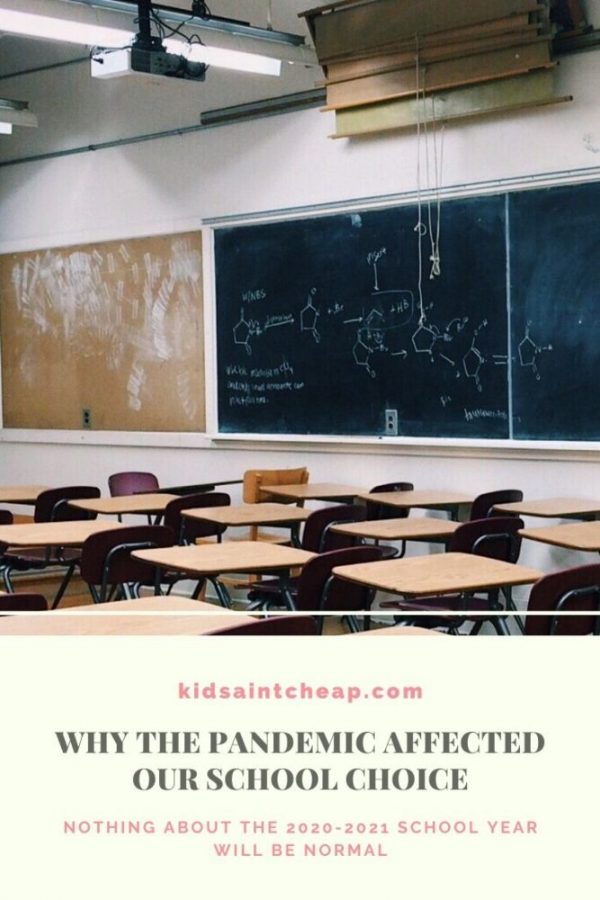
When the pandemic struck, my oldest child was in a public high school.  His school shut down after spring break and offered all online classes.  Quite frankly, the whole experience was a disaster.  All of the teachers were new to online schooling, and the classes had to be put together quickly.  This learning environment was chaotic and confusing.  Plus, the governor told all schools that children’s grades couldn’t be any lower than the grades they were receiving in person, so kids like my son, who were already receiving good grades, lost motivation.  As the pandemic stretched into early summer, we made bold decisions about his education.  There are several reasons why the pandemic affected our school choice.

Why The Pandemic Affected Our School Choice

Why the Pandemic Affected Our School Choice

Our goal is to give our child the best education for the circumstances, which required a different way of thinking for us.

In Person School Wouldn’t Be the Same

Why the Pandemic Affected Our School Choice

Our son is a social kid, and we knew he’d struggle with social distancing in school and being with a smaller cohort of kids because the school was going to stagger which kids go to school on which days.

We Didn’t Feel the Environment Would Be Safe

Frankly, with all we’re learning about COVID-19, we just didn’t feel the environment at school would be safe no matter how many precautions are taken.  The virus thrives indoors with many people, and that’s the environment for schools.  I know many schools are taking precautions, but for us, that’s not enough.

The School’s Online Platform Wouldn’t Work for Us

Our son’s school did offer a completely online option, and at first, we were interested in pursuing this.  However, we learned that teachers will be in class teaching their classes with the students in person, and the online students will watch the class and try to participate that way.

I can’t imagine sitting through an entire school day online, every day.  That means our son would be sitting in front of the computer for roughly 35 to 40 hours a week.  Then, he’d get off the computer and do his homework.  Quite frankly, doing this sounds exhausting.

What We Ultimately Chose

Why the Pandemic Affected Our School Choice

We ultimately decided to enroll our son in a completely online school.  The teachers at this school only teach online, so they’re very familiar with this type of educational delivery.  Just to make sure this option is right for him, we enrolled him in summer school.

The teachers are attentive, calling him to ask if he has questions and encouraging students to text them if they have issues.  Students do most of the work independently, but they are required to go to one class a week per class.  (The teacher only offers one class per week.)

Using this system, our child can do his work in flexible, safe, comfortable environment.  He still engages with the teacher and other students during the online class, but he’s not required to sit at a computer for hours every day.

Final Thoughts

As you can see, there are several reasons why the pandemic affected our school choice.  We’re still hopeful that the pandemic will no longer impact the 2021-2022 school year and that our son can go back to his public school then.  But for now, we think we’ve made the best decision giving the unique circumstances we are all facing this upcoming academic year.

Melissa Batai
Melissa Batai

Melissa is a writer and virtual assistant. She earned her Master’s from Southern Illinois University, and her Bachelor’s in English from the University of Michigan. When she’s not working, you can find her homeschooling her kids, reading a good book, or cooking. She resides in Arizona where she dislikes the summer heat but loves the natural beauty of the area.

Filed Under: Education, Parenting Blog at KidsAintCheap Tagged With: changing schools, online school, pandemic

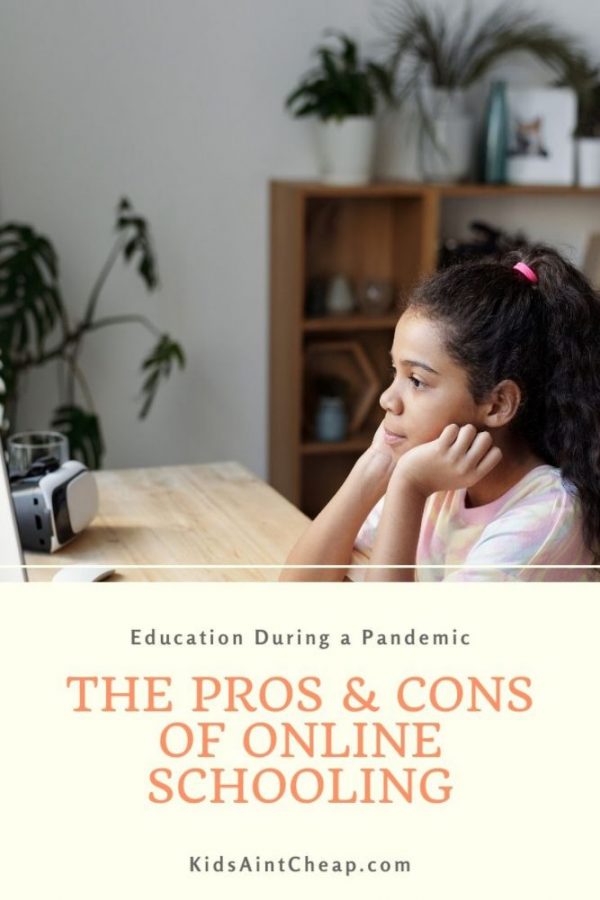
The Pros and Cons of Online Schooling

June 4, 2020 | Leave a Comment

As the pandemic continues to rage and school guidelines for the fall emerge, many parents are looking at alternatives.  While some parents are considering homeschooling, others are looking at online schooling.  After all, online schooling takes some of the burden of education off the parents’ shoulders.  However, before you make the leap, it’s important to understand the pros and cons of online schooling.

The Pros and Cons of Online Schooling

The Pros of Online Schooling

Parents’ Time Is Freed Up

If you’re children are in middle school or above, they will require little attention from you during school hours.  They should be able to do their work independently.  This is likely to be a huge benefit to parents who are also working from home during the pandemic.

The Credits Can Transfer

If you’re looking at online schooling just for a year or two while there is not a treatment or a vaccine, then you’ll want to be sure that your child can seamlessly rejoin brick and mortar school later.  If you choose an accredited online school, your child will easily be able to transfer classes to a physical school later.

Students Have a More Flexible Schedule

When students learn online, they have a much more flexible schedule.  For instance, teens are notorious for wanting to stay up late and get up late.  If they attend online school, they can do exactly that with no serious repercussions.  Or, if a student wants to get a part-time job, he could work any time of day and do school work during unconventional times.  He’s not limited to getting his education between the hours of 8 and 3 as he would be if he attended a traditional school.

The Cons of Online Schooling

When considering the pros and cons of online schooling, you must give careful consideration to the cons, as they may ruin your online experience.

Children’s Motivation Is Important

How motivated is your child to do work?  Kids who are highly motivated will likely do well in online school.  Children who need peer pressure to get work done may struggle with online schooling.  Think carefully about your child’s level of motivation before enrolling her in an online school.

Some Platforms Can Be Difficult to Navigate

Not all online schools are the same.  Some platforms are boring and difficult to navigate, which can be frustrating, especially for young learners.  Our oldest child tried online school a few years ago and hated the experience, largely because of the platform.

After two years in a brick and mortar school, we decided again to put him in an online school due to the pandemic.  We chose carefully.  The online school he’s currently enrolled in has an engaging, intuitive platform, and he’s enjoying his experience much more.

Final Thoughts

As you weigh your child’s education options as you consider next school year, carefully weigh the pros and cons of online schooling.  For the right child, online school can offer some incredible freedoms.  Or, online school can be a miserable experience.  The choice largely depends on your child and the school you choose.

Melissa Batai
Melissa Batai

Melissa is a writer and virtual assistant. She earned her Master’s from Southern Illinois University, and her Bachelor’s in English from the University of Michigan. When she’s not working, you can find her homeschooling her kids, reading a good book, or cooking. She resides in Arizona where she dislikes the summer heat but loves the natural beauty of the area.

Filed Under: Education Tagged With: education, kids education, online school, pandemic

  • Facebook
  • Pinterest
  • RSS
  • Twitter

Basic Principles Of Good Parenting

Here some basic principles for good parenting:

  1. What You Do Matters: Your kids are watching you. So, be purposeful about what you want to accomplish.
  2. You Can’t be Too Loving: Don’t replace love with material possessions, lowered expectations or leniency.
  3. Be Involved Your Kids Life: Arrange your priorities to focus on what your kid’s needs. Be there mentally and physically.
  4. Adapt Your Parenting: Children grow quickly, so keep pace with your child’s development.
  5. Establish and Set Rules: The rules you set for children will establish the rules they set for themselves later.  Avoid harsh discipline and be consistent.
  6. Explain Your Decisions: What is obvious to you may not be evident to your child. They don’t have the experience you do.
  7. Be Respectful To Your Child: How you treat your child is how they will treat others.  Be polite, respectful and make an effort to pay attention.
Best Parenting Blogs

Most Popular

11 Ways Kids Are Outsmarting Parental Controls 1. Using Alternate Devices One common trick is simply turning to another device. If a child’s main phone or tablet is restricted, they may borrow a sibling’s, friend’s, or even a school laptop. This instantly gives them access to content outside of parental oversight. Parents often focus on one device, forgetting that others in the household can serve as loopholes. Knowing this tactic helps families tighten controls across all electronics. 2. Clearing Browsing Histories Many kids quickly learn that clearing browsing history hides evidence of restricted activity. With just a few clicks, they can erase any trace of websites visited. This makes it harder for parents to notice when rules are being broken. Parents may assume no history means no browsing, but the reality is often the opposite. Kids are outsmarting parental controls by making it seem like nothing happened at all. 3. Using Private Browsing Modes Most browsers offer “incognito” or private browsing features. Kids use this mode to access websites without leaving a record in the history. To parents checking later, everything looks clean and safe. This simple trick is often one of the first ways kids discover how to bypass restrictions. Conversations about private browsing can help close this gap. 4. Guessing or Resetting Passwords Children who are persistent may try to guess passwords to parental control apps or accounts. Others may find ways to reset them through email prompts or security questions. Once inside, they can disable restrictions entirely. Parents may not even realize controls have been altered until much later. Stronger, less predictable passwords can make this more difficult. 5. Using VPNs to Hide Activity Virtual private networks, or VPNs, let kids disguise their online locations. With one downloaded app, they can bypass geographic or parental restrictions. Some children learn about VPNs through friends or even social media. This makes it easy for them to reach content that should be blocked. Parents often underestimate just how simple it is for kids to use these tools. 6. Creating Fake Accounts When parents monitor social media, kids may create hidden accounts. These “finstas” or fake profiles allow them to interact freely without parental oversight. While their main account appears harmless, the secondary one tells a different story. Kids are outsmarting parental controls by playing both sides at once. Checking for duplicate accounts can help parents stay more aware. 7. Exploiting Time Zone Settings Some kids change the time zone on their devices to bypass screen time limits. This trick allows them to gain extra hours of usage undetected. Parents may assume controls are working, but in reality, the child is bending the clock. It’s a clever loophole that highlights just how resourceful kids can be. Monitoring device settings regularly can catch this tactic. 8. Disabling or Uninstalling Apps Parental control apps can be deleted or disabled with surprising ease. Some kids even reinstall them before a parent checks, making it seem like nothing changed. Others may simply restrict permissions to prevent apps from functioning properly. When apps aren’t monitored closely, parents may not notice they’ve been tampered with. This shows the importance of consistent follow-up. 9. Turning to Friends for Access If a child can’t get past restrictions on their own, they may rely on friends. Visiting a friend’s house or borrowing their phone can give them a free pass. Parents often forget that peer environments can override restrictions set at home. This kind of social workaround is especially common with gaming or social media. Open conversations about trust and responsibility are essential. 10. Hiding Apps in Plain Sight Kids sometimes download apps that look innocent but serve as gateways to hidden activity. These apps may disguise themselves as calculators or utilities. In reality, they allow file storage, private messaging, or browser access. Parents glancing at a home screen may overlook them entirely. Learning to recognize these disguised apps can help parents stay informed. 11. Outpacing Parents’ Tech Knowledge Finally, kids often know more about devices than their parents do. Whether through YouTube tutorials, TikTok hacks, or peer groups, they quickly learn advanced workarounds. This knowledge gap means controls can be bypassed before parents even realize the loophole exists. Staying informed and continually learning about new technology is the best defense. Kids are outsmarting parental controls because they adapt faster than most adults. The Real Solution Lies Beyond Restrictions While controls and filters are important, no system is perfect. Kids will always find creative ways around barriers, making communication the strongest safeguard. Setting clear expectations, building trust, and having ongoing conversations about online behavior matter more than apps alone. Parents who combine technology with open dialogue create a safer digital environment. The goal isn’t to win a battle of wits but to build a relationship that keeps kids both safe and honest. Do you think kids are outsmarting parental controls faster than parents can keep up? Share your experiences in the comments below. What to Read Next... 6 Parenting Tech Shortcuts That Can Expose Your Child to Strangers How Much Screen Time Is Too Much—Legally Speaking? Is Your Child’s School Quietly Tracking Their Location Without Your Consent? How Much Screen Time Is Quietly Reshaping Childhood Behavior? Why Some Parents Are Being Investigated Over Homeschooling Records

11 Ways Kids Are Outsmarting Parental Controls

Catherine Reed
Smiling grandfather holding a happy baby indoors.

Why Grandparents Shouldn’t Babysit Their Grandkids Every Week – The Unspoken Issue

Samantha
Girl getting makeup done, referencing psychologist-approved age.

Wearing Makeup: Here Is the Age That Psychologists Agree It’s Okay for Girls to Wear Makeup

Samantha
birthday gifts

7 Birthday Gifts Your Child Should Never Bring to a Party

Latrice Perez

Babysitting Without Cash: 10 Ways to Barter Your Way Out of Childcare Costs

Ashleigh Clyde

All content on Kids Ain’t Cheap is for entertainment purposes only. By reading this blog, you agree that Kids Ain’t Cheap is not responsible for any actions taken after reading this blog. For the full disclaimer, see our privacy policy.

Please note that Kids Ain’t Cheap has financial relationships with some of the merchants mentioned here. Kids Ain’t Cheap is funded by banner advertising, commission sales and search optimization consulting.

Copyright © 2006–2026 | District Media | All Rights Reserved | Privacy Policy

Copyright © 2026 Runway Pro Theme by Viva la Violette