
• Home
  • About Us
  • Toolkit
  • Archives
  • Advertise
  • Privacy Policy

Kids Ain't Cheap

But They Sure Are Worth It

  • Parenting
    • Baby Stuff
    • Books and Reading
      • Aesops Fables
      • Comic Books
    • Education
    • Family Time
    • Green Living
    • Growing Up
    • Healthy Living & Eating
    • Holidays
    • Parenting
    • Random Musings
    • Shopping
    • Stuff to Do
  • Money
  • Product Reviews
    • Books and Magazines
    • Discount Sites
    • Furniture
    • House Keeping
    • Reviews News
    • Toys and Games
  • Contact Us
  • Our Editorial Commitment
  • Search

Clothes From Shein and Temu Could Be Hazardous To Your Child’s Health

April 13, 2025 | Leave a Comment

phone loading the SheIn app
Image Source: Unsplash

Most of us love a budget-friendly fashion fix—especially when children outgrow their outfits seemingly overnight. But when that five-dollar jacket risks your child’s health, the real cost becomes immeasurable.

Alarming new research indicates that major fast-fashion retailers Shein and Temu may be selling children’s clothing containing toxic substances. These aren’t minor slip-ups in manufacturing; they involve potentially harmful levels of chemicals linked to cancer, reproductive issues, and developmental concerns.

Let’s break down what could be lurking in these low-cost garments—and what steps you can take to protect your kids.

Excessive Toxins Found in Popular Fast-Fashion Children’s Clothes

Recent investigations have uncovered troubling amounts of hazardous chemicals in Shein and Temu kid’s wear. For instance, a jacket from Temu surpassed legal limits for phthalates by more than six hundred times. These plasticizers disrupt hormones, often leading to long-term health complications. South Korean officials tested children’s winter items and found toxins such as lead and cadmium in pieces from both Shein and Temu. These are serious safety infractions, especially given kids’ heightened vulnerability. Exposure—by ingestion or prolonged skin contact—can pose a real danger over time.

The Hidden Health Hazards Lurking in Your Child’s Wardrobe

It’s easy to focus on warmth or style when choosing clothes—but what about the materials themselves? Certain chemicals in cheap apparel can lead to reproductive harm or even cancer. Phthalates, for instance, interfere with hormones like estrogen and testosterone. In kids, this interference may disrupt developmental milestones, cause behavioral shifts, and risk fertility issues later.

Formaldehyde is another concern, known to irritate skin and eyes, and considered a probable carcinogen at higher exposures. These risks underscore the importance of verifying garment safety before letting children wear them.

Worldwide Scrutiny Brings Fast-Fashion Dangers Into Focus

Thankfully, concerns over Shein and Temu’s safety haven’t slipped by unnoticed. South Korea has stepped up inspections, discovering lead levels in certain clothing that exceed legal thresholds more than tenfold. Regulatory bodies in other countries are now paying attention, revealing how underregulated the ultra-fast fashion market truly is.

Many items are manufactured rapidly, priced cheaply, and imported with minimal checks for chemical content. As more regions demand accountability, the industry’s lack of transparency and oversight regarding children’s products is under scrutiny.
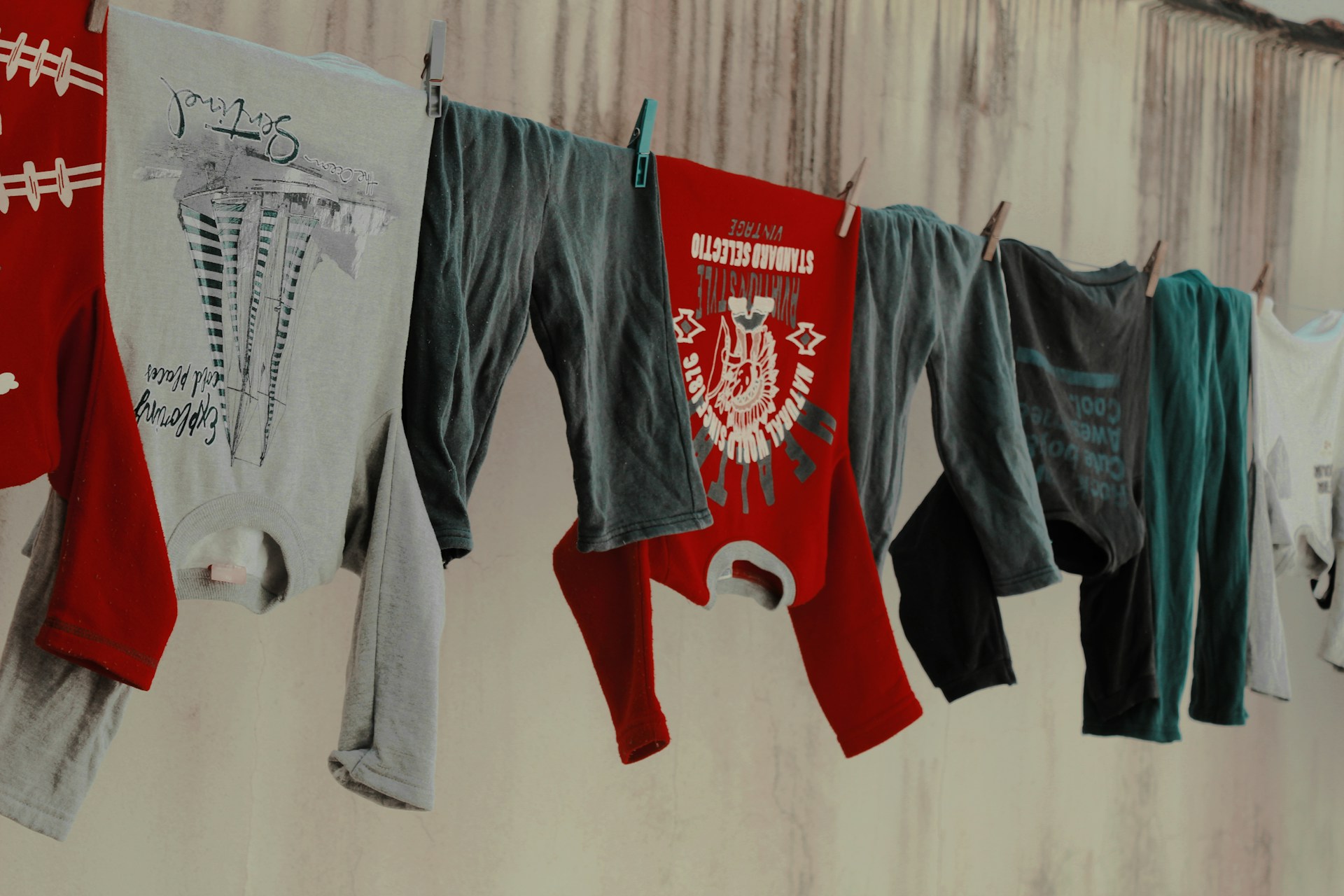
children's clothes hanging to dry
Image Source: Unsplash

U.S. Investigations Are Already Underway for Child Product Safety

This issue has landed on American soil too. The U.S. Consumer Product Safety Commission has started investigating Shein and Temu amid worries about baby and toddler items potentially failing safety requirements. Some goods sold in the U.S. reportedly have alarmingly high levels of lead and phthalates—chemicals to which children are particularly vulnerable. Babies and toddlers frequently mouth their surroundings, escalating the threat of ingesting toxins. And because younger bodies are more sensitive, even smaller amounts over time could prove harmful.

Proposition 65 Violations Offer a Wake-Up Call for Parents

In California, consumer protection legislation is grappling with this fast-fashion problem. Under Proposition 65, businesses must warn buyers if their products have chemicals recognized as cancer-causing or harmful to reproduction. Shein has come under fire for possible violations of these standards. That these clothes still find their way into households spotlights two issues: some items bypass regulatory screenings, and parents often aren’t aware of the risks. It becomes a reminder that parents play a key role in staying informed and making safer shopping decisions.

How You Can Protect Your Child Today

While you can’t control every decision by clothing makers, you can lessen your family’s exposure to dangerous chemicals through several steps.

First, wash new garments—especially those emitting strong plastic or chemical odors—before children wear them. When possible, choose reputable brands that carry out testing or follow certifications like OEKO-TEX. Opt for natural fabrics like organic cotton or bamboo that undergo fewer chemical treatments. And if a deal looks too good to be true, remember that hidden costs can surface in the form of health risks.

A Call for Smarter Choices, Not Shame

Parenting already involves so many choices, including discipline styles and shopping decisions. If you’ve purchased from Shein or Temu previously, this information isn’t about guilt—it’s about awareness. We’re all making the best decisions we can with limited time and budgets.

The key is staying informed, asking questions, and when practical, choosing safer alternatives. Because regarding your children’s well-being, knowledge is one of the best tools you have.

Do you have worries about the safety of your kids’ clothing, or have you found brands you trust? Feel free to share your experiences in the comments. There’s power in collective knowledge, and your insights might help another parent keep their little ones safer.

Read More

  • How To Get Free Clothes For Your Child When Money Is Tight
  • 5 Negative Techniques That Deter Communication with Your Teenager
Samantha Warren
Samantha

Samantha Warren is a holistic marketing strategist with 8+ years of experience partnering with startups, Fortune 500 companies, and everything in between. With an entrepreneurial mindset, she excels at shaping brand narratives through data-driven, creative content. When she’s not working, Samantha loves to travel and draws inspiration from her trips to Thailand, Spain, Costa Rica, and beyond.
Filed Under: Parenting Tagged With: child safety, clothing safety, fast fashion, health risks, kids clothing, parenting tips, Recalls, Shein, Temu, toxic chemicals

Choosing a Crib for Your Baby

November 10, 2010 | Leave a Comment

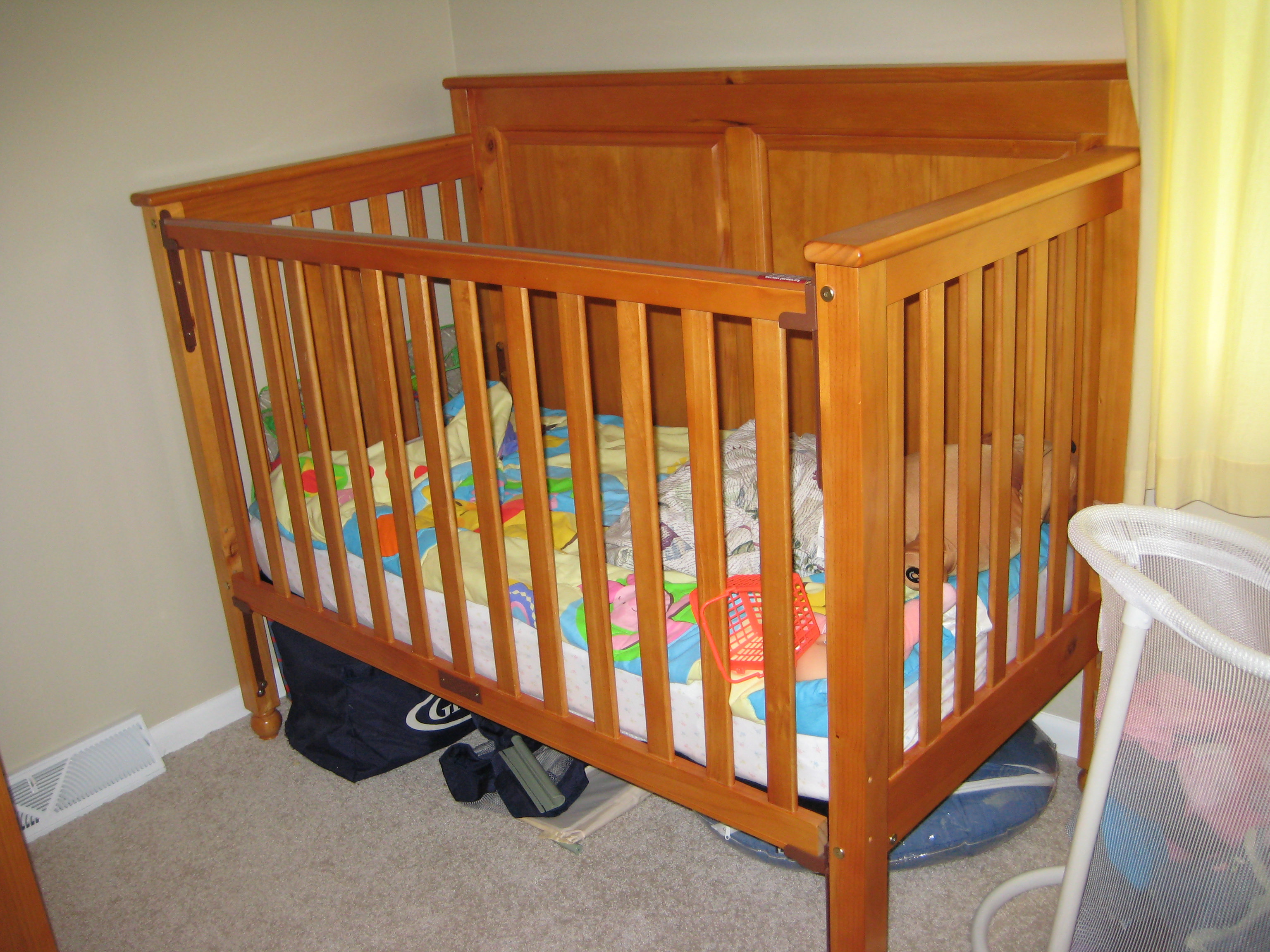
A crib is one of the things you need to buy when expecting a baby
Photo on CAPL

There are many baby items that are perfectly safe to buy second hand. Unfortunately there are a couple of items, such as a car seat and a crib, that are safer for baby if bought brand new. New cribs can be very pricey but you do not need to spend a fortune to keep your baby safe during sleep time. The least expensive crib on the market can be perfectly safe for baby as long as it meets the government safety requirements and is assembled correctly.

If you do purchase secondhand, make sure it is from someone you know and trust. Regardless of where you purchase, it is important, for the safety of your baby, to always keep an eye on current baby product recalls at www.recalls.gov (in the United States) and http://cpsr-rspc.hc-sc.gc.ca/PR-RP/home-accueil-eng.jsp (in Canada). In my experience, most of these recalls are easily fixable and often the company ships you a small repair kit, free of charge to you, complete with instructions. It is only in more drastic cases where you would actually have to discontinue use of the product you have purchased. When buying new, many baby items come with a registration card that you mail to the company and they will mail information concerning recalls directly to your home.

Statistics show that although 4 million babies are born in the United States each year, only 1 million cribs are purchased. In the United States, 26 infants die each year and another 11,500 are hospitalized in crib related accidents. Unfortunately, many of these accidents occurred in older-style cribs that do not meet current government safety regulations. In the United States, the Consumer Product Safety Commission states that only cribs made after 1991 are likely to meet all current safety standards. In Canada, all cribs made after September 1986 are likely to meet all current safety standards. Health Canada states, “Using a crib manufactured before September 1986 poses potential hazards that may result in serious injuries, including death.”

Crib Safety Standards

Crib safety standards in both the United States and Canada include:

  • Crib slats must not be more than 2 3/8 inches apart so as to prevent baby from slipping through them. You should not be able to pass a pop can through the slats. If you can, then the slats are not properly spaced.
  • There should be no broken or missing crib slats or any other missing or broken parts of the crib.
  • Hardware should be properly installed on both the crib and the mattress support, according to instructions. Only use original hardware for both. Hardware should not be loose or damaged.
  • The crib mattress must fit snugly inside the crib with no more 1 3/16” (two fingers) width between the mattress and the sides of the crib. If the mattress is not a tight fit, the baby could become wedged into this space and become trapped.
  • There should be no decorative cutouts in any part of the crib, including the headboard and footboard, where your baby’s head or body become trapped.
  • Corner posts should be no higher than 1/16” (US), 1/8” (Canada) above the end panels of the crib. Your baby’s clothing can hang off of them if they are any higher. This includes decorative knobs and posts.
  • The crib mattress support should always be set so that your baby cannot climb out of the crib. You can use the highest setting for newborns but as soon as your baby is able to push himself to his knees you need to set it to the middle setting (usually around 4 – 6 months) and when she is able to pull herself to standing, the crib setting should be at its lowest setting (usually between 8 – 12 months).

For more detailed safety standards please visit http://www.cpsc.gov/businfo/regsumcrib.pdf (USA) and http://dsp-psd.pwgsc.gc.ca/Collection/H46-2-03-332E.pdf (Canada).

Crib Types

The standard crib is by far the most popular type of crib. It features stationary sides, dual drop sides or single drop sides. For the safety of your baby, however, it is recommended to always keep the sides of the crib to the highest setting. In fact, many crib manufacturers are now doing away with drop down sides. So if you are buying a new crib, it is best to buy one with stationary sides, even though drop down sides are very convenient. If you are buying or using an older crib that has drop down sides, it is best to leave the sides up at their highest setting at all times.

Convertible cribs offer all the features of a standard crib but convert into a toddler bed. Some even then convert into a double bed. This means that you pay one time for a bed that will last your baby well into his or her adulthood!

Other types of cribs available on the market include round cribs, canopy cribs and portable cribs. Round cribs are fairly new to the market. Canopy cribs are available in standard rectangular shapes or as a round crib. Portable cribs are about one-third smaller than a standard crib and fold up easily for travel.

Whatever crib you choose for your baby, just remember to keep safety at the top of your list!

What type of crib did you use for your baby? Where did you get yours?

Brian
Brian

Brian is the founder of Kids Ain’t Cheap and is now sharing his journey through parenthood.

 
Email • Google + • Facebook • Twitter

Filed Under: Baby Stuff, Furniture, Safety Tagged With: Cribs, furniture, Recalls, Safety

  • Facebook
  • Pinterest
  • RSS
  • Twitter

Basic Principles Of Good Parenting

Here some basic principles for good parenting:

  1. What You Do Matters: Your kids are watching you. So, be purposeful about what you want to accomplish.
  2. You Can’t be Too Loving: Don’t replace love with material possessions, lowered expectations or leniency.
  3. Be Involved Your Kids Life: Arrange your priorities to focus on what your kid’s needs. Be there mentally and physically.
  4. Adapt Your Parenting: Children grow quickly, so keep pace with your child’s development.
  5. Establish and Set Rules: The rules you set for children will establish the rules they set for themselves later.  Avoid harsh discipline and be consistent.
  6. Explain Your Decisions: What is obvious to you may not be evident to your child. They don’t have the experience you do.
  7. Be Respectful To Your Child: How you treat your child is how they will treat others.  Be polite, respectful and make an effort to pay attention.
Best Parenting Blogs

Most Popular

Baby names

Teachers Admit: These 6 Baby Names Create Instant Bias in the Classroom

Latrice Perez
These Are 6 Baby Names Inspired by Vintage TV and Movies

6 Baby Names Inspired by Vintage TV and Movies

Brandon Marcus
6 Baby Names That Sound Cute Now but Cause Problems Later

6 Baby Names That Sound Cute Now but Cause Problems Later

Brandon Marcus
11 Ways Kids Are Outsmarting Parental Controls 1. Using Alternate Devices One common trick is simply turning to another device. If a child’s main phone or tablet is restricted, they may borrow a sibling’s, friend’s, or even a school laptop. This instantly gives them access to content outside of parental oversight. Parents often focus on one device, forgetting that others in the household can serve as loopholes. Knowing this tactic helps families tighten controls across all electronics. 2. Clearing Browsing Histories Many kids quickly learn that clearing browsing history hides evidence of restricted activity. With just a few clicks, they can erase any trace of websites visited. This makes it harder for parents to notice when rules are being broken. Parents may assume no history means no browsing, but the reality is often the opposite. Kids are outsmarting parental controls by making it seem like nothing happened at all. 3. Using Private Browsing Modes Most browsers offer “incognito” or private browsing features. Kids use this mode to access websites without leaving a record in the history. To parents checking later, everything looks clean and safe. This simple trick is often one of the first ways kids discover how to bypass restrictions. Conversations about private browsing can help close this gap. 4. Guessing or Resetting Passwords Children who are persistent may try to guess passwords to parental control apps or accounts. Others may find ways to reset them through email prompts or security questions. Once inside, they can disable restrictions entirely. Parents may not even realize controls have been altered until much later. Stronger, less predictable passwords can make this more difficult. 5. Using VPNs to Hide Activity Virtual private networks, or VPNs, let kids disguise their online locations. With one downloaded app, they can bypass geographic or parental restrictions. Some children learn about VPNs through friends or even social media. This makes it easy for them to reach content that should be blocked. Parents often underestimate just how simple it is for kids to use these tools. 6. Creating Fake Accounts When parents monitor social media, kids may create hidden accounts. These “finstas” or fake profiles allow them to interact freely without parental oversight. While their main account appears harmless, the secondary one tells a different story. Kids are outsmarting parental controls by playing both sides at once. Checking for duplicate accounts can help parents stay more aware. 7. Exploiting Time Zone Settings Some kids change the time zone on their devices to bypass screen time limits. This trick allows them to gain extra hours of usage undetected. Parents may assume controls are working, but in reality, the child is bending the clock. It’s a clever loophole that highlights just how resourceful kids can be. Monitoring device settings regularly can catch this tactic. 8. Disabling or Uninstalling Apps Parental control apps can be deleted or disabled with surprising ease. Some kids even reinstall them before a parent checks, making it seem like nothing changed. Others may simply restrict permissions to prevent apps from functioning properly. When apps aren’t monitored closely, parents may not notice they’ve been tampered with. This shows the importance of consistent follow-up. 9. Turning to Friends for Access If a child can’t get past restrictions on their own, they may rely on friends. Visiting a friend’s house or borrowing their phone can give them a free pass. Parents often forget that peer environments can override restrictions set at home. This kind of social workaround is especially common with gaming or social media. Open conversations about trust and responsibility are essential. 10. Hiding Apps in Plain Sight Kids sometimes download apps that look innocent but serve as gateways to hidden activity. These apps may disguise themselves as calculators or utilities. In reality, they allow file storage, private messaging, or browser access. Parents glancing at a home screen may overlook them entirely. Learning to recognize these disguised apps can help parents stay informed. 11. Outpacing Parents’ Tech Knowledge Finally, kids often know more about devices than their parents do. Whether through YouTube tutorials, TikTok hacks, or peer groups, they quickly learn advanced workarounds. This knowledge gap means controls can be bypassed before parents even realize the loophole exists. Staying informed and continually learning about new technology is the best defense. Kids are outsmarting parental controls because they adapt faster than most adults. The Real Solution Lies Beyond Restrictions While controls and filters are important, no system is perfect. Kids will always find creative ways around barriers, making communication the strongest safeguard. Setting clear expectations, building trust, and having ongoing conversations about online behavior matter more than apps alone. Parents who combine technology with open dialogue create a safer digital environment. The goal isn’t to win a battle of wits but to build a relationship that keeps kids both safe and honest. Do you think kids are outsmarting parental controls faster than parents can keep up? Share your experiences in the comments below. What to Read Next... 6 Parenting Tech Shortcuts That Can Expose Your Child to Strangers How Much Screen Time Is Too Much—Legally Speaking? Is Your Child’s School Quietly Tracking Their Location Without Your Consent? How Much Screen Time Is Quietly Reshaping Childhood Behavior? Why Some Parents Are Being Investigated Over Homeschooling Records

11 Ways Kids Are Outsmarting Parental Controls

Catherine Reed
Smiling grandfather holding a happy baby indoors.

Why Grandparents Shouldn’t Babysit Their Grandkids Every Week – The Unspoken Issue

Samantha

All content on Kids Ain’t Cheap is for entertainment purposes only. By reading this blog, you agree that Kids Ain’t Cheap is not responsible for any actions taken after reading this blog. For the full disclaimer, see our privacy policy.

Please note that Kids Ain’t Cheap has financial relationships with some of the merchants mentioned here. Kids Ain’t Cheap is funded by banner advertising, commission sales and search optimization consulting.

Copyright © 2006–2026 | District Media | All Rights Reserved | Privacy Policy

Copyright © 2026 Runway Pro Theme by Viva la Violette