• Home
  • About Us
  • Toolkit
  • Archives
  • Advertise
  • Privacy Policy

Kids Ain't Cheap

But They Sure Are Worth It

  • Parenting
    • Baby Stuff
    • Books and Reading
      • Aesops Fables
      • Comic Books
    • Education
    • Family Time
    • Green Living
    • Growing Up
    • Healthy Living & Eating
    • Holidays
    • Parenting
    • Random Musings
    • Shopping
    • Stuff to Do
  • Money
  • Product Reviews
    • Books and Magazines
    • Discount Sites
    • Furniture
    • House Keeping
    • Reviews News
    • Toys and Games
  • Contact Us
  • Our Editorial Commitment
  • Search

Teaching Honesty: Preventing Lying Habits in Children

April 27, 2025 | Leave a Comment

Image Source: Unsplash

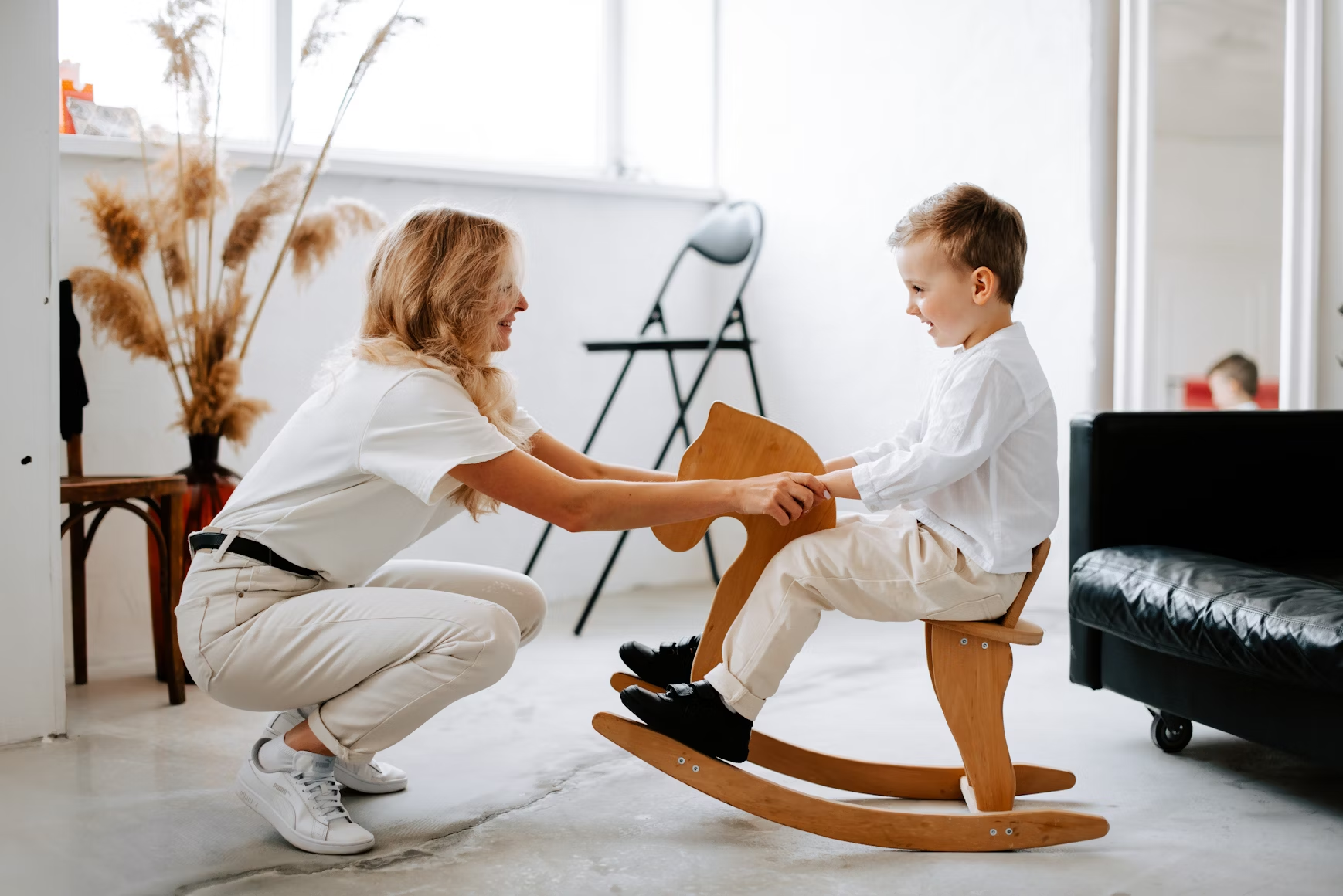
Some days, it can feel like your child has a secret agenda—one where the truth is often optional, and their stories seem to shift in every direction. Maybe they told you they “didn’t eat the cookie” while crumbs are still stuck on their face. Or, perhaps they’ve concocted elaborate tales of imaginary adventures—stories so detailed you almost start believing them.

While it’s normal for children to stretch the truth now and then, it’s essential to intervene before lying becomes a regular habit. With the right approach, you can teach your child the value of honesty, turning small fibs into teachable moments that foster trust and integrity for years to come.

Below are five practical strategies that help prevent lying habits and encourage truthfulness in children.

1. Lead by Example: Model Honesty in Your Actions

Children are keen observers, constantly picking up on the behaviors they see around them. If you want your child to value honesty, it starts with you. Kids learn what they see, so it’s important to demonstrate honesty in your daily interactions.

When you make mistakes, own up to them. If you break something by accident or forget a commitment, say so openly and show that admitting mistakes is part of personal growth.

The more your child sees you being truthful—whether it’s apologizing when you’re wrong or giving accurate information—the more they’ll learn to do the same.

Parent shortcut: Next time you’re running late, tell your child honestly, “I’m sorry, I didn’t manage my time well today, and now we’re running behind.

Let’s try to plan better next time!” This shows your child that honesty isn’t about being perfect, but about taking responsibility for your actions.

2. Set Clear Expectations and Consequences

Children thrive on structure and clear guidelines. If they don’t fully understand why telling the truth is important, they might not see why it matters to tell the truth in the first place.

Establish expectations around honesty early on by explaining why it’s important to be truthful and what the consequences are when lying occurs. Make sure the consequences are related to the lie itself and are consistent every time.

For instance, if your child lies about completing a chore, the consequence could be that they lose a privilege, like screen time. It’s not about punishment but about helping them connect the behavior to the outcome.

Tip for consistency: Write down the family’s expectations regarding honesty (e.g., “We tell the truth no matter what”) and hang them on the fridge. When a situation arises, you can point to the expectations and say, “Remember, we always tell the truth here.”

Image Source: Unsplash

3. Praise Truthfulness, Big and Small

Just like toddlers thrive on positive reinforcement, older kids do too. Praise your child when they tell the truth, even if the truth is uncomfortable or results in a consequence. Let them know you appreciate their honesty and that telling the truth is always the best choice, no matter how difficult it may seem in the moment.

Be specific in your praise: “I’m really proud of you for telling me the truth about what happened with your homework. That wasn’t easy, but it shows me you’re a person I can trust.” Positive reinforcement encourages your child to keep practicing honesty and internalizing it as a value.

Mini-reward system: Create a simple reward system where your child earns points for every time they tell the truth, even when it’s tough. Once they reach a set amount of points, they can earn a small reward, like a favorite activity or an extra bedtime story.

4. Teach the Value of Trust

Children are capable of understanding abstract concepts like trust, especially when it’s connected to their relationships with the people they care about. Help your child understand that honesty is the foundation of trust in all relationships. If they lie, trust is broken, and it can take time to rebuild.

Use real-life examples: “When you told me you finished your homework, I trusted you. But when I found out it wasn’t done, I felt upset because I couldn’t trust your word. Telling the truth next time helps me trust you more.” Also, discuss what happens when people lie to them. Reinforce the idea that trust is a two-way street, and honesty ensures strong, healthy relationships.

Tip for trust-building: Keep open communication about feelings. If your child is hesitant to share something because they fear consequences, reassure them that honesty is valued more than perfection. When they know they can trust you, they’ll feel safer telling the truth.

5. Encourage Open Conversations and Avoid Overreacting

Sometimes, children lie because they fear punishment or disapproval. If you overreact to a lie, your child may learn to hide things instead of sharing the truth. When you catch your child in a lie, respond calmly and allow them to explain themselves. Ask questions like, “Can you help me understand why you said that?” and allow your child to express their feelings.

This helps create an open dialogue where they feel comfortable admitting mistakes without fear of harsh judgment. Use the opportunity to educate them about honesty and its importance.

Read More

  • The School Is Calling Again: 5 Ways to Help Change a Child’s Bad Behavior at School
  • 7 Things Kids Don’t Actually Need That Parents Still Feel Guilty About
Samantha Warren
Samantha

Samantha Warren is a holistic marketing strategist with 8+ years of experience partnering with startups, Fortune 500 companies, and everything in between. With an entrepreneurial mindset, she excels at shaping brand narratives through data-driven, creative content. When she’s not working, Samantha loves to travel and draws inspiration from her trips to Thailand, Spain, Costa Rica, and beyond.
Filed Under: Parenting Tagged With: behavior management, education, parenting values, Values, Values Children

What Should We Teach Our Kids?

May 24, 2011 | Leave a Comment

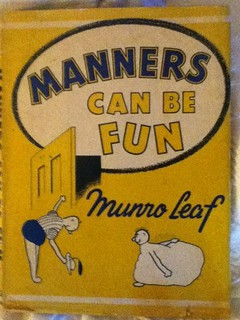
Manners Can Be FUNValues and manners; I do not know what it was like growing up in your homes but in mine, there was a strong emphasis on both these things. And these were strictly repeated and reinforced in school, and in every given occasion. I used to think that some speeches were redundant and that, by the time I was in high school, I knew a lot of them by heart. But now, being a mother myself, I find that there really is no end to how and why you teach your kids values and manners. Someone’s values really come out in times of trouble. I have come to see that what one values will show anyone who that person is. Manners also show how a person thinks and what a person thinks is right and wrong.Both, to me, are important categories for development in children.

I consider myself still quite young. With only 3 decades under my belt and the good first of it being purely developmental, I would have to say that I certainly have not seen it all. But getting married rather young, getting separated, having two kids, and becoming a single mom to them at a very young age (them and I!); I often wonder how to teach them the things I think are important. Sometimes, I even wonder if what I think is important really is so.Let me run down the values and manners I want to teach my kids.

Manners every kid should be taught:

  1. When asking for something, say “Please.”
  2. When receiving something, say “Thank you.” Be appreciative. Gratitude is always better than expectation. When someone helps you, say “thank you.” That person will likely want to help you again. This is especially true with teachers!
  3. Do not interrupt grown-ups who are speaking with each other unless there is an emergency. They will notice you and respond when they are finished talking.
  4. If you do need to get somebody’s attention right away, the phrase “excuse me” is the most polite way for you to enter the conversation. Also, if you bump into somebody, immediately say “Excuse me.” This phrase goes a long way.
  5. When you have any doubt about doing something, ask permission first. It can save you from many hours of grief later.
  6. The world is not interested in what you dislike. Keep negative opinions to yourself, or between you and your friends.
  7. Do not comment on other people’s physical characteristics unless, of course, it’s to compliment them, which is always welcome. Don’t call people mean names. Do not make fun of anyone for any reason. Teasing shows others you are weak, and ganging up on someone else is cruel. No one likes a bully.
  8. When people ask you how you are, tell them and then ask them how they are. But If this is going to be a long sob story, just say you are fine and return the question. Most of the time, your troubles aren’t of interest to a mere acquaintance so reserve this for friends or family.
  9. When you have spent time at your friend’s house, remember to thank his or her parents for having you over and for the good time you had.
  10. Knock on closed doors — and wait to see if there’s a response — before entering.
  11. When you make a phone call, introduce yourself first and then ask if you can speak with the person you are calling.
  12. Forgo foul language. A potty mouth is very unattractive.
  13. Even if a play or an assembly is boring, sit through it quietly and pretend that you are interested. The performers and presenters are doing their best. And one day, this might even be you.
  14. Cover your mouth when you cough or sneeze, and don’t pick your nose in public. Do not spit on the ground! This is unhygienic and just plain nasty.
  15. As you walk through a door, look to see if you can hold it open for someone else.
  16. If you come across a parent, a teacher, or a neighbor working on something, ask if you can help. If they say “yes,” do so — you may learn something new.
  17. When an adult asks you for a favor, do it without grumbling and with a smile.
  18. Use eating utensils properly. If you are unsure how to do so, ask your parents to teach you or watch what adults do. Keep a napkin on your lap; use it to wipe your mouth when necessary.
  19. Don’t reach for things at the table; ask to have them passed.
  20. Do not shake your legs or put your elbows on the table. They show weak character, nerves, or disinterest.

Important Values to Have:

  1. Kindness- I find that it is always better to be kind than on the defensive.Being on the defensive is just so tiring and, often times kindness gets you better results.
  2. Gratitude- As I mentioned earlier, it is better to know how to be grateful than to be filled with expectation. No one person, whether stranger or family, can be exactly how you want them to be and today, not everyone even acts nicely so being grateful always results in positivity.
  3. Hope- Because when this is gone, there is no meaning to life.
  4. Respect- We live in a world colored by differences and respect for everyone and everything is paramount.
  5. Hard work- “Everyone has to start from some place and most often than not, it is at the bottom” This is a phrase my aunt and uncle have been teaching my cousins all their lives and it is so true.Not only does hard work pay off but it makes what is worked for all the more special.
  6. Faith- whatever you choose to believe in, make sure that you know it well and you believe in it wholeheartedly.
  7. Love- It is what a person breathes to survive. It is important to know how to give this and receive this.
  8. Independence- Because it is very important to know how to do things on your own, even if you have one or a multitude of people ready to do anything for you.
  9. Truth- Really, at the end of the day, there is nothing to be done with a stack of untruths, so why bother shelling them out or receiving them?
  10. Responsibility- unless you want to live on an island, you must become accountable for something or someone at some point in your life.

Both lists for manners and values were listed in no particular order so this means I consider all to be equally important.These were also listed after reflection and a lot of time with my kids. These are living lists meaning they are constantly changing as I go through life and learn myself.

What are some of the values and manners that are important to you?

Brian
Brian

Brian is the founder of Kids Ain’t Cheap and is now sharing his journey through parenthood.

 
Email • Google + • Facebook • Twitter

Filed Under: Parenting Tagged With: Manners, Values

  • Facebook
  • Pinterest
  • RSS
  • Twitter

Basic Principles Of Good Parenting

Here some basic principles for good parenting:

  1. What You Do Matters: Your kids are watching you. So, be purposeful about what you want to accomplish.
  2. You Can’t be Too Loving: Don’t replace love with material possessions, lowered expectations or leniency.
  3. Be Involved Your Kids Life: Arrange your priorities to focus on what your kid’s needs. Be there mentally and physically.
  4. Adapt Your Parenting: Children grow quickly, so keep pace with your child’s development.
  5. Establish and Set Rules: The rules you set for children will establish the rules they set for themselves later.  Avoid harsh discipline and be consistent.
  6. Explain Your Decisions: What is obvious to you may not be evident to your child. They don’t have the experience you do.
  7. Be Respectful To Your Child: How you treat your child is how they will treat others.  Be polite, respectful and make an effort to pay attention.
Best Parenting Blogs

Most Popular

Baby names

Teachers Admit: These 6 Baby Names Create Instant Bias in the Classroom

Latrice Perez
6 Baby Names That Sound Cute Now but Cause Problems Later

6 Baby Names That Sound Cute Now but Cause Problems Later

Brandon Marcus
11 Ways Kids Are Outsmarting Parental Controls 1. Using Alternate Devices One common trick is simply turning to another device. If a child’s main phone or tablet is restricted, they may borrow a sibling’s, friend’s, or even a school laptop. This instantly gives them access to content outside of parental oversight. Parents often focus on one device, forgetting that others in the household can serve as loopholes. Knowing this tactic helps families tighten controls across all electronics. 2. Clearing Browsing Histories Many kids quickly learn that clearing browsing history hides evidence of restricted activity. With just a few clicks, they can erase any trace of websites visited. This makes it harder for parents to notice when rules are being broken. Parents may assume no history means no browsing, but the reality is often the opposite. Kids are outsmarting parental controls by making it seem like nothing happened at all. 3. Using Private Browsing Modes Most browsers offer “incognito” or private browsing features. Kids use this mode to access websites without leaving a record in the history. To parents checking later, everything looks clean and safe. This simple trick is often one of the first ways kids discover how to bypass restrictions. Conversations about private browsing can help close this gap. 4. Guessing or Resetting Passwords Children who are persistent may try to guess passwords to parental control apps or accounts. Others may find ways to reset them through email prompts or security questions. Once inside, they can disable restrictions entirely. Parents may not even realize controls have been altered until much later. Stronger, less predictable passwords can make this more difficult. 5. Using VPNs to Hide Activity Virtual private networks, or VPNs, let kids disguise their online locations. With one downloaded app, they can bypass geographic or parental restrictions. Some children learn about VPNs through friends or even social media. This makes it easy for them to reach content that should be blocked. Parents often underestimate just how simple it is for kids to use these tools. 6. Creating Fake Accounts When parents monitor social media, kids may create hidden accounts. These “finstas” or fake profiles allow them to interact freely without parental oversight. While their main account appears harmless, the secondary one tells a different story. Kids are outsmarting parental controls by playing both sides at once. Checking for duplicate accounts can help parents stay more aware. 7. Exploiting Time Zone Settings Some kids change the time zone on their devices to bypass screen time limits. This trick allows them to gain extra hours of usage undetected. Parents may assume controls are working, but in reality, the child is bending the clock. It’s a clever loophole that highlights just how resourceful kids can be. Monitoring device settings regularly can catch this tactic. 8. Disabling or Uninstalling Apps Parental control apps can be deleted or disabled with surprising ease. Some kids even reinstall them before a parent checks, making it seem like nothing changed. Others may simply restrict permissions to prevent apps from functioning properly. When apps aren’t monitored closely, parents may not notice they’ve been tampered with. This shows the importance of consistent follow-up. 9. Turning to Friends for Access If a child can’t get past restrictions on their own, they may rely on friends. Visiting a friend’s house or borrowing their phone can give them a free pass. Parents often forget that peer environments can override restrictions set at home. This kind of social workaround is especially common with gaming or social media. Open conversations about trust and responsibility are essential. 10. Hiding Apps in Plain Sight Kids sometimes download apps that look innocent but serve as gateways to hidden activity. These apps may disguise themselves as calculators or utilities. In reality, they allow file storage, private messaging, or browser access. Parents glancing at a home screen may overlook them entirely. Learning to recognize these disguised apps can help parents stay informed. 11. Outpacing Parents’ Tech Knowledge Finally, kids often know more about devices than their parents do. Whether through YouTube tutorials, TikTok hacks, or peer groups, they quickly learn advanced workarounds. This knowledge gap means controls can be bypassed before parents even realize the loophole exists. Staying informed and continually learning about new technology is the best defense. Kids are outsmarting parental controls because they adapt faster than most adults. The Real Solution Lies Beyond Restrictions While controls and filters are important, no system is perfect. Kids will always find creative ways around barriers, making communication the strongest safeguard. Setting clear expectations, building trust, and having ongoing conversations about online behavior matter more than apps alone. Parents who combine technology with open dialogue create a safer digital environment. The goal isn’t to win a battle of wits but to build a relationship that keeps kids both safe and honest. Do you think kids are outsmarting parental controls faster than parents can keep up? Share your experiences in the comments below. What to Read Next... 6 Parenting Tech Shortcuts That Can Expose Your Child to Strangers How Much Screen Time Is Too Much—Legally Speaking? Is Your Child’s School Quietly Tracking Their Location Without Your Consent? How Much Screen Time Is Quietly Reshaping Childhood Behavior? Why Some Parents Are Being Investigated Over Homeschooling Records

11 Ways Kids Are Outsmarting Parental Controls

Catherine Reed

10 Children’s Games From the ’60s That Need to Make a Comeback

Samantha
Smiling grandfather holding a happy baby indoors.

Why Grandparents Shouldn’t Babysit Their Grandkids Every Week – The Unspoken Issue

Samantha

All content on Kids Ain’t Cheap is for entertainment purposes only. By reading this blog, you agree that Kids Ain’t Cheap is not responsible for any actions taken after reading this blog. For the full disclaimer, see our privacy policy.

Please note that Kids Ain’t Cheap has financial relationships with some of the merchants mentioned here. Kids Ain’t Cheap is funded by banner advertising, commission sales and search optimization consulting.

Copyright © 2006–2026 | District Media | All Rights Reserved | Privacy Policy

Copyright © 2026 Runway Pro Theme by Viva la Violette