• Home
  • About Us
  • Toolkit
  • Archives
  • Advertise
  • Privacy Policy

Kids Ain't Cheap

But They Sure Are Worth It

  • Parenting
    • Baby Stuff
    • Books and Reading
      • Aesops Fables
      • Comic Books
    • Education
    • Family Time
    • Green Living
    • Growing Up
    • Healthy Living & Eating
    • Holidays
    • Parenting
    • Random Musings
    • Shopping
    • Stuff to Do
  • Money
  • Product Reviews
    • Books and Magazines
    • Discount Sites
    • Furniture
    • House Keeping
    • Reviews News
    • Toys and Games
  • Contact Us
  • Our Editorial Commitment
  • Search

Do Modern Parenting Hacks Leave Out Crucial Emotional Support?

December 22, 2025 | Leave a Comment

Do Modern Parenting Hacks Leave Out Crucial Emotional Support?
Image source: shutterstock.com

If you’ve ever searched “how to stop tantrums fast” at 2 a.m., you already understand the appeal of quick fixes. Modern parenting hacks promise calmer mornings, smoother bedtimes, and fewer power struggles, and some of them genuinely help. The problem is that speed can quietly become the main goal, even when a child actually needs connection more than correction. When that happens, the household may look more “controlled,” but kids can feel unseen, and parents can feel strangely disconnected even when routines run like clockwork. This article breaks down where hacks can miss the emotional layer and how to keep the convenience while still showing up for what kids are really trying to say.

1. When The Goal Becomes Compliance Instead of Understanding

Many popular tips focus on getting a child to do the thing, not on why the child is resisting. A sticker chart might produce clean teeth, but it won’t explain anxiety about the bathroom mirror after a rough day. When parenting hacks only measure success by obedience, parents can miss the message underneath the behavior. A simple shift helps: after the “do it” moment, ask one curious question like “What made that hard today?” Kids don’t always answer right away, but the question tells them their feelings matter, too.

2. When Scripts Replace Real Listening

Scripts can be useful, especially when a parent feels burned out or stuck, but they can also become a shortcut around empathy. A child who hears the same perfectly worded phrase every time may start to feel managed instead of understood. Parenting hacks often teach what to say, yet emotional support depends on how well a parent matches the child’s actual moment. Try using a script as a starting point, then add a real observation, such as “Your shoulders are tight and your voice is shaky.” That tiny detail shows presence, not performance.

3. When Calming Tools Become “Stop Feeling That”

Breathing exercises, sensory bottles, and calm-down corners can be great, but they can also send the wrong message if used like a mute button. If the tool appears only when a child is loud, the child may learn that big feelings are unacceptable. Parenting hacks sometimes skip the part where a parent stays close and helps a child name what’s happening. Pair the tool with connection by saying, “I’m right here while your body settles.” The goal isn’t to erase emotion; it’s to help a child move through it safely.

4. When Efficiency Pushes Out Repair After Conflict

Shortcuts shine in busy households, but emotional safety grows in the moments after things go sideways. A parent can “win” the morning battle and still lose the chance to repair a harsh tone or a rushed response. Parenting hacks rarely emphasize the power of a two-minute reconnect, because it doesn’t look impressive on a reel. Repair can be simple: “I didn’t like how I handled that, and I’m sorry.” Kids who see repair learn that relationships can hold mistakes without breaking.

5. When Routines Become Rigid Instead of Supportive

Routines reduce decision fatigue, and they help many kids feel secure, but rigid routines can ignore real needs. If a child is melting down because they are overwhelmed, pushing the schedule harder may increase stress instead of building resilience. Parenting hacks can turn structure into a rulebook that leaves no room for grief, sensory overload, or social conflict. Keep routines as a helpful baseline, then adjust when the day clearly calls for flexibility. A flexible routine teaches kids that systems exist to serve people, not the other way around.

6. When Rewards Replace Relationship

Reward systems can motivate, but they can also teach kids to perform for approval rather than internal growth. If every hard moment ends with a prize, kids may struggle to build self-trust and emotional coping skills. Parenting hacks often highlight rewards because they work quickly, but emotional support usually works slowly and lasts longer. Try swapping some rewards for relational “payoffs,” like choosing a shared activity or getting special one-on-one time. Kids still feel recognized, but the recognition lands as connection instead of a transaction.

7. When Parents Use Hacks to Avoid Their Own Feelings

This part is uncomfortable, but it matters, because kids can sense avoidance even when adults sound calm. Sometimes parents lean on parenting hacks because they are overwhelmed, triggered, or scared they’ll mess it up. A hack can become a shield: “If I follow the steps, I won’t have to feel how hard this is.” Emotional support starts when a parent can tolerate emotion in the room, including their own, without rushing to shut it down. If a parent needs help building that tolerance, therapy, parenting groups, or even a trusted friend can make the emotional load feel less lonely.

How To Keep The Convenience and Add the Missing Emotional Layer

Parents don’t need to throw out every trick that makes life smoother, because families need practical systems to survive. The better move is to treat parenting hacks like tools, not a philosophy, and to pair them with small moments of connection. Aim for a “two-step” response: first stabilize the situation, then circle back for understanding and repair. That second step might be five sentences in the car, a quick cuddle at bedtime, or a quiet check-in while making snacks. When parents do that consistently, kids learn that support doesn’t disappear just because a solution exists.

The Real Hack Is Connection That Doesn’t Rush

The most effective strategies don’t just change behavior; they protect the relationship while behavior changes. Parents can keep structure, use scripts, and lean on routines, but still prioritize a child’s emotional experience as real and worthy of attention. If something works fast but leaves a child feeling alone, it’s not a win, it’s a trade-off. When parenting hacks include empathy, repair, and curiosity, they stop feeling like tricks and start feeling like care. That’s when kids feel guided instead of managed, and parents feel like they’re building a relationship, not just running a household.

Which “hack” has helped your family most, and how do you make sure it doesn’t replace the emotional support your child needs?

What to Read Next…

9 Ways to Emotionally Support Your Child After a Meltdown

How to Turn Kids’ Post-Holiday Blues Into an Opportunity for Connection

9 Parenting Trends That Are Quietly Harming Emotional Growth

8 Emotional Red Flags in Kids That Show Up During the Holidays

Mental Health Crisis: 4 Critical Questions About Your Child’s Mental Health

Catherine Reed
Catherine Reed

Catherine is a tech-savvy writer who has focused on the personal finance space for more than eight years. She has a Bachelor’s in Information Technology and enjoys showcasing how tech can simplify everyday personal finance tasks like budgeting, spending tracking, and planning for the future. Additionally, she’s explored the ins and outs of the world of side hustles and loves to share what she’s learned along the way. When she’s not working, you can find her relaxing at home in the Pacific Northwest with her two cats or enjoying a cup of coffee at her neighborhood cafe.

Filed Under: Parenting Tagged With: behavior management, child development, communication skills, emotional support, family routines, gentle parenting, kids’ emotions, Mental Health, parent burnout, parenting tips

Modern Parenting Trap: Why Reward Charts Are Losing Their Effectiveness

August 29, 2025 | Leave a Comment

Modern Parenting Trap: Why Reward Charts Are Losing Their Effectiveness
Image source: 123rf.com

For years, many parents have leaned on reward charts to encourage good behavior and motivate children to meet responsibilities. Stickers, stars, or check marks on a colorful chart once seemed like a simple way to inspire kids to stay on track. Yet more families are discovering that this system doesn’t always work in the long run, leaving both parents and children frustrated. Reward charts may provide short-term gains, but they often fail to build the deeper habits, resilience, and internal motivation children truly need. Understanding why reward charts are losing their effectiveness can help parents find more meaningful strategies that support healthy development.

1. External Motivation Only Goes So Far

At their core, reward charts rely heavily on external motivation. Children complete tasks not because they value the action itself, but because they want a sticker or prize. While this approach might work at first, the excitement fades over time. Kids may begin to lose interest or even push back when rewards are withheld. This shows why reward charts are losing their effectiveness in shaping lasting behavior.

2. Overemphasis on Perfection

Reward charts can create pressure for children to perform flawlessly every day. A missed chore or a forgotten task often feels like failure when there’s an empty box on the chart. Instead of fostering resilience, these systems may increase frustration and lower self-esteem. Children might even hide mistakes to avoid losing rewards. The result is a tool that unintentionally teaches perfectionism rather than growth, another reason why reward charts are losing their effectiveness.

3. Rewards Can Undermine Intrinsic Motivation

Psychologists often warn that when rewards are used too frequently, they can actually diminish a child’s natural interest in activities. For example, a child who once enjoyed helping in the kitchen might lose enthusiasm if it becomes tied to earning a sticker. Instead of feeling proud of their contribution, they start associating the task only with the reward. This shift undermines intrinsic motivation, which is vital for long-term development. It is one of the clearest examples of why reward charts are losing their effectiveness.

4. Sibling Rivalries and Competition

In homes with multiple children, reward charts can fuel rivalry. One child may consistently outperform the others, creating resentment and discouragement. Instead of fostering teamwork, the system can turn into a competition that pits siblings against each other. Parents may notice children comparing stickers rather than focusing on their own progress. Such outcomes reveal how reward charts can cause more tension than harmony within families.

5. Short-Term Compliance Without Lasting Habits

Many parents appreciate how quickly reward charts can get results in the short run. A child might eagerly complete chores or practice reading to earn a reward that day. However, once the system is removed, the behaviors often fade as well. The chart doesn’t always teach children the underlying value of responsibility, kindness, or persistence. This short-term compliance is another major reason reward charts are losing their effectiveness.

6. Increased Negotiation and Pushback

Over time, children often become savvy negotiators when it comes to rewards. They may begin asking, “What do I get for this?” before agreeing to help or behave. This mindset shifts the focus away from cooperation and toward bargaining. Parents may find themselves caught in a cycle of increasing rewards just to maintain participation. This constant pushback demonstrates the limitations of relying too heavily on reward charts.

7. Emotional Impact on Parents

Reward charts can also take an emotional toll on parents who feel guilty or defeated when the system fails. Many mothers and fathers blame themselves when their child loses interest or refuses to participate. This frustration can build tension in the household and reduce the sense of connection between parent and child. Instead of being a helpful tool, the chart becomes a symbol of conflict. These emotional challenges underscore why reward charts are losing their effectiveness in modern households.

Finding Balance Beyond the Chart

While reward charts aren’t entirely without value, they work best as a temporary tool rather than a long-term solution. Children benefit more when parents combine structure with encouragement, natural consequences, and open conversations about responsibility. The key is to help kids understand why their actions matter, not just what they stand to gain. By shifting focus from rewards to values, families can foster independence, resilience, and cooperation. True growth happens when children learn that their choices have meaning beyond stickers or stars.

Have you tried using reward charts in your home? Share your experiences and insights in the comments below.

What to Read Next…

10 Ways Parents Are Accidentally Teaching Entitlement

5 Unintended Consequences Of Keeping A Child Sheltered

9 “Teachable Moments” That Often Turn Into Parent Regrets

Is Parenting Today Way Too Soft? Here’s Why It Might Be Hurting Your Kids

9 Childhood Milestones That Are Happening Later Than Ever

Catherine Reed
Catherine Reed

Catherine is a tech-savvy writer who has focused on the personal finance space for more than eight years. She has a Bachelor’s in Information Technology and enjoys showcasing how tech can simplify everyday personal finance tasks like budgeting, spending tracking, and planning for the future. Additionally, she’s explored the ins and outs of the world of side hustles and loves to share what she’s learned along the way. When she’s not working, you can find her relaxing at home in the Pacific Northwest with her two cats or enjoying a cup of coffee at her neighborhood cafe.

Filed Under: Parenting Tagged With: behavior management, child development, family strategies, parenting tips, Positive Parenting, reward charts

Teaching Honesty: Preventing Lying Habits in Children

April 27, 2025 | Leave a Comment

Image Source: Unsplash

Some days, it can feel like your child has a secret agenda—one where the truth is often optional, and their stories seem to shift in every direction. Maybe they told you they “didn’t eat the cookie” while crumbs are still stuck on their face. Or, perhaps they’ve concocted elaborate tales of imaginary adventures—stories so detailed you almost start believing them.

While it’s normal for children to stretch the truth now and then, it’s essential to intervene before lying becomes a regular habit. With the right approach, you can teach your child the value of honesty, turning small fibs into teachable moments that foster trust and integrity for years to come.

Below are five practical strategies that help prevent lying habits and encourage truthfulness in children.

1. Lead by Example: Model Honesty in Your Actions

Children are keen observers, constantly picking up on the behaviors they see around them. If you want your child to value honesty, it starts with you. Kids learn what they see, so it’s important to demonstrate honesty in your daily interactions.

When you make mistakes, own up to them. If you break something by accident or forget a commitment, say so openly and show that admitting mistakes is part of personal growth.

The more your child sees you being truthful—whether it’s apologizing when you’re wrong or giving accurate information—the more they’ll learn to do the same.

Parent shortcut: Next time you’re running late, tell your child honestly, “I’m sorry, I didn’t manage my time well today, and now we’re running behind.

Let’s try to plan better next time!” This shows your child that honesty isn’t about being perfect, but about taking responsibility for your actions.

2. Set Clear Expectations and Consequences

Children thrive on structure and clear guidelines. If they don’t fully understand why telling the truth is important, they might not see why it matters to tell the truth in the first place.

Establish expectations around honesty early on by explaining why it’s important to be truthful and what the consequences are when lying occurs. Make sure the consequences are related to the lie itself and are consistent every time.

For instance, if your child lies about completing a chore, the consequence could be that they lose a privilege, like screen time. It’s not about punishment but about helping them connect the behavior to the outcome.

Tip for consistency: Write down the family’s expectations regarding honesty (e.g., “We tell the truth no matter what”) and hang them on the fridge. When a situation arises, you can point to the expectations and say, “Remember, we always tell the truth here.”

Image Source: Unsplash

3. Praise Truthfulness, Big and Small

Just like toddlers thrive on positive reinforcement, older kids do too. Praise your child when they tell the truth, even if the truth is uncomfortable or results in a consequence. Let them know you appreciate their honesty and that telling the truth is always the best choice, no matter how difficult it may seem in the moment.

Be specific in your praise: “I’m really proud of you for telling me the truth about what happened with your homework. That wasn’t easy, but it shows me you’re a person I can trust.” Positive reinforcement encourages your child to keep practicing honesty and internalizing it as a value.

Mini-reward system: Create a simple reward system where your child earns points for every time they tell the truth, even when it’s tough. Once they reach a set amount of points, they can earn a small reward, like a favorite activity or an extra bedtime story.

4. Teach the Value of Trust

Children are capable of understanding abstract concepts like trust, especially when it’s connected to their relationships with the people they care about. Help your child understand that honesty is the foundation of trust in all relationships. If they lie, trust is broken, and it can take time to rebuild.

Use real-life examples: “When you told me you finished your homework, I trusted you. But when I found out it wasn’t done, I felt upset because I couldn’t trust your word. Telling the truth next time helps me trust you more.” Also, discuss what happens when people lie to them. Reinforce the idea that trust is a two-way street, and honesty ensures strong, healthy relationships.

Tip for trust-building: Keep open communication about feelings. If your child is hesitant to share something because they fear consequences, reassure them that honesty is valued more than perfection. When they know they can trust you, they’ll feel safer telling the truth.

5. Encourage Open Conversations and Avoid Overreacting

Sometimes, children lie because they fear punishment or disapproval. If you overreact to a lie, your child may learn to hide things instead of sharing the truth. When you catch your child in a lie, respond calmly and allow them to explain themselves. Ask questions like, “Can you help me understand why you said that?” and allow your child to express their feelings.

This helps create an open dialogue where they feel comfortable admitting mistakes without fear of harsh judgment. Use the opportunity to educate them about honesty and its importance.

Read More

  • The School Is Calling Again: 5 Ways to Help Change a Child’s Bad Behavior at School
  • 7 Things Kids Don’t Actually Need That Parents Still Feel Guilty About
Samantha Warren
Samantha

Samantha Warren is a holistic marketing strategist with 8+ years of experience partnering with startups, Fortune 500 companies, and everything in between. With an entrepreneurial mindset, she excels at shaping brand narratives through data-driven, creative content. When she’s not working, Samantha loves to travel and draws inspiration from her trips to Thailand, Spain, Costa Rica, and beyond.

Filed Under: Parenting Tagged With: behavior management, education, parenting values, Values, Values Children

From Chaos to Calm: Strategies for Difficult Toddler Behavior

April 27, 2025 | Leave a Comment

Toddler yelling while wearing a jacket and hat outdoors.
Image Source: Unsplash

Some days with a toddler feel like living with a tiny whirlwind—one who hurls snack cups, insists pants are optional, and sobs because a banana broke “wrong.” If you’ve ever hidden in the pantry to regroup, you’re not alone. Difficult toddler behavior can upend even the most patient parent, but it doesn’t have to rule your household. With a handful of proven tools, a lot of empathy, and steady consistency, you can guide your child from meltdown to mastery and regain a sense of calm along the way.

Below are five expert-backed strategies that turn daily chaos into teachable moments. Each one is simple enough to start today and powerful enough to transform tomorrow.

1. Set Clear, Positive Expectations

Toddlers spend their days testing cause and effect: What happens if I throw this cup? How loud can I scream before Dad reacts? Vague commands like “Be good” or “Stop it” leave them guessing. Swap those for specific, observable directions:

  • “Food stays on the table.”
  • “Feet stay on the floor.”
  • “We use indoor voices.”

Phrase expectations in the positive—tell your child what to do, not just what not to do. Research shows positive wording reduces stress and helps young children process instructions faster. Post simple picture cues at toddler eye-level (a pair of feet on the floor, a spoon staying in a bowl) to reinforce the message without constant nagging.

Parent shortcut: Before entering a store or restaurant, kneel to eye level and preview 1–2 rules. Toddlers remember better when the information is fresh, short, and interactive (“Can you show me what ‘walking feet’ look like?”).

2. Anchor the Day With Predictable Routines

Imagine an adult schedule that changed hourly with no warning—you’d melt down too. Toddlers crave predictability because it makes their big world feel safe. Establish consistent meal, nap, and bedtime windows; add micro-routines for tricky transitions:

  1. Play → Cleanup song → Snack
  2. Brush teeth → Pick two books → Lights out

Use a visual schedule with photos or drawings: breakfast plate, toy box, bath, pajamas. Point to the next step so your child sees what’s coming instead of feeling blindsided. Stable routines reduce tantrums because children spend less energy fighting the unknown.

Tip for shifts: Life happens—doctor visits, travel, relatives. When routine must change, give a toddler-sized heads-up: “After lunch, Grandma will pick you up. Then we’ll have playground time later.” Even a brief preview lowers anxiety.

3. Lead With Positive Reinforcement

Think of attention as fertilizer: whatever you water grows. If 90 percent of your words focus on whining, throwing, or yelling, guess what behavior blossoms? Flip the script: notice the good—loudly and often.

  • “You shared your blocks. That was kind!”
  • “Thank you for using gentle hands with the cat.”
  • “Wow, you put your shoes on the first time I asked!”

Keep praise immediate and specific; pair it with a smile, high-five, or brief hug. Experts recommend a 4-to-1 ratio of positive to corrective comments for toddlers.

For minor misbehaviors (whining, foot stomping), try planned ignoring. When the unwanted action no longer earns a reaction, it often fades.

Mini-reward system: Place five clothespins on a “Fantastic Day” jar each morning. Each time you catch positive behavior, drop a pin into the jar so your toddler hears the clink. When all pins move, celebrate with a dance party or extra story—no candy needed.

Father and daughter sitting indoors doing a calming hand game.
Image Source: Unsplash

4. Teach Emotional Skills Through Empathy

A toddler’s brain is under construction; the part that controls impulse and language lags behind raw emotion. Meltdowns are often cries for help, not defiance. Start with empathy:

  1. Name the feeling —“You’re mad your tower fell.”
  2. Validate —“It’s okay to feel mad.”
  3. Guide —“Let’s take two big balloon breaths and rebuild.”

Using feeling words builds your child’s vocabulary for self-expression.

Pair that with simple calming tools (blowing bubbles, squeezing a pillow, stomping like dinosaurs) and practice them outside crisis moments so the skills are ready when the storm hits. Children whose parents respond with empathy develop better emotional regulation and fewer behavior problems later (source).

Remember: you’re not indulging bad behavior—you’re teaching a life skill.

5. Sync Up With All Caregivers

Mixed messages confuse toddlers and undercut progress. Share your key phrases, routines, and reward systems with partners, grandparents, babysitters, and daycare teachers:

  • Expectation: “Shoes stay on.”
  • Cue: “Remember, walking feet.”
  • Praise method: high-five + “Great listening!”

Regular 5-minute check-ins (text or voice memo) keep everyone aligned and allow quick tweaks: “Skipping morning nap made bedtime rough. Let’s keep the nap tomorrow.” If your child attends daycare, ask what strategies work there and mirror them at home. Consistency across environments accelerates learning and sparks confidence: rules are clear, adults are united, and the world feels less chaotic.

Keeping Yourself Calm While Teaching Calm

All the strategies above rely on one priceless ingredient—your composure. A dysregulated adult can’t coach regulation in a child. Build tiny self-care pauses into the day: sip water before intervening, breathe while counting to five, tag-team with a partner for a 10-minute reset. Modeling self-control shows your toddler that big feelings are manageable, not dangerous.

From Tantrums to Teach-able Moments

Difficult toddler behavior is normal, temporary, and (believe it or not) an opportunity. When you set clear expectations, ground the day in routine, highlight the positive, teach feelings, and team up with other caregivers, you’re not just surviving; you’re laying foundations for empathy, resilience, and self-discipline. That tiny whirlwind will calm in time, and thanks to your guidance, they’ll emerge ready to navigate the bigger storms life sends their way.

What tactic calmed your latest toddler tornado? Share your wins (and epic fails—we all have them) in the comments. Every story helps another parent feel less alone.

Read More

  • 4 Cheap Recreational Activities for the Whole Family
  • Tired of Chaos? Blunt Advice for Restoring Order at Home

Samantha Warren
Samantha

Samantha Warren is a holistic marketing strategist with 8+ years of experience partnering with startups, Fortune 500 companies, and everything in between. With an entrepreneurial mindset, she excels at shaping brand narratives through data-driven, creative content. When she’s not working, Samantha loves to travel and draws inspiration from her trips to Thailand, Spain, Costa Rica, and beyond.

Filed Under: Parenting Tagged With: behavior management, communication, empathy, parenting tips, Positive Reinforcement, routines, Tantrums, toddler behavior, toddler challenges

The School Is Calling Again: 5 Ways to Help Change a Child’s Bad Behavior at School

April 23, 2025 | Leave a Comment

Child getting face paint, symbolizing efforts to address misbehavior in school.
Image Source: Unsplash

That mid‑morning buzz from the school office can fill any parent with dread. Another report of disruptive behavior? It’s frustrating and often isolating—but you’re not alone. Many families navigate the same terrain, and there are concrete, research‑informed steps that can encourage lasting change.

1. Establish Clear Expectations and Open Communication

When children know exactly what’s expected, they’re better positioned to succeed. Regular, friendly check‑ins with teachers—via brief emails or five‑minute conferences—build trust and keep everyone on the same page.

Here are some more tips:

  • Spell out the “how” as well as the “what.” Instead of “Behave in class,” try “Raise your hand before speaking” or “Keep hands to yourself during circle time.”
  • Create a quick‑reference card. Write three key rules on an index card and tape it inside the homework folder. Kids (and teachers) can point to it when reminders are needed.
  • Use two‑way check‑ins. Send or request a brief email every Friday summarizing wins and challenges. Respond with appreciation, not just concerns, so teachers feel valued partners.
  • Loop in your child. Review classroom rules together and ask, “Which one feels hardest? Which one do you feel confident about?” Their answers guide where to focus coaching at home.

Open, friendly communication keeps everyone aligned and reduces the chance of surprises—good or bad—mid‑semester.

2. Create a Structured Environment with Predictable Routines

Structure gives kids a sense of safety and control, which lowers anxiety and impulsive behavior.

  • Morning anchor: Same wake‑up window each day, followed by a visual checklist (teeth, uniform, breakfast, backpack).
  • Homework zone: A consistent, distraction‑free spot stocked with sharpened pencils, paper, and a timer. Starting homework within 30 minutes of arriving home helps maintain the school mindset.
  • Evening wind‑down: Dim lights an hour before bed, swap screens for quiet play or reading, and use a short “tomorrow preview” so kids know what’s coming.

Classrooms thrive on predictable procedures; mirroring that rhythm at home strengthens children’s ability to transition calmly from environment to environment.

3. Encourage Positive Behavior Through Reinforcement

Children thrive on attention; when it’s mostly negative, they often double down on unwanted actions. Instead, spotlight the good: “I noticed you finished your worksheet before recess. Nice focus!”

The Child Mind Institute confirms that specific, sincere praise paired with small privileges builds self‑esteem and sustains better choices. 

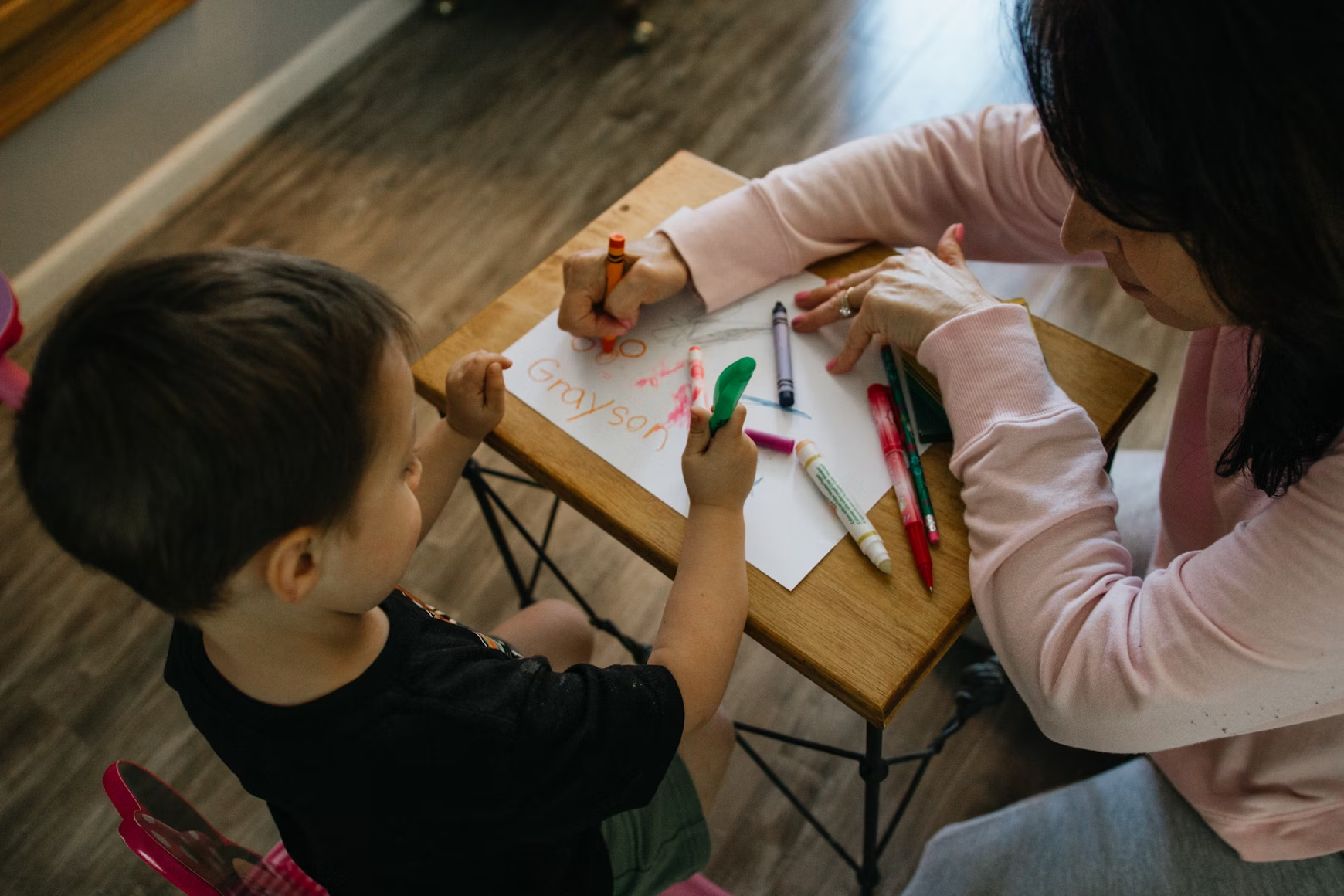
Child and adult working on an art project, illustrating adapted learning strategies.
Image Source: Unsplash

4. Adapt Learning Strategies to Your Child’s Needs

Acting out can be a signal that something in the learning process isn’t clicking.

  • Check task difficulty. Ask the teacher, “Is the work too challenging, or does my child finish early and get bored?” Adjust accordingly by simplifying or enriching assignments.
  • Break learning into chunks. Ten quick math problems can feel more achievable than a sheet of forty. Short, timed bursts followed by movement breaks often keep focus sharp.
  • Offer sensory outlets. Fidgets, wiggle cushions, or quiet stretch corners help kids who need physical input to stay regulated.
  • Leverage strengths. If your child is a visual learner, request graphic organizers or color‑coded steps. Kinesthetic? Ask for hands‑on materials or role‑play options.

When academic demands align with a child’s readiness and learning style, frustration—and misbehavior—usually fade on their own.

5. Collaborate on a Clear Behavior Management Plan

If patterns persist, a formal plan can help everyone move from reacting to proactively teaching new skills.

  • Functional Behavior Assessment (FBA): Pinpoints the triggers (time of day, task type, peer interactions) and the payoff your child gets from acting out (attention, escape, sensory input).
  • Behavior Intervention Plan (BIP): Lists replacement behaviors (“ask for a break” instead of “leave seat”), prompts adults will use, and specific rewards for success.
  • Daily or weekly data tracking: Simple smiley‑face charts or color zones let your child see progress—and help adults adjust strategies quickly.
  • Celebrate publicly, correct privately. Praise successes where peers can overhear; discuss missteps quietly to preserve dignity and motivation.
  • Schedule regular reviews. A 10‑minute check‑in every two weeks keeps goals fresh and collaboration strong.

When children feel they’re part of the team crafting solutions, they’re more likely to buy in—and to practice the new skills that replace disruptive habits.

Progress, Not Perfection

Transforming a child’s bad behavior at school is a process. Empathy, consistency, and teamwork—both at home and in the classroom—lay the groundwork for resilience and growth. Every tricky day is an opportunity to practice new skills, and every small win is worth celebrating.

Have you ever tried any of these strategies? Let us know in the comments!

Read More

  • Your Child Should Be Homeschooled If You Notice These Behaviors
  • 7 Common Types of Behavioral Disorders in Children Every Parent Should Know
Samantha Warren
Samantha

Samantha Warren is a holistic marketing strategist with 8+ years of experience partnering with startups, Fortune 500 companies, and everything in between. With an entrepreneurial mindset, she excels at shaping brand narratives through data-driven, creative content. When she’s not working, Samantha loves to travel and draws inspiration from her trips to Thailand, Spain, Costa Rica, and beyond.

Filed Under: Parenting Tagged With: behavior management, child behavior, emotional development | Parenting, parenting tips, Positive Reinforcement, school discipline, teacher communication

Is It Appropriate to Bribe Children for Good Behavior?

March 26, 2025 | Leave a Comment

appropriate to bribe children
Pexels

Every parent has been in a situation where they’ve offered a quick reward to stop a tantrum or encourage good behavior. While it might seem like a harmless fix, using material incentives can have long-term consequences on a child’s development. The line between positive reinforcement and outright bribery is often blurred. In this article, we examine whether offering rewards for good behavior helps or hinders your child’s growth. We aim to provide insights that empower you to make the best choices for fostering lasting behavior.

Understanding the Difference Between Bribes and Rewards

It’s crucial to distinguish between bribes and rewards. Bribes are typically offered as a quick fix to stop misbehavior, while rewards are given after positive behavior to reinforce it. Timing and intention set them apart—bribes are reactive, rewards are proactive. Children who receive bribes may start expecting incentives for basic tasks. A thoughtful reward system, in contrast, builds intrinsic motivation over time.

The Impact on Intrinsic Motivation

Heavy reliance on external rewards can erode a child’s intrinsic motivation to behave well. When children expect treats for every good action, they may struggle to develop internal standards. This dependency can undermine their ability to self-regulate and take responsibility. Over time, their behavior becomes transactional rather than genuine. Building intrinsic motivation is key to long-term self-discipline.

Short-Term Gains vs. Long-Term Consequences

While bribes might yield immediate compliance, they rarely instill lasting values. The short-term satisfaction of receiving a treat can mask the potential long-term drawbacks. Children may come to expect a reward every time, undermining their ability to act appropriately without external incentives. This approach risks creating a pattern where behavior is only acceptable if a reward is offered. Sustainable discipline should cultivate habits that persist without material rewards.

Alternatives to Bribery

Instead of relying on bribes, consider using praise, recognition, and logical consequences. Positive reinforcement, when given consistently, can encourage desirable behavior without fostering dependency. Setting clear expectations and providing consistent feedback is a more effective strategy. Encouraging children to understand the benefits of good behavior builds intrinsic motivation. These alternatives help develop self-discipline and a genuine sense of responsibility.

Discipline or Deal-Making?

appropriate to bribe children
Pexels

While offering rewards can sometimes help in the heat of the moment, over-reliance on bribes may lead to unintended long-term consequences. True discipline involves teaching children the value of doing the right thing for its own sake, not just for a treat. By fostering intrinsic motivation through consistent communication and support, parents can help children build strong, internal value systems. The ultimate goal is to nurture independent, responsible behavior.

Have you ever struggled with the fine line between bribery and positive reinforcement? Share your experiences in the comments!

Read More:

The Best Money Lessons Kids Learn From Chores

5 Chores That Teach Work Ethic Principles to Toddlers

Latrice Perez

Latrice is a dedicated professional with a rich background in social work, complemented by an Associate Degree in the field. Her journey has been uniquely shaped by the rewarding experience of being a stay-at-home mom to her two children, aged 13 and 5. This role has not only been a testament to her commitment to family but has also provided her with invaluable life lessons and insights.  As a mother, Latrice has embraced the opportunity to educate her children on essential life skills, with a special focus on financial literacy.

Filed Under: Parenting Tagged With: behavior management, bribery, child discipline, parenting advice, Rewards

  • Facebook
  • Pinterest
  • RSS
  • Twitter

Basic Principles Of Good Parenting

Here some basic principles for good parenting:

  1. What You Do Matters: Your kids are watching you. So, be purposeful about what you want to accomplish.
  2. You Can’t be Too Loving: Don’t replace love with material possessions, lowered expectations or leniency.
  3. Be Involved Your Kids Life: Arrange your priorities to focus on what your kid’s needs. Be there mentally and physically.
  4. Adapt Your Parenting: Children grow quickly, so keep pace with your child’s development.
  5. Establish and Set Rules: The rules you set for children will establish the rules they set for themselves later.  Avoid harsh discipline and be consistent.
  6. Explain Your Decisions: What is obvious to you may not be evident to your child. They don’t have the experience you do.
  7. Be Respectful To Your Child: How you treat your child is how they will treat others.  Be polite, respectful and make an effort to pay attention.
Best Parenting Blogs

Most Popular

Baby names

Teachers Admit: These 6 Baby Names Create Instant Bias in the Classroom

Latrice Perez
6 Baby Names That Sound Cute Now but Cause Problems Later

6 Baby Names That Sound Cute Now but Cause Problems Later

Brandon Marcus
11 Ways Kids Are Outsmarting Parental Controls 1. Using Alternate Devices One common trick is simply turning to another device. If a child’s main phone or tablet is restricted, they may borrow a sibling’s, friend’s, or even a school laptop. This instantly gives them access to content outside of parental oversight. Parents often focus on one device, forgetting that others in the household can serve as loopholes. Knowing this tactic helps families tighten controls across all electronics. 2. Clearing Browsing Histories Many kids quickly learn that clearing browsing history hides evidence of restricted activity. With just a few clicks, they can erase any trace of websites visited. This makes it harder for parents to notice when rules are being broken. Parents may assume no history means no browsing, but the reality is often the opposite. Kids are outsmarting parental controls by making it seem like nothing happened at all. 3. Using Private Browsing Modes Most browsers offer “incognito” or private browsing features. Kids use this mode to access websites without leaving a record in the history. To parents checking later, everything looks clean and safe. This simple trick is often one of the first ways kids discover how to bypass restrictions. Conversations about private browsing can help close this gap. 4. Guessing or Resetting Passwords Children who are persistent may try to guess passwords to parental control apps or accounts. Others may find ways to reset them through email prompts or security questions. Once inside, they can disable restrictions entirely. Parents may not even realize controls have been altered until much later. Stronger, less predictable passwords can make this more difficult. 5. Using VPNs to Hide Activity Virtual private networks, or VPNs, let kids disguise their online locations. With one downloaded app, they can bypass geographic or parental restrictions. Some children learn about VPNs through friends or even social media. This makes it easy for them to reach content that should be blocked. Parents often underestimate just how simple it is for kids to use these tools. 6. Creating Fake Accounts When parents monitor social media, kids may create hidden accounts. These “finstas” or fake profiles allow them to interact freely without parental oversight. While their main account appears harmless, the secondary one tells a different story. Kids are outsmarting parental controls by playing both sides at once. Checking for duplicate accounts can help parents stay more aware. 7. Exploiting Time Zone Settings Some kids change the time zone on their devices to bypass screen time limits. This trick allows them to gain extra hours of usage undetected. Parents may assume controls are working, but in reality, the child is bending the clock. It’s a clever loophole that highlights just how resourceful kids can be. Monitoring device settings regularly can catch this tactic. 8. Disabling or Uninstalling Apps Parental control apps can be deleted or disabled with surprising ease. Some kids even reinstall them before a parent checks, making it seem like nothing changed. Others may simply restrict permissions to prevent apps from functioning properly. When apps aren’t monitored closely, parents may not notice they’ve been tampered with. This shows the importance of consistent follow-up. 9. Turning to Friends for Access If a child can’t get past restrictions on their own, they may rely on friends. Visiting a friend’s house or borrowing their phone can give them a free pass. Parents often forget that peer environments can override restrictions set at home. This kind of social workaround is especially common with gaming or social media. Open conversations about trust and responsibility are essential. 10. Hiding Apps in Plain Sight Kids sometimes download apps that look innocent but serve as gateways to hidden activity. These apps may disguise themselves as calculators or utilities. In reality, they allow file storage, private messaging, or browser access. Parents glancing at a home screen may overlook them entirely. Learning to recognize these disguised apps can help parents stay informed. 11. Outpacing Parents’ Tech Knowledge Finally, kids often know more about devices than their parents do. Whether through YouTube tutorials, TikTok hacks, or peer groups, they quickly learn advanced workarounds. This knowledge gap means controls can be bypassed before parents even realize the loophole exists. Staying informed and continually learning about new technology is the best defense. Kids are outsmarting parental controls because they adapt faster than most adults. The Real Solution Lies Beyond Restrictions While controls and filters are important, no system is perfect. Kids will always find creative ways around barriers, making communication the strongest safeguard. Setting clear expectations, building trust, and having ongoing conversations about online behavior matter more than apps alone. Parents who combine technology with open dialogue create a safer digital environment. The goal isn’t to win a battle of wits but to build a relationship that keeps kids both safe and honest. Do you think kids are outsmarting parental controls faster than parents can keep up? Share your experiences in the comments below. What to Read Next... 6 Parenting Tech Shortcuts That Can Expose Your Child to Strangers How Much Screen Time Is Too Much—Legally Speaking? Is Your Child’s School Quietly Tracking Their Location Without Your Consent? How Much Screen Time Is Quietly Reshaping Childhood Behavior? Why Some Parents Are Being Investigated Over Homeschooling Records

11 Ways Kids Are Outsmarting Parental Controls

Catherine Reed

10 Children’s Games From the ’60s That Need to Make a Comeback

Samantha
Smiling grandfather holding a happy baby indoors.

Why Grandparents Shouldn’t Babysit Their Grandkids Every Week – The Unspoken Issue

Samantha

All content on Kids Ain’t Cheap is for entertainment purposes only. By reading this blog, you agree that Kids Ain’t Cheap is not responsible for any actions taken after reading this blog. For the full disclaimer, see our privacy policy.

Please note that Kids Ain’t Cheap has financial relationships with some of the merchants mentioned here. Kids Ain’t Cheap is funded by banner advertising, commission sales and search optimization consulting.

Copyright © 2006–2026 | District Media | All Rights Reserved | Privacy Policy

Copyright © 2026 Runway Pro Theme by Viva la Violette