
• Home
  • About Us
  • Toolkit
  • Archives
  • Advertise
  • Privacy Policy

Kids Ain't Cheap

But They Sure Are Worth It

  • Parenting
    • Baby Stuff
    • Books and Reading
      • Aesops Fables
      • Comic Books
    • Education
    • Family Time
    • Green Living
    • Growing Up
    • Healthy Living & Eating
    • Holidays
    • Parenting
    • Random Musings
    • Shopping
    • Stuff to Do
  • Money
  • Product Reviews
    • Books and Magazines
    • Discount Sites
    • Furniture
    • House Keeping
    • Reviews News
    • Toys and Games
  • Contact Us
  • Our Editorial Commitment
  • Search

Are Parent-Teacher Text Chains Making School Drama Worse?

October 2, 2025 | Leave a Comment

Are Parent-Teacher Text Chains Making School Drama Worse?
Image source: 123rf.com

With smartphones in every pocket, schools now face a new challenge: instant group communication between parents and teachers. What started as a convenient way to share updates about homework, field trips, and schedules has become a breeding ground for gossip, disagreements, and even unnecessary conflict. Parent-teacher text chains, meant to streamline communication, sometimes do the opposite by fueling tension and amplifying minor issues. Instead of helping families and teachers work together, these chats can intensify school drama. Understanding the risks can help parents and educators use these tools wisely and avoid unnecessary stress.

1. Information Overload Creates Stress

Parent-teacher text chains often start with good intentions, but the constant stream of messages can quickly become overwhelming. Many parents feel pressured to keep up with every comment, fearing they might miss something important. When dozens of messages appear daily, the difference between vital school details and casual chatter blurs. This overload can increase stress, especially for working parents already juggling busy schedules. In some cases, the sheer volume of texts contributes more to confusion than clarity.

2. Gossip Finds a Digital Home

One of the biggest risks of parent-teacher text chains is how easily they become a platform for gossip. Parents may vent frustrations, speculate about school policies, or criticize other families in a setting that feels private. The problem is that these words often spread beyond the intended audience. What starts as harmless chatter can quickly escalate into harmful rumors that divide classrooms and communities. When gossip finds a home in text chains, school drama is almost inevitable.

3. Teachers Face Added Pressure

Teachers already balance heavy workloads, and parent-teacher text chains can pile on unnecessary expectations. Instead of focusing on lesson planning or classroom management, they may feel pressured to respond to every message quickly. This constant availability blurs professional boundaries, leaving little space for rest or balance. In some cases, teachers even become targets of criticism within these group chats, creating an unfair and hostile environment. The added pressure undermines the positive relationships parents and teachers should be building.

4. Miscommunication Spreads Quickly

Texting lacks the tone, body language, and context that face-to-face communication provides. As a result, parent-teacher text chains are fertile ground for misunderstandings. A short reply might come across as rude, or a lighthearted comment could be taken the wrong way. Once miscommunication takes root, it often spirals into unnecessary conflict between families and teachers. What could have been solved with a quick in-person conversation turns into ongoing drama within the group.

5. Parents Feel Left Out or Overexposed

Not every parent wants to be part of constant group messaging, but opting out can feel isolating. On the other hand, those who stay in may find their privacy compromised as personal details get shared more widely than expected. Parent-teacher text chains can unintentionally create a sense of competition among parents, with some feeling judged for their level of participation. Whether through oversharing or exclusion, the dynamics of these chats often leave families uncomfortable. Instead of building unity, they can heighten division.

6. Conflicts Between Parents Escalate

Parent-to-parent disagreements are nothing new, but text chains magnify them. A disagreement over snacks for a classroom party or scheduling a field trip can snowball into heated debates. Unlike in-person conversations, the digital format removes the pause for reflection that helps calm tempers. The result is often public conflict that pulls in more parents than necessary. Parent-teacher text chains can turn small issues into major dramas that affect the entire school community.

7. Kids Can Become Unintended Victims

Though children may not see the actual messages, they often feel the impact of parent-teacher text chains. Gossip or criticism directed at families trickles down to the students involved, leading to awkwardness or bullying in the classroom. Kids may also overhear conversations at home, picking up on the negativity their parents carry from the group chat. This creates unnecessary tension in their school experience. In the end, the very children the chains were meant to support may suffer most from the drama.

Why Setting Boundaries Makes All the Difference

Parent-teacher text chains don’t have to disappear altogether, but they work best when used with clear boundaries. Limiting them to essential updates, establishing respectful guidelines, and encouraging in-person conversations for sensitive issues can prevent drama from spiraling out of control. Parents and teachers alike benefit when communication stays focused on student success rather than gossip or conflict. A mindful approach allows these tools to remain helpful rather than harmful. The key is remembering that digital convenience should never come at the cost of school harmony.

Do you think parent-teacher text chains help or hurt school communities? Share your thoughts in the comments below.

What to Read Next…

9 Ways Modern Classrooms Are Disrupting Childhood Focus

Are Parental Rights Being Ignored in Public School Curriculums?

10 Popular Discipline Techniques That Have Been Quietly Discredited

Are You Accidentally Teaching Your Kids Money Doesn’t Matter?

10 School Supply Lists That Now Feel Financially Impossible

Catherine Reed
Catherine Reed

Catherine is a tech-savvy writer who has focused on the personal finance space for more than eight years. She has a Bachelor’s in Information Technology and enjoys showcasing how tech can simplify everyday personal finance tasks like budgeting, spending tracking, and planning for the future. Additionally, she’s explored the ins and outs of the world of side hustles and loves to share what she’s learned along the way. When she’s not working, you can find her relaxing at home in the Pacific Northwest with her two cats or enjoying a cup of coffee at her neighborhood cafe.

Filed Under: Education Tagged With: digital boundaries, education, family relationships, online gossip, parent-teacher text chains, Parenting, school drama, teacher communication

11 Parent Email Mistakes That Infuriate Teachers

September 30, 2025 | Leave a Comment

11 Parent Email Mistakes That Infuriate Teachers
Image source: 123rf.com

Email has made it easier than ever for parents and teachers to communicate, but that convenience often leads to frustrations on both sides. Teachers juggle dozens of students, endless paperwork, and after-hours responsibilities, so unclear or poorly written messages can quickly become overwhelming. Parents may think they’re being helpful by sending a note, yet the way it’s framed can unintentionally create tension. Understanding the most common errors can help families build stronger partnerships with educators. Here are 11 parent email mistakes that infuriate teachers and how to avoid them.

1. Writing Emails Late at Night Expecting Immediate Replies

Many parents send messages late in the evening, assuming teachers will respond right away. What they don’t realize is that most teachers log off after school hours and won’t see it until the next day. The expectation of instant answers adds unnecessary pressure. Respecting boundaries helps preserve teachers’ personal time while still ensuring communication happens. This is one of the parent email mistakes that can strain relationships.

2. Using an Aggressive or Confrontational Tone

Emails written in all caps or filled with accusations immediately set the wrong tone. Teachers want to work with parents, not feel attacked before a conversation begins. A respectful approach encourages collaboration rather than defensiveness. Even if frustration is justified, wording matters more than parents realize. Choosing calm, clear language avoids one of the most damaging parent email mistakes.

3. Sending Long, Unfocused Messages

A teacher’s inbox is already full, so overly lengthy messages make it difficult to identify the main point. Parents sometimes include multiple issues in one email, creating confusion. Breaking concerns into clear, short sections helps teachers respond effectively. When messages are concise, solutions come faster. Long-winded notes are among the most common parent email mistakes teachers dislike.

4. Forgetting to Include Essential Details

Parents often forget to provide critical context such as the child’s full name, grade, or specific class. Teachers may teach hundreds of students and can’t always guess who the message is about. Missing information delays responses and creates frustration. A clear subject line and basic details save everyone time. Overlooking these basics is another parent email mistake that infuriates teachers.

5. Copying the Principal on Every Message

While escalation may sometimes be necessary, copying administrators on every small concern makes teachers feel undermined. It can come across as a lack of trust or an attempt to pressure them unnecessarily. Teachers appreciate when parents first address issues directly with them. Involving higher-ups too quickly creates tension rather than resolution. Overuse of “CC-ing” is one of the parent email mistakes that causes unnecessary stress.

6. Demanding Exceptions for Rules

Emails that ask teachers to bend rules—like extending deadlines or overlooking absences—put them in difficult positions. Teachers must apply policies fairly across the board. Constantly requesting exceptions can make it seem like certain students expect special treatment. These requests disrupt classroom consistency and teacher authority. It’s one of the most frustrating parent email mistakes teachers deal with regularly.

7. Using Email for Sensitive or Emotional Issues

Certain topics, like discipline or personal struggles, are best handled in person or over the phone. Email strips away tone and nuance, making misunderstandings more likely. Parents may think they’re being efficient, but emotional messages can escalate conflicts. Teachers prefer scheduling a meeting for deeper discussions. Using email inappropriately for sensitive topics is a parent email mistake that often backfires.

8. Forwarding Chains of Complaints

Some parents gather a list of issues and send them all at once, often copied from prior messages. This can feel overwhelming and unproductive to teachers. A better approach is to tackle concerns one at a time with clear communication. Forwarded chains add clutter to an already busy inbox. Sending complaint bundles is another parent email mistake that frustrates educators.

9. Assuming Teachers Remember Every Detail

Parents sometimes refer to “the issue from last week” or “that problem in class” without specifics. Teachers manage many students and situations, so vague references waste time. Providing dates, assignments, or clear descriptions helps immensely. Without clarity, teachers may spend more time decoding the message than resolving the issue. This lack of precision is one of the parent email mistakes that slows progress.

10. Ignoring School Communication Platforms

Many schools use apps or portals for attendance, grades, and updates. Parents who ignore these tools often flood teachers’ inboxes with questions that already have answers online. Teachers then spend extra time re-explaining information already provided. Staying engaged with official systems prevents unnecessary emails. Overlooking available resources is a parent email mistake that drains teachers’ energy.

11. Expecting Teachers to Solve Non-School Issues

Sometimes parents bring up matters outside the classroom, such as family conflicts or extracurricular concerns. While teachers care deeply about students, they can’t fix every personal situation. Expecting them to take on roles beyond their professional scope is unfair. It distracts from academic responsibilities and adds stress. This expectation is one of the parent email mistakes that teachers find especially overwhelming.

Building Better Communication with Teachers

Parents and teachers both want the same thing: a positive environment where children thrive. Avoiding these parent email mistakes ensures communication is respectful, efficient, and productive. When messages are clear, polite, and focused, teachers can respond more effectively. Stronger parent-teacher relationships lead to better outcomes for students. Thoughtful communication makes collaboration smoother for everyone involved.

Have you noticed any of these parent email mistakes in your own school community? Share your thoughts and experiences in the comments.

What to Read Next…

7 Unreasonable Demands From Schools That Are Breaking Parents

8 School Rules That Should’ve Changed Decades Ago

7 Reasons You Shouldn’t Waste Money on Private Schools

Are Parental Rights Being Ignored in Public School Curriculums?

9 Ways Modern Classrooms Are Disrupting Childhood Focus

Catherine Reed
Catherine Reed

Catherine is a tech-savvy writer who has focused on the personal finance space for more than eight years. She has a Bachelor’s in Information Technology and enjoys showcasing how tech can simplify everyday personal finance tasks like budgeting, spending tracking, and planning for the future. Additionally, she’s explored the ins and outs of the world of side hustles and loves to share what she’s learned along the way. When she’s not working, you can find her relaxing at home in the Pacific Northwest with her two cats or enjoying a cup of coffee at her neighborhood cafe.
Filed Under: Parenting Tagged With: classroom advice, education insights, parent email mistakes, parent-teacher relationships, school tips, teacher communication

Here’s What to Do When The Teacher Calls About Your Child’s Behavior

May 28, 2025 | Leave a Comment

Heres What to Do When The Teacher Calls About Your Childs Behavior

It’s the phone call no parent wants but most will get at some point—the teacher is calling, and it’s not about how great your child did on their spelling test. Whether it’s classroom disruptions, defiance, or social struggles, hearing that something’s off at school can be tough to process. But instead of going into panic mode or immediately jumping to your child’s defense, it helps to take a calm, proactive approach. Knowing what to do when the teacher calls about your child’s behavior can turn a frustrating moment into a powerful opportunity for growth—for both you and your child.

1. Take a Breath Before Responding

When the teacher calls about your child’s behavior, your first instinct might be to feel embarrassed, defensive, or even angry. That’s completely normal, but try not to react emotionally right away. Take a deep breath, thank the teacher for the call, and let them explain the situation. You don’t have to respond with a solution immediately—sometimes, just listening is the most important first step. Give yourself space to absorb the information before jumping into action.

2. Ask Questions to Understand the Full Story

Don’t assume the worst—but don’t assume your child is innocent either. Ask clarifying questions so you can get a full understanding of what happened. When the teacher calls about your child’s behavior, it’s okay to request examples, context, and how often the issue has occurred. Try to get a sense of how your child’s behavior is impacting others and what steps have already been taken in the classroom. The more information you gather, the better equipped you’ll be to address the issue effectively.

3. Avoid Shaming or Overreacting at Home

It’s tempting to storm into your child’s room with a lecture or punishment ready, but this often backfires. When the teacher calls about your child’s behavior, your goal should be to guide—not scare—your child into better choices. Ask for their side of the story calmly, and make it clear you want to help them succeed, not just punish them. Kids are more likely to open up when they don’t feel cornered. Discipline should be consistent, but also fair and rooted in understanding.

4. Partner With the Teacher, Not Against Them

Your child’s teacher is not your enemy. In fact, they want the same thing you do—for your child to thrive. When the teacher calls about your child’s behavior, try to view them as a partner. Ask what strategies have worked in the classroom and what you can reinforce at home. Building a cooperative relationship with the teacher often leads to faster, more positive outcomes for your child.

5. Look for Patterns, Not Isolated Incidents

One bad day doesn’t define your child—but repeated behavior can signal a bigger issue. Keep track of how often these calls happen and what the concerns are. When the teacher calls about your child’s behavior more than once, it’s important to look for patterns. Is it always after lunch? During group activities? With certain classmates? These details can help identify triggers and shape more targeted solutions.

6. Support Positive Behavior at Home

If your child is struggling with respect, focus, or impulse control at school, you can build those same skills at home. Create routines, practice problem-solving, and praise your child when they handle frustration well. When the teacher calls about your child’s behavior, it’s not just about fixing what went wrong—it’s about reinforcing what can go right. Small, consistent efforts at home can make a big difference in how your child shows up in the classroom.

7. Know When to Seek Additional Help

Sometimes, the issue goes beyond a simple fix. If your child is repeatedly in trouble, not responding to school or home-based strategies, or showing signs of deeper emotional struggles, it may be time to consult a school counselor or pediatrician. When the teacher calls about your child’s behavior regularly, there could be underlying issues such as anxiety, ADHD, or learning differences that need professional support. Asking for help isn’t a sign of failure—it’s a step toward lasting change.

Every Call Is a Chance to Connect and Support

No parent loves getting a behavior call from school, but it doesn’t have to be a crisis. When the teacher calls about your child’s behavior, use it as an opportunity to understand your child more deeply, strengthen communication with their teacher, and set them up for better choices. You’re not just reacting—you’re teaching, guiding, and showing up. And that’s what good parenting looks like, even on the hard days.

How do you handle tough conversations about your child’s school behavior? Share your experiences and advice with other parents in the comments!

Read More:

10 Things Parents Should NEVER Ignore About Their Child’s Behavior

10 Parenting Practices That Are More Harmful Than You Think

Catherine Reed
Catherine Reed

Catherine is a tech-savvy writer who has focused on the personal finance space for more than eight years. She has a Bachelor’s in Information Technology and enjoys showcasing how tech can simplify everyday personal finance tasks like budgeting, spending tracking, and planning for the future. Additionally, she’s explored the ins and outs of the world of side hustles and loves to share what she’s learned along the way. When she’s not working, you can find her relaxing at home in the Pacific Northwest with her two cats or enjoying a cup of coffee at her neighborhood cafe.
Filed Under: Parenting Tagged With: behavioral challenges, child discipline, emotional development, parent-teacher relationships, parenting school-age kids, parenting tips, school behavior, teacher communication

The School Is Calling Again: 5 Ways to Help Change a Child’s Bad Behavior at School

April 23, 2025 | Leave a Comment

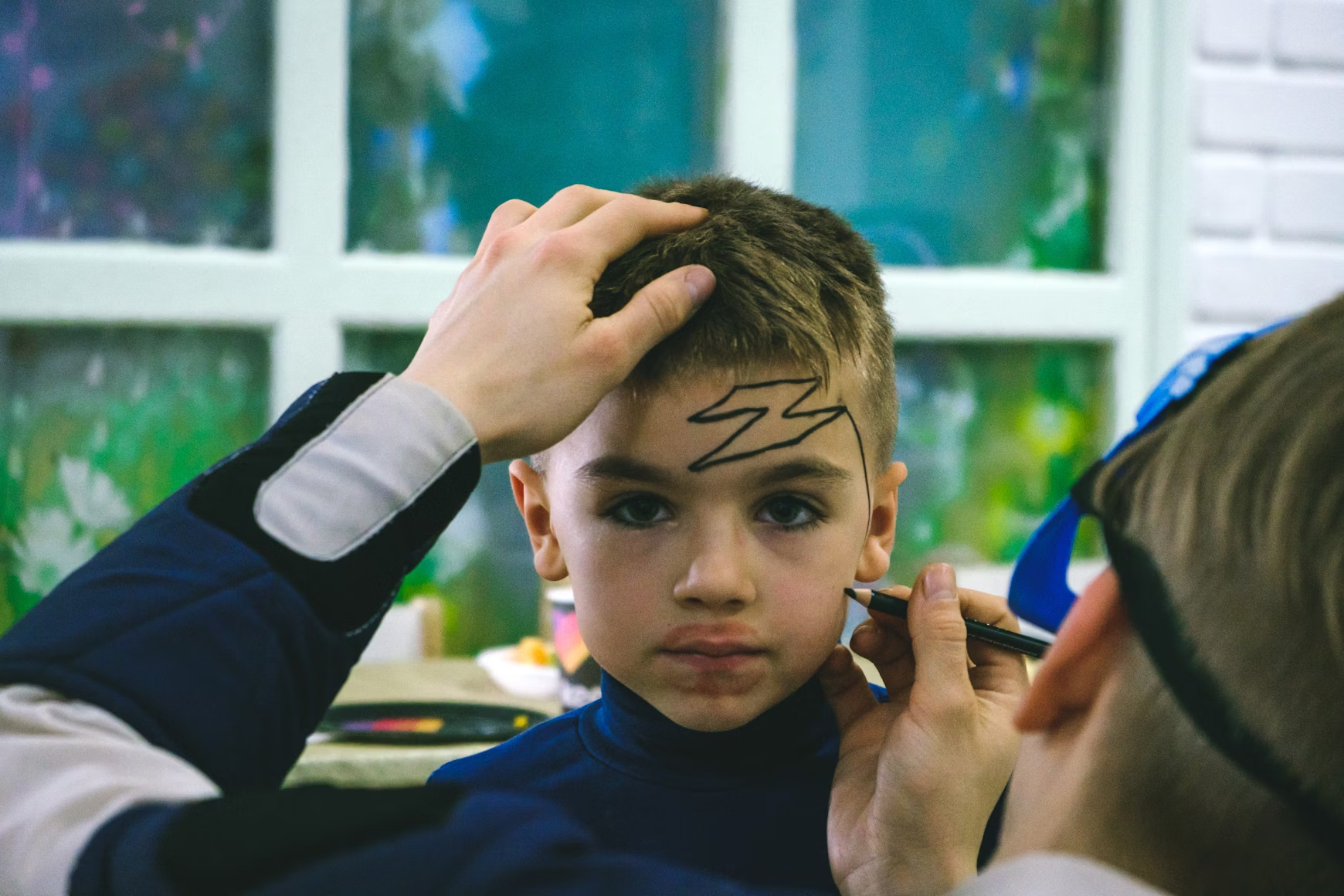
Child getting face paint, symbolizing efforts to address misbehavior in school.
Image Source: Unsplash

That mid‑morning buzz from the school office can fill any parent with dread. Another report of disruptive behavior? It’s frustrating and often isolating—but you’re not alone. Many families navigate the same terrain, and there are concrete, research‑informed steps that can encourage lasting change.

1. Establish Clear Expectations and Open Communication

When children know exactly what’s expected, they’re better positioned to succeed. Regular, friendly check‑ins with teachers—via brief emails or five‑minute conferences—build trust and keep everyone on the same page.

Here are some more tips:

  • Spell out the “how” as well as the “what.” Instead of “Behave in class,” try “Raise your hand before speaking” or “Keep hands to yourself during circle time.”
  • Create a quick‑reference card. Write three key rules on an index card and tape it inside the homework folder. Kids (and teachers) can point to it when reminders are needed.
  • Use two‑way check‑ins. Send or request a brief email every Friday summarizing wins and challenges. Respond with appreciation, not just concerns, so teachers feel valued partners.
  • Loop in your child. Review classroom rules together and ask, “Which one feels hardest? Which one do you feel confident about?” Their answers guide where to focus coaching at home.

Open, friendly communication keeps everyone aligned and reduces the chance of surprises—good or bad—mid‑semester.

2. Create a Structured Environment with Predictable Routines

Structure gives kids a sense of safety and control, which lowers anxiety and impulsive behavior.

  • Morning anchor: Same wake‑up window each day, followed by a visual checklist (teeth, uniform, breakfast, backpack).
  • Homework zone: A consistent, distraction‑free spot stocked with sharpened pencils, paper, and a timer. Starting homework within 30 minutes of arriving home helps maintain the school mindset.
  • Evening wind‑down: Dim lights an hour before bed, swap screens for quiet play or reading, and use a short “tomorrow preview” so kids know what’s coming.

Classrooms thrive on predictable procedures; mirroring that rhythm at home strengthens children’s ability to transition calmly from environment to environment.

3. Encourage Positive Behavior Through Reinforcement

Children thrive on attention; when it’s mostly negative, they often double down on unwanted actions. Instead, spotlight the good: “I noticed you finished your worksheet before recess. Nice focus!”

The Child Mind Institute confirms that specific, sincere praise paired with small privileges builds self‑esteem and sustains better choices. 

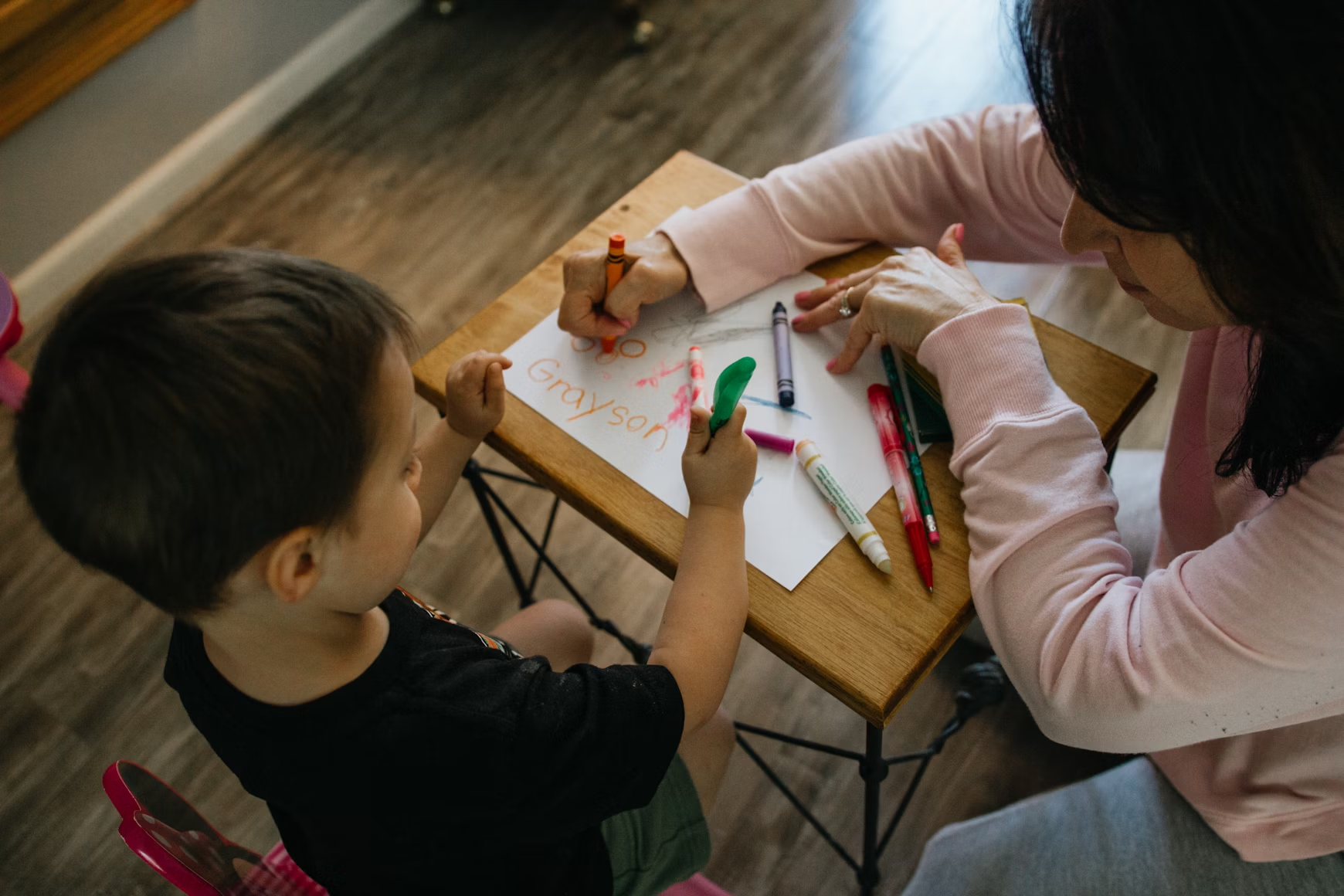
Child and adult working on an art project, illustrating adapted learning strategies.
Image Source: Unsplash

4. Adapt Learning Strategies to Your Child’s Needs

Acting out can be a signal that something in the learning process isn’t clicking.

  • Check task difficulty. Ask the teacher, “Is the work too challenging, or does my child finish early and get bored?” Adjust accordingly by simplifying or enriching assignments.
  • Break learning into chunks. Ten quick math problems can feel more achievable than a sheet of forty. Short, timed bursts followed by movement breaks often keep focus sharp.
  • Offer sensory outlets. Fidgets, wiggle cushions, or quiet stretch corners help kids who need physical input to stay regulated.
  • Leverage strengths. If your child is a visual learner, request graphic organizers or color‑coded steps. Kinesthetic? Ask for hands‑on materials or role‑play options.

When academic demands align with a child’s readiness and learning style, frustration—and misbehavior—usually fade on their own.

5. Collaborate on a Clear Behavior Management Plan

If patterns persist, a formal plan can help everyone move from reacting to proactively teaching new skills.

  • Functional Behavior Assessment (FBA): Pinpoints the triggers (time of day, task type, peer interactions) and the payoff your child gets from acting out (attention, escape, sensory input).
  • Behavior Intervention Plan (BIP): Lists replacement behaviors (“ask for a break” instead of “leave seat”), prompts adults will use, and specific rewards for success.
  • Daily or weekly data tracking: Simple smiley‑face charts or color zones let your child see progress—and help adults adjust strategies quickly.
  • Celebrate publicly, correct privately. Praise successes where peers can overhear; discuss missteps quietly to preserve dignity and motivation.
  • Schedule regular reviews. A 10‑minute check‑in every two weeks keeps goals fresh and collaboration strong.

When children feel they’re part of the team crafting solutions, they’re more likely to buy in—and to practice the new skills that replace disruptive habits.

Progress, Not Perfection

Transforming a child’s bad behavior at school is a process. Empathy, consistency, and teamwork—both at home and in the classroom—lay the groundwork for resilience and growth. Every tricky day is an opportunity to practice new skills, and every small win is worth celebrating.

Have you ever tried any of these strategies? Let us know in the comments!

Read More

  • Your Child Should Be Homeschooled If You Notice These Behaviors
  • 7 Common Types of Behavioral Disorders in Children Every Parent Should Know
Samantha Warren
Samantha

Samantha Warren is a holistic marketing strategist with 8+ years of experience partnering with startups, Fortune 500 companies, and everything in between. With an entrepreneurial mindset, she excels at shaping brand narratives through data-driven, creative content. When she’s not working, Samantha loves to travel and draws inspiration from her trips to Thailand, Spain, Costa Rica, and beyond.

Filed Under: Parenting Tagged With: behavior management, child behavior, emotional development | Parenting, parenting tips, Positive Reinforcement, school discipline, teacher communication

  • Facebook
  • Pinterest
  • RSS
  • Twitter

Basic Principles Of Good Parenting

Here some basic principles for good parenting:

  1. What You Do Matters: Your kids are watching you. So, be purposeful about what you want to accomplish.
  2. You Can’t be Too Loving: Don’t replace love with material possessions, lowered expectations or leniency.
  3. Be Involved Your Kids Life: Arrange your priorities to focus on what your kid’s needs. Be there mentally and physically.
  4. Adapt Your Parenting: Children grow quickly, so keep pace with your child’s development.
  5. Establish and Set Rules: The rules you set for children will establish the rules they set for themselves later.  Avoid harsh discipline and be consistent.
  6. Explain Your Decisions: What is obvious to you may not be evident to your child. They don’t have the experience you do.
  7. Be Respectful To Your Child: How you treat your child is how they will treat others.  Be polite, respectful and make an effort to pay attention.
Best Parenting Blogs

Most Popular

Baby

9 Unusual Baby Names That Sound Like They Belong to Future CEOs

Evan Morgan
Baby

10 Baby Names That Were Once Considered “Grandparent Names” but Feel Cool Again

Evan Morgan
Target Store

Choking Incident Prompts Recall of 49,000 Target Gigglescape “Under the Sea” Popping Toys

Evan Morgan
Frustrated Girl

Why Some Students on the Spectrum Are Labeled With ODD

Evan Morgan
Coke Bottles

12 Things Kids Took to School in the ’70s That Would Never Be Allowed Today

Evan Morgan

All content on Kids Ain’t Cheap is for entertainment purposes only. By reading this blog, you agree that Kids Ain’t Cheap is not responsible for any actions taken after reading this blog. For the full disclaimer, see our privacy policy.

Please note that Kids Ain’t Cheap has financial relationships with some of the merchants mentioned here. Kids Ain’t Cheap is funded by banner advertising, commission sales and search optimization consulting.

Copyright © 2006–2026 | District Media | All Rights Reserved | Privacy Policy

Copyright © 2026 Runway Pro Theme by Viva la Violette