• Home
  • About Us
  • Toolkit
  • Archives
  • Advertise
  • Privacy Policy

Kids Ain't Cheap

But They Sure Are Worth It

  • Parenting
    • Baby Stuff
    • Books and Reading
      • Aesops Fables
      • Comic Books
    • Education
    • Family Time
    • Green Living
    • Growing Up
    • Healthy Living & Eating
    • Holidays
    • Parenting
    • Random Musings
    • Shopping
    • Stuff to Do
  • Money
  • Product Reviews
    • Books and Magazines
    • Discount Sites
    • Furniture
    • House Keeping
    • Reviews News
    • Toys and Games
  • Contact Us
  • Our Editorial Commitment
  • Search

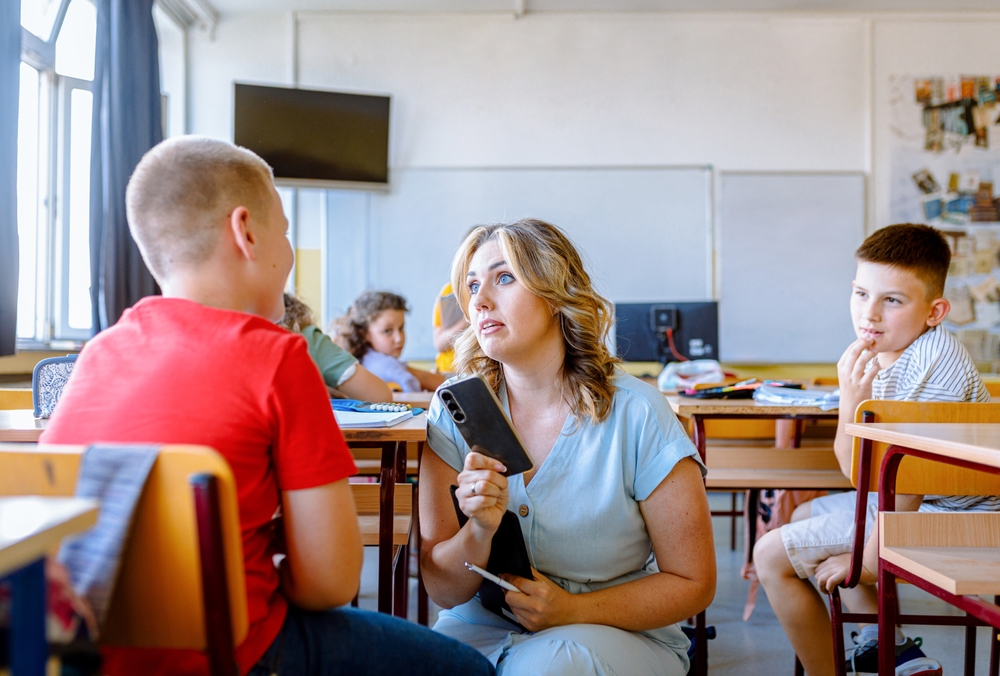
Teachers Say This Common Parent Habit Is Making Classrooms Harder to Manage

March 19, 2026 | Leave a Comment

Common Parent Habit
Image source: shutterstock.com

You probably think you are helping your child when you send that quick text during the school day. It feels like a small way to stay connected or handle a sudden change in soccer practice. However, educators are sounding the alarm on a trend that is quietly dismantling classroom focus. This habit seems harmless on the surface but creates a ripple effect of anxiety and distraction for students and staff alike. Constant digital access is actually hindering the ability of your child to learn and thrive. You will discover how stepping back can move your child forward in the long run.

The Digital Umbilical Cord That Stifles Independence

Honestly, the urge to check in is completely understandable in an uncertain world. We want to know our kids are safe and happy at every moment of the day. Yet, teachers report that students are now reaching for their phones the second they feel a minor frustration. Instead of asking a peer for help or navigating a social hiccup, they text home. This immediate escape hatch prevents them from developing the very problem-solving skills they need for adulthood. It turns a manageable classroom into a series of individual crises handled via text message.

When a parent responds instantly to a non-emergency, it validates the idea that the child cannot handle the school day alone. This constant back-and-forth disrupts the flow of instruction and pulls the student out of the learning environment. Teachers find themselves competing with a glowing screen for the attention of a student. On the other hand, a student who knows they cannot reach home until the final bell is forced to engage with their surroundings. They learn to trust their own judgment and the authority of the adults in the room.

Surprisingly, many parents do not realize that their messages are actually fueling student stress. A child who is constantly tethered to home through a device never fully settles into the school community. They remain in a state of hyper-vigilance, waiting for the next notification from you. By setting firmer boundaries, you give your child the gift of being fully present where they are. This shift allows the classroom to become a place of discovery rather than a satellite office for family logistics.

Why Your Quick Text Is a Major Distraction

Every time a phone vibrates in a pocket, the brain of a student leaves the math problem or the literature discussion. It takes several minutes for a young mind to reach a state of deep focus again. When half the class is receiving check-in texts, the teacher spends more time managing devices than teaching content. This creates an environment where deep learning becomes nearly impossible for everyone involved. It triggers emotional spikes during academic time that the teacher then has to de-escalate without knowing the context of your home conversation.

Furthermore, this habit undermines the role of the teacher as the primary guide in the classroom. If a child feels they can bypass school rules by reaching out to you, they stop respecting the internal boundaries of the institution. This creates a culture of instant gratification over persistence. It fosters unnecessary anxiety about life outside the classroom when they should be focused on their development within it. Teachers are asking for a return to the days where school was a sanctuary from the digital noise of the outside world.

Moving Toward Digital Independence

Establishing a no-contact window during school hours is one of the most effective ways to support the mental health of your child. Recent studies from 2026 show that reducing device access leads to meaningful gains in student achievement and a calmer environment. This allows them to build durable skills like communication, critical thinking, and adaptability. When they know they are responsible for their own day, they rise to the occasion. Your trust in their ability to navigate a few hours without you is the strongest vote of confidence you can give.

It is time to cut the digital cord for the sake of their education. Have you noticed your child becoming more anxious because of their phone? Please think about how these interruptions change their day and leave a comment below to let us know your thoughts on classroom phone policies.

What To Read Next…

  • ‘Gentle Parenting’ Fades in 2026 — The Trend Replacing It
  • 8 Once-Normal ’70s Kids Hobbies That Helicopter Parenting Quietly Killed
  • 7 Parenting Expenses That Quietly Drain Budgets After the Holidays
Latrice Perez

Latrice is a dedicated professional with a rich background in social work, complemented by an Associate Degree in the field. Her journey has been uniquely shaped by the rewarding experience of being a stay-at-home mom to her two children, aged 13 and 5. This role has not only been a testament to her commitment to family but has also provided her with invaluable life lessons and insights.  As a mother, Latrice has embraced the opportunity to educate her children on essential life skills, with a special focus on financial literacy.

Filed Under: Money and Finances Tagged With: child independence, classroom management, digital boundaries, education trends, Parenting, school habits, teacher advice

Are Parent-Teacher Text Chains Making School Drama Worse?

October 2, 2025 | Leave a Comment

Are Parent-Teacher Text Chains Making School Drama Worse?
Image source: 123rf.com

With smartphones in every pocket, schools now face a new challenge: instant group communication between parents and teachers. What started as a convenient way to share updates about homework, field trips, and schedules has become a breeding ground for gossip, disagreements, and even unnecessary conflict. Parent-teacher text chains, meant to streamline communication, sometimes do the opposite by fueling tension and amplifying minor issues. Instead of helping families and teachers work together, these chats can intensify school drama. Understanding the risks can help parents and educators use these tools wisely and avoid unnecessary stress.

1. Information Overload Creates Stress

Parent-teacher text chains often start with good intentions, but the constant stream of messages can quickly become overwhelming. Many parents feel pressured to keep up with every comment, fearing they might miss something important. When dozens of messages appear daily, the difference between vital school details and casual chatter blurs. This overload can increase stress, especially for working parents already juggling busy schedules. In some cases, the sheer volume of texts contributes more to confusion than clarity.

2. Gossip Finds a Digital Home

One of the biggest risks of parent-teacher text chains is how easily they become a platform for gossip. Parents may vent frustrations, speculate about school policies, or criticize other families in a setting that feels private. The problem is that these words often spread beyond the intended audience. What starts as harmless chatter can quickly escalate into harmful rumors that divide classrooms and communities. When gossip finds a home in text chains, school drama is almost inevitable.

3. Teachers Face Added Pressure

Teachers already balance heavy workloads, and parent-teacher text chains can pile on unnecessary expectations. Instead of focusing on lesson planning or classroom management, they may feel pressured to respond to every message quickly. This constant availability blurs professional boundaries, leaving little space for rest or balance. In some cases, teachers even become targets of criticism within these group chats, creating an unfair and hostile environment. The added pressure undermines the positive relationships parents and teachers should be building.

4. Miscommunication Spreads Quickly

Texting lacks the tone, body language, and context that face-to-face communication provides. As a result, parent-teacher text chains are fertile ground for misunderstandings. A short reply might come across as rude, or a lighthearted comment could be taken the wrong way. Once miscommunication takes root, it often spirals into unnecessary conflict between families and teachers. What could have been solved with a quick in-person conversation turns into ongoing drama within the group.

5. Parents Feel Left Out or Overexposed

Not every parent wants to be part of constant group messaging, but opting out can feel isolating. On the other hand, those who stay in may find their privacy compromised as personal details get shared more widely than expected. Parent-teacher text chains can unintentionally create a sense of competition among parents, with some feeling judged for their level of participation. Whether through oversharing or exclusion, the dynamics of these chats often leave families uncomfortable. Instead of building unity, they can heighten division.

6. Conflicts Between Parents Escalate

Parent-to-parent disagreements are nothing new, but text chains magnify them. A disagreement over snacks for a classroom party or scheduling a field trip can snowball into heated debates. Unlike in-person conversations, the digital format removes the pause for reflection that helps calm tempers. The result is often public conflict that pulls in more parents than necessary. Parent-teacher text chains can turn small issues into major dramas that affect the entire school community.

7. Kids Can Become Unintended Victims

Though children may not see the actual messages, they often feel the impact of parent-teacher text chains. Gossip or criticism directed at families trickles down to the students involved, leading to awkwardness or bullying in the classroom. Kids may also overhear conversations at home, picking up on the negativity their parents carry from the group chat. This creates unnecessary tension in their school experience. In the end, the very children the chains were meant to support may suffer most from the drama.

Why Setting Boundaries Makes All the Difference

Parent-teacher text chains don’t have to disappear altogether, but they work best when used with clear boundaries. Limiting them to essential updates, establishing respectful guidelines, and encouraging in-person conversations for sensitive issues can prevent drama from spiraling out of control. Parents and teachers alike benefit when communication stays focused on student success rather than gossip or conflict. A mindful approach allows these tools to remain helpful rather than harmful. The key is remembering that digital convenience should never come at the cost of school harmony.

Do you think parent-teacher text chains help or hurt school communities? Share your thoughts in the comments below.

What to Read Next…

9 Ways Modern Classrooms Are Disrupting Childhood Focus

Are Parental Rights Being Ignored in Public School Curriculums?

10 Popular Discipline Techniques That Have Been Quietly Discredited

Are You Accidentally Teaching Your Kids Money Doesn’t Matter?

10 School Supply Lists That Now Feel Financially Impossible

Catherine Reed
Catherine Reed

Catherine is a tech-savvy writer who has focused on the personal finance space for more than eight years. She has a Bachelor’s in Information Technology and enjoys showcasing how tech can simplify everyday personal finance tasks like budgeting, spending tracking, and planning for the future. Additionally, she’s explored the ins and outs of the world of side hustles and loves to share what she’s learned along the way. When she’s not working, you can find her relaxing at home in the Pacific Northwest with her two cats or enjoying a cup of coffee at her neighborhood cafe.

Filed Under: Education Tagged With: digital boundaries, education, family relationships, online gossip, parent-teacher text chains, Parenting, school drama, teacher communication

Do Family Screen Time Rules Invite Emotional Manipulation?

September 23, 2025 | Leave a Comment

Do Family Screen Time Rules Invite Emotional Manipulation?
Image source: 123rf.com

Setting limits on technology seems like a smart parenting move, but sometimes family screen time rules can backfire in surprising ways. Kids may learn to negotiate, guilt-trip, or even manipulate emotions to get more access to their devices. Parents, on the other hand, may bend their own rules out of exhaustion or guilt, creating a cycle of power struggles. What starts as a way to keep balance can quickly become a source of tension in the household. Understanding how these dynamics work can help families set boundaries that stick without damaging trust or relationships.

1. The Guilt-Trip Approach

One of the most common emotional tactics kids use when confronted with family screen time rules is guilt-tripping. Children may say things like, “Everyone else’s parents let them play longer,” or “You don’t trust me.” These statements are designed to make parents question their judgment. Parents who give in to guilt often undermine their own authority without realizing it. Holding firm to the rules while showing empathy helps break the cycle of manipulation.

2. Negotiating for “Just a Little More”

Another way children push against family screen time rules is by negotiating for small extensions. They might ask for five more minutes that quietly turn into thirty. This negotiation may feel harmless but consistently erodes the boundaries parents work hard to create. Over time, kids learn that persistence pays off more than respecting rules. Parents can prevent this by creating clear start and stop times with no wiggle room.

3. Playing the Victim Card

Some children respond to screen limits by acting as though they’ve been unfairly punished. They may pout, cry, or tell parents they feel left out socially. This behavior shifts the focus from the actual rule to the parent’s perceived “meanness.” Family screen time rules are not about punishment but about balance, and parents need to reinforce that message. Staying calm while acknowledging feelings can diffuse victim tactics.

4. Pitting Parents Against Each Other

When family screen time rules are inconsistent, kids quickly learn how to exploit the gap. A child may ask one parent for permission after being denied by the other. This tactic creates unnecessary conflict between adults and weakens household consistency. Parents can prevent manipulation by agreeing on a united front before enforcing any rule. Consistency between caregivers is one of the strongest tools against emotional pushback.

5. Promising Good Behavior in Exchange for Screen Time

Kids often bargain by promising chores, better grades, or improved behavior if they can get more screen time. While it may seem like a positive trade, this creates unhealthy leverage. Children begin to view screen time as currency rather than a balanced activity. Over time, they may use this tactic to avoid responsibility until a “reward” is on the table. Family screen time rules should be set independently of negotiations for basic responsibilities.

6. Meltdowns as Manipulation

Sometimes, kids resort to tantrums or outbursts when rules are enforced. These meltdowns can wear parents down until they cave for the sake of peace. Unfortunately, giving in reinforces the behavior, teaching kids that yelling or crying works. Parents who stay calm and consistent show that rules won’t change under pressure. Over time, this reduces the frequency of emotional outbursts.

7. Using Technology as a Social Comparison Tool

Children often argue that stricter family screen time rules put them at a disadvantage compared to their peers. They may claim they’ll be left out of social circles if they don’t get more online time. Parents naturally want their kids to feel included, but bending rules to match peers’ habits isn’t always the healthiest choice. It’s important to emphasize that every family has different values and priorities. Teaching kids’ resilience in the face of peer pressure is more valuable than unlimited screen access.

Creating Rules That Resist Manipulation

Family screen time rules don’t have to turn into daily battles if they are built with clarity, consistency, and compassion. Parents can involve children in the conversation, explain the reasoning behind limits, and model healthy screen habits themselves. By doing so, families reduce the opportunities for emotional manipulation to take hold. Clear expectations paired with empathy teach children that boundaries are an important part of life. In the long run, rules enforced with consistency and fairness foster respect rather than conflict.

Have you ever felt your kids use emotional tactics to get more screen time? Share your experiences in the comments below.

What to Read Next…

7 Reasons “Screen Time” Studies Are Misleading Parents

How Much Screen Time Is Too Much—Legally Speaking?

How Much Screen Time Is Quietly Reshaping Childhood Behavior?

The Dark Side of Kids’ YouTube You Didn’t See Coming

9 Childhood Milestones That Are Happening Later Than Ever

Catherine Reed
Catherine Reed

Catherine is a tech-savvy writer who has focused on the personal finance space for more than eight years. She has a Bachelor’s in Information Technology and enjoys showcasing how tech can simplify everyday personal finance tasks like budgeting, spending tracking, and planning for the future. Additionally, she’s explored the ins and outs of the world of side hustles and loves to share what she’s learned along the way. When she’s not working, you can find her relaxing at home in the Pacific Northwest with her two cats or enjoying a cup of coffee at her neighborhood cafe.

Filed Under: Parenting Tagged With: child behavior, digital boundaries, emotional manipulation, family screen time rules, Parenting, parenting challenges, screen time limits

  • Facebook
  • Pinterest
  • RSS
  • Twitter

Basic Principles Of Good Parenting

Here some basic principles for good parenting:

  1. What You Do Matters: Your kids are watching you. So, be purposeful about what you want to accomplish.
  2. You Can’t be Too Loving: Don’t replace love with material possessions, lowered expectations or leniency.
  3. Be Involved Your Kids Life: Arrange your priorities to focus on what your kid’s needs. Be there mentally and physically.
  4. Adapt Your Parenting: Children grow quickly, so keep pace with your child’s development.
  5. Establish and Set Rules: The rules you set for children will establish the rules they set for themselves later.  Avoid harsh discipline and be consistent.
  6. Explain Your Decisions: What is obvious to you may not be evident to your child. They don’t have the experience you do.
  7. Be Respectful To Your Child: How you treat your child is how they will treat others.  Be polite, respectful and make an effort to pay attention.
Best Parenting Blogs

Most Popular

11 Ways Kids Are Outsmarting Parental Controls 1. Using Alternate Devices One common trick is simply turning to another device. If a child’s main phone or tablet is restricted, they may borrow a sibling’s, friend’s, or even a school laptop. This instantly gives them access to content outside of parental oversight. Parents often focus on one device, forgetting that others in the household can serve as loopholes. Knowing this tactic helps families tighten controls across all electronics. 2. Clearing Browsing Histories Many kids quickly learn that clearing browsing history hides evidence of restricted activity. With just a few clicks, they can erase any trace of websites visited. This makes it harder for parents to notice when rules are being broken. Parents may assume no history means no browsing, but the reality is often the opposite. Kids are outsmarting parental controls by making it seem like nothing happened at all. 3. Using Private Browsing Modes Most browsers offer “incognito” or private browsing features. Kids use this mode to access websites without leaving a record in the history. To parents checking later, everything looks clean and safe. This simple trick is often one of the first ways kids discover how to bypass restrictions. Conversations about private browsing can help close this gap. 4. Guessing or Resetting Passwords Children who are persistent may try to guess passwords to parental control apps or accounts. Others may find ways to reset them through email prompts or security questions. Once inside, they can disable restrictions entirely. Parents may not even realize controls have been altered until much later. Stronger, less predictable passwords can make this more difficult. 5. Using VPNs to Hide Activity Virtual private networks, or VPNs, let kids disguise their online locations. With one downloaded app, they can bypass geographic or parental restrictions. Some children learn about VPNs through friends or even social media. This makes it easy for them to reach content that should be blocked. Parents often underestimate just how simple it is for kids to use these tools. 6. Creating Fake Accounts When parents monitor social media, kids may create hidden accounts. These “finstas” or fake profiles allow them to interact freely without parental oversight. While their main account appears harmless, the secondary one tells a different story. Kids are outsmarting parental controls by playing both sides at once. Checking for duplicate accounts can help parents stay more aware. 7. Exploiting Time Zone Settings Some kids change the time zone on their devices to bypass screen time limits. This trick allows them to gain extra hours of usage undetected. Parents may assume controls are working, but in reality, the child is bending the clock. It’s a clever loophole that highlights just how resourceful kids can be. Monitoring device settings regularly can catch this tactic. 8. Disabling or Uninstalling Apps Parental control apps can be deleted or disabled with surprising ease. Some kids even reinstall them before a parent checks, making it seem like nothing changed. Others may simply restrict permissions to prevent apps from functioning properly. When apps aren’t monitored closely, parents may not notice they’ve been tampered with. This shows the importance of consistent follow-up. 9. Turning to Friends for Access If a child can’t get past restrictions on their own, they may rely on friends. Visiting a friend’s house or borrowing their phone can give them a free pass. Parents often forget that peer environments can override restrictions set at home. This kind of social workaround is especially common with gaming or social media. Open conversations about trust and responsibility are essential. 10. Hiding Apps in Plain Sight Kids sometimes download apps that look innocent but serve as gateways to hidden activity. These apps may disguise themselves as calculators or utilities. In reality, they allow file storage, private messaging, or browser access. Parents glancing at a home screen may overlook them entirely. Learning to recognize these disguised apps can help parents stay informed. 11. Outpacing Parents’ Tech Knowledge Finally, kids often know more about devices than their parents do. Whether through YouTube tutorials, TikTok hacks, or peer groups, they quickly learn advanced workarounds. This knowledge gap means controls can be bypassed before parents even realize the loophole exists. Staying informed and continually learning about new technology is the best defense. Kids are outsmarting parental controls because they adapt faster than most adults. The Real Solution Lies Beyond Restrictions While controls and filters are important, no system is perfect. Kids will always find creative ways around barriers, making communication the strongest safeguard. Setting clear expectations, building trust, and having ongoing conversations about online behavior matter more than apps alone. Parents who combine technology with open dialogue create a safer digital environment. The goal isn’t to win a battle of wits but to build a relationship that keeps kids both safe and honest. Do you think kids are outsmarting parental controls faster than parents can keep up? Share your experiences in the comments below. What to Read Next... 6 Parenting Tech Shortcuts That Can Expose Your Child to Strangers How Much Screen Time Is Too Much—Legally Speaking? Is Your Child’s School Quietly Tracking Their Location Without Your Consent? How Much Screen Time Is Quietly Reshaping Childhood Behavior? Why Some Parents Are Being Investigated Over Homeschooling Records

11 Ways Kids Are Outsmarting Parental Controls

Catherine Reed
Smiling grandfather holding a happy baby indoors.

Why Grandparents Shouldn’t Babysit Their Grandkids Every Week – The Unspoken Issue

Samantha
Girl getting makeup done, referencing psychologist-approved age.

Wearing Makeup: Here Is the Age That Psychologists Agree It’s Okay for Girls to Wear Makeup

Samantha
birthday gifts

7 Birthday Gifts Your Child Should Never Bring to a Party

Latrice Perez

Babysitting Without Cash: 10 Ways to Barter Your Way Out of Childcare Costs

Ashleigh Clyde

All content on Kids Ain’t Cheap is for entertainment purposes only. By reading this blog, you agree that Kids Ain’t Cheap is not responsible for any actions taken after reading this blog. For the full disclaimer, see our privacy policy.

Please note that Kids Ain’t Cheap has financial relationships with some of the merchants mentioned here. Kids Ain’t Cheap is funded by banner advertising, commission sales and search optimization consulting.

Copyright © 2006–2026 | District Media | All Rights Reserved | Privacy Policy

Copyright © 2026 Runway Pro Theme by Viva la Violette