
• Home
  • About Us
  • Toolkit
  • Archives
  • Advertise
  • Privacy Policy

Kids Ain't Cheap

But They Sure Are Worth It

  • Parenting
    • Baby Stuff
    • Books and Reading
      • Aesops Fables
      • Comic Books
    • Education
    • Family Time
    • Green Living
    • Growing Up
    • Healthy Living & Eating
    • Holidays
    • Parenting
    • Random Musings
    • Shopping
    • Stuff to Do
  • Money
  • Product Reviews
    • Books and Magazines
    • Discount Sites
    • Furniture
    • House Keeping
    • Reviews News
    • Toys and Games
  • Contact Us
  • Our Editorial Commitment
  • Search

Teachers Say Mainstreaming Is Straining Classrooms

June 20, 2026 | Leave a Comment

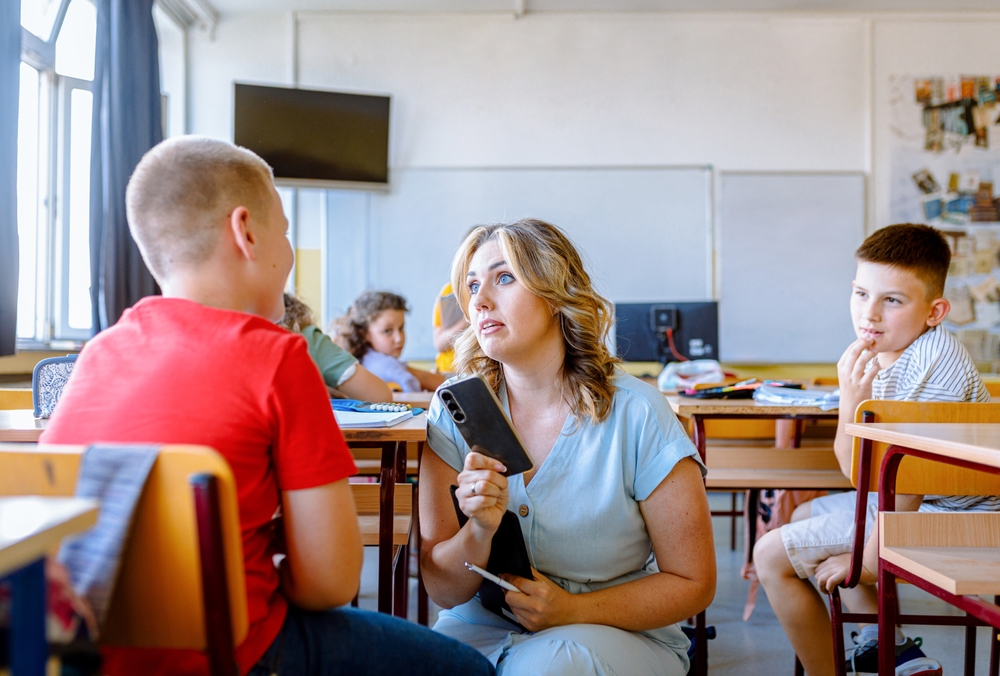
Teacher And Student
A teacher works with students in an inclusive classroom, highlighting the growing need for specialized support, smaller class sizes, and additional staff to make mainstreaming successful. (Pexels).

Teachers across the United States are raising concerns that mainstreaming in classrooms is becoming increasingly difficult to manage without additional support, funding, and specialized staff. While educating students with disabilities alongside their peers remains an important goal, many educators say the current reality often falls short of the vision. Instead of questioning inclusion itself, teachers are pointing to overcrowded classrooms, staffing shortages, and growing behavioral and academic challenges that make it harder to meet every student’s needs. As schools continue expanding inclusive practices, the debate has shifted from whether mainstreaming matters to whether schools have the resources to make it successful.

Why More Teachers Are Speaking Out

Mainstreaming in classrooms has become standard practice in many school districts, with most students receiving special education services spending a significant portion of their day in general education settings. Supporters say inclusive classrooms promote stronger social skills, improve peer relationships, and reduce stigma for students with disabilities. However, many teachers argue that inclusion only works when schools provide adequate support staff, co-teachers, and specialized training. Recent education research has also questioned whether academic outcomes consistently improve without those supports, adding new complexity to the conversation. Rather than opposing inclusion, many educators say they want policymakers to focus on building the infrastructure needed for success.

Classroom Demands Continue to Grow

A typical classroom today may include students working at several different academic levels, along with children who require individualized accommodations, behavioral interventions, or speech and occupational services. Teachers often balance lesson planning, classroom management, and documentation while trying to ensure every student remains engaged. For example, one teacher may spend several minutes helping a student experiencing sensory overload while simultaneously keeping twenty-five other students focused on a math lesson. Those interruptions are understandable and necessary, but they also illustrate why teachers frequently report feeling overwhelmed. As student needs become more diverse, the demands on classroom educators continue to increase.

Research Highlights Both Benefits and Challenges

Research on mainstreaming in classrooms presents a more nuanced picture than many headlines suggest. Some studies have found meaningful social and emotional benefits for students learning alongside their peers, while recent reviews question whether academic gains are as clear when specialized instruction is limited. A major review published in 2025 concluded that decades of research have not definitively settled which educational setting consistently produces the strongest academic outcomes for every student. Experts increasingly agree that successful inclusion depends less on placement alone and more on providing intensive interventions, collaboration, and individualized support. That distinction is becoming central to today’s discussion about improving special education services.

Resources Often Determine Success

Teachers consistently say the biggest issue is not mainstreaming in classrooms itself but the shortage of resources that accompany it. Many districts continue struggling to hire special education teachers, classroom aides, school psychologists, and behavioral specialists, leaving general education teachers to shoulder additional responsibilities. Large class sizes can also make individualized instruction significantly more difficult, particularly when several students require intensive support at the same time. Schools that invest in co-teaching models, ongoing professional development, and smaller student-to-teacher ratios often report stronger outcomes for both general and special education students. These examples suggest that successful inclusion depends heavily on adequate staffing rather than policy alone.

The Real Conversation Schools Need to Have

Parents sometimes worry that acknowledging classroom challenges means opposing inclusion, but that is not necessarily the case. Most educators support providing students with disabilities access to their peers whenever appropriate, while also recognizing that every child learns differently. The goal is to ensure each student receives instruction in an environment where they can make meaningful academic and social progress. Honest conversations about staffing shortages, teacher burnout, and individualized learning plans can strengthen inclusive education rather than weaken it. Addressing those issues may help schools deliver the quality education every student deserves.

Looking Beyond the Debate

The discussion surrounding mainstreaming in classrooms is unlikely to disappear anytime soon because it touches students, families, teachers, and entire school communities. The growing consensus among many education experts is that inclusion succeeds when schools invest in people, training, and evidence-based supports instead of relying on classroom placement alone. Teachers are not asking schools to abandon inclusion; they are asking for the tools needed to make it work effectively for every learner. As enrollment and student needs continue evolving, those investments may become more important than ever.

What do you think schools should prioritize to make inclusive education more successful? Share your thoughts in the comments and join the conversation.

What to Read Next

Teachers Admit These Classroom Changes Are Hurting Neurodivergent Students

5 Red Flags Teachers Look for in Children With Learning Disabilities

7 Things Your Child’s Teacher is Legally Required to Report to the State

Evan Morgan

Evan Morgan has been a full-time freelance writer and editor for 10+ years. When not working, he enjoys catching the latest true crime documentary or getting lost in a good book.
Filed Under: Education Tagged With: classroom management, education, inclusive education, K-12 education, mainstreaming in classrooms, Schools, special education, student learning, teacher shortage, teachers

Teachers Say This Common Parent Habit Is Making Classrooms Harder to Manage

March 19, 2026 | Leave a Comment

Common Parent Habit
Image source: shutterstock.com

You probably think you are helping your child when you send that quick text during the school day. It feels like a small way to stay connected or handle a sudden change in soccer practice. However, educators are sounding the alarm on a trend that is quietly dismantling classroom focus. This habit seems harmless on the surface but creates a ripple effect of anxiety and distraction for students and staff alike. Constant digital access is actually hindering the ability of your child to learn and thrive. You will discover how stepping back can move your child forward in the long run.

The Digital Umbilical Cord That Stifles Independence

Honestly, the urge to check in is completely understandable in an uncertain world. We want to know our kids are safe and happy at every moment of the day. Yet, teachers report that students are now reaching for their phones the second they feel a minor frustration. Instead of asking a peer for help or navigating a social hiccup, they text home. This immediate escape hatch prevents them from developing the very problem-solving skills they need for adulthood. It turns a manageable classroom into a series of individual crises handled via text message.

When a parent responds instantly to a non-emergency, it validates the idea that the child cannot handle the school day alone. This constant back-and-forth disrupts the flow of instruction and pulls the student out of the learning environment. Teachers find themselves competing with a glowing screen for the attention of a student. On the other hand, a student who knows they cannot reach home until the final bell is forced to engage with their surroundings. They learn to trust their own judgment and the authority of the adults in the room.

Surprisingly, many parents do not realize that their messages are actually fueling student stress. A child who is constantly tethered to home through a device never fully settles into the school community. They remain in a state of hyper-vigilance, waiting for the next notification from you. By setting firmer boundaries, you give your child the gift of being fully present where they are. This shift allows the classroom to become a place of discovery rather than a satellite office for family logistics.

Why Your Quick Text Is a Major Distraction

Every time a phone vibrates in a pocket, the brain of a student leaves the math problem or the literature discussion. It takes several minutes for a young mind to reach a state of deep focus again. When half the class is receiving check-in texts, the teacher spends more time managing devices than teaching content. This creates an environment where deep learning becomes nearly impossible for everyone involved. It triggers emotional spikes during academic time that the teacher then has to de-escalate without knowing the context of your home conversation.

Furthermore, this habit undermines the role of the teacher as the primary guide in the classroom. If a child feels they can bypass school rules by reaching out to you, they stop respecting the internal boundaries of the institution. This creates a culture of instant gratification over persistence. It fosters unnecessary anxiety about life outside the classroom when they should be focused on their development within it. Teachers are asking for a return to the days where school was a sanctuary from the digital noise of the outside world.

Moving Toward Digital Independence

Establishing a no-contact window during school hours is one of the most effective ways to support the mental health of your child. Recent studies from 2026 show that reducing device access leads to meaningful gains in student achievement and a calmer environment. This allows them to build durable skills like communication, critical thinking, and adaptability. When they know they are responsible for their own day, they rise to the occasion. Your trust in their ability to navigate a few hours without you is the strongest vote of confidence you can give.

It is time to cut the digital cord for the sake of their education. Have you noticed your child becoming more anxious because of their phone? Please think about how these interruptions change their day and leave a comment below to let us know your thoughts on classroom phone policies.

What To Read Next…

  • ‘Gentle Parenting’ Fades in 2026 — The Trend Replacing It
  • 8 Once-Normal ’70s Kids Hobbies That Helicopter Parenting Quietly Killed
  • 7 Parenting Expenses That Quietly Drain Budgets After the Holidays
Latrice Perez

Latrice is a dedicated professional with a rich background in social work, complemented by an Associate Degree in the field. Her journey has been uniquely shaped by the rewarding experience of being a stay-at-home mom to her two children, aged 13 and 5. This role has not only been a testament to her commitment to family but has also provided her with invaluable life lessons and insights.  As a mother, Latrice has embraced the opportunity to educate her children on essential life skills, with a special focus on financial literacy.

Filed Under: Money and Finances Tagged With: child independence, classroom management, digital boundaries, education trends, Parenting, school habits, teacher advice

7 School Behaviors Teachers Say Are Getting Harder to Manage in 2026

March 5, 2026 | 1 Comment

school behaviors
Image source: shutterstock.com

Stepping into a modern classroom feels less like an educational journey and more like navigating a high-stakes social experiment. You might remember school as a place of rigid rows and quiet whispers, but the reality for teachers in 2026 has shifted into something nearly unrecognizable. It is not just that kids are being kids. Rather, the very foundation of how they interact with the world has been rewritten by a decade of digital saturation and shifting home dynamics. If you feel like the stories you hear from teacher friends are getting more intense, you are right. This exploration looks at the specific behaviors currently pushing our educators to the brink and why the old discipline playbook no longer works.

1. The Death of the Internal Filter

The boundary between a private thought and a public statement has almost entirely vanished in middle and high schools. Students now vocalize every passing whim, insult, or observation without a second of hesitation. This is not necessarily a sign of malice, but it reflects a world where every thought is instantly validated by social media. Teachers find themselves constantly pausing lessons to address blunt, often hurtful comments that students do not even realize are inappropriate. It creates an environment where the flow of learning is interrupted every few minutes by a verbal outburst that needs de-escalation. These behavioral shifts require constant redirection from staff members.

2. Chronic Digital Disassociation

Many students are physically present but mentally miles away, trapped in a loop of digital dopamine. Even when phones are tucked away in cubbies, the mental withdrawal is visible in their glazed expressions and lack of focus. Teachers report that getting a teenager to engage with a physical book or a handwritten assignment feels like asking them to climb a mountain without gear. This disassociation makes it incredibly difficult to build the sustained attention required for complex problem-solving. Furthermore, the frustration students feel when they cannot check their notifications often manifests as irritability or sudden anger toward their peers. You can find more about digital wellness in schools to understand this struggle.

3. An Inability to Handle Boredom

We live in an era of instant gratification, and it has stripped away a vital life skill: the ability to sit with boredom. Education requires moments of quiet reflection and repetitive practice, but many students now view these lulls as a personal affront. Surprisingly, this lack of patience leads to disruptive behaviors like wandering the room or picking fights just to create a spark of stimulation. Educators are being forced to act as entertainers rather than instructors just to keep the peace. When the stimulus drops, the behavior issues rise, leaving teachers exhausted by the constant need to perform.

4. The Rise of Perceived Victimization

There is a growing trend where any form of correction or boundary-setting is viewed by the student as a personal attack or a sign of unfairness. If a teacher asks a student to lower their voice or put away a distraction, the response is often a defensive escalation. This shift makes it nearly impossible to maintain a standard of conduct because the student feels they are being singled out. It is an exhausting cycle for staff who are simply trying to keep a classroom safe and functional. Consequently, many veteran teachers are stepping back because they feel they can no longer give simple instructions without starting a legal or emotional battle. Organizations like the National Education Association track these retention issues.

5. Fragmented Social Stamina

Socializing is a muscle, and for many kids in 2026, that muscle has atrophied significantly. They struggle to navigate minor disagreements without turning them into week-long digital feuds that spill back into the hallways. Small misunderstandings that used to be settled with a quick chat now require hours of mediation by counselors and administrators. This lack of social stamina means that group work, once a staple of the classroom, has become a minefield of potential conflict. Teachers spend more time being referees than they do teaching the actual curriculum.

6. Aggressive Academic Defiance

It used to be that a student might quietly skip an assignment they did not want to do. Today, that avoidance has turned into an active, vocal defiance against the very idea of academic effort. There is a sense of nihilism among some age groups where they openly question the utility of learning when they see influencers making millions for seemingly nothing. This makes it hard to motivate a classroom when a significant portion of the room is loudly proclaiming that the work is pointless. It is a systemic challenge that goes far beyond the classroom walls and touches on how we value expertise as a society.

7. The Vanishing Support from Home

Perhaps the most difficult behavior to manage is the one that starts outside the school through the breakdown of the parent-teacher partnership. Educators are finding that when they reach out for help with a student’s behavior, they are met with either silence or hostility. Instead of working together, many parents now view the school as an adversary, which emboldens the student to continue the disruptive behavior. Without a unified front, teachers are left on an island, trying to manage complex psychological and social issues with very little leverage. This isolation is a primary driver of the burnout we see in the industry today. Resources for strengthening school-home bonds are more important than ever.

The system is currently under an immense amount of pressure, and the cracks are showing in the way our children behave and our teachers struggle. It is easy to blame the kids or the schools, but these behaviors are symptoms of a much larger shift in our cultural and digital landscape. Recognizing these challenges is the first step toward validating the impossible job our educators are doing every single day. We must decide if we are going to leave them to manage these shifts alone or if we are going to rebuild the community support they so desperately need. Your insight matters here because these students are the ones who will eventually run our world.

What do you think is the biggest hurdle facing schools right now? Please leave a comment below and share your thoughts.

What To Read Next…

  • The 5 Educational Apps That Teachers Say Are Actually Hurting Grades
  • 10 “Educational” Outings That Uncover Real Financial Strain
  • 7 Children’s Shows That Experts Say Spike Anxiety Levels
Latrice Perez

Latrice is a dedicated professional with a rich background in social work, complemented by an Associate Degree in the field. Her journey has been uniquely shaped by the rewarding experience of being a stay-at-home mom to her two children, aged 13 and 5. This role has not only been a testament to her commitment to family but has also provided her with invaluable life lessons and insights.  As a mother, Latrice has embraced the opportunity to educate her children on essential life skills, with a special focus on financial literacy.

Filed Under: Education Tagged With: 2026 trends, classroom management, digital distraction, Education Crisis, Parenting, school behaviors, social-emotional learning, student discipline, teacher burnout

  • Facebook
  • Pinterest
  • RSS
  • Twitter

Basic Principles Of Good Parenting

Here some basic principles for good parenting:

  1. What You Do Matters: Your kids are watching you. So, be purposeful about what you want to accomplish.
  2. You Can’t be Too Loving: Don’t replace love with material possessions, lowered expectations or leniency.
  3. Be Involved Your Kids Life: Arrange your priorities to focus on what your kid’s needs. Be there mentally and physically.
  4. Adapt Your Parenting: Children grow quickly, so keep pace with your child’s development.
  5. Establish and Set Rules: The rules you set for children will establish the rules they set for themselves later.  Avoid harsh discipline and be consistent.
  6. Explain Your Decisions: What is obvious to you may not be evident to your child. They don’t have the experience you do.
  7. Be Respectful To Your Child: How you treat your child is how they will treat others.  Be polite, respectful and make an effort to pay attention.
Best Parenting Blogs

Most Popular

Baby

9 Unusual Baby Names That Sound Like They Belong to Future CEOs

Evan Morgan
Baby

10 Baby Names That Were Once Considered “Grandparent Names” but Feel Cool Again

Evan Morgan
Target Store

Choking Incident Prompts Recall of 49,000 Target Gigglescape “Under the Sea” Popping Toys

Evan Morgan
Frustrated Girl

Why Some Students on the Spectrum Are Labeled With ODD

Evan Morgan
Coke Bottles

12 Things Kids Took to School in the ’70s That Would Never Be Allowed Today

Evan Morgan

All content on Kids Ain’t Cheap is for entertainment purposes only. By reading this blog, you agree that Kids Ain’t Cheap is not responsible for any actions taken after reading this blog. For the full disclaimer, see our privacy policy.

Please note that Kids Ain’t Cheap has financial relationships with some of the merchants mentioned here. Kids Ain’t Cheap is funded by banner advertising, commission sales and search optimization consulting.

Copyright © 2006–2026 | District Media | All Rights Reserved | Privacy Policy

Copyright © 2026 Runway Pro Theme by Viva la Violette