• Home
  • About Us
  • Toolkit
  • Archives
  • Advertise
  • Privacy Policy

Kids Ain't Cheap

But They Sure Are Worth It

  • Parenting
    • Baby Stuff
    • Books and Reading
      • Aesops Fables
      • Comic Books
    • Education
    • Family Time
    • Green Living
    • Growing Up
    • Healthy Living & Eating
    • Holidays
    • Parenting
    • Random Musings
    • Shopping
    • Stuff to Do
  • Money
  • Product Reviews
    • Books and Magazines
    • Discount Sites
    • Furniture
    • House Keeping
    • Reviews News
    • Toys and Games
  • Contact Us
  • Our Editorial Commitment
  • Search

Teachers Say This Common Parent Habit Is Making Classrooms Harder to Manage

March 19, 2026 | Leave a Comment

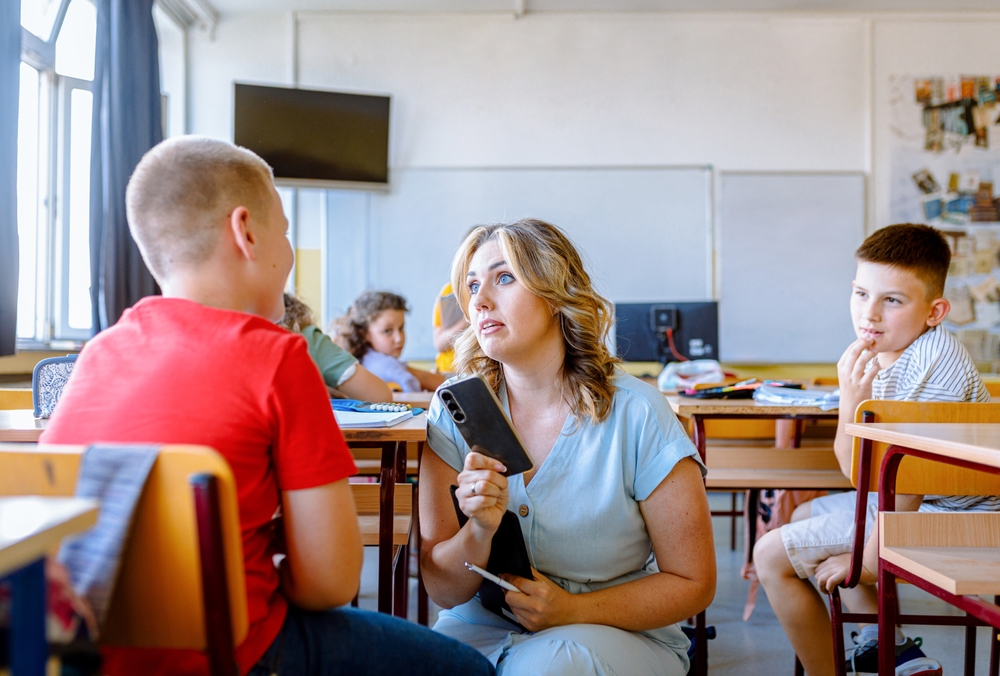
Common Parent Habit
Image source: shutterstock.com

You probably think you are helping your child when you send that quick text during the school day. It feels like a small way to stay connected or handle a sudden change in soccer practice. However, educators are sounding the alarm on a trend that is quietly dismantling classroom focus. This habit seems harmless on the surface but creates a ripple effect of anxiety and distraction for students and staff alike. Constant digital access is actually hindering the ability of your child to learn and thrive. You will discover how stepping back can move your child forward in the long run.

The Digital Umbilical Cord That Stifles Independence

Honestly, the urge to check in is completely understandable in an uncertain world. We want to know our kids are safe and happy at every moment of the day. Yet, teachers report that students are now reaching for their phones the second they feel a minor frustration. Instead of asking a peer for help or navigating a social hiccup, they text home. This immediate escape hatch prevents them from developing the very problem-solving skills they need for adulthood. It turns a manageable classroom into a series of individual crises handled via text message.

When a parent responds instantly to a non-emergency, it validates the idea that the child cannot handle the school day alone. This constant back-and-forth disrupts the flow of instruction and pulls the student out of the learning environment. Teachers find themselves competing with a glowing screen for the attention of a student. On the other hand, a student who knows they cannot reach home until the final bell is forced to engage with their surroundings. They learn to trust their own judgment and the authority of the adults in the room.

Surprisingly, many parents do not realize that their messages are actually fueling student stress. A child who is constantly tethered to home through a device never fully settles into the school community. They remain in a state of hyper-vigilance, waiting for the next notification from you. By setting firmer boundaries, you give your child the gift of being fully present where they are. This shift allows the classroom to become a place of discovery rather than a satellite office for family logistics.

Why Your Quick Text Is a Major Distraction

Every time a phone vibrates in a pocket, the brain of a student leaves the math problem or the literature discussion. It takes several minutes for a young mind to reach a state of deep focus again. When half the class is receiving check-in texts, the teacher spends more time managing devices than teaching content. This creates an environment where deep learning becomes nearly impossible for everyone involved. It triggers emotional spikes during academic time that the teacher then has to de-escalate without knowing the context of your home conversation.

Furthermore, this habit undermines the role of the teacher as the primary guide in the classroom. If a child feels they can bypass school rules by reaching out to you, they stop respecting the internal boundaries of the institution. This creates a culture of instant gratification over persistence. It fosters unnecessary anxiety about life outside the classroom when they should be focused on their development within it. Teachers are asking for a return to the days where school was a sanctuary from the digital noise of the outside world.

Moving Toward Digital Independence

Establishing a no-contact window during school hours is one of the most effective ways to support the mental health of your child. Recent studies from 2026 show that reducing device access leads to meaningful gains in student achievement and a calmer environment. This allows them to build durable skills like communication, critical thinking, and adaptability. When they know they are responsible for their own day, they rise to the occasion. Your trust in their ability to navigate a few hours without you is the strongest vote of confidence you can give.

It is time to cut the digital cord for the sake of their education. Have you noticed your child becoming more anxious because of their phone? Please think about how these interruptions change their day and leave a comment below to let us know your thoughts on classroom phone policies.

What To Read Next…

  • ‘Gentle Parenting’ Fades in 2026 — The Trend Replacing It
  • 8 Once-Normal ’70s Kids Hobbies That Helicopter Parenting Quietly Killed
  • 7 Parenting Expenses That Quietly Drain Budgets After the Holidays
Latrice Perez

Latrice is a dedicated professional with a rich background in social work, complemented by an Associate Degree in the field. Her journey has been uniquely shaped by the rewarding experience of being a stay-at-home mom to her two children, aged 13 and 5. This role has not only been a testament to her commitment to family but has also provided her with invaluable life lessons and insights.  As a mother, Latrice has embraced the opportunity to educate her children on essential life skills, with a special focus on financial literacy.


Filed Under: Money and Finances Tagged With: child independence, classroom management, digital boundaries, education trends, Parenting, school habits, teacher advice

Teachers Share the 5 Valentine’s Gifts That End Up in the Trash Immediately

February 6, 2026 | Leave a Comment

Teachers Share the 5 Valentine’s Gifts That End Up in the Trash Immediately
Image Source: Shutterstock.com

Every February, classrooms across the country transform into a sea of pink construction paper, glitter explosions, and tiny folded cards that smell faintly of fruit punch. Kids love it, teachers embrace it, and parents do their best to keep up with whatever the classroom newsletter demands.

But behind the scenes, teachers say there are a few Valentine’s gifts that don’t just miss the mark—they go straight into the trash before the final bell rings. Not because teachers are ungrateful, but because some items simply can’t be reused, stored, or safely kept in a classroom full of energetic children.

1. The Glitter Bomb Creations That Shed for Eternity

Teachers love creativity, but glitter is their sworn enemy. When a child hands over a Valentine coated in loose glitter, teachers know exactly what’s coming: a week of sparkling floors, shimmering desks, and students who look like they’ve been dipped in fairy dust. Glitter doesn’t stay put, no matter how much glue was used or how carefully the card was crafted. It transfers to clothing, carpets, and even the teacher’s lunch.

Many teachers say these cards are admired briefly and then tossed because they simply can’t risk the glitter spreading any further. If your child loves sparkle, consider glitter stickers or metallic paper instead. They offer the shine without the classroom chaos.

2. Oversized Stuffed Animals That Have Nowhere to Live

Kids adore stuffed animals, but teachers have no place to store them—and no way to manage the drama that follows when one child gets a giant plush bear and another gets a paper card. Oversized stuffed animals take up valuable classroom space, collect dust, and often become distractions during lessons. Teachers say they usually end up quietly discarding them because they can’t send them home on the bus, can’t keep them in the classroom, and can’t donate them without permission.

If your child wants to give something soft and cute, try small Valentine‑themed erasers or stickers. They’re adorable, affordable, and won’t require a storage plan.

Teachers Share the 5 Valentine’s Gifts That End Up in the Trash Immediately
Image Source: Shutterstock.com

3. Homemade Baked Goods That Can’t Be Shared

Teachers appreciate the effort behind homemade treats, but most schools have strict rules about food safety and allergies. That means cupcakes, cookies, and chocolate‑covered anything—no matter how delicious—usually can’t be distributed. Teachers often have to throw them away immediately, even if they feel guilty doing it. They simply can’t risk serving food without ingredient labels or allergen information.

If you want to send something edible, stick to prepackaged items with clear labeling. It keeps everyone safe and ensures your thoughtful gesture doesn’t end up in the trash.

4. Scented Lotions and Bath Products That Trigger Allergies

Scented gifts may seem like a sweet idea, but teachers say they’re one of the most commonly discarded Valentine’s items. Many classrooms have students with fragrance sensitivities, asthma, or skin allergies, which means teachers can’t keep or use heavily scented lotions, sprays, or bath products. Even mild scents can cause headaches or reactions in a closed classroom environment.

Teachers often toss these items immediately to avoid any issues. If you want to give a small self‑care gift, consider unscented hand wipes or a simple handwritten note of appreciation. It’s thoughtful without being risky.

5. Tiny Plastic Toys That Break Before Lunch

Teachers say the number one Valentine’s gift that ends up in the trash is tiny plastic toys—think mini slinkies, plastic rings, tiny figurines, or novelty gadgets. These items break easily, become choking hazards, or get lost within minutes. They clutter desks, distract students, and often cause arguments when one child’s toy breaks and another’s doesn’t.

Teachers usually sweep them into the trash during cleanup because they can’t store them, fix them, or send them home safely. If you want to give something fun, try small activity sheets, bookmarks, or stickers. They’re still exciting for kids but far more classroom‑friendly.

Teachers Aren’t Ungrateful—They’re Just Trying to Survive the Day

It’s important to remember that teachers genuinely appreciate the thought behind every Valentine’s gift, even the ones they can’t keep. Their goal isn’t to discourage generosity but to help families choose items that are safe, practical, and classroom‑appropriate. When you pick gifts that won’t shed glitter, trigger allergies, or break instantly, you’re making the day easier for everyone—especially the teacher who has to manage 20 or more excited kids on a sugar‑fueled holiday. A simple card, a small treat, or a heartfelt note can mean far more than any elaborate gift.

What about you—have you ever sent a Valentine’s gift only to realize later it probably didn’t survive the school day? Tell us about it in the comments below.

You May Also Like…

The 5 “Educational” Apps That Teachers Say Are Actually Hurting Grades

6 Valentine’s Cards That Parents Regret Sending for Years

6 After-School Activities Parents Regret Paying For (Because the “Benefits” Don’t Show Up)

Nutritionists Warn: 6 “Healthy” Lunchbox Staples That Spike Sugar Crashes at School

8 Parent-Teacher Conversations That Can Hurt a Child’s Mental Health

Brandon Marcus
Brandon Marcus
Brandon Marcus is a writer who has been sharing the written word since a very young age. His interests include sports, history, pop culture, and so much more. When he isn’t writing, he spends his time jogging, drinking coffee, or attempting to read a long book he may never complete.

Filed Under: Education Tagged With: 2026 holidays, classroom gifts, classroom parties, family life, holiday trends, kids activities, parenting tips, school events, teacher advice, teacher insights, Valentines Day

10 Parent Habits That Teachers Say Are Making Kids Rude

October 10, 2025 | Leave a Comment

10 Parent Habits That Teachers Say Are Making Kids Rude
Image source: shutterstock.com

Teachers see more than just grades and attendance—they observe the behavior patterns shaping the next generation. And lately, many educators have raised concerns that certain parent habits are unintentionally creating a wave of ruder, less empathetic kids. While every family is unique, there are common behaviors teachers identify as warning signs that children aren’t learning essential respect, patience, or self-control. Recognizing these patterns early can help parents reset and build better foundations for kindness and accountability.

1. Overexplaining or Excusing Bad Behavior

One of the most damaging parent habits teachers notice is constantly explaining away a child’s bad behavior. Parents may think they’re being supportive by saying things like, “He’s just tired,” or “She’s acting out because she’s bored.” But these excuses teach children to rationalize rudeness instead of learning responsibility. Teachers say it’s more effective to acknowledge the behavior and help kids make amends, rather than shifting blame. Setting clear boundaries shows kids that respect matters in every situation.

2. Doing Everything for Their Child

Many parents jump in too quickly to fix every problem—packing forgotten lunches, redoing homework, or emailing teachers to resolve issues. This well-meaning rescue habit teaches kids that others will always step in to clean up their messes. Teachers report that students who never face natural consequences often become entitled and impatient with others. Encouraging independence helps kids develop resilience and humility. Responsibility builds character in a way overprotection never can.

3. Ignoring Manners at Home

Teachers often say rude kids don’t learn it at school—they bring it from home. When “please,” “thank you,” and “excuse me” aren’t part of daily life, kids quickly internalize the idea that basic manners are optional. Parents set the standard for respect in tone and behavior, whether it’s how they speak to servers, cashiers, or each other. Making politeness a family norm helps children carry it naturally into classrooms and friendships. Respect is learned through consistent modeling.

4. Allowing Constant Interruptions

Another common issue teachers highlight among parent habits is letting kids interrupt adult conversations or demand attention instantly. While parents may view it as harmless enthusiasm, teachers see students who struggle to wait their turn or listen to others. Practicing patience at home—such as waiting politely before speaking—can make a huge difference. It teaches empathy and self-control, two skills critical for both school and life. Listening is as valuable as speaking, and it starts with practice.

5. Criticizing Teachers in Front of Kids

When parents openly criticize educators, kids pick up on that disrespect fast. Comments like “Your teacher doesn’t know what she’s doing” can erode authority and encourage defiance in the classroom. Teachers say this habit makes it much harder to maintain order or cooperation. Even if parents disagree with a teacher’s approach, it’s best to discuss concerns privately or model respectful disagreement. Showing kids how to handle conflict maturely sets a powerful example for future interactions.

6. Rewarding Every Little Thing

Modern parenting often blurs the line between encouragement and overpraise. Constantly rewarding kids for basic expectations—like cleaning up or finishing homework—can create a sense of entitlement. Teachers note that students accustomed to endless praise often react poorly to constructive criticism. Genuine self-esteem comes from effort and accomplishment, not constant approval. Recognizing big achievements while expecting everyday effort builds healthier motivation.

7. Allowing Too Much Screen Time

Too much screen exposure is one of the parent habits most linked to rude or impatient behavior. Teachers frequently observe students who mimic online sarcasm or struggle to read emotional cues in real life. Excessive time on tablets or phones also limits empathy and face-to-face communication skills. Setting screen boundaries allows kids to practice real-world interactions. Conversations, eye contact, and shared activities are the best antidotes to digital disconnection.

8. Not Teaching Accountability

When kids don’t face the consequences of their actions, they learn that blame can always be shifted elsewhere. Teachers say many parents rush to defend their child, even when evidence clearly points otherwise. This undermines the lessons of honesty and responsibility. Supporting children means holding them accountable, not shielding them from mistakes. Owning up to misbehavior is a vital life skill—and one that starts at home.

9. Neglecting Empathy and Gratitude

Teachers consistently find that kids who lack empathy often come from homes where appreciation isn’t emphasized. When gratitude and compassion aren’t discussed, children struggle to understand others’ perspectives. Parents can model empathy by discussing feelings, helping others, and showing appreciation daily. Simple acts—like writing thank-you notes or acknowledging kindness—make a lasting impact. Raising emotionally intelligent children starts with intentional modeling and conversation.

10. Letting Disrespect Slide

The final of these parent habits teachers warn about is ignoring small signs of disrespect. When eye-rolling, backtalk, or dismissive tones go unchecked, kids learn that boundaries are flexible. Teachers say even minor rudeness can grow into major attitude problems over time. Correcting behavior early—calmly but firmly—prevents entitlement from taking root. Respect should never be optional; it’s a daily expectation reinforced by consistent action.

Building Respect Starts at Home

Children don’t become rude overnight—it’s a reflection of what they see and what’s tolerated. Parents play the most powerful role in shaping how kids treat others. By being mindful of these parent habits, families can foster empathy, gratitude, and respect that last a lifetime. Kids who learn manners and accountability at home carry those values everywhere they go, from classrooms to future workplaces. Respect begins with the example parents set today.

Which of these parent habits do you think has the biggest impact on kids’ behavior? Share your thoughts or experiences in the comments below!

What to Read Next…

6 Innocent Parenting Habits That Lead to Big Therapy Bills Later

Parenting Pitfalls: 8 Mistakes That Could Cause Trouble With Your Kids Later

The “Harmless” Habit: 7 Health Habits Shortening Childhood For Many

Think Your Baby’s Safe? 5 Toddler Habits Stalling Brain Development

7 Daily Habits That Make You a Calmer Parent

Catherine Reed
Catherine Reed

Catherine is a tech-savvy writer who has focused on the personal finance space for more than eight years. She has a Bachelor’s in Information Technology and enjoys showcasing how tech can simplify everyday personal finance tasks like budgeting, spending tracking, and planning for the future. Additionally, she’s explored the ins and outs of the world of side hustles and loves to share what she’s learned along the way. When she’s not working, you can find her relaxing at home in the Pacific Northwest with her two cats or enjoying a cup of coffee at her neighborhood cafe.

Filed Under: Parenting Tagged With: child behavior, education, Family, parent habits, Parenting, parenting tips, respect, teacher advice

  • Facebook
  • Pinterest
  • RSS
  • Twitter

Basic Principles Of Good Parenting

Here some basic principles for good parenting:

  1. What You Do Matters: Your kids are watching you. So, be purposeful about what you want to accomplish.
  2. You Can’t be Too Loving: Don’t replace love with material possessions, lowered expectations or leniency.
  3. Be Involved Your Kids Life: Arrange your priorities to focus on what your kid’s needs. Be there mentally and physically.
  4. Adapt Your Parenting: Children grow quickly, so keep pace with your child’s development.
  5. Establish and Set Rules: The rules you set for children will establish the rules they set for themselves later.  Avoid harsh discipline and be consistent.
  6. Explain Your Decisions: What is obvious to you may not be evident to your child. They don’t have the experience you do.
  7. Be Respectful To Your Child: How you treat your child is how they will treat others.  Be polite, respectful and make an effort to pay attention.
Best Parenting Blogs

Most Popular

11 Ways Kids Are Outsmarting Parental Controls 1. Using Alternate Devices One common trick is simply turning to another device. If a child’s main phone or tablet is restricted, they may borrow a sibling’s, friend’s, or even a school laptop. This instantly gives them access to content outside of parental oversight. Parents often focus on one device, forgetting that others in the household can serve as loopholes. Knowing this tactic helps families tighten controls across all electronics. 2. Clearing Browsing Histories Many kids quickly learn that clearing browsing history hides evidence of restricted activity. With just a few clicks, they can erase any trace of websites visited. This makes it harder for parents to notice when rules are being broken. Parents may assume no history means no browsing, but the reality is often the opposite. Kids are outsmarting parental controls by making it seem like nothing happened at all. 3. Using Private Browsing Modes Most browsers offer “incognito” or private browsing features. Kids use this mode to access websites without leaving a record in the history. To parents checking later, everything looks clean and safe. This simple trick is often one of the first ways kids discover how to bypass restrictions. Conversations about private browsing can help close this gap. 4. Guessing or Resetting Passwords Children who are persistent may try to guess passwords to parental control apps or accounts. Others may find ways to reset them through email prompts or security questions. Once inside, they can disable restrictions entirely. Parents may not even realize controls have been altered until much later. Stronger, less predictable passwords can make this more difficult. 5. Using VPNs to Hide Activity Virtual private networks, or VPNs, let kids disguise their online locations. With one downloaded app, they can bypass geographic or parental restrictions. Some children learn about VPNs through friends or even social media. This makes it easy for them to reach content that should be blocked. Parents often underestimate just how simple it is for kids to use these tools. 6. Creating Fake Accounts When parents monitor social media, kids may create hidden accounts. These “finstas” or fake profiles allow them to interact freely without parental oversight. While their main account appears harmless, the secondary one tells a different story. Kids are outsmarting parental controls by playing both sides at once. Checking for duplicate accounts can help parents stay more aware. 7. Exploiting Time Zone Settings Some kids change the time zone on their devices to bypass screen time limits. This trick allows them to gain extra hours of usage undetected. Parents may assume controls are working, but in reality, the child is bending the clock. It’s a clever loophole that highlights just how resourceful kids can be. Monitoring device settings regularly can catch this tactic. 8. Disabling or Uninstalling Apps Parental control apps can be deleted or disabled with surprising ease. Some kids even reinstall them before a parent checks, making it seem like nothing changed. Others may simply restrict permissions to prevent apps from functioning properly. When apps aren’t monitored closely, parents may not notice they’ve been tampered with. This shows the importance of consistent follow-up. 9. Turning to Friends for Access If a child can’t get past restrictions on their own, they may rely on friends. Visiting a friend’s house or borrowing their phone can give them a free pass. Parents often forget that peer environments can override restrictions set at home. This kind of social workaround is especially common with gaming or social media. Open conversations about trust and responsibility are essential. 10. Hiding Apps in Plain Sight Kids sometimes download apps that look innocent but serve as gateways to hidden activity. These apps may disguise themselves as calculators or utilities. In reality, they allow file storage, private messaging, or browser access. Parents glancing at a home screen may overlook them entirely. Learning to recognize these disguised apps can help parents stay informed. 11. Outpacing Parents’ Tech Knowledge Finally, kids often know more about devices than their parents do. Whether through YouTube tutorials, TikTok hacks, or peer groups, they quickly learn advanced workarounds. This knowledge gap means controls can be bypassed before parents even realize the loophole exists. Staying informed and continually learning about new technology is the best defense. Kids are outsmarting parental controls because they adapt faster than most adults. The Real Solution Lies Beyond Restrictions While controls and filters are important, no system is perfect. Kids will always find creative ways around barriers, making communication the strongest safeguard. Setting clear expectations, building trust, and having ongoing conversations about online behavior matter more than apps alone. Parents who combine technology with open dialogue create a safer digital environment. The goal isn’t to win a battle of wits but to build a relationship that keeps kids both safe and honest. Do you think kids are outsmarting parental controls faster than parents can keep up? Share your experiences in the comments below. What to Read Next... 6 Parenting Tech Shortcuts That Can Expose Your Child to Strangers How Much Screen Time Is Too Much—Legally Speaking? Is Your Child’s School Quietly Tracking Their Location Without Your Consent? How Much Screen Time Is Quietly Reshaping Childhood Behavior? Why Some Parents Are Being Investigated Over Homeschooling Records

11 Ways Kids Are Outsmarting Parental Controls

Catherine Reed
Smiling grandfather holding a happy baby indoors.

Why Grandparents Shouldn’t Babysit Their Grandkids Every Week – The Unspoken Issue

Samantha
Girl getting makeup done, referencing psychologist-approved age.

Wearing Makeup: Here Is the Age That Psychologists Agree It’s Okay for Girls to Wear Makeup

Samantha
birthday gifts

7 Birthday Gifts Your Child Should Never Bring to a Party

Latrice Perez

Babysitting Without Cash: 10 Ways to Barter Your Way Out of Childcare Costs

Ashleigh Clyde

All content on Kids Ain’t Cheap is for entertainment purposes only. By reading this blog, you agree that Kids Ain’t Cheap is not responsible for any actions taken after reading this blog. For the full disclaimer, see our privacy policy.

Please note that Kids Ain’t Cheap has financial relationships with some of the merchants mentioned here. Kids Ain’t Cheap is funded by banner advertising, commission sales and search optimization consulting.

Copyright © 2006–2026 | District Media | All Rights Reserved | Privacy Policy

Copyright © 2026 Runway Pro Theme by Viva la Violette