• Home
  • About Us
  • Toolkit
  • Archives
  • Advertise
  • Privacy Policy

Kids Ain't Cheap

But They Sure Are Worth It

  • Parenting
    • Baby Stuff
    • Books and Reading
      • Aesops Fables
      • Comic Books
    • Education
    • Family Time
    • Green Living
    • Growing Up
    • Healthy Living & Eating
    • Holidays
    • Parenting
    • Random Musings
    • Shopping
    • Stuff to Do
  • Money
  • Product Reviews
    • Books and Magazines
    • Discount Sites
    • Furniture
    • House Keeping
    • Reviews News
    • Toys and Games
  • Contact Us
  • Our Editorial Commitment
  • Search

Experts Say Summer Screen Time Can Spiral Faster Than Parents Realize

June 5, 2026 | Leave a Comment

Young Girl On Tablet
Children often spend significantly more time on devices during summer break when daily routines disappear. Experts recommend balancing screen use with outdoor play, physical activity, and family interaction. Pexels.

As school doors close and long summer days begin, many families find themselves relaxing rules around devices. A few extra minutes on a tablet can quickly become hours spent scrolling videos, gaming, or chatting online. Experts say summer screen time often increases faster than parents expect because daily routines, school schedules, and structured activities temporarily disappear. What starts as harmless entertainment can gradually replace physical activity, social interaction, and even healthy sleep habits. For parents, recognizing how quickly screen use can escalate is the first step toward maintaining a healthy balance.

Why Summer Creates the Perfect Storm for Excessive Screen Use

Summer offers children more free time than any other season, which naturally increases opportunities to use screens. Without homework, early bedtimes, and classroom schedules, many kids turn to digital entertainment to fill empty hours. According to Common Sense Media, tweens average more than five hours of daily screen media use, while teens average more than eight hours, excluding school-related activities. During summer break, those numbers can climb even higher when structure disappears. Experts note that screen habits often build gradually, making it difficult for parents to notice the increase until it becomes a daily routine.

The Hidden Effects Parents Often Miss

Many parents focus on the total amount of screen time but overlook how it affects other areas of life. Excessive screen use can interfere with sleep schedules, reduce physical activity, and limit face-to-face interactions with family and friends. Health experts continue to emphasize that screen use becomes problematic when it replaces essential activities such as exercise, reading, outdoor play, or adequate rest. Children may also become more irritable when devices are removed after extended use. These subtle changes often appear gradually, making them easy to dismiss as normal summer behavior.

Not All Screen Time Is Created Equal

Experts stress that parents should focus on screen quality as much as screen quantity. A child participating in a virtual art class or educational program is having a different experience than one endlessly scrolling short-form videos. The American Academy of Pediatrics has moved toward encouraging families to create personalized media plans rather than relying solely on strict hourly limits. Parents should consider what content their children consume, how they engage with it, and whether it supports learning or creativity. Looking at the purpose behind screen use often provides a clearer picture than simply counting hours.

Practical Ways to Keep Summer Screen Time in Check

Creating structure remains one of the most effective ways to manage summer screen time. Families can establish screen-free blocks during meals, outdoor activities, and the hour before bedtime. Experts also recommend encouraging children to earn screen privileges through reading, chores, sports, or creative projects. A simple schedule that includes outdoor play, social activities, and family time can significantly reduce the temptation to spend the entire day on devices. Consistency matters more than perfection, and small daily boundaries often work better than sudden restrictions.

Why Parents Should Model Healthy Digital Habits

Children pay close attention to how adults use technology. When parents constantly check phones during meals or conversations, kids receive the message that screens deserve priority attention. Experts recommend creating family-wide expectations that apply to everyone, not just children. This might include device-free dinners, designated charging stations outside bedrooms, or family activities that do not involve screens. When parents model healthy habits, children are more likely to accept and follow similar expectations.

The Summer Habits That Often Last Beyond August

The routines children develop during summer frequently carry into the school year. If excessive screen use becomes the norm for several months, returning to structured schedules in the fall can be challenging. Experts recommend addressing unhealthy habits early before they become deeply ingrained. Families that establish clear expectations, encourage diverse activities, and regularly discuss digital habits often find it easier to maintain balance year-round. Summer should be a season of exploration and connection, not one dominated entirely by screens.

What changes have you made to manage summer screen time in your home, and have they worked? Share your experiences and tips in the comments to help other families navigate the challenges of summer screen time.

What to Read Next

Occupational Therapists Say Screen Overload Is Affecting Younger Kids Faster

Arizona Parents: Early Childhood Screening Efforts Expand

Screen Time Isn’t Causing Autism — But It Can Cause Autism-Like Delays

Evan Morgan

Evan Morgan has been a full-time freelance writer and editor for 10+ years. When not working, he enjoys catching the latest true crime documentary or getting lost in a good book.

Filed Under: Parenting Tagged With: child development, children and technology, digital wellness, family health, healthy habits, parenting advice, parenting tips, screen time limits, summer parenting, summer screen time

Do Family Screen Time Rules Invite Emotional Manipulation?

September 23, 2025 | Leave a Comment

Do Family Screen Time Rules Invite Emotional Manipulation?
Image source: 123rf.com

Setting limits on technology seems like a smart parenting move, but sometimes family screen time rules can backfire in surprising ways. Kids may learn to negotiate, guilt-trip, or even manipulate emotions to get more access to their devices. Parents, on the other hand, may bend their own rules out of exhaustion or guilt, creating a cycle of power struggles. What starts as a way to keep balance can quickly become a source of tension in the household. Understanding how these dynamics work can help families set boundaries that stick without damaging trust or relationships.

1. The Guilt-Trip Approach

One of the most common emotional tactics kids use when confronted with family screen time rules is guilt-tripping. Children may say things like, “Everyone else’s parents let them play longer,” or “You don’t trust me.” These statements are designed to make parents question their judgment. Parents who give in to guilt often undermine their own authority without realizing it. Holding firm to the rules while showing empathy helps break the cycle of manipulation.

2. Negotiating for “Just a Little More”

Another way children push against family screen time rules is by negotiating for small extensions. They might ask for five more minutes that quietly turn into thirty. This negotiation may feel harmless but consistently erodes the boundaries parents work hard to create. Over time, kids learn that persistence pays off more than respecting rules. Parents can prevent this by creating clear start and stop times with no wiggle room.

3. Playing the Victim Card

Some children respond to screen limits by acting as though they’ve been unfairly punished. They may pout, cry, or tell parents they feel left out socially. This behavior shifts the focus from the actual rule to the parent’s perceived “meanness.” Family screen time rules are not about punishment but about balance, and parents need to reinforce that message. Staying calm while acknowledging feelings can diffuse victim tactics.

4. Pitting Parents Against Each Other

When family screen time rules are inconsistent, kids quickly learn how to exploit the gap. A child may ask one parent for permission after being denied by the other. This tactic creates unnecessary conflict between adults and weakens household consistency. Parents can prevent manipulation by agreeing on a united front before enforcing any rule. Consistency between caregivers is one of the strongest tools against emotional pushback.

5. Promising Good Behavior in Exchange for Screen Time

Kids often bargain by promising chores, better grades, or improved behavior if they can get more screen time. While it may seem like a positive trade, this creates unhealthy leverage. Children begin to view screen time as currency rather than a balanced activity. Over time, they may use this tactic to avoid responsibility until a “reward” is on the table. Family screen time rules should be set independently of negotiations for basic responsibilities.

6. Meltdowns as Manipulation

Sometimes, kids resort to tantrums or outbursts when rules are enforced. These meltdowns can wear parents down until they cave for the sake of peace. Unfortunately, giving in reinforces the behavior, teaching kids that yelling or crying works. Parents who stay calm and consistent show that rules won’t change under pressure. Over time, this reduces the frequency of emotional outbursts.

7. Using Technology as a Social Comparison Tool

Children often argue that stricter family screen time rules put them at a disadvantage compared to their peers. They may claim they’ll be left out of social circles if they don’t get more online time. Parents naturally want their kids to feel included, but bending rules to match peers’ habits isn’t always the healthiest choice. It’s important to emphasize that every family has different values and priorities. Teaching kids’ resilience in the face of peer pressure is more valuable than unlimited screen access.

Creating Rules That Resist Manipulation

Family screen time rules don’t have to turn into daily battles if they are built with clarity, consistency, and compassion. Parents can involve children in the conversation, explain the reasoning behind limits, and model healthy screen habits themselves. By doing so, families reduce the opportunities for emotional manipulation to take hold. Clear expectations paired with empathy teach children that boundaries are an important part of life. In the long run, rules enforced with consistency and fairness foster respect rather than conflict.

Have you ever felt your kids use emotional tactics to get more screen time? Share your experiences in the comments below.

What to Read Next…

7 Reasons “Screen Time” Studies Are Misleading Parents

How Much Screen Time Is Too Much—Legally Speaking?

How Much Screen Time Is Quietly Reshaping Childhood Behavior?

The Dark Side of Kids’ YouTube You Didn’t See Coming

9 Childhood Milestones That Are Happening Later Than Ever

Catherine Reed
Catherine Reed

Catherine is a tech-savvy writer who has focused on the personal finance space for more than eight years. She has a Bachelor’s in Information Technology and enjoys showcasing how tech can simplify everyday personal finance tasks like budgeting, spending tracking, and planning for the future. Additionally, she’s explored the ins and outs of the world of side hustles and loves to share what she’s learned along the way. When she’s not working, you can find her relaxing at home in the Pacific Northwest with her two cats or enjoying a cup of coffee at her neighborhood cafe.

Filed Under: Parenting Tagged With: child behavior, digital boundaries, emotional manipulation, family screen time rules, Parenting, parenting challenges, screen time limits

Change Now: 9 Screen Time Rules You Need to Change Now

July 15, 2025 | Leave a Comment

Change Now 9 Screen Time Rules You Need to Change Now
123rf.com

Screens are everywhere, and like it or not, they’re part of our kids’ daily lives. But the old school screen time rules we once relied on may no longer fit today’s fast-paced, tech-saturated world. If your household rules feel outdated, too rigid, or just plain ineffective, it’s time for a reset. Rethinking your screen time strategy can improve your child’s sleep, learning, behavior, and family connection—without turning every device into a source of conflict. These nine screen time rules are overdue for a change and reworking them now could make a big difference for your family.

1. “No Screens During the Week”

While limiting screen use Monday through Friday sounds like a great boundary, it can create a binge-and-crash dynamic on weekends. Kids may spend all Saturday glued to a screen because they’ve been deprived all week. Instead of a total weekday ban, try spreading out screen time in short, meaningful sessions throughout the week. This teaches balance, not all-or-nothing thinking. Updating this rule can create a healthier relationship with tech.

2. “Homework First, Then Screen Time”

This rule seems solid on the surface, but it often sets up screens as a reward, doing homework feel like punishment. That mentality can do homework even harder to get through. Instead, focus on building good study habits without always tying them to screen access. Give praise for focus and effort, not just for finishing to earn screen time. A more flexible routine can reduce power struggles while keeping priorities clear.

3. “All Screen Time Is Bad”

One of the most outdated screen time rules is treating all tech use as harmful. In reality, screen time varies—there’s a big difference between watching random YouTube videos and creating a digital art project. Learning apps, educational videos, and family movie nights all serve different purposes. Rather than labeling it all as negative, focus on quality and purpose. This shift helps kids learn to engage more mindfully with screens.

4. “Only One Hour Per Day, No Exceptions”

While limiting screen time is important, rigid daily limits often backfire. Some days, your child may have a video call with grandparents, a homework assignment on a tablet, and want to unwind with a show. In those cases, one hour simply isn’t realistic. Instead of sticking to a strict time cap, think in terms of screen breaks, types of content, and daily balance. Flexible guidelines can lead to more cooperation and fewer meltdowns.

5. “Devices Stay in the Living Room Only”

This rule can be helpful, especially for young kids, but it may not work as they get older. Teenagers doing schoolwork, video chatting with friends, or relaxing may benefit from some privacy. Rather than enforcing a blanket ban, consider device zones or screen time hours instead. Emphasize safety, check-ins, and appropriate content over hard location rules. Adapting this rule to your child’s age builds trust and encourages independence.

6. “No Screens Before Bed—Ever”

It’s true that screens can disrupt sleep but making this a hard and fast rule can cause friction. The key is not the screen itself, but the type of content and how close it is to lights out. A calming story app or gentle music might help your child wind down. Rather than banning screens completely, focus on a solid bedtime routine that includes screen-free wind-down time. This rule works better when customized to your child’s needs.

7. “Use It or Lose It”

Threatening to take screens away when your child misbehaves may work short term, but over time it loses its power. Worse, it can turn screens into a constant bargaining chip. Instead, build screen time into their daily routine with clear expectations about when and how it’s used. Consequences should connect to the behavior, not just the most valuable item in reach. Consistent discipline, not knee-jerk screen bans, is more effective in the long run.

8. “I’m the Parent, I Control All the Tech”

While it’s true that you’re the one setting boundaries, being too controlling can lead to sneaky behavior or power struggles. It’s important to involve your child in setting screen time rules and revisiting them as they grow. Talk about your concerns, listen to theirs, and agree on boundaries together. When kids feel heard, they’re more likely to follow the rules. Co-creating the plan builds responsibility and mutual respect.

9. “Screens Are a Solo Activity”

Screens are often treated as something kids do alone, but they can also bring families together. Watching a movie, playing a video game cooperatively, or doing a silly filter challenge can all be bonding opportunities. By joining in occasionally, you gain insight into your child’s interests and model healthy screen habits. Not all screen time has to be isolating. Reframing screens as potential shared experiences changes the energy in a big way.

Rewriting the Rules, Rebuilding the Relationship

Screen time doesn’t have to be a constant battle. By letting go of outdated screen time rules and replacing them with thoughtful, age-appropriate, and flexible strategies, you open the door to better communication, more trust, and healthier habits. The goal isn’t to eliminate screens—it’s to help your child learn how to use them wisely. When you change the rules, you often change the results, too.

Which screen time rules have worked (or flopped) in your house? Share your experience and tips in the comments below!

Read More:

8 Rules You Must Enforce This Summer So Your Child Isn’t Left Behind

8 Parenting Trends That Sound Great (But Might Be Hurting Your Kids)

Catherine Reed
Catherine Reed

Catherine is a tech-savvy writer who has focused on the personal finance space for more than eight years. She has a Bachelor’s in Information Technology and enjoys showcasing how tech can simplify everyday personal finance tasks like budgeting, spending tracking, and planning for the future. Additionally, she’s explored the ins and outs of the world of side hustles and loves to share what she’s learned along the way. When she’s not working, you can find her relaxing at home in the Pacific Northwest with her two cats or enjoying a cup of coffee at her neighborhood cafe.

Filed Under: Parenting Tagged With: digital parenting, family tech use, healthy screen habits, kids and technology, parenting tips, screen time balance, screen time limits, screen time rules

Brain Drain: 7 Everyday Habits Hurting Your Child’s Brain Development

July 15, 2025 | Leave a Comment

Brain Drain 7 Everyday Habits Hurting Your Childs Brain Development
123rf.com

You want the best for your child—especially when it comes to their learning, creativity, and ability to thrive. But what if some of the routines that seem harmless (or even helpful) are quietly holding them back? From screen time to sleep schedules, your child’s brain development is influenced by small, daily habits that can either support or hinder their growth. The brain is especially sensitive in the early years, and negative patterns can have long-lasting effects. To raise a confident, capable thinker, it’s worth taking a closer look at what could be standing in the way.

1. Too Much Screen Time

One of the biggest threats to your child’s brain development is unregulated screen use. While digital devices can offer educational content, excessive exposure can delay language skills, shorten attention spans, and reduce face-to-face interactions. The brain develops best through real-world engagement—touching, exploring, asking questions—not passive scrolling. Screens also interfere with sleep, which is essential for memory and emotional regulation. Set limits, encourage interactive play, and model healthy screen habits yourself.

2. Skipping Breakfast or Poor Nutrition

The brain needs consistent fuel to function properly, and skipping breakfast or feeding kids sugar-loaded meals can lead to dips in concentration and mood. Nutrients like iron, omega-3 fatty acids, and protein are essential for your child’s brain development. A diet lacking in whole foods may slow cognitive progress, especially in younger children. Kids who start the day with a balanced meal tend to perform better in school and stay focused longer. Prioritizing brain-friendly foods like eggs, oats, berries, and leafy greens makes a noticeable difference.

3. Not Enough Sleep

Sleep isn’t just rest—it’s when the brain consolidates learning, stores memory, and repairs itself. A chronic lack of sleep can impair problem-solving skills, emotional regulation, and overall cognitive development. Many kids today fall short of the recommended 9–12 hours due to late-night screen time or inconsistent routines. Helping your child stick to a predictable bedtime and wind down without electronics is critical for supporting brain growth. Tired brains can’t think clearly, no matter how smart the child.

4. Lack of Physical Activity

Physical movement directly supports your child’s brain development by increasing blood flow, improving focus, and boosting mood. Active play helps build neural connections, especially in the parts of the brain related to decision-making and memory. A sedentary lifestyle can lead to delayed motor skills, poor self-regulation, and lower academic performance. Even simple activities like jumping, running, or dancing make a big impact. Aim for at least an hour of active play every day to support a healthy, growing brain.

5. Over-Scheduling Without Downtime

Parents often feel pressure to enroll kids in nonstop lessons, sports, and enrichment programs. But too much structure without time to relax or play freely can actually interfere with your child’s brain development. Downtime helps kids process what they’ve learned, build creativity, and problem-solve independently. Overscheduled children may become stressed, anxious, or burned out at an early age. A healthy balance of guided activity and unstructured time is key to fostering both emotional and cognitive resilience.

6. Constant Background Noise

Background noise from the TV, loud music, or even frequent conversations can make it harder for young brains to process language and focus. The brain needs quiet periods to absorb information, especially for toddlers and preschoolers still developing speech. Constant audio stimulation can lead to delayed language development or difficulty following directions. While the occasional TV show is fine, keeping the volume low or turning off devices during meals and homework helps create a brain-friendly environment. Silence isn’t just peaceful—it’s productive.

7. Not Talking or Reading Enough

The simple act of talking to your child—and reading with them—has one of the biggest impacts on your child’s brain development. Children build vocabulary, language comprehension, empathy, and memory through regular conversation and storytelling. If they aren’t spoken to often or engaged with in meaningful ways, critical language centers in the brain may not fully develop. Even babies benefit from being read to daily, hearing new words, and learning patterns of communication. Carve out time each day to read, ask questions, and truly listen to what your child has to say.

Building a Brain-Friendly Routine, One Habit at a Time

You don’t need a degree in neuroscience to support your child’s brain development—you just need to be present, curious, and willing to adjust the small things. Simple shifts in routine can have a powerful effect, from choosing a better breakfast to turning off background noise during play. It’s not about being perfect, but about being aware of how everyday choices shape growing minds. When you focus on habits that support brain health, you’re setting your child up not just for academic success, but for emotional strength and lifelong learning.

What changes have you made to support your child’s brain development? We’d love to hear your tips in the comments below!

Read More:

8 Parenting Trends That Sound Great (But Might Be Hurting Your Kids)

9 Fun Ways to Teach Kids Emotional Intelligence (That Actually Work)

Catherine Reed
Catherine Reed

Catherine is a tech-savvy writer who has focused on the personal finance space for more than eight years. She has a Bachelor’s in Information Technology and enjoys showcasing how tech can simplify everyday personal finance tasks like budgeting, spending tracking, and planning for the future. Additionally, she’s explored the ins and outs of the world of side hustles and loves to share what she’s learned along the way. When she’s not working, you can find her relaxing at home in the Pacific Northwest with her two cats or enjoying a cup of coffee at her neighborhood cafe.

Filed Under: Parenting Tagged With: brain health, child development, Early Childhood Education, healthy habits for kids, parenting tips, screen time limits, sleep and learning, your child's brain development

The Cost of a Kid’s First Phone Is Way More Than You Think

May 12, 2025 | Leave a Comment

The Cost of a Kids First Phone Is Way More Than You Think

Handing over a shiny new smartphone to your child might seem like a rite of passage these days. Whether it’s for safety, socializing, or staying connected after school, more parents are buying phones for their kids earlier than ever. But the true cost of a first phone for kids isn’t just what shows up on your monthly bill. Hidden behind the price tag are emotional, social, and developmental costs that can quickly add up. Before you take the plunge, it’s worth understanding exactly what you’re signing up for.
Let’s break down what a kid’s first phone really costs—beyond the dollars and cents—so you can make a choice that aligns with your family’s values and goals.

1. The Financial Commitment Adds Up Fast

At first glance, a basic smartphone plan might seem affordable—especially with family sharing options. But when you factor in the device cost, monthly service fees, protective cases, screen repairs, insurance, and data overages, the numbers climb quickly. Many parents also end up upgrading their own plans to support the extra line, adding even more to the family budget. And let’s not forget accessories like headphones, pop sockets, and apps. That “just a phone” purchase can balloon into hundreds of dollars a year.

2. Increased Screen Time Affects Daily Life

A first phone for kids often comes with increased screen time—and all the distractions that go with it. Texts, games, videos, and apps can steal time away from homework, chores, and in-person connection. The more time kids spend on screens, the more likely they are to resist tech-free activities or become irritable when asked to unplug. Families may find themselves battling over boundaries that didn’t exist before. Establishing healthy habits upfront becomes essential to avoid long-term issues.

3. Exposure to Online Risks

With great connectivity comes great responsibility—and significant risk. Kids with smartphones gain access to the internet, social media, and messaging apps where inappropriate content, cyberbullying, and online predators exist. Even with parental controls, nothing is foolproof. Parents must actively monitor usage and have regular conversations about digital safety, which takes time, energy, and ongoing involvement. The emotional cost of mishandled digital exposure can be high for both children and parents.

4. Social Pressure Intensifies

Once a child has a phone, they’re suddenly part of the 24/7 digital world. This can lead to constant comparison, fear of missing out (FOMO), and pressure to keep up with peers on social platforms. Group chats and viral trends can dominate their attention and shape their self-esteem in ways that are hard to control. Kids may feel left out if they’re not included or anxious if they are. The social cost of a first phone for kids often includes increased emotional ups and downs.

5. It Changes Parent-Child Dynamics

The moment a phone enters the picture, so does a new layer of negotiation, oversight, and potential conflict. Parents suddenly become tech referees—managing screen limits, checking apps, and worrying about who their child is talking to. Even well-meaning rules can feel like surveillance to a child, sparking pushback or secrecy. The phone can become a battleground instead of a tool. Families need to be proactive about setting expectations to protect the parent-child relationship.

6. Distraction in the Classroom

Many schools have policies around phone use, but enforcing them is a challenge. Kids may sneak glances during class, get distracted by messages, or rely on their phones instead of paying attention. Teachers often report phones as a major source of disruption. Learning to focus without a device is a skill, and early phone use can make that harder to develop. Education isn’t just academic—it’s about learning how to be present and engaged.

7. Loss of Boredom Benefits

Before screens filled every pause, kids had space to daydream, reflect, or invent games. Phones eliminate boredom instantly, but that’s not always a good thing. Boredom is actually beneficial—it spurs creativity, problem-solving, and emotional regulation. Giving kids constant stimulation can reduce their tolerance for stillness or self-directed play. The developmental cost of filling every quiet moment with a screen is one many parents don’t see until later.

8. Family Time Gets Interrupted

Even the best family moments can be derailed by a buzzing phone. Dinner conversations, weekend outings, and bedtime routines all take a hit when phones are present. Kids—and sometimes parents—get pulled into digital worlds while real-time connection suffers. Giving a child their first phone means making intentional efforts to keep family time sacred. Without firm limits, tech can take priority over togetherness.

9. Sleep Can Take a Hit

Many kids keep their phones in their rooms, which opens the door to late-night scrolling, texting, or gaming. Blue light exposure and constant notifications can interfere with falling asleep and staying asleep. Poor sleep leads to crankiness, trouble focusing, and even anxiety. A simple rule—no phones in the bedroom—can go a long way. But enforcing that rule consistently is its own parenting challenge.

10. It’s Hard to Take Back

Once a child has a phone, taking it away is often met with resistance. The device quickly becomes a lifeline to friends, entertainment, and independence. If problems arise and parents decide to restrict access, it can feel like an all-out war. That’s why it’s so important to set boundaries before handing it over. A strong plan beats a reactionary rule change every time.

Think Beyond the Purchase—Plan for the Impact

Getting the first phone for kids is a milestone—but it’s also a major parenting decision with ripple effects. It’s not just about buying a device—it’s about managing the emotional, social, and behavioral shifts that come with it. When parents prepare thoughtfully, set firm boundaries, and stay engaged, a phone can be a useful tool rather than a source of conflict. But make no mistake—the real cost isn’t financial. It’s how much time, energy, and awareness it takes to guide your child through it.
Did you give your child a phone yet—or are you still debating it? What rules have worked (or not worked) for your household? Share below!

Read More:

Is It Ever Okay to Snoop Through Your Teen’s Phone?

Does Your Child Know Your Phone Number and Full Name? Here’s Why They Should

Catherine Reed
Catherine Reed

Catherine is a tech-savvy writer who has focused on the personal finance space for more than eight years. She has a Bachelor’s in Information Technology and enjoys showcasing how tech can simplify everyday personal finance tasks like budgeting, spending tracking, and planning for the future. Additionally, she’s explored the ins and outs of the world of side hustles and loves to share what she’s learned along the way. When she’s not working, you can find her relaxing at home in the Pacific Northwest with her two cats or enjoying a cup of coffee at her neighborhood cafe.

Filed Under: Budgeting Tagged With: child smartphone use, digital safety, family boundaries, first phone for kids, kids and technology, parenting tips, screen time limits, smartphone rules

The Dangers of Screen Addiction and How to Set Healthy Limits

May 2, 2025 | Leave a Comment

Image by Kelly Sikkema

Screens are everywhere—on our walls, in our pockets, and even on our wrists. What once felt like a tool for convenience has slowly crept into every hour of our day, becoming something many of us can’t imagine living without. And while technology connects, informs, and entertains us, it also has a darker side when used without boundaries: screen addiction.

Whether you’re concerned about your own habits or worried about your child’s growing dependence on tablets, phones, and games, the truth is clear. Too much screen time isn’t just a bad habit. It’s a public health issue that affects mental health, sleep quality, relationships, and even brain development.

Here’s what you need to know about screen addiction and how to take practical steps toward building a healthier relationship with your devices.

What Is Screen Addiction?

Screen addiction refers to excessive or compulsive use of digital devices—like smartphones, tablets, gaming consoles, and computers—that interferes with daily life. It can impact productivity, cause emotional withdrawal, and reduce interest in offline activities.

While it’s not formally classified as an addiction in the Diagnostic and Statistical Manual of Mental Disorders (DSM-5), many experts argue that the behavioral and neurological patterns mirror those of other types of addiction, including dopamine surges and withdrawal-like symptoms when access is restricted.

The Hidden Effects of Too Much Screen Time

Screen overuse can take a toll on both physical and mental health. For children, it may stunt development in areas like social interaction, attention span, and emotional regulation. For adults, it often leads to chronic stress, isolation, and burnout.

Some of the most common effects include:

  • Sleep Disruption: Blue light suppresses melatonin, the hormone that regulates sleep. Screen exposure before bed often results in poor sleep quality or insomnia.
  • Anxiety and Depression: Research shows a correlation between heavy screen use and increased symptoms of anxiety and depression, particularly among teens.
  • Reduced Attention Span: The constant stimulus from screens can make it difficult for the brain to sustain focus during real-world tasks.
  • Physical Health Risks: Hours of sedentary screen time are associated with poor posture, eye strain, and a higher risk of obesity.
  • Delayed Social Development in Children: Too much screen time can limit face-to-face communication and reduce empathy or emotional awareness in kids.

How Much Screen Time Is Too Much?

There’s no one-size-fits-all answer, but general guidelines from the American Academy of Pediatrics recommend:

  • Under 2 years old: No screen time, except video chatting.
  • Ages 2 to 5: Limit to 1 hour per day of high-quality content.
  • Ages 6 and up: Consistent limits that ensure screen time doesn’t interfere with sleep, physical activity, and real-world interactions.

For adults, self-awareness and honest reflection are key. If screen use feels compulsive, interferes with relationships, or replaces important activities, it’s time to reassess.

Image by Emily Wade 

How to Set Healthy Limits Without Going Cold Turkey

Setting boundaries doesn’t mean eliminating screens altogether. It’s about restoring balance and using technology with intention. Here’s how:

1. Create Screen-Free Zones

Designate specific areas of the home, such as bedrooms, the dining table, or the bathroom, as screen-free spaces. These boundaries reduce passive scrolling and encourage connection.

2. Establish Clear Time Limits

Use timers, apps, or built-in screen time settings to monitor daily use. For kids, make limits predictable and consistent. Adults can benefit from scheduled “tech breaks” or setting limits for social media and email use.

3. Prioritize Quality Over Quantity

Not all screen time is equal. Educational programs, creative apps, and video chats with loved ones are more enriching than passive content like endless YouTube videos or gaming marathons.

4. Model Healthy Behavior

Children learn more from what you do than what you say. If they see you constantly on your phone, they’ll naturally mirror the behavior. Try placing your phone out of reach during meals or family time.

5. Plan Engaging Offline Activities

Replace screen time with something better, not just something less. Read books, go for walks, play board games, or start a DIY project. When the alternative is fun, screens become easier to turn off.

What If the Limits Don’t Stick?

You’re not alone if you’ve tried cutting back and failed. Like any behavior change, reducing screen time takes patience, consistency, and understanding. Start small, be realistic, and don’t expect perfection.

For kids, using visual charts, sticker rewards, or screen-time “tickets” can help make the transition fun and motivating. For adults, accountability partners or digital detox challenges can offer extra support.

And if screen addiction is seriously interfering with daily life or emotional health, don’t hesitate to seek help from a mental health professional or counselor who specializes in digital dependency.

Digital Balance Is Possible

Technology isn’t going away, and neither should it. The goal isn’t to reject screens but to reclaim our time, attention, and energy from them. With small but meaningful changes, families and individuals can break the cycle of compulsive screen use and reconnect with the world around them.

Because some of life’s best moments aren’t found on a screen; they’re the ones that happen when you put the device down.

What’s one screen habit you’ve been meaning to change, and what’s stopping you?

Read More:

10 Screen-Free Activities to Keep Kids Entertained

Why Screen Time Scares Parents: 10 Eye-Opening Reasons

Filed Under: Parenting Tagged With: digital detox, healthy habits, kids and screens, Mental Health, parenting tips, phone addiction, Screen Addiction, screen time limits, screen-free living, tech balance

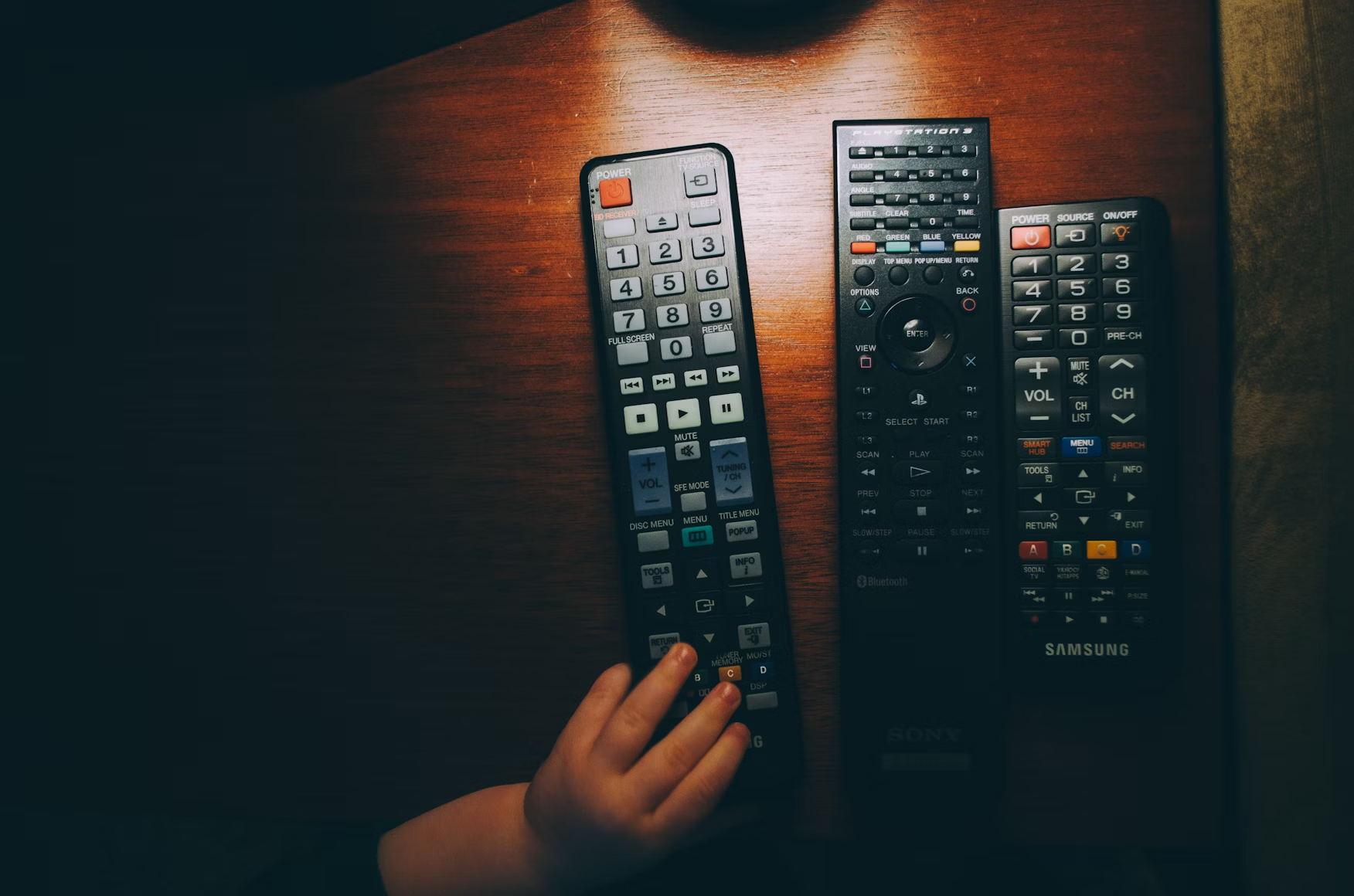
Never Let Your Child Control the TV Remote: 7 Reasons Why It’s a Bad Habit

May 1, 2025 | Leave a Comment

Child's hand reaching for a TV remote on a wooden table.
Image Source: Unsplash

After a long day, it’s tempting to hand your child the TV remote and enjoy a rare moment of silence. The problem? That small act can have a surprisingly big impact on how your child views media, manages impulse control, and even handles frustration.

When kids hold the remote, they’re not just choosing programs—they’re shaping habits that echo far beyond today’s episode. Here are seven compelling reasons to keep the clicker in parental hands and turn screen time into a guided, growth-oriented experience.

1. Inappropriate Content Is Only One Click Away

Even children’s channels now run promo spots for series aimed at teens and adults, so the gap between “kid-safe” and “too mature” can flash by in a single tap. A toddler exploring the on-screen menu may wander from cartoons into gritty live-action without realizing the difference. Sudden exposure to violence, coarse language, or sexual innuendo can plant scary images that linger long after bedtime.

Kids this age lack the context to separate fiction from reality, which can lead to nightmares or anxious what-ifs. Yes, parental-control settings help, but most households juggle multiple streaming apps, each with its own loopholes and update cycles. One mislabeled thumbnail—or an autoplay trailer—can defeat the cleverest filter. When adults keep the remote, they add an essential human checkpoint that algorithms cannot match. You can pause, skip, or stop before discomfort turns into lasting distress.

2. Healthy Screen-Time Limits Quickly Disappear

The American Academy of Pediatrics urges zero entertainment screens for babies under 18 months and roughly one curated hour per day for preschoolers, yet binge-friendly platforms tempt little viewers to keep clicking. Left in charge, many kids move seamlessly from one bright thumbnail to the next, unaware they have crossed the daily quota. Continuous background viewing also blurs the line between “on” and “off,” making limits harder to reinforce later.

When parents physically control the remote, they can frame screen time as a planned activity, not an endless buffet. That structure models mindful consumption: one episode, then blocks or backyard play. Over time, children internalize the rhythm of start, enjoy, and stop—vital groundwork for future self-regulation with phones and tablets. Parents can also choose slower-paced, developmentally appropriate shows rather than auto-generated picks designed to maximize watch hours. Clear guardrails today prevent battles over excessive scrolling tomorrow.

3. Passive Viewing Replaces Developmental Milestones

Early childhood is a sensory laboratory where stacking cups, digging in sand, and trading giggles build neural highways faster than any app. Extended couch time steals minutes from talking, climbing, and imaginative role-play—activities proven to accelerate language growth and executive function. Researchers consistently find links between high solo screen exposure and later delays in speech, attention span, and fine-motor coordination.

Passive media cannot replicate the back-and-forth “serve and return” exchanges that sculpt young brains. By holding the remote, caregivers decide when the TV acts as a short educational tool—maybe a nature clip about rainforests—and when it is crowding out critical hands-on exploration. They can also weave real-world follow-ups, like building a leaf collage after the show, turning passive minutes into active mastery. Ultimately, a well-timed “off” button safeguards the wide-open play that powers cognitive leaps.

4. Power Struggles and Tantrums Intensify

Once a child expects unlimited control, any attempt to reclaim the clicker can spark a level-ten meltdown. The pattern teaches kids that pleading or bargaining might stretch viewing by “just five more minutes,” eroding the credibility of future limits. When adults set consistent start-and-stop cues—“We watch a show after snack and turn it off when the timer dings”—children know exactly what to expect. Predictability lowers anxiety and, over time, tantrum frequency.

It also helps kids practice disappointment in small, manageable doses, a skill they will need for life’s bigger no’s. Consistent boundaries free parents from exhausting negotiations and let family energy flow toward positive routines like story time or outdoor play. Clear rules around the remote communicate that technology serves the household schedule, not the other way around. Fewer battlegrounds mean more harmonious evenings for everyone.

5. Questionable Role Models Slip Through the Cracks

Sarcasm, name-calling, and slapstick violence often masquerade as harmless humor in tween sitcoms, but younger siblings soaking it in may copy the behavior at preschool tomorrow. Children learn social cues by imitation long before they master critical thinking. A steady diet of eye-rolling protagonists can normalize disrespect toward peers—and even toward parents.

By screening episodes first, adults can steer kids toward shows that model empathy, cooperation, and problem-solving. They can also pause scenes to discuss unhealthy choices: “Notice how that joke hurt someone’s feelings—what could the character have said instead?” These micro-conversations turn entertainment into a values workshop. Over months and years, curated content shapes a worldview built on kindness rather than mockery. Remote in hand, parents remain the gatekeepers of the lessons each storyline delivers.

Parents and child sitting on a couch using smartphones and a tablet.
Image Source: Unsplash

6. Parental-Control Tech Isn’t Bulletproof

Every platform touts passcodes, kid profiles, and age-rating filters, but determined grade-schoolers swap discoveries on playgrounds as eagerly as trading cards.

A quick online search reveals button sequences to exit restricted modes or bypass PIN prompts altogether. New user-generated videos often slip through classification nets before moderators catch up. Even if one service stays locked down, another installed app may default to the main account, offering an unguarded library at two clicks’ distance.

Physical custody of the remote adds a low-tech barrier that no exploit can hack. It also signals that technology works best as a shared family tool, not a solitary escape hatch. When kids see you combine smart settings with vigilant oversight, they learn that safety is a partnership, not a toggle switch. Layered defenses reduce the chance of an accidental deep dive into unsuitable content.

7. Co-Viewing Builds Connection—and Teachable Moments

Sitting shoulder to shoulder turns passive watching into active conversation—catching subtle jokes, clarifying confusing plot twists, or spotting hidden biases together. Asking open-ended questions like “Why do you think the hero felt scared?” teaches children to name emotions and consider multiple perspectives. These chats foster media literacy, helping kids recognize advertising tricks or stereotypes before they take root. Shared laughter over a silly scene becomes a family memory, reinforcing positive associations with quality time.

Co-viewing also lets adults model empathy by reacting visibly to characters’ struggles and triumphs. When children hand over control, they lose the built-in company that deepens understanding and emotional growth. Keeping the remote nearby reminds everyone that screens can unite rather than isolate. In the long run, the strongest filter is a caring adult who talks through what appears on-screen.

It’s Not About Control—It’s About Coaching

Children aren’t born knowing how to balance entertainment with real-world experiences; they learn that rhythm by watching you. Controlling the remote lets you:

  • Set predictable routines. “One episode after homework, then device-free dinner.”
  • Model self-regulation. When adults limit their own scrolling, kids see consistency, not double standards.
  • Encourage quality over quantity. Curate shows that align with your child’s age, interests, and values instead of whatever autoplay serves next.

Over time, you’ll move from gatekeeper to mentor, guiding older kids to choose responsibly on their own.

Quick Tips for Remote-Wise Homes

  1. Create a viewing schedule. Post it on the fridge so everyone knows when screens are on—or off.
  2. Use “device parking.” Keep remotes and tablets in a common charging station. Kids must ask before checking them out.
  3. Preview new content. Watch the first episode of an unfamiliar show alone or read reviews before green-lighting it.
  4. Pair TV with activity. Turn on nature documentaries and sketch animals together, or dance during musical numbers.
  5. Hold family media meetings. Revisit rules each semester; let older kids help craft guidelines to boost buy-in.

The Takeaway: Guidance Now, Independence Later

Handing your child the remote control may buy temporary peace, but it sacrifices long-term benefits: media literacy, healthy limits, and family connection. By keeping the clicker in your hands today, you teach the decision-making and self-discipline they’ll need to manage screens wisely tomorrow. So next time little fingers reach for the remote, reach for conversation, creativity, and shared laughter instead.

How does your family manage TV time? Drop your best tips—or funniest screen-time battles—in the comments. We’re all in this digital maze together!

Read More

  • Save Money on Entertainment with Reciprocal Museum Passes
  • 10 Screen-Free Activities to Keep Kids Entertained

Samantha Warren
Samantha

Samantha Warren is a holistic marketing strategist with 8+ years of experience partnering with startups, Fortune 500 companies, and everything in between. With an entrepreneurial mindset, she excels at shaping brand narratives through data-driven, creative content. When she’s not working, Samantha loves to travel and draws inspiration from her trips to Thailand, Spain, Costa Rica, and beyond.

Filed Under: Parenting Tagged With: child development, child remote control, digital habits, parenting advice, parenting concerns | Family Technology, screen time limits, TV safety for kids

  • Facebook
  • Pinterest
  • RSS
  • Twitter

Basic Principles Of Good Parenting

Here some basic principles for good parenting:

  1. What You Do Matters: Your kids are watching you. So, be purposeful about what you want to accomplish.
  2. You Can’t be Too Loving: Don’t replace love with material possessions, lowered expectations or leniency.
  3. Be Involved Your Kids Life: Arrange your priorities to focus on what your kid’s needs. Be there mentally and physically.
  4. Adapt Your Parenting: Children grow quickly, so keep pace with your child’s development.
  5. Establish and Set Rules: The rules you set for children will establish the rules they set for themselves later.  Avoid harsh discipline and be consistent.
  6. Explain Your Decisions: What is obvious to you may not be evident to your child. They don’t have the experience you do.
  7. Be Respectful To Your Child: How you treat your child is how they will treat others.  Be polite, respectful and make an effort to pay attention.
Best Parenting Blogs

Most Popular

11 Ways Kids Are Outsmarting Parental Controls 1. Using Alternate Devices One common trick is simply turning to another device. If a child’s main phone or tablet is restricted, they may borrow a sibling’s, friend’s, or even a school laptop. This instantly gives them access to content outside of parental oversight. Parents often focus on one device, forgetting that others in the household can serve as loopholes. Knowing this tactic helps families tighten controls across all electronics. 2. Clearing Browsing Histories Many kids quickly learn that clearing browsing history hides evidence of restricted activity. With just a few clicks, they can erase any trace of websites visited. This makes it harder for parents to notice when rules are being broken. Parents may assume no history means no browsing, but the reality is often the opposite. Kids are outsmarting parental controls by making it seem like nothing happened at all. 3. Using Private Browsing Modes Most browsers offer “incognito” or private browsing features. Kids use this mode to access websites without leaving a record in the history. To parents checking later, everything looks clean and safe. This simple trick is often one of the first ways kids discover how to bypass restrictions. Conversations about private browsing can help close this gap. 4. Guessing or Resetting Passwords Children who are persistent may try to guess passwords to parental control apps or accounts. Others may find ways to reset them through email prompts or security questions. Once inside, they can disable restrictions entirely. Parents may not even realize controls have been altered until much later. Stronger, less predictable passwords can make this more difficult. 5. Using VPNs to Hide Activity Virtual private networks, or VPNs, let kids disguise their online locations. With one downloaded app, they can bypass geographic or parental restrictions. Some children learn about VPNs through friends or even social media. This makes it easy for them to reach content that should be blocked. Parents often underestimate just how simple it is for kids to use these tools. 6. Creating Fake Accounts When parents monitor social media, kids may create hidden accounts. These “finstas” or fake profiles allow them to interact freely without parental oversight. While their main account appears harmless, the secondary one tells a different story. Kids are outsmarting parental controls by playing both sides at once. Checking for duplicate accounts can help parents stay more aware. 7. Exploiting Time Zone Settings Some kids change the time zone on their devices to bypass screen time limits. This trick allows them to gain extra hours of usage undetected. Parents may assume controls are working, but in reality, the child is bending the clock. It’s a clever loophole that highlights just how resourceful kids can be. Monitoring device settings regularly can catch this tactic. 8. Disabling or Uninstalling Apps Parental control apps can be deleted or disabled with surprising ease. Some kids even reinstall them before a parent checks, making it seem like nothing changed. Others may simply restrict permissions to prevent apps from functioning properly. When apps aren’t monitored closely, parents may not notice they’ve been tampered with. This shows the importance of consistent follow-up. 9. Turning to Friends for Access If a child can’t get past restrictions on their own, they may rely on friends. Visiting a friend’s house or borrowing their phone can give them a free pass. Parents often forget that peer environments can override restrictions set at home. This kind of social workaround is especially common with gaming or social media. Open conversations about trust and responsibility are essential. 10. Hiding Apps in Plain Sight Kids sometimes download apps that look innocent but serve as gateways to hidden activity. These apps may disguise themselves as calculators or utilities. In reality, they allow file storage, private messaging, or browser access. Parents glancing at a home screen may overlook them entirely. Learning to recognize these disguised apps can help parents stay informed. 11. Outpacing Parents’ Tech Knowledge Finally, kids often know more about devices than their parents do. Whether through YouTube tutorials, TikTok hacks, or peer groups, they quickly learn advanced workarounds. This knowledge gap means controls can be bypassed before parents even realize the loophole exists. Staying informed and continually learning about new technology is the best defense. Kids are outsmarting parental controls because they adapt faster than most adults. The Real Solution Lies Beyond Restrictions While controls and filters are important, no system is perfect. Kids will always find creative ways around barriers, making communication the strongest safeguard. Setting clear expectations, building trust, and having ongoing conversations about online behavior matter more than apps alone. Parents who combine technology with open dialogue create a safer digital environment. The goal isn’t to win a battle of wits but to build a relationship that keeps kids both safe and honest. Do you think kids are outsmarting parental controls faster than parents can keep up? Share your experiences in the comments below. What to Read Next... 6 Parenting Tech Shortcuts That Can Expose Your Child to Strangers How Much Screen Time Is Too Much—Legally Speaking? Is Your Child’s School Quietly Tracking Their Location Without Your Consent? How Much Screen Time Is Quietly Reshaping Childhood Behavior? Why Some Parents Are Being Investigated Over Homeschooling Records

11 Ways Kids Are Outsmarting Parental Controls

Catherine Reed
Smiling grandfather holding a happy baby indoors.

Why Grandparents Shouldn’t Babysit Their Grandkids Every Week – The Unspoken Issue

Samantha
Girl getting makeup done, referencing psychologist-approved age.

Wearing Makeup: Here Is the Age That Psychologists Agree It’s Okay for Girls to Wear Makeup

Samantha
birthday gifts

7 Birthday Gifts Your Child Should Never Bring to a Party

Latrice Perez

Babysitting Without Cash: 10 Ways to Barter Your Way Out of Childcare Costs

Ashleigh Clyde

All content on Kids Ain’t Cheap is for entertainment purposes only. By reading this blog, you agree that Kids Ain’t Cheap is not responsible for any actions taken after reading this blog. For the full disclaimer, see our privacy policy.

Please note that Kids Ain’t Cheap has financial relationships with some of the merchants mentioned here. Kids Ain’t Cheap is funded by banner advertising, commission sales and search optimization consulting.

Copyright © 2006–2026 | District Media | All Rights Reserved | Privacy Policy

Copyright © 2026 Runway Pro Theme by Viva la Violette