• Home
  • About Us
  • Toolkit
  • Archives
  • Advertise
  • Privacy Policy

Kids Ain't Cheap

But They Sure Are Worth It

  • Parenting
    • Baby Stuff
    • Books and Reading
      • Aesops Fables
      • Comic Books
    • Education
    • Family Time
    • Green Living
    • Growing Up
    • Healthy Living & Eating
    • Holidays
    • Parenting
    • Random Musings
    • Shopping
    • Stuff to Do
  • Money
  • Product Reviews
    • Books and Magazines
    • Discount Sites
    • Furniture
    • House Keeping
    • Reviews News
    • Toys and Games
  • Contact Us
  • Our Editorial Commitment
  • Search

All-Gender Restrooms Are Now Required in K-12 Schools – What Parents Should Know

July 1, 2026 | Leave a Comment

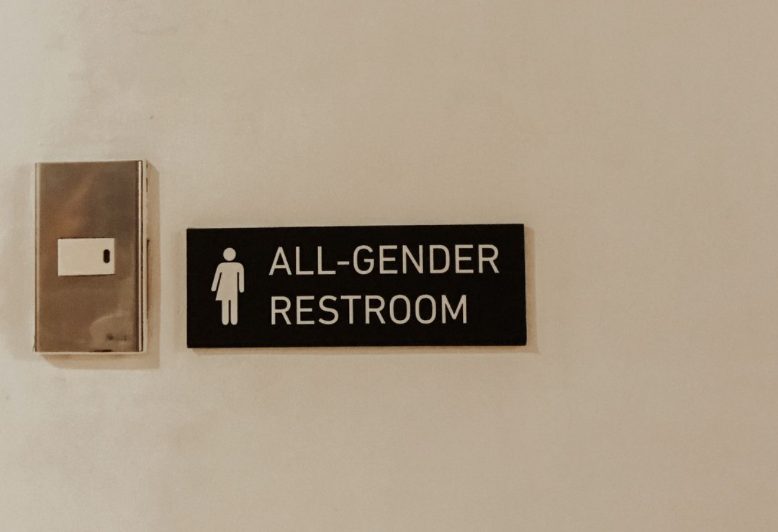
All-Gender Restroom Sign
California schools must now provide at least one voluntary all-gender restroom while continuing to offer traditional boys’ and girls’ restrooms. Parents should understand how the new requirement works before the school year begins. (Pexels).

Parents across California are seeing a significant change on school campuses as a new restroom requirement officially takes effect. Beginning July 1, 2026, every qualifying K-12 public school campus must provide at least one all-gender restroom for voluntary student use under Senate Bill 760. The law is intended to improve accessibility and privacy while ensuring that every student has a safe restroom option.

“Schools should provide a safe and inclusive environment for all students, one where they’re able to focus on learning and where they’re encouraged to thrive academically, socially and emotionally,” said California Senator Josh Newman, author of SB 760. Understanding what the change actually means—and what it doesn’t mean—can help families separate facts from misconceptions.

What the New Law Actually Requires

The new requirement applies to California public school districts, county offices of education, and charter schools serving students in grades K-12. “These measures will help protect vulnerable youth, promote acceptance, and create more supportive environments in our schools and communities,” said Gavin Newsom when signing the legislation.

Schools with more than one boys’ restroom and more than one girls’ restroom must provide at least one clearly marked all-gender restroom that any student may choose to use. Existing boys’ and girls’ restrooms remain in place, meaning students are not required to use the all-gender restroom. In many cases, schools are simply redesignating an existing single-user restroom rather than building an entirely new facility. The all-gender restroom requirement is designed to expand restroom options instead of replacing traditional facilities.

Why Schools Are Adding All-Gender Restrooms

Supporters say the law focuses on student privacy, accessibility, and inclusion rather than on changing existing restroom policies. An all-gender restroom can benefit students with disabilities who need assistance from a caregiver of a different sex, younger siblings attending school events with parents, and students who simply prefer additional privacy. Many campuses already had similar single-user restrooms available for staff or visitors before this statewide requirement. Education leaders also note that students who avoid using school restrooms because they feel uncomfortable may experience health issues, missed class time, or decreased concentration. Providing another restroom option is intended to address those practical concerns.

Common Questions Parents Are Asking

One of the biggest misconceptions is that every restroom on campus will become gender-neutral, but that is not what the law requires. Traditional boys’ and girls’ restrooms continue operating exactly as before, with the all-gender restroom serving as an additional voluntary option. Parents may also wonder whether supervision or safety standards will change, but schools are still expected to maintain restroom monitoring, cleanliness, and campus security policies. Many all-gender restrooms are single-user facilities that offer increased privacy through locking doors. School administrators are also responsible for ensuring the restroom remains accessible, clearly marked, and properly maintained throughout the school day.

How Parents Can Stay Informed

If your child attends a California public school, consider asking campus administrators how the new restroom requirement has been implemented. Schools may have updated campus maps, family communications, or student handbooks explaining the available restroom options. Parents who understand the layout can have more informed conversations with their children before the school year begins. If your child expresses concerns, listening without assumptions and discussing available choices often leads to a more productive conversation than relying on social media rumors. Staying informed directly through your local school helps ensure you receive accurate information rather than speculation.

Looking Ahead: Communication Matters Most

Families should remember that implementation may look slightly different from one campus to another. Some schools already had single-user restrooms that met most of the new requirements, while others needed to update signage, install privacy locks, or designate a staff member as the required point of contact for implementation.

While opinions differ on the policy, the practical change is relatively straightforward: qualifying schools must provide at least one voluntary all-gender restroom while keeping existing boys’ and girls’ restrooms available. Parents who understand the details are better prepared to answer their children’s questions and communicate with school staff when needed. As with many education policies, clear information often reduces unnecessary confusion and helps families focus on what matters most—the safety, comfort, and well-being of every student.

What are your thoughts about this new requirement, and how do you think schools should communicate these changes to families? Share your perspective in the comments and join the conversation.

What to Read Next

The Code Words Schools Use When Denying Services

School Counselors Report a Rise in Severe Anxiety Among Younger Students

How the Seamless Summer Option Keeps Kids Fed After the School Year Ends

Evan Morgan

Evan Morgan has been a full-time freelance writer and editor for 10+ years. When not working, he enjoys catching the latest true crime documentary or getting lost in a good book.

Read More

  • Portrait of impressed santa claus pouted lips arms touch glasses staring cant believe midnight tree garland city center outside.
    Is It Wrong to Use Santa Claus to Manipulate Children's Behavior?

    The holiday season brings joy, festivities, and the beloved tradition of Santa Claus. Many parents…

  • Halloween Crafts
    Easy-Peasy Homemade Halloween Decorations

    Halloween is that time of the year when kids can dress up in their spookiest…

  • Emergency Fund
    Why You Need an Emergency Fund Before Buying a House

    Becoming a homeowner is a dream for many. However, the dream of homeownership quickly turns…

  • Raising Kids Without a Village Youre Probably Paying for It
    Raising Kids Without a Village? You’re Probably Paying for It

    The old saying “it takes a village to raise a child” used to reflect a…

  • Some Last Minute Gifts Before the New Year
    Some Last Minute Gifts Before the New Year

    If you are anything like me, you will surely have forgotten one or two close…

  • My #1 brand of choice for long-lasting toys for toddlers
    My #1 Brand of Choice for Long-Lasting Toys for Toddlers

    What do toddlers love? Getting into EVERYTHING. That's why I want my money to go…

Filed Under: Parenting Tagged With: all-gender restroom requirement, California schools, education policy, K-12 education, Parents, public schools, SB 760, school safety, student privacy

Leave a Reply Cancel reply

Your email address will not be published. Required fields are marked *

This site uses Akismet to reduce spam. Learn how your comment data is processed.

  • Facebook
  • Pinterest
  • RSS
  • Twitter
Best Parenting Blogs

Most Popular

Baby names

Teachers Admit: These 6 Baby Names Create Instant Bias in the Classroom

Latrice Perez
These Are 6 Baby Names Inspired by Vintage TV and Movies

6 Baby Names Inspired by Vintage TV and Movies

Brandon Marcus
6 Baby Names That Sound Cute Now but Cause Problems Later

6 Baby Names That Sound Cute Now but Cause Problems Later

Brandon Marcus
11 Ways Kids Are Outsmarting Parental Controls 1. Using Alternate Devices One common trick is simply turning to another device. If a child’s main phone or tablet is restricted, they may borrow a sibling’s, friend’s, or even a school laptop. This instantly gives them access to content outside of parental oversight. Parents often focus on one device, forgetting that others in the household can serve as loopholes. Knowing this tactic helps families tighten controls across all electronics. 2. Clearing Browsing Histories Many kids quickly learn that clearing browsing history hides evidence of restricted activity. With just a few clicks, they can erase any trace of websites visited. This makes it harder for parents to notice when rules are being broken. Parents may assume no history means no browsing, but the reality is often the opposite. Kids are outsmarting parental controls by making it seem like nothing happened at all. 3. Using Private Browsing Modes Most browsers offer “incognito” or private browsing features. Kids use this mode to access websites without leaving a record in the history. To parents checking later, everything looks clean and safe. This simple trick is often one of the first ways kids discover how to bypass restrictions. Conversations about private browsing can help close this gap. 4. Guessing or Resetting Passwords Children who are persistent may try to guess passwords to parental control apps or accounts. Others may find ways to reset them through email prompts or security questions. Once inside, they can disable restrictions entirely. Parents may not even realize controls have been altered until much later. Stronger, less predictable passwords can make this more difficult. 5. Using VPNs to Hide Activity Virtual private networks, or VPNs, let kids disguise their online locations. With one downloaded app, they can bypass geographic or parental restrictions. Some children learn about VPNs through friends or even social media. This makes it easy for them to reach content that should be blocked. Parents often underestimate just how simple it is for kids to use these tools. 6. Creating Fake Accounts When parents monitor social media, kids may create hidden accounts. These “finstas” or fake profiles allow them to interact freely without parental oversight. While their main account appears harmless, the secondary one tells a different story. Kids are outsmarting parental controls by playing both sides at once. Checking for duplicate accounts can help parents stay more aware. 7. Exploiting Time Zone Settings Some kids change the time zone on their devices to bypass screen time limits. This trick allows them to gain extra hours of usage undetected. Parents may assume controls are working, but in reality, the child is bending the clock. It’s a clever loophole that highlights just how resourceful kids can be. Monitoring device settings regularly can catch this tactic. 8. Disabling or Uninstalling Apps Parental control apps can be deleted or disabled with surprising ease. Some kids even reinstall them before a parent checks, making it seem like nothing changed. Others may simply restrict permissions to prevent apps from functioning properly. When apps aren’t monitored closely, parents may not notice they’ve been tampered with. This shows the importance of consistent follow-up. 9. Turning to Friends for Access If a child can’t get past restrictions on their own, they may rely on friends. Visiting a friend’s house or borrowing their phone can give them a free pass. Parents often forget that peer environments can override restrictions set at home. This kind of social workaround is especially common with gaming or social media. Open conversations about trust and responsibility are essential. 10. Hiding Apps in Plain Sight Kids sometimes download apps that look innocent but serve as gateways to hidden activity. These apps may disguise themselves as calculators or utilities. In reality, they allow file storage, private messaging, or browser access. Parents glancing at a home screen may overlook them entirely. Learning to recognize these disguised apps can help parents stay informed. 11. Outpacing Parents’ Tech Knowledge Finally, kids often know more about devices than their parents do. Whether through YouTube tutorials, TikTok hacks, or peer groups, they quickly learn advanced workarounds. This knowledge gap means controls can be bypassed before parents even realize the loophole exists. Staying informed and continually learning about new technology is the best defense. Kids are outsmarting parental controls because they adapt faster than most adults. The Real Solution Lies Beyond Restrictions While controls and filters are important, no system is perfect. Kids will always find creative ways around barriers, making communication the strongest safeguard. Setting clear expectations, building trust, and having ongoing conversations about online behavior matter more than apps alone. Parents who combine technology with open dialogue create a safer digital environment. The goal isn’t to win a battle of wits but to build a relationship that keeps kids both safe and honest. Do you think kids are outsmarting parental controls faster than parents can keep up? Share your experiences in the comments below. What to Read Next... 6 Parenting Tech Shortcuts That Can Expose Your Child to Strangers How Much Screen Time Is Too Much—Legally Speaking? Is Your Child’s School Quietly Tracking Their Location Without Your Consent? How Much Screen Time Is Quietly Reshaping Childhood Behavior? Why Some Parents Are Being Investigated Over Homeschooling Records

11 Ways Kids Are Outsmarting Parental Controls

Catherine Reed
Smiling grandfather holding a happy baby indoors.

Why Grandparents Shouldn’t Babysit Their Grandkids Every Week – The Unspoken Issue

Samantha

All content on Kids Ain’t Cheap is for entertainment purposes only. By reading this blog, you agree that Kids Ain’t Cheap is not responsible for any actions taken after reading this blog. For the full disclaimer, see our privacy policy.

Please note that Kids Ain’t Cheap has financial relationships with some of the merchants mentioned here. Kids Ain’t Cheap is funded by banner advertising, commission sales and search optimization consulting.

Copyright © 2006–2026 | District Media | All Rights Reserved | Privacy Policy

Copyright © 2026 Runway Pro Theme by Viva la Violette