• Home
  • About Us
  • Toolkit
  • Archives
  • Advertise
  • Privacy Policy

Kids Ain't Cheap

But They Sure Are Worth It

  • Parenting
    • Baby Stuff
    • Books and Reading
      • Aesops Fables
      • Comic Books
    • Education
    • Family Time
    • Green Living
    • Growing Up
    • Healthy Living & Eating
    • Holidays
    • Parenting
    • Random Musings
    • Shopping
    • Stuff to Do
  • Money
  • Product Reviews
    • Books and Magazines
    • Discount Sites
    • Furniture
    • House Keeping
    • Reviews News
    • Toys and Games
  • Contact Us
  • Our Editorial Commitment
  • Search

How Your Child’s Cell Phone Could Now Ruin Them In School

January 27, 2026 | Leave a Comment

How Your Child's Cell Phone Could Now Ruin Them In School
Image Source: Shutterstock.com

In Fayetteville, GA, middle school administrators can now confiscate phones before the first bell rings. Over in Volusia County, Florida, districts have updated student conduct codes over summer break. This is not a culture war sideshow. It’s an enforcement shift, rolled out under the radar and backed by policy and strict guidelines.

Parents are sounding the alarm because certain devices that may be harmless at home are now liabilities. The hidden reality: your child’s phone no longer just distracts them. It creates a permanent record.

The Costs Of Phones In Class

Georgia HB 340 limits phone use for students in class, but it also does so much more. Schools can now keep track of repeated violations, patterns, and peer interactions tied to phones. Repeated breaches of this new rule can lead to very serious consequences for your student if they are using their phone under the watchful eye of school staff.

This is not a theory or something being debated by Georgia lawmakers; it is official and signed into law. District guidance for school policy instructs administrators to treat repeated phone infractions as escalating indicators.

Here’s how a cell phone now ruins a student’s standing fast.

1) Digital contraband equals behavioral flags. One phone out during instruction triggers documentation. Fayetteville, GA, parents may notice an uptick in suspensions tied to noncompliance.

2) Screenshots become evidence. Group chats, photos, and memes circulate. Schools collect them. Context dies. Metadata lives. Administrators’ discipline based on digital facts, not intent.

3) Searches escalate without warning. HB 268 normalizes digital behavior review. A phone becomes a searchable container during investigations. Because of this, a child’s privacy shrinks when they are sitting in their classrooms.

Friction-Maxxing In Class

This enforcement aligns with the national high-stakes parents’ movement that is urging “friction-maxxing” against distraction and burnout.

With these cell phone rules, schools apply friction by design. They remove devices, log resistance, and escalate outcomes. Parents who shrug this off misread the terrain because the school system does not negotiate. By adhering to common friction-maxxing rules such as limiting screen time and reducing digital noise, parents can prevent this cell phone problem from holding their children back.

How Your Child's Cell Phone Could Now Ruin Them In School
Image Source: Shutterstock.com

The Financial & Social Costs

When the cost hits, it hits hard. For example, suspensions force missed workdays and lost wages for parents who have to pick up their kids or provide them with childcare while they sit at home.

On top of all that, repeated discipline at school may threaten extracurricular eligibility, scholarship chances, and recommendation letters. Ignoring these risks and pushing back publicly could you lose social capital with administrators who control outcomes. This is the hidden cost of kids in the modern school landscape: money burned, credit strained, futures narrowed.

Parents Decide Cell Phone Use

High-stakes parenting now demands a hard line. Either you control the device, or the device controls the record attached to your child’s name.

Do you choose strict control for safety—locking phones down completely—or personal liberty for connection—accepting the risk of permanent records?

You May Also Like…

Does Your Child Know Your Phone Number and Full Name? Here’s Why They Should

Parenting Hacks for College Students: 8 Tips to Juggle Studies and Kids

7 Old-School Parenting Habits That Still Save Families Money

Is Your “Convenient” Life Making Your Child Weak? Why Experts Are Urging Parents to Try “Friction-Maxxing” This Winter

Why Your Teen’s Friend Group Is Secretly Rating Your Home on “The Vibe Scale”—and Why It Matter

Brandon Marcus
Brandon Marcus
Brandon Marcus is a writer who has been sharing the written word since a very young age. His interests include sports, history, pop culture, and so much more. When he isn’t writing, he spends his time jogging, drinking coffee, or attempting to read a long book he may never complete.

Filed Under: Education Tagged With: cell phone, cell phone use, elementary students, Family, family issues, school, school rules, smart phones, student conduct, teachers and students

Best Games to Teach Elementary Students Geography

June 18, 2020 | Leave a Comment

For many of us, we learned geography in school through memorization.  We memorized capitals, populations, physical geography.  Oh, the tedium.  While I liked geography, learning it in school took all of the joy out of it.  However, it doesn’t have to be that way.  You can bring geography to life for your student by cooking food eaten in that country and playing games.

Games to Teach Elementary Students Geography

Best Games to Teach Elementary Students Geography

There are so many fun games to teach kids about geography!

The Professor Noggins Series

Games to Teach Elementary Students Geography

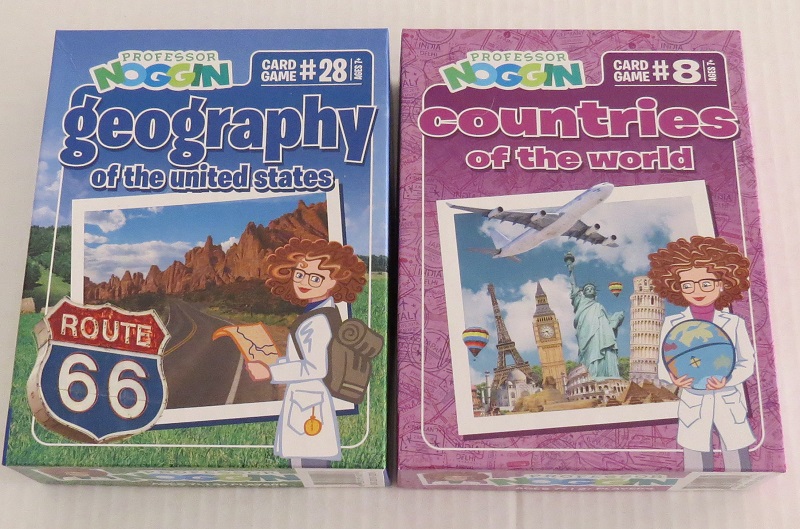
If you’re looking for a quick and educational game, try the various Professor Noggins games.  Popular geography titles include Wonders of the World, Countries of the World, Countries of the World II, and Geography of the United States.

These games are good for ages 7+.  To play the game, roll the dice.  Then, the next player will read you the question.  You can choose between student or scholar.  A student question might read, “The peninsula of Cape Cod juts into which ocean?”, while a scholar question will ask a more difficult question like, “Guadalupe Mountains National Park is located in which state?”  When you’ve gone through the entire deck, whoever has the most cards (correct answers) wins.  Because of the two different levels, this game is great for multiple ages.  I enjoy playing these games with my kids, especially because I usually learn something, too!

The Scrambled States of America

Games to Teach Elementary Students Geography

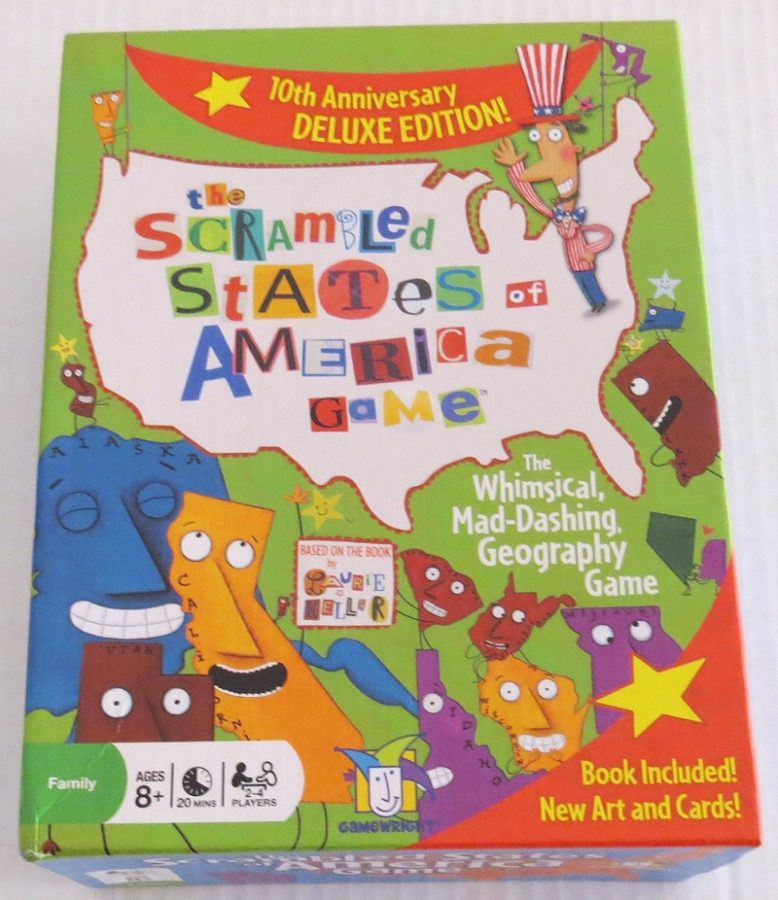
In this fun game, each player is given a U.S. map and five state cards.  Then, you read a playing card such as, “Capital starts with A or B.”  The player then looks at their five-state cards to see if they have a card that fits the criteria.  If they have one, they put that card aside and pick a new one.  The winner is the person who has the most state cards when the pile runs out.

I enjoy The Scrambled States of America because there are two options to play.  You can either race (the first person to answer correctly wins the round), or each player can answer and all the players that have it right win that round.  The latter version is perfect for younger kids or kids who have dyslexia and take more time to read.  The former is perfect for competitive older kids.

Ticket to Ride

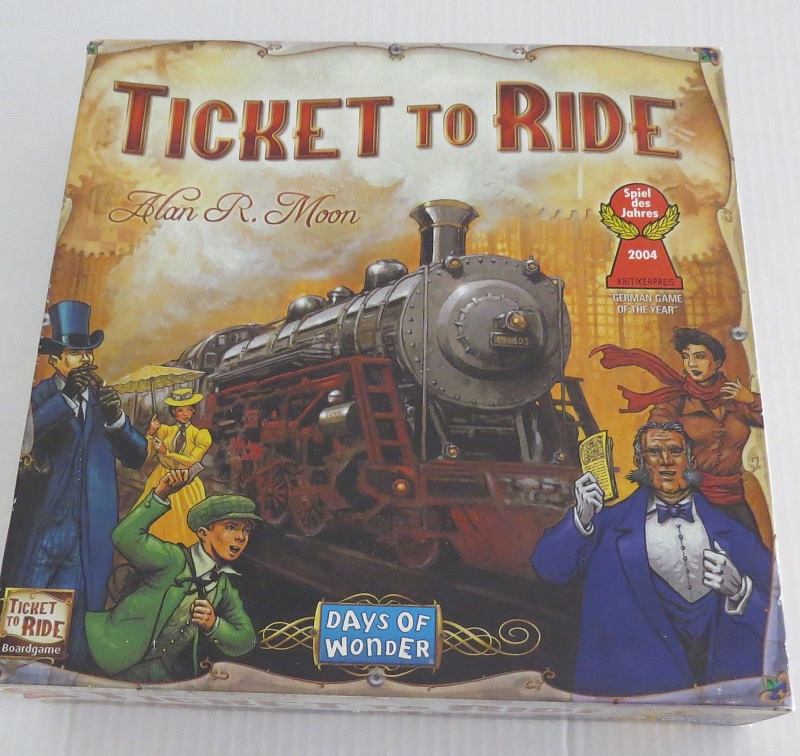
Ticket to Ride is often a long game.  Plan on playing for an hour or so, but it also makes a fun family game.  Players choose three cards that represent trips across America.  They can choose to keep all of the cards, only two, or only one.  If they complete the trip, they get the number of points on the card.  If they don’t complete the trip, the points on the card are deducted from their score.  The winner is the person who has the most points at the end.

Players learn where the states are as well as what the major cities are through regular play.  Our family really enjoys this game.

Final Thoughts

These are just three of the best games to teach elementary students geography.  There are many others available.  With so many fun resources, why settle for boring lessons?  Make learning geography fun instead!


Melissa Batai
Melissa Batai

Melissa is a writer and virtual assistant. She earned her Master’s from Southern Illinois University, and her Bachelor’s in English from the University of Michigan. When she’s not working, you can find her homeschooling her kids, reading a good book, or cooking. She resides in Arizona where she dislikes the summer heat but loves the natural beauty of the area.

Filed Under: Education, Family Time Tagged With: educational games, elementary students, geography, Homeschool

  • Facebook
  • Pinterest
  • RSS
  • Twitter

Basic Principles Of Good Parenting

Here some basic principles for good parenting:

  1. What You Do Matters: Your kids are watching you. So, be purposeful about what you want to accomplish.
  2. You Can’t be Too Loving: Don’t replace love with material possessions, lowered expectations or leniency.
  3. Be Involved Your Kids Life: Arrange your priorities to focus on what your kid’s needs. Be there mentally and physically.
  4. Adapt Your Parenting: Children grow quickly, so keep pace with your child’s development.
  5. Establish and Set Rules: The rules you set for children will establish the rules they set for themselves later.  Avoid harsh discipline and be consistent.
  6. Explain Your Decisions: What is obvious to you may not be evident to your child. They don’t have the experience you do.
  7. Be Respectful To Your Child: How you treat your child is how they will treat others.  Be polite, respectful and make an effort to pay attention.
Best Parenting Blogs

Most Popular

11 Ways Kids Are Outsmarting Parental Controls 1. Using Alternate Devices One common trick is simply turning to another device. If a child’s main phone or tablet is restricted, they may borrow a sibling’s, friend’s, or even a school laptop. This instantly gives them access to content outside of parental oversight. Parents often focus on one device, forgetting that others in the household can serve as loopholes. Knowing this tactic helps families tighten controls across all electronics. 2. Clearing Browsing Histories Many kids quickly learn that clearing browsing history hides evidence of restricted activity. With just a few clicks, they can erase any trace of websites visited. This makes it harder for parents to notice when rules are being broken. Parents may assume no history means no browsing, but the reality is often the opposite. Kids are outsmarting parental controls by making it seem like nothing happened at all. 3. Using Private Browsing Modes Most browsers offer “incognito” or private browsing features. Kids use this mode to access websites without leaving a record in the history. To parents checking later, everything looks clean and safe. This simple trick is often one of the first ways kids discover how to bypass restrictions. Conversations about private browsing can help close this gap. 4. Guessing or Resetting Passwords Children who are persistent may try to guess passwords to parental control apps or accounts. Others may find ways to reset them through email prompts or security questions. Once inside, they can disable restrictions entirely. Parents may not even realize controls have been altered until much later. Stronger, less predictable passwords can make this more difficult. 5. Using VPNs to Hide Activity Virtual private networks, or VPNs, let kids disguise their online locations. With one downloaded app, they can bypass geographic or parental restrictions. Some children learn about VPNs through friends or even social media. This makes it easy for them to reach content that should be blocked. Parents often underestimate just how simple it is for kids to use these tools. 6. Creating Fake Accounts When parents monitor social media, kids may create hidden accounts. These “finstas” or fake profiles allow them to interact freely without parental oversight. While their main account appears harmless, the secondary one tells a different story. Kids are outsmarting parental controls by playing both sides at once. Checking for duplicate accounts can help parents stay more aware. 7. Exploiting Time Zone Settings Some kids change the time zone on their devices to bypass screen time limits. This trick allows them to gain extra hours of usage undetected. Parents may assume controls are working, but in reality, the child is bending the clock. It’s a clever loophole that highlights just how resourceful kids can be. Monitoring device settings regularly can catch this tactic. 8. Disabling or Uninstalling Apps Parental control apps can be deleted or disabled with surprising ease. Some kids even reinstall them before a parent checks, making it seem like nothing changed. Others may simply restrict permissions to prevent apps from functioning properly. When apps aren’t monitored closely, parents may not notice they’ve been tampered with. This shows the importance of consistent follow-up. 9. Turning to Friends for Access If a child can’t get past restrictions on their own, they may rely on friends. Visiting a friend’s house or borrowing their phone can give them a free pass. Parents often forget that peer environments can override restrictions set at home. This kind of social workaround is especially common with gaming or social media. Open conversations about trust and responsibility are essential. 10. Hiding Apps in Plain Sight Kids sometimes download apps that look innocent but serve as gateways to hidden activity. These apps may disguise themselves as calculators or utilities. In reality, they allow file storage, private messaging, or browser access. Parents glancing at a home screen may overlook them entirely. Learning to recognize these disguised apps can help parents stay informed. 11. Outpacing Parents’ Tech Knowledge Finally, kids often know more about devices than their parents do. Whether through YouTube tutorials, TikTok hacks, or peer groups, they quickly learn advanced workarounds. This knowledge gap means controls can be bypassed before parents even realize the loophole exists. Staying informed and continually learning about new technology is the best defense. Kids are outsmarting parental controls because they adapt faster than most adults. The Real Solution Lies Beyond Restrictions While controls and filters are important, no system is perfect. Kids will always find creative ways around barriers, making communication the strongest safeguard. Setting clear expectations, building trust, and having ongoing conversations about online behavior matter more than apps alone. Parents who combine technology with open dialogue create a safer digital environment. The goal isn’t to win a battle of wits but to build a relationship that keeps kids both safe and honest. Do you think kids are outsmarting parental controls faster than parents can keep up? Share your experiences in the comments below. What to Read Next... 6 Parenting Tech Shortcuts That Can Expose Your Child to Strangers How Much Screen Time Is Too Much—Legally Speaking? Is Your Child’s School Quietly Tracking Their Location Without Your Consent? How Much Screen Time Is Quietly Reshaping Childhood Behavior? Why Some Parents Are Being Investigated Over Homeschooling Records

11 Ways Kids Are Outsmarting Parental Controls

Catherine Reed
Smiling grandfather holding a happy baby indoors.

Why Grandparents Shouldn’t Babysit Their Grandkids Every Week – The Unspoken Issue

Samantha
Girl getting makeup done, referencing psychologist-approved age.

Wearing Makeup: Here Is the Age That Psychologists Agree It’s Okay for Girls to Wear Makeup

Samantha
birthday gifts

7 Birthday Gifts Your Child Should Never Bring to a Party

Latrice Perez

Babysitting Without Cash: 10 Ways to Barter Your Way Out of Childcare Costs

Ashleigh Clyde

All content on Kids Ain’t Cheap is for entertainment purposes only. By reading this blog, you agree that Kids Ain’t Cheap is not responsible for any actions taken after reading this blog. For the full disclaimer, see our privacy policy.

Please note that Kids Ain’t Cheap has financial relationships with some of the merchants mentioned here. Kids Ain’t Cheap is funded by banner advertising, commission sales and search optimization consulting.

Copyright © 2006–2026 | District Media | All Rights Reserved | Privacy Policy

Copyright © 2026 Runway Pro Theme by Viva la Violette