• Home
  • About Us
  • Toolkit
  • Archives
  • Advertise
  • Privacy Policy

Kids Ain't Cheap

But They Sure Are Worth It

  • Parenting
    • Baby Stuff
    • Books and Reading
      • Aesops Fables
      • Comic Books
    • Education
    • Family Time
    • Green Living
    • Growing Up
    • Healthy Living & Eating
    • Holidays
    • Parenting
    • Random Musings
    • Shopping
    • Stuff to Do
  • Money
  • Product Reviews
    • Books and Magazines
    • Discount Sites
    • Furniture
    • House Keeping
    • Reviews News
    • Toys and Games
  • Contact Us
  • Our Editorial Commitment
  • Search

How Your Child’s Cell Phone Could Now Ruin Them In School

January 27, 2026 | Leave a Comment

How Your Child's Cell Phone Could Now Ruin Them In School
Image Source: Shutterstock.com

In Fayetteville, GA, middle school administrators can now confiscate phones before the first bell rings. Over in Volusia County, Florida, districts have updated student conduct codes over summer break. This is not a culture war sideshow. It’s an enforcement shift, rolled out under the radar and backed by policy and strict guidelines.

Parents are sounding the alarm because certain devices that may be harmless at home are now liabilities. The hidden reality: your child’s phone no longer just distracts them. It creates a permanent record.

The Costs Of Phones In Class

Georgia HB 340 limits phone use for students in class, but it also does so much more. Schools can now keep track of repeated violations, patterns, and peer interactions tied to phones. Repeated breaches of this new rule can lead to very serious consequences for your student if they are using their phone under the watchful eye of school staff.

This is not a theory or something being debated by Georgia lawmakers; it is official and signed into law. District guidance for school policy instructs administrators to treat repeated phone infractions as escalating indicators.

Here’s how a cell phone now ruins a student’s standing fast.

1) Digital contraband equals behavioral flags. One phone out during instruction triggers documentation. Fayetteville, GA, parents may notice an uptick in suspensions tied to noncompliance.

2) Screenshots become evidence. Group chats, photos, and memes circulate. Schools collect them. Context dies. Metadata lives. Administrators’ discipline based on digital facts, not intent.

3) Searches escalate without warning. HB 268 normalizes digital behavior review. A phone becomes a searchable container during investigations. Because of this, a child’s privacy shrinks when they are sitting in their classrooms.

Friction-Maxxing In Class

This enforcement aligns with the national high-stakes parents’ movement that is urging “friction-maxxing” against distraction and burnout.

With these cell phone rules, schools apply friction by design. They remove devices, log resistance, and escalate outcomes. Parents who shrug this off misread the terrain because the school system does not negotiate. By adhering to common friction-maxxing rules such as limiting screen time and reducing digital noise, parents can prevent this cell phone problem from holding their children back.
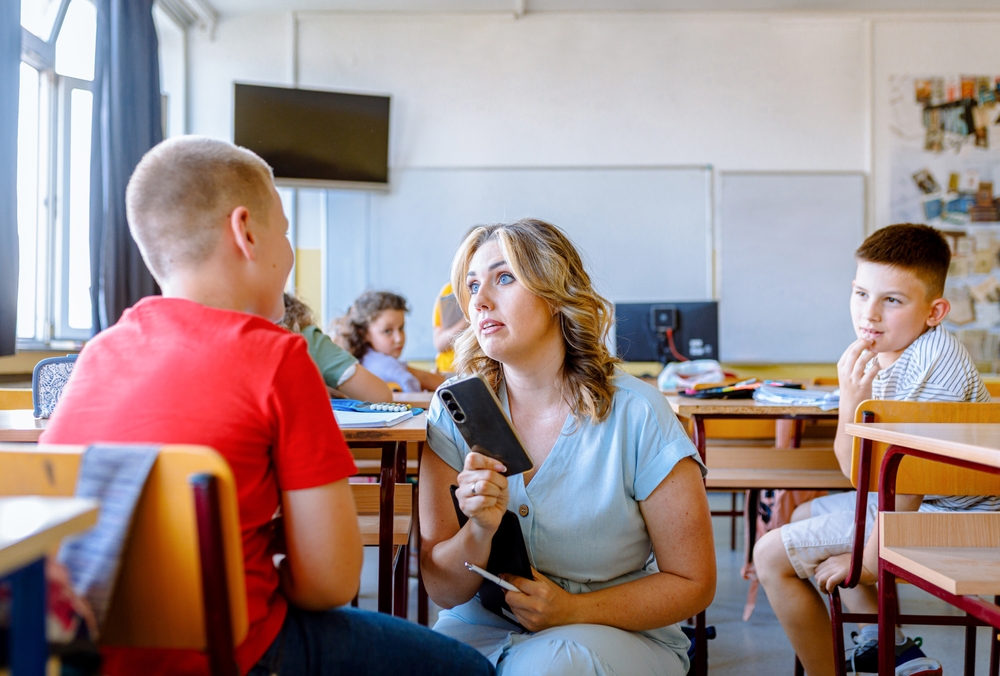
How Your Child's Cell Phone Could Now Ruin Them In School
Image Source: Shutterstock.com

The Financial & Social Costs

When the cost hits, it hits hard. For example, suspensions force missed workdays and lost wages for parents who have to pick up their kids or provide them with childcare while they sit at home.

On top of all that, repeated discipline at school may threaten extracurricular eligibility, scholarship chances, and recommendation letters. Ignoring these risks and pushing back publicly could you lose social capital with administrators who control outcomes. This is the hidden cost of kids in the modern school landscape: money burned, credit strained, futures narrowed.

Parents Decide Cell Phone Use

High-stakes parenting now demands a hard line. Either you control the device, or the device controls the record attached to your child’s name.

Do you choose strict control for safety—locking phones down completely—or personal liberty for connection—accepting the risk of permanent records?

You May Also Like…

Does Your Child Know Your Phone Number and Full Name? Here’s Why They Should

Parenting Hacks for College Students: 8 Tips to Juggle Studies and Kids

7 Old-School Parenting Habits That Still Save Families Money

Is Your “Convenient” Life Making Your Child Weak? Why Experts Are Urging Parents to Try “Friction-Maxxing” This Winter

Why Your Teen’s Friend Group Is Secretly Rating Your Home on “The Vibe Scale”—and Why It Matter

Brandon Marcus
Brandon Marcus
Brandon Marcus is a writer who has been sharing the written word since a very young age. His interests include sports, history, pop culture, and so much more. When he isn’t writing, he spends his time jogging, drinking coffee, or attempting to read a long book he may never complete.

Filed Under: Education Tagged With: cell phone, cell phone use, elementary students, Family, family issues, school, school rules, smart phones, student conduct, teachers and students

10 Innocent Behaviors That Could Get Your Child Suspended in 2026

January 12, 2026 | Leave a Comment

10 Innocent Behaviors That Could Get Your Child Suspended in 2026
Image source: shutterstock.com

School rules can feel straightforward until a “normal kid moment” gets interpreted as defiance, disruption, or a safety issue. In 2026, many campuses are balancing stricter safety expectations, social media fallout, and packed classrooms, which can make consequences move fast. That’s how small misunderstandings sometimes snowball into discipline that surprises families. The best protection is knowing which everyday behaviors can be misread and teaching kids simple scripts that keep things calm. Here are ten common, often innocent behaviors that can get your child suspended, plus practical ways to reduce risk.

1. Play-Fighting That Looks Like Real Fighting

Kids often roughhouse without meaning harm, especially at recess. Staff may have to act quickly if other students feel unsafe or if a crowd forms. When adults see swinging arms, they may apply a “hands-on” rule without investigating intent. Teach kids to keep games non-contact at school, even if it’s normal at home. If play-fighting is a habit, it can get your child suspended after one bad angle.

2. Saying “I’m Going to Kill You” as a Joke

Many kids copy phrases from games, memes, or siblings without thinking. Schools increasingly treat violent language as a safety concern, even when it’s clearly sarcastic. A single overheard comment can trigger a report, an interview, and a mandatory response. Coach kids to replace it with something harmless like, “You’re driving me nuts.” This one phrase alone can get your child removed from class while the school investigates.

3. Bringing “Toy” Items That Resemble Weapons

A plastic keychain, a foam dart gun, or a realistic prop can set off alarms. Some schools apply strict look-alike rules because they can’t risk guessing wrong. Even if a child never points it at anyone, possession can be enough for discipline. Keep backpacks clear of novelty items and double-check pockets after weekends. When a toy looks realistic, it can get your child suspended quickly.

4. Recording Class or Hallway Moments Without Permission

Kids film everything, but schools often have policies against recording staff or students. A short clip meant to be funny can become a privacy issue or a bullying claim. Even “I was just documenting” can fall flat if someone feels targeted. Teach kids to ask first and to keep phones away during transitions. Unauthorized recording can get your child disciplined, even if the video never gets posted.

5. Refusing to Hand Over a Phone Immediately

A child may hesitate because the phone is expensive or because they feel embarrassed. Some staff interpret hesitation as defiance, especially during a tense moment. If a policy requires compliance, the refusal can escalate the consequence. Give kids a simple script: “Okay, I’ll hand it over, and my parent will follow up.” A power struggle over a device can get your child suspended when it turns into “noncompliance.”

6. Talking Back When a Child Feels Misunderstood

Kids often correct adults when they feel wrongly accused. The tone can come off sharp, even if the words are reasonable. In a crowded classroom, teachers may prioritize order over nuance. Help kids practice respectful phrases like, “I hear you, can I explain?” and “Can we talk after class?” A defensive response can get your child labeled as disruptive, even when they’re trying to clarify.

7. Wearing Clothing With “Inappropriate” Graphics or Messages

A shirt that seems silly at home can violate a dress code at school. Messages that mention alcohol, violence, or adult humor can trigger an immediate change request or a send-home. Some schools also restrict symbols that staff believe could cause conflict. Keep a backup hoodie in the backpack for surprise issues. Dress code violations can get your child pulled from class and, in repeated cases, disciplined.

8. Jokes About Self-Harm or “Not Wanting to Be Here”

Kids sometimes use dramatic language when they’re frustrated. Schools often must treat self-harm comments as urgent, even if the child insists it was a joke. That can involve counselors, documentation, and sometimes a requirement to go home. The intention may be innocent, but the process is serious. Teach kids to say, “I’m overwhelmed,” instead of using extreme phrases that can get your child flagged.

9. Throwing Food, Paper, or Small Objects “Just for Fun”

Tossing a grape, flicking an eraser, or launching a paper airplane can look harmless. In a strict environment, it can be treated as disruption or even aggression if it hits someone. The consequence often depends on whether the classroom is already tense that day. Encourage kids to keep hands calm during instruction and save play for approved times. A small toss can get your child removed if it triggers a chain reaction.

10. Leaving Class Without Permission During a Big Emotion

A child may step out to cool off, especially if they feel overloaded. Some schools treat leaving as a safety concern because they must account for every student. If staff can’t locate the student immediately, it escalates fast. Teach kids to ask, “Can I take a break?” or “Can I go to the counselor?” Walking out can get your child suspended, even when they’re trying to self-regulate.

Keep Discipline From Turning Into a Crisis at Home

Most families don’t need harsher parenting, they need clearer school navigation. When you hear about an incident, stay calm and ask for the exact policy and the exact behavior observed. Make a plan with your child that focuses on replacement behaviors, not shame. Document patterns, especially if your child has a disability or anxiety triggers that affect behavior. With the right scripts and support, you can protect your child’s record without turning school into a daily battle.

Which “innocent” school behavior surprised parents the most, and what rule do they wish schools explained better upfront?

What to Read Next…

8 School Rules That Should’ve Changed Decades Ago

11 School Practices That Punish Neurodivergent Children

5 Ways Bullying Apps Are Operating Without School Oversight

10 Clothing Choices That May Trigger Unfair School Discipline

7 School Policies That Secretly Undermine Parental Authority

Catherine Reed
Catherine Reed

Catherine is a tech-savvy writer who has focused on the personal finance space for more than eight years. She has a Bachelor’s in Information Technology and enjoys showcasing how tech can simplify everyday personal finance tasks like budgeting, spending tracking, and planning for the future. Additionally, she’s explored the ins and outs of the world of side hustles and loves to share what she’s learned along the way. When she’s not working, you can find her relaxing at home in the Pacific Northwest with her two cats or enjoying a cup of coffee at her neighborhood cafe.

Filed Under: Education Tagged With: child behavior, elementary school, middle school, parenting tips, school discipline, school rules, student suspension

8 School Rules That Should’ve Changed Decades Ago

August 16, 2025 | Leave a Comment

8 School Rules That Should’ve Changed Decades Ago
Image source: 123rf.com

Schools are meant to prepare kids for the real world, yet some outdated policies do more harm than good. While many rules serve an important purpose, others feel stuck in a time that doesn’t reflect the needs, values, or challenges of today’s students. When certain school rules no longer support learning or well-being, they can create frustration, disengagement, and unnecessary conflict. By rethinking these policies, schools can create environments that are more inclusive, supportive, and aligned with modern education goals. Here are eight rules that deserve a long-overdue update.

1. Strict Dress Codes That Target Certain Styles

Many school dress codes were created decades ago with little consideration for diversity or self-expression. Unfortunately, these rules often single out certain hairstyles, clothing styles, or cultural dress. While the intention may be to maintain a “professional” environment, the result can be unfair targeting of specific groups of students. Schools could benefit from focusing on comfort, safety, and respect instead of outdated style restrictions. Updating these school rules to reflect inclusivity can foster a stronger sense of belonging for every student.

2. Zero-Tolerance Discipline Policies

Zero-tolerance policies were designed to maintain order, but they’ve often led to unnecessarily harsh punishments for minor infractions. Students can end up suspended or even expelled for mistakes that could have been resolved through conversation and guidance. This approach can harm long-term academic success and disproportionately affect certain student populations. Instead, restorative justice practices can encourage accountability and learning without derailing a child’s education. Modernizing these school rules would help create a more balanced and fair discipline system.

3. Outdated Technology Restrictions

Some schools still strictly limit access to devices, even for educational purposes. While it’s important to prevent distractions, the world students are preparing for is heavily tech-driven. Completely banning phones, tablets, or laptops misses opportunities for digital literacy and responsible tech use lessons. Schools could implement structured guidelines that teach students how to use technology wisely instead of avoiding it altogether. Updating these school rules would help kids build skills they need beyond graduation.

4. One-Size-Fits-All Physical Education Requirements

Traditional gym class formats don’t always consider different abilities, interests, or health needs. Some students thrive in team sports, while others prefer yoga, walking, or strength training. Yet many schools still require all students to follow the same fitness tests and activities. This can discourage participation and create unnecessary stress. Adjusting these school rules to allow for variety and personal choice could make physical activity a more positive experience for everyone.

5. Rigid Bathroom Pass Systems

The idea of restricting bathroom breaks is rooted in control rather than health or respect. Forcing kids to wait or justify a personal need can lead to discomfort, embarrassment, and even medical issues. While schools need to prevent misuse of time, a more flexible system could balance trust with accountability. Respecting students’ bodily autonomy is part of building a safe and supportive environment. Updating these school rules could remove unnecessary tension from the classroom.

6. Homework Overload Without Clear Purpose

Homework can reinforce learning, but excessive amounts often create stress without significantly improving outcomes. Some schools still operate under the belief that more homework equals better achievement. In reality, quality matters far more than quantity. Assignments should have a clear purpose, be manageable in time, and allow for rest and family time. Rethinking these school rules could support better mental health and engagement in learning.

7. Punishing Tardiness Without Considering Circumstances

Chronic tardiness can disrupt learning, but immediate punishment doesn’t always address the root cause. Students may be late due to transportation issues, family responsibilities, or other factors outside their control. Rather than instantly resorting to detention, schools could look at supportive solutions like flexible scheduling or problem-solving meetings. This approach fosters understanding while still encouraging punctuality. Updating these school rules would help address lateness in a constructive way.

8. Limiting Student Voice in Decision-Making

Many school policies are created without direct input from the students they affect. This can lead to rules that feel irrelevant or unfair to those who must follow them. Giving students a seat at the table can improve compliance and strengthen school culture. Student councils, surveys, and feedback sessions are easy ways to involve them in shaping policies. Updating these school rules to include student perspectives could lead to more practical and respected guidelines.

Building Schools That Reflect Today’s Needs

Schools thrive when their policies grow alongside the communities they serve. Updating outdated school rules isn’t about throwing structure out the window — it’s about creating guidelines that actually support learning, health, and respect. When rules are fair, inclusive, and relevant, they can inspire rather than restrict. By making these changes, schools can better prepare students not just for tests, but for life beyond the classroom. Change is long overdue, and the next generation deserves an education system that works with them, not against them.

Which outdated rule from your school days do you think needs to go first? Share your opinion in the comments and let’s talk about it.

Read More:

12 Reasons Why Your Kids Are Behind Academically

7 Ways Schools Are Secretly Tracking Kids and Parents

Catherine Reed
Catherine Reed

Catherine is a tech-savvy writer who has focused on the personal finance space for more than eight years. She has a Bachelor’s in Information Technology and enjoys showcasing how tech can simplify everyday personal finance tasks like budgeting, spending tracking, and planning for the future. Additionally, she’s explored the ins and outs of the world of side hustles and loves to share what she’s learned along the way. When she’s not working, you can find her relaxing at home in the Pacific Northwest with her two cats or enjoying a cup of coffee at her neighborhood cafe.

Filed Under: Education Tagged With: education reform, inclusive education, modern learning, school policies, school rules, student rights

If Your Child Is an Introvert, These 7 School Rules Might Be Crushing Them

May 26, 2025 | Leave a Comment

If Your Child Is an Introvert These 7 School Rules Might Be Crushing Them

Schools are often built to reward the loudest voices, the fastest hands, and the most outgoing personalities. But not every student fits neatly into that mold. If your child is an introvert, they may be quietly struggling under rules that value participation over reflection and constant interaction over solitude. While these policies might seem harmless—or even helpful—they can feel overwhelming to a child who prefers to think before speaking or recharge in silence. Here are seven common school rules that might be hurting your introverted child more than helping them.

1. Mandatory Class Participation Grades

Teachers often encourage students to speak up in class as a sign of engagement. But for introverted kids, being forced to raise their hand or talk in front of the group can feel like a punishment. If your child is an introvert, this rule might make them dread class even when they understand the material well. Instead of recognizing thoughtful listening and written expression, this policy equates silence with disengagement. It’s important for schools to provide alternative ways for quieter students to show they’re learning.

2. Group Projects for Every Subject

Working in teams can build collaboration skills—but not all the time. Constant group assignments can overwhelm introverted students, especially when they’re paired with dominant personalities or given little personal space. If your child is an introvert, they may feel drained or overshadowed in settings where they’re expected to contribute verbally and frequently. While group work has value, a balanced approach that includes solo projects can give all students a chance to shine. Learning styles vary, and assignments should reflect that.

3. “No Sitting Alone” Lunch Rules

On the surface, this rule is designed to promote inclusion and discourage social isolation. But for kids who actually want some quiet time during lunch, being forced to socialize can feel invasive. If your child is an introvert, those 20 minutes of silence might be the only break from stimulation they get all day. Being required to join a group or make small talk can increase anxiety and lead to exhaustion. True inclusion means respecting the needs of different personalities—not pushing everyone to behave the same way.

4. Constant Participation in School Events

From spirit weeks to pep rallies to assemblies, schools are packed with high-energy events meant to build community. But if your child is an introvert, the nonstop noise, crowds, and attention can be overstimulating. Some introverted kids enjoy participating, but others find these events overwhelming and disorienting. Unfortunately, sitting out is sometimes seen as “unfriendly” or “unengaged.” Schools should offer low-key alternatives or allow students to opt out without judgment to support diverse comfort levels.

5. Rewarding “Enthusiasm” Over Substance

Many classroom cultures reward students who are outwardly enthusiastic—smiling, chatting, volunteering—while overlooking those who are quietly engaged. If your child is an introvert, they might be internalizing their excitement or reflecting deeply instead of reacting quickly. This difference is often mistaken for boredom or laziness, which can hurt their confidence. Schools should learn to recognize and praise different forms of engagement. Not every learner is a cheerleader, and that’s okay.

6. Limited Time for Independent Work

Busy, structured days leave little room for independent reading, writing, or reflection. Introverted students often thrive in quiet, self-directed environments where they can focus deeply without constant interruption. If your child is an introvert, they might struggle to find peace during the school day and go home feeling mentally exhausted. More flexible periods during the day could help restore their energy and improve their performance. Kids shouldn’t have to wait until after school to be in their ideal learning environment.

7. Public Recognition and Awards

While some kids love being called to the stage or spotlighted during assemblies, introverted kids might find it embarrassing or anxiety-inducing. If your child is an introvert, a well-meaning “Student of the Month” announcement could leave them dreading future recognition. Praise is important, but not every child enjoys the same kind. Schools should consider offering private affirmations, handwritten notes, or low-key recognition that still celebrates achievements without putting kids on display.

Creating Space for Quiet Strength

Not every child is meant to be the loudest voice in the room—and that’s a good thing. If your child is an introvert, what they need most from school isn’t more stimulation—it’s more understanding. With small changes in policy and perspective, schools can become places where quiet thinkers are just as valued as talkative leaders. Helping educators recognize the quiet strengths of introverts can lead to better learning environments for all students—not just the outgoing ones.

Has your child struggled with school rules that don’t match their personality? Share your experience or advice in the comments below!

Read More:

11 False Myths About Introverts That Need to Go Away

10 Things Parents Should NEVER Ignore About Their Child’s Behavior

Catherine Reed
Catherine Reed

Catherine is a tech-savvy writer who has focused on the personal finance space for more than eight years. She has a Bachelor’s in Information Technology and enjoys showcasing how tech can simplify everyday personal finance tasks like budgeting, spending tracking, and planning for the future. Additionally, she’s explored the ins and outs of the world of side hustles and loves to share what she’s learned along the way. When she’s not working, you can find her relaxing at home in the Pacific Northwest with her two cats or enjoying a cup of coffee at her neighborhood cafe.

Filed Under: Child behavior Tagged With: child development, classroom challenges, education policy, introverted kids, parenting advice, parenting introverts, school rules

  • Facebook
  • Pinterest
  • RSS
  • Twitter

Basic Principles Of Good Parenting

Here some basic principles for good parenting:

  1. What You Do Matters: Your kids are watching you. So, be purposeful about what you want to accomplish.
  2. You Can’t be Too Loving: Don’t replace love with material possessions, lowered expectations or leniency.
  3. Be Involved Your Kids Life: Arrange your priorities to focus on what your kid’s needs. Be there mentally and physically.
  4. Adapt Your Parenting: Children grow quickly, so keep pace with your child’s development.
  5. Establish and Set Rules: The rules you set for children will establish the rules they set for themselves later.  Avoid harsh discipline and be consistent.
  6. Explain Your Decisions: What is obvious to you may not be evident to your child. They don’t have the experience you do.
  7. Be Respectful To Your Child: How you treat your child is how they will treat others.  Be polite, respectful and make an effort to pay attention.
Best Parenting Blogs

Most Popular

11 Ways Kids Are Outsmarting Parental Controls 1. Using Alternate Devices One common trick is simply turning to another device. If a child’s main phone or tablet is restricted, they may borrow a sibling’s, friend’s, or even a school laptop. This instantly gives them access to content outside of parental oversight. Parents often focus on one device, forgetting that others in the household can serve as loopholes. Knowing this tactic helps families tighten controls across all electronics. 2. Clearing Browsing Histories Many kids quickly learn that clearing browsing history hides evidence of restricted activity. With just a few clicks, they can erase any trace of websites visited. This makes it harder for parents to notice when rules are being broken. Parents may assume no history means no browsing, but the reality is often the opposite. Kids are outsmarting parental controls by making it seem like nothing happened at all. 3. Using Private Browsing Modes Most browsers offer “incognito” or private browsing features. Kids use this mode to access websites without leaving a record in the history. To parents checking later, everything looks clean and safe. This simple trick is often one of the first ways kids discover how to bypass restrictions. Conversations about private browsing can help close this gap. 4. Guessing or Resetting Passwords Children who are persistent may try to guess passwords to parental control apps or accounts. Others may find ways to reset them through email prompts or security questions. Once inside, they can disable restrictions entirely. Parents may not even realize controls have been altered until much later. Stronger, less predictable passwords can make this more difficult. 5. Using VPNs to Hide Activity Virtual private networks, or VPNs, let kids disguise their online locations. With one downloaded app, they can bypass geographic or parental restrictions. Some children learn about VPNs through friends or even social media. This makes it easy for them to reach content that should be blocked. Parents often underestimate just how simple it is for kids to use these tools. 6. Creating Fake Accounts When parents monitor social media, kids may create hidden accounts. These “finstas” or fake profiles allow them to interact freely without parental oversight. While their main account appears harmless, the secondary one tells a different story. Kids are outsmarting parental controls by playing both sides at once. Checking for duplicate accounts can help parents stay more aware. 7. Exploiting Time Zone Settings Some kids change the time zone on their devices to bypass screen time limits. This trick allows them to gain extra hours of usage undetected. Parents may assume controls are working, but in reality, the child is bending the clock. It’s a clever loophole that highlights just how resourceful kids can be. Monitoring device settings regularly can catch this tactic. 8. Disabling or Uninstalling Apps Parental control apps can be deleted or disabled with surprising ease. Some kids even reinstall them before a parent checks, making it seem like nothing changed. Others may simply restrict permissions to prevent apps from functioning properly. When apps aren’t monitored closely, parents may not notice they’ve been tampered with. This shows the importance of consistent follow-up. 9. Turning to Friends for Access If a child can’t get past restrictions on their own, they may rely on friends. Visiting a friend’s house or borrowing their phone can give them a free pass. Parents often forget that peer environments can override restrictions set at home. This kind of social workaround is especially common with gaming or social media. Open conversations about trust and responsibility are essential. 10. Hiding Apps in Plain Sight Kids sometimes download apps that look innocent but serve as gateways to hidden activity. These apps may disguise themselves as calculators or utilities. In reality, they allow file storage, private messaging, or browser access. Parents glancing at a home screen may overlook them entirely. Learning to recognize these disguised apps can help parents stay informed. 11. Outpacing Parents’ Tech Knowledge Finally, kids often know more about devices than their parents do. Whether through YouTube tutorials, TikTok hacks, or peer groups, they quickly learn advanced workarounds. This knowledge gap means controls can be bypassed before parents even realize the loophole exists. Staying informed and continually learning about new technology is the best defense. Kids are outsmarting parental controls because they adapt faster than most adults. The Real Solution Lies Beyond Restrictions While controls and filters are important, no system is perfect. Kids will always find creative ways around barriers, making communication the strongest safeguard. Setting clear expectations, building trust, and having ongoing conversations about online behavior matter more than apps alone. Parents who combine technology with open dialogue create a safer digital environment. The goal isn’t to win a battle of wits but to build a relationship that keeps kids both safe and honest. Do you think kids are outsmarting parental controls faster than parents can keep up? Share your experiences in the comments below. What to Read Next... 6 Parenting Tech Shortcuts That Can Expose Your Child to Strangers How Much Screen Time Is Too Much—Legally Speaking? Is Your Child’s School Quietly Tracking Their Location Without Your Consent? How Much Screen Time Is Quietly Reshaping Childhood Behavior? Why Some Parents Are Being Investigated Over Homeschooling Records

11 Ways Kids Are Outsmarting Parental Controls

Catherine Reed
Smiling grandfather holding a happy baby indoors.

Why Grandparents Shouldn’t Babysit Their Grandkids Every Week – The Unspoken Issue

Samantha
Girl getting makeup done, referencing psychologist-approved age.

Wearing Makeup: Here Is the Age That Psychologists Agree It’s Okay for Girls to Wear Makeup

Samantha
birthday gifts

7 Birthday Gifts Your Child Should Never Bring to a Party

Latrice Perez

Babysitting Without Cash: 10 Ways to Barter Your Way Out of Childcare Costs

Ashleigh Clyde

All content on Kids Ain’t Cheap is for entertainment purposes only. By reading this blog, you agree that Kids Ain’t Cheap is not responsible for any actions taken after reading this blog. For the full disclaimer, see our privacy policy.

Please note that Kids Ain’t Cheap has financial relationships with some of the merchants mentioned here. Kids Ain’t Cheap is funded by banner advertising, commission sales and search optimization consulting.

Copyright © 2006–2026 | District Media | All Rights Reserved | Privacy Policy

Copyright © 2026 Runway Pro Theme by Viva la Violette