
• Home
  • About Us
  • Toolkit
  • Archives
  • Advertise
  • Privacy Policy

Kids Ain't Cheap

But They Sure Are Worth It

  • Parenting
    • Baby Stuff
    • Books and Reading
      • Aesops Fables
      • Comic Books
    • Education
    • Family Time
    • Green Living
    • Growing Up
    • Healthy Living & Eating
    • Holidays
    • Parenting
    • Random Musings
    • Shopping
    • Stuff to Do
  • Money
  • Product Reviews
    • Books and Magazines
    • Discount Sites
    • Furniture
    • House Keeping
    • Reviews News
    • Toys and Games
  • Contact Us
  • Our Editorial Commitment
  • Search

How Your Child’s Cell Phone Could Now Ruin Them In School

January 27, 2026 | Leave a Comment

How Your Child's Cell Phone Could Now Ruin Them In School
Image Source: Shutterstock.com

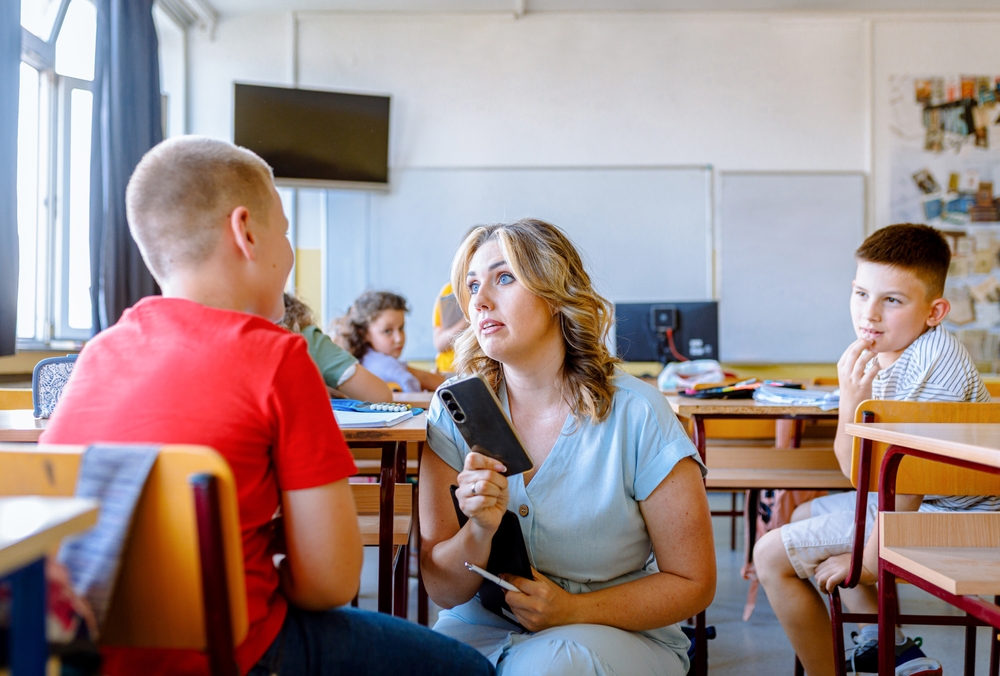
In Fayetteville, GA, middle school administrators can now confiscate phones before the first bell rings. Over in Volusia County, Florida, districts have updated student conduct codes over summer break. This is not a culture war sideshow. It’s an enforcement shift, rolled out under the radar and backed by policy and strict guidelines.

Parents are sounding the alarm because certain devices that may be harmless at home are now liabilities. The hidden reality: your child’s phone no longer just distracts them. It creates a permanent record.

The Costs Of Phones In Class

Georgia HB 340 limits phone use for students in class, but it also does so much more. Schools can now keep track of repeated violations, patterns, and peer interactions tied to phones. Repeated breaches of this new rule can lead to very serious consequences for your student if they are using their phone under the watchful eye of school staff.

This is not a theory or something being debated by Georgia lawmakers; it is official and signed into law. District guidance for school policy instructs administrators to treat repeated phone infractions as escalating indicators.

Here’s how a cell phone now ruins a student’s standing fast.

1) Digital contraband equals behavioral flags. One phone out during instruction triggers documentation. Fayetteville, GA, parents may notice an uptick in suspensions tied to noncompliance.

2) Screenshots become evidence. Group chats, photos, and memes circulate. Schools collect them. Context dies. Metadata lives. Administrators’ discipline based on digital facts, not intent.

3) Searches escalate without warning. HB 268 normalizes digital behavior review. A phone becomes a searchable container during investigations. Because of this, a child’s privacy shrinks when they are sitting in their classrooms.

Friction-Maxxing In Class

This enforcement aligns with the national high-stakes parents’ movement that is urging “friction-maxxing” against distraction and burnout.

With these cell phone rules, schools apply friction by design. They remove devices, log resistance, and escalate outcomes. Parents who shrug this off misread the terrain because the school system does not negotiate. By adhering to common friction-maxxing rules such as limiting screen time and reducing digital noise, parents can prevent this cell phone problem from holding their children back.
How Your Child's Cell Phone Could Now Ruin Them In School
Image Source: Shutterstock.com

The Financial & Social Costs

When the cost hits, it hits hard. For example, suspensions force missed workdays and lost wages for parents who have to pick up their kids or provide them with childcare while they sit at home.

On top of all that, repeated discipline at school may threaten extracurricular eligibility, scholarship chances, and recommendation letters. Ignoring these risks and pushing back publicly could you lose social capital with administrators who control outcomes. This is the hidden cost of kids in the modern school landscape: money burned, credit strained, futures narrowed.

Parents Decide Cell Phone Use

High-stakes parenting now demands a hard line. Either you control the device, or the device controls the record attached to your child’s name.

Do you choose strict control for safety—locking phones down completely—or personal liberty for connection—accepting the risk of permanent records?

You May Also Like…

Does Your Child Know Your Phone Number and Full Name? Here’s Why They Should

Parenting Hacks for College Students: 8 Tips to Juggle Studies and Kids

7 Old-School Parenting Habits That Still Save Families Money

Is Your “Convenient” Life Making Your Child Weak? Why Experts Are Urging Parents to Try “Friction-Maxxing” This Winter

Why Your Teen’s Friend Group Is Secretly Rating Your Home on “The Vibe Scale”—and Why It Matter

Brandon Marcus
Brandon Marcus
Brandon Marcus is a writer who has been sharing the written word since a very young age. His interests include sports, history, pop culture, and so much more. When he isn’t writing, he spends his time jogging, drinking coffee, or attempting to read a long book he may never complete.

Filed Under: Education Tagged With: cell phone, cell phone use, elementary students, Family, family issues, school, school rules, smart phones, student conduct, teachers and students

Should Teachers Be Paid More For Helping to Raise Our Children? The Answer Might Surprise You

May 28, 2025 | Leave a Comment

Should Teachers Be Paid More For Helping to Raise Our Children The Answer Might Surprise You

Teachers do far more than deliver lesson plans and grade papers—they shape lives. They’re the ones who wipe tears, mediate conflicts, give pep talks, and notice when something seems off. For seven or more hours a day, five days a week, teachers become role models, mentors, and in many ways, co-parents to the children in their classrooms. So when people ask, should teachers be paid more for helping to raise our children?, it’s not just a question about salaries—it’s a question about how we value the people shaping the next generation.

1. Teachers Are Expected to Wear Multiple Hats

Today’s teachers aren’t just educators—they’re counselors, mediators, nurses, and social workers, often all before lunchtime. They handle everything from minor cuts to major emotional meltdowns while still trying to meet curriculum benchmarks. When we consider whether teachers should be paid more, we need to look at the ever-growing list of roles they’re expected to take on. This isn’t just about academics anymore. They’re helping raise children in the truest sense.

2. Emotional Support is a Daily Requirement

Whether it’s comforting a child who’s having a rough morning or noticing signs of neglect, teachers are deeply involved in students’ emotional wellbeing. They create safe spaces, provide stability, and sometimes become the only trusted adult a child has. Should teachers be paid more for being the frontline support system for kids who struggle? Many would argue yes, especially since they’re doing this in addition to teaching math or science. The emotional labor involved is immense—and often invisible.

3. Out-of-Pocket Spending Has Become the Norm

Teachers regularly dip into their own paychecks to buy classroom supplies, snacks, and hygiene items for their students. They fill gaps left by underfunded school systems, often without complaint. When debating whether teachers should be paid more, consider that many already subsidize their own classrooms. Their love for their students keeps them going, but that love shouldn’t cost them financially. No other profession asks employees to fund basic resources from their own pocket.

4. The Demands Go Far Beyond the Classroom

The work doesn’t stop at the last bell. Lesson planning, parent communication, grading, and professional development eat into evenings and weekends. The idea that teachers “get summers off” ignores the countless hours spent prepping, recertifying, or working second jobs. Should teachers be paid more for this kind of commitment? Absolutely—because they’re often working a 50-hour week on a 40-hour paycheck. The effort they put in after-hours directly impacts student success.

5. Teachers Often Fill Parenting Gaps

In homes where parents are juggling multiple jobs or going through tough times, teachers step up in quiet, powerful ways. They teach manners, responsibility, empathy, and resilience. They help children process grief, build confidence, and learn to believe in themselves. Should teachers be paid more for the emotional and developmental support they provide? If we agree that raising children is a team effort, then the answer feels obvious.

6. Burnout is at an All-Time High

Teaching isn’t just demanding—it’s exhausting. Many educators report feeling overwhelmed, unsupported, and underappreciated. High levels of burnout are leading to teacher shortages across the country. When asking should teachers be paid more, it’s not just about money—it’s about retaining talented people who are leaving the profession in droves. Better pay could mean better mental health, better retention, and ultimately, better outcomes for kids.

7. Society Trusts Teachers With Our Greatest Responsibility

We trust teachers to educate, nurture, and protect our children—arguably the most important job there is. And yet, the financial compensation often doesn’t reflect that trust. Teachers shape how our children see the world, themselves, and their place in it. Should teachers be paid more? If we value the role they play in shaping the future, it’s hard to argue otherwise.

Paying Teachers What They’re Worth Is Investing in Our Kids

The debate over whether teachers should be paid more isn’t just about paychecks—it’s about priorities. If we truly believe children deserve quality education and care, then we must also believe the people delivering that experience deserve fair, competitive compensation. Teachers are doing far more than teaching—they’re helping to raise and guide a generation. The question isn’t can we afford to pay them more—it’s can we afford not to?

Do you think teachers are fairly paid for everything they do? What would you change about the system if you could? Share your thoughts in the comments.

Read More:

7 Reasons Your Kids Are Faking Illness to Avoid School (And What to Do About It)

7 Reasons You’re Directly Responsible For Your Child’s Poor Grades in School

Catherine Reed
Catherine Reed

Catherine is a tech-savvy writer who has focused on the personal finance space for more than eight years. She has a Bachelor’s in Information Technology and enjoys showcasing how tech can simplify everyday personal finance tasks like budgeting, spending tracking, and planning for the future. Additionally, she’s explored the ins and outs of the world of side hustles and loves to share what she’s learned along the way. When she’s not working, you can find her relaxing at home in the Pacific Northwest with her two cats or enjoying a cup of coffee at her neighborhood cafe.

Filed Under: Education Tagged With: education system, parenting and education, raising kids, school funding, teacher pay, teacher support, teachers and students, underpaid professions

  • Facebook
  • Pinterest
  • RSS
  • Twitter

Basic Principles Of Good Parenting

Here some basic principles for good parenting:

  1. What You Do Matters: Your kids are watching you. So, be purposeful about what you want to accomplish.
  2. You Can’t be Too Loving: Don’t replace love with material possessions, lowered expectations or leniency.
  3. Be Involved Your Kids Life: Arrange your priorities to focus on what your kid’s needs. Be there mentally and physically.
  4. Adapt Your Parenting: Children grow quickly, so keep pace with your child’s development.
  5. Establish and Set Rules: The rules you set for children will establish the rules they set for themselves later.  Avoid harsh discipline and be consistent.
  6. Explain Your Decisions: What is obvious to you may not be evident to your child. They don’t have the experience you do.
  7. Be Respectful To Your Child: How you treat your child is how they will treat others.  Be polite, respectful and make an effort to pay attention.
Best Parenting Blogs

Most Popular

Baby

9 Unusual Baby Names That Sound Like They Belong to Future CEOs

Evan Morgan
Baby

10 Baby Names That Were Once Considered “Grandparent Names” but Feel Cool Again

Evan Morgan
Target Store

Choking Incident Prompts Recall of 49,000 Target Gigglescape “Under the Sea” Popping Toys

Evan Morgan
Frustrated Girl

Why Some Students on the Spectrum Are Labeled With ODD

Evan Morgan
Coke Bottles

12 Things Kids Took to School in the ’70s That Would Never Be Allowed Today

Evan Morgan

All content on Kids Ain’t Cheap is for entertainment purposes only. By reading this blog, you agree that Kids Ain’t Cheap is not responsible for any actions taken after reading this blog. For the full disclaimer, see our privacy policy.

Please note that Kids Ain’t Cheap has financial relationships with some of the merchants mentioned here. Kids Ain’t Cheap is funded by banner advertising, commission sales and search optimization consulting.

Copyright © 2006–2026 | District Media | All Rights Reserved | Privacy Policy

Copyright © 2026 Runway Pro Theme by Viva la Violette