
• Home
  • About Us
  • Toolkit
  • Archives
  • Advertise
  • Privacy Policy

Kids Ain't Cheap

But They Sure Are Worth It

  • Parenting
    • Baby Stuff
    • Books and Reading
      • Aesops Fables
      • Comic Books
    • Education
    • Family Time
    • Green Living
    • Growing Up
    • Healthy Living & Eating
    • Holidays
    • Parenting
    • Random Musings
    • Shopping
    • Stuff to Do
  • Money
  • Product Reviews
    • Books and Magazines
    • Discount Sites
    • Furniture
    • House Keeping
    • Reviews News
    • Toys and Games
  • Contact Us
  • Our Editorial Commitment
  • Search

Inactivity Risk: 7 Health Problems Worsening Without Activity in Kids

July 14, 2025 | Leave a Comment

Inactivity Risk 7 Health Problems Worsening Without Activity in Kids
123rf.com

With screens replacing playgrounds and busy schedules taking over free time, today’s kids are moving less than ever before. But physical activity isn’t just about burning energy or staying fit—it’s essential for overall health, both now and in the long run. The inactivity risk for children can quietly snowball into real problems that affect their development, mood, and ability to thrive. From weakened muscles to emotional struggles, the effects of too much sitting and too little movement are deeper than many parents realize. Let’s break down the biggest health problems that tend to worsen when kids aren’t active—and why it’s never too late to help them get moving again.

1. Obesity and Unhealthy Weight Gain

One of the most obvious consequences of inactivity is an increase in body fat and overall weight. When kids consume more calories than they burn, excess weight often follows. This isn’t just about appearance—childhood obesity increases the risk of diabetes, joint issues, and even social challenges like bullying or low self-esteem. Without regular movement, metabolism slows, and even small indulgences can lead to long-term health issues. Encouraging active play and limiting sedentary time is one of the most powerful ways to help kids maintain a healthy weight.

2. Weak Muscles and Poor Posture

The inactivity risk extends to your child’s physical development, particularly their strength and posture. Without regular use, muscles—especially in the core, legs, and back—can weaken over time. This often leads to slouched shoulders, back pain, and poor balance. Kids who don’t move enough may also struggle with physical tasks like climbing stairs, carrying backpacks, or participating in sports. Keeping them, active helps strengthen growing bodies and supports better physical confidence.

3. Heart and Lung Health Decline

Even young hearts and lungs need regular workouts to stay strong and efficient. A lack of movement means these organs don’t get the stimulation they need, leading to lower cardiovascular endurance. Over time, the inactivity risk may raise blood pressure and cholesterol levels, even in kids. Children may also get winded more easily or have less stamina for everyday activities. Simple activities like biking or playing tag can go a long way toward protecting long-term heart health.

4. Poor Sleep Quality

Inactivity often leads to trouble falling asleep or staying asleep, which becomes a frustrating cycle. Kids who don’t burn off their energy during the day may feel restless at night, resulting in cranky mornings and sluggish days. Physical activity helps regulate the body’s internal clock and encourages deeper, more restful sleep. It also reduces stress and anxiety, which can interfere with sleep patterns. Making sure your child gets time to move each day can improve not just bedtime routines but their overall mood.

5. Emotional and Mental Health Struggles

Physical activity is a natural mood booster, so when kids don’t move enough, their mental health can take a hit. Regular exercise helps release endorphins, which fight stress and improve focus. Without it, children may be more prone to anxiety, depression, or difficulty concentrating. The inactivity risk can also increase feelings of isolation, especially if screen time replaces social play. Activities that involve movement and interaction—like sports, dance, or even playing outside with friends—are crucial for emotional resilience.

6. Delayed Motor Skills and Coordination

Movement is a big part of how kids learn to control their bodies. When children don’t have regular opportunities to run, jump, skip, or throw, their coordination and motor skills may fall behind. This can affect not just sports performance but also classroom tasks like writing or sitting upright for long periods. Active kids tend to develop better reflexes and body awareness. Making movement part of their everyday routine supports both physical and cognitive development.

7. Increased Risk of Chronic Conditions Later in Life

The effects of childhood inactivity don’t always stop in childhood. The habits kids form now can impact their future, including a higher risk for chronic conditions like type 2 diabetes, arthritis, and even certain cancers. The longer children stay inactive, the harder it becomes to break that pattern as adults. Instilling a love for movement early helps build lifelong habits of wellness. It’s never just about today—it’s about helping kids build a healthier tomorrow.

Little Changes Make a Big Difference

You don’t need a gym membership or a rigid routine to counteract the inactivity risk in your child’s life. Something as simple as a family walk, a game of hide and seek, or a backyard obstacle course can add the movement their growing bodies and minds need. The key is consistency and variety—find ways to make activity fun, not a chore. Your encouragement plays a powerful role in how your child values movement. Help them see being active not as a task, but as a joyful part of daily life.

What activities help your kids stay moving and happy? Share your favorite family fitness ideas in the comments!

Read More:

6 Food Items That We Think Are Healthy but Are Bad for Our Children

The Dangers of Screen Addiction and How to Set Healthy Limits

Catherine Reed
Catherine Reed

Catherine is a tech-savvy writer who has focused on the personal finance space for more than eight years. She has a Bachelor’s in Information Technology and enjoys showcasing how tech can simplify everyday personal finance tasks like budgeting, spending tracking, and planning for the future. Additionally, she’s explored the ins and outs of the world of side hustles and loves to share what she’s learned along the way. When she’s not working, you can find her relaxing at home in the Pacific Northwest with her two cats or enjoying a cup of coffee at her neighborhood cafe.

Filed Under: Healthy Living & Eating Tagged With: active kids, child health, Childhood Obesity, family fitness, inactivity risk, kids mental health, parenting tips, screen time alternatives

8 Exercises You Can Do With Your Child for Fun and Fitness

April 12, 2025 | Leave a Comment

Parent and child exercising together
Image Source: Unsplash

Let’s face it—convincing kids to exercise isn’t always a breeze, especially when screens and snacks seem more inviting than sneakers. But staying active can be simple and playful. With the right spin, movement becomes something your child (and you) look forward to. Below are eight activities that blend fun and fitness into quality family time. Whether you have a busy toddler, a grade-schooler with endless energy, or a tween who’s “too cool,” there’s an idea here for every age and attitude.

1. Outdoor Adventures

Venture outside to make fitness feel less like a chore and more like exploration. Take a nature walk, hike a kid-friendly trail, or hop on bikes around the neighborhood. These outings aren’t just good for cardio; research shows that time in nature can lower stress and boost mood for both kids and adults. If you need more ways to spark interest, try a simple scavenger hunt—like looking for different bird species or special leaves along the trail.

Tip: The National Wildlife Federation’s Outdoors Resources offers fun ideas for making outdoor adventures engaging and educational for kids.

2. Backyard Obstacle Courses

Transform a yard into a mini obstacle course using cones, hula hoops, pool noodles, or chalk-drawn markers. Crawling under chairs, hopping through hoops, or balancing on a plank encourages agility and coordination. Better yet, let your child help design the course—creativity meets motor skill practice. You can even time each run, adding a friendly competition (with high-fives, not pressure). Obstacle courses offer a blend of speed, problem-solving, and laughter, which beats a treadmill any day.

3. Family Dance Parties

When the weather isn’t cooperating or you’re short on time, turn on some music and just dance. A living-room dance party can become a calorie-burning, mood-lifting burst of excitement. Dancing also enhances coordination and rhythm. Make it even sillier by letting each family member pick a favorite song—there’s nothing like parent-and-child choreography to bond you. According to Focus on the Family’s article on fun indoor activities, dancing together boosts connection and relieves stress at any age.

4. Sports Competitions Made Friendly

Soccer in the backyard, a game of basketball in the driveway, or even a simple round of tag can be a major energy burn. These mini sports sessions aren’t about perfect form; they’re about igniting a love for movement. The casual nature keeps it friendly, while kids learn teamwork and resilience. You can assign playful team names, rotate “captains,” or hand out funny awards at the end. It’s a straightforward way to promote fun and fitness in a low-pressure environment.

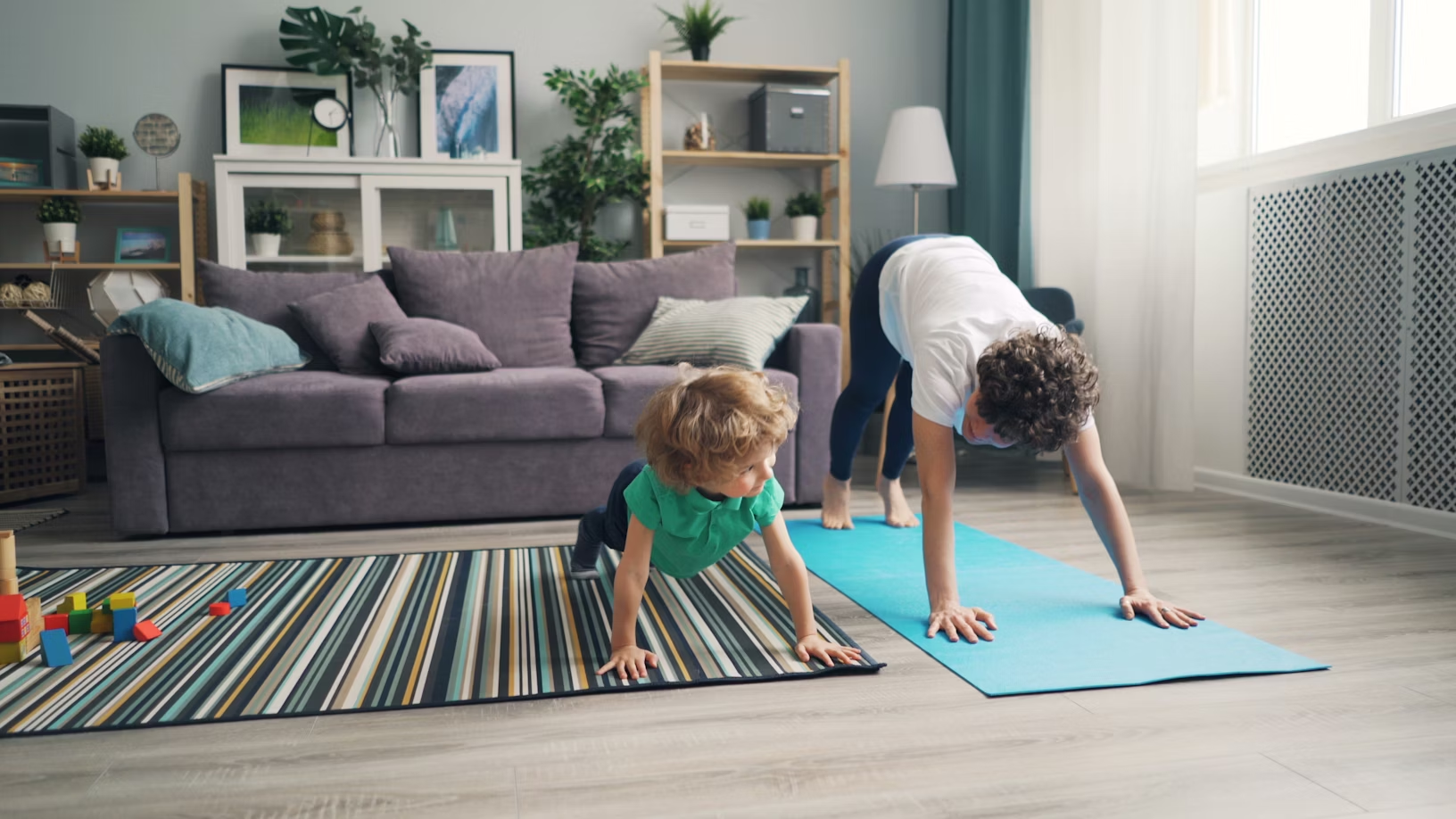
Family doing yoga and stretching together
Image Source: Unsplash

5. Family Yoga and Stretching

If you crave calm as well as exercise, try family yoga or stretching. Start with easy poses like Tree Pose or Downward Dog. Kids learn balance, breath control, and mindfulness—skills that help them manage big feelings. Yoga also makes a great bedtime routine, soothing minds and bodies before lights out. You don’t need formal training; short tutorial videos or basic yoga cards work fine, and your child will love trying to mimic the poses.

6. Scavenger Hunts on the Move

Take a walk around the block and turn it into an adventurous scavenger hunt. Create a list of everyday items like a red car, a bird’s nest, or a flower in bloom. Each time you spot one, you could do a mini exercise challenge—like 5 jumping jacks or a silly dance. This playful approach merges mental alertness with mild cardio. Plus, focusing on finding objects makes the walk feel like a treasure hunt, which is way more inviting than “exercise.”

7. Freeze Tag with a Twist

Revisit a classic: freeze tag. But throw in a twist—when someone’s “frozen,” they perform a short exercise (like two squats or a spin) before getting “unfrozen” by a teammate. It keeps everyone engaged and ups the energy bursts. Expect giggles, mild chaos, and a good sweat. Games like this promote interval-style fitness—quick surges of running followed by stops—while also letting kids practice turn-taking and quick decisions.

8. Stomp Challenges and Follow-the-Leader Moves

Sometimes the simplest ideas are the most memorable. Take turns being the leader and come up with silly movements: stomp like a dinosaur, tiptoe like a ninja, or wiggle like a caterpillar across the living room. Younger kids sharpen gross motor skills; older kids flex their creativity. Best of all, it’s zero cost, zero prep, and maximum bonding. As KidsHealth’s guide on family fitness suggests, the goal is to keep it light and imaginative so children see movement as fun, not a chore.

Keep Moving, Keep Connecting

Physical health and emotional connection can go hand in hand. By blending fun and fitness, you’re not just tackling health goals—you’re also nurturing your relationship. The laughter, curiosity, and teamwork that arise during these activities strengthen your family bond. Ultimately, your child learns that movement is not a “have to” but a “get to”—an opportunity to explore and enjoy. Even short bursts of play can lay the foundation for a lifelong active habit.

What’s your family’s favorite way to stay active together? Tell us in the comments. Sometimes, the easiest ideas from other parents spark the greatest joy!

Read More

  • How to Develop a Healthy Lifestyle without Depriving Yourself
  • 5 Ways to Keep Young Kids Healthy
Samantha Warren
Samantha

Samantha Warren is a holistic marketing strategist with 8+ years of experience partnering with startups, Fortune 500 companies, and everything in between. With an entrepreneurial mindset, she excels at shaping brand narratives through data-driven, creative content. When she’s not working, Samantha loves to travel and draws inspiration from her trips to Thailand, Spain, Costa Rica, and beyond.

Filed Under: Parenting Tagged With: child development, family fitness, fun exercises for kids, parenting tips, Physical Activity, playtime ideas

  • Facebook
  • Pinterest
  • RSS
  • Twitter

Basic Principles Of Good Parenting

Here some basic principles for good parenting:

  1. What You Do Matters: Your kids are watching you. So, be purposeful about what you want to accomplish.
  2. You Can’t be Too Loving: Don’t replace love with material possessions, lowered expectations or leniency.
  3. Be Involved Your Kids Life: Arrange your priorities to focus on what your kid’s needs. Be there mentally and physically.
  4. Adapt Your Parenting: Children grow quickly, so keep pace with your child’s development.
  5. Establish and Set Rules: The rules you set for children will establish the rules they set for themselves later.  Avoid harsh discipline and be consistent.
  6. Explain Your Decisions: What is obvious to you may not be evident to your child. They don’t have the experience you do.
  7. Be Respectful To Your Child: How you treat your child is how they will treat others.  Be polite, respectful and make an effort to pay attention.
Best Parenting Blogs

Most Popular

Baby names

Teachers Admit: These 6 Baby Names Create Instant Bias in the Classroom

Latrice Perez
6 Baby Names That Sound Cute Now but Cause Problems Later

6 Baby Names That Sound Cute Now but Cause Problems Later

Brandon Marcus
11 Ways Kids Are Outsmarting Parental Controls 1. Using Alternate Devices One common trick is simply turning to another device. If a child’s main phone or tablet is restricted, they may borrow a sibling’s, friend’s, or even a school laptop. This instantly gives them access to content outside of parental oversight. Parents often focus on one device, forgetting that others in the household can serve as loopholes. Knowing this tactic helps families tighten controls across all electronics. 2. Clearing Browsing Histories Many kids quickly learn that clearing browsing history hides evidence of restricted activity. With just a few clicks, they can erase any trace of websites visited. This makes it harder for parents to notice when rules are being broken. Parents may assume no history means no browsing, but the reality is often the opposite. Kids are outsmarting parental controls by making it seem like nothing happened at all. 3. Using Private Browsing Modes Most browsers offer “incognito” or private browsing features. Kids use this mode to access websites without leaving a record in the history. To parents checking later, everything looks clean and safe. This simple trick is often one of the first ways kids discover how to bypass restrictions. Conversations about private browsing can help close this gap. 4. Guessing or Resetting Passwords Children who are persistent may try to guess passwords to parental control apps or accounts. Others may find ways to reset them through email prompts or security questions. Once inside, they can disable restrictions entirely. Parents may not even realize controls have been altered until much later. Stronger, less predictable passwords can make this more difficult. 5. Using VPNs to Hide Activity Virtual private networks, or VPNs, let kids disguise their online locations. With one downloaded app, they can bypass geographic or parental restrictions. Some children learn about VPNs through friends or even social media. This makes it easy for them to reach content that should be blocked. Parents often underestimate just how simple it is for kids to use these tools. 6. Creating Fake Accounts When parents monitor social media, kids may create hidden accounts. These “finstas” or fake profiles allow them to interact freely without parental oversight. While their main account appears harmless, the secondary one tells a different story. Kids are outsmarting parental controls by playing both sides at once. Checking for duplicate accounts can help parents stay more aware. 7. Exploiting Time Zone Settings Some kids change the time zone on their devices to bypass screen time limits. This trick allows them to gain extra hours of usage undetected. Parents may assume controls are working, but in reality, the child is bending the clock. It’s a clever loophole that highlights just how resourceful kids can be. Monitoring device settings regularly can catch this tactic. 8. Disabling or Uninstalling Apps Parental control apps can be deleted or disabled with surprising ease. Some kids even reinstall them before a parent checks, making it seem like nothing changed. Others may simply restrict permissions to prevent apps from functioning properly. When apps aren’t monitored closely, parents may not notice they’ve been tampered with. This shows the importance of consistent follow-up. 9. Turning to Friends for Access If a child can’t get past restrictions on their own, they may rely on friends. Visiting a friend’s house or borrowing their phone can give them a free pass. Parents often forget that peer environments can override restrictions set at home. This kind of social workaround is especially common with gaming or social media. Open conversations about trust and responsibility are essential. 10. Hiding Apps in Plain Sight Kids sometimes download apps that look innocent but serve as gateways to hidden activity. These apps may disguise themselves as calculators or utilities. In reality, they allow file storage, private messaging, or browser access. Parents glancing at a home screen may overlook them entirely. Learning to recognize these disguised apps can help parents stay informed. 11. Outpacing Parents’ Tech Knowledge Finally, kids often know more about devices than their parents do. Whether through YouTube tutorials, TikTok hacks, or peer groups, they quickly learn advanced workarounds. This knowledge gap means controls can be bypassed before parents even realize the loophole exists. Staying informed and continually learning about new technology is the best defense. Kids are outsmarting parental controls because they adapt faster than most adults. The Real Solution Lies Beyond Restrictions While controls and filters are important, no system is perfect. Kids will always find creative ways around barriers, making communication the strongest safeguard. Setting clear expectations, building trust, and having ongoing conversations about online behavior matter more than apps alone. Parents who combine technology with open dialogue create a safer digital environment. The goal isn’t to win a battle of wits but to build a relationship that keeps kids both safe and honest. Do you think kids are outsmarting parental controls faster than parents can keep up? Share your experiences in the comments below. What to Read Next... 6 Parenting Tech Shortcuts That Can Expose Your Child to Strangers How Much Screen Time Is Too Much—Legally Speaking? Is Your Child’s School Quietly Tracking Their Location Without Your Consent? How Much Screen Time Is Quietly Reshaping Childhood Behavior? Why Some Parents Are Being Investigated Over Homeschooling Records

11 Ways Kids Are Outsmarting Parental Controls

Catherine Reed
Smiling grandfather holding a happy baby indoors.

Why Grandparents Shouldn’t Babysit Their Grandkids Every Week – The Unspoken Issue

Samantha
birthday gifts

7 Birthday Gifts Your Child Should Never Bring to a Party

Latrice Perez

All content on Kids Ain’t Cheap is for entertainment purposes only. By reading this blog, you agree that Kids Ain’t Cheap is not responsible for any actions taken after reading this blog. For the full disclaimer, see our privacy policy.

Please note that Kids Ain’t Cheap has financial relationships with some of the merchants mentioned here. Kids Ain’t Cheap is funded by banner advertising, commission sales and search optimization consulting.

Copyright © 2006–2026 | District Media | All Rights Reserved | Privacy Policy

Copyright © 2026 Runway Pro Theme by Viva la Violette