
• Home
  • About Us
  • Toolkit
  • Archives
  • Advertise
  • Privacy Policy

Kids Ain't Cheap

But They Sure Are Worth It

  • Parenting
    • Baby Stuff
    • Books and Reading
      • Aesops Fables
      • Comic Books
    • Education
    • Family Time
    • Green Living
    • Growing Up
    • Healthy Living & Eating
    • Holidays
    • Parenting
    • Random Musings
    • Shopping
    • Stuff to Do
  • Money
  • Product Reviews
    • Books and Magazines
    • Discount Sites
    • Furniture
    • House Keeping
    • Reviews News
    • Toys and Games
  • Contact Us
  • Our Editorial Commitment
  • Search

She Gave Birth in Front of a Court Witness: DNA Still Said the Baby Wasn’t Hers

September 1, 2026 | Leave a Comment

Newborn
Lydia Fairchild gave birth while an official witnessed the delivery, yet DNA testing still indicated the newborn was not genetically hers. The mystery was eventually explained by chimerism, a rare condition that can leave one person with distinct sets of DNA. (Pexels).

In 2002, Washington mother Lydia Fairchild sought public assistance and soon faced an almost impossible accusation. DNA testing showed that the father of her children was genetically related to them, but Fairchild apparently was not. She had carried and delivered them, yet the laboratory results contradicted that basic fact. The Lydia Fairchild chimerism case became a striking example of how reliable science can mislead when biology is unusually complicated. What happened next forced a court to confront a question that sounds like science fiction: Can one person carry two distinct sets of DNA?

A Routine DNA Test Turned Into A Legal Nightmare

Fairchild was 26 and pregnant with her third child when DNA testing connected to her request for assistance triggered the dispute. According to accounts of the Lydia Fairchild chimerism case, repeated cheek-swab testing excluded her as the biological mother while confirming Jamie Townsend as the children’s father. Authorities suspected fraud, and records showing that Fairchild had given birth did not immediately overcome the genetic evidence. ABC News later reported that additional testing from different laboratories produced the same disturbing result. The case shows how laboratory findings can carry enormous legal consequences when officials assume there is only one biological explanation.

A Witness Saw Her Give Birth And DNA Still Disagreed

Fairchild was nearing delivery of her third child while the case was unfolding, creating a chance to test the evidence directly. A judge ordered an official to witness the birth and observe blood collection from Fairchild and the newborn, according to Arizona State University’s Embryo Project Encyclopedia. There was no realistic dispute that Fairchild had delivered the baby. Yet roughly two weeks later, testing again reported that the newborn did not genetically match her as a mother.

The stakes quickly became far greater than losing public assistance. According to Arizona State University’s Embryo Project Encyclopedia, the court suggested placing Fairchild’s two children in separate foster homes while the case was contested because officials believed she was being deceptive about their relationship. That contradiction became a turning point in the Lydia Fairchild chimerism case, pointing toward a far stranger explanation.

The Answer Was Hidden In Chimerism

The explanation was tetragametic chimerism, which can occur when two separately fertilized embryos merge early in development. Instead of every tissue carrying exactly the same genetic profile, a chimera can have genetically distinct cell populations in different parts of the body. Fairchild’s commonly sampled tissues reflected one genetic line, while reproductive tissue revealed another line connected to her children. Testing of cervical tissue ultimately uncovered DNA that established her biological relationship to them, according to the Embryo Project Encyclopedia. The Lydia Fairchild chimerism case therefore did not prove that DNA testing was useless; it showed that choosing the right biological sample can matter when rare biology complicates the interpretation.

Another Woman’s Case Helped Unlock The Mystery

Fairchild’s lawyer found a crucial scientific parallel in the case of Karen Keegan, whose unexpected genetic results emerged while her family was being evaluated for a kidney transplant. Researchers reported that two of Keegan’s sons initially appeared not to be genetically hers, leading investigators to examine tissue from different parts of her body. The work demonstrated that Keegan carried genetically distinct cell lines, providing a medical explanation that could also be considered in Fairchild’s case. That precedent helped investigators move beyond the assumption that another cheek or blood test would necessarily settle the issue. The Lydia Fairchild chimerism case shows why unusual DNA conflicts may require specialists, additional tissues, family comparisons, and medical history before life-changing conclusions are drawn.

What This Case Does And Does Not Mean About DNA

DNA testing remains powerful for establishing biological relationships, so Fairchild’s story does not mean routine tests are generally unreliable. The key issue is that a DNA sample represents the cells collected from a particular tissue, and chimerism can make those cells genetically different from cells elsewhere in the same person. Human chimerism is considered rare, and its true prevalence is uncertain because many people may never have a reason to undergo testing that reveals it. It is also important not to confuse tetragametic chimerism with microchimerism, in which a relatively small number of genetically different cells can persist after pregnancy or other biological exchanges. Anyone facing an unexplained parentage result with serious medical or legal stakes should seek qualified genetic and legal guidance rather than assuming an online DNA kit tells the entire story.

How Can One Person Have Two DNA Profiles?

1. Two eggs are fertilized separately.
Each embryo begins with its own genetic profile.

2. The embryos fuse very early in development.
Instead of becoming fraternal twins, they develop as one person.

3. Both genetic cell lines remain.
Different proportions of those cells can wind up in different tissues.

4. A DNA test samples one tissue—not the entire body.
If the sampled tissue contains predominantly one cell line while reproductive tissue carries another, the result can appear to contradict biological parentage.

The Bigger Lesson Is That Biology Can Defy Simple Answers

The Lydia Fairchild chimerism case endures because it challenges the comforting idea that every genetic question has a simple yes-or-no answer. Fairchild reportedly faced the possibility of losing her children even though she had physically given birth to them, and only a rare biological explanation reconciled the evidence with reality. Her story shows why strong evidence still needs context, especially when the consequences affect custody, identity, benefits, or family relationships. DNA can be remarkably precise, but precision is not the same as complete understanding when the human body itself contains an unexpected genetic exception.

If a witnessed birth and repeated DNA tests appeared to contradict each other, which would you trust first—and should courts be more cautious in rare genetic cases? Share your thoughts in the comments.

What to Read Next

Your Child Got Birthday Money — Should You Let Them Spend All of It?

6 Ways Birth Order Still Affects Parenting Today

How to Protect Your Child’s Rights When Moving Districts

Evan Morgan

Evan Morgan has been a full-time freelance writer and editor for 10+ years. When not working, he enjoys catching the latest true crime documentary or getting lost in a good book.
Filed Under: News Tagged With: chimerism, DNA mystery, DNA testing, Family, genetics, human chimerism, Lydia Fairchild, maternity test, science, tetragametic chimerism

Why Some Parents Still Believe Vaccines Cause Autism—Despite All the Evidence

April 1, 2025 | Leave a Comment

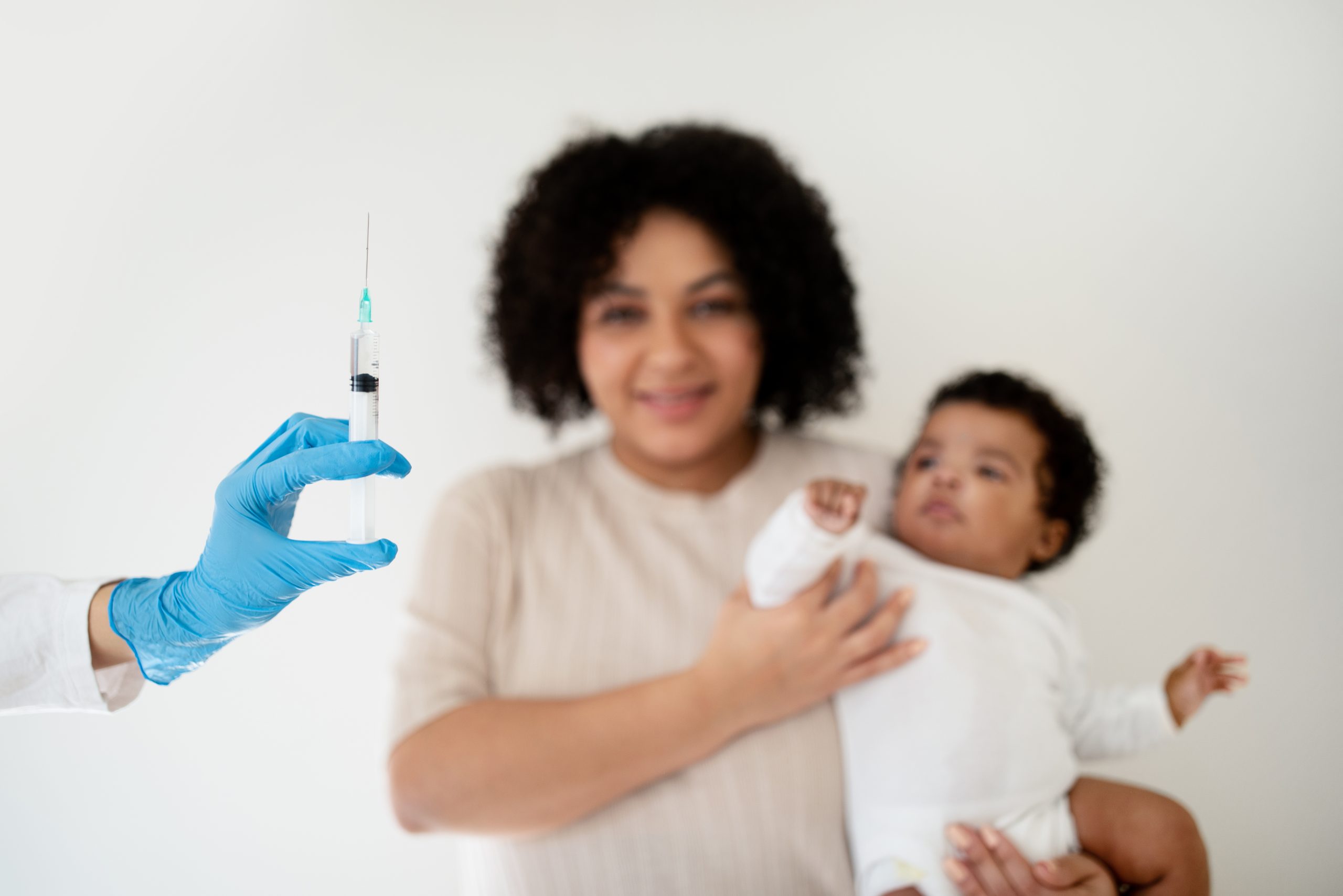
Smiling loving young african american woman holding baby in her arms, looks at doctor hand with syringe on white background, blurred. Mother and child, vaccination, medical health care
Image Source: 123rf.com

The vaccine-autism debate refuses to die, even though science has repeatedly shut it down. Ask a few parents, and you’ll hear stories laced with concern, confusion, and outright fear. It’s easy to dismiss this as ignorance, but it’s often more complicated than that. At its heart, this belief is wrapped in emotion, past trauma, and a desire to protect children at all costs. So, why does this myth still have such a powerful grip?

1. It All Started With a Discredited Study

The myth took root in 1998 when British doctor Andrew Wakefield published a study claiming a link between the MMR (measles, mumps, rubella) vaccine and autism. The paper was later retracted for manipulating data, and Wakefield lost his medical license. But by then, the narrative had spread like wildfire. It gave worried parents a villain—and a reason—for their child’s diagnosis. That single, fraudulent study has haunted vaccine discourse for decades.

2. Celebrity Voices Amplified the Fear

Celebrities like Jenny McCarthy gave the theory a loud and emotional voice. McCarthy claimed vaccines caused her son’s autism and became a public face of the anti-vaccine movement. When someone famous shares a personal story, it feels more convincing, even if it’s not backed by science. People assume celebrities have access to secret truths or inside knowledge. In reality, fame doesn’t equal fact—but it sure gets attention.

3. Social Media Keeps the Myth Alive

Social media is a breeding ground for vaccine misinformation. Platforms like Facebook and TikTok make it easy for emotional stories to go viral, regardless of their accuracy. Algorithms push similar content to users, creating echo chambers that reinforce beliefs. If you’re already skeptical, social media will serve up even more content to validate your fears. It’s not just about facts anymore—it’s about how fast falsehoods can spread.

4. Parental Instinct Meets Confirmation Bias

When parents are scared, they search for answers—and sometimes, they find exactly what they want to believe. If a child starts showing signs of autism after a vaccine appointment, the timing alone can feel like proof. That’s confirmation bias at work: we notice what supports our beliefs and ignore what doesn’t. It’s human nature to connect dots, even when science tells us there’s no real link. And when it comes to their kids, parents often trust their gut more than statistics.

5. Autism’s Complexity Adds to the Confusion

Word AUTISM with colorful puzzle pieces on white background
Image Source: 123rf.com

Autism is a spectrum, with no single cause or clear explanation. Symptoms often emerge between ages one and three—right around the time kids get several vaccines. This overlap in timing can create a strong emotional connection between the two events. When science can’t offer a neat answer, myths step in to fill the void. Parents just want to understand what happened—and simple answers are easier to accept.

6. A Deep Distrust in Big Pharma

Pharmaceutical companies have a long history of putting profits over people. Scandals, lawsuits, and shady practices have made it hard for many to trust the industry. When vaccines come from these same companies, suspicion naturally follows. For some parents, it’s not about the science—it’s about questioning the motives behind it. This distrust can be powerful enough to outweigh even the strongest scientific consensus.

7. Misinterpreting Scientific Language

Scientific studies are often filled with jargon and statistical nuance that can confuse non-experts. Media headlines may oversimplify or misrepresent the findings, leading to panic instead of understanding. Some parents read summaries or secondhand reports and come away with the wrong idea. Others may cling to studies that support their beliefs while ignoring more credible research. Without proper science education, it’s easy to get lost in the noise.

8. Fear Often Overpowers Facts

Let’s face it—fear is stronger than logic in many cases. Autism is a lifelong condition, and the idea of “causing” it through a medical choice feels unbearable. Anti-vaccine advocates tap into that fear with emotionally charged language and heartbreaking anecdotes. Once fear takes hold, it can be hard to let go—even when evidence says otherwise. The emotional weight of “what if” can feel heavier than scientific facts.

9. Media Sensationalism Makes It Worse

News outlets often prioritize clicks over clarity. A headline suggesting a possible link between vaccines and autism will get more attention than one that debunks it. Even balanced articles can be misread if the title sparks fear. The result? Misinformation spreads further and faster than the truth. Media literacy is just as important as medical knowledge in this fight.

10. Changing Minds Requires Compassion

Shaming parents won’t make them trust science. What they need is empathy, education, and time to process. Many of these parents are acting from a place of love and worry, not malice. Helping them understand the real facts means listening first, not lecturing. Public health efforts should focus on support, not scolding.

We Can Break the Cycle

The myth linking vaccines and autism won’t vanish overnight. But we can challenge it—with facts, empathy, and better communication. Parents deserve to feel informed, not judged. The more we open conversations instead of shutting them down, the better chance we have to change minds. And protecting our kids—all of them—starts with the truth.

Have you had conversations about this topic with other parents? What helped you feel more confident about vaccines? Drop your thoughts in the comments—we’d love to hear your perspective!

Read More:

Is Your Parenting Style Shaped by Your Own Childhood Experiences?

What’s Your Parenting Style?

Latrice Perez

Latrice is a dedicated professional with a rich background in social work, complemented by an Associate Degree in the field. Her journey has been uniquely shaped by the rewarding experience of being a stay-at-home mom to her two children, aged 13 and 5. This role has not only been a testament to her commitment to family but has also provided her with invaluable life lessons and insights.  As a mother, Latrice has embraced the opportunity to educate her children on essential life skills, with a special focus on financial literacy.

Filed Under: Parenting Tagged With: autism, Misinformation, Parenting, Public Health, science, vaccine safety, vaccines

  • Facebook
  • Pinterest
  • RSS
  • Twitter

Basic Principles Of Good Parenting

Here some basic principles for good parenting:

  1. What You Do Matters: Your kids are watching you. So, be purposeful about what you want to accomplish.
  2. You Can’t be Too Loving: Don’t replace love with material possessions, lowered expectations or leniency.
  3. Be Involved Your Kids Life: Arrange your priorities to focus on what your kid’s needs. Be there mentally and physically.
  4. Adapt Your Parenting: Children grow quickly, so keep pace with your child’s development.
  5. Establish and Set Rules: The rules you set for children will establish the rules they set for themselves later.  Avoid harsh discipline and be consistent.
  6. Explain Your Decisions: What is obvious to you may not be evident to your child. They don’t have the experience you do.
  7. Be Respectful To Your Child: How you treat your child is how they will treat others.  Be polite, respectful and make an effort to pay attention.
Best Parenting Blogs

Most Popular

Baby names

Teachers Admit: These 6 Baby Names Create Instant Bias in the Classroom

Latrice Perez
6 Baby Names That Sound Cute Now but Cause Problems Later

6 Baby Names That Sound Cute Now but Cause Problems Later

Brandon Marcus
11 Ways Kids Are Outsmarting Parental Controls 1. Using Alternate Devices One common trick is simply turning to another device. If a child’s main phone or tablet is restricted, they may borrow a sibling’s, friend’s, or even a school laptop. This instantly gives them access to content outside of parental oversight. Parents often focus on one device, forgetting that others in the household can serve as loopholes. Knowing this tactic helps families tighten controls across all electronics. 2. Clearing Browsing Histories Many kids quickly learn that clearing browsing history hides evidence of restricted activity. With just a few clicks, they can erase any trace of websites visited. This makes it harder for parents to notice when rules are being broken. Parents may assume no history means no browsing, but the reality is often the opposite. Kids are outsmarting parental controls by making it seem like nothing happened at all. 3. Using Private Browsing Modes Most browsers offer “incognito” or private browsing features. Kids use this mode to access websites without leaving a record in the history. To parents checking later, everything looks clean and safe. This simple trick is often one of the first ways kids discover how to bypass restrictions. Conversations about private browsing can help close this gap. 4. Guessing or Resetting Passwords Children who are persistent may try to guess passwords to parental control apps or accounts. Others may find ways to reset them through email prompts or security questions. Once inside, they can disable restrictions entirely. Parents may not even realize controls have been altered until much later. Stronger, less predictable passwords can make this more difficult. 5. Using VPNs to Hide Activity Virtual private networks, or VPNs, let kids disguise their online locations. With one downloaded app, they can bypass geographic or parental restrictions. Some children learn about VPNs through friends or even social media. This makes it easy for them to reach content that should be blocked. Parents often underestimate just how simple it is for kids to use these tools. 6. Creating Fake Accounts When parents monitor social media, kids may create hidden accounts. These “finstas” or fake profiles allow them to interact freely without parental oversight. While their main account appears harmless, the secondary one tells a different story. Kids are outsmarting parental controls by playing both sides at once. Checking for duplicate accounts can help parents stay more aware. 7. Exploiting Time Zone Settings Some kids change the time zone on their devices to bypass screen time limits. This trick allows them to gain extra hours of usage undetected. Parents may assume controls are working, but in reality, the child is bending the clock. It’s a clever loophole that highlights just how resourceful kids can be. Monitoring device settings regularly can catch this tactic. 8. Disabling or Uninstalling Apps Parental control apps can be deleted or disabled with surprising ease. Some kids even reinstall them before a parent checks, making it seem like nothing changed. Others may simply restrict permissions to prevent apps from functioning properly. When apps aren’t monitored closely, parents may not notice they’ve been tampered with. This shows the importance of consistent follow-up. 9. Turning to Friends for Access If a child can’t get past restrictions on their own, they may rely on friends. Visiting a friend’s house or borrowing their phone can give them a free pass. Parents often forget that peer environments can override restrictions set at home. This kind of social workaround is especially common with gaming or social media. Open conversations about trust and responsibility are essential. 10. Hiding Apps in Plain Sight Kids sometimes download apps that look innocent but serve as gateways to hidden activity. These apps may disguise themselves as calculators or utilities. In reality, they allow file storage, private messaging, or browser access. Parents glancing at a home screen may overlook them entirely. Learning to recognize these disguised apps can help parents stay informed. 11. Outpacing Parents’ Tech Knowledge Finally, kids often know more about devices than their parents do. Whether through YouTube tutorials, TikTok hacks, or peer groups, they quickly learn advanced workarounds. This knowledge gap means controls can be bypassed before parents even realize the loophole exists. Staying informed and continually learning about new technology is the best defense. Kids are outsmarting parental controls because they adapt faster than most adults. The Real Solution Lies Beyond Restrictions While controls and filters are important, no system is perfect. Kids will always find creative ways around barriers, making communication the strongest safeguard. Setting clear expectations, building trust, and having ongoing conversations about online behavior matter more than apps alone. Parents who combine technology with open dialogue create a safer digital environment. The goal isn’t to win a battle of wits but to build a relationship that keeps kids both safe and honest. Do you think kids are outsmarting parental controls faster than parents can keep up? Share your experiences in the comments below. What to Read Next... 6 Parenting Tech Shortcuts That Can Expose Your Child to Strangers How Much Screen Time Is Too Much—Legally Speaking? Is Your Child’s School Quietly Tracking Their Location Without Your Consent? How Much Screen Time Is Quietly Reshaping Childhood Behavior? Why Some Parents Are Being Investigated Over Homeschooling Records

11 Ways Kids Are Outsmarting Parental Controls

Catherine Reed
Smiling grandfather holding a happy baby indoors.

Why Grandparents Shouldn’t Babysit Their Grandkids Every Week – The Unspoken Issue

Samantha
birthday gifts

7 Birthday Gifts Your Child Should Never Bring to a Party

Latrice Perez

All content on Kids Ain’t Cheap is for entertainment purposes only. By reading this blog, you agree that Kids Ain’t Cheap is not responsible for any actions taken after reading this blog. For the full disclaimer, see our privacy policy.

Please note that Kids Ain’t Cheap has financial relationships with some of the merchants mentioned here. Kids Ain’t Cheap is funded by banner advertising, commission sales and search optimization consulting.

Copyright © 2006–2026 | District Media | All Rights Reserved | Privacy Policy

Copyright © 2026 Runway Pro Theme by Viva la Violette