• Home
  • About Us
  • Toolkit
  • Archives
  • Advertise
  • Privacy Policy

Kids Ain't Cheap

But They Sure Are Worth It

  • Parenting
    • Baby Stuff
    • Books and Reading
      • Aesops Fables
      • Comic Books
    • Education
    • Family Time
    • Green Living
    • Growing Up
    • Healthy Living & Eating
    • Holidays
    • Parenting
    • Random Musings
    • Shopping
    • Stuff to Do
  • Money
  • Product Reviews
    • Books and Magazines
    • Discount Sites
    • Furniture
    • House Keeping
    • Reviews News
    • Toys and Games
  • Contact Us
  • Our Editorial Commitment
  • Search

Why Women Don’t Want to ‘Have It All’ Anymore

April 16, 2025 | Leave a Comment

Woman pausing in a busy day
Image Source: Unsplash

In the late 20th century, the phrase “have it all” was championed as the ultimate life goal for women, particularly working mothers. Balance a soaring career, raise accomplished kids, maintain a spotless home, and keep a vibrant social life on the side. Yet today, many women are quietly, and sometimes openly, rejecting that notion.

They’re asking: “At what cost?” Overcoming mom burnout and unrealistic standards, they’re focusing on sanity, sustainability, and self-worth over an outdated ideal of ultimate multitasking.

The Burnout Behind the “Have It All” Myth

Let’s begin with the obvious culprit: burnout. The idea that women can flawlessly excel at both work and parenting doesn’t just raise expectations—it fuels a cycle of stress. According to a recent analysis by the Chartway Promise Foundation, this concept of “doing it all” has led many women to juggle disproportionate amounts of household and professional work.

The result? Emotional fatigue and the sense that life is just one endless task list, rather than a journey of growth.

It’s not that women lack ambition—far from it. But pushing through chaos in the name of “having it all” often leads to chronic overwhelm. Rather than thriving, many find themselves simply enduring. By stepping back, they’re reclaiming balance and mental well-being.

The Trap of Perfectionism

Perfectionism is the quiet companion to “having it all.” We see it in Instagram-worthy birthday parties and endless attempts to keep up with work emails in the middle of a child’s soccer game.

Expecting to be a perfect mom and a perfect employee simultaneously can turn daily life into a hamster wheel you can’t exit. That’s when self-care and joy slip away. Recognizing that you don’t need to excel 24/7 is often the first step toward real confidence and emotional health.

Career Choices Shaped by the Struggle

Some women respond to these pressures by changing their work-life trajectory—downsizing responsibilities, choosing flexible roles, or transitioning to part-time schedules. Others opt out of motherhood entirely, citing the difficulty of balancing it all.

A Harvard Business Review article underscores how some high-achieving professionals realize the conventional path simply isn’t worth the trade-offs. These choices aren’t failures; they’re smart, intentional strategies for protecting well-being and redefining success.

Woman juggling remote work at home
Image Source: Unsplash

When Work and Home Collide

The concept of work-life “balance” can feel like a tug-of-war, especially for those in high-stakes careers. Frustration emerges when the load of parenting and job responsibilities intersects with deep social expectations.

The unrelenting stress of school drop-offs, evening conference calls, and household chores fosters a desire to exit the “have it all” mindset. It’s not that these women are less capable—it’s that the system rarely provides the support structures needed for them to succeed in both domains without hitting burnout.

Redefining Success on Their Own Terms

Moving away from “have it all” doesn’t indicate a lack of ambition. Rather, it’s a clearer, more personal definition of success. With flexible work, remote opportunities, and shifting cultural perceptions, women can tailor their professional and personal lives far beyond the old 9-to-5 plus motherhood routine.

A McKinsey & Company study on Women in the Workplace shows that women increasingly choose roles aligning with genuine personal growth and autonomy, not just a job title. The difference? They’re no longer letting the “have it all” narrative define or limit their sense of achievement.

Invitation to a More Honest Dialogue

Rejecting the myth of “have it all” encourages a more genuine conversation among mothers—and parents in general. Being open about feeling stretched or exhausted doesn’t mean you love your children any less. It means you’re brave enough to acknowledge your own emotional and physical limits.

By discussing these pressures candidly, moms can find solidarity, share coping strategies, and push for societal changes—like better parental leave or more flexible work policies.

What Are You Choosing Instead?

More women today are choosing to trade burnout for balance and guilt for grace. It’s not about giving up or scaling down goals—it’s about selecting which goals genuinely serve their family’s happiness. Whether focusing on building a supportive home life, prioritizing mental health, or selectively pursuing work that nourishes them, these decisions shape a new standard of living well.

Have you felt the pressure to “have it all”? Share your perspective in the comments. Telling your story might help another mom realize she’s not alone—or find the courage to let go of what no longer serves her family or well-being.

Read More:

  • Planning for a Baby
  • Thinking About Home Again

Samantha Warren
Samantha

Samantha Warren is a holistic marketing strategist with 8+ years of experience partnering with startups, Fortune 500 companies, and everything in between. With an entrepreneurial mindset, she excels at shaping brand narratives through data-driven, creative content. When she’s not working, Samantha loves to travel and draws inspiration from her trips to Thailand, Spain, Costa Rica, and beyond.
Filed Under: Parenting Tagged With: child development, Kids, Mental Health, Parenting, parenting advice, parenting tips

Should Parents Be Fined for Posting About Their Kids on Social Media?

April 16, 2025 | Leave a Comment

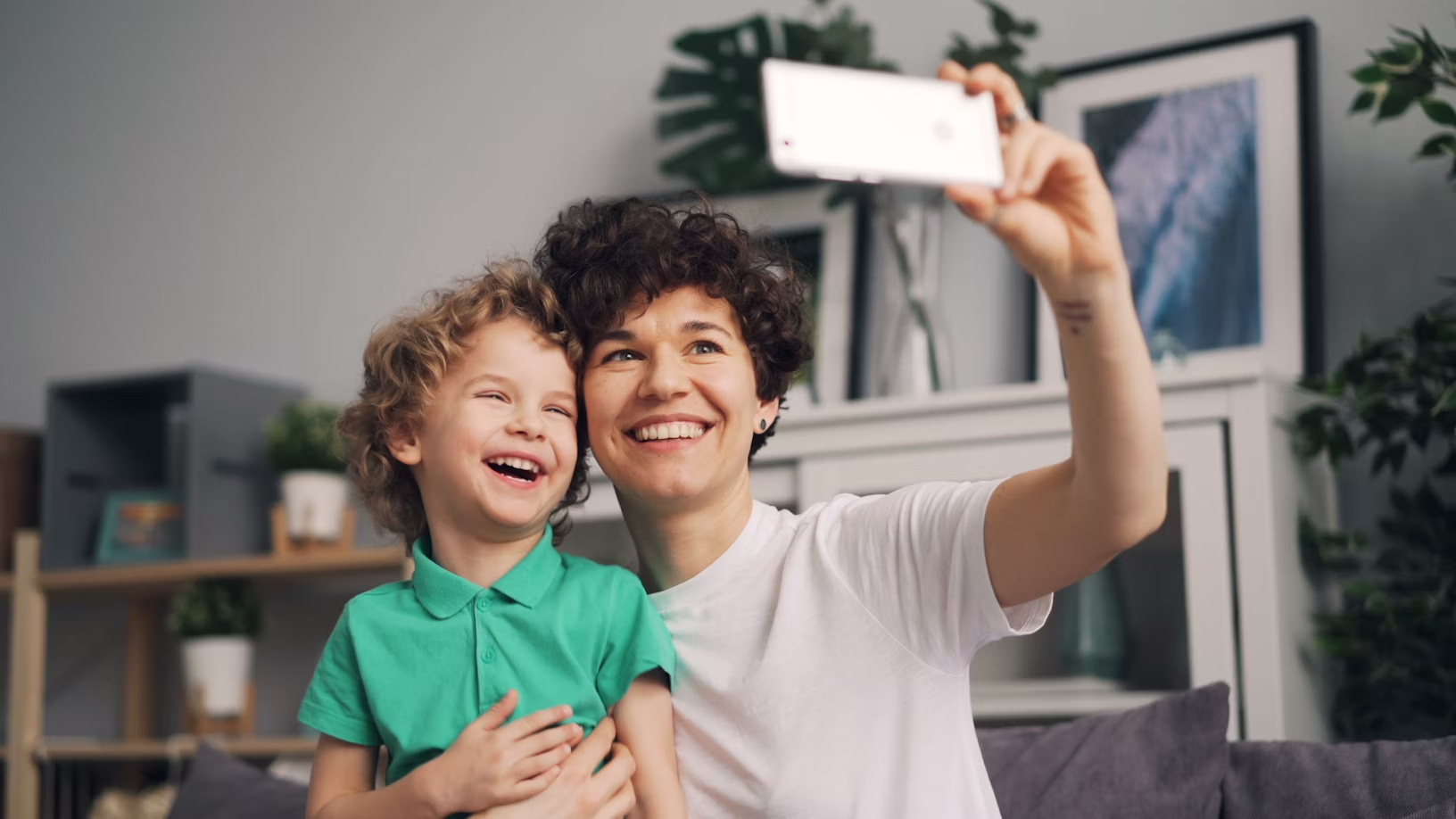
Parent taking photo of child for social media
Image Source: Unsplash

It’s no secret that proud parents love to share. From baby’s first steps to silly toddler antics, it’s easy to reach for your phone and post to your followers.

But lately, a bigger question is looming: should parents be fined for posting about their kids on social media without their consent? Around the world, countries like Italy and France are starting to say “yes—and the consequences can be serious.”

As the digital age blurs the lines between memory-making and privacy invasion, it’s time for families to rethink what they share and why it matters.

The Rise of Sharenting—and Its Risks

Sharenting, the act of sharing content about children online, is more common than we might think. Over 75% of parents post about their kids on social media, often without asking first. This might seem harmless at first glance, but studies show that sharenting can increase children’s exposure to privacy violations, identity theft, and even exploitation.

One recent survey on child data exposure revealed that many parents were unaware of how easily strangers could access images or personal details about their children. While most parents mean well, the long-term consequences can be more damaging than a few likes are worth.

Legal Backlash Is Already Happening

Around the globe, legal systems are stepping in to address sharenting—and it’s no longer just about family rules. In Italy, a 16-year-old boy successfully sued his own mother for posting his photos without permission. Italian copyright law gives ownership of one’s image to the person pictured—not the person who took the photo—meaning she faced a fine if she didn’t remove them.

Similarly, French privacy laws come with even steeper consequences: up to a year in prison and fines reaching €45,000 for posting images without consent. It’s a strong message to parents: your child’s image legally belongs to them, not your newsfeed.

The U.S. Approach: Less Strict, but Still Important

In the U.S., there isn’t yet a universal law penalizing parents for sharenting—but that doesn’t mean lawmakers aren’t paying attention.

The Children’s Online Privacy Protection Act (COPPA) primarily focuses on how websites collect data from children, requiring parental consent before any upload of a child’s image or personal info. While the law doesn’t explicitly punish parents for posting, it underscores kids’ rights to privacy in the digital sphere. As awareness grows, more conversations are emerging around placing similar accountability on parents themselves.

A Moral Dilemma: Whose Story Is It to Share?

Social media has become our digital scrapbook—but unlike the dusty albums on grandma’s shelf, this one never goes away. Kids are growing up to find their potty training pictures, emotional breakdowns, or awkward school plays all online—public, permanent, and searchable.

The ethical question is simple but powerful: Just because we can share, should we? Most children aren’t asked whether they’re okay with it. And by the time they’re old enough to care, it might already be too late to undo the damage.

Parents posing playfully with their kids for a photo
Image Source: Unsplash

How to Find a Healthy Posting Balance

It’s entirely possible to celebrate your child’s milestones online without crossing critical boundaries. One simple step is asking for your child’s permission before you post—especially once they’re old enough to understand. Skip any content that might embarrass them later, like photos of them crying, half-dressed, or having a tantrum.

Be extra cautious about including real names, school details, or geotags that could put them at risk. By modeling responsible online sharing, you’re teaching your child the value of digital consent—and protecting their future all at once.

Respect and Digital Rights Go Hand in Hand

As digital footprints become part of every child’s upbringing, we as caregivers have to lead with empathy, not impulse. Kids deserve the same dignity and privacy online that we expect for ourselves. Sharing their childhood moments can be joyful, but not at the cost of their personal safety or trust.

The laws in places like Italy and France may seem extreme, but they reflect something deeper: a growing need to prioritize children’s rights in every space, even digital ones. The goal isn’t to shame parents, but to help us all pause, reflect, and share with more care.

Let’s Talk Before We Post

Parenting in the internet age isn’t easy, and no one expects perfection. But before hitting “share,” it’s worth asking whose memory it really is—and who gets to decide how it’s preserved.

As discussions around digital consent gain momentum, there may come a day when parents in the U.S. face similar fines for posting about their kids without approval. Until then, the best we can do is lead with respect and protect our children’s voices—even when they’re still learning to use them.

For further insight on how to maintain child privacy while still enjoying social media, check out these tips for safer sharenting.

What are your thoughts—should parents be fined for posting about their kids on social media? Share your perspective below.

Read More:

  • Internet Safety – Teaching Kids Online Boundaries
  • Trouble Online: 10 Dangerous Activities Your Kids Are Participating In Online

Samantha Warren
Samantha

Samantha Warren is a holistic marketing strategist with 8+ years of experience partnering with startups, Fortune 500 companies, and everything in between. With an entrepreneurial mindset, she excels at shaping brand narratives through data-driven, creative content. When she’s not working, Samantha loves to travel and draws inspiration from her trips to Thailand, Spain, Costa Rica, and beyond.

Filed Under: Parenting Tagged With: child privacy, family digital boundaries, legal issues, parenting and social media, parents fined for posting about their kids, sharenting risks

The Gender Reveal Backlash: Are We Finally Over It?

April 16, 2025 | Leave a Comment

Colorful balloons popping at a gender reveal
Image Source: Unsplash

Somewhere between balloons popping in pastel clouds and pyrotechnics exploding in remote fields, gender reveal parties went from cute and quirky to controversial and, in some cases, catastrophic. What began as a way for excited parents to share news has morphed into a social media spectacle, often reinforcing old-school ideas about gender and leading to unintended consequences right out of a breaking news headline.

As more parents, advocates, and even the woman who started it all are rethinking the tradition, the bigger question emerges: Are we finally over gender reveal parties?

Let’s take a closer look at the growing backlash and how it’s reshaping baby celebrations today.

1. The Regret of the Trend’s Creator

Few people realize that Jenna Karvunidis, the blogger credited with launching the gender reveal trend back in 2008, has since spoken out against it.

In her own words, she now sees how these parties “overemphasize one aspect of a person”—reducing children to a pink-or-blue storyline before they even arrive. Karvunidis’s daughter, interestingly, now identifies in ways that challenge traditional gender norms—a reality that changed her mother’s perspective entirely.

Her pivot from proponent to critic has become a rallying cry for those who believe the events do more harm than good. This shift reveals that what started as a sweet idea can transform into a cultural flashpoint, especially as our understanding of gender continues to evolve.

2. Stereotypes Packaged with Confetti

At their core, gender reveal parties lean heavily into binary ideas: pink for girls, blue for boys. Critics argue that it’s not just about color—it’s about the stereotypes embedded in these colors and how they pigeonhole kids before they’re even born.

Traditional “boys vs. girls” attitudes can overshadow the individuality of the child they’re meant to celebrate. As society grows more aware of the spectrum of gender identities, the pink/blue split starts to feel not just outdated, but at odds with inclusive parenting.

Far from an innocent theme, the pink-or-blue approach can subtly nudge kids toward expected roles long before they can speak for themselves.

3. Publicized Flops and Dangerous Stunts

In an era where everything’s performative, gender reveals are prime social media fodder—meaning parents are pushed to go bigger, flashier, and sometimes riskier. From small wildfires to actual injuries, we’ve seen enough headlines to know that these events can escalate quickly.

In Arizona, an explosive-based reveal sparked a massive wildfire that cost millions in damage and threatened countless homes. It’s no wonder firefighters and safety officials have pleaded with the public to rethink or tone down such parties. One ill-advised explosion can turn a joyous event into a community catastrophe.

Check out this CNN report on a gender reveal fire gone wrong for a stark reminder of how dangerous stunts can be.

4. Pressure and Performance for Parents

It’s not just the dramatic fails that are wearing people out—it’s the mounting social pressure to create an “Instagrammable moment.” Parents may feel they have to keep up or top someone else’s reveal, even if they’re not truly comfortable with the spectacle.

This pressure can overshadow the simple joy of expecting a new life, replacing it with event planning stress and online perfectionism. Some parents have expressed regret, realizing later that they cared more about capturing a viral moment than savoring a personal milestone with close family and friends. The trend can leave them asking: “Why did we do that again?”

Pride flag symbolizing LGBTQ+ and intersex inclusion
Image Source: Unsplash

5. LGBTQ+ and Intersex Considerations

One of the most urgent criticisms comes from the LGBTQ+ and intersex communities, who question the entire concept of labeling a child’s identity based solely on anatomy. If that child grows up to identify differently, a gender reveal becomes not just a silly memory—it can be a reminder of early mislabeling. Intersex activists have pointed out how these parties can disregard the complexities of biological sex, too. In short, pink or blue might seem harmless, but for families whose children grow up to challenge norms, these labels can feel alienating.

6. Pivoting Toward More Inclusive Celebrations

If the purpose is to celebrate life and love, many parents now opt for more inclusive baby celebrations. Instead of fixating on “Team Boy” or “Team Girl,” some families choose to highlight the child-to-be’s health, the parents’ excitement, or simply the joy of community.

Non-gendered themes—like a “baby brunch” or “birthday party for the bump”—shift the focus to the family’s journey, not a predicted identity. Others choose quiet gatherings or heartfelt announcements, proving that you don’t need pink or blue confetti to mark a special moment with friends and loved ones.

7. So, Are We Over It?

The backlash against over-the-top gender reveals is real—and growing. But that doesn’t mean every parent is ditching them entirely. Some still find delight in modest, mindful reveals that don’t rely on tired stereotypes or risky stunts. Yet, the broader shift is undeniable.

As our understanding of safety, identity, and authenticity evolves, the full-blown pink or blue extravaganza may finally be on its way out. Whether or not you choose to do a gender reveal, the key takeaway is to do it intentionally—balancing excitement with thoughtfulness about your child’s future self, the environment, and the community around you.

What’s Your Take?
Have you attended or hosted a gender reveal party that felt meaningful—or cringe-worthy? Share your stories in the comments—we’d love to hear your perspective.

Read More:

  • 13 Parenting Hacks That Seem Strange but Work Wonders
  • Baby Shower Thank You Wording: Card Templates You Can Use

Samantha Warren
Samantha

Samantha Warren is a holistic marketing strategist with 8+ years of experience partnering with startups, Fortune 500 companies, and everything in between. With an entrepreneurial mindset, she excels at shaping brand narratives through data-driven, creative content. When she’s not working, Samantha loves to travel and draws inspiration from her trips to Thailand, Spain, Costa Rica, and beyond.

Filed Under: Parenting Tagged With: baby celebrations, child safety, gender reveal backlash, gender stereotypes, LGBTQ, parenting advice, parenting trends

Why Some Parents Are Going Broke Paying for Adult Kids

April 16, 2025 | Leave a Comment

Worried parent looking at bills while adult child relaxes nearby
Image Source: Unsplash

You’ve changed diapers, paid for soccer camp, and maybe even helped with college tuition—but what if the expenses don’t end there? A growing number of parents in the U.S. are finding themselves financially backing adult children, often at the expense of their own retirement funds.

While offering a helping hand can be an act of love, it can quickly become a burden that leaves parents anxious and financially stretched. Let’s look at why this is happening, how it impacts family well-being, and what you can do to protect both your finances and your relationship with your adult child.

1. It Starts as Temporary—But Becomes Permanent

What begins as a short-term lifeline often turns into a long-term drain. Maybe your child needed help with rent one month, and you covered it out of love and a desire to see them stay afloat. But without clear boundaries, that monthly bailout can quietly become routine.

According to a recent survey by Savings.com, almost half of parents with adult children provide regular financial support, spanning bills, groceries, and even streaming subscriptions. While it might feel good to help, the cumulative cost can be substantial over time.

2. How the “Boomerang” Effect Impacts Financial Security

It’s not just about paying a phone bill or a car note—some adult kids move back home entirely. This “boomerang” effect has been on the rise for years, particularly after economic downturns. That return to the nest isn’t always temporary, and parents often wind up covering everyday expenses for far longer than expected.

A Pew Research study finds that many boomerang children take multiple years to re-establish independence, during which parents commonly shoulder everything from utility bills to groceries. It’s easy to see how quickly those costs add up.

3. Emotional Ties Make It Hard to Say “No”

Parenting doesn’t stop when your child turns 18—emotional bonds run deep, and you’ll do anything to see them succeed. That maternal or paternal instinct can blur financial caution, especially when you worry about your child’s job prospects or mental health.

Parents often feel guilty if they don’t help, fearing their adult kids might face undue hardships. Yet, if parents consistently dip into retirement savings, they’re risking their own long-term stability—creating a cycle of worry that benefits no one in the family.

4. The Real Cost: Delayed Retirement and Mounting Debt

As parents continue to bankroll adult children, they’re sacrificing crucial contributions to their retirement funds. In fact, some couples nearing retirement report giving their children hundreds of dollars monthly—sometimes more—while barely saving enough for their own future.

If you’re still paying off your adult child’s expenses, you might need to delay retirement or pick up extra work just to stay financially secure. In extreme cases, parents accumulate debt—like credit card balances or even personal loans—to keep up with “temporary” support that never really ended.

Loan agreement with repayment schedule on desk
Image Source: Unsplash

5. Setting Boundaries Without Feeling Heartless

One of the toughest steps is finding a way to help without enabling. This can mean formalizing a plan for financial support, like a short-term loan with a repayment schedule or a set timeframe for covering certain bills. Some parents find success by drawing up a simple contract that outlines responsibilities for both parties. T

he key is consistency: if your adult child misses a payment or doesn’t stick to the agreement, follow through on established consequences. It’s not about being cold—it’s about ensuring everyone maintains a healthy level of accountability.

6. Encouraging Independence and Job Resilience

Offering a gentle nudge toward independence can make all the difference. Whether it’s requiring your adult child to job-hunt if they’re unemployed or expecting them to handle a portion of rent while living at home, small steps help them gain confidence and financial literacy.

If you’re looking for resources, you might direct them to professional career services or suggest they check out local job fairs. In the long run, every bit of responsibility they accept equips them to stand on their own two feet, boosting their self-esteem and relieving your financial load.

7. You Deserve Security, Too

Remember: you’re not turning your back on your child by setting limits. Parents aren’t just wallets; they’re individuals who also need emotional peace and financial well-being. You’ve already devoted years to raising your kids—running yourself dry now can lead to resentment and jeopardize your golden years. If you feel trapped, consider seeking advice from a financial planner who specializes in intergenerational finances or family wealth.

Maintaining your own security ensures you won’t become financially dependent on your child in the future, reversing the current roles.

Where to Go from Here

Supporting adult children can be an act of love, but it shouldn’t break you. Establishing boundaries and promoting financial independence are critical steps toward a healthier family dynamic. It’s okay to help—just make sure you’re not sacrificing your own well-being in the process.

And if it feels daunting, remember you’re not alone. Many parents are facing the same challenge: balancing compassion with common sense to protect both their kids’ futures and their own.

Have you navigated the financial tightrope of helping an adult child?
Share your strategies in the comments—we’d love to hear what worked (or didn’t) for your family.

Read More:

  • Saving for Your Child’s Future: 8 Steps to Take
  • Say “Runway Ready!” How to Have the Best Dressed Child Without Going Broke

Samantha Warren
Samantha

Samantha Warren is a holistic marketing strategist with 8+ years of experience partnering with startups, Fortune 500 companies, and everything in between. With an entrepreneurial mindset, she excels at shaping brand narratives through data-driven, creative content. When she’s not working, Samantha loves to travel and draws inspiration from her trips to Thailand, Spain, Costa Rica, and beyond.

Filed Under: Parenting Tagged With: financial independence, financial security, parent retirement, parenting adult kids, supporting adult children

Do Stay-at-Home Partners Deserve Half in a Divorce?

April 16, 2025 | Leave a Comment

Dividing assets during divorce with stay-at-home partner
Image Source: Unsplash

Parenting is a full-time, no-days-off kind of job—one that doesn’t come with paychecks, promotions, or a 401(k). And if that ever-changing, ever-demanding role falls primarily to one partner, it’s natural to wonder how things will shake out if the marriage ends.

Many stay-at-home parents ask themselves, “Do I deserve half of what we’ve built together if we divorce?” Let’s break down what courts really consider when deciding whether a stay-at-home partner is entitled to a fair share—and why your years of unpaid labor truly matter.

1. Financial Contributions Aren’t the Only Contributions

When divorce courts divide assets, they don’t just look at who brought in the paycheck. In fact, being a stay-at-home parent is officially recognized as a meaningful and equal contribution to the household.

Managing a home, raising children, and supporting a working spouse are labor forms that significantly impact family success. As a result, the stay-at-home partner may even receive more than a strict 50/50 split if that’s what fairness requires. For more insight on how the law views non-financial contributions, Osborne’s Law offers an in-depth look at breadwinner vs. homemaker scenarios.

2. Equality Isn’t Always a 50/50 Split

Many assume divorce means dividing everything right down the middle. But in real life, courts favor “equitable distribution,” which may not be an even 50/50. Depending on factors like marriage length, children involved, and each spouse’s future needs, one partner may end up with a bigger share.

In some places, equality is just the starting point, and the outcome can shift if it’s decided the stay-at-home parent sacrificed more. This nuance is especially true in the U.S., where state-by-state laws can differ on how assets are split. J.P. Cannon Law Firm explains how housewives and stay-at-home moms often still receive a fair share despite not earning a paycheck.

3. Missed Earnings and Pension: Real Sacrifices

Taking a break (or stepping away permanently) from the workforce is not trivial—it often means years of missed income, promotions, and retirement contributions. Courts usually factor this in as a major sacrifice that benefits the entire family.

Over the long term, these intangible but critical investments in childcare, home management, and emotional support are given serious legal weight in property division. That’s why many stay-at-home parents walk away from a divorce with a fair chunk of the assets, even if they weren’t the ones bringing home a weekly wage.

4. Public Opinion vs. Legal Reality

Legal fairness is one thing; public opinion is another. Some still undervalue non-financial household contributions, often focusing only on who “brought in the money.” Yet the emotional and logistical labor of raising children can be just as demanding—and arguably more impactful in the long run.

Studies reveal men often rate financial input as more valuable, while women emphasize non-monetary work like caregiving and homemaking. Bridging this gap may require open conversations and empathy—understanding that the stay-at-home parent’s role underpins the whole family’s routine.

Stay-at-home parent caring for young child at home
Image Source: Unsplash

5. How Stay-at-Home Parents Can Protect Themselves

If you’re a stay-at-home parent, it’s perfectly reasonable to consider your financial well-being. Keep records of household expenses, major financial decisions, and even your day-to-day responsibilities. Having open, frank discussions with your spouse about shared goals and monetary planning can prevent future misunderstandings. If divorce becomes a possibility, seeking legal advice early can clarify your rights and the potential division of assets.

Remember, you’re not being selfish—you’re safeguarding the value of your contributions and ensuring stability for both yourself and your children.

6. Setting the Stage for Post-Divorce Stability

Even if you’re confident in your marriage, life can be unpredictable. Knowing that your role as a stay-at-home parent carries legal weight can be reassuring. After all, you’ve built a loving environment, provided steady childcare, and maintained a household that allowed your spouse to earn.

Courts typically want families, especially children, to maintain financial security and continuity. A fair division of assets helps both parents move forward more peacefully, and that’s ultimately best for everyone involved.

7. Redefining Value: Emotional Labor Is Labor

Let’s be clear: giving up a career to focus on family is a form of labor—one that courts recognize deserves protection. In a world where we’re starting to value emotional labor more, it’s a step in the right direction.

Divorce shouldn’t punish those who chose to spend their energy nurturing relationships and raising children. So yes—stay-at-home partners often do deserve half in a divorce, or at least a substantial share, based on the real sacrifices they’ve made.

Have you experienced or supported someone through a stay-at-home parent divorce? Share your thoughts or tips in the comments—your story could help another parent navigate uncertain times.

Read More:

  • Do You Need Kids To Live a “Fulfilled” Life?
  • Teaching Kids Financial Responsibility: Start With These Simple Steps

Samantha Warren
Samantha

Samantha Warren is a holistic marketing strategist with 8+ years of experience partnering with startups, Fortune 500 companies, and everything in between. With an entrepreneurial mindset, she excels at shaping brand narratives through data-driven, creative content. When she’s not working, Samantha loves to travel and draws inspiration from her trips to Thailand, Spain, Costa Rica, and beyond.

Filed Under: Parenting Tagged With: asset division, divorce fairness, equitable division, family law, non-financial contributions, parenting and divorce, stay-at-home parent divorce

Is It Ever Okay to Snoop Through Your Teen’s Phone?

April 16, 2025 | Leave a Comment

Teen using phone while parent looks on.
Image Source: Unsplash

In a world where your teen’s entire social life can unfold through a screen, it’s only natural to wonder what they’re really up to. One second they’re giggling at a meme, and the next they’re visibly shaken by a message they won’t talk about.

As a parent, the urge to grab their phone and dig deep can feel like a necessary act of love. But is snooping on your teen’s phone actually helpful—or could it quietly erode the trust little by little? The answer isn’t black and white, but understanding the emotional stakes, risks, and responsible alternatives can help guide your next move.

Parents May Have The Right—But That Doesn’t Always Make It Right

Legally speaking, if your teen is under 18 and lives under your roof, you’re well within your rights to monitor their phone. In fact, in many places, there are no laws specifically protecting a child’s privacy from their parents. But law and parenting don’t always align from a psychological point of view.

Just because you can snoop doesn’t mean doing so encourages a healthy parent-child relationship. Your teen is learning autonomy, and when that sense of space is violated, it can signal distrust instead of protection.

Snooping Can Undermine Trust—and Emotional Security

Snooping might give you insight into potential red flags, but it can also damage your child’s emotional resilience. Research shows that constant, secretive monitoring can strip teens of their growing sense of independence and self-trust. Worse, when they find out you’ve been going through their messages, it can feel like a betrayal—hurting the very trust you’re trying to preserve. Even with good intentions, the method matters just as much as the motivation. Teens are more receptive to guidance when it’s rooted in open conversation, not covert control.

Transparency Builds Cooperation—And Digital Responsibility

Before checking your teen’s phone, try starting with an honest conversation about online safety. Explain that your goal is to protect, not punish, and invite them into the process of creating digital guidelines for your household.

Talk about cyberbullying, online predators, and mental health triggers so your teen understands the “why” behind your concerns. In families where phones are treated as a shared responsibility, trust tends to be stronger, and teens are more likely to come forward when something feels off. Creating this foundation early makes reactive snooping less necessary in the long run.

Mom checking her daughter's phone without permission
Image Source: Unsplash

When Is It “Okay” to Check Their Phone Without Consent?

There are situations when intervening might be in your child’s best interest—especially if you suspect they’re at serious risk. Warning signs like sudden withdrawal, alarming messages, or exposure to dangerous content can require additional oversight.

In these moments, monitoring doesn’t equal spying—it’s a safety net designed to prevent harm. But even then, it should be followed by an honest talk that acknowledges your actions and explains the reasoning. Emergencies may justify snooping, but ongoing secrecy usually won’t solve the underlying issues.

Trust Is a Two-Way Street—So Is Digital Growth

Snooping on your teen’s phone is never just about gathering intel—it’s about navigating trust, safety, and emotional growth for both of you. Parenting a teen means walking the tightrope between giving them space and stepping in when it truly counts.

Building a culture of digital openness early on makes those high-stake moments easier to recognize—and handle—with care. Instead of acting out of fear, lead with curiosity and compassion, and your teen will be more likely to turn to you when it matters most. You’re not just managing behavior; you’re shaping lifelong habits around respect, boundaries, and family connection.

Have you ever struggled with when—or whether—to check your teen’s phone? Share your thoughts or tips in the comments below. Your experience could help another parent feeling just as unsure.

Read More:

  • 10 Things Every Teen Boy Should Hear from His Mom
  • 9 Money Moves Every Teen Should Know Before They Turn 18

Samantha Warren
Samantha

Samantha Warren is a holistic marketing strategist with 8+ years of experience partnering with startups, Fortune 500 companies, and everything in between. With an entrepreneurial mindset, she excels at shaping brand narratives through data-driven, creative content. When she’s not working, Samantha loves to travel and draws inspiration from her trips to Thailand, Spain, Costa Rica, and beyond.

Filed Under: Parenting Tagged With: child safety, digital monitoring, online safety for kids, parental control apps, parenting teens, teen mental health, teen privacy

Why Time-Outs Might Be Emotionally Harmful—And What to Do Instead

April 16, 2025 | Leave a Comment

Image Source: Unsplash

We’ve all been there. Your child is mid-meltdown, emotions are high, and you’re searching for a way to regain calm and control. For many of us, time-outs feel like a go-to solution—removing a child from the chaos in hopes they’ll “cool down” and reflect.

But as more parents turn toward emotionally supportive and connection-based discipline, many are rethinking the classic time-out. So, is time-out really the best strategy—or could it be doing more harm than good?

Let’s explore why time-outs might be emotionally damaging, and more importantly, what you can do instead.

Why Time-Outs Can Miss the Bigger Emotional Picture

At first glance, time-outs seem harmless enough. They promise structure, calm, and a teaching moment—but that’s not always what children experience. In fact, time-outs can unintentionally tell kids that emotions like anger, sadness, or frustration should be hidden away.

Instead of learning how to sit with hard feelings and move through them, children may internalize the belief that difficult emotions mean disconnection. As Zero to Three notes, it’s crucial that discipline methods help children understand and manage their emotions rather than ignore them.

Emotional Skills Need Practice, Not Punishment

Children aren’t born knowing how to manage big feelings—they need gentle, consistent practice. During time-outs, a child is often left alone to “figure it out,” missing a critical opportunity to learn emotional regulation with a caregiver’s help.

Imagine being upset and told to sit by yourself without comfort. That isolation can feel confusing or even frightening for young children. Instead of offering clarity or support, the time-out can become its own reason for distress—derailing the actual lesson parents hope to teach.

The Power of Time-Ins to Build Connection

What if, instead of sending kids away, we brought them closer in times of struggle? That’s the heart of a “time-in.” A time-in means sitting with your child, acknowledging what they’re feeling, and helping them find calm—together. It encourages emotional validation and guides children to understand their reactions in a nurturing space. According to the Child Mind Institute, time-ins can be a more nurturing alternative by fostering connection and empathy when your child needs it most.

Create a Positive Calm-Down Space to Replace “The Naughty Chair”

Not every calming moment needs to happen in your arms. Some kids benefit from a dedicated “calm corner”—a comfy, quiet space with soft blankets, sensory toys, or drawing supplies. The key is allowing the child to choose this space rather than forcing it as a consequence. When children take that initiative, they learn to recognize when they need a break and how to soothe themselves. These types of positive time-outs teach kids that regulating their emotions isn’t about punishment—it’s about care and self-awareness.

Gentle Alternatives That Actually Work

Looking for simple tools that prevent or ease emotional outbursts without isolating your child? There are several gentle, effective alternatives to time-outs worth trying. Encourage drawing or coloring to help express feelings that words can’t capture just yet. Offer a “redo” or second chance, which not only models forgiveness but also reinforces better behavior through practice—not shame.

As suggested by parenting experts, these time-out alternatives promote emotional intelligence and help kids feel safe enough to grow from mistakes.

Image Source: Unsplash

Moving from Control to Connection

Discipline doesn’t need to feel like a power struggle. When we shift our mindset from controlling behavior to building understanding, discipline becomes an opportunity for growth—not just correction. It helps to remember that kids often act out because they lack the skills to express or manage their feelings.

By choosing alternatives to time-outs that are rooted in connection, you’re helping your child develop lifelong emotional resilience. You’re not just reacting to a problem—you’re guiding them through it.

Switching Strategies Starts With Compassion—For Them and For You

Letting go of time-outs may feel daunting, especially if it’s something you were raised with or have used for years. Change doesn’t have to happen overnight. Try one new alternative this week and notice how your child responds. Most importantly, remember that you’re learning too—and that’s okay. Parenting isn’t about perfection; it’s about progress, patience, and the relationships we nurture along the way.

Your Calm Is Contagious—and So Is Connection

If there’s one takeaway, it’s this: kids flourish when discipline is built from connection, not rejection. Time-outs often isolate a child just when they most need support, while time-out alternatives encourage growth, safety, and emotional intelligence. You don’t need to fear emotions—yours or theirs. By showing your child how to face tough feelings with compassion, you’re setting the stage for deeper bonds and stronger coping skills. And that’s a gift they’ll carry into every area of life.

What strategies have helped you connect with your child during tough moments? Share your tips and experiences in the comments below.

Read More:

  • From Mean to Queen: 11 Secrets to Being a Happier Calmer Mom
  • 6 of the Best Ways to Relax your Body and Mind

Samantha Warren
Samantha

Samantha Warren is a holistic marketing strategist with 8+ years of experience partnering with startups, Fortune 500 companies, and everything in between. With an entrepreneurial mindset, she excels at shaping brand narratives through data-driven, creative content. When she’s not working, Samantha loves to travel and draws inspiration from her trips to Thailand, Spain, Costa Rica, and beyond.

Filed Under: Parenting Tagged With: child emotions, emotional intelligence, gentle discipline, parenting tips, Positive Parenting, time-out alternatives

Is Giving a Toddler an iPad the Same as Giving Them Junk Food?

April 16, 2025 | Leave a Comment

Toddler holding an iPad
Image Source: Unsplash

When your toddler’s mid-meltdown at a restaurant or fussy during a grocery run, handing over the iPad may feel like a parenting life-saver. It’s fast, it’s quiet, and it gives you five merciful minutes to breathe. But have you ever wondered if it’s really that different from soothing them with a cookie or a bag of chips?

More experts are drawing a connection between screen time and junk food, especially when it comes to toddler development. Let’s unpack why these comparisons are cropping up—and what mindful choices might look like in your everyday routine.

Both Can Cause Long-Term Harm

Just as too much junk food can lead to obesity, early screen dependence may affect a child’s mental and social development. Studies show that excessive screen time can contribute to anxiety, depression, and lowered emotional regulation in kids, concerns that map closely to physical harm caused by frequent unhealthy snacking.

According to OSF HealthCare, too much screen exposure can hinder a toddler’s ability to engage naturally with peers, making it harder for them to develop empathy and self-control. Similarly, a diet rooted in sugary snacks instead of protein and fiber can impact concentration, sleep, and overall mood. While neither iPads nor cookies are inherently “bad,” overuse of either chips away at a child’s long-term well-being.

It Can Delay Physical and Social Development

Your toddler’s brain and body are in a critical growth window, and both screens and junk food can interfere with that momentum. Research shows a concerning link between increased screen time and developmental delays in fine motor, personal, and social skills. That’s not unlike how poor nutrition can rob children of the fuel they need for physical growth and cognitive advancement. Hands-on play and active family interaction are essential building blocks at this stage. Simply put, passive screen watching can’t replace the deep learning that comes with real-world exploration and connection.

Habit Formation Starts Early

Whether it’s watching cartoons during breakfast or munching on sugary snacks after nap time, routines form much faster than we think. Unfortunately, repetitive exposure to either screens or unhealthy food can establish habits that are hard to undo later. According to Lucie’s List, building that dependency on screens during toddler years may set the tone for more sedentary, less interactive behavior as your child grows. The same goes for junk food—once it becomes a crutch for regulating emotions or providing comfort, we risk creating long-term challenges with self-control and balanced nutrition. This doesn’t mean total elimination, but awareness is key in preventing over-reliance.

They Can Fuel Behavioral Challenges

We’ve all witnessed the sugar crash: a burst of hyperactivity followed by a full-on meltdown. Believe it or not, screens have a similar impact. Research from Mayo Clinic links screen overuse to tantrums, irritability, sleep disruption, and escalating struggles with self-regulation.

The reason? Screens (like sweets) overstimulate the brain’s reward systems, making it harder for young children to manage disappointment or boredom. That’s why emotional outbursts after screen time aren’t just coincidental—they’re often a signal that the sensory input was too much, too fast.

Toddler playing and exploring for cognitive growth
Image Source: Unsplash

Cognitive Development Can Suffer

A toddler’s early years are rich with potential for language acquisition, critical thinking, and creativity—but only if those skills are actively nurtured. According to Boston Children’s Hospital, excess screen exposure can reduce quality caregiver interaction, stunting executive function and problem-solving skills. Junk food has a similar effect when relied upon in place of brain-nourishing meals; it simply doesn’t offer the nutrients needed for optimal mental performance and mood stability. In other words, neither screens nor empty-calorie snacks feed those foundational abilities that shape a child’s future. Hands-on play, responsive conversation, and movement remain the gold standards for strengthening young minds.

Thoughtful Choices, Not Perfection

Let’s be honest—sometimes, the iPad really is the only way you’re getting through that 45-minute appointment or keeping dinner from burning. And yes, a bowl of ice cream now and then is part of a joyful, balanced life. What matters most is how consistent these choices become.

Being mindful about limiting screen time for toddlers (just like we monitor sugar intake) gives them space to thrive in healthier ways. It’s not about guilt—it’s about guidance, balance, and choosing what supports your child’s long-term growth rather than just the short-term ease.

What Do You Think?

Have you noticed similar effects between screens and snacks with your little one? We’d love to hear how your family balances tech, treats, and toddler tantrums—drop a note in the comments and connect with others navigating this too.

Read More:

  • 10 Screen-Free Activities to Keep Kids Entertained
  • A Toddlers Rules of Possession
Samantha Warren
Samantha

Samantha Warren is a holistic marketing strategist with 8+ years of experience partnering with startups, Fortune 500 companies, and everything in between. With an entrepreneurial mindset, she excels at shaping brand narratives through data-driven, creative content. When she’s not working, Samantha loves to travel and draws inspiration from her trips to Thailand, Spain, Costa Rica, and beyond.

Filed Under: Parenting Tagged With: behavior, child development, child health, emotional well-being, iPads and kids, parenting tips, Screen Time, toddlers

Is Choosing to Be a Housewife the New Rebellion?

April 16, 2025 | Leave a Comment

Woman doing housework with confidence and pride
Image Source: Unsplash

If you’ve ever thought of the term “housewife” as something antiquated, think again. In an era where success is measured by workplace hustle, LinkedIn updates, and balancing multiple gigs, deliberately stepping away from the traditional workforce can feel downright radical.

Yet that’s exactly what some women (and families) are choosing to do. Far from being a passive fallback, becoming a housewife can be a bold, empowered statement—a decision that’s stirring conversation about what it truly means to thrive. So, is this the new rebellion? Let’s see why it just might be.

The Quiet Strength Behind the Apron Strings

Being a housewife isn’t about returning to a 1950s cliché—it’s about managing a family ecosystem. From scheduling doctor’s appointments and kids’ after-school activities to maintaining a supportive emotional environment, housewives handle a host of responsibilities that often go unrecognized. Yet their impact on family stability and mental well-being is substantial.

According to a recent analysis in Forbes, many modern stay-at-home moms describe their work as a balancing act that requires leadership, organization, and a clear sense of purpose. It’s not about “doing nothing”—it’s about shouldering a role that glues daily life together.

Societal Judgment Still Lingers—But Why?

Despite its complexity, the housewife role can still draw unfair stigma. In some circles, stay-at-home moms are seen as “lacking ambition” or “wasting their potential,” compared to those in paid roles. This mindset ignores the multi-layered tasks housewives juggle: from meal planning to conflict resolution.

Even with new momentum around recognizing domestic labor, a residue of shame persists, as though earning a paycheck is the sole measure of value.

Reclaiming the Role as a Bold Life Choice

So what makes it “rebellious?” In a world that emphasizes career milestones, choosing to stay home can be seen as stepping out of the rat race. It can be less about rejecting a career and more about creating a life centered on values like presence, simplicity, and emotional wellness.

With rising childcare costs, remote work complexities, and shifting family priorities, the decision to focus on household management might feel more aligned with personal goals. Rather than looking “dated,” it can be refreshingly modern: a conscious declaration of how you want to invest your energy.

The Global Roots of the Role

Some people call the housewife role “old-fashioned,” but globally, it’s as relevant as ever. Across different cultures, women have historically contributed critical support, whether by growing food, weaving clothes, or building community ties.

The difference now is choice. Where once many women were limited or forced into domestic roles, modern housewives increasingly do so by informed agreement, not by default. In that sense, it’s a return to essential but undervalued work—only this time viewed through the lens of autonomy and self-determination.

The Economic Power of the Household

Let’s not forget the economic dimension: housewives influence what a family buys, when they buy it, and how the household budget is managed. Whether clipping coupons or deciding which new appliance to purchase, these choices carry weight in consumer markets.

This unacknowledged “chief purchasing officer” role impacts demand for products and services that cater to busy families. Far from being “out of the game,” housewives are active players in how money gets spent and saved.

Woman managing household tasks with emotional care
Image Source: Unsplash

When Love Becomes Labor—And Still Matters

Emotional labor is another invisible thread: the daily check-ins, emotional support, and conflict resolution that keep relationships healthy. Housewives often shoulder a large share of this unseen load, ensuring each family member feels heard and cared for.

While there’s no trophy for calming a toddler’s tantrum or supporting a teen through heartbreak, these tasks are the heart of stable family life. And unlike an 8-to-5 job, there’s no off switch. It’s love in action, and it’s rarely recognized in the way paid jobs are.

Embracing the Choice, Ending the Shame

A growing number of women are standing tall in their decision to be housewives, refusing to feel belittled by stereotypes. They aren’t retreating from society; they’re crafting a home environment that fosters well-being—one they believe is worth the trade-offs.

This approach challenges the “always working” mantra, proving that “always nurturing” can be just as meaningful. Whether you see it as a throwback or a necessary pivot in an overworked culture, what matters most is that it’s chosen freely and done with pride.

It’s Not a Step Back—It’s a Step into Purpose

In a culture addicted to hustle, deciding to focus on home life is anything but lazy or outdated. It’s a recalibration—an opportunity to define success in more personal, intimate terms. Whether it’s for a few years while the kids are young or a long-term commitment, the housewife role can be a deeply empowering path.

While it’s not without challenges—financial dependence, social isolation, or fear of losing career footing—it also holds the potential for rewarding depth, connection, and growth within the family.

Do you see choosing to be a housewife as a revolutionary act or simply another option on the parenting spectrum? Share your thoughts in the comments below. Our community is richer when we hear every perspective—whether you’re balancing full-time work, part-time gigs, or a full-on domestic commitment.

Read More

  • The Curse of Wealth: 15 Reasons Why Wealthy Kids Struggle with Mental Health and Happiness
  • How to Get By On a Low Income
Samantha Warren
Samantha

Samantha Warren is a holistic marketing strategist with 8+ years of experience partnering with startups, Fortune 500 companies, and everything in between. With an entrepreneurial mindset, she excels at shaping brand narratives through data-driven, creative content. When she’s not working, Samantha loves to travel and draws inspiration from her trips to Thailand, Spain, Costa Rica, and beyond.

Filed Under: Parenting Tagged With: family well-being, housewife, modern parenting, parenting values, stay-at-home moms

Should Parents Have to Pass a Test Before Having Kids?

April 15, 2025 | Leave a Comment

Parent holding baby next to a checklist
Image Source: Unsplash

It’s a question most people have asked themselves at some point: “Am I really ready for this?”

For some, parenting is a dream filled with purpose and joy. For others, the reality hits like stepping on a ton of LEGOs.

The idea that new parents might benefit from some kind of evaluation has floated around for years. But should parenting readiness require something as formal as passing a test?

Before we go further, let’s clarify: there are no legally required parenting tests before you have a child, and while it may sound appealing in theory, it raises a complex mix of ethical, legal, and emotional challenges. Let’s unpack these issues step by step.

Why the Idea Gains Traction

Every parent wants what’s best for their child, yet we approach parenting with less prep than we need for a driver’s license. The concept of pre-parenting tests often stems from a desire to minimize neglect, abuse, or plain ignorance about child development. Indeed, early education about topics like feeding, discipline, and emotional intelligence could arguably reduce problems down the line. But let’s be real—how do you test empathy, adaptability, or resilience?

While some couples opt for genetic counseling or health screenings, these don’t measure if you’re mentally prepared for parenthood. They focus on medical risks, not your ability to handle sleepless nights or a tantrum in aisle five at the grocery store.

What We’re Really Measuring With “Parenting Readiness”

Readiness to raise a child goes beyond finances and a Pinterest-worthy nursery. It means understanding developmental stages, having strategies to cope with stress, and possessing a willingness to grow with your kid.

Knowing what to expect at each stage can impact how parents behave and bond with their children in a positive way. But is there a single metric that captures all the intangible qualities—like patience, love, or moral alignment—that define good parenting?

The answer is less about a test and more about a continuous process. Parenting readiness can’t be pinned down in a pass/fail scenario. We learn by doing, adjusting, and, yes, sometimes failing, then trying again.

Existing Tests Focus on Medical Realities—Not Parenting Skills

Prospective parents do face some screenings, but they revolve around health, not emotional or practical readiness. Think prenatal tests or preconception genetic assessments.

These might tell you about risks for certain diseases or conditions, but won’t evaluate how well you’ll handle the real-life rollercoaster of raising a child. They’re about pregnancy viability and fetal health, not about your emotional toolkit for dealing with a rebellious middle-schooler or a newly minted toddler’s bedtime meltdown.

Likewise, organizations like the American Academy of Pediatrics offer guidance on child health, but not a standardized test for “Are you emotionally fit to parent?” That’s because it’s a subjective mix of temperament, environment, and personal history—none of which can be graded like an exam.

Legal and Ethical Entanglements

A government-mandated test to have children would run into huge ethical and legal roadblocks. First, it could easily infringe on fundamental human rights—reproductive freedom is typically regarded as a private matter.

Second, it opens the door to discrimination: who decides what makes a person “fit” or “unfit” to be a parent? If we look at historical examples like forced sterilizations or one-child policies, the fear of authoritarian overreach isn’t far-fetched. Mandating tests or restricting parenting can become a slippery slope to violating personal liberty.

New parent while holding baby
Image Source: Unsplash

Learning Should (and Can) Be Voluntary

Instead of imposing a pass/fail test, perhaps we can focus on providing voluntary resources. Imagine widely accessible parenting education: classes on child development, emotional support, or conflict resolution. By framing these as supportive tools rather than requirements, parents (and prospective parents) can gain the insights they need without feeling judged or coerced.

It All Comes Down to Real-Life Growth

No multiple-choice quiz can prepare you for that 3 a.m. feeding or your child’s first heartbreak at school. Parenting is an ongoing dance of trial, error, and reflection. While the idea of a pre-parenthood test might appeal to our sense of order and safety, the intangible virtues—empathy, patience, sacrifice—are best learned in the real world. Providing better access to support networks and resources may be the more compassionate path than policing who can and can’t have children.

What do you think? Should society push for some version of “required” education—or is that a step too far? Share your thoughts in the comments below. After all, parenting shapes our shared future, whether we’ve got kids of our own or not.

Read More:

  • How to Save Money for Your Family
  • Fit Families: Being Active Doesn’t Have to Cost Money
Samantha Warren
Samantha

Samantha Warren is a holistic marketing strategist with 8+ years of experience partnering with startups, Fortune 500 companies, and everything in between. With an entrepreneurial mindset, she excels at shaping brand narratives through data-driven, creative content. When she’s not working, Samantha loves to travel and draws inspiration from her trips to Thailand, Spain, Costa Rica, and beyond.

Filed Under: Parenting Tagged With: child development, ethical parenting, parenting readiness, parenting responsibilities, parenting skills, parenting test debate

Should People Be Fined for Having Too Many Kids?

April 15, 2025 | Leave a Comment

Large family playing together outdoors
Image Source: Unsplash

Is there ever a valid reason to punish parents for growing their families? Parenting is challenging enough without the added stress of public policy intervening in our most personal decisions. Yet in some parts of the world, the idea of fining people for having “too many” children isn’t just an idea—it’s real policy.

These regulations don’t just shape individual households; they can redefine an entire nation’s perception of family life. Below, we’ll explore how such policies have played out and the consequences for both parents and kids when governments take control of family size.

The Story of China’s One-Child Policy: More Than Just a Number

From 1980 to 2015, China enforced a sweeping one-child policy aimed at curbing population growth. Parents who dared exceed the limit faced steep income-based fines—referred to as “social maintenance fees.” These fines often matched or even surpassed a family’s annual earnings. In many cases, parents who couldn’t pay risked losing access to vital resources like education and healthcare for their child.

While it might seem extreme, the policy was embedded in everyday life for millions, affecting fundamental choices about marriage, childbirth, and even the possibility of forced abortions or hidden pregnancies. It was, in essence, the government deciding how many children a family could have—and punishing those who dared go beyond that limit.

Real-Life Consequences for Parents and Children

Fines aren’t just about money; in places with strict reproductive controls, kids born outside of quotas often wind up without legal registration. That means no official ID, no schooling, no healthcare, and no social services.

Parents, desperate to protect their unregistered children, sometimes resort to illegal or semi-legal schemes to get them basic rights. The human toll is staggering.

Children grow up with limited opportunities. Families bear constant shame or secrecy. It’s not simply an inconvenience—it permanently affects a child’s education, self-esteem, and long-term well-being.

As the NPR coverage of China’s one-child policy explains, couples who tried to navigate these regulations found themselves caught between their own desires for a family and the government’s demands for population control.

Policies Can Shape Behavior in Unexpected Ways

For families determined to have more than one child under such restrictive regulations, creative workarounds emerged. In China, a notable uptick in twin births was reported—some couples used fertility treatments to sidestep the limit, since twins didn’t technically violate it.

Yet having multiples is no small task, often bringing its own set of stresses, from higher medical costs to more complicated childcare. This underscores how policies aimed at controlling one aspect of family planning can end up pushing parents into new, sometimes riskier decisions.

Two kids sitting together outdoors
Image Source: Unsplash

From One-Child to Two-Child—and Beyond

Even after China transitioned to a two-child limit, many of the pressures continued. Third children were still penalized with fines that could reach ten times a family’s annual income. Forced or coerced abortions, especially in under-resourced rural areas, have not disappeared entirely.

Though the fine structure changed, the emotional, physical, and mental strain for parents didn’t vanish overnight. This evolution illustrates that even slight adjustments in family-size policies may not fully address the deeper ethical and psychological dilemmas they create.

Are Other Countries Following Suit?

In the United States and many other nations, fining families for having more children is typically viewed through the lens of human rights violations. Democratic societies generally consider reproductive freedom a fundamental right, making the prospect of family-size fines unlikely.

Still, concerns about environmental resources, public spending, or social welfare do fuel debates about how many children people “should” have. These arguments sometimes spur controversy but rarely lead to formal policies like China’s. Nevertheless, it’s a reminder that population control discussions remain relevant, especially as global issues like climate change intensify.

What Parents Need to Understand

The heart of the matter is this: raising a family shouldn’t risk punishment. Policies that fine families for having more children not only undercut empathy and personal choice—they disproportionately harm the poorest and most vulnerable.

Instead of tackling issues like poverty or resource management through penalties, governments can foster solutions that uplift families. Investing in healthcare, education, and community support is more humane—and more effective—than penalizing reproduction.

Ultimately, these policies can cast a long shadow over a child’s life, hindering access to basic rights and a sense of security. While everyone wants a sustainable planet and well-managed public resources, using fines to regulate family size risks eroding human freedoms in deeply personal ways.

Join the Conversation

So is there ever a valid argument for fining families based on how many kids they have? Should environmental or economic concerns outweigh individual rights? Or is the very idea a slippery slope that leads to more harm than good?

Your insights matter. Feel free to share what you think about this complex intersection of personal freedom, government policy, and the future of our communities.

Read More:

  • How to Save Money for Your Family
  • Fit Families: Being Active Doesn’t Have to Cost Money
Samantha Warren
Samantha

Samantha Warren is a holistic marketing strategist with 8+ years of experience partnering with startups, Fortune 500 companies, and everything in between. With an entrepreneurial mindset, she excels at shaping brand narratives through data-driven, creative content. When she’s not working, Samantha loves to travel and draws inspiration from her trips to Thailand, Spain, Costa Rica, and beyond.

Filed Under: Parenting Tagged With: child fines, China population control, family planning, government regulation, one-child policy, parenting ethics, parenting policy

The Truth About Why Some Women Don’t Want Kids—And Never Will

April 15, 2025 | Leave a Comment

Woman standing alone, deep in thought about motherhood
Image Source: Unsplash

If you’ve ever wondered why some women who choose not to have children feel incredibly confident about that decision, it’s not a mystery, just a matter of perspective.

While society often pushes the idea that motherhood is a natural and expected path, the reality is far more nuanced. For many women, not having children isn’t a delay or a maybe—it’s a deliberate, lifelong choice grounded in personal truths, not misconceptions.

Understanding those reasons doesn’t just invite empathy; it expands how we support and validate every caregiving—or non-caregiving—journey. Let’s take an honest look at why some women don’t want kids, and never will.

The Role of Emotional and Practical Realities

Some women who choose not to have children are navigating emotional or practical truths that can’t be ignored. A difficult childhood, trauma, or strained family dynamics often leave lasting marks—and it’s okay for someone to decide they don’t want to recreate that experience.

On a practical level, raising children isn’t just emotionally intensive—it’s financially demanding, logistically complex, and, for some, environmentally concerning. These aren’t decisions made lightly; they’re rooted in a deep understanding of one’s limits, values, and long-term goals. When we honor these choices, we make space for more thoughtful family planning in every form

On WeAreChildfree.com, many women share similar journeys of self-discovery and come to realize they can lead fulfilling lives without motherhood. By hearing these stories, it becomes clear that practicalities—like career goals or mental health considerations—often reinforce their choice.

A Simple Lack of Desire Isn’t a Problem

For some women, there was never a longing to be a mom—and that’s a valid feeling, not a flaw. In fact, research from Pew reveals that 64% of women under 50 who don’t have children say it’s because they simply don’t want them. This contrasts with older women, who often report that life circumstances—not lack of desire—shaped their child-free path.

It’s essential to understand that desire is deeply individual, not something owed or assumed based on gender. Rather than question or pathologize it, we can practice respecting it just as we would any other personal boundary.

This Isn’t a “New” Trend After All

It might seem like more women are choosing not to have kids these days—and in some ways, that’s true. But the idea of non-motherhood has historical roots; women have made this decision across generations, though often in silence.

What’s changed now is the visibility of that choice and the modern pressures—like career demands and affordability—that have made having children less accessible for many. Structural gaps, such as limited maternity leave and costly childcare, put unnecessary weight on a deeply personal question. For some women, the answer isn’t “not now”—it’s “not ever,” and that’s okay.

One in-depth BBC report on declining birth rates highlights how economic constraints and evolving social norms have contributed to this shift. Women worldwide are feeling empowered to shape their own narratives, even if that means opting out of motherhood entirely.

Woman looking at old family photos, reflecting on the past
Image Source: Unsplash

Family History Can Shape the Future

Not everyone grows up in a home where love felt unconditional or safety was guaranteed. For many women, childhood resilience comes at a cost, and becoming a parent means confronting those memories.

Research shows that women are particularly likely to cite negative family experiences as a reason for opting out of parenthood. When you’ve spent years healing from the past, it’s understandable to decide that breaking cycles might mean not passing them on at all. Choosing not to become a parent can be a powerful way to reclaim peace and protect one’s own emotional health.

Happiness Comes in Many Forms

It’s a common assumption that having children is the “natural” route to fulfillment—but happiness looks different for everyone. Studies show there isn’t a definitive gap in happiness between parents and non-parents—in fact, some data suggest those without children may experience higher day-to-day contentment.

That doesn’t mean parenting is any less meaningful; it just reminds us that meaning isn’t one-size-fits-all. Joy can come from travel, career, relationships, hobbies, service, or simply more time for yourself. There’s more than one way to lead a full, rich, and generous life.

Making Room for Other Paths to Connection

For the women who choose not to have children, connection still deeply matters—they just find it through other channels. Meaningful relationships with nieces, nephews, students, friends, and community networks often become just as nurturing and rewarding.

Choosing not to be a parent doesn’t mean choosing isolation—it simply invites different ways of giving and receiving love. And let’s not forget, many of these women are the bonus caregivers, the wise mentors, the ones helping overwhelmed parents take a breath. Their presence is not a gap in the family tree—it’s a different kind of branch.

What Acceptance Honestly Looks Like

Being supportive doesn’t mean trying to “change their mind” or gently hinting that they’ll regret it someday. Instead, true support means stepping back and trusting that other people understand their own lives best.

When someone says, “I don’t want kids,” the most compassionate thing we can do is believe them. Accepting this choice without judgment isn’t just the right thing to do—it models the kind of respect and autonomy we hope our own kids will one day receive. After all, empowerment means honoring every decision that’s made with clarity, conviction, and love.

The Real Answer: It’s Their Life, Not a Debate

At the end of the day, parenting is one of life’s biggest responsibilities—and not everyone wants or needs to take it on. For women who choose not to have children, that choice often leads to more peace, better mental health, and a more aligned life path.

They are not selfish, confused, or misguided—they are self-aware, intentional, and valid. Understanding that can help us become more compassionate, whether we’re raising kids ourselves or walking alongside someone who chose a different path. Because the real beauty of family is that it doesn’t all have to look the same.

What do you think—have you felt pressure to explain your parenting choices, or do you know someone who has? Share your thoughts or stories in the comments below. We’d love to hear your perspective.

Read More:

  • How to Let Go of Parental Guilt and Accept Imperfection
  • Parenting the Second Time Around: 12 Reasons Your Parents Shouldn’t Be Raising Your Kids
Samantha Warren
Samantha

Samantha Warren is a holistic marketing strategist with 8+ years of experience partnering with startups, Fortune 500 companies, and everything in between. With an entrepreneurial mindset, she excels at shaping brand narratives through data-driven, creative content. When she’s not working, Samantha loves to travel and draws inspiration from her trips to Thailand, Spain, Costa Rica, and beyond.

Filed Under: Parenting Tagged With: child-free lifestyle, emotional well-being, family dynamics, financial burden, Mental Health, parenting alternatives, parenting choices, women without children

« Previous Page
Next Page »
  • Facebook
  • Pinterest
  • RSS
  • Twitter
Best Parenting Blogs

Most Popular

Baby Girl

12 “Grandma” Baby Names That Are Suddenly Cool Again

Evan Morgan
Baby

9 Baby Names That Sound Rare Without Being Hard to Spell

Evan Morgan
Target Store

Choking Incident Prompts Recall of 49,000 Target Gigglescape “Under the Sea” Popping Toys

Evan Morgan
Frustrated Girl

Why Some Students on the Spectrum Are Labeled With ODD

Evan Morgan
Coke Bottles

12 Things Kids Took to School in the ’70s That Would Never Be Allowed Today

Evan Morgan

All content on Kids Ain’t Cheap is for entertainment purposes only. By reading this blog, you agree that Kids Ain’t Cheap is not responsible for any actions taken after reading this blog. For the full disclaimer, see our privacy policy.

Please note that Kids Ain’t Cheap has financial relationships with some of the merchants mentioned here. Kids Ain’t Cheap is funded by banner advertising, commission sales and search optimization consulting.

Copyright © 2006–2026 | District Media | All Rights Reserved | Privacy Policy

Copyright © 2026 Runway Pro Theme by Viva la Violette