• Home
  • About Us
  • Toolkit
  • Archives
  • Advertise
  • Privacy Policy

Kids Ain't Cheap

But They Sure Are Worth It

  • Parenting
    • Baby Stuff
    • Books and Reading
      • Aesops Fables
      • Comic Books
    • Education
    • Family Time
    • Green Living
    • Growing Up
    • Healthy Living & Eating
    • Holidays
    • Parenting
    • Random Musings
    • Shopping
    • Stuff to Do
  • Money
  • Product Reviews
    • Books and Magazines
    • Discount Sites
    • Furniture
    • House Keeping
    • Reviews News
    • Toys and Games
  • Contact Us
  • Our Editorial Commitment
  • Search

Is Your Dog Ready to Be a Big Brother or Sister?

April 18, 2025 | Leave a Comment

Two puppies
Image Source: Unsplash

Bringing home a baby changes everything—including life for your dog. If your pup has been your “first baby” for years, introducing a newborn sibling can be a big adjustment.

The good news? With a little preparation and a lot of love, your dog and baby can build a strong bond right from the start. This guide walks you through thoughtful, practical ways to help your dog become the best furry big sibling they can be.

Below are five essential strategies to help your dog transition smoothly, feel secure, and respond well when baby finally arrives.

1. Start With Baby’s Scent

Dogs rely heavily on scent to understand their world—and a new baby brings a whole lot of new smells. One effective way to prepare your dog is to start introducing the baby’s scent gradually. Before you bring your baby home, let your dog sniff a blanket, hat, or onesie the baby has worn. This “scent preview” eases anxiety and sets the stage for a positive introduction.

2. Practice Baby Scenarios With a Doll

Your dog is used to fetch and sofa snuggles—but bouncing a baby? That’s new. Using a life‑like doll to simulate common baby activities can help desensitize your dog ahead of time. Try feeding, rocking, and carrying the doll while observing your pup’s reactions. It may feel silly, yet it makes a world of difference once the real bundle arrives.

3. Modify Your Dog’s Routine in Advance

Babies shake up well‑established routines, and pets often struggle with sudden change. Begin shifting walk times, feeding schedules, and attention windows a few weeks before your due date so your dog doesn’t associate the switch directly with the baby. A gradual transition keeps your pet feeling secure and reduces the risk of jealousy.

Teaching a dog basic commands outdoors
Image Source: Unsplash

4. Teach and Reinforce Critical Commands

When your hands are full of bottles and blankets, the last thing you need is a pup leaping into the mix. That’s why it’s crucial to train key cues like “stay,” “leave it,” and “go to your mat”. Practice these commands in different rooms and with distractions so your dog responds reliably. Clear boundaries protect both baby and dog—and lower everyone’s stress.

5. Manage That First Meeting Carefully

The first encounter sets the tone. Professionals recommend a calm, staged introduction: have one adult greet the dog alone first, let the pup sniff a baby blanket, then bring the baby in once the excitement dies down. Use praise and treats to reinforce gentle, relaxed behavior.

A Growing Pack: Why This Transition Matters

Your baby’s arrival is a beautiful milestone—but for your dog, it can feel like a big unknown. Helping your pup feel included, safe, and respected during this time is one of the best gifts you can give both your child and your pet.

Think of this transition as expanding your family’s communication playbook. Introduce baby‑related sounds early—soft recordings of coos, gentle lullabies, even the faint whir of a swing—so Fido won’t be startled on day one. Rotate new baby scents, like freshly washed onesies or lotion, into your dog’s resting spaces, pairing them with praise and treats to build positive associations. Maintain your pup’s favorite routines—morning walks, puzzle feeders, evening cuddle time—so a sense of normalcy anchors the change.

Managed with care, the dog‑and‑baby relationship can blossom into a lifelong bond. Someday, hearing your child call your dog their “first best friend” will make every bit of preparation worthwhile.

What helped your dog adjust when your baby arrived? Share your tips in the comments—we’d love to hear your story!

Read More

  • Tips for Ensuring a Cost-Effective Home Build for Your Family
  • 4 Simple Ways Your Family Can Save Money
Samantha Warren
Samantha

Samantha Warren is a holistic marketing strategist with 8+ years of experience partnering with startups, Fortune 500 companies, and everything in between. With an entrepreneurial mindset, she excels at shaping brand narratives through data-driven, creative content. When she’s not working, Samantha loves to travel and draws inspiration from her trips to Thailand, Spain, Costa Rica, and beyond.


Filed Under: Money and Finances, Parenting Tagged With: dog training for new baby, dogs and babies, introducing dog to baby, newborn prep, parenting with pets, pet safety

Why More Parents Are Choosing to Raise Their Kids Without Gender Labels

April 17, 2025 | Leave a Comment

gender fluid human
Image Source: Unsplash

In delivery rooms across North America, a centuries‑old ritual still unfolds: a quick glance between a medical professional and new parents, followed by the words “It’s a boy!” or “It’s a girl!”

For many families, that single sentence shapes everything from the color of the nursery to the expectations placed on the child’s future career, hobbies, and personality. Yet a growing number of parents are quietly rewriting this script. Instead of announcing gender at birth, they’re allowing space for their children to discover and declare their own identities in their own time.

This approach—often called gender‑creative or gender‑expansive parenting—can feel radical in a world where pink and blue still dominate baby aisles. But supporters say the method is less about erasing gender and more about expanding possibilities. What is driving the rise of this philosophy, and how does it unfold in daily family life?

A Need for Breathing Room in Identity Development

Advocates point out that traditional gender expectations can box children in long before they have the language to articulate who they are. Data from developmental psychologists show that by toddlerhood, many kids already limit their toy and clothing choices because they perceive certain items as “not for my gender.”

Eliminating gender labels at the outset gives children a blank canvas. Instead of filtering interests through “boy things” or “girl things,” they can gravitate toward what truly captivates them—be it glittery ballet slippers, remote‑control excavators, or both.

Parents who practice gender‑creative methods often recount small but meaningful moments when their child’s tastes defy stereotypes. A preschooler might pair a superhero cape with a floral sun hat and announce it’s the perfect outfit for building block towers. Without pre‑set labels, families say children feel freer to invent and adopt the expressions that fit them best, fostering confidence and a sense of authenticity.

gender-expansive parenting
Image Source: Unsplash

Challenging a Legacy of Gender Stereotypes

Gender‑expansive parenting is also a response to the entrenchment of gender marketing. Over the last few decades, children’s products have become more rigidly divided by color, theme, and even shelf placement.

By declining early labels, parents aim to break this feedback loop. They often curate play spaces with a wide variety of toys—dolls and dump trucks side by side, tool benches next to tea sets—so curiosity rather than marketing decides which activities take hold. Over time, advocates argue, this diversity of experiences contributes to broader skill sets, empathy, and resilience.

Supporting Mental Health and Well‑Being

Beyond toys and clothing, many families turn to gender‑free parenting with mental health in mind. Studies tracking LGBTQ+ youth find that children who feel supported and accepted in their gender journeys show lower rates of anxiety, depression, and self‑harm. Parents reason that if social expectations are loosened early, kids who later identify as transgender or nonbinary may face fewer internal conflicts and external pressures.

Some critics worry that omitting gender entirely might sow confusion. Proponents counter that children still learn about gender—they simply do so as observers within a spectrum rather than as subjects assigned to a category. Caregivers typically use gender‑neutral pronouns such as “they/them” until a child expresses a preference. When toddlers begin using “he” or “she” for themselves, parents respect and adopt those choices, treating self‑identification as a milestone similar to picking a favorite color or food.

Practical Strategies at Home and in Public

Implementing gender‑creative parenting varies by household. Common steps include:

  1. Neutral language: Parents often refer to their babies as “our child” instead of “our son” or “our daughter,” and close relatives follow suit.
  2. Open wardrobe and toy selection: Clothing is chosen for comfort, durability, and personal flair, not for conformity. Toy boxes remain unsorted by gender cues.
  3. Proactive conversations: Families talk about how some people are boys, some are girls, and some identify differently. Picture books featuring diverse characters serve as springboards for discussion.
  4. School collaboration: Parents may meet with teachers to explain their approach, asking educators to honor the child’s self‑expressed identity and to avoid stereotyping classroom activities.
  5. Boundaries with outsiders: When strangers ask “Is it a boy or a girl?” caregivers might reply, “We’re letting them decide who they’ll be,” or simply, “They’re a kid who loves dinosaurs and finger paint.”

Admittedly, these practices can invite awkward moments. Some extended family members worry that children will be teased or lack a sense of belonging. Proponents emphasize that the goal is not to isolate kids from social norms but to equip them with language and confidence to assert themselves—skills that ultimately protect against teasing rather than invite it.

Cultural Shifts and Community Support

The rise of gender‑creative parenting aligns with broader cultural shifts. Media coverage of transgender and nonbinary youth has increased, and more jurisdictions are updating legal frameworks to include non‑gendered markers on identification documents.

Social media communities and support groups offer parents practical advice and solidarity. This visibility helps newcomers feel less alone and provides models for navigating challenges, from preschool enrollment forms that demand “M” or “F” to pediatric clinics that default to gendered growth charts.

Balancing Individual Choice and Social Context

Choosing to raise children without preset gender labels is not without critics. Some argue that children need clear categories to understand social structures, while others worry about complicating interactions with peers who have traditional views.

Families respond that their approach is about flexibility, not erasure—gender exists, but it is self‑determined rather than assigned.

Ultimately, gender‑expansive parenting is part of a larger dialogue on autonomy, respect, and inclusion. By offering children room to explore identity without confines, caregivers hope to cultivate young people who see possibilities in themselves and in others.

Whether society embraces or questions this path, its growing prominence suggests an enduring truth: parents will continue to seek the healthiest, most authentic environments for their children to flourish—even if that means reimagining traditions that once seemed set in stone.

How do you feel about gender-expansive parenting? Let us know in the comments below.

Read More

  • Why Burned-Out Moms Are Fantasizing About Running Away
  • Why Women Don’t Want to ‘Have It All’ Anymore

Samantha Warren
Samantha

Samantha Warren is a holistic marketing strategist with 8+ years of experience partnering with startups, Fortune 500 companies, and everything in between. With an entrepreneurial mindset, she excels at shaping brand narratives through data-driven, creative content. When she’s not working, Samantha loves to travel and draws inspiration from her trips to Thailand, Spain, Costa Rica, and beyond.
Filed Under: Money and Finances

Are We Over‑Diagnosing Kids With ADHD Just to Keep Them in Line?

April 17, 2025 | Leave a Comment

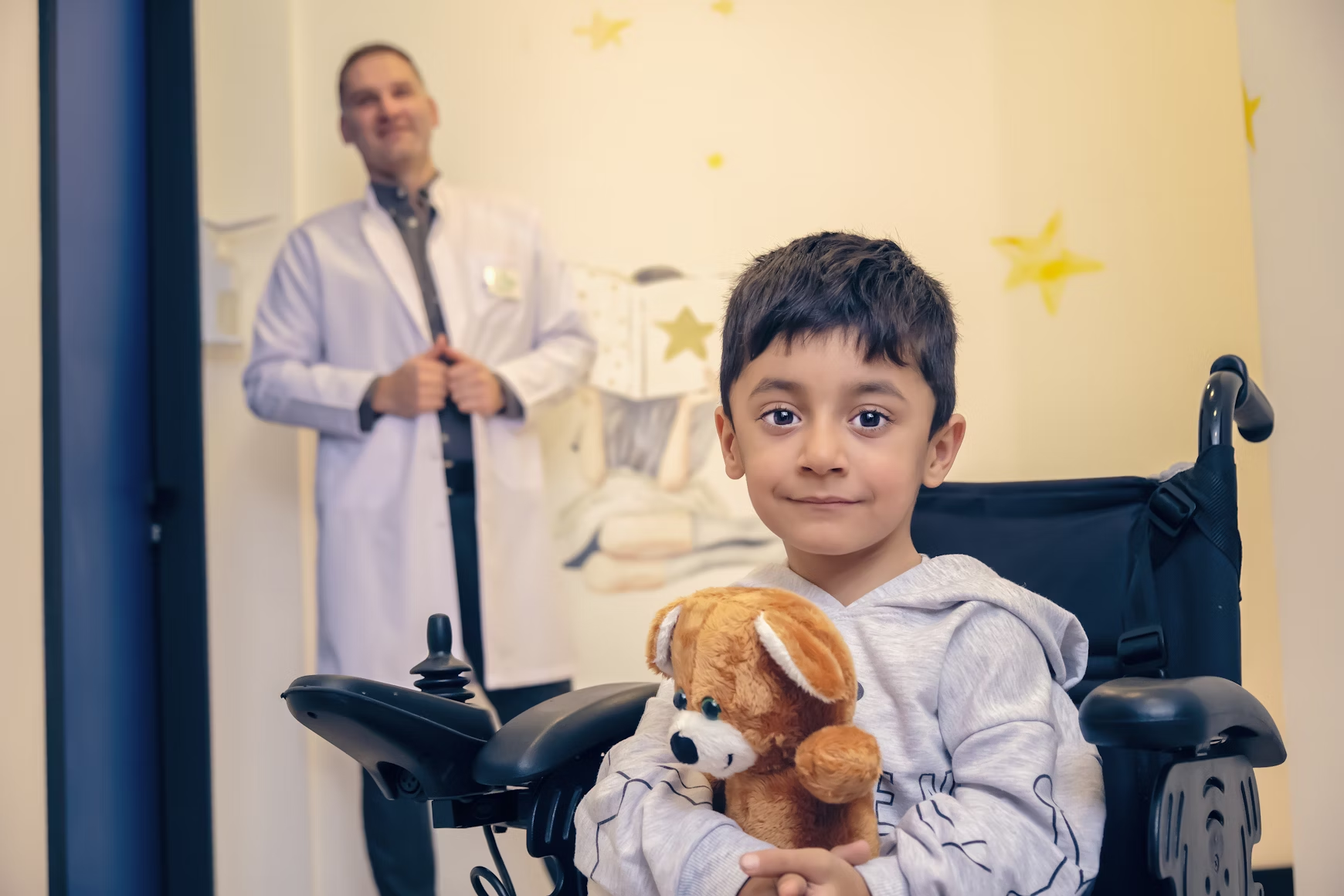
Child in hospital wheelchair, undergoing ADHD assessment
Image Source: Unsplash

Despite the rising awareness of attention‑deficit/hyperactivity disorder (ADHD), many parents wonder whether we’re labeling normal childhood energy as a disorder just to manage behavior.

ADHD diagnosis rates have surged over the past two decades. For some kids, a diagnosis opens the door to meaningful support; for others, it can mean medication and misunderstanding. Is your child struggling with a disorder, or do they simply need a different kind of attention?

Understanding What ADHD Really Means

An ADHD diagnosis requires much more than forgetfulness or an inability to sit still. According to the National Institute of Mental Health, children must show clear symptoms—such as impulsivity or hyperactivity—before age 12, and those symptoms must disrupt everyday life in multiple settings. A fidgety child isn’t automatically ADHD if they’re calm and focused at home but struggle only in one classroom. ADHD is a clinical condition, not a judgment on personality or parenting.

Diagnosis Is Complex—And It Should Be

When behavior feels outside the norm, it’s natural to want answers. A proper ADHD diagnosis should never hinge on a single checklist. We recommend a comprehensive evaluation that includes input from teachers, parents, and medical professionals while ruling out anxiety, depression, or learning disorders. Each of these conditions can mimic ADHD symptoms, and mistaking one for the other can lead to the wrong treatment.

Not Every Wiggly Kid Has ADHD

Researchers warn that ADHD is sometimes overdiagnosed—especially in children with mild symptoms. A large‑scale NIH review found growing evidence of overdiagnosis and overtreatment, leading to unnecessary medication use. Some kids who simply need more movement, hands‑on learning, or emotional guidance may instead receive a clinical label. The goal is to recognize genuine disorder while avoiding the quick pathologizing of normal development.

a closer look with a baby
Image Source: Unsplash

A Closer Look at Inequities in Diagnosis

Diagnosis isn’t evenly distributed. A Penn State study found white children—particularly high achievers—are more likely to be overdiagnosed, while children of color may be overlooked even with clear symptoms. Diagnostic rates also vary widely across regions; kids in rural areas are more frequently labeled than those in urban schools. Bias, access, and cultural misunderstandings all influence who receives an ADHD diagnosis.

Why One Label Can Change Everything

Once a child receives an ADHD diagnosis, it can become their defining trait. Labels can guide school support, shape peer perceptions, and affect self‑esteem. For some families, the diagnosis brings relief and resources; for others it feels like a box that doesn’t fit. A label should start a conversation about tailored support, not end it.

What You Can Do as a Parent

  1. Observe, don’t panic. Track when behaviors appear and what triggers them.
  2. Gather perspectives. Ask teachers, pediatricians, and caregivers what they notice.
  3. Question the process. Ensure evaluations include rating scales, interviews, and developmental history.
  4. Look for underlying needs. Boredom, stress, or grief can mimic ADHD symptoms.
  5. Advocate. If a plan feels off, seek a second opinion.

Choosing Thoughtful Paths Over Quick Fixes

Peer reactions can sting more than any academic hurdle. Role‑play common scenarios—blurting out in class, impatience during games—and brainstorm calmer responses.

Encourage friendship circles built around shared interests (Robotics Club, dance team) where focus morphs into passion. When mistakes happen, model non‑shaming language: “Looks like your brain was on turbo mode—how can we hit reset together?” Repairing quickly helps children view slip‑ups as data, not defects.

Parents need clear, compassionate guidance—rooted in evidence and empathy. ADHD is real, but so is overdiagnosis. Let’s aim for assessments that fit each unique child, not just the system.

Has your family navigated an ADHD diagnosis? Share your story in the comments.

Read More

  • When The Kids Are Sick
  • How to Afford Raising a Child with Special Needs

Samantha Warren
Samantha

Samantha Warren is a holistic marketing strategist with 8+ years of experience partnering with startups, Fortune 500 companies, and everything in between. With an entrepreneurial mindset, she excels at shaping brand narratives through data-driven, creative content. When she’s not working, Samantha loves to travel and draws inspiration from her trips to Thailand, Spain, Costa Rica, and beyond.

Filed Under: Parenting Tagged With: ADHD diagnosis, child behavior, children’s mental health, overdiagnosis in kids, parenting advice, parenting support, school discipline

Should There Be a Legal Limit on How Many Kids One Family Can Have?

April 17, 2025 | Leave a Comment

Large group of siblings standing together outdoors
Image Source: Unsplash

Could the number of children you’re allowed to raise someday be up to the law—and not your heart or home? It’s already a live debate in policy circles, fueled by worries about resource distribution, environmental impact, and child welfare.

Some nations have tried to curb births (China’s historic one‑child policy is the most famous example), while the United States currently leaves family size to personal choice. Before we imagine legislation that caps kids, it’s worth weighing the ethical, practical, and emotional stakes.

When Fiction Sparks Real Questions

Law‑school case studies sometimes use hypotheticals like a “Quality of Life Act,” limiting families to two children, to probe the tension between individual freedoms and collective interests. One well‑known classroom example explores hardship exemptions and enforcement dilemmas, pushing students to ask who decides what family size is “acceptable.”

You can read that thought experiment in the William & Mary Bill of Rights Journal’s archive. While fictional, it forces us to confront how deeply personal decisions collide with public policy goals.

Lessons From Countries That Tried Child Limits

China’s one‑child policy (1979‑2015) is often cited as proof that hard caps create unintended fallout—gender imbalance, forced abortions, and a shrinking workforce among them. The country’s pivot to a three‑child allowance underscores how difficult it is to fine‑tune population through law. A concise overview of the policy’s evolution and side effects appears on Britannica. The takeaway: imposing quotas may reduce births, but social costs can linger for generations.

Economic Policies Already Shape U.S. Family Size

Even without an official limit, certain rules act like soft caps. The Social Security “family maximum” caps survivors’ or disability benefits no matter how many children need support, nudging larger families to make do with less.

Meanwhile, stringent childcare regulations drive up costs, deterring some couples from having a third or fourth child. Policy pressure points already influence how big families get—just indirectly.

Equity Concerns in Any Limit

Research from Penn State shows white, higher‑income children are more likely to be diagnosed (and sometimes over‑diagnosed) with special needs than peers of color—illustrating how bias creeps into supposedly objective systems.

If family‑size laws ever relied on hardship waivers or medical exemptions, similar inequities could emerge. Any cap would need rock‑solid safeguards to prevent discrimination, yet history suggests those safeguards are difficult to design and enforce.

running freely through open field
Image Source: Unsplash

Freedom, Responsibility, and Better Alternatives

Supporters of limits argue they could ease environmental strain or relieve pressure on public services. Critics counter that bodily autonomy and cultural traditions make reproduction a fundamental right. One compromise: strengthen voluntary family‑planning tools—affordable childcare, paid leave, tax credits—so people can choose the family size that feels sustainable.

When financial barriers drop, birth rates align more closely with parents’ true desires, reducing the perceived need for coercive laws.

Raising What Matters Most

The heart of the debate isn’t merely how many children people have—it’s how society shares responsibility for their future. A child raised in a community with solid schools, clean air, and accessible healthcare grows into an adult better equipped to innovate the very solutions our planet needs.

Whether you envision one child or five, healthy families thrive on resources, respect, and informed choice—not quotas. Instead of policing wombs, policymakers might focus on making housing, healthcare, and education attainable for households of every size.

What’s your take—could a legal limit on family size ever be justified, or would it cross a line that should remain inviolable? Share your thoughts below.

Read More:

  • New Baby, New Budget: The Top Tips for Budgeting for a New Baby
  • How to Get Teens Excited About an International Trip
Samantha Warren
Samantha

Samantha Warren is a holistic marketing strategist with 8+ years of experience partnering with startups, Fortune 500 companies, and everything in between. With an entrepreneurial mindset, she excels at shaping brand narratives through data-driven, creative content. When she’s not working, Samantha loves to travel and draws inspiration from her trips to Thailand, Spain, Costa Rica, and beyond.

Filed Under: Parenting Tagged With: child welfare, family planning, family size, fertility policy, legal parenting issues, parenting choices

Did Boomer Parenting Create Emotionally Unavailable Adults?

April 17, 2025 | Leave a Comment

Adult hugging child with a distant expression
Image Source: Unsplash

If you’ve ever struggled to express feelings—or found it tough to connect deeply with others—you’re not alone. Many Millennials and Gen Z adults wonder whether the way they were raised contributed to today’s surge in anxiety, depression, and emotional detachment.

Rather than pointing fingers, it helps to examine how the dominant parenting approach of Baby Boomers might have shaped both the strengths and struggles of their children.

Boomer Parents Were Deeply Involved—Sometimes Overly So

Baby Boomers ushered in an era of unprecedented parental engagement: driving to every soccer practice, checking homework, and offering frequent advice well into their kids’ adulthood.

A landmark study found that Boomers gave emotional or practical help to their adult children multiple times a week. Yet “always there” can morph into “too involved.”

That unwavering attendance at every recital or late‑night proofreading session came from love—and it also set a high bar. Many Millennials remember feeling torn between gratitude for constant support and pressure to meet equally high expectations.

Today, a helpful first step is simply naming that tension: “I appreciate how present you were, but I also felt I always had to ace it.” Acknowledging both gratitude and pressure lets families honor good intentions without glossing over side effects.

When parents constantly intervene, children may have fewer chances to solve problems independently. Over time, that can blunt emotional resilience.

Ultra‑Involvement Can Stifle Emotional Growth

Helicopter‑style oversight didn’t start with Millennials; Boomers often pioneered it. A University of Northern Iowa paper observed that close monitoring of teens’ academics and friendships sometimes undercut self‑regulation skills.

Consider the difference between rescuing and scaffolding. Rescuing means swooping in to fix the science‑fair project at midnight. Scaffolding is asking guiding questions—“What’s your next step?”—and letting the child decide.

Adults who grew up with rescuing often notice a sneaky doubt when challenges arise: “Can I handle this by myself?” If that feels familiar, experiment with micro‑risks: try a new hobby without Googling ten tutorials first, allow a friend to give feedback before perfecting a draft. Each small stretch rewires the “someone will save me” script.

If parents solve every conflict or cushion every failure, kids may struggle later with anxiety, perfectionism, or fear of disappointing others. The lesson: presence is valuable, but boundaries matter.

supportive hug
Image Source: Unsplash

Early Emotional Support Predicts Adult Well‑Being

Research is clear: childhood emotional climate strongly forecasts adult mental and physical health. Adults who reported low warmth in youth faced higher rates of depression and chronic illness decades later.

In many Boomer households, affection was shown through provision—roof, food, education—while feelings were rarely discussed. That gap can leave grown children uncertain how to name emotions or seek help.

Emotional Availability Outweighs Practical Help

A 2021 meta‑analysis linked parents’ day‑to‑day emotional responsiveness with superior relationship skills and self‑esteem in offspring. Kids need more than attendance at events; they need validation when they’re sad, angry, or scared.

Without it, some learn to suppress vulnerability—fueling the “emotionally unavailable” stereotype many adults now try to overcome.

Unequal Impacts and Today’s Mental‑Health Crisis

Boomer parenting was not monolithic—race, class, and culture shaped how involvement and emotional expression played out. Still, surveys show record levels of poor mental health among young adults, driven by economic stress, social media, and lingering family dynamics.

Recognizing the role of upbringing helps break cycles of silence and normalize therapy, open dialogue, and healthier boundaries.

Generational Growth Begins With Awareness

So, did Boomer parenting create emotionally unavailable adults? It contributed—alongside broader social forces—to how many of us process feelings today. The hopeful news: emotional availability is learnable at any age.

By practicing empathy, encouraging open conversations, and allowing children to face age‑appropriate challenges, today’s parents can build on their own upbringing rather than simply repeat it.

Have you felt the influence of Boomer parenting in your emotional life? Share your story below—your insight might help another reader feel less alone.

Read More

  • Unlock the Heart of Your Child: 10 Life-Changing Ways to Build an Emotional Bond
  • Supporting Adult Children: 8 Things Boomers Can Do Instead of Giving Money
Samantha Warren
Samantha

Samantha Warren is a holistic marketing strategist with 8+ years of experience partnering with startups, Fortune 500 companies, and everything in between. With an entrepreneurial mindset, she excels at shaping brand narratives through data-driven, creative content. When she’s not working, Samantha loves to travel and draws inspiration from her trips to Thailand, Spain, Costa Rica, and beyond.

Filed Under: Parenting Tagged With: Boomer parenting, emotional availability, emotional resilience, generational parenting, Mental Health, parenting styles

Are Influencer Parents Exploiting Their Kids for Views?

April 17, 2025 | Leave a Comment

Kid featured in a video setup
Image Source: Unsplash

Once upon a time, kids played center stage in family photo albums—kept safe on a shelf or shared only with relatives. Today, some children star in meticulously curated content viewed by millions of strangers.

Whether it’s a toddler’s meltdown captured on TikTok or daily vlogs of family life, influencer parents are building full‑time brands around their children. On the surface, it’s charming and relatable. Underneath, serious questions demand thoughtful reflection: Are these kids being celebrated or exploited?

Some Kids Are Working—Without a Paycheck

One of the biggest concerns with influencer parenting is the slide into economic exploitation. Parents use children’s appearances to generate income through sponsored posts, affiliate deals, and ad revenue. If earnings aren’t saved or used for the child’s benefit, it crosses an ethical line—especially since kids can’t give informed consent.

A University of Chicago Law School paper warns that this practice is “a modern form of child labor carried out on social media” and calls for updated regulations to protect minors.

Constant Sharing Can Harm Emotional Growth

Posting milestones, tantrums, or private moments feels harmless until cameras are always around. Children who grow up on camera may experience anxiety or distorted self‑esteem once they realize how widely their lives have been broadcast.

Research summarized by Creativity Unleashed shows that continual exposure can teach kids to equate attention with approval, putting them at higher risk for mental‑health struggles later in life.

Privacy Gets Trampled in the Race for Views

Even well‑meaning parents overlook how revealing online content can be. School emblems on uniforms, street signs in the background, or casual references to daily routines create a digital breadcrumb trail for strangers.

Once a child’s data is online, it is effectively permanent and can be misused for bullying, identity theft, or worse. Children have no practical way to reclaim that privacy in the future.

There’s No Safety Net in This Growing Industry

Children in film or television benefit from labor laws that regulate hours, income, and working conditions. Kidfluencers, by contrast, operate in a largely unregulated space. Without formal oversight, children can be overworked or underpaid—all from their own living rooms. The blurred line between playtime and labor makes it hard to enforce safeguards.

Online Fame Today, Real‑Life Struggles Tomorrow

Long‑term effects of growing up online are still being studied, but early evidence raises red flags. Kids who become family “brands” may skip school for filming, crave online validation, or struggle to form offline friendships. If their popularity funds the household, pressure to perform can overshadow education and personal growth.

mother holding the remote
Image Source: Unsplash

Parents Hold the Remote—And the Responsibility

Kids can’t give full consent to internet fame. Only parents can decide what’s truly in a child’s best interest. Before posting, influencer parents might ask: Does my child understand the audience? Would I still share this if they were a teenager? What will this content mean five years from now?

Let’s Put Kids Before Clicks

Emerging laws, platform tweaks, and advocacy efforts all point to one principle: a child’s right to safety, privacy, and fair compensation outweighs any algorithmic boost. Until regulations are airtight, the most effective protector is still a parent who chooses the long‑term well‑being of their kid over the next viral view.

Sharing family life online can foster community, but never at the expense of a child’s privacy or well‑being. Influencer parents have a chance to model responsible storytelling—valuing children as people, not props. Because ultimately, it shouldn’t be about views; it should be about values.

Have you found a healthy balance when sharing your family life online? Tell us about it in the comments.

Read More

  • 3 Essential Tips for Finding the Best Family Neighborhood to Raise Kids
  • Internet Safety for Children: Protection from Inappropriate Content

Samantha Warren
Samantha

Samantha Warren is a holistic marketing strategist with 8+ years of experience partnering with startups, Fortune 500 companies, and everything in between. With an entrepreneurial mindset, she excels at shaping brand narratives through data-driven, creative content. When she’s not working, Samantha loves to travel and draws inspiration from her trips to Thailand, Spain, Costa Rica, and beyond.

Filed Under: Parenting Tagged With: child exploitation, children and privacy, family social media, influencer parents, kidfluencers, kids and social media, parenting ethics

Why Some Boomers Struggle With Their Kids’ Mental Health Needs

April 17, 2025 | Leave a Comment

Teen sitting alone, struggling with emotions
Image Source: Unsplash

We’re seeing a critical conversation unfold in many families today—one where parents, often Baby Boomers, and their grown children struggle to speak the same language about emotional well‑being.

Younger generations can feel unsupported when sharing their mental health needs, while Boomers may feel puzzled by new terminology and treatment options. This disconnect isn’t about lack of love; it’s about generational wiring. Understanding where the gap comes from is the first step toward healing and connection. Creasman Counseling can help bridge this gap by offering guidance that resonates with both generations, fostering empathy and meaningful communication.

Tough‑It‑Out Mentality: When Emotions Were a Private Matter

Many Boomers were raised in households where mental health wasn’t discussed—it was endured. Their parents, shaped by wars and economic upheaval, often taught them to keep it moving and suppress emotional struggles.

As a result, some Boomers still equate open conversations about anxiety or depression with weakness. Even when they want to be supportive, they may not understand why speaking openly feels essential to younger adults.

If you need help explaining why talk therapy or medication management matters to you, the National Alliance on Mental Illness offers a concise guide for families that you can share with skeptical parents.

New Tools, New Territory: The Learning Curve Around Mental‑Health Care

Modern support options—text‑based counseling apps, mindfulness podcasts, even TikTok therapists—can be bewildering to Boomers, many of whom never had access to any therapy at all.

When a young adult says they track moods on their phone, a Boomer parent might respond with uncertainty or skepticism because it’s brand‑new territory.

The Emotional Load Boomers Carry Today

Boomers are grappling with their own challenges—chronic health issues, loneliness, or caring for aging relatives. These stressors raise rates of depression and anxiety in older adults, leaving less emotional bandwidth for their children’s needs, according to WellMed Healthcare. Recognizing their struggles can foster empathy on both sides and open doors to more balanced conversations.

Layer on caregiving for spouses or grandkids, and their stress cup overflows. Invite them to share their own worries before launching into yours.

Swap roles occasionally—perhaps you attend a medical appointment with them, and they join one of your therapy sessions as a supportive observer. Mutual caretaking turns parallel struggles into shared strength.

Stigma Still Lingers: When Seeking Help Feels Taboo

Despite progress, stigma remains powerful for many Boomers. Challenging stigma means reframing vulnerability as strength and normalizing professional support.

Use stories, not statistics, to loosen stigma. Share a high‑profile example—like Olympic swimmer Michael Phelps crediting therapy with saving his life, or your own breakthrough moment after counseling. Replace the word “therapy” with “mental fitness coaching” if that lands better.

Frame help‑seeking as responsible family stewardship: just as you would treat diabetes, you treat mood disorders to stay present for your loved ones. Celebrate every small step—a first screening, a support‑group visit—so progress feels visible and valued.

too much screen time
Image Source: Unsplash

Different Realities: When Parenting Philosophies Collide

Ask three generations about the teen mental‑health crisis and you’ll hear different culprits.

Boomers may blame helicopter parenting or too much screen time, while younger adults cite climate anxiety, economic pressure, or social‑media overload.

Bridging this gap begins with active listening and validating that younger generations face unprecedented challenges.

How Families Can Shift From Disconnection to Support

  • Frame conversations with empathy: share personal experiences rather than pointing out what parents “don’t get.”
  • Learn together: watch a mental health documentary or attend a family psychoeducation workshop.
  • Create a safe space: remind each other that love is the goal, even when words fall short.

Love, Not Perfect Understanding, Connects Generations

Most Boomers truly want what’s best for their children; they just grew up with different norms. By shifting the narrative from blame to curiosity, families can foster deeper empathy and collaboration.

Mental health support is an ongoing conversation that thrives on patience, respect, and open hearts.

Read More

  • 15 Surprising Ways Your Daily Habits Impact Your Finances
  • Why We’re Opening a Bank Account For Our 3 Year Old

Samantha Warren
Samantha

Samantha Warren is a holistic marketing strategist with 8+ years of experience partnering with startups, Fortune 500 companies, and everything in between. With an entrepreneurial mindset, she excels at shaping brand narratives through data-driven, creative content. When she’s not working, Samantha loves to travel and draws inspiration from her trips to Thailand, Spain, Costa Rica, and beyond.

Filed Under: Parenting Tagged With: baby boomers and mental health, child mental health, family mental wellness, generational differences, parenting challenges

8 Signs You Were Parentified as a Child—And Still Are

April 17, 2025 | Leave a Comment

child is helping
Image Source: Unsplash

For most kids, childhood should be a time of learning, growing, and being cared for. But if you were regularly expected to act like the adult, keeping siblings fed, managing a parent’s emotions, or smoothing over family chaos, you may have been a parentified child.

And here’s the tough part: many of those responsibilities don’t just disappear when you grow up. Without even realizing it, you might still be carrying that heavy emotional load. Recognizing the signs is the first step toward setting healthier boundaries and giving your inner child the care they always needed.

What Is Parentification?

Parentification happens when a child takes on roles and responsibilities meant for a caregiver. Sometimes it’s practical—cooking dinner, paying bills—other times it’s emotional, like becoming a parent’s confidant. Kids aren’t equipped for adult duties, no matter how “mature” they appear.

Over time, these expectations shape how we attach, communicate, and love—especially if they go unacknowledged. A concise overview from Psychology Today explains the two main types—instrumental and emotional parentification—and their lifelong effects.

Below are eight signs those early roles may still be influencing your adult life.

1. You Missed Out on Just Being a Kid

If you felt like a mini‑adult while peers worried about homework and playground drama, take note. Packing lunches instead of playing outside, or calming a parent instead of hearing bedtime stories, robs kids of crucial developmental experiences. Experts emphasize that losing childhood freedom often leaves a void that lingers well into adulthood.

2. You Feel Overwhelming Responsibility for Others

Caring is great—feeling endlessly accountable for everyone’s happiness is not. Parentified kids often grow into adults who panic or feel guilty when someone they love struggles. Chronic anxiety or burnout can follow because you’re still wearing an invisible superhero cape.

3. You Take the Caregiver Role in Every Relationship

Are you the partner who organizes everything, the friend everyone leans on, or the colleague who picks up extra tasks? Constantly taking responsibility for others’ emotions creates one‑sided dynamics and leaves your own needs unmet.

4. You Struggle to Say “No”

If refusal sparks guilt or fear, it may trace back to times when saying “no” meant conflict or rejection at home. This “ever‑yes” reflex drains energy and makes boundary‑setting feel impossible.

Child helping an adult with care
Image Source: Unsplash

5. You Equate Love With Helping or Fixing

When worth is tied to fixing problems, you may mistake over‑functioning for care. While dependable, this pattern can leave you depleted and prevent mutual emotional reciprocity.

6. You Fear Abandonment and Rejection

Love that felt conditional—shown only when you were useful—can create a lifelong fear of being cast aside. Insecure attachments, separation anxiety, or clinging to unhealthy relationships often stem from this early lesson.

7. You Have Trouble Trusting Others to Lead

Micromanaging, avoiding vulnerability, or reluctance to ask for help may signal a survival strategy from childhood. Being the strong one 24/7 leaves little room for rest or shared responsibility.

8. You Struggle With Emotional Regulation

If you had to suppress feelings or absorb others’ emotions, expressing your own can feel risky. Suppression often leads to depression, anxiety, or emotional shutdowns.

A helpful guide from Verywell Mind offers practical exercises for rebuilding healthy emotional skills.

You’re Allowed to Put Yourself First Now

If these signs resonate, remember: you’re not broken—you adapted to survive. Today, you no longer have to live in survival mode.

Therapy, journaling, mindfulness, and supportive relationships can help you unlearn old patterns and reclaim your own needs. Your worth has never depended on how much you carry for others.

What’s been the hardest part of unlearning parentified habits? Share your experience in the comments below—we’d love to hear from you.

Read More

  • 12 Parenting Mistakes You’re Making Right Now: Learn How to Save Your Child’s Happiness Before It’s Too Late
  • Playground Dangers: 8 Pieces of Playground Equipment That Could Seriously Injure Your Child

Samantha Warren
Samantha

Samantha Warren is a holistic marketing strategist with 8+ years of experience partnering with startups, Fortune 500 companies, and everything in between. With an entrepreneurial mindset, she excels at shaping brand narratives through data-driven, creative content. When she’s not working, Samantha loves to travel and draws inspiration from her trips to Thailand, Spain, Costa Rica, and beyond.

Filed Under: Parenting Tagged With: adult children, childhood responsibility, childhood trauma, emotional healing, family roles, parentification, parentified child

7 Things Kids Don’t Actually Need That Parents Still Feel Guilty About

April 17, 2025 | Leave a Comment

Image Source: Unsplash

It sneaks in quietly—when you say “no” to a toy at checkout or skip the over‑the‑top birthday bash. That inner voice whispering, “Am I doing enough?” is all too familiar. Yet much of what we stress over isn’t what kids need.

The pressure to provide more—more stuff, more experiences, more perfection—is usually rooted in outside expectations, not reality. Here are seven common things children don’t truly need (even if parenting guilt tells you otherwise).

1. Brand‑New, Trendy Everything

Kids outgrow clothes and lose interest in toys fast. Choosing good‑quality hand‑me‑downs or shopping secondhand teaches gratitude and sustainability without draining your wallet.

Turn thrift trips into mini‑treasure hunts. Give your child a small budget and let them choose one “new‑to‑them” item—maybe a sparkly jacket or a stack of picture books. You’ll teach money sense, ignite creativity (“How can we style this?”), and cut clutter. When relatives ask for gift ideas, suggest experiences (museum passes, zoo memberships) or quality staples that last more than a season.

2. Over‑the‑Top Celebrations

Research shows children gain lasting happiness from connection rather than extravagance. A simple party with a few friends, cake, and shared laughter is more than enough.

Pick one “signature” ritual—pancakes shaped like their age, a birthday‑morning playlist, a handwritten letter. These cost little yet become eagerly awaited traditions. Invite just a handful of friends and let the guest of honor choose a cooperative game or outdoor adventure.

3. A Constant Yes

Saying “no” helps kids develop patience and resilience.

Create a family “pause list” for requests that aren’t urgent—new gadgets, impulse treats. Revisit the list every two weeks so desires cool (or prove genuine).

When you do decline, pair the no with empathy: “I know those sneakers look awesome. Let’s add them to your birthday wish list.”

Over time children learn patience, budgeting, and that disappointment isn’t a catastrophe.

4. Perfect School Pictures and Milestones

Keep a monthly “real‑life reel” on your phone: the missing tooth grin, the mud‑splattered jeans after soccer. Print a few candid shots and place them on the fridge where everyone can laugh together. When photo‑day panic hits, remind yourself that kids value the smile behind the crooked collar, not the collar itself. Imperfection humanizes family memories.

Child playing in a clean living room
Image Source: Unsplash

5. A Clean House 24/7

A spotless home is nice—but connection matters more. Parenting experts at Zero to Three emphasize that playtime promotes growth even if the living room looks chaotic.

Institute a quick “10‑minute tidy” before bedtime—set a timer, blast a song, and make cleanup a race. The rest of the day, let the Lego city sprawl. Researchers say loose‑part play in lived‑in spaces boosts cognitive flexibility. A house that occasionally looks lived in signals to children that exploration trumps presentation.

6. Constant Productivity and Perfection

Trying to do everything perfectly leads to burnout. Modeling balance shows kids healthy ways to manage stress.

Block one agenda‑free Saturday morning each month. No chores, no lessons, no errands—just unstructured time for wandering the neighborhood, building blanket forts, or doing absolutely nothing.

When kids watch you lounge with a book or take a mindful walk, they learn rest is productive too. This rhythm lowers family stress and preserves curiosity.

7. Sacrificing All Self‑Care and Spending

Treating yourself to small comforts boosts energy and mood, benefiting everyone at home. Self‑care isn’t selfish; it’s maintenance.

Schedule micro‑rituals: a 15‑minute stretch at sunrise, a Friday latte date with yourself, a quarterly friends’ night out. Explain to kids: “Just like a phone needs charging, grown‑ups need recharging.”

Let them witness you returning calmer and happier—that lived example teaches self‑respect better than any lecture.

The Real Essentials Can’t Be Bought

When you peel back parenting guilt, what remains is the desire to nurture. Kids need love, safety, presence, and acceptance—none of which require pricey upgrades or perfect optics.

Letting go of guilt around non‑essentials leaves room for joy and genuine connection.

What’s something you’ve stopped feeling guilty about? Share in the comments—we’d love to hear.

Read More

  • Year-round Money Saving and Fun Activites for Parents and Kids
  • Teaching Children About Money

Samantha Warren
Samantha

Samantha Warren is a holistic marketing strategist with 8+ years of experience partnering with startups, Fortune 500 companies, and everything in between. With an entrepreneurial mindset, she excels at shaping brand narratives through data-driven, creative content. When she’s not working, Samantha loves to travel and draws inspiration from her trips to Thailand, Spain, Costa Rica, and beyond.

Filed Under: Money and Finances Tagged With: Family Budgeting, guilt‑free parenting, kids don’t need, parenting expectations, parenting guilt, practical parenting, self‑care for parents

10 Unspoken Rules Every Multigenerational Household Has

April 17, 2025 | Leave a Comment

Image Source: Unsplash

Multigenerational households are on the rise—and for good reason. They offer emotional closeness, practical help with childcare, and shared financial responsibilities.

Beyond challenges like the ability to get children and the elderly on insurance plans, multigenerational households also face communication issues at times, and that’s why it’s so important to have boundaries and guidelines for interacting with one another.

As heartwarming as it can be to live with extended family, there are also unspoken rules that shape the way everyone coexists. Understanding those dynamics can help everyone breathe a little easier.

1. Respect Different Parenting Styles

When several generations live together, at least two approaches to parenting will collide. Talking through expectations early—and listening to each other—prevents daily friction. Studies find that acknowledging different styles while maintaining consistency for kids is crucial for harmony in intergenerational homes.

Sit down within the first week of living together and trade notes on non‑negotiables (discipline, food rules, screen time). Keep the tone curious—“Tell me more about why bedtime feels important to you.” When clashes arise later, you can reference this conversation instead of reacting in the moment.

Post a one‑page “family agreement” on the fridge as a gentle reminder of shared goals and the kids’ need for consistency.

2. Privacy Matters More Than You Think

Even in a loving, close‑knit residence, privacy is a form of respect. Simple agreements—like knocking before entering bedrooms or setting quiet hours—preserve everyone’s well‑being.

Agree on literal “do‑not‑disturb” zones: bedrooms, work nooks, and bathrooms. Add a visual cue such as a small sign or a closed‑door policy during certain hours. Encourage headphones for calls and designate a single, centralized spot for loud play or TV. Privacy isn’t withdrawal—it’s fuel for positive interaction when everyone reconvenes.

3. Shared Expenses Should Be Discussed, Not Assumed

From utilities to groceries, cost‑sharing can be a huge advantage, but only if expectations are clear. Transparent money talks are a key predictor of reduced conflict in multigenerational living.

Hold a monthly 20‑minute budget huddle. Itemize major costs (rent/mortgage, groceries, childcare) and assign owners or percentages right then—no lingering “we’ll figure it out later.” Use a shared spreadsheet or expense‑tracking app so every adult can see running totals in real time.

Clear, written agreements minimize resentment and make it easier to adjust when someone’s circumstances change.

4. Leave Room for Conflicting Values

Political, spiritual, or lifestyle differences will surface. Focusing on shared values—such as love for the children—helps bridge gaps.

Instead of debating the latest headline, anchor conversations in mutual care for the children. Swap “You’re wrong about…” with “How can we model respect for the kids when we disagree?”

Create a family reading list, movie night, or volunteer outing that highlights universal values—kindness, service, gratitude—so ideological gaps feel smaller.

5. Don’t Undervalue the Power of Emotional Support

Give grandparents or relatives a regular “connection gig” (story time, afternoon walk, Friday pancake breakfast). This predictable role lets kids build a tight bond and gives parents breathing room. In turn, elders feel seen and purposeful—which research shows boosts their mental health, too.

helping with chores at home
Image Source: Unsplash

6. Everyone Needs to Feel Useful

No matter their age, each family member wants to contribute. Small roles—like cooking, tutoring, or gardening—build respect across age lines.

Hold a quick Sunday “role‑roulette.” Let each person choose or swap a task—grandpa trims basil, teens handle grocery pickup, younger kids feed the dog. Rotate roles every month so chores stay fresh and no one feels pigeon‑holed. Publicly thank each contributor during dinner to reinforce dignity and teamwork.

7. Keep Communication Clear and Daily

Regular check‑ins (a group text or post‑dinner recap) stop small misunderstandings from snowballing.

Start a shared group chat (or dry‑erase board) for quick updates—“Soccer practice ends at 6,” “Grandma resting, please keep hallway quiet.” Follow up with a five‑minute after‑dinner roundtable where everyone shares one win and one need. This ritual normalizes speaking up before frustrations calcify.

8. Recognize Parenting Is Still the Parents’ Job

Extra adults can assist, but parents make the final call on bedtime, discipline, and routines. Respecting this boundary keeps relationships healthy.

Create a code phrase—“Parent call”—that signals Mom or Dad is stepping in. Relatives can still suggest ideas, but the parents’ decision stands. When boundaries blur, revisit the mantra: support is helpful; overriding is harmful. Clear lines preserve authority and keep gratitude flowing both ways.

9. Kids Thrive on Routine—Even in a Busy House

Shared living is lively, yet consistent bedtimes, homework slots, and screen limits act as anchors for children’s sense of security.

Post a simple picture schedule for younger kids and a written one for older siblings (wake‑up, meals, homework, screen‑off, lights‑out). Use smartphone alarms to cue transitions so adults don’t have to play time‑cop. Routines also cue visitors: when Nana sees the 8 p.m. “quiet wind‑down,” she’ll know it’s not the best time for spontaneous karaoke.

10. Laughter Is Essential

Humor lightens the mood, diffuses tension, and strengthens bonds. If you can laugh together, you’ll weather the messier parts of shared living—and maybe even thrive.

Start a weekly “family funny” tradition: share a joke at dinner, re‑enact a silly moment, or watch a short comedy clip together. Keep a communal jar for comic strips and kid‑drawn cartoons. Humor acts as social glue—when tempers flare, a shared laugh reminds everyone they’re on the same team.

Finding Harmony in the Chaos

Successful multigenerational homes don’t avoid challenges; they commit to working through them together with clarity, compassion, and flexibility. Which of these unspoken rules rings true in your household?

Read More

  • 8 Things Grandparents Wish Their Grandkids Wanted to Do With Them
  • The Silent Burnout Epidemic Among Stay-at-Home Parents

Samantha Warren
Samantha

Samantha Warren is a holistic marketing strategist with 8+ years of experience partnering with startups, Fortune 500 companies, and everything in between. With an entrepreneurial mindset, she excels at shaping brand narratives through data-driven, creative content. When she’s not working, Samantha loves to travel and draws inspiration from her trips to Thailand, Spain, Costa Rica, and beyond.

Filed Under: Parenting Tagged With: emotional support, family dynamics, household boundaries, multigenerational living, parenting advice, parenting styles, shared living

6 Modern Parenting Trends That Might Be Doing More Harm Than Good

April 17, 2025 | Leave a Comment

Image Source: Unsplash

As parents and caregivers, we want the best for our kids. We read the books, join the Facebook groups, and try to keep up with what’s “in” when it comes to raising emotionally intelligent, well‑rounded little humans. But in trying so hard, we sometimes adopt approaches that seem helpful on the surface, yet carry hidden downsides. If you’ve felt overwhelmed or wondered whether you’re “doing it right,” you’re not alone.

Below are six popular trends that may need a rethink, plus gentle adjustments that put connection and well‑being first.

1. Over‑Scheduling Kids

From toddler music classes to weekend STEM camps, constant busyness can lead to burnout and reduced creativity. Children thrive on downtime and unscripted play, where imaginations take flight.

Kids need margin as much as they need math or music. Start by blocking two “nothing” afternoons each week—no lessons, no play‑dates, just free play at home. Protect them the way you would a dentist appointment.

During that unstructured time, put away the planner and let boredom spark imagination. If your child complains, resist filling the gap; boredom is the doorway to creativity. As seasons change, re‑evaluate activities together and ask, “Which ones still feel fun?” Dropping even one commitment can restore energy for everyone.

2. Helicopter Parenting

Hovering too closely—fixing every problem before it lands—can stunt resilience. Giving age‑appropriate freedom helps kids build confidence and decision‑making skills. For a deeper dive into nurturing independence, see this pediatric‑backed overview of risk‑friendly play.

Picture yourself as a rock‑climbing belayer, not a bubble‑wrap shield. Give your child a chance to solve minor problems—tying a knot, negotiating a turn on the swing—while you stand nearby as a safety net. When setbacks happen, avoid the urge to rescue immediately.

Ask guiding questions instead: “What could you try next?” or “How might you fix that?” These micro‑moments of struggle build grit. Celebrate effort more than outcomes so kids learn that perseverance, not perfection, is the win.

3. Excessive Technology Use

Screens are handy, but heavy reliance can delay language development and social skills. The American Academy of Pediatrics recommends interactive, shared screen time and plenty of real‑world exploration.

Create a simple family media plan posted on the fridge: device‑free meals, no tablets in bedrooms, and a nightly “power‑down” basket after 8 p.m.

Pair every hour of solo screen time with an hour of active play, outdoor exploration, or face‑to‑face conversation. When screens are on, co‑view and talk about what you see, turning passive watching into shared learning. Model digital balance yourself; when parents scroll less, kids follow suit.

4. Over‑Curating Childhood for Social Media

Perfectly staged memories can teach kids that likes are equal in worth. Experts warn that such perfectionism also stresses parents, fueling comparison culture. Try focusing on experiences with genuine emotional value—homemade cards or screen‑free picnics—that foster real connection.

Instead of filming every milestone, designate occasional “memory days” where phones stay in pockets and the goal is simply to be fully present. Invite children to capture the day in their own way—maybe a crayon sketch or a written journal entry.

Post only after asking, “Does sharing this respect my child’s privacy and feelings?” Focusing on lived joy, not online applause, teaches kids that worth isn’t measured in likes.

Child misbehaving
Image Source: Unsplash

5. Lack of Discipline or Clear Guidance

Gentle parenting doesn’t mean never saying “no.” Consistent limits help children feel secure and learn self‑regulation. When boundaries are warm yet firm, kids thrive.

Think of boundaries as guardrails on a bridge: they keep everyone safe while allowing forward motion. Pick three non‑negotiables (for example, no hitting, kind words, bedtime by eight) and enforce them consistently with calm, brief explanations.

Use natural consequences whenever possible—if toys aren’t put away, they’re unavailable tomorrow. When rules are broken, offer a reset: “Let’s try that again.” Predictable structure plus empathy equals security and self‑control.

6. Performing “Perfect Parenting”

Social feeds can imply flawless households, but perfection is impossible—and unnecessary. Embracing a “good‑enough” mindset models resilience and self‑compassion for your child. Psychologists emphasize that sincere repair after mistakes is more powerful than never erring.

Perfection is a mirage that drains joy. Replace impossible standards with the “2‑out‑of‑3 rule”: aim to provide warmth, safety, and structure most days—two out of three is still success. When you slip up (everyone does), pause, apologize, and repair: “I yelled earlier. I’m sorry. How can we make this better?” That brief repair models accountability—and shows kids mistakes are stepping stones, not verdicts.

Finding Your Family’s Balance

Trends come and go; your consistent love endures. If an approach isn’t working, pivot toward what brings joy and authenticity to your family life—and remember that flexibility is a strength, not a failure.

What adjustment will you try this week? Share your thoughts in the comments below!

Read More

  • How to Talk to Your Kids When You’re Struggling Mentally Yourself
  • Stop Ignoring These 7 Health Symptoms Before It’s Too Late

Samantha Warren
Samantha

Samantha Warren is a holistic marketing strategist with 8+ years of experience partnering with startups, Fortune 500 companies, and everything in between. With an entrepreneurial mindset, she excels at shaping brand narratives through data-driven, creative content. When she’s not working, Samantha loves to travel and draws inspiration from her trips to Thailand, Spain, Costa Rica, and beyond.

Filed Under: Parenting Tagged With: child development, harmful parenting trends, modern parenting, parental guidance, parenting advice, parenting tips

Why Burned-Out Moms Are Fantasizing About Running Away

April 16, 2025 | Leave a Comment

Overwhelmed mom holding child while walking away
Image Source: Unsplash

If you’ve ever found yourself fantasizing about a one-way ticket to anywhere-but-here, you’re far from alone. More and more mothers admit to fleeting daydreams of escape—not because they don’t love their families, but because they’re overwhelmed by mom burnout and weighed down by impossible expectations. Contrary to what some might think, these thoughts don’t point to a failing parent; they simply reveal the intense pressure many mothers face daily.

Below, we’ll explore why these runaway fantasies happen, what they actually mean, and—crucially—how to address the root issues so you can find relief, not just momentary mental escape.

A Fantasy of Escape Isn’t Selfish—It’s a Signal

When moms fantasize about running away, it isn’t really about wanting a permanent goodbye—it’s about craving breathing room. According to a recent piece by Verywell Family on parental burnout, such thoughts act as a coping mechanism.

Rather than physically leaving home, it’s your mind’s way of saying, “I need help. I need rest.” Recognizing the difference between passing thoughts and genuine plans to leave can help you focus on addressing your emotional needs instead of fueling guilt.

The Home Front Isn’t Always an Even Field

One core driver of mom burnout is the unequal distribution of household and childcare responsibilities. Studies show women often bear the brunt of the mental load, that never-ending checklist of scheduling doctor’s appointments, planning meals, and remembering every detail of daily life.

This invisible labor is so consuming that the BBC once called it the “job that never ends.” Add work demands or limited support, and the scale can tip from mild stress to overwhelming exhaustion—making those runaway fantasies more frequent.

Losing Yourself Somewhere Between Snack Time and Soccer Practice

Before parenthood, you had distinct passions, interests, and even a certain freedom to explore them. Now, those personal pursuits might sit on the back burner—sometimes for years. It’s not that you resent your child; it’s that you miss who you were outside the role of Mom.

These feelings don’t mean you’re ungrateful; they reveal a need to reconnect with yourself. Simple steps like carving out an hour for a hobby or asking a partner to handle bedtime once a week can help. While these changes might feel small, they can make a big difference in reclaiming your sense of identity.

The Mental Load Is More Than You Think

We often talk about physical exhaustion—late-night feedings, endless laundry—but the mental burden can be just as draining. Constant vigilance over your child’s well-being, scheduling, emotional needs, and even your own personal tasks can create a prolonged stress state.

According to mental health experts, chronic overwhelm can lead to anxiety or depressive symptoms, pushing you to fantasize about an “easier” scenario. It’s not about wanting to abandon your child; it’s about longing for respite from relentless responsibility.

Stressed mom standing with head down
Image Source: Unsplash

When Constant Stress Becomes Too Much

It’s easy for busy moms to run on adrenaline and coffee until a breaking point hits. One minute, you’re functioning (albeit stressed), and the next, even brushing your teeth feels like climbing a mountain.

Living in sustained fight-or-flight mode affects your physical health—think headaches, elevated blood pressure, or insomnia. It also impacts emotional health, often leading to short tempers and less patience. If these signs sound familiar, it may be time to talk to someone you trust—a therapist, a friend, or a mom’s support group—before daydreams of running away morph into deeper despair.

Reclaiming Yourself Without Running Away

You don’t have to vanish to feel whole again. Most moms just need permission—permission to rest, to get help, to say “not today” to some obligations. Establishing small daily rituals can help: a morning walk, journaling, a power nap, or trading childcare duties with a friend.

Even short, dedicated moments can provide emotional healing and reduce the desire for escapism. Creating a supportive network around you ensures that your well-being becomes a priority alongside your child’s.

Let’s Keep the Conversation Going

If you’ve ever thought, “I just want to disappear”—know that you’re not alone and you’re certainly not a bad parent. These fantasies often illuminate the parts of motherhood that are isolating, repetitive, and mentally taxing. Talking about them openly helps break the stigma, giving other moms the courage to seek practical solutions.

What small step could you take this week to lessen the load or protect some “you” time? Share your stories or suggestions in the comments, and let’s lift each other up in the knowledge that none of us have to parent in silence—or shame.

Read More

  • How to Talk to Your Kids When You’re Struggling Mentally Yourself
  • 4 Ideas For Self-Care That Don’t Take Much Time
Samantha Warren
Samantha

Samantha Warren is a holistic marketing strategist with 8+ years of experience partnering with startups, Fortune 500 companies, and everything in between. With an entrepreneurial mindset, she excels at shaping brand narratives through data-driven, creative content. When she’s not working, Samantha loves to travel and draws inspiration from her trips to Thailand, Spain, Costa Rica, and beyond.
Filed Under: Parenting Tagged With: emotional resilience, mental load, mom burnout, Motherhood, overwhelmed moms, parenting stress, running away fantasy

« Previous Page
Next Page »
  • Facebook
  • Pinterest
  • RSS
  • Twitter
Best Parenting Blogs

Most Popular

Baby Girl

12 “Grandma” Baby Names That Are Suddenly Cool Again

Evan Morgan
Baby

9 Baby Names That Sound Rare Without Being Hard to Spell

Evan Morgan
Target Store

Choking Incident Prompts Recall of 49,000 Target Gigglescape “Under the Sea” Popping Toys

Evan Morgan
Frustrated Girl

Why Some Students on the Spectrum Are Labeled With ODD

Evan Morgan
Coke Bottles

12 Things Kids Took to School in the ’70s That Would Never Be Allowed Today

Evan Morgan

All content on Kids Ain’t Cheap is for entertainment purposes only. By reading this blog, you agree that Kids Ain’t Cheap is not responsible for any actions taken after reading this blog. For the full disclaimer, see our privacy policy.

Please note that Kids Ain’t Cheap has financial relationships with some of the merchants mentioned here. Kids Ain’t Cheap is funded by banner advertising, commission sales and search optimization consulting.

Copyright © 2006–2026 | District Media | All Rights Reserved | Privacy Policy

Copyright © 2026 Runway Pro Theme by Viva la Violette