• Home
  • About Us
  • Toolkit
  • Archives
  • Advertise
  • Privacy Policy

Kids Ain't Cheap

But They Sure Are Worth It

  • Parenting
    • Baby Stuff
    • Books and Reading
      • Aesops Fables
      • Comic Books
    • Education
    • Family Time
    • Green Living
    • Growing Up
    • Healthy Living & Eating
    • Holidays
    • Parenting
    • Random Musings
    • Shopping
    • Stuff to Do
  • Money
  • Product Reviews
    • Books and Magazines
    • Discount Sites
    • Furniture
    • House Keeping
    • Reviews News
    • Toys and Games
  • Contact Us
  • Our Editorial Commitment
  • Search

Why More Parents Are Regretting Having Kids—But Can’t Admit It

April 15, 2025 | Leave a Comment

Parent appearing conflicted about raising children
Image Source: Unsplash

Parenting is often associated with words like “joy,” “love,” and “fulfillment.”

But beneath the sleepless nights, never-ending laundry, and countless car rides lies a quieter narrative that more parents are confronting—regret. It might sound alarming.

After all, how can a parent love their child yet wish they didn’t have them? For some, the ongoing sacrifices required by parenthood clash with what they once imagined family life would be. Harder still, most parents who feel this way don’t find it easy to come out and say it.

Below, we’ll explore what parental regret looks like, why it’s more common than assumed, and how we can make space for honesty and healing.

A Surprising Number of Parents Feel Regret

While taboo, research indicates that parental regret isn’t as rare as we think. Between 5% and 14% of parents say they regret having children.

This revelation doesn’t mean they don’t love their kids; rather, it highlights how difficult daily caregiving can be when expectations collide with reality.

For example, a Financial Samurai analysis reveals how unmet financial goals and unexpected lifestyle changes often amplify these feelings of regret. Nevertheless, parents rarely voice these sentiments publicly, fearing judgment from their communities.

The Mental and Physical Toll of Regret

Parental regret can impact both mental and physical health. Many parents dealing with it cite increased stress, symptoms of depression, and strain in personal relationships. Financial worries often worsen these struggles, as raising kids is expensive and can lead to lifestyle sacrifices that overshadow initial hopes.

Lingering regret can further feed parental guilt, making parents feel stuck between loving their child deeply and yearning for a life they no longer have. This emotional tug-of-war, combined with constant fatigue, takes a toll over time.

Why It Feels Impossible to Say Out Loud

If you’ve ever thought you couldn’t openly discuss how challenging parenting can be, you’re in good company. Societal norms paint parenting—especially motherhood—as an endlessly grateful role.

Consequently, admitting to regret triggers shame and the fear of being labeled “unloving” or “selfish.” This stigma is so strong that many parents keep quiet, missing out on help they might receive if they felt safe enough to share. As TIME’s exploration of the regret taboo points out, the code of silence doesn’t just hurt the parent—it also creates a cycle of isolation that can elevate stress and erode mental health.

looking emotionally distant
Image Source: Unsplash

Parenting Can Strain Even the Strongest Relationships

Parenthood doesn’t just transform individuals; it reshapes partnerships, too. While children bring love and purpose to many couples, the day-to-day demands—lack of sleep, limited couple time, increased responsibilities—can strain even solid relationships.

Over time, this can cement regret for parents who feel blindsided by how much their marriage or personal life has changed. Yet because divorce or therapy can feel stigmatized in some communities, parents bury these feelings to “keep the family together,” only amplifying the regret beneath the surface.

Grieving the Life You Used to Have Is Real

We talk a lot about postpartum experiences, but we rarely mention the grief many parents feel for their “old life.” They might miss spontaneous weekend getaways, uninterrupted hobbies, or even simpler tasks like going grocery shopping alone. These losses can be normal, but they’re often mislabeled as selfish or ungrateful.

The truth is, you can adore your child and still long for pockets of the freedom you once had. Recognizing that these emotions can coexist is a vital step toward preventing deeper regret from taking root.

Let’s Talk About It: Creating Space for Honesty

Regret doesn’t have to define you as a parent or overshadow your love for your child. Opening up about these conflicted feelings can actually lead to more support, empathy, and better self-awareness.

Online forums and mental health professionals now offer spaces for parents to share candidly without fear of judgment. Reframing regret not as a condemnation, but as an indicator that something in your life might need adjusting—such as needing more help, rest, or recalibrated expectations—can help you move forward with less guilt.

Building a Future Where Parents Feel Seen

The fact is, parenting isn’t monolithic. If regret has a place in your story, it doesn’t mean you’re a bad parent.

More likely, it’s a sign you’re exhausted, overwhelmed, or lacking the support structures essential for thriving in your role. Talking about regret candidly paves the way for real solutions: improved family policies, better mental health resources, and a culture that acknowledges parenting’s highs and lows.

Change begins when we accept that not all regrets stem from a lack of love—often, they arise from a lack of balance and understanding.

Have you, or someone you know, ever dealt with the silent weight of parental regret? What helped you find peace—or at least acceptance—within that experience? Feel free to share your thoughts and stories in the comments.

Read More:

  • How to Let Go of Parental Guilt and Accept Imperfection
  • The Silent Burnout Epidemic Among Stay-at-Home Parents
Samantha Warren
Samantha

Samantha Warren is a holistic marketing strategist with 8+ years of experience partnering with startups, Fortune 500 companies, and everything in between. With an entrepreneurial mindset, she excels at shaping brand narratives through data-driven, creative content. When she’s not working, Samantha loves to travel and draws inspiration from her trips to Thailand, Spain, Costa Rica, and beyond.


Filed Under: Parenting Tagged With: emotional wellness for parents, family dynamics, honest parenting, parental regret, parenting challenges

Is Gentle Parenting Creating Entitled Kids—or Building Strong Character?

April 15, 2025 | Leave a Comment

Parent calmly guiding young child
Image Source: Unsplash

The idea of gentle parenting has surged in popularity across social media, parenting blogs, and everyday conversation. For many caregivers, it feels like a vital shift toward compassion and connection. But there’s also a wave of skepticism—some wonder if kindness and empathy in discipline are breeding kids who think the world revolves around them.

Let’s get real: parenting is tough. Balancing warmth and firmness can be like navigating a tightrope while juggling homework, sibling spats, and your own tired nerves. If you’ve questioned whether gentle parenting fosters respectful adults or just overly coddled ones, you’re not alone. Below, we’ll dive into what the research actually says, the pitfalls to avoid, and how you can raise confident kids without fueling entitlement.

What Gentle Parenting Really Means

First off, gentle parenting isn’t just saying yes to everything or letting kids run wild. At its heart, it stresses empathy, emotional awareness, and steady boundaries, all done without harsh punishments. Instead of imposing time-outs for every infraction, gentle parents acknowledge emotions, guide choices, and build understanding.

According to Psychology Today’s overview of the pros and cons of gentle parenting, the approach isn’t about letting kids “get away” with things—it’s about teaching them to self-regulate rather than behave out of fear. Still, it’s a philosophy, not a rigid set of rules. When misunderstood or inconsistently applied, it risks sliding into permissiveness, where real boundaries might go missing.

Where the Entitlement Fear Comes From

Critics argue that a kid who’s rarely reprimanded might develop unrealistic expectations, like believing the world should adapt to them. But as the Bay Area CBT Center explains, the real difference lies in how parents handle boundaries.

If “gentle” starts to mean “anything goes,” children may not learn that actions have consequences. Yet this drift isn’t inherent to gentle parenting—rather, it’s a result of inconsistent or incomplete follow-through. Effective gentle parenting couples empathy with consistent rules, so kids still grasp limits.

A Foundation in Emotional Intelligence, Not Entitlement

One core belief of gentle parenting is equipping children to name and handle their emotions. That might involve calmly stating, “You’re upset because you wanted another cookie,” while still holding firm to “No more cookies tonight.” Rather than encouraging entitlement, it teaches kids to process frustration or disappointment constructively.

Research published in peer-reviewed journals shows that kids who can recognize and talk about feelings tend to be better at managing stress and forming positive relationships. Far from creating narcissism, this heightened emotional literacy often fosters empathy. If anything, they’re learning that other people’s feelings matter, too.

Where Burnout Can Undermine Success

Being warm and empathetic requires patience and self-control—two things that can run thin in the chaos of daily life. Parents practicing gentle methods frequently cite stress and guilt about “not doing enough,” which can lead to burnout. In that exhaustion, some might let boundaries slip, inadvertently reinforcing the very permissiveness they aimed to avoid.

Staying balanced may mean you need outside help—like a supportive partner, friend, or community who can step in when you’re drained. Gentle parenting doesn’t mean bearing every challenge alone. Asking for help is a testament to self-care, not a failure.

Parent hand-in-hand with child
Image Source: Unsplash

Over the Long Haul, Does Gentle Parenting Work?

Studies consistently tie nurturing, compassionate discipline with better parent-child relationships, improved self-esteem, and fewer behavioral issues down the road. When children trust caregivers to be caring but consistent, they’re more likely to explore the world with confidence, not entitlement. Teens raised this way often turn out to be better communicators and more emotionally secure adults.

Ultimately, gentle parenting isn’t about coddling—it’s about helping kids develop internal motivation and respect. A home built on dialogue and understanding doesn’t typically breed entitlement—it cultivates emotional resilience and empathy.

Bringing Empathy and Boundaries Together

So if you’re on the fence—hoping to cultivate kind, confident children without raising entitled adults—remember it’s all in the blend:

  1. Set Clear Limits: Gentle doesn’t mean weak. State rules calmly, but firmly. Consistency is key.
  2. Validate Feelings: Let kids know it’s okay to feel upset or disappointed, even if the answer is “no.”
  3. Use Real Consequences: If they break a rule, calmly follow through with logical outcomes. Consequences, not punishments, guide kids toward better choices.
  4. Stay Open: Talk about emotions—yours and theirs. This fosters emotional intelligence, so kids learn from mistakes, not just fear them.

When you pair warmth with unwavering limits, you sidestep the extremes—either harsh discipline or over-permissiveness.

Where to Go from Here

If you worry your household is drifting toward entitlement, look at how consistently you’re maintaining boundaries.

Is everyone on the same page (including grandparents and babysitters)?

Are kids facing predictable, meaningful consequences for poor choices?

Ensuring structure keeps empathy from turning into permissiveness. If you’re already doing this, you’re likely on track to raise compassionate, self-aware children, without the fear that you’re inflating their egos.

Have you tried gentle parenting? Share your thoughts, successes, or challenges in the comments. You might help another parent realize gentleness can be effective, not enabling.

Read More:

  • What’s Your Parenting Style?
  • “I’m Bored” Activity Ideas
Samantha Warren
Samantha

Samantha Warren is a holistic marketing strategist with 8+ years of experience partnering with startups, Fortune 500 companies, and everything in between. With an entrepreneurial mindset, she excels at shaping brand narratives through data-driven, creative content. When she’s not working, Samantha loves to travel and draws inspiration from her trips to Thailand, Spain, Costa Rica, and beyond.

Filed Under: Parenting Tagged With: child behavior, emotional development, entitled kids, gentle parenting, parenting discipline, parenting tips, raising kids

Should Non-Parents Have a Say in Parenting Policies?

April 15, 2025 | Leave a Comment

Image Source: Unsplash

There’s a common argument: “If you don’t have kids, stay out of parenting decisions.”

At first glance, it seems logical—why should someone without diapers to change or school pickups to manage have a voice in how children are raised?

The reality, however, is more intricate. From education to healthcare, parenting policies shape not only family households, but also workplaces, communities, and even the broader national psyche. Whether you’re parenting or not, these policies help create the kind of world we all occupy.

Below is a look at why non-parents not only should but also must have a seat at the table when it comes to influencing parenting policies.

Parenting Policies Impact Everyone

When we talk about “parenting policies,” we’re referring to social supports like paid family leave, childcare subsidies, and flexible work arrangements. These initiatives don’t just aid parents—they raise the quality of life for entire communities. For instance, paid family leave reduces burnout for caregivers, promoting healthier family units that lead to more productive workers and decreased healthcare spending. According to the National Partnership for Women & Families, implementing family-friendly policies benefits child development and also enhances workplace morale for all employees, including those without children.

When parents thrive, society at large reaps the rewards.

Diverse Households Demand Inclusive Policy

Families look different today—single parents, blended families, multi-generational homes, LGBTQ+ households. Some confront additional hurdles, such as language barriers or financial constraints. Non-parents with unique cultural or professional viewpoints can inform more inclusive policy-making, ensuring these family types are seen and supported.

For example, a social worker who doesn’t have kids might recognize where certain parenting policies fall short for at-risk youth. A local business owner could speak on how family-friendly hours boost community cohesion. Collaboration across these perspectives leads to more equitable solutions that serve both traditional and non-traditional families.

Stronger Communities Need Everyone’s Input

Raising kids doesn’t happen in isolation—it’s a community affair. Neighborhood childcare co-ops, public libraries, safe playgrounds, and after-school programs rely on consensus and funding from people of all backgrounds. Non-parents often assist with volunteer efforts or local bonds to better these programs.

Organizations like Child Care Aware emphasize that community involvement—and that includes non-parents—underpins stable, effective resources for children. By helping reduce parental stress or bridging childcare gaps, non-parents enhance the entire social fabric.

Fair Policies Are Key to a Healthier Society

Some might argue that non-parents have minimal stake in parenting policies. But consider the longer-term benefits: investing in children often leads to decreased crime rates, better-educated future employees, and more engaged citizens.

Everyone stands to gain from a well-educated, emotionally stable generation. Hearing voices outside the “parent bubble” can provide fresh perspectives and policy insights. That’s not “interference”—it’s civic participation that drives more balanced solutions.

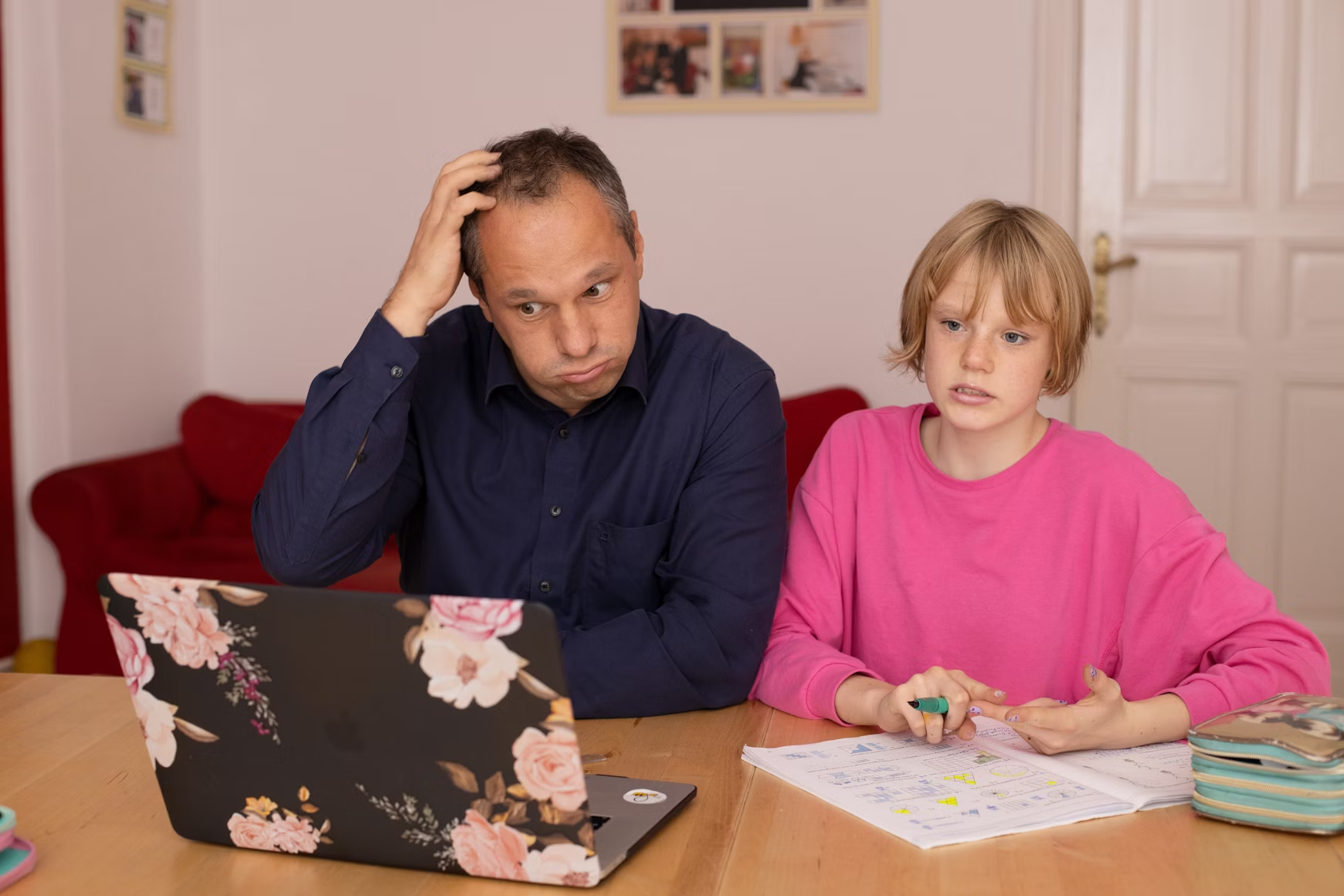
Stressed parent sitting with head in hands
Image Source: Unsplash

Teamwork Fuels Smarter Policies

The strongest policy-making blends experience and perspective. Parents contribute emotional insight into the day-to-day realities of child-rearing, while non-parents bring objectivity, professional expertise, and an outside lens. Instead of crowding each other out, combining these strengths leads to legislation that safeguards kids without being myopic or exclusive. Modern challenges—like the shift to remote work or dealing with school safety—require multi-faceted thinking from a wide array of people, not just those directly raising children.

Building a Future That Works for All

Parenting might be an individual choice, but raising functional, empathetic, and educated citizens affects everyone. From public parks to library programs, from quiet neighborhoods to vibrant workplaces, the results of good parenting policies touch each corner of society.

Including non-parents in these conversations isn’t about diluting parental needs; it’s about realizing that children’s welfare is a shared responsibility. A world that nurtures family life is also a world that fosters health, stability, and growth for everyone else, too.

Have you found yourself caring about a policy related to children even though you’re not a parent? Share your story or viewpoint in the comments—your experiences might guide another caregiver or non-parent navigating the same questions.

Read More:

  • 10 Ways to Save on Your Next Grocery Bill
  • 6 Ways Owning a Pet Can Reduce Stress Levels
Samantha Warren
Samantha

Samantha Warren is a holistic marketing strategist with 8+ years of experience partnering with startups, Fortune 500 companies, and everything in between. With an entrepreneurial mindset, she excels at shaping brand narratives through data-driven, creative content. When she’s not working, Samantha loves to travel and draws inspiration from her trips to Thailand, Spain, Costa Rica, and beyond.

Filed Under: Parenting Tagged With: child well-being, community involvement, family support, family-friendly legislation, non-parents, parenting policies

Does Religion Still Belong in Public School Culture?

April 15, 2025 | Leave a Comment

Student praying in school
Image Source: Unsplash

It’s a question many parents eventually face: what role—if any—should religion play in public schools?

Perhaps your child came home curious about a classmate praying at lunchtime, or you’ve caught wind of new legislation involving the Bible in the classroom. School is where children learn to think critically, embrace diversity, and step outside their own experiences. So how do we strike a balance between religious freedom and inclusive education in one of America’s most diverse and foundational institutions?

Below, we’ll examine how the law draws boundaries around religion, how students are affected, and what it all means for you as a parent.

Religion Can’t Be Endorsed—But It Can Be Practiced

In U.S. public schools, the Constitution requires neutrality regarding religion. This means schools cannot endorse or encourage any specific faith, or block it. Yet, students themselves retain First Amendment rights. According to this ACLU guide, so long as a prayer or religious activity is student-initiated and doesn’t interfere with instruction, it’s protected.

Kids have the right to pray quietly before lunch or read sacred texts during free periods—others have the right not to. This setup respects all belief systems by preventing the school from promoting one particular viewpoint.

By ensuring that no single faith dominates, all children—religious or not—can learn without feeling pressured. At the same time, students with spiritual practices feel recognized and respected. This is a delicate balance that honors individual freedoms without allowing the school itself to endorse or enforce a specific religion.

Teaching About Religion vs. Teaching Religion

One of the biggest sources of debate in public education is whether lessons on spirituality cross a line from academic to devotional.

Legally, public schools can’t promote religious doctrine—but they can and often do teach about religion academically. For example, a world history course might cover Buddhism’s influence or how Christianity shaped medieval Europe. The difference is teaching about a faith versus instructing students to follow or participate in it.

When approached thoughtfully, these lessons promote cultural awareness and empathy, crucial in our interconnected world. Exposure to various faith traditions in the classroom can reduce prejudice and build respect among students of different backgrounds. It only becomes problematic if the class crosses from education into endorsement or practice.

Students’ Religious Expression Is Protected

Kids don’t drop their identities when they walk into school. If your daughter wants to wear a hijab or your son wants to read a Bible verse during free reading, they can—provided it doesn’t disrupt the school environment or disrespect others. The same goes for wearing religious jewelry or forming a faith-based after-school club.

Emotional well-being also benefits when a child feels free to be themselves, including any spiritual dimension. This fosters a sense of belonging and self-acceptance. Open dialogue, rather than suppression, tends to result in healthier community bonds.

Stack of religious texts in school
Image Source: Unsplash

Religious Texts Are Sparking New Debates

In recent years, some states have considered policies that integrate religious texts—often the Bible—into standard school curricula. Proponents argue these texts can be studied for historical or literary value. Opponents worry it edges too close to religious indoctrination in a setting meant to be pluralistic.

If these programs aren’t carefully managed, non-Christian students could feel alienated, and the classroom might slip from neutral study into spiritual persuasion. Ultimately, any policy involving religious material must abide by constitutional limitations, staying on the right side of that line between academic inquiry and endorsement of belief.

Religion: A Chance for Cultural Understanding—When Inclusive

Religion has shaped societies from ancient times to modern politics. Studying different faiths—Judaism, Islam, Christianity, Hinduism, Buddhism, and more—can help students appreciate the diversity in their classrooms and beyond. Real inclusivity means teaching about many traditions, not just a single dominant one.

The result? Better cultural literacy and mutual respect. Ignoring religion entirely may lead to ignorance or perpetuate stereotypes; the goal isn’t to exclude it, but to ensure it’s taught fairly, accurately, and in a way that welcomes all beliefs.

What It Means for Parents

In the end, debates on religion in schools affect not just policy but our children’s daily experiences.

Will they feel safe if they’re part of a religious minority?

Will your faith-based child feel dismissed, or your non-religious child feel pressured?

As a parent, staying engaged is key. Keep lines of communication open with your child: ask what they see or hear in class. Know your district’s policies, and if something feels off—like a teacher leading prayer or a lesson that crosses into indoctrination, don’t hesitate to speak up.

The ultimate aim of public school is to shape informed, empathetic citizens. That includes acknowledging personal beliefs without turning them into mandatory practice for everyone else.

Have you encountered any religion-related issues at your child’s school? Share your experiences—your perspective might help another family find clarity or solutions.

Read More:

  • Teaching Volunteer Values to Your Children
  • 7 Lessons from Kids That’ll Change How You See the World
Samantha Warren
Samantha

Samantha Warren is a holistic marketing strategist with 8+ years of experience partnering with startups, Fortune 500 companies, and everything in between. With an entrepreneurial mindset, she excels at shaping brand narratives through data-driven, creative content. When she’s not working, Samantha loves to travel and draws inspiration from her trips to Thailand, Spain, Costa Rica, and beyond.

Filed Under: Parenting Tagged With: public education, religion in schools, religious expression, secular education, student rights, teaching about religion

What If We Banned the Internet One Day a Week?

April 15, 2025 | Leave a Comment

Family enjoying time together without devices
Image Source: Unsplash

Picture waking up on a Wednesday to find… nothing online. No social media feeds to scroll, no emails to check, no streaming services for your child’s cartoons or easy grocery orders.

Would it feel liberating or chaotic? As concerns about screen time grow, many families wish for an occasional digital detox to recenter.

But the idea of an internet-free day each week isn’t just personal—it raises huge questions about modern economies, essential services, and how we communicate.

Below, we’ll examine what one forced day offline might actually mean, both for families looking to unplug and for society at large.

1. It Sounds Peaceful—But the World Relies on 24/7 Connectivity

In theory, an internet-free day could restore calm. We might see kids rediscover board games and quiet reading, or parents swapping social media time for face-to-face chats.

Yet globally, the internet fuels our workplaces, supply chains, and emergency services. A single global day of internet shutdown could cost the world a staggering $43 billion in lost productivity and commerce, according to Allconnect’s research. In countries like the U.S. and China, which heavily depend on online infrastructure, even a partial shutdown threatens economic stability, impacting everything from banking to deliveries.

The notion of “digital rest” is appealing for family bonding, but can’t be mandated without risking jobs, trade, and essential communication. Instead of a government-imposed blackout, an optional approach—like a personal or household digital detox—may strike a safer balance between convenience and calm.

2. Key Services Would Take a Serious Hit

It’s not just about missed social media updates or Netflix shows. Services like 911 calls, hospital data systems, and public transit rely on constant connectivity.

One real-world example occurred in Arizona, where a severed fiber optic cable left entire regions without cell service or debit/credit capabilities for hours. That turned daily tasks into logistical nightmares—people couldn’t buy gas or groceries with cards, and some emergency calls didn’t go through.

Imagine this scenario multiplied across a weekly shutdown. You might plan a family park day offline, but if your car broke down or your child spiked a fever, you’d want quick digital access to solutions.

Even if we gave emergency lines exceptions, the routine infrastructure of everyday life (like traffic signals, GPS, or hospital databases) wouldn’t easily adapt to scheduled downtime.

3. Human Rights and Policy Implications

Globally, restricting internet access is often viewed as a human rights concern. The Internet Society points out that internet shutdowns—even brief ones—can stifle freedom of expression and limit vital information flow. In democratic societies, a repeated weekly shutdown would likely face heavy backlash, as it disrupts personal liberties and public services.

Meanwhile, authoritarian regimes sometimes intentionally cut internet access to control narratives, like in times of political tension.

That’s not exactly the model you want if you’re aiming for a wholesome family day. Unplugging by choice can be restorative. Enforcing it from the top down can easily veer into censorship or oppression, creating more anxiety than peace.

Person holding a voting invitation offline
Image Source: Unsplash

4. Could We Survive Offline Elections or Public Crises?

Think about an election cycle—a time when real-time information is crucial. From candidate news to polling station updates, many aspects of electoral processes rely on the web.

Organizations like Access Now have documented how internet shutdowns affect democratic participation, limiting public discourse and transparency. If an internet ban coincided with crucial voting days, it could hamper the democratic process.

Even outside elections, families regularly check weather alerts, school closure notices, or health guidelines via official websites or apps. A daylong internet freeze might disrupt these vital messages. It’s not just a mild inconvenience; it’s blocking key info that helps parents make safe decisions.

5. Embracing a Personal Digital Detox Instead

So where does that leave us? Rather than a mandated, nation- or worldwide shutdown, families might find more success in creating their own offline day or evening.

Turning off Wi-Fi and silencing notifications one day a week can provide many of the same benefits—like better face-to-face interaction, creativity, and mental clarity—without jeopardizing businesses or public safety.

With the internet off in just your household, you can still enjoy mealtimes without phones, encourage kids to explore offline hobbies, and allow your family to see that life is bigger than a scrollable screen. You retain control if an emergency arises (you can always switch data back on), and your child also learns self-regulation by seeing you voluntarily set boundaries around technology use.

The Middle Path: Balancing Tech and Family Time

One day a week without internet might bring quiet, but at a national scale, it risks major chaos. Instead of seeking a blanket ban, families can champion smaller, sustainable changes—like scheduling device-free hours or tech-free zones at home. That way, you cultivate a healthy relationship with technology without pushing essential systems and freedoms into the crosshairs.

Have you tried a personal digital detox as a family? Share your insights below about how it worked (or didn’t!). By choosing mindful disconnection—rather than forcing it—we create an environment where kids can thrive online and off.

Read More:

  • Fears About Screen Time – And Why They Aren’t True
  • Learning Through Games: 5 Best Educational Gift Ideas for Kids
Samantha Warren
Samantha

Samantha Warren is a holistic marketing strategist with 8+ years of experience partnering with startups, Fortune 500 companies, and everything in between. With an entrepreneurial mindset, she excels at shaping brand narratives through data-driven, creative content. When she’s not working, Samantha loves to travel and draws inspiration from her trips to Thailand, Spain, Costa Rica, and beyond.

Filed Under: Parenting Tagged With: digital detox, Family bonding, internet use, kids and technology, parenting challenges, parenting in the digital age, Screen Time

Are Schools Still Preparing Kids for a World That No Longer Exists?

April 15, 2025 | Leave a Comment

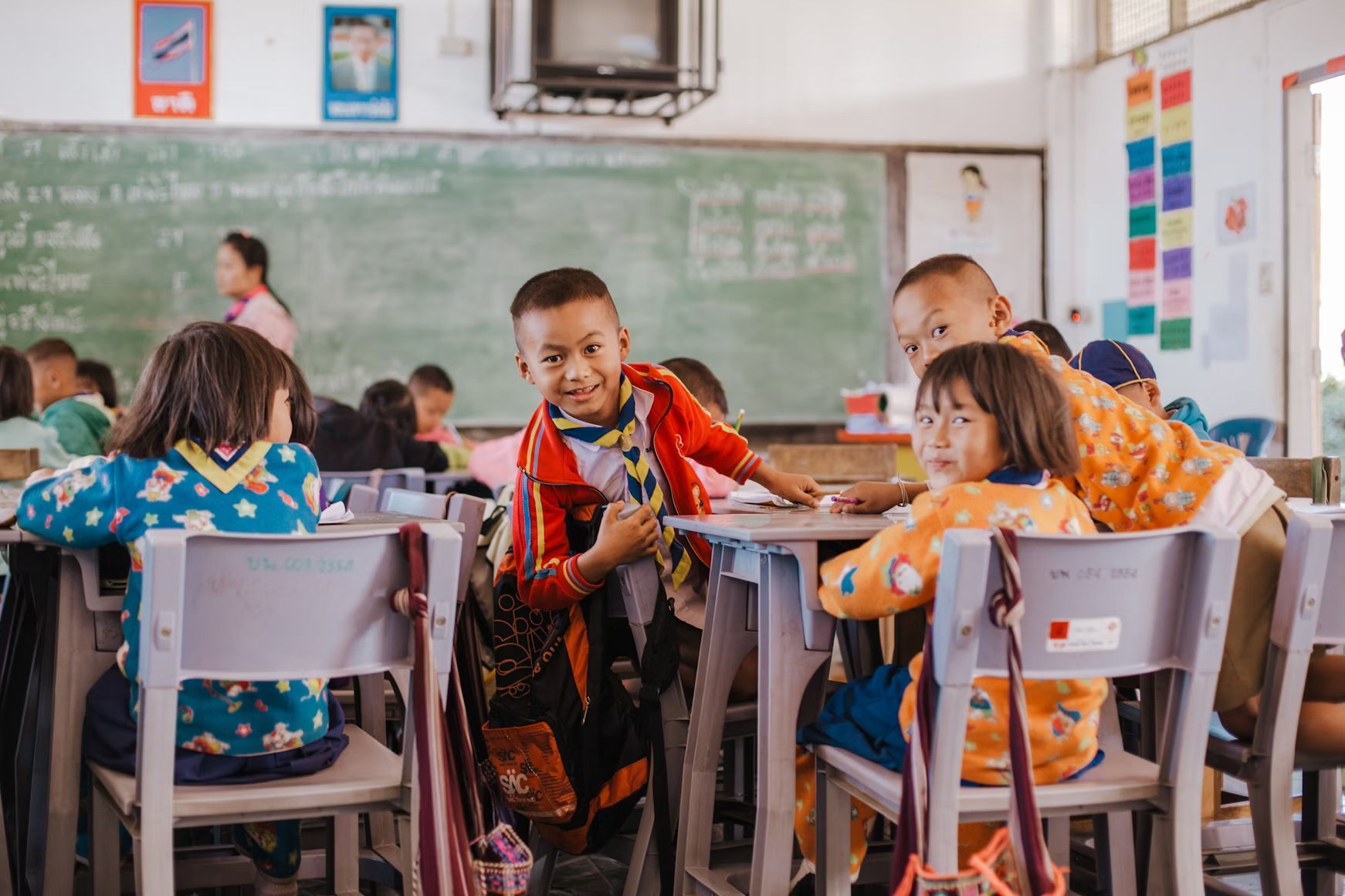
Student in classroom looking disengaged
Image Source: Unsplash

What if the world changed—but schools didn’t? Parenting today can feel like equipping children for a future we can’t fully envision. Technology transforms daily, job markets shift, and life looks drastically different than it did a generation ago. Yet walk into many classrooms, and it’s like stepping into a time warp: textbooks, lectures, bubble tests—remnants of an older era. With these old methods still dominating, parents are asking: does the outdated education system truly align with our modern needs—or is it trying to catch up with a world that has already passed it by?

Today’s Classrooms Echo Yesterday’s Priorities

Much of the modern school model was developed during the Industrial Revolution. That environment stressed punctuality, obedience, and rote memorization—factors crucial for factory workers. But in today’s digital, innovation-driven society, the emphasis has shifted toward problem-solving, adaptability, and creative thinking. According to an Edutopia analysis of school practices, clinging to outdated approaches often leaves students disengaged and ill-prepared for real-world challenges. Employers and universities are increasingly looking for collaboration, empathy, and resilience—traits you can’t just cram from a textbook.

Key Skills Are MIA in Traditional Education

Knowing facts alone doesn’t cut it anymore; the ability to find, interpret, and apply knowledge is king. Yet standard curricula typically prioritize passing tests over teaching critical life skills—like financial literacy, effective communication, and digital fluency.

For example, though coding and STEM are gaining traction in certain schools, many still allocate minimal time to them. While students might memorize historical dates or math formulas, they often struggle with day-to-day tasks such as creating a budget or writing a professional email. The gap between school lessons and future workplace realities can make young adults feel unprepared right when they need confidence the most.

Students Are Graduating—But Not Truly Ready

Plenty of teens walk the graduation stage only to realize they’re not equipped for life beyond the classroom. This mismatch might surface as anxiety over a job interview, bewilderment over how to do taxes, or a general sense that the “real world” is far more complex than their school days suggested.

Without hands-on experiences like internships, community projects, or actual mentorship in practical tasks, students often exit school with high GPAs but weak real-world navigation skills. It’s like learning to drive without ever getting behind the wheel—fine in theory, problematic in practice.

Outdated Theories Still Linger

Even how core subjects are taught sometimes relies on debunked or dubious educational theories. For instance, reading instruction in many classrooms has historically leaned on so-called “three cueing” strategies, which have shown significant shortcomings in helping children become fluent readers.

These older methods persist in teacher training and curricula in some districts, hindering progress. This mismatch underlines a bigger issue: when policy lags behind academic findings, students bear the consequences.

Student studying hard for a multiple-choice exam
Image Source: Unsplash

Parents Are Sounding the Alarm

Increasingly, parents are pushing back, citing concerns that the standard academic path isn’t aligned with future realities. Whether it’s dissatisfaction with rigid standardized tests, the desire for more flexible scheduling, or the wish for real-life skill-building, families are questioning the status quo. They observe that while kids spend hours prepping for multiple-choice exams, they rarely learn about self-care, budgeting, or conflict resolution—skills vital for adult life. That’s not simple frustration; it’s a call for broad reforms and a system that genuinely fosters the diverse talents of each child.

What You Can Do at Home

Even if your local school system isn’t overhauling its approach, you can fill in the gaps:

  1. Encourage Real-World Exploration: Whether through weekend volunteer work, part-time jobs, or online classes in coding or finances, show your child that learning goes beyond the desk.
  2. Model Problem-Solving: Invite your child to help plan a family budget or cook a meal, teaching decision-making and accountability.
  3. Advocate for Change: Attend school board meetings, join parent committees, or collaborate with teachers open to trying new projects. A single voice can spark surprising shifts.

Rethinking “Prepared” in a Changing World

We can’t go back, but we can move forward thoughtfully. While the outdated education system still dominates many spaces, parents aren’t powerless. Through consistent advocacy and complementary home learning, you can bridge the gap between what’s taught and what’s essential.

At its heart, success in the 21st century isn’t about memorizing facts—it’s about creativity, resilience, empathy, and the ability to adapt. When we update our definition of “prepared,” we give our children the best shot at navigating a future where change is the only constant.

Are you noticing gaps between your child’s school experience and the real world? Share your thoughts in the comments—your observations might help another parent find new ways to supplement their child’s education.

Read More:

  • 14 Profitable Stay-at-Home Mom Jobs Online (That Are Worth Your Time)
  • The Cheapest Way to Qualify as a Teacher While You’re a Stay At Home Mom
Samantha Warren
Samantha

Samantha Warren is a holistic marketing strategist with 8+ years of experience partnering with startups, Fortune 500 companies, and everything in between. With an entrepreneurial mindset, she excels at shaping brand narratives through data-driven, creative content. When she’s not working, Samantha loves to travel and draws inspiration from her trips to Thailand, Spain, Costa Rica, and beyond.

Filed Under: Parenting Tagged With: child development, life skills for kids, modern education, outdated curriculum, parenting tips, school system, student preparation

Why Dads Get Applauded for Doing the Bare Minimum

April 15, 2025 | Leave a Comment

Dad casually parenting while receiving praise
Image Source: Unsplash

It’s a scene that plays out on park benches and dinner tables everywhere: a dad shows up at school pickup, bathes the kids, or packs their lunches—and then receives near-heroic praise.

Meanwhile, moms doing the exact same daily tasks get… silence. No parade. No Facebook accolades. Just another Tuesday. When it comes to parenting, the applause gap is real—and it’s long overdue for a closer look.

Let’s explore why society showers dads with gold stars for routine parenting duties, and how we can shift these outdated standards toward genuine equality and recognition for all.

The Weight of Gender Roles Hits Differently

Generations of societal messaging have painted men as breadwinners first, caregivers second. Even though family structures have evolved, the echoes of these stereotypes persist. As a culture, we’re often so used to seeing fathers as only partially involved that any sign of hands-on parenting looks above-and-beyond.

These days, dads who handle simple chores like laundry or bedtime stories receive near-celebrity status. This dynamic places minimal expectations on fathers while mothers shoulder the bulk of the day-to-day mental load without receiving half the applause.

Hero Status for Simply Showing Up

Let’s be clear—active fatherhood is wonderful. What’s problematic is the double standard that showers dads with compliments for tasks moms are expected to do automatically. Whether it’s preparing dinner, attending parent-teacher meetings, or dispensing medicine during a sniffle season, these are standard parenting duties. Yet our culture has normalized praising fathers for “babysitting their own kids,” creating a lower bar that inadvertently underestimates mothers’ everyday work. The imbalance can leave moms feeling unseen or undervalued.

Mothers Face a Thankless Marathon

Behind every “amazing dad” post stands a mom who’s quietly done the same tasks—or more—day in and day out, often without a break. She’s scheduling doctor’s appointments, juggling extracurriculars, making sure dinner includes vegetables, and checking homework. And she does it all without a standing ovation. The discrepancy isn’t that dads don’t deserve praise—it’s that moms deserve just as much. When dads are applauded for minimal involvement, mothers can end up exhausted, carrying a heavier workload with little validation.

Father actively caring for his child
Image Source: Unsplash

Fatherhood Is Not Optional

One significant aspect fueling the praise gap is the perception that fatherly involvement is extra credit. If dads participate, it’s seen as a bonus, whereas mothers are expected to be ever-present. This mindset perpetuates the idea that fatherhood is a choice rather than a commitment. Of course, many modern dads want to be fully involved. But if we give them gold stars for everyday parenting, we reinforce the message that the “bare minimum” is both special and sufficient.

Changing the Double Standard

  • Acknowledge the Overlooked: Show genuine appreciation for both parents. If you see a mom managing grocery shopping and two kids in tow with grace, that’s noteworthy, too.
  • Embrace Equal Parenting: Division of labor at home should reflect each partner’s strengths and schedule—not gender-based assumptions. Let kids see their dads handling nighttime routines or meal prep regularly, so it becomes normal.
  • Raise the Bar, Not the Applause: Encouragement is great, but let’s not over-celebrate the basics. Encourage active fatherhood as standard, not extraordinary.

Celebrating Parenting, Not Gender Stereotypes

This isn’t about taking anything away from dads who are truly stepping up. Engaged fatherhood is a powerful, positive force in family life, and dads who participate deserve real support.

It’s about evening the scale so that mothers don’t burn out while fathers are seen as heroic for tasks that should be second nature. When we stop giving out trophies for the basics and instead celebrate genuine partnership and emotional presence, everyone wins. Families grow stronger, kids see healthier role models, and parents—both moms and dads—feel equally valued.

Have you noticed this double standard in your community or household? Drop your perspective in the comments. Your insight could guide another parent wrestling with the same frustration—and remind them that real partnership means raising the bar for us all.

Read More

  • 3 Unique Tips to Remember When Having Your First Child
  • We’re Trying to Raise Independent Kids
Samantha Warren
Samantha

Samantha Warren is a holistic marketing strategist with 8+ years of experience partnering with startups, Fortune 500 companies, and everything in between. With an entrepreneurial mindset, she excels at shaping brand narratives through data-driven, creative content. When she’s not working, Samantha loves to travel and draws inspiration from her trips to Thailand, Spain, Costa Rica, and beyond.

Filed Under: Parenting Tagged With: dads doing the bare minimum, fatherhood expectations, gender roles in parenting, modern fatherhood, parenting double standards, parenting recognition

Single Dads: You’re Not Failing—You’re Fathering

April 14, 2025 | Leave a Comment

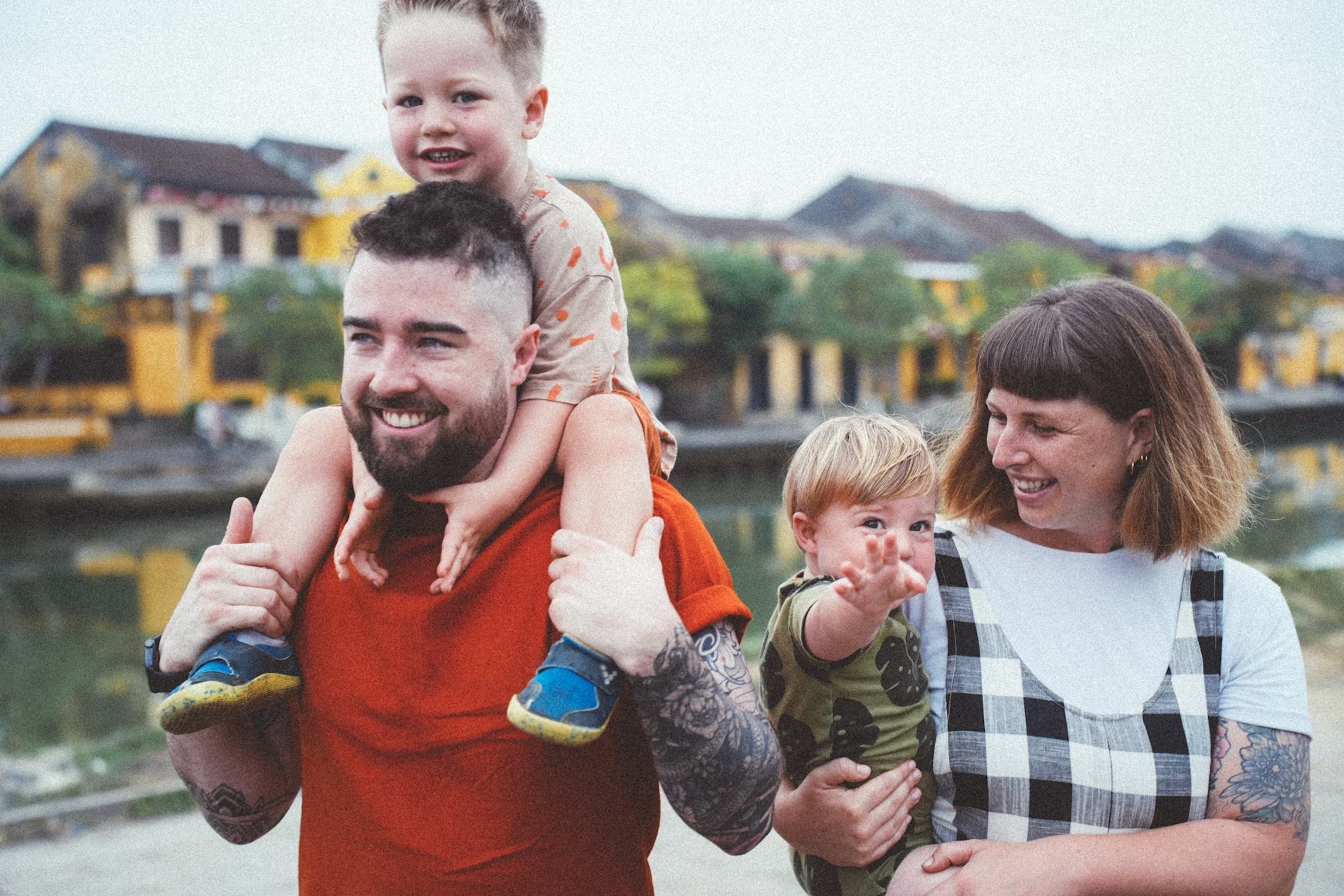
Single dad spending quality time with his child
Image Source: Unsplash

You’re not just surviving—you’re showing up, day in and day out. And that effort means more than you might realize. For many single dads, the pressure to “do it all” can bring quiet self-doubt or lead to unfair comparisons with other family setups.

Here’s the truth, though: raising a child on your own isn’t about brokenness – it’s about remarkable strength, endless love, and steadfast dedication. If you’ve ever worried that you’re not doing enough, take this as your reminder: you’re fathering, not failing.

The Rise of the Single Dad

Parenting norms are shifting, and single dads are increasingly part of that change. In the U.S., about 8% of households with minor children are led by single fathers—a striking jump from just over 1% in 1960. This data, compiled by the Pew Research Center, represents a ninefold growth, from fewer than 300,000 families to over 2.6 million. Currently, more than 1.5 million single fathers live full-time with their children, as noted in a recent study by LendingTree. These numbers do more than illustrate a trend – they speak to evolving roles and a genuine willingness to be present, despite challenges.

The Unique Challenges You Navigate

As a single dad, you’re balancing a range of responsibilities, often without the broader support couples might rely on. You’re the protector, day-to-day caregiver, carpool driver, and bedtime story reader—all at once. Many single fathers face hurdles like financial strain, limited childcare options, or the emotional toll of doing this mostly on their own. That’s a lot. Friends, neighbors, or local parenting groups can provide much-needed backup, confirming you’re not alone in the journey. Tapping into these resources can offer not just practical help, but also a sense of camaraderie.

Why Routine is Your Superpower

When you’re handling parenting solo, structure matters. Predictable routines—like setting mealtimes, bedtime rituals, and homework sessions—bring a sense of stability that kids crave. These routines also serve you: they cut down on chaos and free up mental energy. You might create a morning checklist to ensure your child’s lunch, backpack, and uniform are ready to go. Rituals like a bedtime story or nightly chat can deepen your emotional bond, reminding both of you that love and security exist amidst life’s demands.

Single father carrying child through daily life
Image Source: Unsplash

Your Parenting Makes a Difference

There’s a myth that children from single-parent households are fated for difficulties. While raising a child alone can present economic or developmental challenges, the real key is the quality of parenting. Kids thrive on consistent love, clear guidance, and emotional safety—exactly what you’re providing each day.

Even if finances are tight or schedules are hectic, your focused presence builds the emotional scaffolding they need to become confident adults. They won’t remember fancy toys nearly as much as the time you spent listening and caring.

5 Practical Tips to Keep You Moving Forward

  1. Stick to a Daily Routine: It might be simple things—like dinnertime at 6 pm or half an hour of reading together before bed—but it eases stress for everyone.
  2. Ask for Help: Whether it’s a neighbor offering a ride or a local church group with childcare resources, you don’t have to do this alone.
  3. Communicate with Your Child: A heart-to-heart can happen in the car, at dinner, or during a quick walk. Keeping that bond strong makes tough days more manageable.
  4. Connect with Other Single Dads: Seek out local meet-ups or online forums where experiences are shared freely. Sometimes, hearing “me too” can lift your spirits.
  5. Prioritize Self-Care: Even if it’s just 10 minutes to breathe quietly or watch something that makes you smile, your child benefits when you’re emotionally and mentally recharged.

Keep Your Eyes on What Matters Most

It’s easy to compare your life to a two-parent household and feel like you’re missing the mark. But as you pack lunches at dawn or juggle bedtime alone, you’re showing your child that family can look many ways and still be filled with love.

Fatherhood doesn’t demand perfection—just presence. If that means you sometimes rely on frozen pizza for dinner, so be it. Your child will recall the silly chats, the steady hand, the unwavering presence—those are the real cornerstones of a secure childhood.

You’re Not Alone—and You’re Doing Better Than You Think

It’s normal to wonder if anyone understands the unique weight you carry.

The answer? Absolutely. Your role is crucial, your challenges are valid, and your dedication is commendable. You’re modeling empathy, toughness, and flexibility all at once.

Every small step forward reminds the world that dad-led households work—and work well. Keep going, and let yourself believe: you’re more than enough.

Have you built routines or found support systems that ease single fatherhood? Let us know in the comments—your tips could uplift another dad walking the same path.

Read More:

  • Where to Find Financial Support for Single Dads?
  • 10 Reasons Why Single-Parent Households Are Under Scrutiny
Samantha Warren
Samantha

Samantha Warren is a holistic marketing strategist with 8+ years of experience partnering with startups, Fortune 500 companies, and everything in between. With an entrepreneurial mindset, she excels at shaping brand narratives through data-driven, creative content. When she’s not working, Samantha loves to travel and draws inspiration from her trips to Thailand, Spain, Costa Rica, and beyond.
Filed Under: Parenting Tagged With: child development, fatherhood, parenting advice, parenting support, single dads, single parenting

Can Yelling Ever Be “Justified” Parenting—or Is It Always Damage?

April 14, 2025 | Leave a Comment

Parent yelling while child looks upset
Image Source: Unsplash

We’ve all had those moments: the sippy cup spills (again), the laundry piles never seem to end, and someone’s late for school—before you know it, you’re yelling. In the whirlwind of parenthood, yelling can feel like an instant release or a moment of control.

But it begs a critical question: Can yelling at your child ever be justified, or does it always leave a mark?

According to most research, the consequences of yelling in parenting may be more serious than many realize.

Let’s dive into what yelling really does when it happens, whether it’s ever “okay,” and how you can make positive changes—even on your most stressful days.

1. Yelling Feels Natural—But That Doesn’t Make It Harmless

All parents lose their cool occasionally. Parenting is emotional, demanding, and chaotic. In moments of high stress, shouting might seem like a normal reaction. But studies indicate that yelling isn’t harmless, even if it’s rare or emotionally fueled.

In fact, the impact can be similar to physical discipline, causing fear, anxiety, depression, and behavioral problems in children. According to this resource from Humanium, yelling can lead to long-term emotional harm, regardless of how justified it felt in the moment.

2. Even “Protective Yelling” Can Have Consequences

You might think certain situations justify yelling—your child darts across a busy road, or nearly touches a hot stove. While raising your voice instinctively in emergencies can help keep them safe, it doesn’t negate the negative impact yelling can have. Even this so-called “protective yelling” can instill fear or stress if it becomes a regular parenting tactic. It’s a short-term solution that might reinforce immediate compliance but can also erode trust and emotional security in the long run.

3. Yelling Models Poor Emotional Regulation

Children learn to handle conflict and frustration largely from observing how we, as parents, respond. When we yell, we’re effectively showing them that yelling is an acceptable outlet for anger. This modeling can lead them to mimic the same aggression with siblings, peers, or even authority figures. As research in the Journal of Marriage and Family notes, consistent yelling teaches kids fear rather than reflection or problem-solving—an approach that harms their ability to self-regulate when they’re upset.

4. The Long-Term Effects Extend Beyond the Moment

Even if yelling yields compliance now, it often fosters resistance in the long run. Children who are regularly yelled at might become withdrawn, oppositional, or more aggressive themselves. Studies also show that repeated exposure to shouting can heighten a child’s risk of anxiety, depression, and other mental health struggles into adolescence and adulthood. According to research highlighted by the American Psychological Association, verbal aggression can fundamentally shift how a child’s brain processes stress.

Parent hugging child after a tough moment
Image Source: Unsplash

5. Love Doesn’t Cancel Out the Harm

Many parents will yell at times but also shower their kids with hugs and reassurance. While affection is invaluable, it doesn’t undo the emotional hurt caused by yelling. Children may start questioning their safety in the parent-child bond, fearing unexpected eruptions of anger. Emotional unpredictability can cultivate an environment of hypervigilance, leading kids to feel they must walk on eggshells. Consistency—both emotional and behavioral—is key to a secure attachment.

So, What Can You Do Instead?

If yelling has become a habit, it’s not too late to shift gears. Start by identifying triggers, such as tiredness, stress, or a specific time of day when everything feels overwhelming. Develop alternative strategies—maybe you take a quick breath or step out of the room before reacting. You could also try a calm but firm tone to get your child’s attention; remind them you’re upset without escalating volume. Positive discipline approaches encourage building routines, using natural consequences, and guiding emotional awareness, all of which help kids learn without fear.

Repair Is More Important Than Perfection

No one parents flawlessly, and slip-ups happen. If you do yell, a sincere apology—explaining you felt overwhelmed—can go a long way. It shows your child that grown-ups also have lessons to learn about self-control. It emphasizes accountability and reassures them that your relationship is grounded in respect and emotional safety, even when mistakes occur.

Balancing Love, Boundaries, and Composure

Ultimately, discipline should teach, not terrify. When big emotions come crashing, taking a moment to ground yourself can make all the difference. Teaching kids healthy emotional regulation means modeling it ourselves—showing that, yes, we get mad, but we can handle those feelings constructively. If you’ve been relying on yelling as a go-to, consider gradually incorporating calmer tactics. Over time, you’ll likely notice a more peaceful home environment and a stronger bond with your child.

Have you successfully moved away from yelling? Let us know which strategies helped you stay calm in the comments below. Sharing your experiences might guide another parent toward a more peaceful household.

Read More:

  • “Spanking A Child Has Its Place” (Here’s When It’s Okay)
  • When You Regret Yelling at Your Kids: What No One Talks About
Samantha Warren
Samantha

Samantha Warren is a holistic marketing strategist with 8+ years of experience partnering with startups, Fortune 500 companies, and everything in between. With an entrepreneurial mindset, she excels at shaping brand narratives through data-driven, creative content. When she’s not working, Samantha loves to travel and draws inspiration from her trips to Thailand, Spain, Costa Rica, and beyond.
Filed Under: Parenting Tagged With: child development, child safety, Parenting, parenting advice, parenting tips

Are We Raising a Generation of Emotionally Fragile Kids?

April 14, 2025 | Leave a Comment

Child sitting alone, looking emotionally overwhelmed
Image Source: Unsplash

The question can feel unsettling: “Have we become so protective that our children are more emotionally fragile than ever?” You’re not alone in noticing changes. Rising mental health concerns, different parenting norms, and a world filled with caution signs point to a shift.

But it’s not about blame—it’s about identifying how we can help kids develop the emotional strength to cope with life’s ups and downs. Below, we’ll look at why children might be more anxious or sensitive today and practical ways to foster healthier resilience.

1. Overprotection Can Undermine Resilience

We all want to keep our children safe. But in the quest to shield them from every possible setback, we can inadvertently limit their opportunities to face challenges head-on.

According to this in-depth analysis from The Happy Talent, many younger people show heightened sensitivity partly because they haven’t been given enough chances to handle adversity independently.

Struggles, big or small, help kids learn adaptability and problem-solving. Without these experiences, normal stressors may feel overwhelmingly large.

2. Risk Aversion Starts at Home

Remember those neighborhood adventures that shaped your own independence? Today, free play is increasingly replaced by structured, supervised activities.

As explained in this piece from Reason, parents often default to “safer” and more controlled settings, limiting kids’ exploration and risk assessment. While caution can prevent accidents, it can also limit children’s natural development of self-reliance.

Over time, they may be less prepared to handle disappointment, conflict, or challenges on their own—key ingredients for building emotional resilience.

3. Home Isn’t Just a Place—It’s an Emotional Training Ground

Children learn to handle feelings by observing how caregivers respond to them. When parents dismiss or shame big emotions, kids can internalize the idea that strong feelings are unwelcome. On the other hand, validating a child’s experience—while still setting limits—helps them learn to manage challenges without crumbling.

The family’s emotional climate is a major factor in whether kids develop healthy coping mechanisms. The more consistently parents model calm, empathetic responses, the more children internalize those patterns.

4. Anxiety Is More Than a Passing Phase

It’s no secret that mental health professionals see increased anxiety among today’s kids, often tied to external pressures like academic demands or social media comparisons. Part of this anxiety arises when kids aren’t allowed to practice independence or risk-taking in smaller, manageable ways.

With little experience facing normal stresses or minor failures, the big world can feel petrifying. Encouraging manageable challenges—like solo problem-solving or minor independence—can mitigate these fears before they escalate into full-blown anxiety.

5. Unscheduled Time Builds Stronger Kids

Constantly managed schedules mean children rarely steer their own play or negotiate their own friendships. This robs them of leadership, collaboration, and conflict-resolution practice. Even letting them be “bored” for a moment can spark creativity and confidence.

While structured activities are beneficial, a balance with unstructured time ensures kids learn to rely on themselves and their peer networks, rather than always waiting for adult direction. They discover the internal tools needed to handle real-life complexities.

Parent supporting child to build emotional resilience
Image Source: Unsplash

Growing Resilience in Your Home

Emotional fragility isn’t a life sentence; it’s a snapshot of where some kids are—often as a result of well-intentioned but overly protective environments. Thankfully, the solution isn’t dramatic. Start small by allowing your child to tackle everyday stressors instead of immediately intervening.

Give them ownership over projects, let them make mistakes, and then guide them through reflecting on what worked or didn’t. Offer reassurance without rescuing them from every hurdle. This measured approach helps kids see challenges not as threats but as learning moments that build self-confidence.

Being Present Without Overstepping

Ultimately, the goal is to support kids while still giving them room to grow. It’s a challenging dance: protect, but not stifle; encourage, but don’t micromanage. You won’t get it right every time, and that’s okay.

Parenting is about learning, too. Just remember that the best gift we can give is the courage to stand on their own, face discomfort, and emerge stronger. Because grit, perseverance, and empathy—those come from practicing life in all its imperfections, not from avoiding them.

Have you noticed signs of emotional fragility in your own kids, or found strategies to build resilience? Share your insights in the comments. Other parents may be searching for just the advice you have.

Read More

  • Bored No More: The 7 Best Travel Games for Endless Fun on the Go
  • 4 Easy and Affordable Ways to Boost Your Child’s Health
Samantha Warren
Samantha

Samantha Warren is a holistic marketing strategist with 8+ years of experience partnering with startups, Fortune 500 companies, and everything in between. With an entrepreneurial mindset, she excels at shaping brand narratives through data-driven, creative content. When she’s not working, Samantha loves to travel and draws inspiration from her trips to Thailand, Spain, Costa Rica, and beyond.

Filed Under: Parenting Tagged With: child development, emotional intelligence, emotionally fragile kids, Gen Z anxiety, overprotective parenting, parenting tips, resilience in children

Secondhand Smoke and Children: Hidden Risks Every Parent Should Know

April 14, 2025 | Leave a Comment

Child exposed to secondhand smoke
Image Source: Unsplash

We all want to protect our children—from small bumps and bruises to more invisible threats that don’t show up until much later. One of those largely unseen dangers is secondhand smoke.

Even if you’re not the one smoking, your child may still be exposed—and the effects are more serious than many realize. From heightened risks of asthma attacks to diseases that damage young lungs, the impact is real, widespread, and entirely preventable. Thankfully, you have the power to make changes that safeguard your child’s health for years to come.

The Health Risks Are Especially High for Kids

Children’s lungs are still developing, making them particularly vulnerable to the harmful chemicals in secondhand smoke. According to both the Centers for Disease Control and Prevention (CDC), exposure can increase the likelihood of sudden infant death syndrome (SIDS), severe respiratory infections, and more intense or frequent asthma flare-ups. Babies in smoking households often face higher hospitalization rates in their first year. Because kids can’t simply “move away” from a smoky area, even brief exposure can lead to long-term issues.

Asthma and Breathing Issues: Common, Preventable Outcomes

If your child frequently coughs or wakes up wheezing at night, secondhand smoke might be part of the problem. Research from the American Lung Association highlights that inhaling secondhand smoke both triggers asthma attacks and amplifies their severity. Even for children who haven’t been diagnosed with asthma, living around smoke can bring about wheezing, breathlessness, or chronic coughing. Reducing these triggers at home not only helps them breathe better now, but also cuts down on ER visits and missed school days down the road.

There Is No Safe Level of Exposure

Cracking a window or running a fan does not magically eliminate secondhand smoke. There is no safe level of exposure—tiny toxins cling to clothes, furniture, and even hair, remaining long after a cigarette is stubbed out. This “thirdhand smoke” still carries many of the same contaminants, so you can’t rely on smell alone to gauge safety. The only surefire way to shield your child is to keep any smoking entirely away from indoor areas and shared spaces.

Parent holding child in a smoke-free home
Image Source: Unsplash

Smoke-Free Homes Are Essential

Compromises like smoking in a single room or just outside the door can still let harmful particles drift back inside. Kids roam the house, so restricting smoking to “one area” often isn’t enough. The HealthyChildren.org resource emphasizes that only a fully smoke-free zone, particularly in your home and car, can effectively guard against lingering chemicals. If someone in the family or a regular visitor smokes, consider setting firm rules or designating a smoking spot far from living spaces. These steps can play a big role in preserving a clean-air environment for your child.

It Can Be Hard to Quit—But Reducing Exposure Is a Start

Kicking a tobacco habit isn’t simple—it often demands time, support, and multiple attempts. Yet each bit of progress matters, whether you’re the smoker or you’re encouraging a smoking friend or relative. Think about setting up wholly smoke-free “child zones” within your home, or encourage loved ones to smoke away from the house entirely.

While the best scenario is a total smoke-free lifestyle, any reduction in exposure means fewer toxins building up in the environment. Compassionate support—rather than shaming—often motivates real change in those trying to quit.

Building a Healthier Future, One Choice at a Time

Parenting is a balancing act of countless decisions, from bedtime routines to meal planning. Being mindful of secondhand smoke is yet another way to safeguard your child’s long-term health. Every step—asking guests not to smoke, thoroughly airing out clothes, or gently nudging a spouse to smoke outside—adds up.

These efforts establish a safe space where your child can breathe, sleep, and grow without invisible contaminants threatening their lungs. If you feel discouraged, remember you’re advocating for your family’s well-being—and that’s worth every ounce of effort.

Have you dealt with secondhand smoke issues in your household? Share how you tackled the challenge or found solutions in the comments—your story may help another parent on the same path.

Read More

  • 5 Natural Ways to Boost Your Immune System
  • 7 Positive Parenting Tips for Building Strong Bonds With Your Kids
Samantha Warren
Samantha

Samantha Warren is a holistic marketing strategist with 8+ years of experience partnering with startups, Fortune 500 companies, and everything in between. With an entrepreneurial mindset, she excels at shaping brand narratives through data-driven, creative content. When she’s not working, Samantha loves to travel and draws inspiration from her trips to Thailand, Spain, Costa Rica, and beyond.

Filed Under: Parenting Tagged With: asthma in children, child safety, family health, parenting tips, quit smoking, secondhand smoke, smoke-free home

If You Were Raised in the 80s or 90s, You’ll Relate to These Parenting Shifts

April 14, 2025 | Leave a Comment

Retro childhood items reflecting 80s and 90s parenting
Image Source: Unsplash

If you grew up in the 80s or 90s, there’s a good chance your childhood featured scraped knees, unsupervised bike rides until dusk, and entire afternoons lost in unstructured play. Fast-forward to the current era, and it’s a vastly different world of scheduled activities, child GPS trackers, and endless hand sanitizer.

While many of these shifts in parenting have arisen from good intentions—like boosting safety—they’ve also reshaped how children experience everyday life, and how we as parents manage our role. If you’re now raising kids but were once a “free-range” child, prepare to nod your head (or laugh) at these distinct changes in parenting culture.

1. We Went from “Come Home When the Streetlights Turn On” to Constant Check-Ins

In the 1980s, a hands-off approach allowed kids to roam neighborhoods and local parks with minimal supervision. This independence fostered resilience and self-reliance, aided by the strong sense that the neighborhood collectively watched over children.

By contrast, today’s approach involves more check-ins, phone trackers, and scheduled pickups—an often safety-driven strategy, yet one that might reduce spontaneous exploration. According to this article from Importikaah, modern parents juggle the tension between ensuring safety and giving children the autonomy we once took for granted.

2. Playdates Are Now on the Calendar—with Snacks and Supervision

If you grew up knocking on a neighbor’s door to ask, “Can Jamie come out and play?” you might be surprised how different it is now. Playdates often involve scheduled appointments, coordinated snacks, and watchful eyes. While this structure can ensure safety, it also reduces the organic friendship-building we experienced as kids.

Business Insider notes that this heightened organization and supervision gained traction in the 90s, making social interactions less “figure it out on your own” and more curated. Some might argue that today’s approach, while beneficial in certain ways, can hamper kids’ ability to navigate peer dynamics independently.

3. Parents Used to Hover Less—Now It’s Called Helicoptering

Older generations recall parents who allowed children to solve minor social and academic challenges on their own, often citing “You’ll work it out.” Nowadays, many parents feel compelled to oversee every detail of their child’s schedule, from double-checking homework to intervening in friend disputes.

While involvement isn’t inherently negative, LoveToKnow Parenting highlights how this evolution mirrors a more intense oversight of childhood experiences. The risk is that kids may grow up less prepared to handle adversity. Striking a balance—offering support without micromanaging—can yield resilience similar to that cultivated in the 80s and 90s.

Parent actively engaging with their child
Image Source: Unsplash

4. The Parenting Style Evolved—from Detached to More Engaged

The 80s parenting style could appear more detached at times, but by the 90s, parents began adopting a more authoritative (balanced) approach—warm but firm. This trend accelerated in the 2000s, leading to the “intensive parenting” we see today, where detail-oriented involvement is the norm. While we’re arguably better at emotional support, we also wrestle with over-scheduling and limited free play.

Consciously blending the best of both worlds—a supportive environment plus some structured freedom—might help children develop critical thinking and independence without feeling abandoned.

5. Risk-Taking Used to Be Normal—Now It’s Often Seen as Negligent

If you grew up riding in the back of a station wagon without seatbelts or playing with questionable toys like lawn darts, you know what “risky” looks like. We learned self-reliance and tested boundaries physically in ways that might horrify modern parents.

Today, child safety seats, protective helmets, and strict playground regulations are standard—an improvement in many respects, but they can also limit unstructured, slightly risky play that fosters resilience. Let Grow points out that while safety standards save lives, too much caution may curb children’s development of risk assessment skills.

Navigating Today While Remembering Yesterday

Parenting shifts remind us that every generation blends its own knowledge, concerns, and cultural influences. The digital era brings new tools and anxieties—yet many of us look back on the 80s and 90s with nostalgia for a less complicated, more free-form life.

That doesn’t mean going back to ignoring seatbelts or letting kids run wild; it means thoughtfully merging the best parts of our past—autonomy, curiosity, resilience—with modern safety and emotional awareness. Ultimately, good parenting is about adapting in ways that foster growth, not merely replicating old methods or embracing new ones blindly.

Have you integrated any “old-school” elements into your modern parenting? Share your experiences in the comments—others might find creative inspiration in your fusion of nostalgia and practicality.

Read More

  • Parenting the Second Time Around: 12 Reasons Your Parents Shouldn’t Be Raising Your Kids
  • Parenting Triggers Old Childhood Wounds—Here’s How to Recognize Yours
Samantha Warren
Samantha

Samantha Warren is a holistic marketing strategist with 8+ years of experience partnering with startups, Fortune 500 companies, and everything in between. With an entrepreneurial mindset, she excels at shaping brand narratives through data-driven, creative content. When she’s not working, Samantha loves to travel and draws inspiration from her trips to Thailand, Spain, Costa Rica, and beyond.

Filed Under: Parenting Tagged With: 80s parenting, 90s parenting, helicopter parenting, modern parenting, parenting evolution, parenting shifts, raising kids today

« Previous Page
Next Page »
  • Facebook
  • Pinterest
  • RSS
  • Twitter
Best Parenting Blogs

Most Popular

Baby Girl

12 “Grandma” Baby Names That Are Suddenly Cool Again

Evan Morgan
Baby

9 Baby Names That Sound Rare Without Being Hard to Spell

Evan Morgan
Target Store

Choking Incident Prompts Recall of 49,000 Target Gigglescape “Under the Sea” Popping Toys

Evan Morgan
Frustrated Girl

Why Some Students on the Spectrum Are Labeled With ODD

Evan Morgan
Coke Bottles

12 Things Kids Took to School in the ’70s That Would Never Be Allowed Today

Evan Morgan

All content on Kids Ain’t Cheap is for entertainment purposes only. By reading this blog, you agree that Kids Ain’t Cheap is not responsible for any actions taken after reading this blog. For the full disclaimer, see our privacy policy.

Please note that Kids Ain’t Cheap has financial relationships with some of the merchants mentioned here. Kids Ain’t Cheap is funded by banner advertising, commission sales and search optimization consulting.

Copyright © 2006–2026 | District Media | All Rights Reserved | Privacy Policy

Copyright © 2026 Runway Pro Theme by Viva la Violette