• Home
  • About Us
  • Toolkit
  • Archives
  • Advertise
  • Privacy Policy

Kids Ain't Cheap

But They Sure Are Worth It

  • Parenting
    • Baby Stuff
    • Books and Reading
      • Aesops Fables
      • Comic Books
    • Education
    • Family Time
    • Green Living
    • Growing Up
    • Healthy Living & Eating
    • Holidays
    • Parenting
    • Random Musings
    • Shopping
    • Stuff to Do
  • Money
  • Product Reviews
    • Books and Magazines
    • Discount Sites
    • Furniture
    • House Keeping
    • Reviews News
    • Toys and Games
  • Contact Us
  • Our Editorial Commitment
  • Search

The Red Flags Your Teen Might Be Hanging With the Wrong Crowd

April 14, 2025 | Leave a Comment

Teens partying at a festival, possibly in the wrong crowd
Image Source: Unsplash

It’s a tough moment for any parent, realizing your teen might be veering in a direction that feels unsettling. Perhaps you’ve picked up on new friends, changed music tastes, or a shift in how they speak to you.

Then come bigger, more alarming changes, leading you to wonder: “Are they hanging with the wrong crowd?”

Trusting your instincts matters, but having concrete signs to watch for can help you act sooner rather than later. Adolescence naturally includes some rebellion, but certain indicators point to a deeper, more troubling influence—one you shouldn’t ignore.

Don’t panic. You’re not alone, and you’re not powerless. With empathy, honesty, and decisive steps, you can guide your teen back onto a more positive path, preserving their well-being and your peace of mind.

1. Sudden Changes in Behavior or Appearance

One early warning sign that your teen may be involved with the wrong group is a noticeable shift in how they act or look.

Maybe a once-cheerful child is now perpetually irritable, or their fashion choices have drastically transformed overnight. These abrupt changes often reflect an attempt to fit in with peers who encourage unfamiliar habits and attitudes. According to this article from Next Step Youth Transport, persistent mood swings and neglect of basic hygiene are strong clues of negative peer influence.

Don’t hesitate to calmly bring it up—sometimes asking simple, open-ended questions can reveal more than you expect.

2. Abruptly Cutting Off Old Friends

It’s perfectly normal for teens to form new friendships. Yet a sudden, complete break from all former friends can signal deeper issues. Perhaps your teen is distancing themselves from positive influences who might question new behavior or discourage certain choices.

If your previously tight-knit group has been replaced by an entirely new circle your teen is cagey about, consider it a red flag. As Raising Teens Today explains, an abrupt friend shift often indicates your teen is gravitating toward a crowd you might not approve of—and they sense it.

3. Withdrawal from Family Life

Some independence is normal, but if your teen now routinely avoids family meals, stays in their room all the time, or disappears without explanation, that level of detachment can mean more than typical teenage privacy. While not all isolation is a sign of dire trouble, consistent withdrawal might reveal that your teen’s new friends (or their behaviors) clash with family values. They may retreat because deep down, they sense family members wouldn’t approve. Keep inviting them to participate—gently—and offer safe spaces to connect, like weekend brunch or low-pressure family outings.

Teen texting secretly, avoiding questions about plans.
Image Source: Unsplash

4. Lying or Being Evasive About Plans

Teens need and deserve some privacy, but when secrecy morphs into regular lying or consistently vague explanations, it’s time to check in more intentionally. Dishonesty about where they’re going or who they’re with can signal that something risky is happening. According to reports on teen behavior, frequent deceptions point to attempts to cover up peer activities they know you wouldn’t approve of, such as experimenting with substances or breaking curfew. Approach this calmly—escalating into anger can drive them further into secrecy.

5. Defensiveness Around New Friends

It’s typical for teens to get annoyed if you pry too much, but if your child becomes overly defensive every time you mention their new group, there might be more going on. This strong defensive stance could imply they’re hiding something or feel protective of peers who are influencing them negatively.

Remember that fear often underlies defensiveness; they may worry about losing new friendships or facing disappointment. If you suspect problematic behavior but can’t get them to open up, consider reaching out to a counselor or other trusted adult who can gently step in.

What You Can Do: Building Trust, Setting Boundaries

Not every shift in behavior is catastrophic—teens are naturally exploratory. But when these red flags show up together, it’s wise to take supportive, proactive steps. Instead of jumping straight into strict rules or harsh punishments, focus on honest conversations.

Cultivate an environment where your teen feels safe discussing challenges, peer pressure, or insecurities. Reinforce your love and willingness to listen, even if you disagree with their actions. Sometimes, professional guidance—like family therapy—can also help if your teen resists opening up at home.

Remember: While it’s easy to feel alarmed, your involvement and commitment can steer your teen back toward healthier influences. Be the person they can turn to, not the one they want to hide from.

Have you noticed these changes in your teen? Share in the comments how you’ve navigated this tricky terrain—your experience might be the exact guidance another parent needs.

Read More:

  • How to Let Go of Parental Guilt and Accept Imperfection
  • 5 Negative Techniques That Deter Communication with Your Teenager
Samantha Warren
Samantha

Samantha Warren is a holistic marketing strategist with 8+ years of experience partnering with startups, Fortune 500 companies, and everything in between. With an entrepreneurial mindset, she excels at shaping brand narratives through data-driven, creative content. When she’s not working, Samantha loves to travel and draws inspiration from her trips to Thailand, Spain, Costa Rica, and beyond.

Filed Under: Parenting Tagged With: adolescent development, family communication, parenting teens, Peer pressure, teen behavior, teen safety

7 Red Flags Your Child May Be Struggling (Even If They Say They’re Fine)

April 14, 2025 | Leave a Comment

Child looking down, showing signs of emotional struggle
Image Source: Unsplash

When your child says “I’m fine,” it can be tempting—and sometimes a relief—to accept it at face value. But as any parent or caregiver knows, kids don’t always have the language or the desire to reveal what’s really going on. Sometimes their inner struggles surface in more subtle ways long before they’re ready to discuss them.

Recognizing these early red flags can empower you to offer support before things escalate. From school avoidance to frequent physical complaints, here are seven signals your child may be quietly battling more than they let on—and steps you can take to help.

1. Persistent Irritability or Moodiness

Occasional bad days are normal for kids and teens. But a constant state of crankiness or emotional outbursts could indicate a deeper issue. Anxiety, depression, or chronic stress often hide behind irritability, especially in older children. According to Embark Behavioral Health, many adolescents dealing with hidden anxiety might act out more at home because they feel safest there. If your child was once easygoing but now seems angry or withdrawn, take it as a potential red flag rather than just “moodiness.”

2. Avoiding School or Falling Behind Academically

One of the most common early signs of emotional distress is trouble at school, whether that looks like skipping classes, refusing to get ready in the morning, or showing a noticeable dip in grades. While it’s natural for kids to complain about homework sometimes, persistent school avoidance or academic decline warrants a closer look. Issues like depression, anxiety, bullying, or unaddressed learning challenges may lurk beneath the surface. It’s a good time to talk to teachers, counselors, or coaches to see if they’ve noticed changes, too.

3. Shifts in Sleep Patterns

Sleep is crucial for a child’s mental and physical health. When that changes suddenly—whether it’s insomnia, excessive napping, or nighttime restlessness—it might be more than a phase. Sleep disturbances often go hand-in-hand with anxiety or depression. Try gently asking about how rested they feel in the mornings or if anything is keeping them awake. Limit screens before bed and introduce consistent routines to encourage a smoother wind-down. Parents point out that improving sleep hygiene can have a surprisingly positive effect on a child’s overall mood.

4. Complaints About Physical Aches with No Clear Cause

Kids naturally complain about tummy aches or headaches to dodge chores or school. But repeated, unexplained physical complaints can reflect emotional tension. Stress and worry often manifest in the body, especially when children can’t articulate what’s bothering them. If your child frequently mentions aches without a medical explanation, it may be time to check in about stress at school, friendships, or self-esteem. A gentle conversation or even a simple doctor’s visit to rule out anything physical can help you figure out if emotional distress is the real culprit.

Child picking at food, showing loss of appetite
Image Source: Unsplash

5. Significant Changes in Appetite

Has your child been eating noticeably more or less than usual? Such shifts in appetite, especially alongside mood changes, can point to emotional turmoil like depression or anxiety. Emotional eating or consistently skipping meals are signsthat something deeper might be going on. Keep an eye on their meal patterns, encourage regular family dinners, and be open to hearing what they have to say if they’re not hungry or are suddenly ravenous. Consistency in nutrition also gives you a daily chance to observe and connect.

6. Pulling Away from Friends and Family

Social withdrawal is one of the clearest indicators that a child may be struggling, even if they claim they’re fine. Maybe they no longer hang out with friends, or they’ve dropped interests they once loved. It doesn’t have to be drastic; a slow retreat from activities and relationships can still signal underlying issues like anxiety, low self-esteem, or depression. If you see these changes, gently encourage them to reach out to friends or join group activities. Meanwhile, maintain lines of communication at home without pressuring them too hard.

7. Destructive or Risky Behavior

When kids feel emotionally overwhelmed, they sometimes express it through boundary-pushing actions like aggression, vandalism, or sudden risk-taking (think dangerous stunts or experimenting with substances). These behaviors usually aren’t about “being bad.” Instead, they can be ways to cope with stress, sadness, or anger they can’t voice. Let them know they’re loved and safe, and consider talking to a mental health professional if the behaviors escalate. Quick intervention can help them find healthier ways to handle strong emotions.

What You Can Do When “I’m Fine” Isn’t the Full Story

Spotting signs your child is struggling doesn’t mean you’re failing—it means you’re paying close attention. Even if your child brushes you off, trust your instincts if you sense something is off. The sooner you acknowledge these red flags, the earlier you can help them navigate big feelings and stressful circumstances.

Don’t hesitate to reach out to school counselors, pediatricians, or mental health professionals for advice. Above all, remain a calm, consistent presence; let your child know they’re never alone, and it’s okay to talk about whatever they’re facing.

What subtle changes have you noticed in your child that made you think something deeper might be going on? Share your observations and experiences in the comments—other parents can learn from your story.

Read More

  • How Do You Teach Kids About Consent and Boundaries?
  • 6 Signs Your Child Is Struggling with Social Anxiety
Samantha Warren
Samantha

Samantha Warren is a holistic marketing strategist with 8+ years of experience partnering with startups, Fortune 500 companies, and everything in between. With an entrepreneurial mindset, she excels at shaping brand narratives through data-driven, creative content. When she’s not working, Samantha loves to travel and draws inspiration from her trips to Thailand, Spain, Costa Rica, and beyond.

Filed Under: Parenting Tagged With: behavioral changes, child mental health, emotional wellness, parenting advice, parenting tips, red flags in behavior, teen anxiety

5 Things Mothers Regret Not Teaching Their Sons

April 14, 2025 | Leave a Comment

Mother and son sharing a thoughtful moment
Image Source: Unsplash

No mother plans to leave important life lessons untaught, but parenthood often speeds by – one day you have a toddler, the next you’re looking at a teen who’s always on his phone. It’s easy to look back and ponder what could have been done differently. Which moments ended up carrying more weight than you expected? These five common regrets, especially relevant for moms raising boys, can guide you toward more intentional choices that will serve your son well, both now and into the future.

1. Not Limiting Screen Time and Teaching Responsibility

In today’s digital world, it’s all too simple for screens to dominate. Many mothers wish they had established firmer boundaries earlier, rather than battling deeply ingrained tech habits in the teen years. Without clear limits, screens can eat into valuable real-world learning – chores, social skills, responsibility.

Parents often regret not teaching kids the balance between digital engagement and practical life skills early on. Whether it’s controlling screen hours or ensuring your son completes tasks independently, these lessons set the stage for self-discipline and future success.

2. Not Spending Enough Quality Time Together

Time is precious, and it’s easy to assume you’ll have more “later.” But one of the most common parenting regrets is not making room for genuine bonding when children are younger. Sons, in particular, thrive on real engagement – tossing a ball around, sharing a playful board game, or simply chatting during car rides. Those simple connections shape a child’s emotional framework more than we often realize. Making the effort to connect, even for a few moments each day, can reinforce your son’s sense of belonging and security.

3. Not Helping Him Build Emotional Resilience

As parents, we want to shield kids from every hurt – but completely insulating them can hold back their emotional growth. Many mothers later regret swooping in too quickly to fix issues rather than teaching sons to cope and adapt. Encouraging a child to navigate setbacks – failing a test, losing a game, handling conflict – fosters confidence and resilience. It’s about empowering your son to face obstacles head-on, teaching him that challenges aren’t roadblocks but opportunities to learn and grow.

Mother and son sitting apart, not engaging in conversation
Image Source: Unsplash

4. Not Creating Space for Meaningful Conversations

It’s surprisingly easy to float on surface-level talk. Days get busy, and teens can be withdrawn. But numerous parents look back and wish they’d carved out intentional time to discuss deeper topics, or just to truly listen. Genuine, two-way dialogue helps a son feel acknowledged and supported as he navigates everything from friendships to personal doubts. By asking open-ended questions and really tuning in – without judgment or constant advice – you keep the door open for honest communication.

5. Not Being Fully Present When It Mattered Most

Finally, nothing lingers in hindsight like realizing you were physically there but mentally checked out during key moments. Whether that’s scrolling through your phone at the dinner table or half-listening to stories about his day, these small disconnects add up. Sons learn attentiveness and genuine affection by observing it in action. Making an effort to put devices aside and offer undivided attention during pivotal routines – bedtime chats, weekend outings, etc. – can strengthen trust and convey lasting love.

Every Day Is Another Chance

The good news is, it’s never too late to teach your child something that matters. Whether your son is still young or already hitting adolescence, meaningful lessons still resonate when shared kindly and consistently. Reflecting on parenting regrets can guide you, rather than define you. Use these insights to shape new intentions for today and tomorrow.

You don’t need to achieve perfection – just keep striving to be present, supportive, and proactive in your son’s life. After all, those choices can pave the way for him to grow into the empathetic, grounded adult you believe he can be.

Have a life lesson you’re glad you instilled in your son – or wish you had done sooner? Share it in the comments below!

Read More

  • How to Budget for Home Repairs as a Single Mother
  • 6 Moments Parents Regret Missing (But Don’t Talk About)
Samantha Warren
Samantha

Samantha Warren is a holistic marketing strategist with 8+ years of experience partnering with startups, Fortune 500 companies, and everything in between. With an entrepreneurial mindset, she excels at shaping brand narratives through data-driven, creative content. When she’s not working, Samantha loves to travel and draws inspiration from her trips to Thailand, Spain, Costa Rica, and beyond.

Filed Under: Parenting Tagged With: emotional resilience, life lessons for sons, parenting regrets, quality time with kids, raising boys, teaching responsibility

10 Questions to Ask Each Other Before Marriage

April 14, 2025 | Leave a Comment

Couple having a serious conversation before marriage
Image Source: Unsplash

Thinking About Forever? Start with These 10 Conversations:

Before you say “I do,” it’s crucial to ask yourselves: Are we truly ready for life together? Marriage isn’t simply a wedding day or a shared last name—it’s a partnership that fuses your values, ambitions, emotions, and day-to-day routines. Too often, couples skip over tough conversations in the euphoria of being in love. While love is foundational, it can’t be the only ingredient for a thriving union. These 10 questions to ask before marriage help you step into a shared life with eyes—and hearts—open.

1. Is Our Relationship Enough as It Is Today?

Ask yourselves if the relationship you have right now—free of future what-ifs—is the one you’d want to commit to indefinitely. This doesn’t mean you shouldn’t grow, but your bond should already exhibit mutual trust, joy, and stability. As some marriage experts explain, people sometimes marry for “potential,” hoping their partner will transform. It’s wiser to embrace a union that already feels steadfast, capable of weathering future changes together.

2. Do We Want to Have Children, and How Would We Raise Them?

Children aren’t just a yes or no topic; discuss the when, how many, and the style of parenting each of you envisions. Beyond that, clarify discipline methods, educational preferences, and overall values you’d like to instill. According to family counselors, the closer you align on parenting principles, the more smoothly you’ll navigate major decisions down the line. Don’t wait until pregnancy to find out you disagree on fundamental issues.

3. How Do We Each Handle Money—and How Will We Handle It Together?

Money can spark marital tension faster than many realize. Are you a cautious saver while your partner is more carefree with spending? Does either of you carry debt, and if so, how will you manage it jointly? Talk openly about budgeting, long-term savings, and daily financial habits. Couples with transparent, shared financial goals are less prone to the stress and conflict that hidden or mismatched money mindsets can bring.

4. How Do We Communicate—Especially When Things Get Tough?

Healthy relationships face conflict; it’s how you tackle it that makes the difference. Do you both tend to shut down, or does one withdraw while the other pushes forward? Understanding your conflict styles can safeguard you from deeper wounds. Couples who develop respectful, consistent communication strategies—even in heated moments—have a higher chance of long-term harmony.

5. What Does Marriage Mean to Each of Us?

Marriage can represent different hopes or expectations. For one partner, it might be about building a strong family unit; for the other, a tangible commitment to emotional intimacy. Delve into what you each want from marriage, along with any concerns or fears you hold. Are you each comfortable with certain roles in the home or around finances? Clarity in these areas helps establish a stable foundation.

Couple discussing how they handle stress together
Image Source: Unsplash

6. How Do We Handle Stress—and Can We Support Each Other Effectively?

Life doesn’t slow down after you exchange vows. Job pressures, health setbacks, family tragedies—they’re part of the journey. Talk about how each of you typically reacts to stress. Some people need solitude to decompress; others crave reassurance. Knowing what form of support is most helpful for each partner can help you unite in facing challenges instead of drifting apart.

7. What Role Will Extended Family Play in Our Life?

Marriage isn’t just two people joining—extended families enter the mix, too. Discuss how frequently you’d like to see parents or siblings, holiday traditions, and how to navigate conflicting viewpoints among relatives. If you’re from contrasting religious or cultural backgrounds, dig deeper into how you’ll blend these influences. Family can be a tremendous blessing, but setting boundaries early and gently can prevent disputes or hurt feelings later.

8. Do We Share Similar Habits or Routines That Matter to Us?

Think about everyday life—weekend plans, household chores, bedtime schedules, or how much social activity you prefer. Harmony often arises when a couple’s daily rhythms align. Of course, you don’t need to be identical in all things. Meeting in the middle or taking turns can keep household friction low, ensuring each partner feels respected.

9. How Will We Nurture Our Relationship Over Time?

Marriage thrives on intentional effort. Consider how you’ll safeguard date nights, regular conversations, or shared hobbies—particularly when kids or work intensify. Cultivating your bond isn’t “extra,” it’s essential. Consistent investment in your relationship fosters a strong emotional backbone for weathering life’s storms.

10. Do We Truly Trust and Respect Each Other—Even When We Disagree?

Misunderstandings and differences are inevitable, but do they erode or reinforce your trust? Respect means giving each other room to think, feel, and occasionally change. If your fights remain fair, with an emphasis on resolving rather than injuring, that’s a good sign. True trust is the anchor that keeps your marriage steady, even in turbulent seas.

Laying the Foundation for a Lasting Union

Asking these questions before marriage isn’t a sign of doubt—it’s a sign of profound respect and care for your partner and your future life together. Addressing potential friction points early can pave the way for a more secure, transparent partnership.

After all, love is a beautiful start, but mutual understanding, shared goals, and open conversation keep that love flourishing. Which question do you see as most crucial?

Share your thoughts in the comments; discussing them can help another couple, too.

Read More

  • The Ultimate First Year Baby Budget Guide: Affordable Must-Haves for New Parents on a Tight Budget
  • How We Plan To Financially Afford More Children
Samantha Warren
Samantha

Samantha Warren is a holistic marketing strategist with 8+ years of experience partnering with startups, Fortune 500 companies, and everything in between. With an entrepreneurial mindset, she excels at shaping brand narratives through data-driven, creative content. When she’s not working, Samantha loves to travel and draws inspiration from her trips to Thailand, Spain, Costa Rica, and beyond.

Filed Under: Parenting Tagged With: financial planning for couples, marriage advice, parenting and marriage, questions to ask before marriage, relationship communication

Yes, I Love My Kids—But I Miss Who I Was Before I Became a Parent

April 12, 2025 | Leave a Comment

Mother reflecting on life before parenting
Image Source: Unsplash

Parenthood is life-changing, but that doesn’t mean it’s easy to say goodbye to who you were before children came along. Maybe you miss sleeping in, impromptu outings, or just the luxury of a peaceful meal where no one’s demanding more ketchup.

And then there are your deeper parts: your professional drive, creative passions, social connections. These are more than just fleeting preferences – they’re core elements of who you are. Feeling nostalgia or even a sense of loss for your pre-parent identity doesn’t make you a bad mom or dad – it makes you human.

Let’s talk about why it’s perfectly okay to both love your children wholeheartedly and miss the version of yourself that existed before parenthood redefined your life

The Shift from “Me” to “Mom” (or Dad)

Becoming a parent can feel like a seismic shift. You’re no longer who you once were; you’re now someone’s entire world, and that changes your focus, your schedule, and even how you see yourself. Research confirms that parental identity is distinct—it isn’t just another role but can reshape your entire sense of self. According to Zero to Three’s articles on parental mental health, parents commonly experience internal conflicts as they juggle new responsibilities and feelings.

It’s natural to oscillate between moments of pride and moments of loss. Recognizing this tug-of-war can help you approach your changing identity with more kindness toward yourself.

Recognizing the Parts of You That Feel “Missing”

It’s not only about missing late-night adventures or Saturday brunches with friends. You might yearn for the elements of identity that gave you purpose or excitement—like your art practice, your career ambitions, or your travel bucket list.

While parenthood offers emotional rewards beyond measure, it’s normal to feel that some parts of “old you” got lost in the shuffle. A study published in the journal Frontiers in Psychology found that a strong parental identity can coexist with feelings of grief over lost personal freedoms.

Making a list of the things you miss can clarify which ones you might reclaim—even in small ways—so you don’t lose sight of what makes you, you.

The Role of Your Parenting Style in Identity Development

Interestingly, how you parent can also shape your own self-concept. Approaches that encourage autonomy and openness, for instance, can foster growth not just in your child, but in you as well. On the flip side, methods heavy in control or conditional approval may limit both your child’s and your own emotional well-being. Realizing that your parenting style can support or stifle your evolving identity might inspire you to adopt a more balanced, empathetic approach—one that respects your child’s individuality and your own.

Mental Health and the Parental Identity Equation

Parenthood is intense. Hitching your entire identity to being “Mom” or “Dad” can set you up for emotional swings when things go off track. However, experts note that intentionally committing to parenthood while maintaining self-awareness leads to healthier emotional outcomes. This balance often involves self-care – whether that’s talking to a therapist, carving out “me time,” or joining a supportive community of parents. Don’t let guilt convince you that focusing on your mental health is selfish; it’s vital to your well-being and family harmony.

The Ripple Effect: How Your Identity Influences Your Child

Your self-perception affects your child more than you might think. Parents who feel secure in their multidimensional identity typically model confidence and emotional health, which rubs off on their kids. By showing them that it’s normal to miss parts of yourself while embracing new responsibilities, you teach resilience and authenticity. Children learn that love for family and love for personal growth aren’t mutually exclusive.

So every time you honor who you are—whether it’s indulging a hobby or standing firm in your boundaries—you’re helping your child develop a well-rounded sense of self, too.

Woman reflecting to reconnect with her past self.
Image Source: Unsplash

Starting Small: How to Reconnect with the Old You

You don’t need sweeping life changes to rediscover those lost pieces. Sometimes, tiny adjustments make a big difference:

  1. Mini-Rituals: Dedicate 15 minutes daily to read a book, paint, or revisit a creative interest.
  2. Ask for Help: Talk openly with your partner or close friends about needing some alone time—even an hour can recharge you.
  3. Blend Old and New: Combine your pre-parent self with parenting life. If you loved concerts, try a family-friendly outdoor show. If you miss cooking gourmet meals, invite your child to help chop veggies (safely!)

Practice Boundaries: It’s okay to say no sometimes—to social events, extra commitments, or even certain parenting “obligations” that weigh you down.

Rediscovering the Whole You Is a Form of Love

Feeling a twinge (or more) of loss for your pre-parent life doesn’t cancel out your devotion to your child—it underscores your humanity. Parenting demands a lot, but you shouldn’t have to lose the essence of who you are. By prioritizing all parts of yourself—past passions, present responsibilities, future dreams—you model authenticity and self-respect for your kids. And let’s face it: a parent who feels grounded and fulfilled is far better equipped to raise a resilient, confident child.

Do you find yourself missing the old you? Share how you balance your identity with parenting in the comments below. We’re all in this together, learning to love our families while still honoring the person we’ve always been.

Read More

  • Warning Signs That Your Teen Might Be Struggling With Mental Health Issues
  • 3 Mental Health Tips for New Moms
Samantha Warren
Samantha

Samantha Warren is a holistic marketing strategist with 8+ years of experience partnering with startups, Fortune 500 companies, and everything in between. With an entrepreneurial mindset, she excels at shaping brand narratives through data-driven, creative content. When she’s not working, Samantha loves to travel and draws inspiration from her trips to Thailand, Spain, Costa Rica, and beyond.

Filed Under: Parenting Tagged With: emotional well-being, fatherhood, Motherhood, parental identity, parenting identity loss, parenting mental health, self-care for parents

Can You Afford to Be a Stay-at-Home Parent? Here’s a Simple Calculator

April 12, 2025 | Leave a Comment

stay-at-home parent affordability.
Image Source: Unsplash

Is becoming a stay-at-home parent a dream or a financially sound decision? For many families, this question brings a mix of hope, uncertainty, and some very real math. Staying home means more time with your child—but it also often means saying goodbye to a second income. So how do you know if your family can afford it? The good news is, you don’t have to guess—there are tools and methods that can help you make an informed choice that balances both your heart and your wallet.

The Hidden Value of a Stay-at-Home Parent’s Work

It’s easy to undervalue the work stay-at-home parents do, especially since it’s unpaid. However, assigning a dollar amount to those daily tasks can be eye-opening. Think about the cost of hiring out childcare, cooking, and cleaning. For instance, if you spend eight hours a day on childcare at $15/hour, two hours on cooking at $12/hour, and two hours on cleaning at $10/hour, that could total roughly $164 per day. A stay-at-home parent salary calculator can help you see the hidden value of your labor in clear numbers.

Factoring the Family Budget into the Decision

Switching to a single income is more than just good intentions; it requires a deep dive into your current finances. That means tracking monthly spending, projecting how it’ll change with one salary, and identifying potential budget cuts or savings. Tools like Fox Communities Credit Union’s calculator let families crunch the real numbers before taking the leap. Rather than discouraging you, these insights can help reduce stress by showing exactly how (and where) you might need to adjust.

Know What “Enough” Looks Like in Your Area

Cost of living varies dramatically by region, which affects how far one income goes. A decision that’s feasible in a small Midwestern town could be a strain in a high-cost coastal city. For a personalized snapshot, you can refer to the Economic Policy Institute’s family budget calculator to see what a modest standard of living looks like in your location. Comparing your projected one-income finances with these local estimates can clarify what’s truly doable—and what might require rethinking.

Person reviewing finances before a big decision
Image Source: Unsplash

Check Your Financial Cushion Before Taking the Leap

Before transitioning to a one-income setup, you’ll want a solid buffer. That means assessing your emergency fund—how many months of expenses could you cover if something unexpected arises? Using a stay-at-home mom cushion calculator (or a simple spreadsheet) can show you if you’re ready or if you’d benefit from saving more first. A sturdy safety net can turn a nerve-wracking guess into a confident plan, letting you focus on parenting instead of panicking over every expense.

Use the Right Tools to Guide Your Decision

No single formula works for every family, but helpful budgeting tools—like the stay-at-home parent calculator—allow you to input your income, savings, and monthly costs. These resources simplify decision-making by putting real numbers on paper. They’re about peace of mind, not just mathematics. Whether you realize you can afford it comfortably or need more planning time, clarity can make all the difference.

When Numbers Meet Nurture: Making the Best Decision for You

Whether or not you become a stay-at-home parent isn’t purely a financial question; it’s also about your values, lifestyle, and family dynamics. But understanding the numbers means you’re choosing from a place of empowerment, not guesswork.

Many families find their own blend—some parents go part-time, work from home, or get creative with childcare solutions to manage expenses. Every situation is unique. The key is making a choice that aligns with both your family’s budget and your personal sense of well-being.

Have you weighed the costs of becoming a stay-at-home parent? Share your thoughts or any budgeting tips that helped you in the comments—we’d love to hear your experiences.

Read More

  • 9 Baby Names You’ve Never Heard Before, But Should Consider
  • Doctors Swear by These 7 Baby Sleep Hacks—And They Actually Work
Samantha Warren
Samantha

Samantha Warren is a holistic marketing strategist with 8+ years of experience partnering with startups, Fortune 500 companies, and everything in between. With an entrepreneurial mindset, she excels at shaping brand narratives through data-driven, creative content. When she’s not working, Samantha loves to travel and draws inspiration from her trips to Thailand, Spain, Costa Rica, and beyond.

Filed Under: Parenting Tagged With: budgeting tools, childcare costs, Family Budget, financial planning, one-income family, parental decisions, parenting finances, stay-at-home parent

Do Stay-at-Home Partners Deserve a “Salary?” The Debate Is Heating Up

April 12, 2025 | Leave a Comment

at home partners receiving a salary.
Image Source: Unsplash

When a loved one chooses to stay home and raise the kids, most families view it as selfless, sensible, or even financially strategic. But here’s the reality check: despite organizing schedules, meals, emotional needs, and sometimes schooling, stay-at-home parents rarely get recognized in economic terms.

Recently, the question sparking conversations in family and finance circles is whether a stay-at-home parent should receive a formal “salary.” Between the rising costs of childcare and shifting views on modern parenting, the conversation isn’t just theoretical anymore. And like most parenting debates, there’s no single right answer.

What Is the Work of a Stay-at-Home Parent Actually Worth?

Let’s talk actual numbers. According to Investopedia, the combined tasks of a stay-at-home parent—cooking, cleaning, childcare, scheduling, etc.—would command roughly $205,000 a year.

Of course, that’s based on standard hours and rates, and many parents work well beyond a typical 9-to-5. While not everyone is angling for a literal paycheck, this figure reframes the conversation: the role holds significant economic value. Recognizing it can be a game-changer, especially in households where one partner feels financially invisible.

Unpaid Labor Has Global Impact, Yet Remains Undervalued

This issue isn’t just limited to family life—it resonates worldwide. The International Labour Organization (ILO) reports that women globally carry a disproportionate share of unpaid domestic labor. When these tasks aren’t acknowledged economically, it leads to long-term disparities in retirement savings, financial security, and self-esteem. In simpler terms, ignoring the monetary worth of stay-at-home parenting perpetuates a system that undervalues one partner’s effort—and it’s usually moms who feel the brunt of it.

Economic Realities Influence Who Stays Home—and Why

Staying home may look like a “luxury,” but data paints a complex picture. Studies show that among mothers whose partners earn $250,000 or more, around 46% stay home. According to the same research, 35% of mothers with spouses making under $25,000 also end up out of the workforce, often by necessity. Interestingly, mothers partnered with men earning around the national median (~$60,000) stay home less often, at about 25%.

These numbers hint that household income matters a lot, but so do personal values, childcare costs, and access to flexible work. It’s rarely a one-dimensional choice.

stay at home salary
Image Source: Unsplash

Should a Salary Be Symbolic—or Literal?

Some families opt for a symbolic or partial “salary” for the stay-at-home parent—an acknowledgment of their labor. Critics warn that formalizing it could create power dynamics if handled poorly. A monthly or weekly stipend might help the non-earning partner feel valued, but it can also spark tension if one spouse sees their “paid job” as superior. The aim isn’t to pit roles against each other, but to cultivate financial fairness. Whether that’s a dedicated allowance, a fully shared bank account, or explicit conversations about each partner’s contributions, real equity goes beyond the dollar figure.

Open Financial Communication Can Prevent Resentment

Money touches emotions, especially when only one partner earns it. Many stay-at-home parents report feeling uncomfortable with an “allowance” unless it’s agreed upon in a framework of shared responsibility. Being transparent with budgets, short- and long-term savings, and personal spending helps both spouses feel equally respected. This clarity affirms the stay-at-home partner’s work isn’t just a convenience; it’s a structural part of the household’s well-being.

Some couples turn to joint budgeting apps or recurring family money check-ins to make sure each voice is heard and valued.

A Fresh Way to Measure Fairness at Home

So, do stay-at-home parents “deserve” a salary? It depends on what “fairness” means to your family. Whether you offer a monthly stipend, share all finances equally, or simply make a point to articulate gratitude for daily tasks, the underlying goal is mutual respect. Instead of focusing on whether you “should” pay a parent, ask if everyone’s feeling seen, supported, and secure. Parenthood is already tough without hidden resentment or an unlevel financial playing field—and open conversations about resources and recognition are a significant step toward preventing both.

What’s your perspective on stay-at-home parent compensation? Let us know in the comments—your family’s insights could help others find their own version of balance.

Read More

  • Should You Use a Spreadsheet to Keep Track of Bills?
  • 6 Things a Husband Can Do If His Spouse Won’t Enforce Rules for the Kids
Samantha Warren
Samantha

Samantha Warren is a holistic marketing strategist with 8+ years of experience partnering with startups, Fortune 500 companies, and everything in between. With an entrepreneurial mindset, she excels at shaping brand narratives through data-driven, creative content. When she’s not working, Samantha loves to travel and draws inspiration from her trips to Thailand, Spain, Costa Rica, and beyond.

Filed Under: Parenting Tagged With: financial fairness, household equality, parenting finances, stay-at-home parent salary, stay-at-home spouse, unpaid labor

7 Great Kids Names for the Boy Who Might Become President

April 12, 2025 | Leave a Comment

Young boy with names fit for a future president
Image Source: Unsplash

Is your baby boy destined for the Oval Office?

Naming your child is no small task. It’s the first gift you give them—and for some parents, that gift comes with a hint of big dreams (yes, even big enough for the White House). Choosing a name that evokes leadership, honor, and legacy feels right when you’re picturing a future world-changer.

Whether you’re inspired by historical figures or simply drawn to names that exude power, these seven have the potential to suit any future leader. Each one is steeped in history, carried by influential figures, and has the gravitas worthy of any world stage—even a presidential one.

1. Abraham

Abraham is more than just a classic—it’s a name shaped by history. Meaning “Father of multitudes” in Hebrew, it’s famously tied to Abraham Lincoln, one of America’s most revered presidents.

Lincoln’s leadership during a period of deep national crisis and his role in ending slavery make the name a symbol of moral courage. Consider reading more about his life and impact on democracy at The White House’s official page on Abraham Lincoln for inspiration.

Why it resonates: If you want a name that speaks to steadfast principles and compassion, Abraham is a timeless choice.

2. Alberto

A name with international flavor, Alberto comes from the Italian and Spanish tradition, meaning “noble, bright, and famous.” It connects to leaders like Argentine President Alberto Fernández, renowned for his academic background and pragmatic politics. Yet Alberto also evokes brilliance beyond politics—think of Albert Einstein, the epitome of intellect. If you imagine a boy who’s both brainy and charismatic, Alberto fits that vision of leadership.

Why it resonates: Alberto balances dignified elegance with a global vibe—perfect for parents who value both wisdom and warmth.

3. Barack

Distinctive and powerful, Barack in Swahili can mean “lightning” or “blessing.” The name soared into the international spotlight thanks to Barack Obama, the first African American president of the United States. His tenure highlighted themes of perseverance, unity, and hope during times of global uncertainty. For anyone drawn to a name that reflects societal change and personal resilience, Barack brings a certain magic. You can delve deeper into Obama’s story at History.com’s biography to see how his path shaped modern American politics.

Why it resonates: Barack boldly stands for transformation and aspiration—great qualities for any future leader.

4. Lyndon

Though somewhat rare these days, Lyndon deserves a second glance. Associated with President Lyndon B. Johnson, it speaks to an era of sweeping reforms and civil rights progress. The name itself means “hill with lime trees,” lending a gentler, grounded feel. Johnson’s presidency reminds us that leadership can be messy but also deeply consequential—especially when championing social change.

Why it resonates: If you like names that balance an earthy softness with significant historical heft, Lyndon might be the hidden gem you’re after.

5. Kennedy

Originally a Gaelic surname meaning “chief with helmet,” Kennedy brings a protective, warrior-like aura. It instantly calls to mind John F. Kennedy, known for his youthful energy, charisma, and forward-thinking ideals that gave rise to “Camelot.” Kennedy is also gender-neutral, working seamlessly as a boy’s or girl’s name. If your family appreciates both grace and grit, this name can stand for elegant leadership and visionary ideas.

Why it resonates: Kennedy carries a sense of evolution—mixing tradition with a flair for progress.

6. Franklin

Franklin calls to mind both Franklin D. Roosevelt and Benjamin Franklin, uniting two strikingly different yet influential figures in American history. Roosevelt guided the U.S. through the Great Depression and World War II with bold, reformist policies; Benjamin Franklin, a Founding Father, combined intellectual curiosity with public service. The name Franklin offers an academic, thoughtful dimension—ideal for a future statesman or innovator.

Why it resonates: Franklin merges academic depth and hands-on practicality, reflecting the best of both visionary and doer.

7. Theodore

Theodore, from Greek roots, means “gift of God.” It evokes images of Theodore Roosevelt, an exuberant president famous for championing conservation and progressive reforms. Nicknamed “Teddy,” it can be both approachable and commanding. Roosevelt’s legacy includes pioneering efforts in national parks and global diplomacy. This name suits a child who might pair heart with heroism—and maybe mix a bit of boldness with benevolence.

Why it resonates: Theodore encompasses gentle power, turning big ideas into tangible action.

Boy symbolizing future leadership and potential
Image Source: Unsplash

A Name That Speaks to Possibility

Choosing a presidential baby name isn’t about adding pressure—it’s about planting seeds of aspiration. Each of these names carries a legacy of leadership, embodying qualities like courage, intellect, or tenacity. They’re reminders that every influential figure was once a child, shaped by love, curiosity, and a name chosen with care. Whether your little one pursues public office or simply becomes a guiding light in their own community, a name steeped in history can feel like a sturdy stepping stone.

Have you considered a name with presidential flair for your baby boy? Share your picks in the comments below—we’d love to hear your take on choosing a moniker that’s poised for big dreams.

Read More

  • We’re Trying to Raise Independent Kids
  • 3 Life Skills Every Child Needs To Learn
Samantha Warren
Samantha

Samantha Warren is a holistic marketing strategist with 8+ years of experience partnering with startups, Fortune 500 companies, and everything in between. With an entrepreneurial mindset, she excels at shaping brand narratives through data-driven, creative content. When she’s not working, Samantha loves to travel and draws inspiration from her trips to Thailand, Spain, Costa Rica, and beyond.

Filed Under: Parenting Tagged With: baby boy names, leadership names for boys, Parenting, presidential baby names, strong names for boys

How To Get Free Clothes For Your Child When Money Is Tight

April 12, 2025 | Leave a Comment

Parent picking out free clothes for a child
Image Source: Unsplash

When clothing feels out of reach, real help is closer than you think. Kids grow fast. One minute their jeans fit perfectly; the next, you’re wondering how their ankles are sticking out. If finances are stretched thin, it can feel daunting—even overwhelming. You want your child to have what they need to feel comfortable and confident, without draining your wallet. The good news? You’re not alone, and there are judgment-free ways to get free clothes for your child.

Below are five compassionate options families are using right now—no shame, no strings, just genuine support when you need it most.

1. Turn to Local Charities and Nonprofits

Organizations like the Salvation Army and Goodwill get it—parenting is tough, especially on a tight budget. Many run clothing closets or seasonal drives specifically to help kids who need items for back-to-school or winter weather. These programs offer gently used clothing, often in great condition, at no charge to qualifying families. If you’re unsure where to start, call your local community center or reach out to a nearby church. These resources exist to lend a hand during challenging seasons, providing everything from coats to baby onesies.

2. Join or Start a Community Clothing Swap

Clothing swaps are a win-win for everyone. You bring in clothes your child has outgrown and leave with sizes that fit—entirely free. Whether it’s organized by your local library, a parenting group, or just neighbors, these swaps let families recycle clothes while saving money. Planning swaps before a new season ensures every child has weather-appropriate gear.

Even if you have nothing to trade right now, you can often still take what your child needs—no questions asked. Check out the Buy Nothing Project as well, which organizes local groups for no-cost giving and receiving of items.

3. Explore Facebook Groups in Your Area

Generous families frequently list free kids’ clothes online, especially during cleanouts or seasonal transitions. Local “Buy Nothing” Facebook groups, swap pages, or neighborhood communities can be goldmines for gently-used items.

Join these groups, turn on notifications, and be ready to respond quickly—it’s first-come, first-served. You’ll not only score free clothing but also help keep these items out of landfills, which is great for both your budget and the environment.

Free clothing resources
Image Source: Unsplash

4. Look Into Clothing Assistance Programs

Across the country, nonprofits and government-backed agencies supply free clothing via voucher systems. Families in need can use these vouchers at designated thrift stores without spending a dime. This approach is especially useful if you’re handling growth spurts or tackling multiple kids’ wardrobes at once.

A few calls to social service offices or a local 211 helpline can put you on the path to finding these resources. Having formal support doesn’t mean you’ve failed—it means you’re determined to meet your child’s needs in the most secure way possible.

5. Try Specialized Nonprofits Like Cradles to Crayons

For families struggling with deeper financial challenges, specialized nonprofits may be a direct lifeline. An example is Cradles to Crayons, which delivers essential clothing packages to kids who need them the most. They work through partnering schools, social workers, and youth organizations to ensure that children not only get the right size but also maintain dignity in the process.

You can explore their mission and location-specific details on their site or tap into local parenting networks that know which nonprofits are actively distributing clothing in your area.

Empowering Your Efforts Without Costing a Dime

Seeking free clothes for your child doesn’t mean you’re failing. It means you’re resourceful, responding to life’s hurdles with resilience. From local swaps to national nonprofits, these solutions prove there’s a genuine community ready to help. Best of all, they’re often about more than clothes—they’re about neighbors supporting neighbors, parents uplifting parents, and kids growing up surrounded by care. That’s the real message: you and your child deserve support without judgment.

Have you tapped into any local resources or inventive hacks to keep your child’s wardrobe stocked? Share your experiences or tips in the comments. We’re all in this together, ensuring our kids stay warm, confident, and truly cared for.

Read More

  • Kids Ain’t Cheap But They Sure Are Worth It!
  • 9 Things You Should Never Buy Cheap for Your Kids
Samantha Warren
Samantha

Samantha Warren is a holistic marketing strategist with 8+ years of experience partnering with startups, Fortune 500 companies, and everything in between. With an entrepreneurial mindset, she excels at shaping brand narratives through data-driven, creative content. When she’s not working, Samantha loves to travel and draws inspiration from her trips to Thailand, Spain, Costa Rica, and beyond.

Filed Under: Money and Finances

“Spanking A Child Has Its Place” (Here’s When It’s Okay)

April 12, 2025 | Leave a Comment

Parent and child in a moment of discipline
Image Source: Unsplash

There’s a belief out there that “spanking a child has its place.” Maybe you’ve heard it from a neighbor, your own parents, or even thought it yourself in a heated moment. After all, many of us were raised with spankings—didn’t we turn out okay? But just because a disciplinary tactic is traditional doesn’t mean it’s effective—or safe.

It’s time to look at what research actually tells us: the evidence is pretty clear that spanking does more harm than good, and there are healthier, more effective ways to teach and guide our kids.

Spanking Increases Aggression, Not Respect

Parents often turn to spanking in hopes of quickly stopping defiance. Yet science consistently shows a link between spanking and rising levels of aggression in children. In a large-scale meta-analysis of over 75 studies, researchers found that physical punishment was associated with more, not less, aggressive behavior. Children learn by example; if they see conflict solved with force, they’re more likely to imitate it. Discipline should be a moment to guide and teach, not instill fear or a sense of retaliation.

Spanking Fails to Foster Long-Term Behavior Change

Yes, spanking might stop misbehavior in the moment. But that quick fix often backfires long-term. Without a deeper understanding, children just learn to avoid punishment, rather than truly internalizing better choices. According to WebMD’s analysis on spanking’s ineffectiveness, the focus becomes fear and compliance instead of growth and self-regulation. Real discipline helps a child connect actions to consequences in a positive way, fostering maturity rather than resentment.

Spanking Harms Mental Health—Sometimes for Life

We talk about physical safety, but emotional safety matters just as much. Studies have shown that spanking is linked to higher rates of anxiety, depression, and emotional distress in children. These issues often linger into adulthood, affecting self-esteem, trust, and relationship patterns. In these moments of hitting, children can feel that love is conditional, dependent on “good” behavior rather than unconditional acceptance. That can hurt them well beyond the tantrum at hand.

Child looking down, highlighting effects of physical punishment
Image Source: Unsplash

Physical Punishment Impacts Brain Development

It’s unsettling, but true: using physical discipline can alter how a child’s brain processes stress and emotion. Research has found that certain areas of the brain involved in emotional regulation and decision-making can be negatively impacted by physical punishment. Even though spanking might not rise to the level of abuse, the child’s brain can respond similarly, triggering greater fight-or-flight reactions. When we know better, we can choose discipline methods that guide rather than harm.

There’s No “Right Age” to Spank

Some parents believe hitting is more acceptable with toddlers or younger kids, to “nip bad behavior in the bud.” But spanking is never beneficial. A one-year-old or two-year-old simply doesn’t understand the logic behind physical punishment; they only learn fear and confusion.

Discipline must match developmental stages, and toddlers thrive on calm modeling, not pain. If our goal is to teach them to handle big feelings responsibly, spanking does the opposite—amplifying fear instead of emotional skill-building.

What You Can Do Instead

Thankfully, discipline without spanking isn’t just possible—it’s proven effective. Rather than relying on physical force, try these strategies:

  1. Positive Reinforcement: Praise the behaviors you want to see.
  2. Natural Consequences: Let a child feel the direct outcome of their actions (safely).
  3. Time-Ins: Instead of isolating them in a separate room, stay close and help them calm down.
  4. Clear, Consistent Boundaries: Routine and predictability help reduce chaos.
  5. Emotion Coaching: Help them name and navigate big feelings—anger, sadness, frustration.

When you prioritize these approaches, kids learn self-control from within, not from a fear of being hit.

Parenting with Compassion, Not Control

Spanking a child might sometimes seem like a quick shortcut—but quick doesn’t mean right. As caregivers, our job isn’t just to correct misbehavior, but to instill empathy, problem-solving, and trust.

And that rarely comes from force. Implementing mindful discipline methods—where calm, connection, and teaching are the focus—lays a stronger foundation for a child’s emotional development. Yes, it takes patience, but the long-term rewards (happier kids, deeper trust, less conflict) make it well worth the effort.

Ever switched from spanking to another discipline style? Share what worked in the comments below—parenthood is a learning journey, and we learn best together.

Read More

  • 8 Reasons Why Time-Outs Might Not Be the Best Discipline Strategy
  • Is Your Parenting Style Shaped by Your Own Childhood Experiences?
Samantha Warren
Samantha

Samantha Warren is a holistic marketing strategist with 8+ years of experience partnering with startups, Fortune 500 companies, and everything in between. With an entrepreneurial mindset, she excels at shaping brand narratives through data-driven, creative content. When she’s not working, Samantha loves to travel and draws inspiration from her trips to Thailand, Spain, Costa Rica, and beyond.

Filed Under: Parenting Tagged With: child behavior, child development, discipline, parenting strategies, parenting tips, Positive Parenting

8 Exercises You Can Do With Your Child for Fun and Fitness

April 12, 2025 | Leave a Comment

Parent and child exercising together
Image Source: Unsplash

Let’s face it—convincing kids to exercise isn’t always a breeze, especially when screens and snacks seem more inviting than sneakers. But staying active can be simple and playful. With the right spin, movement becomes something your child (and you) look forward to. Below are eight activities that blend fun and fitness into quality family time. Whether you have a busy toddler, a grade-schooler with endless energy, or a tween who’s “too cool,” there’s an idea here for every age and attitude.

1. Outdoor Adventures

Venture outside to make fitness feel less like a chore and more like exploration. Take a nature walk, hike a kid-friendly trail, or hop on bikes around the neighborhood. These outings aren’t just good for cardio; research shows that time in nature can lower stress and boost mood for both kids and adults. If you need more ways to spark interest, try a simple scavenger hunt—like looking for different bird species or special leaves along the trail.

Tip: The National Wildlife Federation’s Outdoors Resources offers fun ideas for making outdoor adventures engaging and educational for kids.

2. Backyard Obstacle Courses

Transform a yard into a mini obstacle course using cones, hula hoops, pool noodles, or chalk-drawn markers. Crawling under chairs, hopping through hoops, or balancing on a plank encourages agility and coordination. Better yet, let your child help design the course—creativity meets motor skill practice. You can even time each run, adding a friendly competition (with high-fives, not pressure). Obstacle courses offer a blend of speed, problem-solving, and laughter, which beats a treadmill any day.

3. Family Dance Parties

When the weather isn’t cooperating or you’re short on time, turn on some music and just dance. A living-room dance party can become a calorie-burning, mood-lifting burst of excitement. Dancing also enhances coordination and rhythm. Make it even sillier by letting each family member pick a favorite song—there’s nothing like parent-and-child choreography to bond you. According to Focus on the Family’s article on fun indoor activities, dancing together boosts connection and relieves stress at any age.

4. Sports Competitions Made Friendly

Soccer in the backyard, a game of basketball in the driveway, or even a simple round of tag can be a major energy burn. These mini sports sessions aren’t about perfect form; they’re about igniting a love for movement. The casual nature keeps it friendly, while kids learn teamwork and resilience. You can assign playful team names, rotate “captains,” or hand out funny awards at the end. It’s a straightforward way to promote fun and fitness in a low-pressure environment.

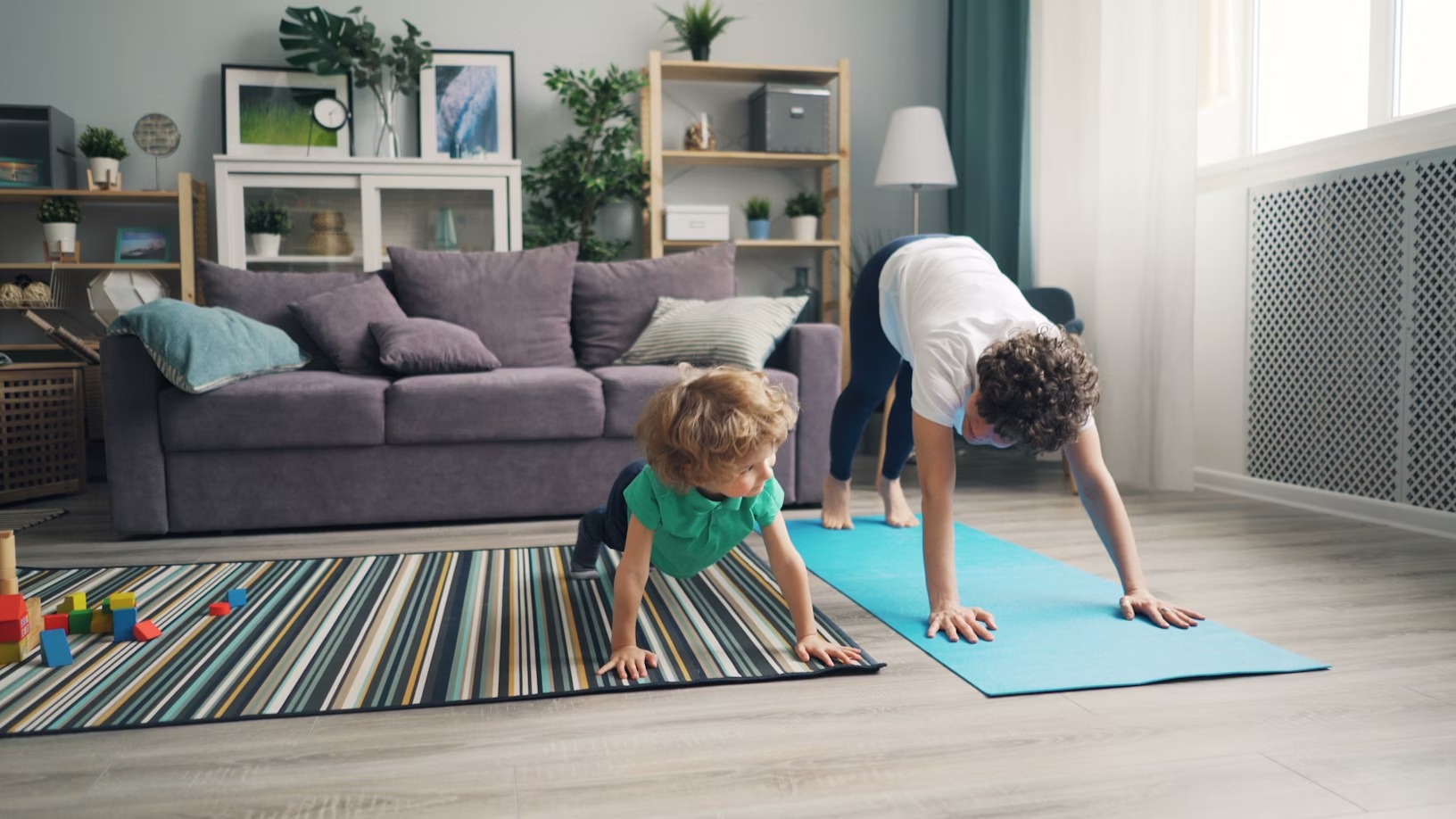
Family doing yoga and stretching together
Image Source: Unsplash

5. Family Yoga and Stretching

If you crave calm as well as exercise, try family yoga or stretching. Start with easy poses like Tree Pose or Downward Dog. Kids learn balance, breath control, and mindfulness—skills that help them manage big feelings. Yoga also makes a great bedtime routine, soothing minds and bodies before lights out. You don’t need formal training; short tutorial videos or basic yoga cards work fine, and your child will love trying to mimic the poses.

6. Scavenger Hunts on the Move

Take a walk around the block and turn it into an adventurous scavenger hunt. Create a list of everyday items like a red car, a bird’s nest, or a flower in bloom. Each time you spot one, you could do a mini exercise challenge—like 5 jumping jacks or a silly dance. This playful approach merges mental alertness with mild cardio. Plus, focusing on finding objects makes the walk feel like a treasure hunt, which is way more inviting than “exercise.”

7. Freeze Tag with a Twist

Revisit a classic: freeze tag. But throw in a twist—when someone’s “frozen,” they perform a short exercise (like two squats or a spin) before getting “unfrozen” by a teammate. It keeps everyone engaged and ups the energy bursts. Expect giggles, mild chaos, and a good sweat. Games like this promote interval-style fitness—quick surges of running followed by stops—while also letting kids practice turn-taking and quick decisions.

8. Stomp Challenges and Follow-the-Leader Moves

Sometimes the simplest ideas are the most memorable. Take turns being the leader and come up with silly movements: stomp like a dinosaur, tiptoe like a ninja, or wiggle like a caterpillar across the living room. Younger kids sharpen gross motor skills; older kids flex their creativity. Best of all, it’s zero cost, zero prep, and maximum bonding. As KidsHealth’s guide on family fitness suggests, the goal is to keep it light and imaginative so children see movement as fun, not a chore.

Keep Moving, Keep Connecting

Physical health and emotional connection can go hand in hand. By blending fun and fitness, you’re not just tackling health goals—you’re also nurturing your relationship. The laughter, curiosity, and teamwork that arise during these activities strengthen your family bond. Ultimately, your child learns that movement is not a “have to” but a “get to”—an opportunity to explore and enjoy. Even short bursts of play can lay the foundation for a lifelong active habit.

What’s your family’s favorite way to stay active together? Tell us in the comments. Sometimes, the easiest ideas from other parents spark the greatest joy!

Read More

  • How to Develop a Healthy Lifestyle without Depriving Yourself
  • 5 Ways to Keep Young Kids Healthy
Samantha Warren
Samantha

Samantha Warren is a holistic marketing strategist with 8+ years of experience partnering with startups, Fortune 500 companies, and everything in between. With an entrepreneurial mindset, she excels at shaping brand narratives through data-driven, creative content. When she’s not working, Samantha loves to travel and draws inspiration from her trips to Thailand, Spain, Costa Rica, and beyond.

Filed Under: Parenting Tagged With: child development, family fitness, fun exercises for kids, parenting tips, Physical Activity, playtime ideas

7 Pranks No Kid Should Play On Their Friends

April 12, 2025 | Leave a Comment

Kid sneaking up with a prank idea
Image Source: Unsplash

A silly prank can spark laughter. But when jokes go too far, they can leave hurt feelings—or even real harm in their wake. As a parent, guiding your child also means helping them understand where to draw the line. Not all tricks are created equal, and what seems funny to one child might be deeply upsetting to another. Here are 7 pranks kids should avoid – plus tips on steering your child toward safer, more considerate fun.

1. The “Scary Insect” Prank

Hiding a fake spider or rubber snake in someone’s backpack or bed might sound harmless, but it can seriously frighten kids (and adults!) with deep-seated phobias. Fear-based pranks usually lead to panic, not giggles, and they can damage trust if a child begins to associate friends with anxiety. If your child likes the shock factor, nudge them toward surprises that produce surprise without genuine fear.

Extra tip: For fun ideas that don’t scare or hurt, check out Parents.com’s safe prank suggestions – they keep the laughs but ditch the fear.

2. The “Locked In” Joke

Trapping a friend in a closet, bathroom stall, or even under a blanket isn’t just a prank—it can be genuinely scary. Some kids may panic if they feel confined, especially if they’re already prone to anxiety or claustrophobia. Plus, it risks real danger if there’s no quick way out. Teach your child that pranks involving removing someone’s freedom are off-limits. Safety and respect matter more than momentary laughs.

3. “Toilet Trouble” Pranks

Plastic-wrapping a toilet seat or stuffing it with tissue might sound funny in theory, but it’s messy, embarrassing, and downright unpleasant for the person on the receiving end. Bathroom-based pranks can also cross boundaries of personal hygiene and privacy. If your child finds these stunts hilarious, suggest comedic alternatives that don’t interfere with someone’s most basic needs. A good rule: if it disrupts hygiene or humiliates, skip it.

Damaged belongings used as a prank
Image Source: Unsplash

4. The “Torn/Damaged Belongings” Prank

Pretending to ruin a friend’s favorite hoodie, phone, or homework is a surefire way to break trust. Even if the damage isn’t real, the victim feels immediate panic and betrayal over something they value. Children’s belongings often hold personal or sentimental importance, and messing with them can lead to bigger conflicts—including disciplinary actions at school. Urge your child to stay away from messing with people’s property—even as a so-called joke.

5. The “Fake Emergency” Prank

Pretending to be hurt or scream “Fire!” when none exists might grab attention, but it teaches kids that serious situations are game material. Not only does it cause genuine fear, but it also wastes time if adults or other children rush to help. In worst-case scenarios, false alarms can tie up resources that should remain free for real emergencies. Encourage your child to keep crisis-level words and actions strictly out of their prank repertoire.

6. The “Embarrassing Reveal” Joke

Posting a friend’s private photo, reading their diary entry aloud, or revealing a secret in front of peers can shatter trust faster than any silly gag. Kids often view these “shaming” pranks as harmless, but the victim might feel singled out or even bullied. Public embarrassment can leave deep emotional scars, especially if it spreads on social media. If your child loves a good laugh, show them how to do it with friends, not at their expense.

7. The “You’re Not Invited” Prank

Telling someone they’re excluded from a party or outing—then dropping a casual “Just kidding!”—can seriously hurt a child’s sense of belonging. Social pranks that toy with inclusion are often deeply felt, and they can plant seeds of insecurity. Remind your child that friendship should foster connections, not erode them. Instead, encourage inclusive fun that brings everyone closer.

Turning Pranks Into Teachable Moments

Not all pranks come from a mean place; sometimes kids are just testing boundaries. Still, it’s crucial to help them see why certain jokes step over the line. Encourage your child to ask: “Would I want this done to me?” If the answer is no, it’s time to rethink. Apologies and accountability—owning a mistake and making it right—can preserve friendships if they’ve accidentally gone too far.

Key Takeaway: Keep Humor Kind

Kids crave humor and bonding—but it doesn’t have to cross boundaries or incite harm. Teaching children empathy in their jokes helps them become more thoughtful friends and classmates. Instead of “You’re not invited,” they learn “We’d love for you to join.” Instead of humiliating someone with an embarrassing reveal, they find ways to make everyone laugh together. Humor should unite, not divide.

Has your child ever tried or experienced one of these pranks? We’d love to hear your story or how you helped them learn from it. Share in the comments below—sometimes the best lessons come from real-life experiences.

Read More

  • When You Think Your Kid Might Be The Bully
  • Seeing The Emotional Side of Our Children
Samantha Warren
Samantha

Samantha Warren is a holistic marketing strategist with 8+ years of experience partnering with startups, Fortune 500 companies, and everything in between. With an entrepreneurial mindset, she excels at shaping brand narratives through data-driven, creative content. When she’s not working, Samantha loves to travel and draws inspiration from her trips to Thailand, Spain, Costa Rica, and beyond.

Filed Under: Parenting Tagged With: child safety, emotional well-being, friendship tips, parenting advice, pranks kids should avoid, safe pranks

« Previous Page
Next Page »
  • Facebook
  • Pinterest
  • RSS
  • Twitter
Best Parenting Blogs

Most Popular

Baby Girl

12 “Grandma” Baby Names That Are Suddenly Cool Again

Evan Morgan
Baby

9 Baby Names That Sound Rare Without Being Hard to Spell

Evan Morgan
Target Store

Choking Incident Prompts Recall of 49,000 Target Gigglescape “Under the Sea” Popping Toys

Evan Morgan
Frustrated Girl

Why Some Students on the Spectrum Are Labeled With ODD

Evan Morgan
Coke Bottles

12 Things Kids Took to School in the ’70s That Would Never Be Allowed Today

Evan Morgan

All content on Kids Ain’t Cheap is for entertainment purposes only. By reading this blog, you agree that Kids Ain’t Cheap is not responsible for any actions taken after reading this blog. For the full disclaimer, see our privacy policy.

Please note that Kids Ain’t Cheap has financial relationships with some of the merchants mentioned here. Kids Ain’t Cheap is funded by banner advertising, commission sales and search optimization consulting.

Copyright © 2006–2026 | District Media | All Rights Reserved | Privacy Policy

Copyright © 2026 Runway Pro Theme by Viva la Violette