• Home
  • About Us
  • Toolkit
  • Archives
  • Advertise
  • Privacy Policy

Kids Ain't Cheap

But They Sure Are Worth It

  • Parenting
    • Baby Stuff
    • Books and Reading
      • Aesops Fables
      • Comic Books
    • Education
    • Family Time
    • Green Living
    • Growing Up
    • Healthy Living & Eating
    • Holidays
    • Parenting
    • Random Musings
    • Shopping
    • Stuff to Do
  • Money
  • Product Reviews
    • Books and Magazines
    • Discount Sites
    • Furniture
    • House Keeping
    • Reviews News
    • Toys and Games
  • Contact Us
  • Our Editorial Commitment
  • Search

7 Surprising Parenting Methods That Are Outperforming Old-School Rules

March 25, 2026 | Leave a Comment

parenting methods
Image source: shutterstock.com

Many parents feel the advice from twenty years ago fails in today’s world. You probably find the rigid strategies of the past fall flat with modern children. We once learned that blind obedience served as the only goal for success. However, this outdated approach often fails to prepare kids for a complex future. Evolving alongside our children requires a sophisticated new set of tools for 2026.

1. Prioritizing Emotional Intelligence Over Compliance

Old-school focus on immediate obedience often ignores the underlying feelings driving a child’s behavior. Surprisingly, teaching children to manage their emotions leads to better discipline than fear-based tactics. When a child understands why they feel upset, they develop vital self-regulation skills for their future. Mindless compliance usually breaks down the moment a parent leaves the room. This shift toward emotional coaching validates the child’s experience. Harvard Center research into executive function shows that these skills build the foundation for lifelong success.

2. Replacing Time-Outs with Time-Ins

Traditional time-outs often leave children feeling isolated and ashamed during their most vulnerable moments. Many modern experts suggest time-ins where a parent stays near the struggling child. This method fosters a stronger secure attachment for future healthy relationships. Proximity helps children feel safe while they catch your calm. It shows your child that your love stays constant regardless of their behavior. Specific strategies from Zero to Three help parents use connection to guide kids through intense emotional moments.

3. Using Natural Consequences Instead of Arbitrary Punishments

Grounding a child for a week because they forgot homework rarely teaches responsibility. Instead, allowing them to face a lower grade or a missed practice creates a direct link. This approach removes the parent from the role of the villain in the story. It places the focus entirely on the child’s personal choices. Honestly, life teaches children better than a lecture while you provide the emotional support they need. You can see the difference between discipline and punishment clearly when you focus on growth over penalties.

4. Encouraging Collaborative Problem Solving

When a conflict arises, try asking the child for their ideas on how to fix it. This parenting method teaches negotiation and critical thinking skills for the modern workforce. Children are much more likely to follow through on a solution if they helped create it. The Lives in the Balance guide for families provides a clear roadmap for resolving family disputes together. It turns every argument into a learning opportunity that strengthens your bond.

5. Focusing on Connection Before Correction

It is nearly impossible to teach a child anything when they feel disconnected or defensive. Ensure the relationship sits on solid ground before you address a behavior issue. This method recognizes that most misbehavior is actually a cry for connection. Filling their emotional cup first makes the correction phase much smoother and more productive. It completely changes the dynamic of the home from conflict to mutual respect.

6. Modeling Vulnerability and Mistakes

Old-school rules demanded that parents appear perfect and infallible at all times. Surprisingly, admitting when you are wrong is a powerful teaching tool. It gives children permission to be human and learn from their errors. On the other hand, a parent who never apologizes creates an impossible standard of perfection. This authenticity builds a bridge of trust that lasts into their teenage and adult years.

7. Prioritizing Mental Health Over Academic Perfection

The pressure to perform in school leads to extreme anxiety in children as young as seven. Modern parenting methods recognize that mental well-being predicts long-term success better than a report card. Surprisingly, giving them space to rest and play improves their cognitive function and creativity. By validating their need for balance, you protect them from corporate burnout later in life. Recent research on academic stress highlights why prioritizing mental health over grades is vital for development.

Embracing these parenting methods is about being a smart parent rather than a soft one. You are breaking the cycle of outdated traditions to give your children resilience. By focusing on connection and natural consequences, you build a relationship that survives the test of time. It is an investment in their future happiness that no old-school rule could provide. We are all learning how to navigate this new landscape as a community.

Which of these methods have you found most effective in your own home? Think about your current routine and leave a comment with your strategy below.

What To Read Next…

  • Are Parents Overlooking Trauma Caused by “Normal” Discipline?
  • Why Are So Many Parents Afraid to Discipline in Public Now?
  • 7 Discipline Mistakes Even Good Parents Make
Latrice Perez

Latrice is a dedicated professional with a rich background in social work, complemented by an Associate Degree in the field. Her journey has been uniquely shaped by the rewarding experience of being a stay-at-home mom to her two children, aged 13 and 5. This role has not only been a testament to her commitment to family but has also provided her with invaluable life lessons and insights.  As a mother, Latrice has embraced the opportunity to educate her children on essential life skills, with a special focus on financial literacy.

Filed Under: Education Tagged With: Child Psychology, discipline tips, family wellness, gentle parenting, modern parenting, parenting methods, parenting trends, resilient kids

7 Unorthodox Parenting Methods That Actually Work

April 21, 2025 | Leave a Comment

7 Unorthodox Parenting Methods That Actually Work
Image Source: Pexels

Parenting is about creative problem-solving. Every parent deals with unique issues that require out-of-the-box solutions. While not every parenting method will work for your family, it’s important to understand the helpful tools at your disposal. We’ve laid out several of the best unorthodox parenting methods that might help you as you get through the terrible twos, the teenage years, and everything in between.

1. No Screens 

No Screens
Image Source: Pexels

According to the University of Albany, 87% of kids spend too much time in front of screens, exceeding the recommendations from the American Academy of Pediatrics. Although kids love watching shows and playing games on their tablets, it may not be the best activity for their development. Unicef says that screens hijack children’s attention spans, reduce their impulse control, and lower their empathy levels. 

When one mom decided to take the screens away completely, she noticed immediate improvements in her children’s behavior. The kids didn’t throw as many tantrums and even had fewer nightmares. They were more creative and calmer. The family as a whole also spent more quality time together and engaged in new hobbies together. Although life without screens can seem incomprehensible at first, this unorthodox parenting method may actually work! 

2. Free Range Parenting 

Free Range Parenting
Image Source: Pexels

Actors Kristen Bell and Dax Shepherd use an unorthodox parenting method called “free ranging.” It’s basically the opposite of helicopter parenting. Instead of closely supervising their kids all the time, Dax and Kristen give their offspring more autonomy. For example, they allow them to ride their motorcycles around the neighborhood unsupervised. 

Proponents of this unusual parenting style say that it helps kids build independence and problem-solving skills. However, striking the right balance between autonomy and parental oversight is important to ensure your kids stay safe. 

3. Homeschooling 

Homeschooling
Image Source: Pexels

It’s a common misconception that homeschooled kids struggle academically. Studies have actually shown that homeschoolers perform better on standardized tests and earn higher GPAs in college. Many homeschoolers also thrive socially and are just as outgoing as their public school peers. 

However, if you’re thinking about homeschooling, it’s crucial to provide your kids with adequate resources and opportunities. Do your research to find a robust curriculum that suits your child’s needs. Make sure to provide plenty of after-school enrichment, including extracurriculars, museum visits, and social opportunities. 

4. Low or No Sugar

Low or No Sugar
Image Source: Pexels

With the prevalence of sugar in foods, some parents are deciding to limit or fully delay their child’s consumption of it. While you can never fully escape sugar as it naturally occurs in fruits and vegetables, high sugar foods like candy or sodas are on another level. A 12-oz can of Pepsi contains 40 grams of sugar, which is almost double the recommended limit for adults. 

The Keck School of Medicine at USC has found that toddlers who drink a half cup of 100% juice every day are 30% more likely to be overweight within two years. It’s essential that parents understand how much sugar a child at any given age can consume. Starting our kids off with healthy habits is the key to a long and successful life.

5. Toy Cycling 

Toy Cycling
Image Source: Pexels

Many kids receive mountains of toys for Christmas and have overflowing toy chests. However, leaving out all of your child’s toys can overwhelm them. Montessori toy rotation is an unorthodox parenting method that involves limiting your child’s toy selection.

Instead of leaving out every stuffie and figurine, Montessori parents only give their kids access to a few toys and activities at a time. This helps children focus better and truly master the skills that each toy is designed to teach. Every week, Montessori parents rotate the selection of toys, swapping them out for a different set. This creates a sense of novelty that helps children get excited about learning through play. 

6. Starting Chores Early 

Starting Chores Early
Image Source: Pexels

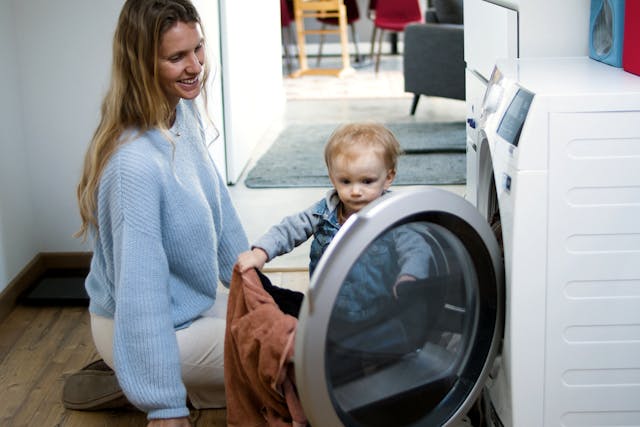
Most of us had chores growing up and learned responsibility by doing laundry and mopping floors. Although the value of chores is widely understood, many parents don’t start early enough. 

Believe it or not, children as young as 2 or 3 benefit from chores. Kids who start putting toys away and dressing themselves at a young age report higher levels of confidence and self-esteem. Kids who learn to help around the house early even feel better at academics and happier with their lives. 

7. Gentle Parenting 

Gentle Parenting
Image Source: Pexels

Many people believe that gentle parenting is permissive. But it’s all about holding space for your child’s emotions and teaching boundaries in an empathetic way. For example, a gentle parent wouldn’t allow their child to hit them. They’d validate that the child is having big emotions and explain that hitting is still isn’t allowed. 

When a child misbehaves, gentle parents will try to redirect the child, helping them choose a more positive behavior. Modeling the behavior that you want to see can also encourage your kids to make better decisions. If these non-punitive strategies don’t work, gentle parents can still use natural or logical consequences to discipline their kids. For example, if a child throws his food on the floor, he may be required to help clean it up as a logical consequence. 

Studies have shown that positive parenting techniques like gentle parenting lead to better brain functioning during the teen years. Plus, kids who experience this unorthodox parenting method have better relationships and mental health as adults. 

Which unorthodox parenting methods do you swear by? Are there any that haven’t worked for you? Share your thoughts in the comments. 

Vicky Monroe headshot
Vicky Monroe

Vicky Monroe is a freelance personal finance writer who enjoys learning about and discussing the psychology of money. In her free time, she loves to cook and tackle DIY projects.

Filed Under: Parenting Tagged With: child development, Parenting, parenting methods

Is the ‘Cry It Out’ Method Cruel or Effective?

March 28, 2025 | Leave a Comment

Crying newborn baby (Japanese baby girl)
Image Source: 123rf.com

The debate over the ‘Cry It Out’ (CIO) method of sleep training has polarized parents and experts for years. This technique, which involves letting a baby cry for controlled periods to encourage self-soothing, has both ardent supporters and strong critics.

Advocates say CIO leads to better sleep patterns and improved parental well-being, while detractors worry about potential emotional harm to the infant. In this article, we delve into the research, benefits, and criticisms of the CIO method, offering insights to help you decide what’s best for your family. By understanding both sides of the debate, you can make an informed decision tailored to your child’s needs.

Understanding the CIO Method

The Cry It Out method involves allowing a baby to cry for set intervals before offering comfort. This approach is based on the idea that babies will eventually learn to self-soothe and fall asleep on their own. Proponents point to studies showing that CIO can improve sleep duration and quality for both infants and parents. It is typically recommended to begin this method when a baby is between 4 and 6 months old. Experts stress that consistency and a gradual increase in waiting time are key elements for success.

Benefits Reported by Advocates

Many parents report that CIO significantly improves sleep patterns, benefiting both the child and the entire family. Better sleep can lead to improved mood, increased energy, and reduced stress levels for parents. Some studies indicate that sleep training methods like CIO do not have long-term negative effects on emotional development. The quick results achieved by this method are often cited as a major advantage. Additionally, a well-rested baby can be more alert and content during waking hours, contributing to overall development.

Criticisms and Concerns

Critics of the CIO method argue that allowing a baby to cry without immediate comfort can cause emotional distress. Some worry that prolonged crying may lead to elevated stress hormone levels in infants. There are concerns about potential impacts on the child’s attachment and trust with caregivers. Parents who are uncomfortable with listening to their baby cry may find the method emotionally challenging. These concerns have led some experts to recommend gentler sleep training alternatives that focus on gradual soothing.

Alternative Sleep Training Methods

Sleeping Baby
Image Source: 123rf.com

For parents seeking less stressful alternatives, several gentler sleep training methods are available. The Pick-Up/Put-Down method involves comforting the baby before returning them to their crib, gradually reducing the need for intervention. The Chair Method allows parents to remain present while slowly distancing themselves over time. Gradual extinction methods help minimize crying while still promoting independent sleep. Each alternative offers a different balance between parental involvement and fostering self-soothing skills.

What Research Tells Us

Scientific studies on the CIO method present mixed findings, with some showing no long-term negative effects and others urging caution. Research published in reputable journals indicates that, when implemented correctly, CIO does not harm the parent-child bond. However, the variability in individual child temperament means that one method may work well for some but not for others. It is important to review multiple studies and consider your child’s unique needs. Informed decision-making requires balancing empirical evidence with your parental instincts.

Making the Best Decision for Your Family

Ultimately, choosing a sleep training method should be based on your child’s temperament and your comfort level as a parent. Reflect on your family’s values, your baby’s responses, and your own emotional well-being. Consulting with your pediatrician can provide personalized advice tailored to your situation. It is also helpful to speak with other parents who have tried different methods. The goal is to ensure a restful night for everyone without compromising the emotional health of your baby.

Have you tried the Cry It Out method, or do you prefer a gentler approach? What challenges have you faced in establishing a sleep routine for your baby? Share your experiences, tips, and questions in the comments below to help other parents navigate this challenging decision.

Read More:

When A Child Bumps Their Head to Go to Sleep, Here’s What It Means

Doctors Swear by These 7 Baby Sleep Hacks—And They Actually Work

Tamila McDonald
Tamila McDonald

Tamila McDonald is a U.S. Army veteran with 20 years of service, including five years as a military financial advisor. After retiring from the Army, she spent eight years as an AFCPE-certified personal financial advisor for wounded warriors and their families. Now she writes about personal finance and benefits programs for numerous financial websites.

Filed Under: Parenting Tagged With: baby sleep, Childcare, Cry It Out, infant sleep, parenting methods, sleep training

  • Facebook
  • Pinterest
  • RSS
  • Twitter

Basic Principles Of Good Parenting

Here some basic principles for good parenting:

  1. What You Do Matters: Your kids are watching you. So, be purposeful about what you want to accomplish.
  2. You Can’t be Too Loving: Don’t replace love with material possessions, lowered expectations or leniency.
  3. Be Involved Your Kids Life: Arrange your priorities to focus on what your kid’s needs. Be there mentally and physically.
  4. Adapt Your Parenting: Children grow quickly, so keep pace with your child’s development.
  5. Establish and Set Rules: The rules you set for children will establish the rules they set for themselves later.  Avoid harsh discipline and be consistent.
  6. Explain Your Decisions: What is obvious to you may not be evident to your child. They don’t have the experience you do.
  7. Be Respectful To Your Child: How you treat your child is how they will treat others.  Be polite, respectful and make an effort to pay attention.
Best Parenting Blogs

Most Popular

11 Ways Kids Are Outsmarting Parental Controls 1. Using Alternate Devices One common trick is simply turning to another device. If a child’s main phone or tablet is restricted, they may borrow a sibling’s, friend’s, or even a school laptop. This instantly gives them access to content outside of parental oversight. Parents often focus on one device, forgetting that others in the household can serve as loopholes. Knowing this tactic helps families tighten controls across all electronics. 2. Clearing Browsing Histories Many kids quickly learn that clearing browsing history hides evidence of restricted activity. With just a few clicks, they can erase any trace of websites visited. This makes it harder for parents to notice when rules are being broken. Parents may assume no history means no browsing, but the reality is often the opposite. Kids are outsmarting parental controls by making it seem like nothing happened at all. 3. Using Private Browsing Modes Most browsers offer “incognito” or private browsing features. Kids use this mode to access websites without leaving a record in the history. To parents checking later, everything looks clean and safe. This simple trick is often one of the first ways kids discover how to bypass restrictions. Conversations about private browsing can help close this gap. 4. Guessing or Resetting Passwords Children who are persistent may try to guess passwords to parental control apps or accounts. Others may find ways to reset them through email prompts or security questions. Once inside, they can disable restrictions entirely. Parents may not even realize controls have been altered until much later. Stronger, less predictable passwords can make this more difficult. 5. Using VPNs to Hide Activity Virtual private networks, or VPNs, let kids disguise their online locations. With one downloaded app, they can bypass geographic or parental restrictions. Some children learn about VPNs through friends or even social media. This makes it easy for them to reach content that should be blocked. Parents often underestimate just how simple it is for kids to use these tools. 6. Creating Fake Accounts When parents monitor social media, kids may create hidden accounts. These “finstas” or fake profiles allow them to interact freely without parental oversight. While their main account appears harmless, the secondary one tells a different story. Kids are outsmarting parental controls by playing both sides at once. Checking for duplicate accounts can help parents stay more aware. 7. Exploiting Time Zone Settings Some kids change the time zone on their devices to bypass screen time limits. This trick allows them to gain extra hours of usage undetected. Parents may assume controls are working, but in reality, the child is bending the clock. It’s a clever loophole that highlights just how resourceful kids can be. Monitoring device settings regularly can catch this tactic. 8. Disabling or Uninstalling Apps Parental control apps can be deleted or disabled with surprising ease. Some kids even reinstall them before a parent checks, making it seem like nothing changed. Others may simply restrict permissions to prevent apps from functioning properly. When apps aren’t monitored closely, parents may not notice they’ve been tampered with. This shows the importance of consistent follow-up. 9. Turning to Friends for Access If a child can’t get past restrictions on their own, they may rely on friends. Visiting a friend’s house or borrowing their phone can give them a free pass. Parents often forget that peer environments can override restrictions set at home. This kind of social workaround is especially common with gaming or social media. Open conversations about trust and responsibility are essential. 10. Hiding Apps in Plain Sight Kids sometimes download apps that look innocent but serve as gateways to hidden activity. These apps may disguise themselves as calculators or utilities. In reality, they allow file storage, private messaging, or browser access. Parents glancing at a home screen may overlook them entirely. Learning to recognize these disguised apps can help parents stay informed. 11. Outpacing Parents’ Tech Knowledge Finally, kids often know more about devices than their parents do. Whether through YouTube tutorials, TikTok hacks, or peer groups, they quickly learn advanced workarounds. This knowledge gap means controls can be bypassed before parents even realize the loophole exists. Staying informed and continually learning about new technology is the best defense. Kids are outsmarting parental controls because they adapt faster than most adults. The Real Solution Lies Beyond Restrictions While controls and filters are important, no system is perfect. Kids will always find creative ways around barriers, making communication the strongest safeguard. Setting clear expectations, building trust, and having ongoing conversations about online behavior matter more than apps alone. Parents who combine technology with open dialogue create a safer digital environment. The goal isn’t to win a battle of wits but to build a relationship that keeps kids both safe and honest. Do you think kids are outsmarting parental controls faster than parents can keep up? Share your experiences in the comments below. What to Read Next... 6 Parenting Tech Shortcuts That Can Expose Your Child to Strangers How Much Screen Time Is Too Much—Legally Speaking? Is Your Child’s School Quietly Tracking Their Location Without Your Consent? How Much Screen Time Is Quietly Reshaping Childhood Behavior? Why Some Parents Are Being Investigated Over Homeschooling Records

11 Ways Kids Are Outsmarting Parental Controls

Catherine Reed

10 Children’s Games From the ’60s That Need to Make a Comeback

Samantha
Girl getting makeup done, referencing psychologist-approved age.

Wearing Makeup: Here Is the Age That Psychologists Agree It’s Okay for Girls to Wear Makeup

Samantha
birthday gifts

7 Birthday Gifts Your Child Should Never Bring to a Party

Latrice Perez

Babysitting Without Cash: 10 Ways to Barter Your Way Out of Childcare Costs

Ashleigh Clyde

All content on Kids Ain’t Cheap is for entertainment purposes only. By reading this blog, you agree that Kids Ain’t Cheap is not responsible for any actions taken after reading this blog. For the full disclaimer, see our privacy policy.

Please note that Kids Ain’t Cheap has financial relationships with some of the merchants mentioned here. Kids Ain’t Cheap is funded by banner advertising, commission sales and search optimization consulting.

Copyright © 2006–2026 | District Media | All Rights Reserved | Privacy Policy

Copyright © 2026 Runway Pro Theme by Viva la Violette