• Home
  • About Us
  • Toolkit
  • Archives
  • Advertise
  • Privacy Policy

Kids Ain't Cheap

But They Sure Are Worth It

  • Parenting
    • Baby Stuff
    • Books and Reading
      • Aesops Fables
      • Comic Books
    • Education
    • Family Time
    • Green Living
    • Growing Up
    • Healthy Living & Eating
    • Holidays
    • Parenting
    • Random Musings
    • Shopping
    • Stuff to Do
  • Money
  • Product Reviews
    • Books and Magazines
    • Discount Sites
    • Furniture
    • House Keeping
    • Reviews News
    • Toys and Games
  • Contact Us
  • Our Editorial Commitment
  • Search

Archives for 2013

Planning a Frugal Family Feast

October 16, 2013 | 2 Comments

frugal family feastThis weekend I will be celebrating Canadian Thanksgiving by spending time with my family and stuffing my face with turkey and pumpkin pie. There’s something about Thanksgiving that I love. I think it’s the family gathering that isn’t already around another busy holiday such as Christmas or Easter, or maybe it’s just the fact that we get pumpkin pie, regardless, Thanksgiving is one of my favorite times of year.

Depending on where you live putting together a family feast can get very expensive. By the time you factor in meat prices, dessert and all the fixings, costs add up quickly! Today we will talk about how you can have a family feast without breaking the bank!


Skip the Meat

No where does it say your family feast has to include a turkey, ham or ”turduckin”. During Christmas, we would traditionally have a large family turkey dinner on Christmas eve after mass. Over the years though the family began to grow, a lot. Through marriages, new relationships, births and friends what started at three people blossomed into many, many people. Asking my mom to cook a turkey dinner large enough for everyone would have got very expensive, during an already expensive time of year.

Instead, she decided to skip the meat all together. A few years ago she decided to take a poll of everyone’s favorite pasta dish. A big winner was fettucine alfredo, so that year instead of turkey, she made a huge batch of pasta. Even buying all fresh ingredients from a specialty store, it was substantially cheaper to make pasta than it was to make a large traditional meal involving meat and everyone enjoyed it.


Pot Luck Style

If you’re hosting a family feast, divvy up the cooking responsibilities. Especially if you provide the meat, there is nothing wrong with asking each of your guests to bring a dish that accompanies the main course. To make sure you don’t get repeats, you tell them what to bring or you may end up with five versions of potatoes and six pies.

For Thanksgiving dinner, where will we have approximately 20 people to feed. Hubby and I are on ”dinner roll duty”. His granddad will be making a turkey and every family member has an item to bring to the meal from dinner rolls to pumpkin pie, we all know our dish.


Sometimes It’s Cheaper to Buy Pre-Made

I was going to bake a pie to bring in addition to the dinner rolls we were required to bring. My baking supplies are dangerously low so I knew there would be quite a few ingredients to buy. I went and priced out the ingredients to make my pie given what I had and it was going to cost me almost $20 to make from scratch, about $10 less if I bought a pre-made crust or $4.50 total if I just bought a pre-made pie. While people would have appreciated the effort and taste of my delicious pumpkin-apple pie, I simply don’t have the extra room in our budget this month for $20 in baking supplies. The store-made pie will be delicious, I’m sure, especially with a $4.50 pricetag.

So much about large family meals are more about spending time together rather than the food itself. While traditional meals around meat may be the norm, don’t be afraid to try something new. At the very least, new memories will be created.

How do you cut costs with family gatherings?

Catherine
Catherine

Catherine is a first time momma to a rambunctious toddler. When she isn’t soaking up all that motherhood has to offer, you can find her blogging over at Plunged in Debt where she chronicles her and her husbands journey out of debt. You can also follow her on Twitter.

plungedindebt.com

Filed Under: Holidays Tagged With: family feast, feast, Frugal, holiday meal

Minimizing Potential Black Friday Problems

October 9, 2013 | Leave a Comment

Black Friday problemsBlack Friday can make even the sanest shopper pull out her hair. It’s uncommon to get through the day without facing at least one time-consuming and frustrating problem. Since almost everyone is up before the first light of dawn, standing in line in the cold or in the rain, it’s little wonder that most people are lacking in holiday spirit. However, you can make your day easier just by making sure that you minimize the potential Black Friday problems before they come up. Preparation is key in this regard.


Only Carry the Cards You Will Use

Pickpocketing and identity theft are both quite common on Black Friday. Make sure that you are aware of your financial information, purse, wallet, and everything else during the entire trip. Even doing this, you may still discover that you are information was stolen. To minimize the damage, only carry the actual credit cards and debit cards that you plan on using. If possible, you might even consider getting a black Friday specific credit card with a set limit of no more than $1000 or $2000. If it is a Visa or MasterCard, it should be accepted at just about any store. As for checks, only carry a few at a time. Do not carry your entire checkbook. The same goes for your passport, Social Security cards, and other things. You will need your driver’s license, but if you’re not leaving the country, leave your immunization records, marriage certificates, birth certificates, Social Security cards, and everything else that you may carry in your purse or bag behind.


Pack Essential Medical Supplies

Make sure to pack ibuprofen, Tylenol, or whatever else it is that you used to treat headaches, cramps, and pains. If you’ve been Black Friday shopping before, you know they can be a madhouse, particularly when they are deals out there like, “Save 25% on Macys promo codes in addition to double coupon value plus bonus points.” You don’t want to have to give up your place in line because of a headache. Also pack Band-Aids, Neosporin, Q-tips, hair ties, decongestants, and throat lozenges. With these things, you’ll be able to stand in line for far longer.


Have a Clear Route Planned

Make sure that you know where you’re going and when you need to be there. Having a clear route planned in advance can help you avoid a lot of the stresses that you otherwise face. If you are going to be in an area that you aren’t familiar with, make sure you have a GPS as well. If you live in a larger city like Chicago and Detroit, it may be a good idea to have a GPS anyway. It’s not unusual for cities to cordon off certain portions of the street for celebrations, parades, and the like.

Preparing for Black Friday problems doesn’t have to be time-consuming. Just make sure that you only carry the information that you actually need to make your purchases. Carry nothing more. For medical supplies, make sure that you pack painkillers and other essentials to make sure that your day isn’t derailed by common maladies. And to save time, get your route planned in advance.

Have you ever battled it out on Black Friday morning?

Brian
Brian

Brian is the founder of Kids Ain’t Cheap and is now sharing his journey through parenthood.

 
Email • Google + • Facebook • Twitter

Filed Under: Shopping Tagged With: Black Friday, Black Friday problems

How to Make it Through Your First Year of Breastfeeding

October 8, 2013 | Leave a Comment

breastfeedingBreastfeeding was something that was very important to me. Though I respect women who chose not to for whatever reason, for me and my family, breastfeeding was the answer. As soon as I found out I was pregnant I started reading anything and everything I could about pregnancy and raising a child. Especially looking for as much information I could about breastfeeding and what to expect since it was so important to me.


Get Help Early

There are a ton of resources out there, too many actually. It is very easy to get overwhelmed. Though there is a lot of valuable information out there but here is a lot of misleading and downright terrible advice as well. If breastfeeding is something you want to master, and don’t think for one second this isn’t a learned skill, establish it in the hospital. If you have a home birth, make sure you have a Douala, midwife or your doctor help you before they leave. The first few hours and days are crucial to establishing good breastfeeding techniques. The nurses at our hospital were amazing and really helped us. When we were sent home, we had access to public health nurses who specialized in lactation and breastfeeding which was another great resource. Ask and accept all the professional help you can in the early days!


The First Three Months

The first 10-12 weeks we’re anything but easy for me. It hurt, a lot, and was exhausting. Through help (in my case, nurses and a temporary shield) I was able to get through it. I remember my daughter going through a growth spurt around eight weeks and doing nothing but nursing for almost 36 hours. She literally nursed non-stop for three days. I was exhausted and wanted to cry, actually I did cry, multiple times. My husband was frustrated because he couldn’t help me with it and I was milliseconds away from telling him to go to the store and buy formula.

I’m so glad I persevered though. I stuck with it, through the pain and frustration and made it through those dreadful first three months. I know not everyone’s experience will be the same but most women I chat with, who have breastfed, agree that the first 10-12 weeks are the most difficult. So my advice is that if you can stick with it, nursing on demand as much as they want it gets easier after the first few weeks.


Get Over It

I got over nursing in public early on. I realized that if I was going to have any sort of life, breastfeeding in public was going to be apart of my life. I nursed while grocery shopping, at restaurants and in many other public places. I always chose to use a cover or nurse in my sling for my own modesty, but do whatever you feel comfortable with. In today’s age of Miley Cyrus public performances and barely there women’s clothing, breastfeeding should be a total non issue.


Enjoy It!

Even through the hard times, breastfeeding has been one of, if not my favorite part of being a mom. The closeness that we shared because of it was amazing. There is nothing like secluding yourself and your baby away to cuddle and nurse.

I chose to let my daughter self ween but do what works for you and your family. I’m fortunate being in Canada and getting a year maternity leave so it was easy for me to make it to the critical one year mark. She weened herself about five weeks later, just lost interest. Probably because she got use to being away from me at daycare and was slowly nursing less. I could tell she was ready.

Breastfeeding is an amazing experience, it can be very difficult but us women are equipped to do it, power though the tough times, it’s so worth it!

What tips and tricks did you use to get through breastfeeding?

Catherine
Catherine

Catherine is a first time momma to a rambunctious toddler. When she isn’t soaking up all that motherhood has to offer, you can find her blogging over at Plunged in Debt where she chronicles her and her husbands journey out of debt. You can also follow her on Twitter.

plungedindebt.com

Filed Under: Parenting Tagged With: Breastfeeding

Raising Money Smart Kids

October 7, 2013 | Leave a Comment

money smart kidsIn today’s tumultuous economy, it is more important than ever for parents to teach their children how to be financially responsible. Money has to be earned and budgeted before it’s spent, and let’s not forget the importance of continuously saving money for the future. Communicating this to your children is essential to helping shape the financial decisions they will make later in life.

That said here are some helpful tips for raising money-smart kids, at an early age.


Open Up a Savings Account

Has your child been asking for a special toy, a bicycle, a video game? Open them a savings account at your local bank. Discuss how much they will need to set aside to reach their target, on a weekly or monthly basis. You can also explain how a savings account works and how he or she can earn interest on money that is deposited. This is often a nice motivation for your child to use the savings account. You may find that your child uses the account to set and reach a financial goal, which is a great thing to watch.


Let them Earn Allowances

Once your child reaches an age where they can start contributing around the house, you can pay them a small amount of money for helping out. Whether it’s taking out the garbage, watering the plants, or helping with dishes, you need to show them that they have to work for their money. It doesn’t just grow on trees. This is a small amount of money that you give the child for spending on just about whatever he or she so desires. By giving your child an allowance, your child will come to realize the value of a dollar when it comes time to make decisions about what to buy.


Get Your Child Involved

If your child is old enough, you can teach him or her a financial lesson by sending your child on an errand to pick up some groceries. Give your child $20 or so along with a list of items that you know will cost very close to $20. Your child will then have to carefully consider how to make that money stretch to get all the groceries you need. If your child is successful, consider giving him or her some kind of reward.

In order for children to grow up to be financially responsible adults, it is important that parents begin teaching them about how to manage money as early as possible. If you have been putting this off with your own child, then it may very well be time to reconsider.

Brian
Brian

Brian is the founder of Kids Ain’t Cheap and is now sharing his journey through parenthood.

 
Email • Google + • Facebook • Twitter

Filed Under: Money and Finances Tagged With: Kids, money

Raising a Saver

October 2, 2013 | 3 Comments

raising a saverGrowing up, I didn’t have much in terms of financial role models. My mom used to say blanket statements like ”debt is bad” and ”always pay your credit card balance in full” but she never explained details about money.  Details about how to manage my money, how to allocate savings or even encouraging me to save. I think she was just relieved that when I got a job she was no longer on the hook to ‘support’ me and my social habits.


My History

I grew up always spending any money earned. I managed to save a few bucks for my wedding but that was the extent of my savings. Even though I started working when I was 15, it wasn’t until I was in my mid 20’s that I began to understand the logic behind emergency funds and planning for a ”rainy day”. Though I had a savings account my entire life, it remained empty 99% of the time.

Educating your children early on how and why one saves money is so important. When I think about how much money  let pass through my fingers over the last 15 years a small piece of my soul dies.


Start Young

If you want to raise a child who understands and respects money, it is so, so, important that you start young. Giving an allowance before they start earning their own money is an easy way for children to learn the ins and outs of money management.

The allowance money should come from your budgeted monthly amount for your children. If, for example you have allocated $50 per month for ”kids” which can include anything from haircuts to lunch money, give your child a percentage of that money for them to manage. This will be done within you guidance but have them learn about money; spending, saving and budgeting. Have them help you shop and budget for their things. This way they will understand that they only have $25 to buy pants, therefore rather than whining in the store about the why they can’t have the $50 jeans they will need to shop around.

A percentage of their allowance needs to go into savings. Teach them early about the importance of saving for things. If they really want those $50 jeans, they’re going to have to save up for them. Not everything can be purchased immediately and will require financial planning and preparation. This is applied to everything from the purple My Little Pony they want to the university education they aspire to obtain.


Saving as Your Child Grows Older

As kids get older, give them opportunity to make more money. Money that can be made beyond upholding normal household expectations (ie don’t pay them for making their bed). If they’re saving for something or would like to have extra money for something have them work for it. This will depend on the age but something like cleaning dads car for $20, helping clean the yard in preparation for winter for $30 sort of thing. The point is that kids need to understand early that money comes from hard work, and building savings, not from mom and dad’s wallet. If children grow up assuming money will just appear when they need it, they will fail.

When kids get they first real paying job it is important that a percentage of their pay goes directly into savings. This will be decided upon between kids and parents but agree on a spending and savings amount and enforce it. Saving early will establish long-term good habits.

Did you start saving young? How are you encouraging your kids to save?

Catherine
Catherine

Catherine is a first time momma to a rambunctious toddler. When she isn’t soaking up all that motherhood has to offer, you can find her blogging over at Plunged in Debt where she chronicles her and her husbands journey out of debt. You can also follow her on Twitter.

plungedindebt.com

Filed Under: Money and Finances Tagged With: Saver, saving, Saving Money

4 Tips for Saving When Moving Abroad

September 29, 2013 | Leave a Comment

Uhaul truck for movingSo, moving is a tough activity!  When I was a kid, I always dreamed of moving from one house to the next, of course always with the provision that I was moving to a progressively better house with each move.  It never occurred to me then, and it didn’t really hit home until the past two years, that moving is a very involved job.  And this becomes even more complicated when you have a very small budget to work with.  Plus, if you’re considering moving aborad, you have some extra elements that you have to take into consideration.


Always Start Early

As soon as you have sold your home, perhaps to a cash buyer like https://webuyhousesinatlanta.com/, and locked down your new house, start to pack up things in your current place. This should be started as soon as possible before the move. Of course, you will be scratching your head thinking, “‘how can this be done when obviously we will still need access to a lot of our things?”  The answer is really quite simple.  Pack all those things you hardly use first. Yes, you will have a lot of them.  I consciously made the effort not to hoard things from my last move so I was surprised still at the amount of knickknacks I had managed to collect, some important, some not so much.  So, start with those things.  Then work your way to the move date slowly packing things along the way.  You will, at some point, need professional movers to get your stuff overseas.  If you pack things yourself, consider talking with the movers ahead of time to make sure that you do things correctly.


Clean and Dispose of Things

I always had three containers when I was packing, one for the stuff I was bringing with me, the other for the stuff I was donating, and the last for the stuff I was throwing away.  And, again, I was surprised at how little I was actually considering bringing with me to my new abode. As I packed these now-few items, I always made sure to thoroughly clean them before packing them away.  If you know me well, you would know that I HATE packing and unpacking and, in my college days, resorted to just stuffing things in boxes in a haste to get things packed, only to wince in pain at the effort required to unpack.  This time, the ‘mature me’ packed carefully making unpacking much, much easier to do.  How do you save here? Throwing thing away obviously lessened the amount of things I needed to cart from one location to the next. Donating things even turned out to be a helping hand.  Cleaning things before carefully packing them away took away the need to thoroughly crush and clean things when they came out.  So, not only was I able to save on cleaning implements, but also time and effort.

Remember, the less you pack, the more you save on moving costs to go overseas!


The Most Expensive is Not Always The Best

I do not know how it is in other countries but in mine, there are two kinds of movers- the pro’s and the amateur haulers. The pro’s will pack your stuff for you in nice, thick boxes, complete with addictive bubble wrap while you sit, watching them, sipping a cup of tea.  They will also unpack most of your things for you when you get to your new place.  Amateur haulers will physically lift your already-boxed items into a moving truck and then physically bring them down and place them where you want the item. That’s it.  No thick box (you have to buy this yourself), and no bubble wrap. You can imagine how much the price difference is between the two. Now, if you have started your packing relatively early, and if you were meticulous with your packing, all you really need is the physically labor to lift things around and then get it to where you’re going.  So, do not feel bad if you can only afford the cheapest truck.  The point is getting yourself, and your belongings, from point old to point new.


Plan For When You Get There

When you move, you always end up needing to buy new things when you move in.  You need to plan ahead, and make sure that you open an offshore bank account.  Before you leave home, make sure that you transfer a nice sum of money to your new offshore account, and confirm that it arrived.  That way, when you get to your final destination, you have cash available to purchase the new items that you’ll need for your home.  Plus, having a bank account in the country you’re going can make it easier to get a cell phone and setup utilities at your new home. Do not forget that moving your money from your home country to your destination can be quite costly. As an alternative, you can use currency services for your international money transfers. Read this expat blog on this topic to learn more.

I found that if you follow these basic things, you will be able to save on so many things. You will keep to a small budget, you will save time and energy, and you will not stress out.

What is moving like in your corner of the world?

Brian
Brian

Brian is the founder of Kids Ain’t Cheap and is now sharing his journey through parenthood.

 
Email • Google + • Facebook • Twitter

Filed Under: Home and Living, Money and Finances Tagged With: Movers, Moving, Packing, saving

Soccer and Debt Infographic

September 29, 2013 | Leave a Comment

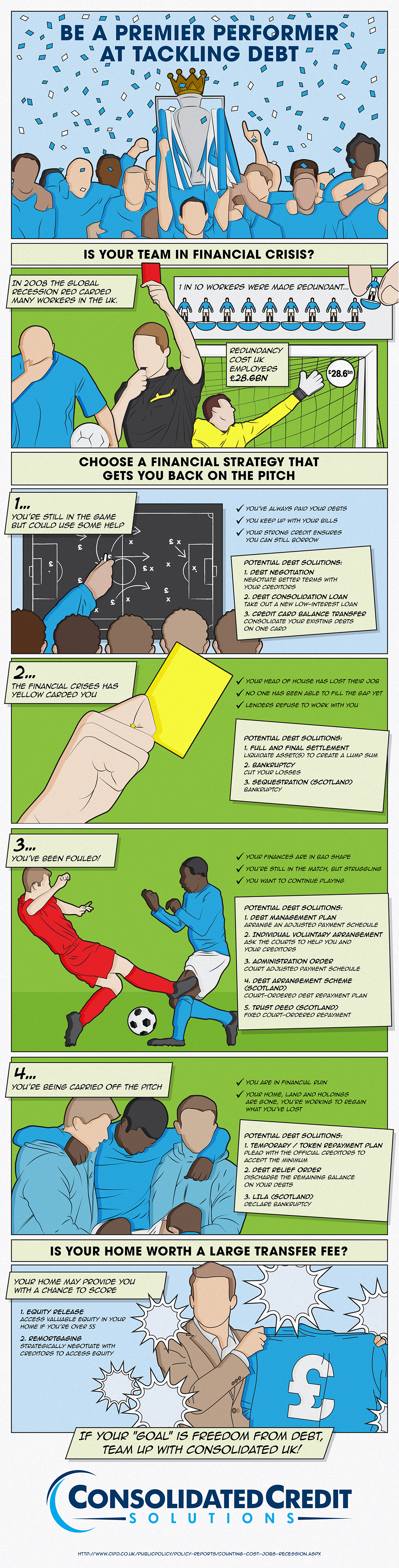
Does debt have you on the sidelines when you’d rather be working toward your financial goals? Shedding debt is a necessary step in unencumbering yourself in your financial life. Once done, you have much more saving power. You could be in debt for a variety of reasons and at varying degrees. The cause and amount of debt you are under can affect the strategies you should take to get out of debt. However no matter how much debt you are under, there is a way out. Whether you just have a little bit of debt and can still make payments or you have a huge amount there is a game plan for you.

Soccer Debt

If you are worried that you can’t deal with your debt on your own try talking to experts at places like Consolidated Credit to see if the can help make your payments more manageable. To determine the kind of debt you have and the possible solutions at your disposal, read through this infographic. Whether, you are at stage 1 or stage 4, Consolidated Credit is on your team.

Brian
Brian

Brian is the founder of Kids Ain’t Cheap and is now sharing his journey through parenthood.

 
Email • Google + • Facebook • Twitter

Filed Under: Money and Finances Tagged With: Debt, paying off debt, soccer

Halloween Safety Tips

September 26, 2013 | 1 Comment

jackolantern bucketHalloween should be spooky; but certainly not dangerous. It is our responsibility as parents to always keep our kids safe; so it is very important that we don’t let our guard down on Halloween, if anything — we need to amp it up. To avoid the many risks children face while trick-or-treating, it is imperative to use common sense. Here are some Halloween safety tips that will keep your kids safe and happy during this exciting holiday.


Before You Head Out

Here are some simple tips that you can check before you head out trick or treating:

Check Out Your Child’s Costume

Be sure that there is nothing dragging on the ground that they could trip on. If your child is wearing a mask, like the Monsters University Sulley Monster Mask, make sure they can see. If the holes are too small, you can make them larger by cutting them. This is very important; kids need to be able to see where they are going and when it’s dark out, it’s just that much more difficult. Make-up is an even better alternative to a mask; especially for little ones. Be sure to select make-up that is non-toxic and hypoallergenic.

Get Your Glow On

Put reflective tape on your child’s costume, have them carry glow sticks and/or wear glow bracelets or glow necklaces. This will help them to be more visible to motorists. You’ll also want to carry a flashlight to stay safe and visible; it also helps everyone to see where they are going, so hopefully no one will trip and fall.

Talk To Your Kids

Make sure you let your kids know what is expected of them while they are out trick-or-treating. They need to be aware that they should never enter a home, there should be no running, no playing in the street, they should only go to houses where the lights are on, and they should not eat any treats before you get home and inspect everything. Also, be sure they know to say “Trick-or-Treat” — and that “Thank you” is always appreciated.

Layer Up

If it’s a little chilly be sure to put layers under your kids’ costumes. This will keep them comfortable and warm during their fun night of trick-or-treating.

Plan to Accompany Your Children

If your kids are young enough to go trick-or-treating; then they are young enough to require adult supervision. I know it might not be very “cool” for a twelve year old to have Mom and Dad hanging out, but you can be with them without being right next to them. You can just hang back a bit but still keep a watchful eye (this should only be done with older children).


Trick-or-Treating Safety

Here’s what you need to know when you’re out and about:

Let the Light be your Guide

As I mentioned before, you’ll want to carry a flashlight to help light the way, but another important thing you should do is to only walk down well lit streets. Other lights that will guide you, are house lights. Only go to homes that have their porch lights on. People have their lights off for a reason so be respectful of that.

The More the Merrier

Trick-or-treat as a group. This keeps you safer for many reasons, but the main one is, its makes you all more visible. Visibility really is the main element to having a safe Halloween. When crossing the street be sure to cross at corners and use crosswalks.

Beware of Dog

Anytime you come in contact with an animal you don’t know, you must always use caution. It is especially important to keep this mind during Halloween. Costumes can be confusing and scary to animals – dogs especially – so it is essential that you and your children are aware of this so there aren’t any unfortunate encounters.

Here are a Few More Quick Tips:

  • Do not go inside anyone’s house
  • Carry a cell phone for emergencies
  • Watch where you step
  • Don’t stand to close to Jack-o-Lanterns, since they usually contain a lit candle


Halloween Safety Tips at Home

Once you get home be sure to inspect all of the items your children have received. This means looking for any candy that may have been tampered with. Remove all choking hazards for little ones. This is especially important for parents with children under age 6. You’ll also want to monitor the candy intake; you don’t want to have to deal with an upset tummy later on. You might let the kids select a few pieces and then put the rest up. Some parents like to let their children trade in their candy for something else, like a special toy, gift card, or money. Some dentist offices offer this as well.

If you’ll be handing out candy, be sure that your pathways are clear that there isn’t anything trick-or-treaters might hurt themselves on. It’s also a good idea to lock up your pets so they don’t run out the door. Even the best behaved animals can get a little spooked, so just play it safe for everyone’s sake.

Do you have any additional Halloween safety tips?

Brian
Brian

Brian is the founder of Kids Ain’t Cheap and is now sharing his journey through parenthood.

 
Email • Google + • Facebook • Twitter

Filed Under: Holidays Tagged With: Halloween, Safety

Pinterest Inspired Family Recipes Tested!

September 24, 2013 | Leave a Comment

Pinterest Inspired ReceipesIn the last few weeks, my bi-weekly meal plan has become, well boring. Both my husband and I have been feeling like we eat the same 10-15 meals over and over. Since meal planning is the single easiest way to keep our money in check (we’re suckers for grocery stores) I need to do it. The thought of walking into a grocery store without a list gives me near panic attacks knowing the amount of money we will end up wasting on food!

Feeling uninspired is not how one wants to enter a meal planning evening. Since I knew it had to be done, last week I turned to the internet for some inspiration. Since I love a good food picture without all the text to sift through, Pinterest was fun to browse. I picked a few recipes, ran them by the husband, bought the ingredients and gave them a shot. I’m happy to report so far we’ve had nothing but success!


Recipe 1: Taco Casserole

The first recipe we tried was Taco Casserole. I love tacos, my husband isn’t so crazy about them. He finds them messy and annoying to eat (his words). Making tacos in a casserole form seemed to be a great compromise.

Taco Casserole

What I changed: In the final steps of the recipe it calls to add shredded lettuce and tomato and then continue baking. Since I hate soggy lettuce, I instead topped the ground beef with a jar of salsa (instead of tomato) and shredded cheese, totally omitting the cooking with lettuce and tomato. I added the fresh lettuce and some sour cream when we ate it.

This was super fast, cheap and yummy. You can use whatever chip or tortilla you want in the bottom and can play with the spices. I will be making this again for sure.

Total cost: $10.98 ($1.83 per portion) 


Recipe 2: Southwest Chicken Soup

The second recipe I tried was a clean-eating, two bean southwest chicken soup/chili.

Southwestern Chicken Soup

I didn’t change much other than swapping pinto beans for romano beans (plus the one can of black beans). This was even easier in terms of prep considering it was a slow cooker recipe. If, and when I make this again I will use a different flavor salsa since it is the salsa that gives all the flavor. I’m thinking about trying it with a peach mango salsa next time. The hardest part of this recipe was getting my can opener to work. It made a LOT and tasted great two days later as leftovers. This recipe easily made enough for six large adult portions.

I chose to eat it with tortilla chips, super yummy.

Total cost: I lost my receipt but I think it was approximately $12.00 total or $1.50-$2.00 per portion depending on size.

We have one more recipe on dock to try next week. I’m optimistic because of all three new recipes, it’s the one the reviewed the best.

It’s easy to find excuses to not do your meal plans but meal planning, when done properly, will save your sanity and budget! If you’re feeling uninspired check out a new recipe book, website or Pinterest for some new ideas.

What Pinterest recipes do you love?  Post them below so we can all share!

Catherine
Catherine

Catherine is a first time momma to a rambunctious toddler. When she isn’t soaking up all that motherhood has to offer, you can find her blogging over at Plunged in Debt where she chronicles her and her husbands journey out of debt. You can also follow her on Twitter.

plungedindebt.com

Filed Under: Healthy Living & Eating Tagged With: Pinterest, Pinterest Recipes, Recipes Tested

Are You Ready to Buy a Family Home?

September 18, 2013 | Leave a Comment

family homeBuying a home for your family is a very exciting time. It is important that you consider all factors before making the transition though.

When hubby and I purchased the home that we currently live in, we fully expected to move eventually. It’s not a large enough home, nor is it in our ideal area. We currently live in the suburbs in a nice area but would rather not see our neighbors. What I mean is that once our priorities are taken care of (paying off debt, minus mortgage) we plan on moving further out towards the ‘country’.

Since we have considered everything we realize that this move won’t be feasible for a few years. These are things you need to consider when thinking about moving your family.


Have You Considered all Expenses?

For us, we want to have our non-mortgage debt paid off before we move again. By the time this happens we will be at max capacity of this home (nearing this point now) but have committed to paying things off before moving. This frees up money for other expenses such as larger down payment, legal fees involved with move, potential fees if we decide to build, and professional movers. We have moved twice with the help and kindness of friends and family, but there’s no way we could, or would do it again. Since our plan is to make our next move, our last move, we will be hiring professionals to do it for us. An expense but so worth it.

Consider ALL expenses before deciding to move. In our case when we move out of our current area, a second car will be a must, an added expense we can’t handle right now even with the decrease in public transit use.


Is Renting a More Viable Option?

You have to still consider if renting is a more viable option for you and your family. Home ownership is not for everyone. As long as you have a safe roof over your family’s head that’s all that matters. Some argue that rent is throwing money away but if renting means your able to live the life you want, debt-free, without property ownership than who cares?! For some, tying permanent roots down is daunting, they move often or like the idea of a swanky apartment with more amenities than a starter home. If home maintenance doesn’t interest you than don’t ever be pressured to buy.


Don’t Buy More Than You Need!

This is a tricky one. Especially if you’ve gone through the pre-approval process. You see how much the bank thinks you can afford and you’re expectations of home get out of control. Try and keep a modest list of wants and needs and be willing to make compromises if needed.


Beef Up Your Emergency Fund, Add New Budget Categories

If this home purchase will be your first, it’s time that you establish or beef up an emergency fund. Homeownership can be a bumpy ride and stuff can go wrong. Mother nature can be a real pain in the butt and hit you when you least expect it – whether that’s due to a sudden storm or for unexpected damages that necessitate a Crawl Space Remediation, make sure you have at least enough in your emergency fund to cover any insurance deductibles as well as minor home repairs.

You also need to set aside a small amount of money to new expenses such as insurance premiums and regular home maintenance repairs. If this is something that will send your budget over the edge, probably an indication that you’re not quite ready for homeownership.

Homeownership can be an amazingly fun experience but it can also be very stressful. Make sure you have everything figured out before deciding to embark on this venture, especially if there’s a family involved that you’re required to protect!

What else do you need to be ready for your family home?

Catherine
Catherine

Catherine is a first time momma to a rambunctious toddler. When she isn’t soaking up all that motherhood has to offer, you can find her blogging over at Plunged in Debt where she chronicles her and her husbands journey out of debt. You can also follow her on Twitter.

plungedindebt.com

Filed Under: Money and Finances Tagged With: Buying a Home, Family Home, Home Buying

Baby Swimming: What is a Swim Nappy?

September 13, 2013 | Leave a Comment

Baby NappyYou may have heard of baby swimming already. Though what you may NOT have heard about are the *ahem* ‘little surprises’ than a baby without a swim nappy can leave behind in the pool.

One company in the UK pioneered a defensive system: the Happy Nappy Swim Nappy! (More info here).

A swim nappy is designed for use in water, primarily for babies but can be worn by adults also. They are used either underneath a bathing suit or as the bathing suit itself.

Although they can serve the purpose of containing waste for some incontinent grown-ups, swim nappies are more commonly manufactured for babies who are not capable of visiting the toilet themselves.

For parents who wish to take their infants to the seaside or a public swimming baths, investing in a swim nappy can make the experience a whole lot easier and save potentially embarrassing situations. Some public baths will actually not allow babies entry into the pool without a swim nappy for hygienic reasons.


How do Swim Nappies Work?

Normal bathing suits do not provide adequate protection from accidents. Likewise, regular nappies are not suitable for use underwater as they will soak up water and weigh down the baby. A swim nappy is designed to combat these problems.

Contrary to popular belief, their main purpose is to actually catch waste and not absorb it; a nappy like this would simply actually swell up. Urine can simply be allowed to escape as it is not sterile.

There are two types of swim nappies available for consumers. These are:

Reusable – Lined with soft, stretchy fibres, the reusable swim nappy will encourage solids to cling to the inside without soaking up waste into the material. An inner mesh layer helps with this, where fluids can escape though solids can’t. The main disadvantage of the reusable nappy is that they must be washed after each use, although this is cheaper in the long run and more eco-friendly.

Disposable – The alternative comes with disposable swim nappies that come in multi-packs and need to be thrown away after each individual use. An absorbent core is present but is designed so as not to take in too much liquid. A tight but comfortable elastic around the legs and waist are essential for containment purposes.


Which Nappy to Buy?

The size and weight of the swim nappy should be the main buying considerations; comfort for the baby is paramount along with functionality. Lycra materials and a stretchy elastic waist will make for easier changing also.

Different types of nappy are available. Think of easy they will be to put on and take off, especially if they are reusable swim nappy. Trying out different versions in store, or simply buying a range of them from various manufacturers, can help parents decide on the best nappy.

In the UK well known brands Huggies and Pampers produce swim nappies, marketed as Little Swimmers and Splashers respectively. For parents who already use them yet are still worried about any leakage, The Happy Nappy by Splash About can be purchased as an extra assistant to a regular swim nappy.

Regardless of the type of swim nappy chosen for your child, staying vigilant whilst they are in water is a good idea. Check every so often to see if the swim nappy has been used and, if it has, how well it has performed.

Do You Enjoy Taking Your Baby Swimming?

Brian
Brian

Brian is the founder of Kids Ain’t Cheap and is now sharing his journey through parenthood.

 
Email • Google + • Facebook • Twitter

Filed Under: Baby Stuff Tagged With: A Swim, Baby Nappies, Baby Swimming, Nappies, Swim Nappies

Fit Families: Being Active Doesn’t Have to Cost Money

September 11, 2013 | 4 Comments

fit familiesGrowing up, activity was second nature to me. I’d wake up, go outside and play until the sun went down and repeat the next day. I was involved in some organized sports, but for the most part, unless it was pouring rain there was an expectation on me to be active.

The level of inactivity in today’s general population, especially children is alarming. I live on a street full of children and I can count on one hand the amount of times I have seen them actually playing outside. While this doesn’t necessarily mean they’re not involved in organized activity outside of the home, it still concerns me. Unless it is pouring rain, I make sure my daughter gets outside and explores everyday. I want activity to be ingrained in her little brain.

A friend of mine recently started complaining about how her overweight son (who is 11) was never going to lose weight because she couldn’t afford to enroll him in an organized sport. Overweight herself, she claims to be determined to not have him lead the life she has as an overweight adult. When I told her I thought ”not being able to afford organized sport” was a poor excuse, she was taken aback.  And don’t even get me started on a junk food tax.

Though organized sports and activity hold many benefits in many aspects, they are not the only ways to get active and fit.


Free or Inexpensive Activities for Families

Families who are active together are generally much happier as a whole and individual parts. I can tell you I always feel much better mentally and physically when my whole family gets out together rather than being alone or even me and the little one. Having my husband present is encouraging and fun. Activity is an amazing bonding time for everyone.

Some free or inexpensive activity ideas for the whole family include:

  • Walking or hiking, exploring your neighborhood or local parks,
  • Biking
  • Playing in the snow, snowshoes, skiing, building snowmen are always fun.
  • Family sport game (baseball, tennis, soccer)
  • Play on the beach, running in the sand, building sand castles.
  • Swimming
  • Walk the family dog together
  • Rake leaves, clean the yard, garden together (for more fun jump in the leave piles!)
  • Play electronic games. Electronic games (Wii, xBox, Playstation) can be fun when played as a family, there are many games that encourage activity.
  • Run, there are many family friendly races that you could train and run together.

When activity is a component of your life, you feel better in all aspects of your life. You have more focus and are generally more organized and in a better mood. Nothing bad ever comes from being active together. Being active as a family means you are setting your children up for a healthier life than leading an inactive childhood. When children see their parents active they are also more apt to partake in activity.

Being fit a fit family doesn’t have to include fancy gym memberships or organized sports. There’s nothing stopping you from exploring the world around you and having fun while doing it!

Do you consider yourself to be active? How about your family?

Catherine
Catherine

Catherine is a first time momma to a rambunctious toddler. When she isn’t soaking up all that motherhood has to offer, you can find her blogging over at Plunged in Debt where she chronicles her and her husbands journey out of debt. You can also follow her on Twitter.
plungedindebt.com

Filed Under: Healthy Living & Eating Tagged With: Activities For Family, Family, Family Sports, Fit Families

« Previous Page
Next Page »
  • Facebook
  • Pinterest
  • RSS
  • Twitter

Basic Principles Of Good Parenting

Here some basic principles for good parenting:

  1. What You Do Matters: Your kids are watching you. So, be purposeful about what you want to accomplish.
  2. You Can’t be Too Loving: Don’t replace love with material possessions, lowered expectations or leniency.
  3. Be Involved Your Kids Life: Arrange your priorities to focus on what your kid’s needs. Be there mentally and physically.
  4. Adapt Your Parenting: Children grow quickly, so keep pace with your child’s development.
  5. Establish and Set Rules: The rules you set for children will establish the rules they set for themselves later.  Avoid harsh discipline and be consistent.
  6. Explain Your Decisions: What is obvious to you may not be evident to your child. They don’t have the experience you do.
  7. Be Respectful To Your Child: How you treat your child is how they will treat others.  Be polite, respectful and make an effort to pay attention.
Best Parenting Blogs

Most Popular

Baby

9 Unusual Baby Names That Sound Like They Belong to Future CEOs

Evan Morgan
Baby

10 Baby Names That Were Once Considered “Grandparent Names” but Feel Cool Again

Evan Morgan
Baby

9 Baby Names Inspired by Fall Without Naming Your Child Autumn

Evan Morgan
Baby

10 Vintage Baby Names That Sound Surprisingly Modern Again

Evan Morgan
Baby names

Teachers Admit: These 6 Baby Names Create Instant Bias in the Classroom

Latrice Perez

All content on Kids Ain’t Cheap is for entertainment purposes only. By reading this blog, you agree that Kids Ain’t Cheap is not responsible for any actions taken after reading this blog. For the full disclaimer, see our privacy policy.

Please note that Kids Ain’t Cheap has financial relationships with some of the merchants mentioned here. Kids Ain’t Cheap is funded by banner advertising, commission sales and search optimization consulting.

Copyright © 2006–2026 | District Media | All Rights Reserved | Privacy Policy

Copyright © 2026 Runway Pro Theme by Viva la Violette